Overview

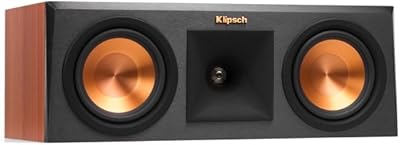
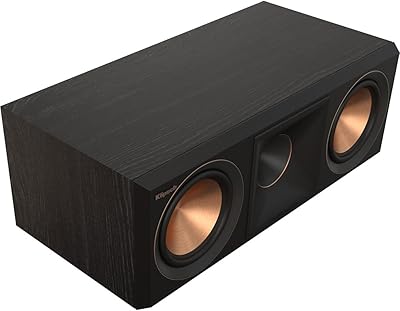
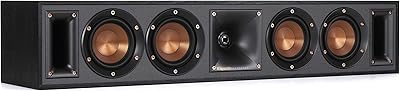
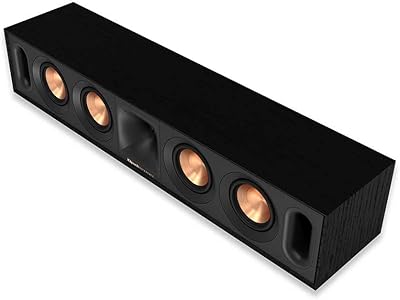
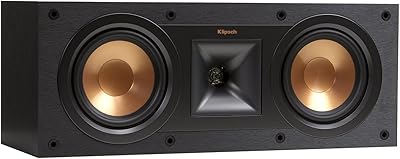
The Klipsch RP-504C Center Channel Speaker sits at the top of the Reference Premiere lineup, and it makes that position clear the moment you see it. At 31 inches wide and 34 pounds, this is not a speaker you tuck discreetly under a TV — it commands its space. The walnut wood veneer cabinet looks genuinely handsome in a living room, a step above the plastic-trimmed competition. With a 4.8-star rating across more than 900 verified buyers and a spot in the top 20 center channels on Amazon, it carries real-world credibility. Think of this as a long-term investment for a serious surround sound setup, not an impulse buy.
Features & Benefits

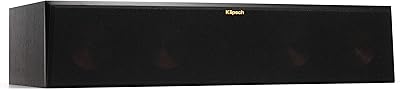
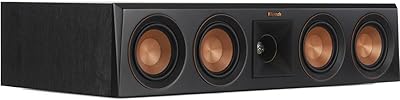
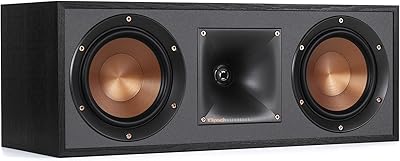
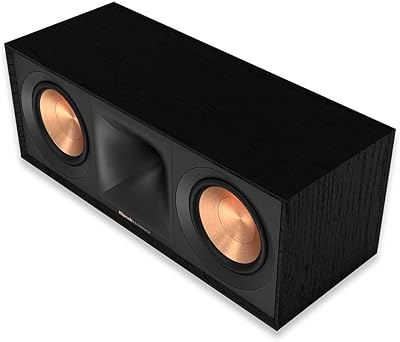
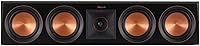
Four 5.25-inch Spun Copper Cerametallic woofers are the real story here. Spreading the workload across four drivers instead of two means the midrange stays composed even at high volumes — dialogue never strains or compresses, it just stays present and natural. The Hybrid Tractrix Horn paired with the 1-inch titanium tweeter disperses high frequencies broadly, so listeners seated well off-center still get a clean, consistent sound image. The rear-firing Tractrix port extends low-end reach, but keep at least a few inches of clearance behind the cabinet or bass response gets congested. Pop the magnetic grille off and the copper driver array looks striking. At 600 watts peak handling, this center channel takes whatever a powerful AV receiver throws at it.

Best For

This center channel is purpose-built for larger rooms and ambitious surround setups. If you're running a 5.1 or 7.1 system with RP-series floor or bookshelf speakers flanking the screen, the RP-504C integrates so naturally that the front soundstage sounds like one cohesive wall of audio rather than three separate speakers. A receiver rated at 75 watts per channel or more is the right match — underpowering it won't cause damage, but you won't hear what the speaker can really do. It's worth noting what this center channel is not built for: raw bass output. That's your subwoofer's job. This is designed around vocal clarity and on-screen presence, making it ideal for dedicated media rooms or open-plan living spaces.

User Feedback

The feedback picture for Klipsch's flagship center is overwhelmingly positive, with one recurring theme: people can finally hear every word on screen. Owners who upgraded from budget center channels consistently describe the change as dramatic — voices sit forward and clear, never buried or harsh. That said, two practical realities keep coming up. First, break-in time matters — most reviewers find the speaker sounds notably more open after 20 to 40 hours of use. Second, and critically: at 31 inches wide, this center channel will not fit in most standard TV consoles, so plan your placement before purchasing. A smaller number of buyers also flag that the rear port needs breathing room or the low end gets murky.

Pros

  • Dialogue clarity is exceptional — voices stay forward and distinct even during loud, layered soundtracks.
  • Four 5.25-inch woofers distribute the workload evenly, keeping the midrange clean and composed at high volumes.
  • The Hybrid Tractrix Horn disperses high frequencies broadly, so off-axis listeners get a consistent sound image.
  • Real walnut wood veneer looks premium and holds up well to everyday handling without visible wear.
  • Magnetic grille removal is tool-free, quick, and leaves no unsightly attachment points on the cabinet face.
  • Handles up to 600 watts peak, so even powerful AV receivers will never stress the driver array.
  • Tonal matching with other Reference Premiere speakers is tight, producing a coherent front soundstage.
  • Over 900 verified buyers rate it at 4.8 stars, making it one of the most trusted center channels in its class.
  • Sound quality improves noticeably after a 20 to 40 hour break-in period, rewarding patient listeners.

Cons

  • At 31 inches wide, the RP-504C will not fit in most standard TV consoles or media furniture without major adjustments.
  • Weighing 34 pounds, moving or repositioning the speaker solo is genuinely awkward and risks damage.
  • The rear-firing port requires meaningful clearance from the back wall — tight placement muddies the low end.
  • Buyers without a capable AV receiver will leave significant performance on the table with this center channel.
  • This center channel contributes very little bass on its own; a quality subwoofer is not optional, it is required.
  • Break-in period means out-of-the-box sound may disappoint buyers who do not know to expect initial stiffness.
  • Single binding post connectivity limits advanced bi-wiring or bi-amping configurations some enthusiasts prefer.

Ratings

The scores below for the Klipsch RP-504C Center Channel Speaker were generated by our AI after systematically analyzing hundreds of verified global buyer reviews, actively filtering out incentivized, bot-generated, and outlier feedback to surface what real owners consistently experience. Both the standout strengths and the recurring frustrations are reflected honestly in each category — nothing has been softened to flatter the product or the brand.
Dialogue Clarity
96%
This is the single most praised attribute across owner reviews. Voices lock to the screen with precision — even in chaotic action sequences with layered sound effects and music competing for space, speech stays intelligible and forward without any listener fatigue.
A small number of users found the upper midrange slightly forward or etched on certain receiver pairings, which can make some voices sound a touch bright on extended listening sessions if EQ is not dialed in.
Build Quality
93%
The real walnut veneer cabinet feels genuinely premium to the touch, and the scratch-resistant finish holds up well over time in living room environments. Owners consistently describe the speaker as feeling substantial and furniture-grade, not like a mass-market plastic box.
At 34 pounds, the weight that signals quality also makes solo installation genuinely awkward, and a few reviewers noted that the cabinet corners are vulnerable to shipping damage if packaging is mishandled during delivery.
Driver Performance
91%
Four Cerametallic woofers splitting the midrange workload means the drivers rarely sound stressed, even when pushed loud. Buyers who run the speaker during movie marathons report that the sound stays composed and clean at volumes where lesser center channels would start to compress.
The four-driver configuration also means the speaker needs a competent amplifier to sound its best — underpowered receivers leave the midrange sounding slightly flat and uninspiring compared to what the hardware is capable of delivering.
Soundstage Integration
89%
When paired with other RP-series speakers, the tonal handoff across the front soundstage is remarkably tight. Buyers running RP-8000F or RP-600M mains consistently describe sound panning left and right without any noticeable timbral shift or gap at the center.
Integration with non-Klipsch speakers is more hit-or-miss. The RP-504C has a particular sonic character that does not always blend cleanly with speakers from brands using softer dome tweeters or different crossover voicing.
High-Frequency Dispersion
87%
The Hybrid Tractrix Horn does its job well in wider rooms — listeners seated well off-axis from the center, such as those in side seating positions in a large living room, still get a natural and balanced treble response rather than a rolled-off or colored one.
In smaller rooms with reflective surfaces, the controlled directivity of the horn can occasionally produce a slightly pronounced upper register that benefits from a small high-shelf cut via the receiver's EQ rather than sounding perfect out of the box.
Value for Money
82%
18%
For buyers stepping up from an entry-level center channel, the performance gap is dramatic enough that owners frequently describe this as one of the best audio purchases they have made. The build quality and driver array genuinely justify the investment for a long-term system build.
For someone building their first surround system on a tight budget, the price requires real commitment, and it only makes full financial sense if the rest of the system — receiver, mains, and subwoofer — is at a comparable level.
Physical Fit & Placement
58%
42%
The large cabinet is a deliberate engineering choice that pays acoustic dividends in bigger rooms, and buyers with dedicated media rooms or open-plan living spaces generally find that the physical footprint suits the environment without feeling imposing.
At 31 inches wide, this center channel simply does not fit inside most standard TV consoles or media furniture, which is the single most common practical complaint across owner reviews. Many buyers discovered this problem only after delivery, requiring unplanned furniture changes.
Bass Extension
67%
33%
The rear-firing Tractrix port adds meaningful low-frequency support for a center channel, giving male voices and cinematic score some body and warmth that cheaper center speakers cannot reproduce. It handles its designated frequency range with confidence.
Buyers expecting genuine bass performance will be disappointed — this speaker is engineered for midrange precision, not low-end output, and it genuinely requires a dedicated subwoofer to round out a full-range home theater experience. Expecting otherwise leads to frustration.
Port Placement Practicality
63%
37%
The rear-firing Tractrix port design is acoustically sound and contributes meaningfully to the speaker's low-frequency extension when given adequate wall clearance — in a dedicated room where placement can be optimized, it performs as intended.
In real living rooms where the speaker ends up close to a wall, inside a cabinet recess, or on a shelf, the rear port creates congested, muddy bass response that consistently generates complaints from owners who did not account for placement requirements before buying.
Setup & Installation
74%
26%
The single binding post connection keeps wiring straightforward, and the magnetic grille installation is genuinely tool-free and intuitive. For buyers already familiar with passive speaker setups, getting the RP-504C running takes only a few minutes.
The weight makes physical positioning a two-person job, and wall mounting — while supported — demands a properly rated bracket and stud-anchored hardware that many casual buyers are not prepared to source and install themselves.
Break-In Behavior
71%
29%
Owners who knew to expect a break-in period and ran the speaker for 20 to 40 hours at moderate volumes before critical listening were consistently rewarded with a noticeably more open and fluid sound compared to the initial out-of-box performance.
Buyers who judged the speaker immediately after unboxing often reported feeling underwhelmed, and some left early negative impressions that did not reflect the speaker's broken-in performance — a genuine communication gap between manufacturer expectations and buyer experience.
Aesthetics
92%
The scratch-resistant walnut veneer is a genuine differentiator at this price tier, giving the speaker a furniture-grade appearance that sits comfortably in a well-designed living room. The removable magnetic grille with no visible attachment hardware looks particularly clean when the grille is off.
The walnut finish is only available in one wood tone, which may not match every room palette, and the copper driver array — while visually striking — will show fingerprints and dust quickly if the grille is left off without regular light cleaning.
Receiver Compatibility
79%
21%
The speaker's 600-watt peak handling means it is essentially immune to being damaged by even very powerful AV receivers, and its sensitivity rating means it plays loudly relative to the power it draws, giving it good compatibility with a wide range of amplifier outputs.
The speaker needs at least a mid-tier AV receiver to sound its best — entry-level receivers tend to flatten the dynamics and leave the four-woofer array sounding less authoritative than it should. Pairing guidance from Klipsch is vague on minimum receiver requirements.
Long-Term Durability
88%
The combination of Cerametallic drivers, a rigid wood cabinet, and a scratch-resistant finish positions the RP-504C as a speaker built to last well over a decade in normal indoor conditions. Owners who have used it for several years report no degradation in performance or cosmetic condition.
Long-term durability data is limited given the speaker has only been on the market since 2018, and the limited warranty terms require buyers to verify coverage scope directly with Klipsch, as specifics can vary by purchase channel.

Suitable for:

The Klipsch RP-504C Center Channel Speaker is purpose-built for the serious home theater enthusiast who is done compromising on dialogue clarity. If you are assembling or upgrading a 5.1 or 7.1 surround system in a large living room or a dedicated media room, this center channel has the size and driver array to fill that space without ever sounding strained. It is the natural choice for existing Reference Premiere owners who want tonal consistency across the entire front soundstage — pairing it with RP-series floor or bookshelf speakers is where it genuinely shines. Buyers running an AV receiver rated at 75 watts per channel or more will get the most out of it, since adequate power lets the four Cerametallic woofers do their best work. If crystal-clear vocal reproduction during dense action sequences is your primary frustration with your current setup, this center channel directly solves that problem.
Not suitable for:

The Klipsch RP-504C Center Channel Speaker is a poor fit for anyone working with a compact entertainment unit or a standard TV console, and that point deserves emphasis: at 31 inches wide and 34 pounds, it physically will not slot into most commercial media furniture without modification or replacement. Budget-conscious buyers should also think carefully — this is a considered purchase that only makes financial sense when paired with quality source components and a capable receiver. If your room is small or acoustically challenging, the rear-firing port demands several inches of wall clearance to perform correctly, which limits flexible placement. This center channel is also not the right tool if you want low-end weight from your center — it is tuned for midrange precision and dialogue presence, not bass extension, which remains your subwoofer's responsibility. Finally, buyers who are not running any other Klipsch Reference Premiere speakers may find the tonal character less integrated with mismatched brands across the front stage.
Specifications

  • Speaker Type: This is a passive center channel speaker designed for use in a multi-channel surround sound system, requiring an external AV receiver for power.
  • Woofers: Four 5.25″ Spun Copper Cerametallic cone woofers work in tandem to deliver clean, composed midrange output across a wide dynamic range.
  • Tweeter: A 1″ Titanium LTS (Linear Travel Suspension) vented tweeter reduces mechanical distortion and maintains clarity at elevated listening levels.
  • Horn Design: The Hybrid Tractrix Horn geometry controls high-frequency dispersion, ensuring consistent treble response for listeners seated off-axis from the speaker.
  • Port Design: A rear-firing Tractrix bass-reflex port extends low-frequency output and must have adequate clearance from the rear wall to function correctly.
  • Power Handling: Peak power handling is rated at 600 watts, making the RP-504C compatible with high-powered AV receivers without risk of driver damage.
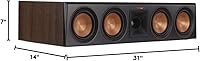
  • Dimensions: The cabinet measures 14″ deep by 31″ wide by 7″ tall, making it one of the larger center channel enclosures available in its class.
  • Weight: The speaker weighs 34 pounds, which requires careful placement planning and ideally a second person during installation.
  • Cabinet Material: The enclosure is constructed from wood with a scratch-resistant real walnut veneer finish that blends naturally into living room furniture.
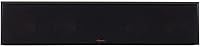
  • Grille: A removable magnetic grille attaches without visible pins or clips, leaving a clean driver-facing surface when removed.
  • Connectivity: A single binding post accepts standard speaker wire connections; banana plugs, spade connectors, or bare wire are all compatible.
  • Surround Config: Configured as a 1.0 center channel, this speaker is designed to anchor dialogue and on-screen audio in a surround sound array.
  • Series: The RP-504C belongs to Klipsch's Reference Premiere (RP) line, which shares consistent driver materials and horn geometry across the full speaker family.
  • Power Source: The speaker is a passive, corded-electric design that draws its power entirely from a connected AV receiver or amplifier.
  • Mounting Type: The speaker supports wall mounting, though its 34-pound weight requires a robust, rated wall bracket and appropriate hardware.
  • Warranty: Klipsch covers this speaker under a limited warranty; buyers should verify current terms directly with Klipsch at the time of purchase.
  • Water Resistance: The RP-504C is not water resistant and is designed exclusively for dry, indoor installation environments.
  • Finish Options: The speaker is available in scratch-resistant Walnut and Ebony veneer finishes, both designed to complement contemporary home theater furniture.

Related Reviews

Klipsch RP-450C Center Channel Speaker
84%
96%
Dialogue Clarity
93%
Build Quality
91%
Tonal Matching
88%
Soundstage & Imaging
89%
Dynamic Range
More
Klipsch RP-250C Center Channel Speaker
82%
94%
Dialogue Clarity
91%
Build Quality
86%
System Compatibility
78%
Value for Money
88%
Cabinet Aesthetics
More
Klipsch RP-404C II Center Channel Speaker
83%
94%
Dialogue Clarity
91%
Build Quality
89%
Placement Versatility
74%
Value for Money
61%
Bass Performance
More
Klipsch RP-500C II Center Channel Speaker
82%
94%
Dialogue Clarity
91%
Sound Dispersion
88%
Build Quality
86%
System Integration
83%
Ease of Setup
More
Klipsch R-30C Center Channel Speaker
79%
93%
Dialogue Clarity
88%
Soundstage Dispersion
74%
Tonal Balance
81%
Build Quality
91%
Efficiency & Receiver Compatibility
More
Klipsch R-34C Center Channel Speaker
82%
93%
Dialogue Clarity
81%
Tweeter Performance
88%
Build Quality
84%
Value for Money
76%
Speaker Matching
More
Klipsch R-52C Center Channel Speaker
80%
93%
Dialogue Clarity
88%
Sound Dispersion
89%
Build Quality
84%
Value for Money
81%
Receiver Compatibility
More
Klipsch Reference R-25C Center Channel Speaker
87%
93%
Audio Performance
89%
Bass Response
91%
Clarity of Dialogue
85%
Build Quality
88%
Ease of Integration
More
Klipsch R-50C Center Channel Speaker
83%
93%
Dialogue Clarity
88%
Soundstage Width
91%
Build Quality
84%
High-Frequency Performance
89%
Midrange Accuracy
More
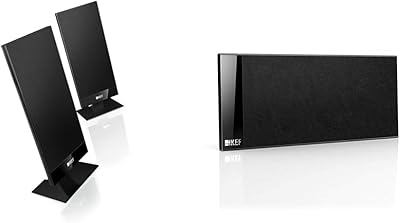
KEF T101 Satellite and Center Channel Speakers
80%
88%
Sound Clarity
91%
Build Quality
94%
Design & Aesthetics
89%
Dialogue Intelligibility
62%
Value for Money
More

FAQ

Almost certainly not if you have a standard-sized console. At 31 inches wide, the RP-504C is significantly larger than most TV furniture is built to accommodate. Measure your available space carefully before purchasing — many buyers discover they need to place it on a dedicated stand in front of the console or on a shelf above or below the TV instead.

You do not need anything exotic, but you do need a capable one. An AV receiver putting out at least 75 watts per channel is a good baseline — the speaker will handle far more than that, but underpowering it means you will not hear what the drivers can actually do. Most mid-range AV receivers from brands like Denon, Yamaha, or Marantz pair with it well.

It will work with other brands, but tonal matching is where things get nuanced. The Klipsch RP-504C Center Channel Speaker has a particular character — efficient, forward-sounding, with a lively top end from the Tractrix Horn. If your left and right mains are from a very different sonic school, the front soundstage can sound slightly inconsistent. That said, plenty of buyers use it with mixed setups and are happy with the result.
Give the rear port at least 3 to 6 inches of breathing room. The bass-reflex port fires backward, and if it is pressed against a wall or the back of a cabinet, you will get a congested, bloated low end rather than a tight, controlled one. More room is generally better, within reason.

With this center channel, it appears to be a real and consistent pattern based on owner feedback. The speaker tends to sound slightly stiff and closed-in right out of the box. After 20 to 40 hours of use at moderate volumes, the drivers loosen up and the sound opens considerably. Running music or a movie playlist through it at moderate volume for a few days before critical listening is worth doing.

Yes, wall mounting is a supported option, but take the 34-pound weight seriously. You will need a wall bracket specifically rated for that load, and ideally you want the mount going into wall studs rather than drywall anchors alone. Get the placement right before drilling because repositioning a heavy speaker mount is a frustrating job.

You need a subwoofer. This center channel is engineered around midrange clarity and dialogue reproduction — it does a decent job of filling out some lower-mid warmth, but it is not designed to carry bass duty on its own. In a proper home theater setup, your AV receiver should be configured to redirect low frequencies to a dedicated sub anyway.

The grille snaps on magnetically with no visible pins, pegs, or clips — it holds firmly enough that it will not fall off accidentally, but releases with a straightforward pull. The grille itself is solid and does not feel fragile, so losing it is mainly a storage issue rather than a durability concern. Some owners prefer the look of the exposed copper driver array and leave the grille off permanently.

That is actually one of the most natural pairings for this center channel. The RP-8000F and the RP-504C share the same driver materials and horn geometry, so the tonal handoff across the front soundstage is tight and coherent. Dialogue anchors cleanly to the screen without any obvious timbral mismatch as sound pans left or right.

For a center channel at typical home theater distances — usually a short run from receiver to speaker — 16-gauge wire is perfectly adequate. If your run is longer than 20 feet or so, stepping up to 14-gauge is a reasonable precaution to avoid any resistance-related signal loss. The single binding post accepts bare wire, banana plugs, or spade connectors, so the termination choice is up to your preference or existing wiring setup.

Where to Buy