Overview

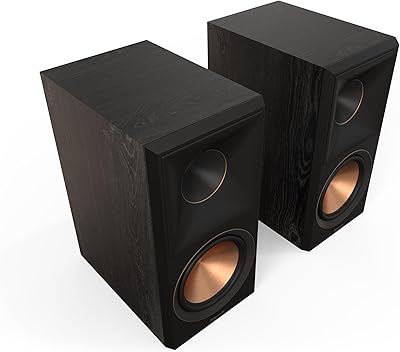
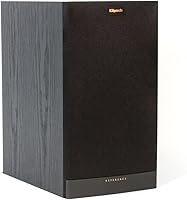
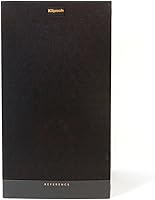
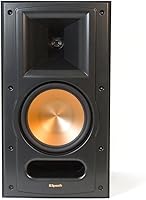
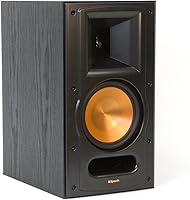
The Klipsch RB-61 II has been a steady presence in the Reference Series lineup for good reason — it occupies a mid-range position where real acoustic engineering starts to show. These are passive speakers, so new buyers should know upfront that a separate amplifier or AV receiver is required to run them. The cabinet wears a wood-grain vinyl finish that looks clean and understated without trying too hard. Sized for medium rooms, the RB-61 II pair draws on Klipsch's long tradition of horn-loaded design, which directly shapes how efficiently they convert power into sound. That heritage is not just marketing — it has a measurable effect on real-world performance.

Features & Benefits

The 6.5-inch copper-spun IMG woofer gives these Klipsch bookshelves a grounded, controlled low end — not a subwoofer replacement, but solid down to around 45Hz for most listening situations. Up top, the Tractrix horn tweeter is the real differentiator: it distributes high frequencies more evenly across the room while reducing the harshness that cheaper tweeters often produce during long sessions. With a 98dB sensitivity rating, they get genuinely loud without demanding much from your amplifier. The 8-ohm impedance plays nicely with a wide range of receivers, and the 400W power handling leaves plenty of headroom. One practical note: rear-ported cabinets benefit from a few inches of breathing room away from the wall.

Best For

These Klipsch bookshelves hit a sweet spot for a particular kind of buyer. Music listeners who want detail and dynamics from a compact passive setup will find them a strong fit, especially in rooms between roughly 150 and 300 square feet. Home theater users will appreciate them as capable front or surround channels when matched with a solid AV receiver. For anyone stepping up from budget-tier bookshelves, the improvement in imaging and vocal clarity is noticeable. Bass-heavy genres like hip-hop or EDM may benefit from pairing with a subwoofer, but for rock, jazz, spoken word, and film dialogue, this Reference Series speaker holds its own without assistance.

User Feedback

Owners consistently praise the RB-61 II pair for producing loud, clear output at modest receiver volumes, which aligns directly with that high sensitivity rating. The horn tweeter earns particular attention for how cleanly it handles vocals and acoustic instruments — a recurring theme across long-term reviews. On the critical side, a notable share of buyers flag the sound signature as leaning bright, which is worth factoring in before purchasing; some find it refreshing, others find it tiring over extended sessions. Cabinet finish and build quality generally earn solid marks. Experienced buyers often emphasize that amplifier quality matters here — a weak receiver will hold these back noticeably. Multi-year owners report no driver issues, which is a good sign for longevity.

Pros

  • The 98dB sensitivity rating means loud, clear output without taxing even a mid-range receiver.
  • Vocal reproduction and instrument separation are genuinely impressive for the price tier.
  • The Tractrix horn tweeter reduces the harshness that makes cheap tweeters unbearable over time.
  • These Klipsch bookshelves work with virtually any standard 8-ohm-compatible amplifier or AV receiver.
  • Frequency response reaching down to 45Hz handles most music genres without requiring a subwoofer.
  • Multi-year owners report no driver degradation or cabinet issues — durability is well-documented, not assumed.
  • The imaging and soundstage width make stereo music listening genuinely engaging, not just functional.
  • Cabinet construction feels solid and rattle-free, even at higher playback volumes.
  • Power handling headroom at 400W means the speakers are unlikely to be a bottleneck in any realistic home setup.
  • At the asking price, few passive bookshelf options at this size match the overall performance package.

Cons

  • The bright sound signature can cause listening fatigue during long sessions with certain recordings or streaming sources.
  • No amplifier is included — first-time passive speaker buyers often underestimate the added cost of a capable receiver.
  • Rear-ported cabinets require deliberate placement; flush against a bookshelf or wall, bass quality suffers noticeably.
  • A weak or underpowered amplifier will hold these speakers back in ways that feel punishing rather than neutral.
  • The wood-grain vinyl finish looks clean but does not hold up visually against genuine wood veneer alternatives at similar price points.
  • Bass-heavy music genres expose the woofer's limits quickly — a subwoofer becomes a near-necessity for those listeners.
  • At 35.3 pounds per speaker, moving or repositioning these is less casual than lighter compact alternatives.
  • There is no wireless or Bluetooth option, which is a hard stop for buyers expecting modern connectivity.
  • Off-axis listening performance drops more noticeably than some competing designs with wider dispersion patterns.
  • Sensitivity to source quality is high — low-bitrate streaming or compressed audio sounds more obviously flawed through these speakers.

Ratings

The Klipsch RB-61 II scores here reflect an AI-driven analysis of verified buyer reviews from global markets, with spam, bot activity, and incentivized feedback actively filtered out before scoring. Ratings are built around what real owners reported after weeks and months of daily use — not just first impressions. Both the genuine strengths and the recurring frustrations are factored in equally, so the numbers tell the full story.

Sound Clarity
91%
Owners consistently single out vocal reproduction and instrument separation as highlights, particularly when listening to acoustic recordings or film dialogue at moderate to high volumes. The horn-loaded tweeter design pays off in practice — detail retrieval at the high end is noticeably sharper than competing bookshelves in the same price tier.
The clarity comes with a trade-off: the top end can occasionally feel forward or sharp with poorly mastered recordings or low-bitrate streaming. A handful of listeners with sensitivity to brightness found fatigue creeping in during multi-hour sessions.
Sensitivity & Efficiency
94%
At 98dB sensitivity, these speakers get genuinely loud with modest amplifier power — owners running mid-range AV receivers report filling medium rooms without pushing the volume past halfway. This is one of the most frequently praised real-world advantages, especially for buyers who own entry-level or mid-tier receivers.
The high sensitivity can occasionally expose noise floors or hiss in lower-quality amplifiers, which a small percentage of users noticed when the room was quiet. It is a minor issue but worth flagging for anyone pairing with budget electronics.
Bass Performance
72%
28%
For a bookshelf speaker without a subwoofer, the low-end extension down to around 45Hz handles most music genres competently. Rock, jazz, and cinematic soundtracks all come across with decent body and punch, particularly when the speakers are positioned with adequate clearance from rear walls.
Bass-heavy genres like hip-hop and EDM expose the limits of what a 6.5-inch woofer can do without subwoofer support. A meaningful share of owners added a subwoofer to round out the low end, treating it as a practical necessity rather than an optional upgrade.
Sound Staging & Imaging
86%
The Tractrix horn disperses high frequencies broadly and evenly, which translates into a wider listening sweet spot than many competing designs. Owners setting these up as stereo pairs for music report convincing spatial imaging — instruments occupy distinct positions rather than blurring together in the center.
Some users noted the soundstage narrows slightly when listening off-axis at steeper angles, particularly in unconventional room layouts. It remains above average for the category but audiophiles with large or asymmetric listening spaces may want to audition before committing.
Build Quality
83%
The wood-grain vinyl cabinet feels solid and well-assembled out of the box, with no rattles, loose grilles, or flimsy binding posts. Long-term owners spanning three to five years report no degradation in the cabinet or driver performance, which builds real confidence in the construction choices.
The vinyl finish, while clean and understated, does not look or feel as premium as genuine wood veneer at comparable price points from some competitors. A small number of buyers found the aesthetic dated, though this is largely a matter of personal preference.
Value for Money
88%
Relative to what the RB-61 II pair delivers in sensitivity, clarity, and long-term reliability, most owners feel the asking price is well-justified — particularly those upgrading from budget bookshelf options where the performance gap is immediately audible. The durability track record strengthens the case over time.
Buyers who factor in the cost of a quality amplifier or AV receiver alongside the speakers may find the total system investment higher than initially anticipated. The speakers themselves represent good value, but the passive design means the upfront spend does not stop at the speaker price.
Amplifier Compatibility
79%
21%
The standard 8-ohm impedance means these bookshelves work with virtually any home theater or stereo receiver on the market without creating load issues. For buyers who already own a capable mid-range amp, setup is straightforward and the pairing options are broad.
While compatible with most equipment, these speakers genuinely reveal differences in amplifier quality. Users who paired them with underpowered or entry-level amplifiers reported a noticeably flatter, less dynamic result — the speakers essentially benchmark whatever is driving them.
Tweeter Performance
92%
The aluminum Tractrix horn tweeter is frequently called out by name in owner reviews, which is unusual — most buyers do not discuss component-level details unless something genuinely stands out. Vocalists, acoustic guitars, and string instruments in particular benefit from how clean and extended the high-frequency reproduction sounds.
For listeners who prefer a warmer, rolled-off top end — the kind common in certain British-designed speakers — the tweeter can feel overly present. It is not a defect, but a clear tonal preference consideration that splits buyer opinion in a predictable way.
Low-Frequency Extension
69%
31%
Reaching down to approximately 45Hz, the RB-61 II pair handles the lower midrange and upper bass with more authority than many bookshelf competitors at this size. Orchestral music, rock drums, and cinematic bass effects all register with reasonable depth in a properly set-up room.
Sub-50Hz content — the foundation of electronic music or action film soundtracks — is simply not in this speaker's wheelhouse without a dedicated subwoofer. Owners who expected full-range bass without a sub reported disappointment, while those who planned for a sub from the start had no complaints.
Room Placement Flexibility
67%
33%
Shelf mounting is straightforward, and the speakers integrate into most room setups without demanding elaborate positioning. In rooms where optimal placement is achievable, owners report the imaging and tonal balance fall into place with minimal effort.
The rear port requires breathing room away from walls and surfaces to perform as intended — placing them flush against a bookshelf or close to a rear wall introduces bass muddiness that several reviewers specifically mentioned. This limits flexibility in tighter or more furnished spaces.
Listening Fatigue
74%
26%
Many owners specifically report hours-long listening sessions with no discomfort, crediting the horn design for smoothing out high-frequency harshness that cheaper tweeters struggle with. For regular music or film use at normal volumes, fatigue is not a widespread complaint.
Listeners who run these at high volumes for extended periods, or those who are particularly sensitive to bright sound signatures, do report some ear fatigue. It comes up more often in music listening contexts than home theater use, and is closely tied to the source material and volume level.
Cabinet Resonance & Coloration
81%
19%
The enclosure is well-braced and adds minimal resonant coloration to the sound at typical listening volumes. Long-term owners note that the cabinet does not develop rattles or buzzes over time, which speaks to the structural integrity of the build.
At very high volume levels, a small number of owners detected mild cabinet resonance, though this appears to be the exception rather than the rule. For most use cases, the enclosure stays acoustically neutral and does not draw attention to itself.
Ease of Setup
63%
37%
For buyers who already own a compatible amplifier or receiver, physical setup is uncomplicated — binding posts accept banana plugs and bare wire cleanly, and the speakers are intuitive to position on a shelf or stand. No configuration is required beyond making the connections.
New buyers unfamiliar with passive audio setups consistently report confusion about why the speakers do not simply plug into a wall or a device directly. The learning curve around sourcing a compatible amplifier adds friction that powered speaker alternatives avoid entirely.
Long-Term Durability
89%
Multi-year owner reviews are notably positive — drivers hold their performance, cabinets stay solid, and the overall sound character does not drift over time. For a speaker that has been in production since 2010, the durability track record is well-established and not based on speculation.
Some minor cosmetic wear to the vinyl finish appears in older units over years of handling, though this does not affect performance. There are no widespread reports of driver failure or component issues, making this more of an aesthetic observation than a functional concern.

Suitable for:

The Klipsch RB-61 II is a strong match for anyone who already owns — or is ready to invest in — a decent stereo amplifier or AV receiver and wants a meaningful upgrade over entry-level bookshelf speakers. Music listeners who spend real time with acoustic recordings, jazz, rock, or film soundtracks will notice the difference in vocal clarity and high-frequency detail almost immediately. Home theater enthusiasts looking for capable front or surround channels will find the RB-61 II pair punches well above its footprint, particularly in rooms between roughly 150 and 300 square feet where the 98dB sensitivity means the speakers can genuinely fill the space without strain. Buyers who have grown frustrated with the compressed, congested sound of cheaper bookshelves and want something with actual dynamic range will find this a convincing step up. Long-term owners back up the value case too — these speakers hold their performance over years of regular use, which makes the investment easier to justify.

Not suitable for:

The Klipsch RB-61 II is not the right choice for buyers expecting a complete, ready-to-use audio solution straight out of the box — these are passive speakers that require a separate amplifier or AV receiver to function at all, and that additional investment is real. Listeners who favor a warm, rounded, or bass-forward sound signature are likely to find the RB-61 II pair's bright tonal character a persistent irritant rather than an occasional quirk, no matter how well-reviewed the tweeter is. Anyone building a system around bass-heavy music genres — electronic, hip-hop, or heavy metal — should budget for a subwoofer from the start, because the 6.5-inch woofer alone will leave those genres feeling thin and unsatisfying. Buyers in very small rooms or apartment setups where placement options are limited may also struggle with the rear-ported cabinet, which needs clearance from walls to avoid a muddy low end. Finally, anyone expecting powered-speaker convenience or Bluetooth connectivity will need to look elsewhere entirely — this Reference Series speaker is a straightforward passive design with no wireless capability whatsoever.

Specifications

  • Speaker Type: Passive bookshelf speaker requiring an external amplifier or AV receiver to operate.
  • Woofer: 6.5-inch copper-spun IMG (Injection Molded Graphite) dynamic driver for low-frequency reproduction.
  • Tweeter: Aluminum diaphragm Tractrix horn-loaded tweeter designed to reduce distortion and disperse high frequencies evenly.
  • Sensitivity: Rated at 98dB at 2.83V/1m, making these among the most efficient speakers in their class.
  • Power Handling: Continuous power handling of 100W with a maximum peak rating of 400W.
  • Frequency Response: Rated frequency response spans 45Hz to 24kHz, covering most music and home theater content without a subwoofer.
  • Impedance: Nominal impedance of 8 ohms, compatible with the vast majority of consumer AV receivers and stereo amplifiers.
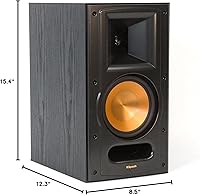
  • Dimensions: Each cabinet measures 12.3″ deep, 8.5″ wide, and 15.4″ tall.
  • Weight: Each speaker weighs 35.3 pounds, making the pair substantial to handle and position.
  • Cabinet Material: Enclosure is constructed with an MDF core wrapped in a wood-grain vinyl finish.
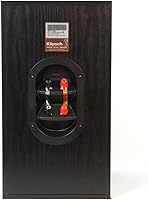
  • Port Design: Rear-ported bass reflex enclosure that benefits from at least a few inches of clearance from rear walls.
  • Connectivity: Wired passive connection only via five-way binding posts accepting banana plugs, spade connectors, or bare wire.
  • Mounting Type: Designed for shelf or stand placement; no integrated wall-mount hardware is included.
  • Audio Driver Size: Primary audio driver measures 6.5 inches in diameter across both woofer and tweeter horn mouth.
  • Series: Part of the Klipsch Reference Series, a long-running lineup positioned at the mid-range of Klipsch's speaker portfolio.
  • Wireless: No wireless or Bluetooth connectivity of any kind; these are strictly wired passive speakers.
  • Recommended Use: Optimized for music listening and movie playback in medium-sized rooms of roughly 150 to 300 square feet.
  • Warranty: Covered by a Klipsch limited warranty; buyers should confirm current warranty terms directly with Klipsch or their retailer.
  • Model Number: Official item model number is KL1011852, with ASIN B0040LRI96 on Amazon.
  • Availability: First made available in August 2010 and has not been discontinued by the manufacturer as of the latest available data.

Related Reviews
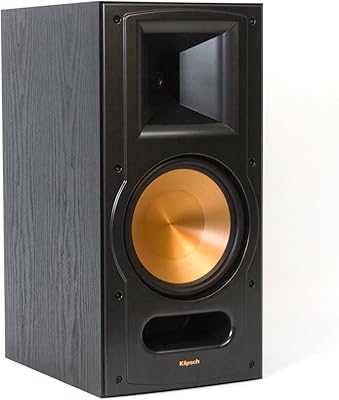
Klipsch RB-81 II
Klipsch RB-81 II
80%
93%
Sound Dynamics & Punch
81%
High-Frequency Clarity
84%
Bass Performance
96%
Sensitivity & Amplifier Compatibility
78%
Build Quality
More
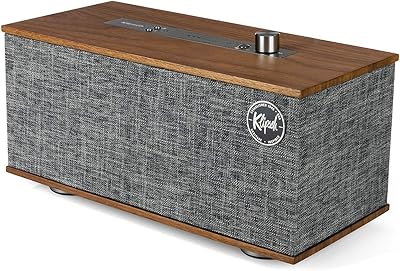
Klipsch The One II
Klipsch The One II
76%
83%
Sound Quality
91%
Build Quality
94%
Design & Aesthetics
61%
Connectivity & Bluetooth Stability
67%
Chromecast & Multi-Room Integration
More
Klipsch R-3650-W II In-Wall Speaker
86%
89%
Sound Quality
87%
Bass Response
91%
Ease of Installation
84%
Design & Aesthetics
90%
Build Quality
More
Klipsch CDT-5650-C II In-Ceiling Speaker
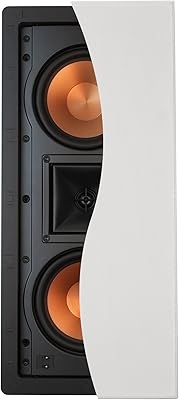
84%
91%
Sound Quality
87%
Ease of Installation
73%
Bass Performance
89%
Build Quality
94%
Discreet Appearance
More
Klipsch R-5800-W II In-Wall Speakers
87%
91%
Sound Quality
89%
Ease of Installation
94%
Build Quality
85%
Customization Options (Sound Tuning)
88%
Acoustics/Clarity
More
Klipsch R-5502-W II In-Wall Speaker
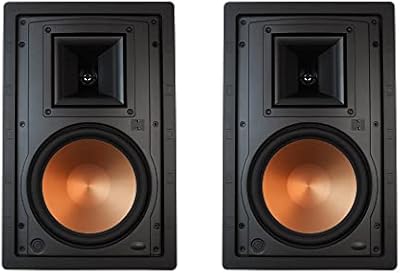
83%
91%
Sound Quality
78%
Ease of Installation
88%
Design and Aesthetics
85%
Build Quality
89%
Power Handling
More
Klipsch R-5650-S II In-Wall Speaker
88%
92%
Sound Quality
88%
Ease of Installation
89%
Bass Performance
91%
Directional Sound Accuracy
85%
Build Quality
More
Klipsch RP-600M II
Klipsch RP-600M II
80%
91%
Sound Quality
88%
Treble & High-Frequency Detail
83%
Bass Performance
94%
Sensitivity & Efficiency
79%
Midrange Clarity
More
Klipsch CDT-5800-C II In-Ceiling Speaker (Pair)
85%
92%
Sound Clarity (Mid & High Frequencies)
88%
Ease of Installation
72%
Bass Performance
90%
Design & Aesthetics
89%
Build Quality
More
Klipsch Reference Premiere RP-8000F II Floorstanding Speakers
87%
94%
Sound Performance
92%
Bass Quality
91%
Clarity & Detail
89%
Build Quality
85%
Ease of Setup
More

FAQ

You will need a separate amplifier or AV receiver — these are passive speakers with no built-in amplification. Without an external amp, they simply will not produce any sound. If you already own a receiver with speaker outputs, you are ready to go; if not, factor that into your budget before purchasing.

Any AV receiver or stereo amplifier with an 8-ohm speaker output will work. Given the 98dB sensitivity rating, you do not need a particularly powerful amplifier — even a 50 to 80 watt per channel receiver will drive them confidently in a medium-sized room. That said, the speakers do reveal differences in amplifier quality, so a better amp will produce noticeably better results.

They do a solid job for most genres, reaching down to around 45Hz, but if your listening diet leans heavily toward hip-hop, EDM, or electronic music, you will likely feel something is missing without a dedicated subwoofer. For rock, jazz, classical, and general movie watching, most owners find the bass performance more than adequate on its own.

It depends entirely on your listening preferences. The horn tweeter produces a detailed, forward high end that some listeners find crisp and exciting, while others with sensitivity to brightness find it tiring over long sessions. If you tend to prefer warmer, more laid-back speakers, it is a genuine consideration. Pairing them with a warmer-sounding amplifier can help balance things out.

You can, but it is not ideal. The rear port needs some breathing room — at least 3 to 4 inches from the back wall — or the low end starts to sound bloated and poorly defined. If your only option is flush-against-a-wall placement, you may want to experiment with some acoustic damping material in the port or look at a front-ported alternative.

They work well for both, honestly. As front left and right channels in a home theater system, they handle dialogue, music, and cinematic soundtracks with real authority. Many owners use the RB-61 II pair specifically as part of a larger Klipsch Reference surround setup, and they integrate naturally given the consistent tonal character across the Reference lineup.

The five-way binding posts accept banana plugs, spade connectors, pin connectors, and bare wire, so you have flexibility on the connection type. Banana plugs tend to be the most convenient for regular setup and repositioning, but bare wire twisted and inserted works fine if you are keeping the setup permanent.

Long-term owners are generally positive on durability — multi-year reviews spanning three to five years consistently report no driver degradation or cabinet issues. The build quality is considered solid for the price tier, and there are no widespread reports of component failure in the ownership community.

Rooms in the range of roughly 150 to 300 square feet tend to be the sweet spot. The high sensitivity means they fill that space with relative ease, but they can also work in slightly larger rooms if you have a capable amplifier behind them. Very small rooms may find the projection a bit overwhelming at moderate to high volumes.

It depends on your decor. The finish is clean and conservative rather than flashy, and it blends reasonably well with most traditional or mid-century setups. In a very modern or minimalist room, some buyers find the vinyl wood grain feels a bit dated compared to gloss or matte cabinet finishes. It is worth seeing in person if aesthetics matter a great deal to you.