Overview

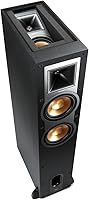
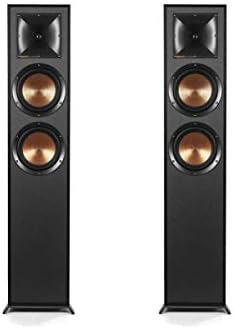
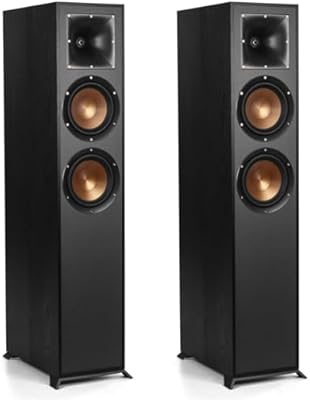
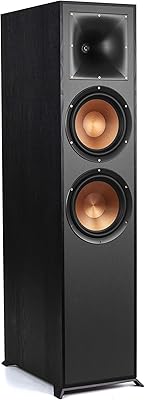
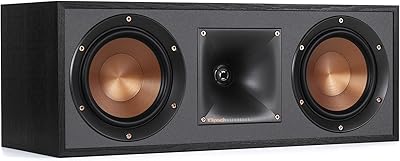
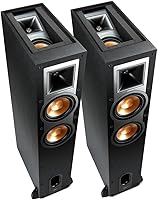
The Klipsch R-26FA Floorstanding Speakers occupy a compelling spot in the mid-range tower market — tall, confident cabinets built from MDF with copper-spun woofer cones and that instantly recognizable Tractrix horn up front. One thing worth clarifying right away: these are passive speakers, so you'll need a separate AV receiver or amplifier to drive them. Not plug-and-play. What makes the R-26FA pair genuinely interesting is the built-in upward-firing driver that handles Dolby Atmos height effects without requiring dedicated ceiling speakers — a real convenience for most living rooms. They also work well as stereo music speakers, not just home theater workhorses.
Features & Benefits

The engineering inside these Klipsch towers is where things get interesting. A 1-inch aluminum compression tweeter mounted behind a 90x90-degree Tractrix horn spreads high frequencies evenly across a wide listening area — you won't need to sit in a narrow sweet spot to get detailed, clear treble. The dual 6.5-inch copper-spun woofers handle the low-to-mid range with punch, and the front-firing bass port means you can place them closer to a wall without sacrificing too much low-end performance. Power handling sits at 100W continuous and 400W peak at 8 ohms, and the high sensitivity rating means even a mid-grade receiver can drive them convincingly. Dual binding posts round things out for anyone interested in bi-wiring.

Best For

These floorstanding speakers make the most sense if you're building or upgrading a Dolby Atmos home theater and want to keep the speaker count manageable. They're best suited to mid-sized or large rooms — small spaces may find them overpowering. If you're stepping up from a soundbar or a pair of bookshelf speakers and want to make a genuine leap in audio performance, this is a logical next move. Worth knowing upfront: the Klipsch sound signature leans energetic and forward, with real presence in the highs. If you prefer a warmer, laid-back presentation, this house sound may not suit your taste.

User Feedback

Across hundreds of owner reviews, a few clear patterns emerge. The most consistent praise centers on loudness efficiency — owners are repeatedly surprised by how well the R-26FA pair performs with modest receivers, without needing to push the volume hard. Bass earns solid marks in medium-sized rooms, though quite a few reviewers mention a subwoofer still helps for genuinely deep low-end extension. The built-in elevation driver divides opinion: casual home theater users find it a convenient solution, while more demanding listeners argue it doesn't fully replace proper in-ceiling Atmos speakers. Some note the horn-loaded tweeter can sound bright in reflective rooms, so placement and room treatment matter. Build quality draws consistent approval across the board.

Pros

  • Built-in upward-firing driver adds Dolby Atmos height effects without the hassle of ceiling speaker installation.
  • High sensitivity means the R-26FA pair gets impressively loud even with mid-range AV receivers.
  • Dual 6.5-inch copper-spun woofers deliver punchy, room-filling bass that is strong for this cabinet size.
  • The 90x90-degree Tractrix horn spreads treble evenly, so the listening sweet spot is wide and forgiving.
  • Front-firing bass port gives more flexibility in room placement than rear-ported alternatives.
  • Dual binding posts support bi-wiring or bi-amping for listeners who want to push performance further.
  • Build quality and cosmetic finish are well-regarded at this price tier — these look substantial in a room.
  • Works credibly as both a home theater front channel and a stereo music speaker without compromise.
  • Compatible with a wide range of 8-ohm capable AV receivers, so pairing options are broad.

Cons

  • Requires a separate AV receiver or amplifier — there is no built-in amplification whatsoever.
  • The Tractrix horn can sound bright or fatiguing in rooms with hard, reflective surfaces and no acoustic treatment.
  • The built-in elevation driver is a practical convenience but does not fully replicate the precision of dedicated in-ceiling Atmos speakers.
  • Low-frequency extension has limits — a subwoofer is still advisable for genuinely deep bass reproduction.
  • At nearly 57 pounds for the pair, these floorstanding speakers are cumbersome to move, reposition, or ship if returns become necessary.
  • The energetic Klipsch sound signature is polarizing — listeners who prefer neutral or warm-sounding speakers may find the character exhausting over time.
  • Larger cabinet footprint demands meaningful floor space, making these impractical for smaller rooms or minimalist setups.
  • No wireless connectivity — everything is wired, which may feel limiting for buyers accustomed to modern streaming-integrated speaker systems.

Ratings

Our AI scoring system analyzed verified owner reviews of the Klipsch R-26FA Floorstanding Speakers from across major global markets, actively filtering out incentivized, duplicate, and bot-generated feedback to surface what real buyers actually experience. The scores below reflect a transparent synthesis of both the genuine strengths and the recurring frustrations reported by long-term owners across a range of room types and system configurations. No category has been softened — where trade-offs exist, they are scored accordingly.
Sound Clarity
92%
Owners consistently describe the high-frequency reproduction as exceptionally clean and detailed, particularly for dialogue in movies and acoustic instruments in music. The Tractrix horn pushes treble across a wide area without sounding pinched or narrow, which makes a real difference in larger living rooms with off-axis seating.
A subset of listeners — particularly those coming from warmer-voiced speakers — find the clarity tips into brightness during extended sessions. In rooms with a lot of reflective surfaces like hardwood floors and bare walls, the upper frequencies can become tiring rather than engaging.
Bass Performance
78%
22%
The dual 6.5-inch copper-spun woofers deliver punchy, well-defined bass that fills medium-sized rooms convincingly without a subwoofer. Owners building home theater setups note that action sequences and musical bass lines feel present and physical, which is above average for towers in this size class.
Below roughly 40Hz, these floorstanding speakers start to run out of steam — deep bass extension is limited compared to larger woofer designs. Several reviewers specifically note that pairing with a subwoofer transforms the low-end experience, suggesting the R-26FA pair alone is not a complete solution for bass-critical listening.
Dolby Atmos Height Effects
71%
29%
For casual home theater viewers, the integrated upward-firing elevation driver produces a convincing sense of overhead audio without any ceiling speaker installation — a meaningful convenience in apartments or rental homes where drilling is not an option. Most owners report that rain, ambient effects, and panning overhead sounds are noticeably improved over a flat 5.1 setup.
Audiophiles and dedicated home theater enthusiasts are less impressed — the reflected height channel lacks the pinpoint precision of actual in-ceiling speakers, and rooms with vaulted or textured ceilings get noticeably worse results. This is a practical compromise, and buyers expecting reference-grade Atmos performance will ultimately need to look beyond the built-in driver.
Sensitivity & Efficiency
91%
One of the standout real-world advantages of these Klipsch towers is how little amplifier power they actually need to sound authoritative. Owners running mid-range receivers in the 60-80 watt per channel range report the speakers getting genuinely loud and dynamic without any sense of strain or compression.
High sensitivity is a double-edged trait — a few owners note that background hiss from lower-quality amplifiers becomes audible at low volumes because the speakers are so efficient. Pairing with a noisy or entry-level receiver can expose amplifier weaknesses that more demanding speakers would simply mask.
Build Quality
86%
The MDF cabinet construction feels solid and resonance-free when tapped, and the copper-spun woofer cones give the speakers a distinctive, premium look that owners frequently comment on positively. Grille attachment and overall fit and finish are consistently described as appropriate for the price tier — nothing feels cheap or plasticky.
The MDF enclosure, while acoustically sound, is not particularly distinctive in terms of furniture-grade finish quality — it reads as a utilitarian speaker cabinet rather than a statement piece. A few buyers note minor cosmetic inconsistencies in the veneer wrap at close inspection, though these don't affect performance.
Soundstage & Imaging
83%
The wide 90x90-degree horn dispersion creates a broad, enveloping soundstage that works well in rooms where listeners aren't always seated in a fixed sweet spot. Stereo imaging on music is well-regarded, with instruments and vocals placed convincingly in space rather than smeared across the front wall.
Precise center imaging can feel slightly diffuse at very high volumes, and the forward-firing character of the Klipsch house sound means depth — the sense of space behind the speakers — is less pronounced than with some competing designs. Critical stereo listeners may want to experiment carefully with toe-in angle to optimize focus.
Room Compatibility
69%
31%
The front-firing port design gives owners more flexibility in positioning relative to rear walls than a rear-ported alternative, which is genuinely useful in rooms where speaker placement options are limited. Owners in mid-sized living rooms — roughly 200 to 400 square feet — report excellent results without the speakers feeling overwhelming.
Small rooms are a real problem: the R-26FA pair can pressurize a compact space aggressively, leading to bass buildup and a fatiguing listening experience. Untreated rooms with hard reflective surfaces also amplify the brightness of the horn tweeter, and without some acoustic management, the sound can feel raw rather than refined.
Value for Money
84%
When you factor in that these towers replace both front channel and Atmos height speakers in a single purchase, the value proposition becomes quite strong for buyers assembling a full surround system on a controlled budget. Owners frequently express that the audio performance they get would require spending meaningfully more with competing brands.
The sticker price covers only the speakers — buyers still need to budget for an AV receiver, speaker cables, and potentially a subwoofer to get the most out of these floorstanding speakers, which pushes the total system cost considerably higher. For buyers who don't already own a receiver, the all-in cost is easy to underestimate.
Midrange Reproduction
77%
23%
Vocal reproduction is a genuine strength — dialogue clarity in movies is frequently singled out by owners as one of the first things they noticed after setup, and lead vocals in music sit forward and intelligible in the mix. The handoff between the woofers and the compression tweeter is smooth enough that most listeners won't notice a transition.
The midrange can occasionally feel slightly recessed relative to the prominent treble and punchy bass — a characteristic of the classic Klipsch V-shaped sound signature. Listeners who prioritize midrange warmth and body, particularly for vocal-centric music genres, may find the R-26FA pair slightly thin through the 500Hz to 2kHz range.
Setup & Installation
74%
26%
Wiring up the R-26FA pair to an AV receiver is straightforward for anyone with basic home theater experience — the dual binding posts are clearly labeled and accommodate a variety of connector types including banana plugs and bare wire. Packaging is consistently praised for being robust, with owners reporting no transit damage in the overwhelming majority of cases.
At nearly 57 pounds for the pair, getting the cabinets into position without a second person is awkward and potentially risky for the speaker grilles and driver cones. First-time buyers who have never set up passive speakers are sometimes caught off guard by the need to configure their receiver's speaker output settings correctly before the Atmos elevation channel functions as expected.
High-Frequency Character
73%
27%
The aluminum compression tweeter resolves fine detail in cymbals, string instruments, and ambient sound effects with genuine precision, and many owners coming from budget or mid-fi speakers describe the treble as a revelation. For home theater use specifically, the articulate highs make movie soundtracks feel more cinematic and spatially convincing.
The forwardness of the horn-loaded tweeter is the single most divisive characteristic these Klipsch towers have among real owners — it simply does not suit every listener or every room. Users who have tried to tame the treble through EQ report mixed results, and some conclude that the Klipsch house sound is baked in deeply enough that it requires acoustic treatment rather than electronics to address.
Long-Term Reliability
88%
Klipsch has a strong reputation for driver longevity, and the R-26FA pair carries that tradition — owners who have used the speakers for two or more years report no degradation in driver performance or cabinet integrity. The MDF enclosure shows minimal susceptibility to humidity-related warping in typical indoor environments.
Long-term reliability data specific to the integrated elevation driver is less established than for the main woofers and tweeter, given the relatively recent adoption of built-in Atmos technology in tower speakers. Warranty coverage details should be verified at the time of purchase, as terms can vary between authorized retailers.
Aesthetic & Design
81%
19%
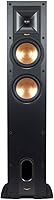
The combination of the black finish, copper-spun woofer cones, and the brushed metal Tractrix horn gives these towers a confident, purposeful look that stands out in a living room without being ostentatious. Owners frequently note that the speakers look more expensive than comparable models at the same price point.
The design is unmistakably utilitarian in its rectangular prism form — there is no curved cabinet or furniture-grade wood veneer option for buyers who want speakers that double as decor. The fabric grille, while functional, is relatively plain and doesn't dramatically improve the aesthetic when fitted.

Suitable for:

The Klipsch R-26FA Floorstanding Speakers are an excellent match for home theater enthusiasts who want to build a capable Dolby Atmos system without mounting speakers in the ceiling. If you have a mid-sized to large living room and already own — or plan to buy — a decent AV receiver, the R-26FA pair slots in as a front channel solution that also handles height effects from a single cabinet, which is a genuine convenience. Music listeners who enjoy an energetic, punchy sound signature will also get a lot out of these towers; they're alive and present in a way that passive speakers at this price tier often aren't. People stepping up from a soundbar or a budget bookshelf setup will find the jump in scale and clarity immediately noticeable. If you're the type who likes the option to bi-wire or experiment with amplification down the road, the dual binding posts leave that door open.
Not suitable for:

The Klipsch R-26FA Floorstanding Speakers are not a good fit for buyers expecting a ready-to-use, self-contained audio solution — these are passive speakers, full stop, and they require a separate AV receiver or stereo amplifier to function at all. Small apartments or rooms where large floor-standing cabinets would be physically overwhelming or acoustically problematic are also a poor match; at over 44 inches tall and weighing nearly 57 pounds for the pair, these are genuinely big speakers that demand real space. Listeners who gravitate toward a warm, smooth, or relaxed sound profile should also look elsewhere — the Klipsch horn-loaded character is bright and forward, and no amount of EQ will turn them into something they're not. Home theater purists who insist on dedicated in-ceiling Atmos speakers will likely find the built-in elevation driver a compromise rather than a solution. Finally, buyers who are not ready to invest in additional components like a subwoofer for extended bass depth or a capable receiver may find the total system cost climbs well beyond the speaker price alone.
Specifications

  • Speaker Type: Freestanding floorstanding tower speakers, sold as a matched pair.
  • Woofers: Each cabinet houses dual 6.5-inch copper-spun IMG (Injection Molded Graphite) woofers for low-to-mid frequency reproduction.
  • Tweeter: A 1-inch aluminum diaphragm compression driver handles high-frequency output with low distortion across the listening range.
  • Horn Design: The tweeter is mounted behind a 90x90-degree Tractrix horn, which disperses treble evenly both horizontally and vertically.
  • Elevation Driver: An integrated upward-firing driver in each cabinet handles Dolby Atmos and DTS:X height channel audio without requiring separate ceiling speakers.
  • Power Handling: Each speaker handles 100W continuous (RMS) and up to 400W peak program power.
  • Impedance: Nominal impedance is 8 ohms, making these towers compatible with the vast majority of consumer AV receivers and stereo amplifiers.
  • Port Design: A front-firing bass reflex port enhances low-frequency output and allows more flexible placement relative to rear walls.
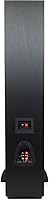
  • Binding Posts: Dual five-way binding posts per speaker support standard single-wire connections, as well as bi-wiring or bi-amping configurations.
  • Enclosure Material: Cabinets are constructed from MDF (Medium Density Fiberboard) with metal accent details for rigidity and resonance control.
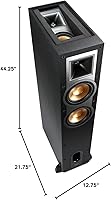
  • Dimensions: Each speaker measures 21.75-inch deep, 44.25-inch tall, and 12.75-inch wide.
  • Weight: The pair weighs approximately 57.2 pounds in total; individual cabinet weight should be confirmed before solo installation.
  • Surround Config: Designed to function within a 5.1.2 or 7.1.2 Dolby Atmos surround sound channel configuration.
  • Connectivity: These are passive speakers with no built-in amplification; they connect to an external receiver or amplifier via speaker wire.
  • Color & Finish: Available in a black finish with a removable fabric grille for a clean, modern appearance in most room decors.
  • Warranty: Klipsch covers these speakers under a limited warranty; buyers should verify current warranty terms directly with Klipsch or the authorized retailer.

Related Reviews

Klipsch R-625FA Dolby Atmos Floorstanding Speaker
83%
93%
Sound Dynamics
74%
Dolby Atmos Height Effect
81%
Bass Performance
91%
Build Quality
86%
Ease of Setup
More
Klipsch Reference R-820F Floorstanding Speaker
86%
92%
Sound Quality
89%
Bass Performance
85%
Build Quality
90%
Ease of Integration
75%
Size & Space Requirements
More
Klipsch R-620F Floorstanding Speakers
80%
91%
Sound Dynamics
72%
Treble Quality
78%
Bass Performance
88%
Value for Money
84%
Build Quality
More
Klipsch R-610F Floorstanding Speakers
80%
91%
Sound Dynamics
78%
High-Frequency Clarity
74%
Bass Performance
93%
Efficiency & Drive
89%
Home Theater Integration
More
Klipsch R-41M
Klipsch R-41M
78%
91%
Sound Clarity & Detail
52%
Bass Performance
86%
Soundstage & Imaging
93%
Sensitivity & Amplifier Compatibility
78%
Build Quality
More
Klipsch R-50M Bookshelf Speakers
82%
91%
Sound Clarity & Detail
74%
Treble Balance
86%
Midrange Performance
63%
Bass Response
93%
Efficiency & Sensitivity
More
Klipsch R-34C Center Channel Speaker
89%
93%
Sound Clarity
89%
Dialogue Reproduction
84%
Bass Performance
90%
Build Quality
88%
Ease of Setup
More
Klipsch R-52C Center Channel Speaker
80%
93%
Dialogue Clarity
88%
Sound Dispersion
89%
Build Quality
84%
Value for Money
81%
Receiver Compatibility
More
Klipsch R-41PM Powered Bookshelf Speakers
80%
88%
Sound Clarity & Detail
67%
Bass Performance
84%
Soundstage & Imaging
91%
Built-in Phono Preamp
86%
Connectivity & Input Range
More
Klipsch R-51M
Klipsch R-51M
82%
93%
Sound Clarity
91%
Dynamic Range
88%
Build Quality
72%
Bass Performance
89%
Value for Money
More

FAQ

You will need a separate AV receiver or stereo amplifier to use the Klipsch R-26FA Floorstanding Speakers — they have no built-in amplification. This is a common point of confusion, so budget for a receiver if you don't already own one. Most 8-ohm compatible receivers on the market will work fine with these towers.
It's a genuine convenience, but it's worth being honest about the trade-off. The upward-firing driver bounces sound off the ceiling to simulate height effects, which works reasonably well in rooms with flat, low-to-medium ceilings. Dedicated in-ceiling speakers will give you more precise overhead imaging, but for most casual home theater setups, the integrated driver is a solid and practical alternative.

Any AV receiver that supports 8-ohm speakers and outputs at least 50–75 watts per channel will drive the R-26FA pair without issue. Given their high sensitivity, they don't demand massive power — brands like Denon, Yamaha, Marantz, and Onkyo all have well-regarded options in various price ranges that pair naturally with these towers.

These Klipsch towers handle bass quite capably on their own, especially in medium-sized rooms. That said, if you want deep, visceral low-end for action movies or bass-heavy music — think below 40Hz — a dedicated subwoofer will fill in what the 6.5-inch woofers can't fully reach. For casual listeners, the towers alone are satisfying; for enthusiasts, pairing with a sub unlocks the full picture.

The Klipsch horn-loaded sound character is energetic and forward — that's by design, not a defect. Listeners who love crisp, detailed, dynamic sound tend to love it. Those who prefer a warmer or softer sound profile may find the treble tiring over long sessions, particularly in rooms with hard floors and bare walls. A bit of soft furnishing or acoustic treatment goes a long way in taming any edge.

The front-firing bass port is a genuine advantage here — unlike rear-ported speakers, the R-26FA pair won't suffer dramatically if placed a foot or so from the back wall. That said, some breathing room still helps with soundstage and bass accuracy. Aim for at least 12 to 18 inches from the rear wall if your space allows.

Absolutely. These floorstanding speakers work well in a two-channel stereo setup driven by a stereo integrated amplifier. The wide dispersion from the Tractrix horn and the punch from the dual woofers make for an engaging music presentation, especially with rock, jazz, and anything with dynamic range. They're not a neutral studio reference, but for enjoyable everyday listening they're very capable.

Bi-wiring means running separate cable runs from your amplifier to the high-frequency and low-frequency binding posts on the speaker, rather than using a single connection for both. The audible difference is debated — some listeners swear by it, others hear no change. The dual binding posts are there if you want to experiment, but single-wire connection performs perfectly well for most people.

Yes, the fabric grilles on these towers are removable. Many owners prefer the look without them, and removing them can slightly improve high-frequency clarity since the grille adds a minor layer of acoustic resistance. Either way, the difference is subtle — it mostly comes down to personal preference and whether you have children or pets that might damage exposed driver cones.

Setup is fairly straightforward if you're comfortable running speaker wire and connecting to a receiver. The trickier part is physical — each cabinet is substantial, so having a second person for positioning is a smart idea. Once in place, toe them in slightly toward your listening position and experiment with distance from the side walls to find the best stereo imaging and bass balance for your specific room.

Where to Buy