Overview

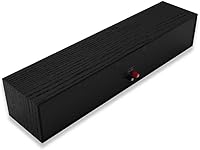
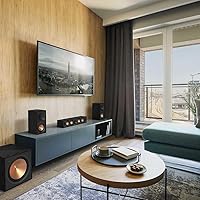
The Klipsch R-30C Center Channel Speaker sits at the heart of Klipsch's refreshed Reference lineup, built around one core idea: making every word in a film or TV show land with real clarity. Horn-loaded acoustics have always been Klipsch's calling card, and this center channel carries that philosophy forward in a wide, shallow cabinet designed to sit comfortably above or below most televisions. At nearly 26 inches wide, though, confirm your TV stand can actually accommodate it before buying. Priced in the mid-to-upper tier of the center channel market, it competes with serious alternatives — but its efficiency and dialogue focus give it a distinct character worth considering.
Features & Benefits

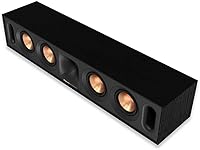
The R-30C's most defining feature is its 90° x 90° Tractrix Horn, which controls how sound spreads across the room — keeping dialogue tightly focused yet audible from the couch to the side chairs without turning harsh. The 1-inch aluminum tweeter uses a Linear Travel Suspension design that keeps distortion low, translating to crisp consonants and subtle background detail you would otherwise miss. Two 3.5-inch spun-copper woofers borrow cone geometry from Klipsch's Reference Premiere series, smoothing out the midrange where voices actually live. A tapered array crossover broadens the horizontal sweet spot considerably, so off-center listeners still hear clean speech. The reinforced MDF cabinet with internal bracing keeps the enclosure from adding unwanted coloration to the sound.

Best For

Klipsch's horn-loaded center is a natural fit for anyone already building around the Reference or Reference Premiere ecosystem — matching towers keep the tonal character consistent across all front channels, which matters more than most people realize. It also shines in rooms with a wide seating arrangement, since the horizontal dispersion keeps everyone following the dialogue, not just the person sitting dead center. If your current center channel has you constantly reaching for the volume remote to catch mumbled lines, the R-30C is a meaningful upgrade. Just keep in mind: with a 78 Hz low-end floor, a subwoofer is not optional — it is assumed. A capable AV receiver helps unlock the full benefit of its 400-watt handling.

User Feedback

Buyers consistently highlight one thing: dialogue intelligibility at everyday listening levels. No cranking the receiver to catch a whispered line — voices simply cut through. Those pairing this center channel with Klipsch R-820F or R-625FA towers tend to be especially satisfied, noting how cohesive the front soundstage feels. On the flip side, listeners coming from warmer-sounding brands sometimes find the high frequencies a touch bright — that is the Klipsch horn character, and it is worth an audition before committing. A few buyers were caught off guard by the physical footprint; at nearly 26 inches, it will not fit every stand. The vinyl wrap earns a passing grade aesthetically but is not quite premium. Efficiency, though, draws consistent praise.

Pros

  • Dialogue clarity is noticeably strong even at moderate listening volumes, reducing the constant need to adjust receiver levels.
  • The Tractrix Horn design delivers wide horizontal dispersion, keeping speech intelligible for listeners seated well off-center.
  • Highly efficient design works well even with mid-powered AV receivers, not just high-end amplification.
  • Tonal synergy with other Klipsch Reference speakers makes it one of the most cohesive center channel upgrades for existing Klipsch owners.
  • Low-distortion aluminum tweeter retrieves fine detail — subtle background sounds and quiet dialogue come through with real clarity.
  • The tapered array crossover meaningfully improves the midrange, where the majority of on-screen voices and instruments actually sit.
  • Magnetic grille attachment and clean horn-edge aesthetic integrate well into modern living room setups without looking industrial.
  • At 13 pounds with a shallow depth profile, the R-30C is manageable to position and does not dominate the space beneath a TV.
  • Reinforced MDF cabinet with internal bracing keeps the enclosure acoustically neutral, avoiding the boxy coloration common in cheaper builds.

Cons

  • At nearly 26 inches wide, this center channel will not physically fit on many standard TV stands or media consoles.
  • A subwoofer is effectively required — the 78 Hz frequency floor leaves a real gap in bass that the speaker cannot cover alone.
  • The horn-loaded sound character can read as bright or forward, which takes adjustment if you are coming from warmer-sounding systems.
  • The textured vinyl wrap finish feels functional rather than premium, which may feel inconsistent with higher-end furniture or cabinetry.
  • Buyers outside the Klipsch ecosystem may struggle to achieve a tonally balanced front soundstage when mixing with other brands.
  • The wired-only RCA connectivity offers no wireless flexibility, which limits placement options in certain room configurations.
  • At this price tier, competing center channels from other reputable brands offer a warmer default tuning that some listeners simply prefer.
  • The speaker is sold as a single unit with no included cables, so budgeting for accessories is necessary from the start.

Ratings

Our AI-generated scores for the Klipsch R-30C Center Channel Speaker are derived from deep analysis of verified global buyer reviews, with spam, bot-submitted, and incentivized feedback actively filtered out before scoring. The ratings reflect a honest, balanced picture of where this center channel genuinely excels and where real buyers have run into friction. Both the standout strengths and the legitimate pain points are factored into every score you see below.
Dialogue Clarity
93%
This is the R-30C's single strongest suit, and buyers notice it almost immediately. Whispered lines, fast-talking characters, and layered dialogue in dense film mixes all come through with uncommon precision — even at the kind of moderate volume levels you would use on a weeknight without disturbing the household.
A small but consistent group of reviewers notes that the clarity can tip into sharpness on poorly mastered streaming content, where compressed audio gets exposed rather than forgiven. It rewards good source material and can be unforgiving with low-quality tracks.
Soundstage Dispersion
88%
The Tractrix Horn design pays real dividends in rooms where seating is spread across a wide arc. Listeners seated several feet off-center still report clear, intelligible dialogue rather than the muffled or recessed center image that budget speakers produce in the same position.
The horizontal dispersion strength comes with a trade-off in vertical projection — buyers who mount their display very high or position the speaker at an unusual vertical angle sometimes report that the sweet spot narrows more than expected from that axis.
Tonal Balance
74%
26%
In the midrange — where voices, instruments, and most on-screen action live — the R-30C performs with genuine accuracy. The spun-copper woofers and crossover tuning work together to keep male and female vocals sounding natural and grounded rather than thin or nasal.
The high-frequency character is the most divisive aspect of this speaker. Klipsch's horn-loaded treble is livelier than many competing center channels, and buyers coming from warmer-sounding brands often describe it as bright or forward — particularly during high-volume action sequences.
Build Quality
81%
19%
The reinforced MDF cabinet feels solid and does not produce the hollow knock you get from cheaper enclosures. The internal bracing is audible in practice — cabinet resonance stays out of the way during demanding passages — and the magnetic grille mechanism feels considered rather than tacked on.
The textured vinyl wrap is functional but comes across as below expectations at this price tier. A few buyers specifically mention that close-up inspection reveals it as a vinyl finish rather than anything more substantial, which can feel inconsistent next to premium TV furniture.
Efficiency & Receiver Compatibility
91%
One of the most frequently praised practical advantages: this center channel does not demand a powerful receiver to sound good. Mid-tier AVRs from mainstream brands drive it confidently, and owners report solid dynamic output without the receiver visibly straining.
There are almost no real complaints here, though a handful of users with very entry-level receivers note that the full dynamic range only becomes apparent after upgrading amplification — meaning the speaker can outpace the receiver rather than the other way around.
Bass Extension
58%
42%
Within its operating range, the two TCP woofers handle upper bass and lower midrange cleanly. For content that lives mostly in the voice band — dialogue-heavy dramas, news, sports commentary — the low-end contribution is adequate and well-integrated.
The 78 Hz frequency floor is a genuine limitation and a recurring point of buyer disappointment for those who did not read the specs carefully. Without a subwoofer, action films and music content feel noticeably thin. This is not a design flaw exactly, but it catches unprepared buyers off guard.
Value for Money
77%
23%
For buyers building or completing a Klipsch Reference system, the R-30C represents a well-targeted investment — the dialogue improvement over budget center channels is audible enough to justify the step-up cost. Paired with matching towers, the front soundstage cohesion alone feels worth the price for serious home theater users.
Considered in isolation, the pricing asks a lot when the cabinet finish is vinyl and the bass requires a separate subwoofer investment on top. Buyers who are not committed Klipsch ecosystem builders may find similarly priced options from competing brands deliver a more complete out-of-the-box experience.
Placement Flexibility
62%
38%
The shallow depth profile keeps the speaker from protruding awkwardly beneath a television, and the tabletop design makes it genuinely easy to position without wall-mount hardware or complex installation. It sits cleanly on most AV furniture when the width fits.
The nearly 26-inch width is a recurring source of buyer frustration, with a notable number of reviews mentioning it would not fit their existing media console. It is not a niche complaint — it comes up consistently enough to be treated as a real purchasing risk for anyone without wide shelving already in place.
Aesthetic Integration
83%
The edge-to-edge horn baffle and hidden fastener design give the R-30C a purposeful, modern appearance that holds up whether the grille is on or off. Buyers in contemporary or minimalist living rooms consistently mention that it does not look out of place beneath a flat-panel display.
The visual appeal is strongly tied to the grille being in good condition — a few long-term owners note that the magnetic grille can accumulate dust in the fabric and is not the easiest to clean thoroughly without risking the material. The vinyl side panels also attract fingerprints more readily than a painted or lacquered finish would.
Setup & Installation
89%
Connecting the R-30C is as straightforward as any passive center channel — standard speaker wire to your receiver's center terminals, position it, and run your AV receiver's auto-calibration routine. Buyers with all levels of home theater experience report a smooth, uncomplicated setup process.
There are no meaningful complaints about setup complexity. The only minor friction point reported is by buyers who underestimated the physical footprint and had to rearrange their entertainment center after delivery, which is more of a pre-purchase research gap than a product issue.
Pairing Synergy
87%
Within the Klipsch Reference family, the tonal match with towers like the R-820F and R-625FA is genuinely strong. Buyers who complete a full Klipsch front stage describe a cohesive, seamless front image where the center channel neither stands out as brighter nor recedes as duller than the mains.
Outside the Klipsch ecosystem, tonal coherence is less reliable. Buyers mixing this center with speakers from Polk, Elac, or similar warmer-voiced brands report that the tonal gap is noticeable enough to distract during critical listening — requiring EQ adjustment to compensate.
Long-Term Listening Comfort
71%
29%
For everyday TV watching — news, sitcoms, dramas, sports — the R-30C is easy to live with at normal volume levels. The dialogue focus means you follow conversations without effort, which reduces listening fatigue in the way that unclear speech actually causes it.
Extended high-volume movie sessions expose the horn character more than casual evening viewing does. Some buyers describe a gradual sense of ear fatigue during two-hour-plus films with aggressive sound design, particularly when the treble is not tamed with receiver EQ or room treatment.
Unboxing & Packaging
79%
21%
The speaker arrives well-protected, with packaging adequate to survive standard shipping handling. Buyers generally note the unboxing experience feels appropriate for the price tier — no flimsiness in the box construction, and the speaker itself shows no transit damage in the vast majority of reported cases.
The included accessories are minimal — just the speaker and grille, with no speaker wire or other extras included. Buyers who are new to passive speakers occasionally express mild surprise at the barebones inclusion list, though this is industry-standard for the category.

Suitable for:

The Klipsch R-30C Center Channel Speaker is an excellent choice for dedicated home theater enthusiasts who have already invested in — or are planning to build around — the Klipsch Reference or Reference Premiere speaker family. Because tonal matching across the front soundstage is critical, pairing this center channel with compatible Klipsch towers like the R-820F or R-625FA produces a cohesive, natural front image that mixed-brand setups rarely achieve. It is especially well-suited to larger living rooms or dedicated screening spaces where multiple seats are spread across a wide area, since the horn-loaded design throws sound broadly and evenly without forcing everyone to sit dead center. Viewers who regularly struggle to catch dialogue in action-heavy films, dense dramas, or fast-paced sports broadcasts will notice a real, immediate improvement. Anyone upgrading from an entry-level center channel and ready to invest in meaningful audio clarity will find this a well-targeted step up.

Not suitable for:

The Klipsch R-30C Center Channel Speaker is a harder sell for buyers who are just beginning to build a surround sound system on a tighter budget, since the price assumes a receiver and subwoofer investment to go along with it — the speaker rolls off at 78 Hz and genuinely needs a sub to fill out the low end. Its nearly 26-inch width also makes it physically incompatible with many standard TV stands and media consoles, so placement needs to be confirmed before purchasing rather than after. Listeners who prefer a warmer, more forgiving sound signature — common in competing brands like Polk or Sonos — may find the horn-loaded high-frequency character too bright for extended, relaxed viewing. It is also not a great standalone purchase for someone whose existing speakers are from a completely different brand family, as tonal mismatches can be more distracting than a weaker center channel. Finally, buyers expecting premium furniture-grade cabinetry at this price point may be mildly underwhelmed by the vinyl wrap finish.
Specifications

  • Dimensions: The cabinet measures 6.81″ deep, 25.98″ wide, and 4.96″ tall, making it a wide, low-profile unit designed for horizontal placement.
  • Weight: The speaker weighs 13 pounds, which is substantial enough to sit stably on a shelf or TV stand without additional mounting hardware.
  • Tweeter: A 1-inch aluminum Linear Travel Suspension (LTS) tweeter with Kapton suspension handles high-frequency reproduction with minimal distortion.
  • Woofers: Two 3.5-inch spun-copper Thermoformed Crystalline Polymer (TCP) drivers handle midrange and upper bass frequencies with steeper cone angles for smoother response.
  • Horn Design: A 90° x 90° Tractrix Horn controls horizontal and vertical sound dispersion for consistent dialogue clarity across a wide listening area.
  • Power Handling: The speaker is rated for up to 400 watts maximum power input, accommodating a wide range of AV receivers from mid-powered to high-output.
  • Frequency Response: The usable frequency range begins at 78 Hz, meaning a subwoofer is required to reproduce low bass frequencies in a full home theater setup.
  • Cabinet Material: The enclosure is constructed from reinforced 3/4-inch MDF with an internal bracing design to reduce resonance and cabinet coloration.
  • Finish: The exterior is wrapped in a scratch-resistant, textured wood grain vinyl that provides durability and a neutral aesthetic suited to most room decors.
  • Connectivity: The speaker connects via wired RCA input and has no wireless or Bluetooth capability, requiring a direct cable run from an AV receiver.
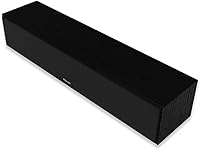
  • Grille: A low-profile magnetic grille attaches and detaches without visible fasteners, allowing for a clean appearance whether the grille is on or off.
  • Mounting Type: The R-30C is designed for tabletop placement and does not include wall-mount hardware in the box.
  • Channel Config: This is a single-unit center channel (1.0 configuration) intended to anchor dialogue and on-screen sound in a surround sound system.
  • Crossover: A tapered array crossover design improves midrange dispersion across horizontal listening positions, benefiting rooms with wide seating arrangements.
  • Compatible Devices: The speaker is compatible with any AV receiver-driven home theater system connected to a television or projector.
  • Warranty: Klipsch provides a full manufacturer warranty with this speaker; buyers should verify current warranty terms directly with Klipsch at time of purchase.
  • Model Line: The R-30C is part of Klipsch's next-generation Reference lineup, sitting in the mid-to-upper tier of their center channel offerings.

Related Reviews
Klipsch R-34C Center Channel Speaker
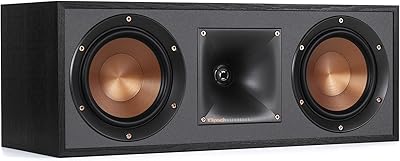
89%
93%
Sound Clarity
89%
Dialogue Reproduction
84%
Bass Performance
90%
Build Quality
88%
Ease of Setup
More
Klipsch R-52C Center Channel Speaker
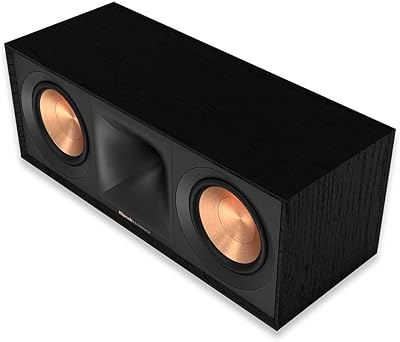
80%
93%
Dialogue Clarity
88%
Sound Dispersion
89%
Build Quality
84%
Value for Money
81%
Receiver Compatibility
More
Klipsch R-50C Center Channel Speaker
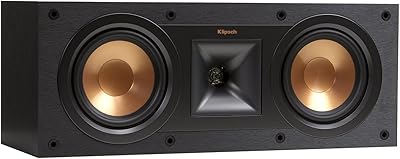
83%
93%
Dialogue Clarity
88%
Soundstage Width
91%
Build Quality
84%
High-Frequency Performance
89%
Midrange Accuracy
More
Klipsch Reference R-25C Center Channel Speaker
87%
93%
Audio Performance
89%
Bass Response
91%
Clarity of Dialogue
85%
Build Quality
88%
Ease of Integration
More
Klipsch RP-450C Center Channel Speaker
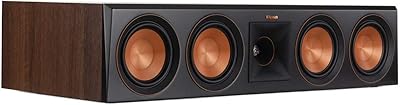
86%
92%
Sound Quality
88%
Build Quality
94%
Dialogue Clarity
84%
Bass Performance
87%
Ease of Integration
More
Klipsch RP-504C Center Channel Speaker
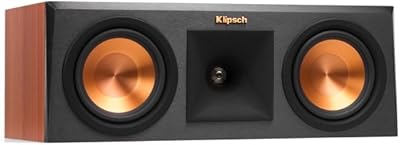
87%
91%
Sound Clarity
87%
Bass Response
90%
Build Quality
85%
Aesthetic Design
82%
Ease of Installation
More
Klipsch RP-250C Center Channel Speaker
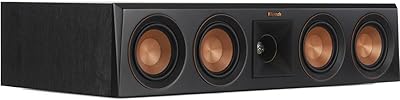
87%
92%
Sound Clarity
91%
Dialogue Performance
85%
Bass Quality
90%
Build Quality
88%
Compatibility with Klipsch Systems
More
Klipsch RP-500C II Center Channel Speaker
82%
94%
Dialogue Clarity
91%
Sound Dispersion
88%
Build Quality
86%
System Integration
83%
Ease of Setup
More
Klipsch RP-404C II Center Channel Speaker
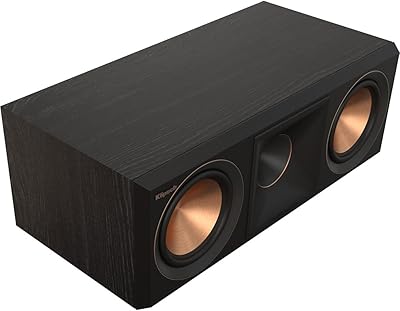
83%
94%
Dialogue Clarity
91%
Build Quality
89%
Placement Versatility
74%
Value for Money
61%
Bass Performance
More
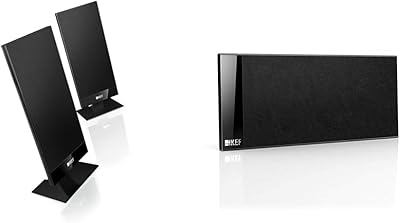
KEF T101 Satellite and Center Channel Speakers
80%
88%
Sound Clarity
91%
Build Quality
94%
Design & Aesthetics
89%
Dialogue Intelligibility
62%
Value for Money
More

FAQ

Technically yes — it will connect to any AV receiver regardless of what other speakers you have. That said, tonal matching matters a lot for front soundstage coherence. If your left and right speakers have a noticeably warmer or darker character, the R-30C's brighter horn-loaded signature may stand out in a way that feels inconsistent. It works best when paired with other Klipsch Reference speakers.

Yes, practically speaking. The low-end response starts at 78 Hz, which means anything below that — deep bass in action films, low musical notes, rumble effects — simply will not be reproduced by this speaker. In a proper home theater setup that is expected; the center channel handles dialogue and midrange, while a dedicated subwoofer covers the rest. Without a sub, the overall sound will feel noticeably thin.

That depends entirely on your furniture. At nearly 26 inches wide, the R-30C is wider than many people expect from a center channel. Measure the shelf or surface you plan to use before ordering. Some popular media consoles have a center shelf that is only 20 to 22 inches wide, which would make this a no-go without rearranging your setup.

The R-30C is efficient enough that it will run adequately on a mid-powered receiver — you do not need a flagship amplifier. Most name-brand AV receivers in the mid-range tier from Denon, Yamaha, Marantz, or Onkyo will drive it without issue. The 400-watt maximum power handling gives you plenty of headroom if you do have a more powerful receiver.

Not at all. You connect it to your AV receiver's center channel speaker terminals using standard speaker wire, place it above or below your display, and run the setup calibration on your receiver. The main things to sort out ahead of time are placement width and making sure your receiver's center channel crossover is set appropriately to hand off bass duties to your subwoofer.

Some listeners find Klipsch's horn-loaded character a bit bright, particularly if they are used to softer-sounding speakers. For dialogue-heavy content like dramas or news, most people find it clear and easy to follow. Extended action movie sessions at high volumes can feel more energetic than relaxed. If you are sensitive to treble, it is worth auditioning before committing.

Yes, the design actually holds up well without the grille. The edge-to-edge horn and hidden fasteners give the baffle a deliberately finished look. Many owners run it grille-off permanently and find it looks intentional rather than unfinished. It comes down to personal preference and whether you have kids or pets that might make contact with the drivers.

The R-30C is the newer generation with a redesigned horn, updated TCP cone woofers, and improved internal bracing. The directivity control is better, which means cleaner, more consistent sound across a wider seating area. If you are deciding between the two on the used or closeout market, the R-30C is the more capable speaker for most rooms.

Yes, the R-30C works in any surround format as a center channel because those formats simply route the center channel audio to whichever speaker is assigned that role in your receiver. Dolby Atmos and DTS:X overhead effects are handled by height speakers, not the center, so this speaker's role stays the same regardless of which immersive audio format you are running.

For most home theater runs under 20 feet, 16-gauge speaker wire works fine. If your cable run is longer or you want extra headroom, stepping up to 14-gauge is a reasonable choice. The binding posts on the R-30C accept both bare wire ends and banana plugs, so either connection style will work cleanly.

Where to Buy