Overview

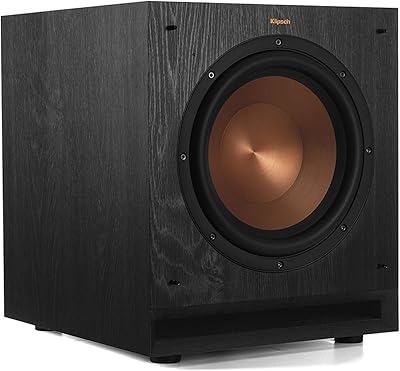
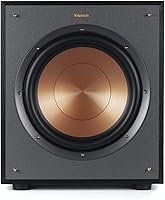
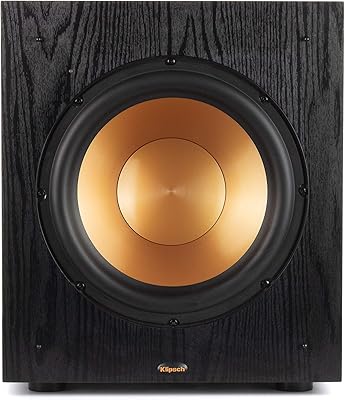
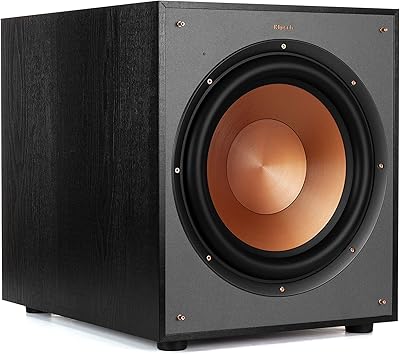
The Klipsch R-100SW 10-inch Subwoofer sits in the middle of Klipsch's Reference lineup — not the bare-bones entry point, but not the flagship either. What sets it apart visually and acoustically is that spun-copper IMG woofer cone, which isn't just for show. Injected molded graphite cones are stiffer and lighter than standard paper or plastic alternatives, translating to lower distortion at higher output levels. The all-digital amplifier keeps the electronics running efficiently and cool. And while the cabinet is compact enough to tuck beside a TV stand, it punches well above what its footprint suggests. Klipsch has been building speakers since 1946, and that depth of experience shows in how this sub is engineered.

Features & Benefits

The front-firing woofer design is one of those practical decisions you appreciate the moment you're arranging furniture. Unlike down-firing subs that interact unpredictably with different floor surfaces, this Klipsch subwoofer projects bass outward, giving more consistent performance regardless of placement. The all-digital amplifier delivers 150 watts continuously, with headroom up to 300 watts for thunderous movie moments — real, usable power without heat-related efficiency loss. It handles frequencies from 32Hz all the way up to 120Hz, covering the full rumble spectrum from deep explosions to bass guitar. The variable low-pass crossover and 0/180-degree phase control let you fine-tune how the sub blends with your main speakers, and the auto power-on means you never have to think about switching it on.

Best For

This 10-inch sub fits a fairly specific and very common buyer profile. If you're building a 5.1 or 7.1 home theater in a living room or bedroom — not a dedicated cinema room — this is a strong match. The cabinet dimensions make it workable in apartments where a larger sub would be overkill and, frankly, a noise complaint waiting to happen. Gamers will appreciate the tactile bass feedback during action-heavy sequences without needing to invest in an audiophile-tier system. It's also a natural choice for anyone already running Klipsch Reference bookshelf or floor-standing speakers who wants a brand-matched subwoofer. First-timers benefit too: the LFE RCA input means it connects to virtually any AV receiver without hunting for adapters.

User Feedback

With over 3,000 ratings averaging 4.7 stars, the R-100SW has earned genuine loyalty from buyers — not just first-impression enthusiasm. The most consistent praise centers on tight, controlled bass that doesn't bloat or muddy the midrange, plus a setup process that rarely takes longer than ten minutes. That said, a couple of recurring frustrations are worth knowing upfront. In larger rooms or at very high volume levels, this Klipsch subwoofer can start to show its limits — bass extension feels strained rather than authoritative. A smaller number of buyers also mention that the auto power-on can lag a few seconds behind the audio signal. Neither issue is a dealbreaker for its intended use case, but room size is genuinely worth factoring in before you buy.

Pros

  • The spun-copper IMG woofer cone reduces distortion and handles dynamic peaks more cleanly than standard paper-cone alternatives.
  • Front-firing bass projection delivers consistent performance whether the sub is placed against a wall, in a corner, or open in the room.
  • With 300 watts of peak power, the R-100SW handles explosive movie soundtracks without obvious compression or audible strain at moderate listening levels.
  • The variable low-pass crossover lets you dial in a smooth, natural blend with virtually any set of main speakers.
  • Auto power-on is genuinely convenient — the sub wakes automatically when it detects a signal and powers down when the source goes quiet.
  • LFE RCA inputs ensure broad compatibility with virtually every modern AV receiver without requiring adapters or workarounds.
  • Over 3,000 verified buyers rate it at 4.7 stars, reflecting a rare level of consistent real-world satisfaction across diverse setups.
  • Setup takes under ten minutes for most buyers, including initial crossover calibration and phase adjustment.
  • The 0/180-degree phase switch makes it straightforward to resolve integration mismatches across different speaker and room configurations.
  • At 14.5 by 12.5 inches, the cabinet fits discreetly in most living room layouts without dominating the space.

Cons

  • In rooms larger than roughly 400 square feet, this 10-inch sub can struggle to fill the space convincingly at realistic listening levels.
  • The auto power-on circuit can be slow to respond, occasionally clipping the first second or two of audio after a period of silence.
  • No wireless connectivity whatsoever — Bluetooth or Wi-Fi streaming integration is simply not an option with this unit.
  • Bass extension below 32Hz is limited, which matters for pipe organ recordings, certain electronica, and the deepest cinematic sound effects.
  • At sustained high volumes, the amplifier can run noticeably warm, which may be a concern in poorly ventilated entertainment cabinets.
  • Only a single LFE RCA input is available — there is no balanced XLR or dual RCA option for more advanced receiver configurations.
  • The visual design is utilitarian at best; buyers who care about aesthetics in a premium living space may find the look underwhelming.
  • At 26 pounds, repositioning the cabinet for room-correction adjustments requires more physical effort than smaller, lighter competing models.

Ratings

The scores below for the Klipsch R-100SW 10-inch Subwoofer were generated by AI after analyzing thousands of verified buyer reviews from global markets, with spam, bot-generated responses, and incentivized feedback actively screened out. Every category rating reflects real ownership experiences across a wide range of room sizes, receiver configurations, and listening habits — not manufacturer specifications or promotional claims. Both consistent strengths and recurring frustrations are transparently represented in each score.

Bass Performance
88%
Most buyers describe the bass as punchy and tight rather than flabby — a character that works particularly well for action movies, gaming, and bass-heavy music like hip-hop or rock. For a 10-inch driver, the output level surprised a significant number of first-time sub owners who weren't expecting this much impact from a cabinet of this size.
Where the performance starts to thin out is at the extreme low end — content with significant energy below 32Hz, such as deep synthesizer drones or subterranean film effects, lacks the authority buyers with larger rooms or audiophile expectations were hoping for. At very high volume settings, the bass can also start to feel less controlled and more strained.
Build Quality
83%
The wood cabinet feels noticeably more solid than plastic-enclosure competitors at a similar price tier, and the spun-copper woofer cone gives the unit a premium visual identity that most buyers appreciated. The removable grille fits securely, and the rear panel controls feel well-mounted and responsive to adjustment.
A portion of buyers noted that the cabinet finish, while clean, shows fingerprints and minor scuffs more readily than a matte or textured alternative would. The overall aesthetic, though tidy, is utilitarian — it won't pass as a piece of furniture in a carefully decorated living space.
Amplifier Performance
86%
The all-digital amplifier runs noticeably cooler than Class A/B alternatives buyers had previously owned, and delivers clean output at moderate listening levels — which is where most buyers spend the majority of their time. The 300-watt peak headroom handles movie transients without audible clipping during typical home theater sessions.
At sustained high-volume operation in larger rooms, some buyers reported the amplifier beginning to feel taxed — bass compression becomes more noticeable and the sense of effortless dynamics fades. The 150-watt continuous rating, while solid for its class, does impose a ceiling for users who regularly push their systems hard.
Ease of Setup
91%
The vast majority of buyers had this sub running in under ten minutes, with the LFE RCA input requiring only a standard cable and a single connection to any AV receiver. First-time subwoofer owners specifically praised how little guesswork was involved — plug in, set the crossover roughly, and the system simply worked.
Dialing in the crossover and phase settings for optimal blending with main speakers requires some patience and ideally a reference track you know well — buyers without prior experience occasionally spent extra time achieving a natural blend. The manual could also provide more practical calibration guidance for complete beginners.
Value for Money
89%
Across thousands of reviews, the dominant sentiment is that this Klipsch subwoofer punches above its weight class — buyers consistently described feeling like they received more sub than they paid for, particularly when comparing output to competing units at similar or slightly higher price points. The brand's long-standing reputation added further reassurance for many purchasers.
Buyers who stretched to this sub expecting it to fill a large room were occasionally left feeling the investment fell short of what a larger driver would have delivered. For listeners with rooms above 350 square feet or with more demanding listening habits, the value calculation shifts considerably toward stepping up in driver size.
Room Integration
76%
24%
In small to mid-size enclosed rooms, most buyers found the R-100SW blended naturally with their main speakers once the crossover was set correctly. The 0/180-degree phase switch resolved integration issues for many without requiring any physical repositioning of the cabinet.
In open-plan spaces or larger rooms, achieving a coherent and well-integrated sound proved harder — several buyers noted a persistent disconnect between the sub and their main speakers that survived crossover and phase adjustments. The binary phase switch, with no intermediate options, was a recurring frustration for more experienced listeners seeking finer control.
Connectivity & Compatibility
93%
Line-level LFE RCA inputs work with every modern AV receiver without exception, and multiple buyers specifically mentioned the relief of not needing adapters, special cables, or brand-matched hardware to get up and running. Compatibility with gaming consoles and smart TVs that provide a dedicated subwoofer output was also consistently reported as trouble-free.
The absence of wireless connectivity is the most common complaint among buyers who expected at least an optional Bluetooth input for added flexibility. In a category increasingly moving toward wireless integration, a wired-only connection is a meaningful limitation for buyers setting up in rooms where cable routing across the floor is inconvenient.
Low-End Extension
66%
34%
For the core bass content of mainstream movies, TV shows, gaming, and popular music genres, the 32Hz lower limit is entirely adequate — most buyers never noticed a gap in the frequency range during real-world listening. Output within the 40Hz to 80Hz range, which covers the majority of useful bass content, is genuinely strong.
Buyers who regularly listen to genres with deep sub-bass content — deep house, drone music, film scores with infrasonic design, or pipe organ recordings — consistently noted that the extension stops short of what a 12-inch or larger ported cabinet delivers. This 10-inch sub simply does not pressurize a room the way larger drivers can at the deepest registers.
Auto Power-On Reliability
72%
28%
For buyers using the sub with a standard AV receiver at normal listening volumes, the auto power-on worked reliably and invisibly during daily home theater sessions. Long-term owners generally reported that the feature remained consistent over extended use without requiring manual workarounds.
A recurring pattern in negative feedback involves the circuit being slow to respond after periods of silence, causing the first second or two of audio to pass undetected before the sub wakes up. Buyers using the sub at lower volume settings or with quieter source material reported this misfiring more frequently than those watching action content at normal levels.
Cabinet & Finish
74%
26%
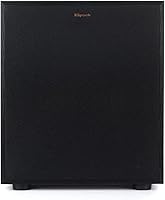
The wood construction and clean black finish satisfied most buyers who prioritized acoustic function over visual flair — it looks composed and unobtrusive beside a TV stand or within an entertainment unit. The removable grille gives buyers the choice to present the copper driver face or conceal it depending on their preference.
Buyers hoping for a premium furniture-grade finish were occasionally disappointed — the vinyl wrap can show minor wear at the corners with regular repositioning, and the overall look is functional rather than refined. In high-end living rooms or dedicated listening spaces with carefully chosen decor, it may feel visually out of place.
Placement Flexibility
82%
18%
The front-firing woofer design makes placement decisions more predictable than with down-firing alternatives — buyers reported consistent results whether the sub was placed in a corner, along a side wall, or beside the TV cabinet. The compact footprint also meant it fit comfortably in spaces where a 12-inch or 15-inch cabinet would have been impractical.
Despite the front-firing advantage, buyers in rooms with irregular layouts or limited wall space still occasionally struggled to find a position that avoided bass buildup or room modes. At 26 pounds, experimenting with multiple placements to find the acoustic sweet spot is also more physically demanding than with lighter competing models.
Long-Term Reliability
81%
19%
The general consensus among long-term owners is that the R-100SW holds up well under regular daily use — buyers who had owned the unit for two or more years frequently reported no degradation in performance or any hardware faults. The Klipsch brand's track record in speaker durability gave additional confidence to hesitant buyers.
A small but present subset of reviews describes amplifier issues emerging after one to two years of heavier use, though these represent a clear minority in the overall feedback pool. The limited warranty means that out-of-warranty repairs could represent a meaningful cost relative to what was originally spent on the unit.
Sound Control Options
79%
21%
Having both a variable low-pass crossover and a phase switch gives buyers practical tools for optimizing integration, and buyers who took the time to experiment with these controls reported a noticeably more cohesive sound compared to their first quick setup. The volume knob is smooth and precise, with no audible channel noise when adjusting.
Experienced home theater enthusiasts noted that the control set, while useful, is fairly basic compared to subwoofers offering parametric EQ, app-based room correction, or selectable crossover slopes. Buyers trying to compensate for specific room acoustic problems may find these two rear-panel controls insufficient for meaningful correction.

Suitable for:

The Klipsch R-100SW 10-inch Subwoofer is a strong fit for anyone building or upgrading a 5.1 or 7.1 surround sound system in a small to mid-size room — think a typical apartment living room or a dedicated bedroom theater space up to around 350 square feet. The front-firing design and compact footprint make placement straightforward, which is a real advantage in rooms where you can't afford to experiment endlessly with sub positioning. Existing Klipsch Reference speaker owners will appreciate the tonal consistency a brand-matched sub brings, avoiding the uneven bass character that often comes from mixing speaker families. Gamers who want visceral, tactile low-end response during action-heavy sessions will find it genuinely satisfying without needing to invest in a high-end dedicated audio system. First-time subwoofer buyers also benefit from the intuitive controls and auto power-on, which removes most of the friction from daily use.

Not suitable for:

The Klipsch R-100SW 10-inch Subwoofer is not the right choice for large, open-plan living spaces or dedicated home cinema rooms that demand authoritative, effortless bass at high output levels. If your room exceeds roughly 400 square feet, you will likely push this sub to its limits before it satisfies — the bass starts to feel strained rather than controlled, and the sense of headroom disappears. Serious home theater enthusiasts or audiophiles with demanding standards should consider a 12-inch or 15-inch cabinet with higher continuous power ratings to avoid running into those ceilings. Music-first listeners who prioritize deep sub-30Hz extension for genres like pipe organ, orchestral recordings, or heavy electronic music will find the 32Hz lower limit a meaningful constraint. Anyone expecting wireless connectivity should also look elsewhere — this is a strictly wired unit with no Bluetooth or network audio capability.

Specifications

  • Woofer Size: The driver measures 10 inches in diameter, sized to deliver substantial bass output without requiring a large enclosure.
  • Woofer Type: A front-firing spun-copper IMG (Injected Molded Graphite) cone is used, providing greater stiffness and lower distortion than conventional paper or plastic woofer cones.
  • Amplifier Type: An internal all-digital amplifier powers the driver, operating with higher efficiency and less heat output than traditional Class A/B amplifier designs.
  • Continuous Power: The amplifier is rated at 150 watts RMS continuous power, sustaining clean bass reproduction during extended listening sessions.
  • Peak Power: Peak output reaches 300 watts, providing headroom for sharp dynamic transients in film soundtracks and music.
  • Frequency Response: The usable frequency range spans 32Hz to 120Hz (±3dB), covering the core bass spectrum relevant to home theater, gaming, and most music genres.
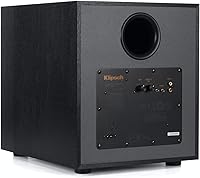
  • Inputs: Two line-level LFE RCA inputs allow direct connection to the dedicated subwoofer output of any compatible AV receiver.
  • Controls: The rear panel provides a volume knob, a variable low-pass crossover control, and a 0/180-degree phase switch for system integration adjustment.
  • Auto Power-On: An automatic power-on circuit detects an incoming audio signal and activates the subwoofer, returning it to standby during prolonged silence.
  • Cabinet Material: The enclosure is built from wood, which reduces unwanted cabinet resonance and contributes to more accurate low-frequency reproduction.
  • Mounting Style: The unit is designed exclusively for floor-standing placement and is not rated or intended for wall or ceiling mounting.
  • Color & Finish: The cabinet ships in black with a removable front grille that can be detached for a cleaner, driver-exposed look.
  • Dimensions: The cabinet measures 14.5″ wide by 12.5″ deep by 16.4″ tall, a compact footprint for a ported wooden subwoofer enclosure.
  • Weight: The unit weighs 26 pounds, consistent with a wood-cabinet subwoofer of this driver size and amplifier configuration.
  • Connectivity: All connectivity is wired via RCA only; no Bluetooth, Wi-Fi, or any form of wireless audio transmission is supported.
  • Compatible Devices: The subwoofer is compatible with AV receivers, televisions, and gaming consoles that provide a dedicated subwoofer or LFE line output.

Related Reviews
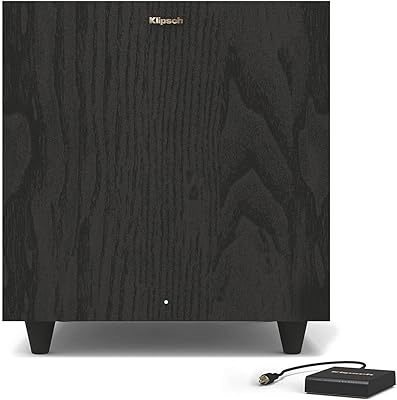
Klipsch R-80SWi 8-Inch Wireless Subwoofer
81%
88%
Wireless Reliability
83%
Bass Quality & Accuracy
93%
Ease of Setup
87%
Audio Latency
81%
Build Quality
More
Klipsch Sub-100 10-inch Subwoofer
80%
83%
Bass Performance
88%
Build Quality
91%
Value for Money
86%
Setup & Integration
87%
Placement Flexibility
More
Acoustic Audio PSW400-10 10-Inch Powered Subwoofer
85%
91%
Bass Performance
88%
Ease of Setup
85%
Sound Quality
92%
Value for Money
87%
Build Quality
More
CT Sounds OZONE-10-D4 10″ Car Subwoofer
80%
88%
Build Quality
83%
Sound Quality
91%
Value for Money
79%
Thermal Durability
84%
Installation Experience
More
CT Sounds STRATO-10-D2 10 Inch Dual 2 Ohm Car Subwoofer
87%
91%
Bass Performance
89%
Build Quality & Durability
92%
Power Handling
88%
Sound Clarity
83%
Ease of Installation
More
Rockford Fosgate R2D2-10 10-Inch Car Subwoofer
82%
83%
Bass Output Quality
88%
Build Quality
91%
Value for Money
86%
Installation Ease
79%
Amplifier Compatibility
More
Klipsch R-120SW Subwoofer
80%
91%
Bass Performance
88%
Value for Money
84%
Build Quality
92%
Ease of Setup
79%
Room Integration & Tuning
More
QPower QHD110V 10-Inch Vented Subwoofer Box
76%
91%
Value for Money
78%
Build Quality
84%
Bass Output
88%
Ease of Installation
69%
Driver Compatibility
More
Orion XTR104D 10-Inch Car Subwoofer
75%
83%
Bass Output Quality
81%
Build Quality
78%
Value for Money
61%
Power Handling Accuracy
58%
Enclosure Sensitivity
More
DS18 GEN-X104D 10-Inch Car Subwoofer
76%
88%
Bass Output
93%
Value for Money
63%
Long-Term Durability
86%
Wiring Flexibility
81%
Low-Frequency Extension
More

FAQ

It works with virtually any AV receiver that has a dedicated subwoofer or LFE output, which covers essentially every modern home theater receiver regardless of brand. You simply run a standard RCA cable from your receiver's sub-out jack to the LFE input on the back of the sub. No brand-matching is required at all.

Because this Klipsch subwoofer fires from the front rather than downward, it's less fussy about placement than many down-firing models. Positioning it in a front corner or along the wall behind your main speakers tends to reinforce bass naturally. If the sound feels boomy or uneven, try toggling the phase switch — that single adjustment often sorts out room interaction problems without moving the cabinet.

A practical starting point is to match the crossover frequency to the approximate lower limit of your main speakers — so if your bookshelfs roll off around 80Hz, dial the crossover to 80Hz. If your AV receiver handles crossover management in its own speaker setup menu, you can turn the sub's crossover knob to maximum and let the receiver do the filtering instead.

You can, but it depends on your amplifier. If it has a pre-amp or subwoofer output, a direct RCA connection works fine. Without that, you'd need a speaker-level to line-level adapter to bridge the connection. The easiest, cleanest integration is always through an AV receiver with a proper LFE output.

The auto power-on responds to the signal level at the LFE input, and it handles normal home theater levels well. At very low volumes or after extended silence, a small number of owners report it can take a moment to wake up, occasionally missing the very first second of audio. For typical movie and TV watching at comfortable volumes, it works reliably enough that most people never think about it.

The R-100SW handles music quite naturally for a sub in this class — rock, pop, hip-hop, and acoustic genres all benefit from the added weight and warmth it provides. Where it shows limits is in genres that push well below 30Hz, like deep electronic music, pipe organ recordings, or certain orchestral film scores with very low subsonic content. For the vast majority of listeners across mixed use, it contributes a satisfying musical low end without sounding bloated.

The Klipsch R-100SW 10-inch Subwoofer is genuinely confident in small to mid-size enclosed rooms up to roughly 300 to 350 square feet. In a large open-plan space, it will still produce bass, but it can start to lose authority and extension before reaching the volume levels needed to fill the room convincingly. For significantly larger or open spaces, a 12-inch or 15-inch subwoofer with higher continuous power output would be a more appropriate match.

The package includes the subwoofer unit, a removable front grille, a power cord, and a printed manual. An RCA cable for connecting to your receiver is not included, so you will need to purchase one separately. A standard single RCA cable in whatever length suits your room layout is all you need — nothing exotic or proprietary is required.

The 0/180-degree phase switch controls the timing relationship between the subwoofer's output and your main speakers. When both are in phase, all drivers move in sync, producing full and coherent bass through the crossover region. If you're hearing a thinning of bass or a hollow quality in the lower midrange, flipping to 180 degrees often resolves the issue immediately — it's a surprisingly powerful fix for room and placement mismatches.

Leaving it in standby indefinitely is completely fine — the auto power-on circuit is designed for exactly that kind of continuous-standby use, and the idle power draw is minimal. Switching it off at the wall when you go on vacation or during extended periods of non-use is also safe and has no negative effect on the unit. Either approach works; it really comes down to personal preference.

Where to Buy