Overview

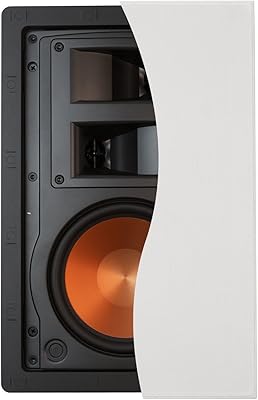
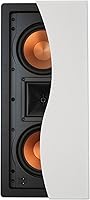
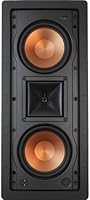
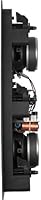
The Klipsch R-5502-W II In-Wall Speaker is Klipsch's Reference-series answer for home theater builders who want serious sound without surrendering wall space to boxy cabinets. Sold as a single unit — worth noting upfront if you're planning a stereo pair — it pairs dual 5.25″ Cerametallic woofers with a titanium compression driver in a package that mounts either horizontally or vertically. That flexibility makes it viable as a left, center, or right channel speaker without compromise. The white paintable grille means it can disappear entirely into your wall finish. At its price point, this sits comfortably in mid-to-upper territory, aimed squarely at people who are serious about building a real home theater.

Features & Benefits

The titanium compression driver at the heart of this Klipsch in-wall speaker isn't just a spec-sheet detail — titanium handles sustained high-frequency output with far less distortion than softer materials, meaning treble stays clean even at higher volumes. The pivoting Tractrix Horn is genuinely useful in practice: you can aim the tweeter toward your primary listening position even if the speaker isn't perfectly centered on the wall, which makes a real difference in soundstage focus. The dual Cerametallic woofers use a cone stiff enough to resist flexing but light enough to respond quickly, keeping the midrange from sounding muddy. At 8 ohms and 150W power handling, it pairs comfortably with most mid-tier AV receivers without demanding a high-output amplifier.

Best For

This in-wall home theater speaker is purpose-built for homeowners doing renovations or new construction where speaker wires can be run inside walls before drywall goes up — attempting a retrofit in a finished room is significantly more work and should be budgeted accordingly. It's especially well-suited for 5.1 or 7.1 surround setups where matched timbre across all channels matters, since you can use these for the left, center, and right positions interchangeably. Klipsch's horn-loaded efficiency also means listeners with modest receivers get more acoustic output per watt than a typical passive speaker would deliver. Anyone prioritizing a discreet, wall-flush look over visible enclosures will find this design a genuinely strong fit.

User Feedback

Across more than 240 ratings, the R-5502-W II holds a 4.8-star average — genuinely rare in a category where audio enthusiasts tend to be vocal about shortcomings. Clear highs and surprisingly capable bass for a wall-mounted design are the most consistent praise points. Owners frequently note that pairing these with a dedicated subwoofer rounds out the low end considerably, since no in-wall speaker, regardless of woofer size, can fully compensate for the physics of an open-baffle installation. The one recurring complaint worth flagging: reattaching the grille after painting can be tricky to align correctly. On longevity, long-term owners report no reliability issues over years of use, which speaks well of the overall build quality.

Pros

  • The titanium compression driver keeps high frequencies clean and distortion-free even at sustained, higher volumes.
  • A pivoting Tractrix Horn lets you aim the tweeter directly at your listening position, noticeably improving sound focus.
  • Dual Cerametallic woofers deliver clear, well-defined midrange with surprisingly little coloration for an in-wall design.
  • The horn-loaded efficiency means you can drive the R-5502-W II with a modest AV receiver and still get strong output.
  • Mounts horizontally or vertically, so it works as a left, center, or right channel without any acoustic compromise.
  • The white grille is paintable, making it straightforward to blend the speaker into almost any wall color.
  • Long-term owners consistently report reliable performance with no degradation over years of regular use.
  • Standard bracket mounting is compatible with typical stud spacing, keeping the rough-in process manageable for experienced installers.
  • A 4.8-star average across more than 240 ratings from a category full of critical listeners is genuinely difficult to argue with.
  • Pairing this Klipsch in-wall speaker with a dedicated subwoofer produces a well-balanced, full-range surround system.

Cons

  • Sold as a single unit, so budget carefully — a stereo pair means purchasing two, and costs add up quickly.
  • Installation in a fully finished room can be a significant project requiring drywall work and professional wiring help.
  • Bass output has real physical limits without an enclosure; a subwoofer is essentially mandatory for a complete system.
  • The grille can be frustratingly difficult to reattach correctly after painting, according to multiple long-term owners.
  • Not a practical option for renters or anyone unwilling to make permanent modifications to their walls.
  • Installation complexity varies widely depending on wall construction, insulation type, and existing wiring access.
  • Casual listeners who want simple setup will find the installation commitment and system-building requirements excessive.
  • No wireless option — this is a fully wired speaker, so cable routing must be planned well in advance of installation.

Ratings

The scores below reflect our AI-driven analysis of verified global buyer reviews for the Klipsch R-5502-W II In-Wall Speaker, with spam, bot-submitted, and incentivized feedback actively filtered out before any scoring was applied. Across hundreds of real-world installations — from dedicated home theaters to open-plan living rooms — we tracked both the praise and the pain points with equal weight. What you see here is an honest, balanced picture of where this in-wall speaker genuinely excels and where it asks for compromise.

Sound Clarity
93%
Owners consistently describe the high-frequency reproduction as sharp and fatigue-free even during extended movie sessions or live concert recordings. The titanium compression driver handles transients — cymbal hits, vocal sibilance, sound effects — with a precision that buyers switching from cheaper in-wall alternatives find immediately noticeable.
A small number of listeners with highly revealing source material note that the upper treble can occasionally edge toward brightness at elevated volumes, which is a known characteristic of horn-loaded tweeters. This is unlikely to bother most home theater users but may give critical two-channel listeners pause.
Bass Performance
71%
29%
For an in-wall design, the dual 5.25″ woofers produce a surprisingly solid upper and mid-bass response that handles film dialogue, action effects, and music with more presence than buyers typically expect from a flush-mount speaker at this size.
Without an enclosure, deep bass simply cannot be reproduced the way a ported cabinet would — this is physics, not a flaw unique to the R-5502-W II. Owners who expected standalone low-end performance were disappointed; pairing with a dedicated subwoofer is effectively mandatory for a satisfying full-range system.
Midrange Accuracy
89%
The Cerametallic cone construction keeps the midrange honest — voices sound natural, dialogue in films is intelligible even at lower listening volumes, and acoustic instruments retain texture without sounding artificially forward. Several buyers specifically upgraded from competing in-wall models and cited midrange clarity as the deciding factor.
At very high output levels in larger rooms, a few owners noted a slight hardness in the upper midrange, though this was a minority observation. For most listening environments and typical home theater volumes, midrange performance draws almost universal satisfaction.
Soundstage & Imaging
86%
The pivoting Tractrix Horn is a practical feature that makes a real difference: installers report being able to orient the tweeter toward the primary seating area post-installation, which tightens stereo imaging noticeably compared to fixed-horn in-wall alternatives. In properly configured 5.1 setups, the surround field feels cohesive and well-defined.
Imaging performance is sensitive to placement decisions made during installation — if the speaker ends up significantly off-axis relative to the main listening position and the horn cannot fully compensate, the soundstage narrows. This is less forgiving than a freestanding speaker you can physically reposition later.
Installation Ease
74%
26%
Buyers with prior A/V installation experience report a straightforward rough-in process, especially in new construction or open renovation projects where wiring access is unobstructed. The standard bracket system fits typical stud spacing, and the horizontal or vertical mounting flexibility reduces placement constraints considerably.
Retrofitting into a finished wall is a meaningfully different undertaking — multiple owners in completed homes describe needing professional help for wire fishing, drywall cutting, and cleanup. Installation difficulty ranges from manageable to genuinely complex depending on wall construction, insulation, and existing wiring routes.
Build Quality
91%
Long-term owners who have lived with this Klipsch in-wall speaker for five or more years consistently report zero performance degradation, no rattles, and no driver failures. The choice of titanium and Cerametallic materials over cheaper polymer alternatives signals that the internal components are built to outlast the installation itself.
The grille frame, while functional, has drawn occasional criticism for feeling less premium than the speaker basket itself — a minor tactile disappointment that does not affect audio performance but is noticeable to buyers who handle the component closely during installation.
Grille & Aesthetics
78%
22%
The paintable white grille is a genuine design asset for homeowners who want speakers to vanish into their walls. When properly painted and flush-mounted, reviewers describe the final result as looking intentional and architectural rather than like afterthought A/V hardware.
Reattaching the grille after painting is the single most cited frustration across user reviews — the alignment requires patience, and some buyers report needing multiple attempts. A minor but recurring annoyance that a small design refinement from Klipsch could easily resolve.
Efficiency & Sensitivity
92%
Horn-loaded drivers are inherently more efficient than conventional cone-and-dome designs, and owners with mid-tier receivers — including 50W-per-channel models — report getting room-filling volume without pushing the amplifier hard. This is a meaningful advantage for anyone who does not want to budget for a high-powered separate amplifier.
The high sensitivity that makes these easy to drive also means system noise — hiss from a lower-quality receiver or preamp — can occasionally be audible at low listening levels in a quiet room. This is an amp-pairing consideration rather than a flaw with the speaker itself.
Channel Versatility
88%
The ability to use the same speaker unit for the left, center, and right positions in a surround system is a practical and financial benefit that buyers building full multi-channel setups genuinely appreciate. Timbre matching across channels is consistent, which keeps the surround field from sounding disjointed.
Using this speaker as a center channel in a horizontal mount requires confirming that the wall space above or below the display is sufficient for the 17.8″ height — in some media cabinet or built-in configurations, this clearance is tighter than expected.
Value for Money
83%
Buyers who have compared this in-wall home theater speaker against competing options in the same price range consistently rate it as the stronger performer, particularly for high-frequency clarity and long-term reliability. The cost of ownership spread across many years of trouble-free performance shifts the per-year value calculation favorably.
The single-unit pricing catches budget-conscious buyers off guard — a complete front stereo pair plus a center channel requires three purchases at this price, and that investment adds up quickly before factoring in installation costs. Value perception drops noticeably for buyers who did not plan total system costs in advance.
Long-Term Reliability
94%
The product has been available since 2005, and multi-year owners are a substantial portion of the reviewer base — their sustained satisfaction with no reported driver failures or degradation over extended periods is as reliable a durability indicator as any formal stress test.
There are very few reported reliability concerns of substance, which makes it difficult to surface meaningful negatives here. The primary caveat is that any in-wall installation is inherently less serviceable than a freestanding speaker if a component ever needs repair or replacement.
Receiver Compatibility
87%
At 8 ohms nominal impedance, the R-5502-W II is compatible with essentially every home theater receiver on the market without impedance-matching concerns. Buyers report successful pairings with a wide range of brands including Denon, Yamaha, Marantz, and Onkyo at various price points.
While compatibility is broad, buyers running very old or entry-level receivers with limited power reserves may find that the amplifier, rather than the speaker, becomes the bottleneck at higher volumes — a subtle but real performance ceiling for some system configurations.
Subwoofer Integration
81%
19%
Buyers who pair this Klipsch in-wall speaker with a dedicated subwoofer describe the combined system as punchy, well-balanced, and genuinely satisfying for both movies and music. The speaker's clean midrange and bass handoff to a sub is smooth, with no obvious crossover gaps when the subwoofer is set appropriately.
The dependency on a subwoofer for a complete frequency range is worth internalizing as a system cost, not a bonus. Buyers who purchased these speakers expecting standalone bass fullness without a sub were the most likely to leave lower ratings, often due to misaligned expectations rather than actual product shortcomings.

Suitable for:

The Klipsch R-5502-W II In-Wall Speaker was built for homeowners who are serious about home theater and want the sound to fill a room without the speakers dominating the decor. It fits best in new construction or active renovation projects, where running speaker wire inside walls before drywall is finished is a realistic option rather than an afterthought. If you're building out a 5.1 or 7.1 surround system and want consistent tonal character across your left, right, and center channels, using this speaker in all three positions is a smart and practical approach. The horn-loaded design rewards listeners running mid-tier AV receivers, since the efficiency advantage means you get strong output without needing a high-wattage amplifier. Anyone who wants speakers that visually vanish into the wall — especially with the paintable grille option — will find this design genuinely well-suited to living rooms, dedicated theaters, or media rooms where aesthetics matter as much as acoustics.

Not suitable for:

Renters or anyone in a fully finished home without easy access to wall cavities should think carefully before committing to the Klipsch R-5502-W II In-Wall Speaker, since installation in that scenario typically means cutting drywall, fishing wire through insulation, and patching around the cutout — a project that can quickly become expensive and disruptive. This is also not the right choice for casual listeners who just want background music in a room; the price point and installation effort only make sense if you're building a real, dedicated surround system. Buyers expecting deep, room-filling bass without a subwoofer will be disappointed — in-wall speakers physically cannot replicate the low-frequency output of a ported cabinet, and this one is no exception. If you're pricing out a stereo pair, remember that this speaker is sold individually, so the total cost doubles before you've even started on installation. Apartment dwellers or those who move frequently should also consider whether a permanent, in-wall solution fits their living situation long-term.

Specifications

  • Tweeter: A 1″ titanium diaphragm compression driver handles high-frequency reproduction with low distortion under sustained output.
  • Woofers: Dual 5.25″ Cerametallic cone woofers provide stiff yet lightweight cone material for accurate, low-coloration midrange performance.
  • Horn Type: A pivoting 90°x90° square Tractrix Horn allows the tweeter to be aimed directly at the listening position after installation.
  • Power Handling: Maximum power handling is rated at 150W, making it compatible with a wide range of mid-tier AV receivers and amplifiers.
  • Impedance: Nominal impedance is 8 ohms, which is a standard load compatible with virtually all home theater receivers on the market.
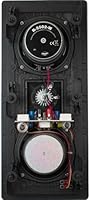
  • Dimensions: The speaker body measures 3.5″ deep by 8″ wide by 17.8″ tall, suitable for standard residential wall cavity depths.
  • Weight: Each unit weighs 6.5 pounds, which is manageable for a single-person rough-in installation with standard mounting hardware.
  • Mounting: Designed for flush wall mounting with included brackets, and can be oriented horizontally or vertically to suit any channel position.
  • Channel Use: Suitable for use as a left, center, or right channel speaker in a surround sound configuration without acoustic compromise.
  • Surround Config: Fully compatible with 5.1 and 7.1 surround sound system configurations when multiple units are used together.
  • Grille Finish: Includes a white magnetic grille that is paintable, allowing the speaker face to blend into virtually any wall color.
  • Connectivity: Wired connection only via standard spring-clip or binding-post speaker wire terminals; no wireless or Bluetooth capability.
  • Driver Design: Horn-loaded driver architecture increases acoustic efficiency, delivering more output per watt than a conventional direct-radiating design.
  • Series: Part of the Klipsch Reference lineup, which represents the brand's core performance tier above the entry-level Synergy line.
  • Unit Count: Sold as a single speaker; buyers planning a stereo front pair or a full surround system will need to purchase multiple units.
  • Waterproofing: Not rated for waterproof or moisture-resistant use; intended strictly for standard indoor, climate-controlled residential environments.
  • Warranty: Covered by a Klipsch limited warranty; buyers should confirm current warranty terms directly with Klipsch or the point of purchase.

Related Reviews
Klipsch R-5800-W II In-Wall Speakers
84%
93%
Sound Clarity
74%
Bass Performance
91%
Build Quality
58%
Installation Experience
89%
Tweeter Versatility
More
Klipsch R-3650-W II In-Wall Speaker
86%
89%
Sound Quality
87%
Bass Response
91%
Ease of Installation
84%
Design & Aesthetics
90%
Build Quality
More
Klipsch R-5650-S II In-Wall Speaker
78%
91%
Surround Sound Immersion
88%
Tonal Matching with Klipsch Systems
86%
High-Frequency Clarity
61%
Bass Performance
58%
Installation Experience
More
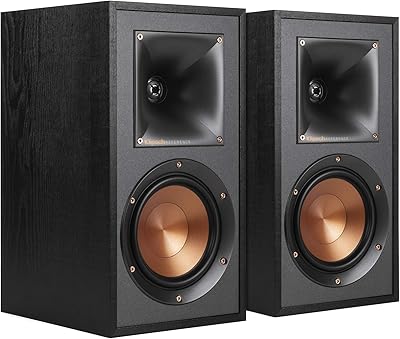
Klipsch R-50M Bookshelf Speakers
82%
91%
Sound Clarity & Detail
74%
Treble Balance
86%
Midrange Performance
63%
Bass Response
93%
Efficiency & Sensitivity
More
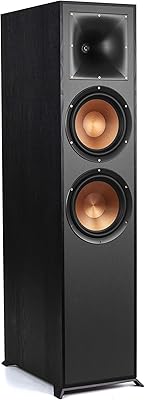
Klipsch R-625FA Dolby Atmos Floorstanding Speaker
83%
93%
Sound Dynamics
74%
Dolby Atmos Height Effect
81%
Bass Performance
91%
Build Quality
86%
Ease of Setup
More
Klipsch R-41M
Klipsch R-41M
78%
91%
Sound Clarity & Detail
52%
Bass Performance
86%
Soundstage & Imaging
93%
Sensitivity & Amplifier Compatibility
78%
Build Quality
More
Klipsch R-52C Center Channel Speaker
80%
93%
Dialogue Clarity
88%
Sound Dispersion
89%
Build Quality
84%
Value for Money
81%
Receiver Compatibility
More
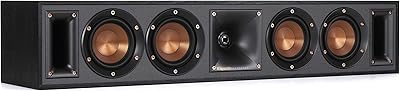
Klipsch R-30C Center Channel Speaker
79%
93%
Dialogue Clarity
88%
Soundstage Dispersion
74%
Tonal Balance
81%
Build Quality
91%
Efficiency & Receiver Compatibility
More
Klipsch CDT-3800-Cii In-Wall Speaker
79%
91%
Sound Clarity
72%
Bass Performance
88%
Soundstage & Dispersion
84%
Build Quality
63%
Installation Experience
More
Klipsch R-26FA Floorstanding Speakers
81%
92%
Sound Clarity
78%
Bass Performance
71%
Dolby Atmos Height Effects
91%
Sensitivity & Efficiency
86%
Build Quality
More

FAQ

It is sold as a single unit. If you need two speakers for a stereo front setup, you will need to add two to your cart. This catches a lot of buyers off guard, so it is worth double-checking your order before checkout.

Yes, and this is actually one of its strengths. The Klipsch R-5502-W II In-Wall Speaker can be mounted horizontally to fit the typical center channel position below or above a display, and the pivoting Tractrix Horn lets you fine-tune the tweeter angle toward your listening area after it is installed.

Most standard home theater receivers rated at 50–100 watts per channel at 8 ohms will drive these without any issue. The horn-loaded design is unusually efficient, so you genuinely do not need a high-powered amplifier to get strong output from them.

A subwoofer is strongly recommended. The dual 5.25″ woofers do a respectable job in the midrange and upper bass, but no in-wall speaker — regardless of brand — can produce deep, room-pressurizing low frequencies without an enclosure. Think of a subwoofer as part of the system budget, not an optional add-on.

That really depends on your wall situation. If you are installing during new construction or an active renovation before drywall goes up, it is a manageable project for someone comfortable with basic electrical work and stud-finder use. Retrofitting into a finished wall is considerably more involved — you may need to cut drywall, fish wire through insulation, and patch afterward. Many buyers in finished homes hire an A/V installer for this step.

Yes. The grille is designed to be painted with standard latex wall paint. The common tip from experienced installers is to remove the grille from the speaker before painting and to use light coats so the paint does not clog the grille material. A few owners have noted that reattaching the grille after painting requires some patience to align correctly.

Absolutely. You can use this Klipsch in-wall speaker for any channel position in a 5.1, 6.1, or 7.1 system. Many buyers mix and match, using several of these units for all front and surround channels to maintain consistent tonal character throughout the room.

The speaker body is 3.5″ deep, so your wall cavity needs to accommodate at least that depth plus a bit of clearance for wiring. Standard 2x4 construction walls provide roughly 3.5″ of cavity depth, which works but can be tight; 2x6 framing gives noticeably more room to work with.

Based on the track record of this specific model — which has been available since 2005 — long-term owners consistently report no performance degradation over years of regular use. Titanium and Cerametallic are both materials chosen partly for their durability, and keeping the speakers in a stable indoor environment means there is very little mechanical stress on them over time.

No. This in-wall home theater speaker is not rated for moisture or humidity exposure and should only be installed in standard indoor, climate-controlled spaces. For damp locations like covered patios or bathrooms, you would need a speaker specifically rated for those environments.