Overview

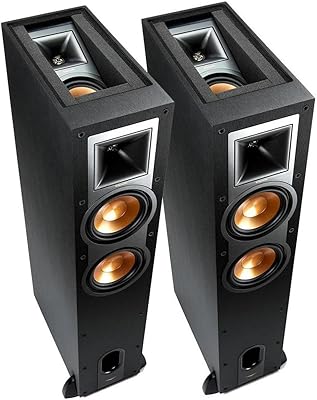
The Klipsch R-5650-S II In-Wall Speaker is a dedicated surround channel speaker from Klipsch's Reference line, built specifically for home theater installations where visible speakers simply aren't an option. What separates this in-wall surround speaker from most competitors is its dual-tweeter configuration — a design you rarely see at this price tier. It's been available since 2012, which says something about its staying power as a proven, stable platform rather than a spec-chasing experiment. One important note upfront: it's sold as a single unit, so if you're outfitting two surround positions, budget for two. It's a serious tool for a specific job, not a standalone system.
Features & Benefits

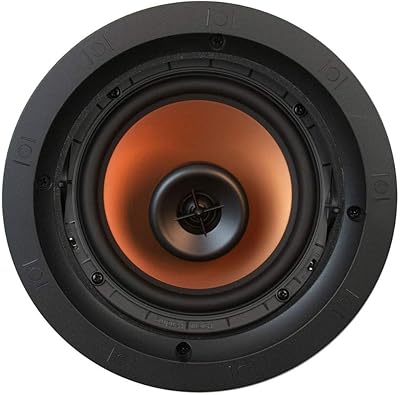
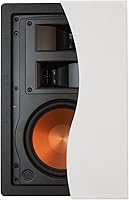
The core engineering story here is the pair of stacked Tractrix Horn tweeters, each fitted with a titanium diaphragm. Horn geometry spreads high-frequency energy across a wide arc rather than focusing it in one spot — exactly what you want from a surround channel, where the goal is envelopment rather than pinpoint imaging. The 6.5-inch Cerametallic woofer covers midrange and upper bass with enough authority for a surround role, though a subwoofer remains essential. Horn-loading also improves driver efficiency, delivering more output with less power and lower distortion. The pivoting tweeter assembly lets you redirect aim after installation, which genuinely matters when the listening position isn't centered in front of the speaker.

Best For

This wall-mounted surround unit makes the most sense for homeowners doing a full home theater build or renovation — the kind of project where drywall work and cable runs are already on the plan. It fits naturally into 5.1 or 7.1 setups where architectural cleanliness matters and floor-standing surrounds would eat up valuable space. Buyers already running Klipsch Reference speakers up front will appreciate how well the tonal character carries across channels. It's a poor fit for renters or anyone not comfortable with a committed installation. Cutting a hole in your wall is a real decision, and this speaker rewards those who've planned their layout before purchasing.

User Feedback

Owners who've lived with this in-wall surround speaker long-term consistently praise the wide dispersion effect the stacked tweeters produce — many note it sounds less like a point source and more like sound emerging from the room itself. Klipsch-ecosystem buyers frequently highlight how naturally it blends with Reference front speakers tonally. On the critical side, bass depth comes up often, which is fair and expected for a surround in-wall. Running the speaker without a proper backing enclosure leaves the low end noticeably thin; adding one makes a real difference and is worth the extra cost. Long-term reliability feedback is broadly positive, and a handful of buyers flag the per-unit pricing as a surprise when shopping for a pair.

Pros

  • Dual stacked tweeters produce genuinely wide surround dispersion that single-tweeter in-wall speakers cannot replicate.
  • Horn-loaded design delivers high efficiency and clean output without pushing your receiver hard.
  • Pivoting tweeter assembly lets you redirect sound after installation — useful in asymmetric or oddly shaped rooms.
  • Tonal character matches Klipsch Reference front speakers closely, making blending across channels straightforward.
  • Painted to match your wall color, this wall-mounted surround unit becomes effectively invisible in the room.
  • Long market history since 2012 means real long-term reliability data exists, and it holds up well.
  • Standard 8-ohm impedance ensures compatibility with virtually any home theater receiver without special setup.
  • The Cerametallic woofer handles midrange and upper bass cleanly, making dialogue and ambient effects sound natural.
  • Adding a proper backing enclosure noticeably tightens and improves bass response — a worthwhile upgrade with a clear payoff.

Cons

  • Sold as a single unit — buying a pair for standard surround use costs double what the listing price suggests.
  • Bass output without a dedicated backing enclosure is noticeably thin and underwhelming.
  • Installation requires drywall cutting, in-wall cable runs, and real planning — this is not a beginner weekend project.
  • Horn-loaded tweeters can sound slightly aggressive in bright, reflective rooms at higher listening volumes.
  • Documentation included in the box does not clearly explain the backing enclosure recommendation, leaving buyers to discover it independently.
  • Limited warranty coverage offers less protection than some competing brands, which matters more for a permanently installed product.
  • Tonal brightness may require receiver EQ adjustment when paired with non-Klipsch front speakers.
  • Not suitable for music-only listening applications — the surround-focused design is too specialized for general stereo use.
  • Per-unit pricing plus installation costs can make the total investment grow significantly beyond the initial sticker price.

Ratings

Our scores for the Klipsch R-5650-S II In-Wall Speaker were built by processing verified buyer reviews from multiple global markets, with automated filters applied to remove incentivized, bot-generated, and outlier feedback. What remains reflects the honest majority — enthusiasts who installed these speakers, lived with them, and reported back on both what impressed and what frustrated them. Strengths and genuine pain points are weighted equally here, so the scores tell the real story.
Surround Sound Immersion
91%
The stacked dual-tweeter layout consistently earns praise for producing a wide, enveloping soundstage that single-tweeter in-wall speakers simply cannot match. Buyers describe action sequences and concert mixes as feeling genuinely three-dimensional rather than coming from an obvious point on the wall.
A small number of listeners in very large rooms note that even with the tweeter angled correctly, the dispersion can feel uneven at extreme seating positions far from the speaker's axis. This is partly a room acoustics issue, but it does come up.
Tonal Matching with Klipsch Systems
88%
Buyers already running Klipsch Reference towers or bookshelf speakers up front consistently report that these surrounds blend without any obvious tonal discontinuity. The horn-loaded character translates across channels in a way that competing brands rarely achieve when mixed into an existing Klipsch setup.
For anyone pairing this with non-Klipsch front speakers, the tonal signature — slightly forward and bright in the upper midrange — can create a mismatch that takes meaningful receiver EQ to smooth out. It is not a universal plug-in solution.
High-Frequency Clarity
86%
The titanium diaphragm compression drivers handle high-frequency transients — cymbal strikes, dialogue consonants, ambient environmental detail — with real crispness. Multiple reviewers specifically call out how much cleaner dialogue reproduction feels compared to budget in-wall alternatives they had previously used.
Some listeners find the treble presence slightly aggressive at higher listening volumes, which is a known characteristic of horn-loaded tweeters in general. Rooms with hard reflective surfaces like tile or glass can amplify this tendency noticeably.
Bass Performance
61%
39%
For a surround-role speaker, the 6.5-inch Cerametallic woofer handles upper bass and lower midrange responsibly. Buyers who pair it with a dedicated subwoofer report that the overall system bass feels well-integrated and the woofer hands off cleanly without a noticeable gap.
Running this speaker without a proper in-wall backing enclosure results in noticeably thin, loose bass — a recurring complaint in reviews. Even with an enclosure, true low-end extension is limited, and buyers expecting meaningful bass output without a sub will be disappointed.
Installation Experience
58%
42%
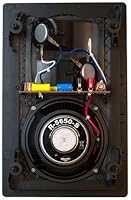
The physical installation mechanism works reliably once you are comfortable with basic drywall cuts, and the dog-leg mounting system secures the speaker firmly without requiring a separate frame. The pivoting tweeter adjustment is genuinely useful and easy to set after the speaker is seated in the wall.
This is not a beginner-friendly install. Running speaker wire inside walls, cutting precise openings, and sourcing an appropriate backing enclosure adds real time and cost. Several buyers underestimated the complexity and flagged it as a multi-hour project even for experienced DIYers.
Build Quality
79%
21%
The overall construction feels solid for the price tier, and the grille attaches cleanly with a flush fit that looks intentional rather than an afterthought. Buyers in long-term ownership report no structural failures, loose drivers, or rattling over years of regular use.
The ABS enclosure material does not feel particularly premium when handling the unit during installation, and a handful of reviewers note that the grille clips can feel fragile if removed and reattached frequently for painting purposes.
Tweeter Adjustability
83%
The pivoting horn assembly is one of this speaker's more practical features — being able to redirect the tweeter cluster after the speaker is already set in the wall removes a significant installation headache. Buyers in asymmetric room layouts specifically call this out as a deciding factor in their purchase.
The pivot range, while useful, has physical limits, and in some corner or angled installations the maximum rotation still does not fully align with an off-center listening position. It helps substantially but is not a fix for extreme room geometry.
Value for Money
72%
28%
At its price point, the dual-tweeter surround design offers a level of engineering investment that is hard to find from competing brands. For buyers who understand what they are purchasing — a purpose-built surround channel speaker — the performance-to-cost ratio holds up well.
The per-unit pricing catches many shoppers off guard when they realize two are needed for a standard surround setup, effectively doubling the outlay. Factoring in the cost of backing enclosures and professional installation if needed, the total spend can grow faster than the listing price implies.
Receiver Compatibility
84%
The standard 8-ohm impedance means this speaker works with virtually every home theater receiver on the market without any special configuration. Buyers report clean, stable operation across a wide range of amplifier brands and power ratings, including budget AVRs.
There are no meaningful compatibility complaints in the broader feedback pool. The only edge case involves very low-powered vintage receivers, where the horn-loading efficiency helps but extreme listening levels are still off the table.
Room Aesthetics & Discretion
87%
Installed and painted to match the wall, this in-wall surround speaker essentially disappears from the room. Buyers consistently praise how much cleaner their home theater looks compared to bracket-mounted bookshelf speakers, particularly in living rooms that double as social spaces.
Painting the grille to match a non-white wall requires care — a sloppy paint job can clog the grille fabric and affect high-frequency output. A small number of buyers mention this as something they wished had been warned about more clearly upfront.
Long-Term Reliability
82%
18%
With a market history stretching back to 2012, there is a genuine pool of long-term ownership data here. Buyers reporting five-plus years of regular use are common, and component failures — driver burnout, connection degradation — are rarely cited.
Klipsch's limited warranty offers less coverage than some competing brands, and a few buyers in geographies outside the US report difficulty obtaining warranty service. For a permanent in-wall installation, warranty terms matter more than they would for a portable product.
Midrange Reproduction
78%
22%
Dialogue and vocal clarity in movie and TV content come through with solid intelligibility, and buyers using these as rear surrounds in a 5.1 system report that ambient sound effects feel naturally layered without harsh coloration in the midrange band.
The midrange can sound slightly compressed on complex orchestral passages at high listening levels, which a handful of audiophile-leaning buyers notice. It is a minor criticism in a surround context, but worth flagging for listeners with critical ears.
Packaging & Out-of-Box Experience
69%
31%
The speaker arrives well-protected and includes basic documentation. Nothing about the unboxing experience generates complaints, and the mounting template included in the packaging makes the drywall cutting step more straightforward for first-time installers.
The documentation for optimal placement and backing enclosure selection is thin. Several buyers had to research independently to understand that an enclosure is strongly recommended, which feels like information that should be front and center in the included materials.

Suitable for:

The Klipsch R-5650-S II In-Wall Speaker is purpose-built for homeowners who are serious about their home theater and want the speakers to disappear into the architecture rather than dominate the room. It fits best into dedicated theater builds or whole-room renovations where running speaker wire inside walls is already part of the plan — the kind of project where you are thinking about the finished room, not just the audio equipment in isolation. Buyers already running Klipsch Reference speakers at the front of their system will find the tonal character carries over naturally, making channel-to-channel consistency a genuine strength rather than something to compensate for with EQ. It also suits rooms where bookshelf or floor-standing surrounds are simply impractical — tight spaces, high-traffic areas, or living rooms that need to function as normal spaces between movie nights. If you are comfortable with basic drywall work and speaker wiring, or you have a trusted installer lined up, this wall-mounted surround unit rewards the effort with a clean, immersive surround field that over-the-wall solutions rarely match.

Not suitable for:

The Klipsch R-5650-S II In-Wall Speaker is a poor choice for anyone expecting a simple, reversible setup — once it is in the wall, it is in the wall, and that commitment is not for everyone. Renters, frequent movers, or buyers who want to audition and return speakers without leaving holes in drywall should look at conventional bookshelf options instead. This in-wall surround speaker is also not the right pick for listeners hoping to get meaningful bass output without a dedicated subwoofer — it handles the surround role responsibly, but it is not designed to carry low-end weight on its own. Budget-conscious buyers need to factor in that it is sold as a single unit, meaning a stereo surround pair requires two purchases, plus the additional cost of backing enclosures if you want the bass performance to reach its potential. Finally, anyone looking for a universal speaker that works equally well across multiple use cases — music listening, desktop audio, casual TV watching — will find this in-wall surround speaker too specialized and too permanently installed to justify the trade-offs.

Specifications

  • Woofer: A 6.5-inch Cerametallic cone woofer handles midrange and upper bass frequencies, providing clean output suited to a dedicated surround channel role.
  • Tweeters: Two 1-inch titanium diaphragm compression drivers are vertically stacked and horn-loaded to widen high-frequency dispersion across the listening area.
  • Horn Type: A pivoting 90°x90° square Tractrix Horn allows the tweeter assembly to be physically angled toward the listening position after the speaker is installed in the wall.
  • Frequency Response: The speaker is rated from 60 Hz upward, making subwoofer support essential for any system requiring full low-frequency coverage.
  • Impedance: Nominal impedance is 8 ohms, ensuring broad compatibility with standard home theater receivers without requiring special amplifier configuration.
  • Dimensions: The speaker body measures 3.75″ deep by 9.3″ wide by 14.3″ tall, determining the minimum wall cavity space required for installation.
  • Surround Config: Designed for 5.1 and 7.1 surround sound channel configurations, with the dual-tweeter layout specifically optimized for surround and rear channel placement.
  • Mounting Type: In-wall mounting only — the speaker requires a cutout in drywall and uses a dog-leg clamping mechanism to secure itself to the wall material.
  • Driver Material: The woofer cone uses a Cerametallic composite material, while the tweeter diaphragms are titanium, both chosen for stiffness and low resonance coloration.
  • Enclosure Material: The speaker body and baffle are constructed from ABS (Acrylonitrile Butadiene Styrene), a rigid thermoplastic suitable for in-wall acoustic applications.
  • Audio Driver Type: Dynamic driver topology is used throughout, with horn-loading applied to the tweeter section to improve efficiency and reduce distortion at the driver level.
  • Power Source: The speaker operates as a passive corded unit, requiring connection to an external amplifier or home theater receiver via standard speaker wire.
  • IR Knockout: An IR (infrared) receiver knockout is included in the baffle, allowing optional integration with IR control systems without requiring a separate wall-mounted sensor.
  • Unit Count: Each purchase contains one speaker only — two units must be purchased separately to outfit a standard stereo surround position pair.
  • Warranty: Klipsch provides a limited warranty with this speaker; full terms and regional service availability should be confirmed directly with Klipsch prior to purchase.
  • Series: This model belongs to Klipsch's Reference (R) series, positioned as a performance-oriented line above entry-level offerings but below the brand's flagship tiers.
  • Grille Finish: The included grille is paintable, allowing it to be finished to match the wall color for a near-invisible aesthetic after installation.
  • Shape: The speaker has a rectangular profile, which aligns with standard in-wall speaker rough-in brackets and common drywall cutout templates.

Related Reviews
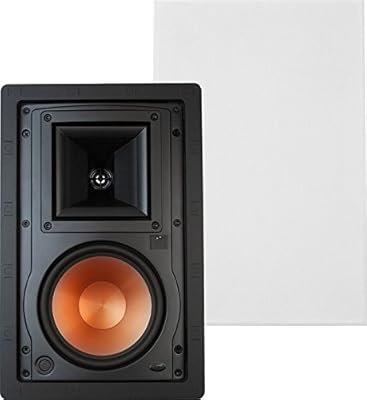
Klipsch R-3650-W II In-Wall Speaker
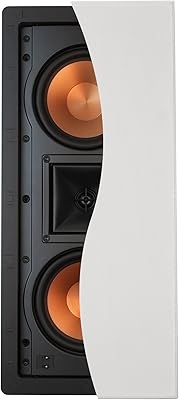
86%
89%
Sound Quality
87%
Bass Response
91%
Ease of Installation
84%
Design & Aesthetics
90%
Build Quality
More
Klipsch R-5502-W II In-Wall Speaker
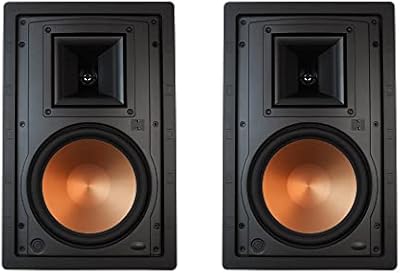
83%
91%
Sound Quality
78%
Ease of Installation
88%
Design and Aesthetics
85%
Build Quality
89%
Power Handling
More
Klipsch R-5800-W II In-Wall Speakers
87%
91%
Sound Quality
89%
Ease of Installation
94%
Build Quality
85%
Customization Options (Sound Tuning)
88%
Acoustics/Clarity
More
Klipsch CDT-5650-C II In-Ceiling Speaker
81%
93%
Sound Clarity
61%
Bass Performance
91%
Driver Aimability
54%
Installation Experience
89%
Sound Dispersion
More
Klipsch R-625FA Dolby Atmos Floorstanding Speaker
83%
93%
Sound Dynamics
74%
Dolby Atmos Height Effect
81%
Bass Performance
91%
Build Quality
86%
Ease of Setup
More
Klipsch R-41M
Klipsch R-41M
78%
91%
Sound Clarity & Detail
52%
Bass Performance
86%
Soundstage & Imaging
93%
Sensitivity & Amplifier Compatibility
78%
Build Quality
More
Klipsch R-50M Bookshelf Speakers
82%
91%
Sound Clarity & Detail
74%
Treble Balance
86%
Midrange Performance
63%
Bass Response
93%
Efficiency & Sensitivity
More
Klipsch R-41PM Powered Bookshelf Speakers
80%
88%
Sound Clarity & Detail
67%
Bass Performance
84%
Soundstage & Imaging
91%
Built-in Phono Preamp
86%
Connectivity & Input Range
More
Klipsch R-34C Center Channel Speaker
89%
93%
Sound Clarity
89%
Dialogue Reproduction
84%
Bass Performance
90%
Build Quality
88%
Ease of Setup
More
Klipsch Reference R-820F Floorstanding Speaker
86%
92%
Sound Quality
89%
Bass Performance
85%
Build Quality
90%
Ease of Integration
75%
Size & Space Requirements
More

FAQ

Yes — this in-wall surround speaker is sold as a single unit, so a standard left and right surround setup requires two separate purchases. It is one of the more common surprises for first-time buyers, so factor that into your total budget from the start.

You can install it in an open wall cavity, but most experienced buyers recommend against it. Without a backing enclosure, the bass output tends to sound loose and thin because the woofer is working against an undefined air space. A dedicated in-wall enclosure tightens up the low end noticeably and is worth the extra cost if bass performance matters to you.

It blends well with other Reference series speakers, and that is honestly one of its stronger selling points. The horn-loaded character and tonal signature carry across the channel consistently, which reduces the need for heavy receiver EQ to compensate for mismatched timbre.

It is manageable if you are comfortable with basic drywall work, but it is not a beginner project. You will need to plan your cable routing inside the walls, cut a precise opening using the provided template, and make sure the wall cavity depth accommodates the speaker body. The clamping mechanism itself is straightforward once everything is positioned correctly.

The tweeter assembly can be physically rotated within the baffle so you can aim the high-frequency output toward your seating position rather than straight out from the wall. It matters quite a bit in rooms where the listening position is not directly in front of the speaker — angling the horn toward the couch rather than across the room makes a real difference in clarity and presence.

The 8-ohm impedance rating means it will work reliably with virtually any modern home theater receiver on the market. There are no special requirements or unusual load characteristics to worry about — standard speaker wire connections and normal receiver settings are all you need.

Yes, the grille is designed to be painted. Use a light spray application rather than a brush to avoid clogging the grille fabric, which can muffle high-frequency output if the paint sits too thick. Let it dry fully before reinstalling.

For any serious home theater use, yes. The speaker's frequency response starts at 60 Hz, which means everything below that — the deep bass in film soundtracks, explosions, low musical notes — will simply be missing without a subwoofer handling that range. This speaker is designed as a surround channel component, not a full-range solution.

The main advantages are aesthetics and space — once installed, the speaker disappears into the wall, which bookshelf speakers on brackets cannot do. The dual-tweeter design also provides a wider dispersion pattern that suits the surround role particularly well. The trade-off is permanence and installation effort; if you move or want to change your setup, you are dealing with wall repairs rather than simply repositioning a stand.

As of the time of this review, the model has not been discontinued by the manufacturer. It has been available since 2012, which is actually reassuring — long production runs typically indicate stable demand and ongoing parts availability. That said, always confirm current warranty and support terms directly with Klipsch, as regional service options can vary.

Where to Buy