
Overview

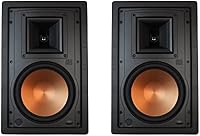
The Klipsch R-5800-W II In-Wall Speakers are built for homeowners who want serious audio performance without sacrificing wall space to floor-standers or bookshelf units. Part of Klipsch's Reference series, these in-wall speakers sit a clear notch above budget flush-mount options in build quality, driver technology, and long-term reliability. They ship as a stereo pair with a lifetime warranty, which matters more than it might sound — permanent wall installations are not easy to swap out, so buying something backed for life is genuinely reassuring. Requiring a receiver or amplifier to function, this is not a casual convenience buy. It is infrastructure for a real audio system.

Features & Benefits

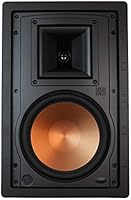
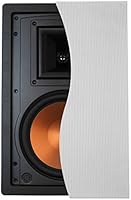
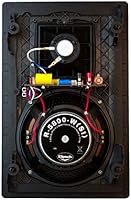
The core of what makes this Klipsch wall speaker set worth considering is the horn-loaded driver configuration. Most competing in-wall speakers expose a conventional tweeter dome directly to the room — Klipsch routes high frequencies through a pivoting Tractrix Horn, which focuses and projects sound more efficiently. In practical terms, that means lower distortion at higher volumes and better coverage across a listening area. The Cerametallic woofer handles the low end with decent authority for a wall-mounted unit, though in larger rooms, pairing with a subwoofer remains advisable. Treble and midbass attenuation switches let you fine-tune output after installation, which is genuinely useful when room acoustics don't cooperate.

Best For

These in-wall speakers are the right call for homeowners building a dedicated home theater or a whole-home audio system where aesthetics and performance need to coexist. If you are designing a media room and the idea of visible speaker cabinets cluttering the space is a dealbreaker, this Klipsch wall speaker set fits neatly behind a standard drywall grille. Custom AV integrators will appreciate the high sensitivity, which pairs well with most mid-tier AV receivers without demanding a powerful amplifier. That said, installation involves cutting drywall and running speaker wire through walls — ideally with professional help — making these a poor fit for renters or anyone likely to move soon.

User Feedback

With a 4.7 out of 5 rating across more than 170 verified buyers, the overall sentiment around the Klipsch R-5800-W II pair is strongly positive. Owners frequently call out clarity at high volumes as the standout quality, suggesting the horn-loaded design delivers in real rooms, not just on paper. The pivoting tweeter earns specific praise from DIY installers who found it practical when placement was less than ideal. On the downside, a handful of reviewers flag that installation is no simple weekend project — without prior experience, it is easy to underestimate the effort involved. Buyers comparing against Polk Audio or Sonance at similar price points often cite Klipsch's horn efficiency advantage as the deciding factor.

Pros

  • Horn-loaded tweeter design produces noticeably clearer, more efficient sound than most comparably sized in-wall speakers.
  • The pivoting Tractrix Horn lets you aim high frequencies toward the listening area, regardless of where the speaker ends up in the wall.
  • An 8-inch Cerametallic woofer handles bass with real authority for a wall-mounted unit — no subwoofer needed in smaller rooms.
  • Treble and midbass attenuation switches let you tune the sound after installation, which is rare and genuinely practical.
  • The white grille sits flush and clean against drywall — most owners report it blends in without drawing attention.
  • Lifetime warranty on a permanent installation is a meaningful commitment, not just a marketing footnote.
  • At 100 watts max power handling, these in-wall speakers have real headroom without straining at higher listening levels.
  • Owners consistently report strong output volume relative to the speakers' in-wall form factor.
  • The IR receiver knockout adds useful flexibility for integrators building hidden component setups.
  • Rated 4.7 out of 5 across more than 170 buyers — a reliable signal of consistent real-world satisfaction.

Cons

  • Installation requires cutting drywall, running in-wall speaker wire, and confident hands — this is not a plug-and-play setup.
  • Professional installation adds meaningful cost on top of the purchase price and should be factored in from the start.
  • Bass performance thins out noticeably in larger rooms; a subwoofer is a practical necessity in those spaces.
  • No wireless capability whatsoever — if your setup does not already include a wired infrastructure, these in-wall speakers add planning complexity.
  • Competing options from Polk Audio and Sonance exist at lower price points, making value comparisons worth doing before committing.
  • At 20 pounds for the pair, the physical weight and size of each unit can make solo installation awkward without a helper.
  • The rectangular cutout dimensions are specific — retrofitting into existing drywall openings from other brands is not guaranteed to work.
  • No grille color options are offered; buyers with darker wall finishes have no matching alternative.
  • Requires an external amplifier or AV receiver — new buyers underestimating total system cost may find the full setup more expensive than expected.

Ratings

Our AI rating system analyzed verified global buyer reviews for the Klipsch R-5800-W II In-Wall Speakers, actively filtering out incentivized, bot-generated, and outlier feedback to surface what real owners consistently experience. Scores reflect both the genuine strengths that make these in-wall speakers stand out in their category and the honest pain points that buyers encounter in real-world installations. Every category below is weighted against comparable products at this price tier, so you get a transparent picture — not a polished sales summary.

Sound Clarity
93%
Owners repeatedly describe the midrange and high-frequency reproduction as unusually clear for an in-wall format — a direct result of the horn-loaded compression driver. In home theater setups, dialogue intelligibility stands out, with voices sounding natural and well-defined even at moderate listening distances.
A small number of users found the treble slightly forward-sounding in bright, reflective rooms before adjusting the attenuation switches. This is manageable with tuning, but buyers expecting a warm, laid-back sound signature out of the box may need time to dial things in.
Bass Performance
74%
26%
For a passively driven in-wall speaker, the 8-inch Cerametallic woofer handles low-end with more authority than most competing designs at this size. In smaller dedicated listening rooms, buyers report satisfying bass weight for both music and TV audio without immediately reaching for a subwoofer.
In medium-to-large rooms, the limitations of the in-wall format become apparent — low frequencies lose punch and fullness, and a subwoofer becomes less optional. Bass-first listeners expecting club-level impact from a two-speaker setup will find these in-wall speakers fall short of that expectation.
Build Quality
91%
The physical construction earns consistent praise from buyers who have handled premium in-wall speakers before. The grille fits flush with minimal gaps, the driver basket feels rigid and well-anchored, and nothing rattles or flexes in ways that suggest cost-cutting in the enclosure or mounting hardware.
A handful of installers noted the drywall mounting clips require careful handling during installation to avoid stripping — not a dealbreaker, but something worth slowing down for. There are no pre-painted grille color options, which is a minor but real aesthetic limitation for buyers with non-white walls.
Installation Experience
58%
42%
Experienced AV installers and capable DIYers appreciate the thoughtful physical design — the mounting system is well-engineered, the wiring terminals are easy to reach, and the pivoting tweeter snaps into position cleanly without fuss once the speaker is seated in the wall.
For the majority of buyers without professional installation experience, this is genuinely challenging work. Cutting the correct rectangular opening, managing wall cavity depth, and routing speaker wire cleanly through walls is a multi-hour project that frequently requires professional help, adding real cost that some buyers did not anticipate upfront.
Tweeter Versatility
89%
The pivoting Tractrix Horn is one of the most practically praised features across owner reviews. When wall placement is constrained by studs or room layout, being able to physically angle the tweeter toward the seating position makes a perceptible difference in focus and imaging compared to fixed-tweeter alternatives.
The pivot range, while useful, has physical limits — buyers with extreme off-axis listening positions or very wide rooms will find it helps but does not fully solve the dispersion challenge. Some users also report needing to re-angle the tweeter after grille reinstallation, which requires a second round of fine-tuning.
Value for Money
78%
22%
When measured against what these in-wall speakers deliver sonically — horn efficiency, quality drivers, a lifetime warranty, and real tuning flexibility — buyers who do their research consistently feel the price is justified. The lifetime coverage alone offsets a meaningful portion of the premium over budget in-wall alternatives.
At this price point, buyers are directly competing with well-regarded alternatives from Polk Audio, Sonance, and the lower end of the Bowers and Wilkins in-wall range. Without professional installation already budgeted, the total ownership cost rises quickly, and some buyers feel the value calculation gets less comfortable at that point.
Room Integration
86%
The white grille and rectangular profile integrate cleanly into standard painted drywall without drawing the eye — owners frequently comment that guests do not notice the speakers until the audio starts. The flush-mount design works particularly well in minimalist or modern interior spaces where visible speaker cabinets would feel out of place.
The single white finish limits flexibility in rooms with colored or dark walls, and there is no official alternative grille option from Klipsch for this model. Buyers with warmer interior color schemes sometimes note that the bright white grille stands out more than they would prefer.
High-Volume Performance
88%
The horn-loaded driver configuration pays dividends at higher playback levels — these in-wall speakers hold together well under demanding listening conditions, with less compression and distortion creep than typical direct-radiating in-wall designs at comparable volumes. Home theater users in particular notice the difference during action sequences.
Sustained very-high-volume listening in smaller rooms can occasionally reveal some cabinet resonance, particularly in the lower midrange frequencies. This is more a function of the in-wall format itself than a flaw in this specific model, but it is worth noting for buyers who routinely push their audio systems hard.
Amplifier Compatibility
87%
The 8-ohm impedance and efficient horn-loaded design mean these in-wall speakers pair comfortably with a wide range of mid-tier AV receivers without demanding extreme amplifier output. Buyers running modest receivers in the 75-watt-per-channel range report plenty of dynamic range without needing to upgrade their amplification.
Because amplification is required and not included, buyers who do not already own a receiver are looking at a meaningful additional purchase. Entry-level receivers can technically drive these speakers, but pairing them with underpowered or low-quality amplification undersells what the drivers are capable of delivering.
Warranty Coverage
96%
A lifetime warranty on a permanently installed speaker is a genuinely meaningful commitment that very few competing brands match at this price tier. For homeowners who understand the labor cost of replacing an in-wall speaker years down the line, this coverage functions as real financial protection rather than just marketing language.
The warranty applies to the original purchaser only, which limits its value if the home is ever sold or the speakers change hands. Buyers should also be aware that physical installation damage — such as cracked baffles from rough handling during mounting — is typically excluded from manufacturer defect coverage.
Tuning Flexibility
82%
18%
Having physical attenuation switches for both treble and midbass built directly into the speaker is a practical advantage that owners of competing models often lack. In rooms with hard reflective surfaces, pulling the treble back slightly post-installation produces a noticeably more balanced result without touching the receiver EQ.
The attenuation switches offer only fixed-level cuts rather than continuous adjustment, which limits how precisely you can fine-tune the output. Audiophiles used to parametric room correction tools may find the adjustment range too coarse for their preferences, though most casual listeners find the available options sufficient.
Imaging and Stereo Staging
81%
19%
For an in-wall stereo pair, the Klipsch R-5800-W II pair produces a surprisingly well-defined stereo image when speakers are correctly positioned and the tweeter is aimed properly. Music listeners report a genuine sense of instrument placement and depth, which is not always a given with flush-mount designs in this category.
Stereo imaging is sensitive to room placement, and because wall positioning is often dictated by construction constraints, some buyers end up with speakers that are not ideally spaced for the listening area. In those scenarios, the imaging suffers noticeably, and no amount of tweeter adjustment fully compensates for poor lateral spacing.
Long-Term Durability
88%
Early ownership feedback is consistently positive regarding driver condition and mounting stability over time. The Cerametallic cone material is known for resisting humidity-related degradation better than paper or fabric alternatives, which matters in environments with seasonal humidity fluctuations — a real consideration for permanently installed speakers.
Long-term reliability data is naturally limited given the product launched in early 2023. While Klipsch's track record in this category is strong and the lifetime warranty provides a safety net, buyers cannot yet draw on years of post-installation owner feedback the way they might with older legacy speaker lines.

Suitable for:

The Klipsch R-5800-W II In-Wall Speakers are built for a specific kind of buyer: someone who is serious about audio quality and equally serious about keeping their living space clean and uncluttered. They make the most sense in purpose-built home theater rooms, dedicated media spaces, or whole-home audio systems where an AV receiver or amplifier is already part of the plan. Homeowners working with a custom AV integrator will find these particularly well-suited, as the high-sensitivity design works efficiently with a wide range of amplification. Listeners who prioritize vocal clarity, detailed midrange reproduction, and crisp highs over raw, room-shaking bass will feel well-served here. If you are building something permanent and want speakers that will outlast every component around them — given the lifetime warranty — this pair deserves serious consideration.

Not suitable for:

The Klipsch R-5800-W II In-Wall Speakers are a hard sell for anyone who has not thought carefully about what a permanent wall installation actually involves. Cutting through drywall, fishing speaker wire through wall cavities, and properly mounting a flush enclosure is not a casual afternoon project — most buyers without prior AV installation experience should budget for professional help, which adds real cost to the overall investment. Renters or anyone who anticipates moving within a few years should look elsewhere entirely; these speakers are designed to stay put. Bass-first listeners who want thunderous low-end from a two-speaker stereo setup will likely be disappointed without adding a subwoofer, especially in larger rooms. Buyers on a tight budget should also know that competing brands like Polk Audio offer in-wall options at lower price points, even if they sacrifice some of the horn-loaded performance advantage that defines this Klipsch line.

Specifications

  • Woofer: Each speaker uses an 8-inch Cerametallic cone woofer designed to deliver tight, low-distortion bass response in a flush-mount enclosure.
  • Tweeter: A 1-inch titanium dome compression driver handles high-frequency reproduction with clarity and minimal listening fatigue.
  • Horn Type: A 4-inch square 90°x60° Tractrix Horn is mated to the tweeter, focusing sound dispersion toward the listening area rather than scattering it broadly.
  • Power Handling: Each speaker handles up to 100 watts, giving these in-wall speakers meaningful headroom for high-volume listening without strain.
  • Impedance: Both speakers in the pair present an 8-ohm load, compatible with the vast majority of home theater AV receivers and stereo amplifiers.
  • Configuration: The set includes two speakers configured as a stereo pair with a 2.0 surround sound channel layout.
  • Mounting Type: These speakers are designed for permanent in-wall, flush-mount installation requiring a rectangular cutout in standard drywall.
  • Dimensions: Each speaker measures 3.75″ deep by 9.25″ wide by 14.75″ tall, which determines the required wall cutout and cavity depth.
  • Total Weight: The pair weighs 20.1 pounds combined, so each unit is substantial enough to require careful handling and secure mounting during installation.
  • Finish: Both speakers ship with a white grille designed to sit flush and blend unobtrusively against standard painted drywall.
  • Tweeter Adjustment: The Tractrix Horn tweeter pivots independently, allowing installers to aim high-frequency output toward the primary listening position.
  • Tuning Switches: Built-in treble and midbass attenuation switches let users adjust tonal balance after installation to better suit specific room acoustics.
  • IR Knockout: An IR receiver knockout is included, enabling optional integration with in-wall infrared repeater systems for hidden AV component control.
  • Power Source: These in-wall speakers are passively driven and require connection to an external wired amplifier or AV receiver — no internal amplification is included.
  • Warranty: Klipsch backs these speakers with a lifetime warranty, which is especially relevant given the permanent, labor-intensive nature of in-wall installation.
  • Series: These speakers belong to Klipsch's Reference series, which occupies a mid-to-upper tier in the brand's in-wall speaker lineup.
  • Speaker Type: Classified as component in-wall speakers, they are intended for custom audio installations rather than standalone or portable use.
  • Compatible Devices: These in-wall speakers are compatible with televisions, projectors, desktop computers, and laptops when connected through an appropriate amplifier or receiver.
  • ASIN: The Amazon product identifier for this listing is B0BV5H2MDR, corresponding to model number R-5800-W II.
  • Availability Date: This product was first listed for sale on February 8, 2023, making it a relatively recent addition to Klipsch's Reference in-wall lineup.

Related Reviews
Klipsch R-3650-W II In-Wall Speaker
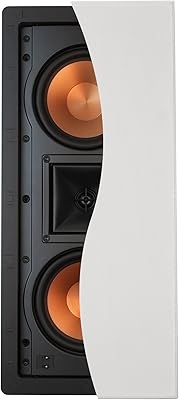
86%
89%
Sound Quality
87%
Bass Response
91%
Ease of Installation
84%
Design & Aesthetics
90%
Build Quality
More
Klipsch R-5502-W II In-Wall Speaker
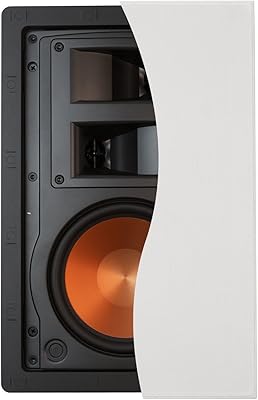
85%
93%
Sound Clarity
71%
Bass Performance
89%
Midrange Accuracy
86%
Soundstage & Imaging
74%
Installation Ease
More
Klipsch R-5650-S II In-Wall Speaker
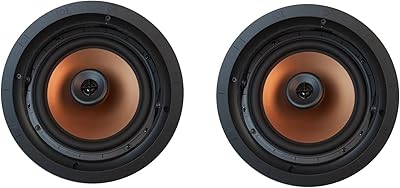
78%
91%
Surround Sound Immersion
88%
Tonal Matching with Klipsch Systems
86%
High-Frequency Clarity
61%
Bass Performance
58%
Installation Experience
More
Klipsch CDT-5800-C II In-Ceiling Speakers
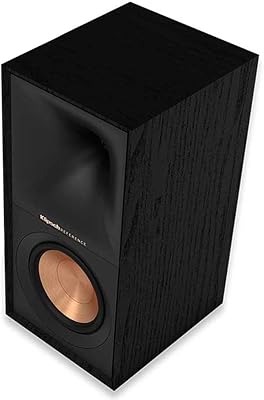
84%
91%
Sound Clarity
74%
Bass Performance
88%
Build Quality
79%
Installation Experience
86%
Room Tuning Flexibility
More
Klipsch R-50M Bookshelf Speakers
82%
91%
Sound Clarity & Detail
74%
Treble Balance
86%
Midrange Performance
63%
Bass Response
93%
Efficiency & Sensitivity
More
Klipsch R-41M
Klipsch R-41M
78%
91%
Sound Clarity & Detail
52%
Bass Performance
86%
Soundstage & Imaging
93%
Sensitivity & Amplifier Compatibility
78%
Build Quality
More
Klipsch R-625FA Dolby Atmos Floorstanding Speaker
83%
93%
Sound Dynamics
74%
Dolby Atmos Height Effect
81%
Bass Performance
91%
Build Quality
86%
Ease of Setup
More
Klipsch RB-61 II
Klipsch RB-61 II
81%
91%
Sound Clarity
94%
Sensitivity & Efficiency
72%
Bass Performance
86%
Sound Staging & Imaging
83%
Build Quality
More
Klipsch R-620F Floorstanding Speakers
80%
91%
Sound Dynamics
72%
Treble Quality
78%
Bass Performance
88%
Value for Money
84%
Build Quality
More
Klipsch R-26FA Floorstanding Speakers
81%
92%
Sound Clarity
78%
Bass Performance
71%
Dolby Atmos Height Effects
91%
Sensitivity & Efficiency
86%
Build Quality
More

FAQ

You will need a separate amplifier or AV receiver — these are passive speakers with no built-in amplification. Most modern TVs do not supply speaker-level output directly, so a dedicated receiver is the standard path. If you are building a home theater setup, that receiver is likely already part of your plan.

Honestly, this is not a beginner DIY project. It involves cutting a precise rectangular hole in your drywall, fishing speaker wire through the wall cavity, and securing the speaker to the drywall without a traditional back-box. If you have done similar work before, it is manageable — but most buyers without AV installation experience hire a professional, and for good reason. Rushing the cutout or wiring can create costly problems.

In smaller to medium-sized rooms, the 8-inch woofer provides respectable bass that works well for music and general TV audio without a subwoofer. In larger spaces or for home theater use where you want cinematic low-end impact, adding a subwoofer is a practical upgrade worth planning for. These in-wall speakers are strong performers, but they are not a replacement for a dedicated sub in a big room.

The tweeter can be physically angled after the speaker is mounted, which means you can redirect high-frequency sound toward your seating area even if the speaker is not positioned directly in front of you. In practice, this makes a real difference — highs and vocals feel more focused rather than diffuse. It is particularly helpful when installation positions are dictated by wall studs or room layout rather than acoustics.

No — these are explicitly rated for indoor use only and are not waterproof or moisture-resistant. Using them in a bathroom or any humid environment risks damaging the drivers and voiding the warranty. If you need outdoor or moisture-tolerant speakers, Klipsch does make dedicated outdoor models in their lineup.

With an 8-ohm impedance and 100-watt max power handling, the Klipsch R-5800-W II pair works comfortably with most mid-range AV receivers rated between 50 and 100 watts per channel. You do not need an exceptionally powerful amplifier — the horn-loaded design is efficient, meaning you get good volume from modest power. Matching them with a quality receiver in the 75-watt-per-channel range is a solid starting point.

Each speaker has physical switches that let you reduce the level of the tweeter and midbass drivers independently. This is useful once the speakers are installed and you discover the room's acoustics make certain frequencies sound harsh or too prominent. For example, a highly reflective room with hard floors might benefit from pulling the treble back slightly. It is a small but useful feature that saves you from having to rely entirely on your receiver's EQ.

Yes — this specific listing ships with a white grille only, and there is no officially listed alternative color variant for this model. If your walls are a darker color, the grille can technically be painted with the right type of paint, though doing so carefully without damaging the grille material requires some effort. Check with Klipsch or your installer before attempting that.

The main practical difference is the dispersion pattern and installation angle. Ceiling speakers fire downward and work well for ambient or surround audio, while these in-wall speakers fire horizontally at ear level, which is better for a primary stereo listening setup or front left and right channels in a home theater. If you want speakers that feel more like a traditional stereo pair — just hidden in the wall — this in-wall format is the stronger choice for that use case.

Klipsch's lifetime warranty covers defects in materials and workmanship for the original purchaser. Given that these speakers are going into your walls permanently, having a manufacturer stand behind the product for the life of your ownership is genuinely meaningful — if a driver fails years down the line, you are not stuck tearing out the wall and starting from scratch at full cost. Warranty transferability to a second owner should be confirmed directly with Klipsch, as their policy terms can vary.