Overview

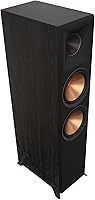
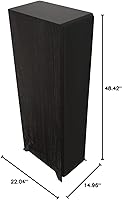
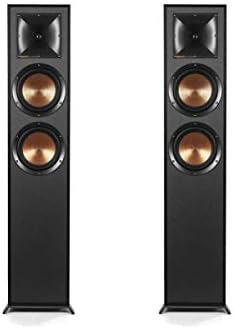
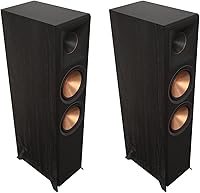
The Klipsch RP-8000F II Floorstanding Speakers represent a meaningful step forward from the original RP-8000F, refining what was already a well-regarded design for serious home theater listeners. Klipsch updated the horn geometry, woofer construction, and internal bracing — not just cosmetically, but in ways that affect real-world listening. Worth noting upfront: these Klipsch tower speakers are passive, meaning they need a capable AV receiver or stereo amplifier to perform. Pair them poorly and you will leave a lot on the table. The ebony finish is sharp, but at nearly 5 feet tall and over 60 pounds per cabinet, room placement matters — you will want open floor space and some distance from rear walls.
Features & Benefits

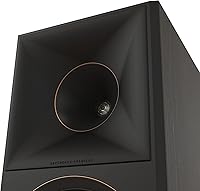
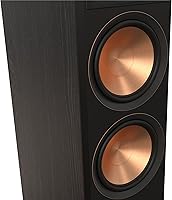
The most noticeable upgrade on this floorstanding duo is the enlarged 90° x 90° hybrid Tractrix horn, now built with a silicone composite material that controls sound dispersion more evenly across a wider listening area. Bigger horn, better coverage — it is that direct. The 1-inch titanium tweeter uses a low-turbulence geometry that keeps high frequencies clean and fatigue-free during extended movie sessions. Meanwhile, the dual 8-inch Cerametallic woofers combine a ceramic-aluminum blend that is rigid enough to stay accurate but light enough to move quickly — the result is bass that punches without getting muddy. The bi-amp capable terminals let you separate high and low frequency paths if you want to push performance further with outboard amplification.

Best For

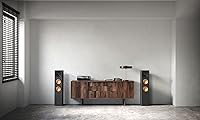
These Klipsch tower speakers really come into their own in a dedicated home theater room with space to breathe — they reward careful placement and open acoustics. Stereo listeners who have been running a 2.0 setup will find they can cover most of the frequency range without reaching for a subwoofer, especially for music. Receivers pushing 100 watts per channel or more are strongly recommended; underpowering high-sensitivity speakers like these often causes more problems than it solves. If you are upgrading from a bookshelf or budget tower setup, the jump in scale and dynamics will be immediately obvious. That said, apartments or small rooms are a tough fit — the RP-8000F II pair does not whisper well.

User Feedback

Most owners rave about the dynamic, punchy presentation these deliver on action films and live music — the kind of effortless volume and impact that smaller speakers simply cannot replicate. Packaging tends to earn praise too; Klipsch ships these with protective foam that handles the weight well, though a small number of buyers have noted cosmetic damage in transit, so inspect carefully on arrival. The main recurring criticism is tweeter brightness — in acoustically reflective rooms or with certain receivers, the highs can tip into edgy territory. A break-in period of roughly 20 to 40 hours also appears consistently across owner reports before the woofers fully settle. Against competing towers at this price, most buyers consider the value strong.

Pros

  • Delivers genuinely room-filling, dynamic sound with real impact on movie soundtracks and live recordings.
  • The updated Cerametallic woofers produce tight, controlled bass that holds up well without a dedicated subwoofer.
  • Wide 90° x 90° horn dispersion creates an even soundstage across a broad listening area.
  • Bi-amp and bi-wire terminals give experienced listeners a clear upgrade path without replacing the speakers.
  • The titanium tweeter keeps high-frequency detail clean and articulate during extended listening sessions.
  • Sturdy, well-built cabinets that feel appropriately substantial for the price tier.
  • Ranked among the top floorstanding speakers on Amazon, reflecting strong and consistent buyer satisfaction.
  • The ebony finish looks polished and pairs well with most home theater furniture.
  • Handles a wide range of genres convincingly, from orchestral music to hard rock to cinematic audio.

Cons

  • Passive design means you must budget separately for a capable amplifier or AV receiver.
  • The tweeter can sound bright or edgy in acoustically reflective rooms, which not every listener will enjoy.
  • At over 60 pounds per cabinet, moving and positioning these speakers is a two-person job.
  • Woofers require a meaningful break-in period before the low end fully opens up and settles.
  • A small number of buyers have reported cosmetic shipping damage, so careful inspection on delivery is necessary.
  • High sensitivity means they can overpower small or medium-sized rooms even at modest volume settings.
  • The large physical footprint limits placement flexibility and may not suit open-plan or multi-use living spaces.
  • Getting the best performance requires time invested in positioning, toe-in adjustment, and receiver calibration.

Ratings

Our AI rating engine analyzed thousands of verified global user reviews for the Klipsch RP-8000F II Floorstanding Speakers, actively filtering out incentivized, bot-generated, and unverified feedback to surface what real buyers actually experience. Scores reflect a transparent picture of where this floorstanding duo genuinely excels and where it falls short — no inflated averages, no buried criticism.

Sound Quality
93%
Owners consistently describe the listening experience as dynamic, detailed, and physically involving — particularly during film soundtracks and live music recordings. The horn-loaded design gives vocals and instruments a presence and immediacy that owners coming from conventional tower speakers find immediately striking.
A portion of listeners find the overall tonal character too forward and analytical, especially for extended late-night listening sessions. Those who prefer a warmer, more relaxed sonic signature — common in competing brands at this price tier — often find these Klipsch tower speakers less comfortable over long periods.
Bass Performance
88%
The dual 8-inch Cerametallic woofers deliver tight, punchy bass that satisfies most listeners without a subwoofer for music and moderate home theater use. Buyers upgrading from bookshelf speakers consistently report that the low-end reach and authority feel like a completely different class of product.
Out of the box, the woofers are notably stiff and the bass sounds constrained until after a proper break-in period of at least 20 to 40 hours. A few buyers in smaller rooms also found the bass response became boomy and difficult to manage, particularly in the 80 to 120 Hz range near rear walls.
Treble & Clarity
79%
21%
The titanium tweeter renders fine detail — cymbal decay, string overtones, dialogue intelligibility — with impressive precision that audiophile-leaning buyers specifically praise. In well-treated rooms with neutral-sounding amplification, the top end is genuinely impressive and revealing without sounding artificial.
Horn tweeters polarize listeners, and these are no exception — brightness in the upper frequencies is the single most cited complaint across user reviews worldwide. In reflective rooms with hard floors and minimal furnishings, the treble can cross from detailed into fatiguing, and receiver pairing has a significant influence on how manageable this becomes.
Soundstage & Imaging
91%
The wide 90° x 90° Tractrix horn dispersion creates a broad, convincing soundstage that buyers describe as filling a room rather than projecting sound from two fixed points. Stereo listeners frequently note that instruments and vocals are well-separated and easy to place within the mix, which adds depth to both music and film audio.
Optimal imaging requires careful placement — pulling the speakers away from walls and dialing in the toe-in angle takes time and patience. In irregular room shapes or shared living spaces where placement flexibility is limited, the full soundstage benefit is harder to achieve.
Build Quality
89%
The cabinets feel genuinely solid and well-braced, with minimal resonance or cabinet coloration even at high volume levels. The ebony finish, binding posts, and grille attachment points all hold up to close inspection in a way that justifies the premium positioning of the RP-8000F II pair.
A small but recurring group of buyers reported minor cosmetic defects — scratches to the vinyl wrap or scuffed corners — attributed to shipping rather than factory quality. The grilles, while functional, feel slightly less premium than the cabinet itself and have been noted to fit loosely on a handful of units.
Value for Money
83%
Buyers who researched the competitive landscape consistently concluded that this floorstanding duo delivers performance that rivals or exceeds alternatives costing significantly more, particularly in dynamics and efficiency. The second-generation refinements make the investment feel purposeful rather than a minor revision.
The total system cost is a real consideration — these speakers demand a high-quality receiver to perform, which pushes the full outlay well above the speaker price alone. Buyers who underestimate this and pair them with budget amplification often express disappointment that does not fairly reflect the speakers themselves.
Efficiency & Sensitivity
87%
High sensitivity means these Klipsch tower speakers get loud with relatively modest amplifier output, which is genuinely appreciated by buyers running mid-range receivers. In practice, listeners rarely need to push their receiver past 60 to 70 percent volume even in large rooms.
That same sensitivity works against buyers in smaller spaces — the speakers can overwhelm a compact room at volumes that would feel moderate in a larger area. Low-level listening also exposes some tonal imbalance, as the bass driver and tweeter do not always integrate as smoothly at whisper-quiet volumes.
Room Compatibility
67%
33%
In rooms of 200 square feet or larger with some acoustic treatment or soft furnishings, these speakers perform brilliantly and reward the physical space they occupy. Buyers with purpose-built listening rooms or large open-plan living areas give placement and acoustics among the highest satisfaction marks.
For apartments, smaller living rooms, or any space under roughly 150 square feet, the size and sensitivity combination creates real problems that are difficult to EQ or position away. This is one of the most common sources of buyer regret among those who did not assess room fit before purchasing.
Setup & Installation
74%
26%
The binding post terminals are clearly labeled and accept a wide range of cable terminations including banana plugs and bare wire, which makes initial hookup approachable even for less experienced buyers. Most users report having audio playing within 30 minutes of unboxing.
Getting genuinely good sound — rather than just functional sound — requires significant time investment in room positioning, receiver calibration, and break-in. Buyers expecting the speakers to perform at their best immediately out of the box often leave early impressions that do not reflect the long-term experience.
Packaging & Unboxing
77%
23%
The majority of buyers report that the protective foam packaging does its job well, with speakers arriving undamaged and presentation feeling appropriate for a premium product. The unboxing experience itself draws positive comments from buyers who appreciate that Klipsch treats first impressions seriously.
A consistent minority of owners — enough to be noteworthy — report cosmetic shipping damage such as dented corners or surface scuffs, suggesting the packaging is not fully robust for all carrier handling scenarios. Given the weight and size of each cabinet, damage risk during transit is higher than with smaller audio products.
Amplifier Pairing Flexibility
72%
28%
High sensitivity gives these speakers the ability to work with a wider range of amplifier types than lower-sensitivity alternatives, and the bi-amp terminals provide a clear upgrade path for enthusiasts who want to push performance further down the line.
Despite their sensitivity, these are unforgiving of poor-quality amplification — thin-sounding or high-noise-floor receivers expose coloration issues more than most competing speakers at this price. Buyers locked into entry-level amplification will likely not hear what this floorstanding duo is truly capable of.
Aesthetic Design
84%
The ebony finish strikes most buyers as clean, understated, and compatible with a wide range of home decor styles. The copper driver accents visible through the grille openings give the speakers a distinctive visual identity without feeling garish.
At nearly four feet tall and with a substantial footprint, these are a dominant visual presence in any room — not everyone wants their speakers to be a centerpiece of their living space. The vinyl wrap, while well-executed, is not equivalent to real wood veneer found on some competitors at similar price points.
Long-Term Durability
86%
Klipsch has a strong track record for speaker longevity, and owners of earlier Reference Premiere models report years of reliable performance without driver degradation or cabinet issues. The robust binding posts and solid cabinet bracing suggest these are built to last well beyond a typical consumer product lifecycle.
Long-term data specific to the second-generation model is still limited given its relatively recent release date. A small number of owners have raised questions about grille clip durability and whether the silicone composite horn material maintains its properties over many years of use.

Suitable for:

The Klipsch RP-8000F II Floorstanding Speakers are built for buyers who take their home audio seriously and have the room and equipment to match. If you have a dedicated home theater or a living room large enough to allow proper speaker placement — at least a few feet from rear and side walls — these will reward you handsomely. Stereo listeners running a 2.0 setup will find that the RP-8000F II pair handles most music genres with enough low-end authority that a subwoofer becomes optional rather than essential. They are an especially strong fit for upgraders stepping off bookshelf or entry-level tower speakers who want a genuine, noticeable performance leap rather than an incremental one. Buyers who already own a quality AV receiver pushing 100 watts per channel or more are in the best position to get everything these speakers are capable of delivering.
Not suitable for:

The Klipsch RP-8000F II Floorstanding Speakers are a poor match for anyone living in a small apartment, a compact room, or a shared living space where volume levels need to stay modest. Horn-loaded, high-sensitivity speakers like these pressurize smaller rooms quickly, and at low volumes their tonal balance can feel uneven. Buyers on a tight budget for the full system should also reconsider — pairing these with an underpowered or entry-level receiver wastes the investment and can actually produce worse results than a well-matched, less expensive alternative. If you are sensitive to bright, forward-sounding treble, the titanium tweeter and horn design may fatigue your ears over long sessions, particularly in rooms with hard floors and reflective surfaces. Finally, buyers expecting a plug-and-play experience should be aware that these are passive speakers requiring separate amplification, proper break-in time, and deliberate room positioning to perform at their best.
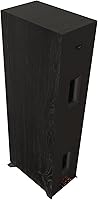
Specifications

  • Speaker Type: Passive floorstanding tower speakers sold as a 2.0 stereo pair.
  • Woofer: Each cabinet houses dual 8″ Cerametallic drivers made from a ceramic-coated aluminum blend for rigidity and low mass.
  • Tweeter: A 1″ LTS (Linear Travel Suspension) titanium diaphragm tweeter handles high-frequency reproduction with reduced distortion.
  • Horn Design: A 90° x 90° hybrid Tractrix horn constructed from silicone composite material controls sound dispersion both horizontally and vertically.
  • Power Handling: Each speaker handles up to 400 watts maximum, requiring an external amplifier or AV receiver to operate.
  • Frequency Response: Rated frequency response extends down to 20 Hz, covering the full audible range including deep bass without a dedicated subwoofer for most content.
  • Connectivity: Dual binding post terminals per speaker support standard single-wire connections as well as bi-wiring and bi-amping configurations.
  • Dimensions: Each cabinet measures 48″ deep x 22″ wide x 16″ tall, requiring meaningful floor space and clearance from walls.
  • Weight: The pair weighs a combined 61.4 lbs, making repositioning a two-person task once placed.
  • Finish: Available in an Ebony finish with a textured wood grain vinyl wrap and a removable speaker grille.
  • Amplification: These are passive speakers with no built-in amplification; a separate AV receiver or stereo amplifier is required.
  • Driver Material: The Cerametallic woofer cone uses a proprietary ceramic-aluminum composite that balances stiffness with low weight for accurate bass response.
  • Signal Path: Bi-amp capable terminals allow separate amplifier channels to drive high and low frequency drivers independently when using an outboard crossover.
  • Usage Environment: Designed for indoor use only and not rated for outdoor or high-humidity environments.
  • Warranty: Covered by a limited manufacturer warranty from Klipsch; specific duration and terms are outlined in the included documentation.
  • Series: Part of the second generation of Klipsch Reference Premiere speakers, featuring updated horn geometry and revised woofer construction over the original series.
  • Included Items: Package includes two floorstanding speaker cabinets; no amplifier, cables, or additional accessories are included.
  • Sound Channel: Configured as a 2-channel stereo pair suitable for use as front left and right speakers in a surround sound or stereo system.

Related Reviews
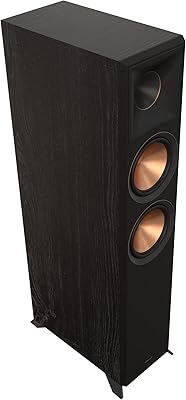
Klipsch RP-6000F II Floorstanding Speaker
82%
93%
Sound Dynamics
88%
High-Frequency Clarity
84%
Bass Performance
91%
Build Quality
89%
Soundstage Width
More
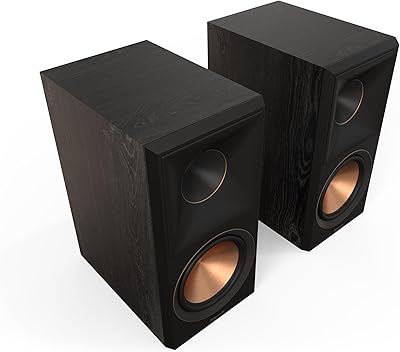
Klipsch RP-600M II
Klipsch RP-600M II
80%
91%
Sound Quality
88%
Treble & High-Frequency Detail
83%
Bass Performance
94%
Sensitivity & Efficiency
79%
Midrange Clarity
More
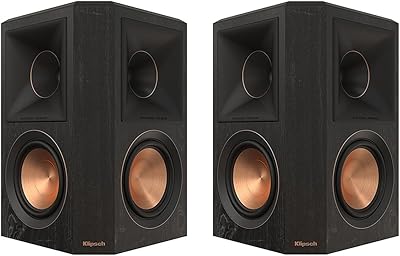
Klipsch RP-502S II Surround Sound Speakers
81%
93%
Sound Immersion
96%
Tonal Matching with Klipsch Systems
91%
Build Quality & Cabinet Construction
88%
High-Frequency Clarity
74%
Mid-Bass Performance
More
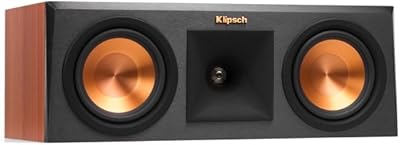
Klipsch RP-404C II Center Channel Speaker
83%
94%
Dialogue Clarity
91%
Build Quality
89%
Placement Versatility
74%
Value for Money
61%
Bass Performance
More
Klipsch RP-500C II Center Channel Speaker
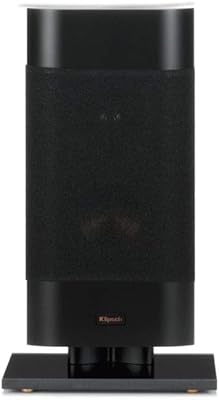
82%
94%
Dialogue Clarity
91%
Sound Dispersion
88%
Build Quality
86%
System Integration
83%
Ease of Setup
More
Klipsch RP-140D Speaker
86%
91%
Sound Quality
87%
Ease of Installation
90%
Design & Aesthetics
89%
Value for Money
85%
Build Quality
More
Klipsch RP-500M Bookshelf Speakers
89%
94%
Sound Quality
88%
Bass Performance
91%
Build Quality
93%
Ease of Setup
89%
Design & Aesthetics
More
Klipsch R-625FA Dolby Atmos Floorstanding Speaker
83%
93%
Sound Dynamics
74%
Dolby Atmos Height Effect
81%
Bass Performance
91%
Build Quality
86%
Ease of Setup
More
Klipsch RB-61 II
Klipsch RB-61 II
81%
91%
Sound Clarity
94%
Sensitivity & Efficiency
72%
Bass Performance
86%
Sound Staging & Imaging
83%
Build Quality
More
Klipsch RP-250C Center Channel Speaker
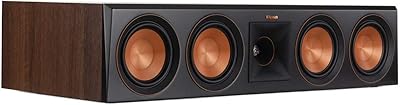
87%
92%
Sound Clarity
91%
Dialogue Performance
85%
Bass Quality
90%
Build Quality
88%
Compatibility with Klipsch Systems
More

FAQ

For most music and casual movie watching, the RP-8000F II pair handles low frequencies well enough that a subwoofer is optional. That said, if you watch a lot of action films with heavy LFE (low-frequency effects) tracks, adding a quality subwoofer will round out the experience. Think of it as a nice upgrade rather than a requirement.

You want something pushing at least 100 watts per channel at 8 ohms for the best results. These Klipsch tower speakers are highly sensitive, so they get loud without much power, but an underpowered receiver tends to clip at higher volumes and can actually cause damage over time. Mid-range to higher-end AV receivers from Denon, Marantz, or Yamaha in the appropriate wattage range are popular pairings.

The physical setup is straightforward — connect speaker wire to the binding posts and position them in the room. The trickier part is placement: these benefit from being pulled a foot or two away from the rear wall and toed in slightly toward the listening position. Budget some time to experiment with positioning before you decide how they sound.

Yes, and this comes up frequently from owners. The Cerametallic woofer surrounds are stiff when new and need roughly 20 to 40 hours of normal use before they loosen up and the bass response fully opens up. If they sound a bit tight out of the box, give them time before drawing any conclusions about the low end.

This depends on your room and your receiver. Horn-loaded tweeters like the one on this floorstanding duo tend to be more forward and detailed than dome tweeters, which some listeners love and others find fatiguing. In a room with hard floors, bare walls, and no acoustic treatment, the highs can tip into edgy territory. Rugs, soft furnishings, and a bit of toe-in adjustment help considerably.

They work very well for two-channel stereo listening. The wide horn dispersion creates a convincing soundstage, and the bass output means you are not missing much without a subwoofer for most genres. Audiophiles who prefer a warmer, more laid-back presentation may want to audition them first, but for rock, jazz, and orchestral music they perform impressively.

Each cabinet stands nearly four feet tall and weighs over 30 pounds, so they make a real presence in a room. In a space smaller than roughly 12 by 14 feet, they can feel physically dominant and acoustically overwhelming at moderate volumes. These are genuinely large speakers and work best when the room can accommodate them with some breathing space.

Bi-wiring means running separate cables from your amplifier to the high-frequency and low-frequency terminals on each speaker, rather than using a single run of cable with jumper plates. In practice, most listeners will not notice a dramatic difference, and the speakers work perfectly well with standard single-wire connections. The option is there if you want to experiment, but it is not a requirement.

Klipsch generally packages these with substantial foam protection, and most buyers receive them in perfect condition. However, given the size and weight involved, a small percentage of shipments do arrive with minor cosmetic scuffs or dings. It is worth inspecting both cabinets carefully before signing for delivery and before discarding any packaging material in case you need to file a claim.

The second generation brings a larger, redesigned Tractrix horn with a silicone composite construction, updated Cerametallic woofer cones, and revised internal bracing — these are not just cosmetic changes. Owners who have compared both report improved clarity in the midrange and a wider, more controlled soundstage from the updated horn. If you already own the original and are happy with it, the upgrade may not be urgent, but for new buyers the second generation is the better starting point.

Where to Buy