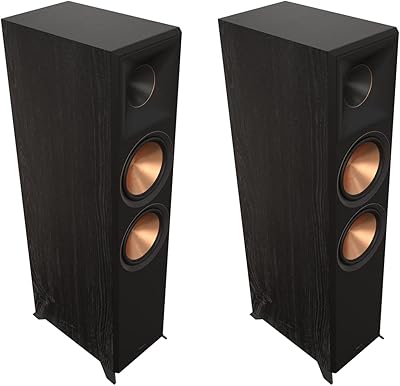
Overview

The Klipsch CDT-5800-C II In-Ceiling Speakers represent what you get when a brand with serious audio roots decides to do flush-mount right. Sold as a pair, these in-ceiling speakers are built for homeowners and AV integrators who want real performance without visible hardware cluttering their walls or floors. The circular, low-profile design disappears into the ceiling once installed, making them a natural fit for dedicated home theaters and whole-home audio setups alike. Unlike wireless ceiling speakers that depend on network stability, the wired connection here keeps the signal clean and consistent — no dropouts, no latency, no compromises.
Features & Benefits

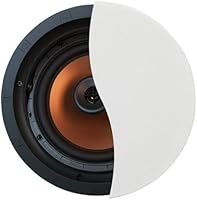
The 8-inch cerametallic woofer is the standout here. Cerametallic cones are stiffer than standard paper or polypropylene, which translates to tighter bass and lower distortion at higher volumes — useful in larger rooms where a weaker driver would start to strain. Pairing that with a 1-inch titanium tweeter means the high end stays crisp and detailed without the softness or early wear you sometimes get from fabric domes. Controlled Dispersion Technology directs sound toward the listening area rather than scattering it, which matters in open-plan spaces. The treble and mid-bass attenuation switches are a practical touch — dial in the response to match your room without ever opening a receiver menu.

Best For

This Klipsch ceiling speaker pair makes the most sense for buyers doing a planned renovation or new construction, where running speaker wire through the ceiling is already part of the project scope. They slot naturally into a 5.1 surround setup — ideal as surrounds or front channels where floor space is at a premium. Custom AV installers tend to appreciate these because the tuning switches provide flexibility across different room sizes without swapping hardware. That said, if you need a quick plug-and-play solution or wireless capability, these are not that. They reward buyers who plan carefully and are comfortable committing to a proper wired installation.

User Feedback

The CDT-5800-C II holds a strong average rating, though the review pool sits at roughly 65 ratings — small enough that individual experiences carry more weight than usual. Buyers consistently call out sound clarity as the highlight, and several note the bass response is impressive for an in-ceiling driver, while being honest that it is still no substitute for a dedicated subwoofer. Installation earns positive marks broadly, though a handful of reviewers flag the need for adequate ceiling depth and proper wire gauge to realize full performance. The magnetic grille removal gets easy praise. On value, most buyers at this tier find the pair pricing reasonable against comparable competition.

Pros

  • The 8-inch cerametallic woofer delivers notably tight, low-distortion bass for an in-ceiling driver.
  • Titanium dome tweeter handles high-frequency detail cleanly and holds up well over years of use.
  • Controlled Dispersion Technology keeps sound focused on the listening zone rather than bouncing it around the room.
  • On-driver treble and mid-bass switches let you tune the response to your specific room without extra gear.
  • The magnetic SlimTrim grille snaps off without tools and leaves a clean, hardware-free ceiling appearance.
  • Sold as a pair, making it straightforward to cover stereo or surround channels in a single purchase.
  • Wired connectivity ensures a stable, dropout-free signal that wireless options cannot always guarantee.
  • Compatible with standard AV receivers and amplifiers, so integration into most existing systems is uncomplicated.
  • Circular, low-profile form factor blends naturally into white ceilings without drawing attention.

Cons

  • No receiver or amplifier is included, so total setup cost is considerably higher than the speaker price alone.
  • Permanent ceiling installation means these in-ceiling speakers are not practical for renters or frequent movers.
  • Adequate ceiling depth is required for proper fit; buyers should verify clearance before cutting.
  • The review pool is relatively small at around 65 ratings, making it harder to assess long-term reliability trends.
  • No wireless or Bluetooth capability, which is a hard dealbreaker for buyers who want flexible, cable-free placement.
  • Bass output, while solid for the format, still requires a separate subwoofer for a truly full-range home theater experience.
  • Installation for most buyers will realistically require professional help, adding labor cost to the overall budget.
  • Wire gauge and receiver pairing choices meaningfully affect performance, which demands more homework from the buyer.

Ratings

Our AI-generated scores for the Klipsch CDT-5800-C II In-Ceiling Speakers are derived from analyzing verified buyer reviews worldwide, with spam, bot activity, and incentivized feedback actively filtered out before any scoring is applied. The ratings below reflect the full picture — where these in-ceiling speakers genuinely impress, and where real buyers have hit friction. Both strengths and honest trade-offs are represented without softening.
Sound Clarity
91%
Buyers consistently describe the midrange and high-frequency reproduction as unusually clean for a ceiling-mounted driver. In home theater setups, dialogue intelligibility in particular stands out — voices cut through movie soundtracks without harshness or muddiness, which is not always a given at this form factor.
A small number of users in very large or acoustically reflective rooms note that clarity drops slightly at higher volumes, where the drivers can begin to compress. This is a physics limitation of the format rather than a defect, but it is worth acknowledging for buyers expecting floor-stander-level headroom.
Bass Performance
74%
26%
For an in-ceiling speaker, the 8″ cerametallic woofer delivers a surprisingly firm and controlled low-mid response. Users integrating these into 5.1 systems report that background music and movie scores sound full and grounded, without the hollowness common to smaller ceiling drivers.
Deep bass extension is limited by the in-ceiling format itself — buyers without a separate subwoofer will notice the absence of true low-end impact in action sequences or bass-heavy music. Several reviewers specifically flagged this as a surprise, suggesting the product could be marketed more transparently about its low-frequency floor.
Build Quality
88%
The driver basket, surround material, and overall construction feel robust compared to similarly priced competitors. Buyers who have handled multiple in-ceiling brands note that the CDT-5800-C II feels noticeably more solid in hand, and the magnetic grille attachment in particular draws praise for its clean, rattle-free fit.
A few installers mention that the mounting dog-ear clamps require careful handling during installation to avoid over-tightening, which can stress the ceiling material around the cutout. This is a minor concern but worth noting for first-time DIY installers working in older drywall.
Installation Experience
79%
21%
The included cardboard cutting template simplifies the hole layout process considerably, and most buyers with basic tool experience report a clean install on the first attempt. The magnetic grille system also means finishing the job looks polished without any fiddly hardware to manage at ceiling height.
Ceiling depth requirements catch some buyers off guard, particularly in rooms with shallow joist cavities or HVAC infrastructure nearby. Several reviewers also note that fishing wire from the ceiling to the receiver location requires planning well in advance — something that is easy to underestimate if you are not an experienced installer.
Room Tuning Flexibility
86%
The on-driver treble and mid-bass attenuation switches are a genuinely practical feature that buyers use in the real world. In rooms with hard flooring and bare walls, rolling back the treble switch softens the high end noticeably without touching the receiver — a quick, effective adjustment that more expensive speaker lines sometimes omit.
The switches offer only a fixed cut rather than continuous adjustment, which means buyers with unusual room acoustics may find the increments too coarse to dial things in precisely. Audiophiles who want granular control will still need a receiver-side EQ to fully optimize the frequency response.
Value for Money
82%
18%
Buyers who have compared this Klipsch ceiling speaker pair against similarly priced alternatives generally consider the audio quality and build consistency to justify the investment. The fact that the pair includes two complete speakers with grilles, hardware, and a template makes the out-of-box value feel reasonable for the tier.
The total system cost climbs quickly once you factor in a capable receiver, quality speaker wire, and potential installation labor — and that reality surprises some buyers who focus only on the speaker price. For budget-conscious buyers, the ancillary costs can double the effective project spend.
Visual Integration
93%
Once installed and grilles in place, these in-ceiling speakers are genuinely hard to spot against a standard white ceiling. Homeowners specifically call this out as a priority satisfied — the room retains its aesthetic without speaker stands, cables on the floor, or visible hardware cluttering the space.
The white finish works well in most residential settings but offers no color options for rooms with non-white ceilings or exposed beams. Buyers with darker or textured ceiling treatments may need to paint the grille, which is doable but adds a finishing step not everyone anticipates.
Tweeter Performance
89%
The titanium dome tweeter handles the top end with a crispness that fabric dome alternatives often cannot sustain over time. Listeners who use these for music note that cymbal detail, acoustic guitar strings, and vocal sibilance all come through cleanly without the brittleness sometimes associated with metal dome designs.
In very bright-sounding rooms, the titanium tweeter can tip into stridency if the treble attenuation switch is left at its default position. It is easily managed with the on-driver switch, but buyers who prefer a warmer default voicing should be aware the out-of-box tuning leans slightly forward in the high frequencies.
Dispersion & Coverage
83%
Controlled Dispersion Technology meaningfully improves how focused the sound feels in a defined listening area, which is especially valuable in open-plan living spaces where sound tends to scatter and thin out. Buyers using these as surround channels in a 5.1 layout report a convincing sense of audio directionality that cheaper ceiling speakers fail to produce.
The controlled dispersion pattern means coverage can feel narrow if the speakers are mounted too far from the primary listening position, or if the listening area shifts frequently — for example in a kitchen where people move around while cooking. Optimal placement requires more upfront planning than some buyers expect.
Long-Term Durability
84%
Buyers who installed an earlier generation of Klipsch in-ceiling speakers and are upgrading report that the drivers hold up well over years of daily use, with no surround rot or tweeter degradation at typical listening levels. The cerametallic cone material is inherently more resistant to humidity-related warping than paper cones.
The review pool for this specific generation is relatively modest in size, which limits how confidently long-term durability can be assessed from buyer feedback alone. A few reviewers flag that the mounting hardware can loosen slightly over time in ceilings with minor structural flex, which may require occasional re-tightening.
Compatibility
87%
These in-ceiling speakers pair without issue across a wide range of AV receivers and stereo amplifiers that buyers commonly use, and the impedance characteristics are well within the tolerance of most modern home theater receivers. Buyers integrating them into multi-zone systems report consistent performance across zones.
There is no wireless, Bluetooth, or active amplifier compatibility, which is a hard stop for buyers hoping to avoid running speaker wire. This is a design choice rather than a flaw, but it narrows the compatible ecosystem to passive amplifier setups exclusively.
Packaging & Unboxing
76%
24%
The speakers arrive well protected, and the inclusion of a pre-cut cardboard installation template is a practical touch that saves time during layout. Buyers generally report no transit damage, and the multilingual manual covers the key installation steps clearly enough for experienced DIYers.
The packaging does not include speaker wire, wire connectors, or a hole saw — items a first-time installer will need immediately. A few buyers express frustration that this is not flagged more clearly at the point of purchase, leading to an unexpected trip to a hardware store before installation can begin.
Grille Design
91%
The magnetic SlimTrim grille is one of the most consistently praised physical features across buyer reviews. Snapping the grille on and off without tools at ceiling height sounds like a small detail until you have wrestled with screw-on alternatives — buyers who have made that comparison appreciate the difference immediately.
The white metal mesh grille, while clean-looking, is not paintable without affecting the magnetic attachment reliability, according to a small number of buyers who attempted it. Those wanting a truly invisible finish in non-white ceilings may find the grille draws slightly more attention than expected.
Documentation & Support
71%
29%
The included owner's manual covers installation steps in three languages and provides enough technical detail for buyers with some AV experience to complete setup without outside help. Klipsch's brand reputation also gives buyers confidence that support channels and replacement parts are accessible if needed.
Several buyers note the manual lacks specific guidance on optimal wire gauge for longer runs, recommended receiver power ranges, and ceiling depth clearance tolerances — information that would meaningfully reduce installation uncertainty for less experienced buyers. Online resources partially fill this gap, but the in-box documentation could do more.

Suitable for:

The Klipsch CDT-5800-C II In-Ceiling Speakers are built for buyers who are serious about their listening environment and are willing to plan around a proper wired installation. They are an especially strong fit for homeowners in the middle of a renovation or new construction, where running speaker wire through the ceiling is already on the contractor's punch list. If you are assembling a 5.1 surround sound system and want the surround or front channels to vanish visually without sacrificing audio quality, these in-ceiling speakers deliver exactly that. Custom AV integrators will appreciate the on-driver attenuation switches, which allow room-specific tuning without dragging a separate equalizer into the signal chain. Multi-room audio projects also benefit from the consistent, room-filling output this Klipsch ceiling speaker pair can produce when paired with a capable receiver.

Not suitable for:

The Klipsch CDT-5800-C II In-Ceiling Speakers are simply the wrong tool if you are looking for a wireless, plug-and-play audio solution. Renters, anyone in a temporary living situation, or buyers who are not comfortable committing to ceiling cutouts and permanent wiring should look elsewhere. These speakers also require a separate AV receiver or amplifier to function — the pair alone produces no sound out of the box, which adds meaningful cost and complexity to the total setup. Buyers expecting chest-thumping bass without a dedicated subwoofer will be disappointed; an 8-inch in-ceiling driver performs well for its format, but physics still apply. If your budget is tight and you are hoping these speakers alone complete your home theater, the additional investment in a quality receiver, speaker wire, and potential installation labor may stretch the overall project well beyond initial expectations.
Specifications

  • Woofer: Each speaker is fitted with an 8″ cerametallic cone woofer, a material chosen for its high stiffness-to-weight ratio which reduces distortion and extends low-frequency output.
  • Tweeter: A 1″ titanium dome tweeter handles high-frequency reproduction, offering better long-term durability and sharper detail retrieval than softer fabric dome alternatives.
  • Driver Type: Both drivers use a dynamic driver design, the most common and reliable driver architecture for full-range home audio applications.
  • Max Power: Each speaker is rated at a maximum output power of 7W, intended for use with a dedicated AV receiver or amplifier rather than standalone operation.
  • Surround Config: These speakers are compatible with 5.1 surround sound channel configurations, making them suitable for use as surround or front channels in a home theater setup.
  • Connectivity: Connection is strictly wired via speaker wire terminals, ensuring a stable, interference-free signal path without dependence on a network or wireless protocol.
  • Mounting Type: Designed exclusively for ceiling mounting, the circular housing cuts into a standard ceiling opening and secures with an integrated dog-ear clamping mechanism.
  • Grille Design: The SlimTrim magnetic grille attaches and detaches without tools or visible fasteners, leaving a clean white finish flush with the ceiling surface.
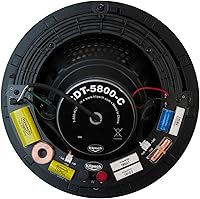
  • Attenuation: On-board treble and mid-bass attenuation switches are located on the driver basket, allowing acoustic adjustments tailored to the specific room without external EQ equipment.
  • Dispersion Tech: Controlled Dispersion Technology is built into the tweeter assembly to direct high-frequency sound toward the listening area rather than dispersing it indiscriminately across the room.
  • Color: The grille and speaker surround are finished in white, designed to blend with standard residential ceiling paint without requiring additional finishing work.
  • Shape: The housing and grille are circular, a standard geometry for in-ceiling speakers that simplifies hole-cutting with a standard round template.
  • Pair Weight: The combined weight of both speakers is 7.4 lbs, which is typical for an 8″ in-ceiling design and manageable for a single installer during overhead mounting.
  • Compatible Devices: These speakers are designed to work with AV receivers and stereo amplifiers that provide passive speaker output terminals; they are not compatible with powered or active speaker inputs.
  • Power Source: Power is supplied through the connected AV receiver or amplifier via standard speaker wire; there is no onboard power input or battery option.
  • Box Contents: Each pair ships with two ceiling-mount speakers, two white metal mesh grilles, a cardboard cutting template, and a multilingual owner's manual covering English, French, and Spanish.
  • Sold As: This listing covers a pair of two speakers, which is the minimum configuration needed for stereo or a single surround channel pair in a 5.1 layout.
  • Waterproofing: These speakers carry no waterproof or moisture-resistance rating and are intended strictly for dry indoor ceiling installations away from humidity or direct moisture exposure.
  • Warranty: Klipsch provides an extended warranty on this product, though buyers should confirm current warranty terms directly with Klipsch or their retailer at time of purchase.
  • Item Model: The official model number is CDT-5800C-II, which identifies the second-generation variant of Klipsch's CDT-5800 ceiling speaker line.

Related Reviews
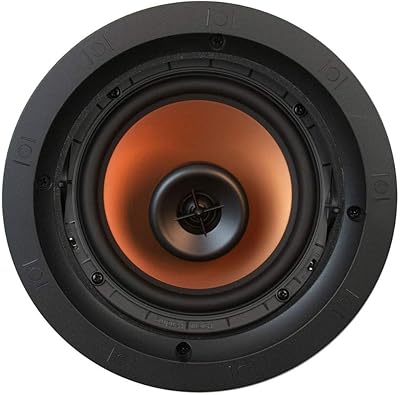
Klipsch CDT-5650-C II In-Ceiling Speaker
81%
93%
Sound Clarity
61%
Bass Performance
91%
Driver Aimability
54%
Installation Experience
89%
Sound Dispersion
More
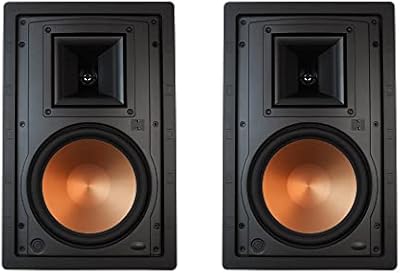
Klipsch R-5800-W II In-Wall Speakers
87%
91%
Sound Quality
89%
Ease of Installation
94%
Build Quality
85%
Customization Options (Sound Tuning)
88%
Acoustics/Clarity
More
Klipsch CDT-3800-Cii In-Wall Speaker
79%
91%
Sound Clarity
72%
Bass Performance
88%
Soundstage & Dispersion
84%
Build Quality
63%
Installation Experience
More
Klipsch RB-61 II
Klipsch RB-61 II
81%
91%
Sound Clarity
94%
Sensitivity & Efficiency
72%
Bass Performance
86%
Sound Staging & Imaging
83%
Build Quality
More
Klipsch R-5650-S II In-Wall Speaker
78%
91%
Surround Sound Immersion
88%
Tonal Matching with Klipsch Systems
86%
High-Frequency Clarity
61%
Bass Performance
58%
Installation Experience
More
Klipsch R-3650-W II In-Wall Speaker
86%
89%
Sound Quality
87%
Bass Response
91%
Ease of Installation
84%
Design & Aesthetics
90%
Build Quality
More
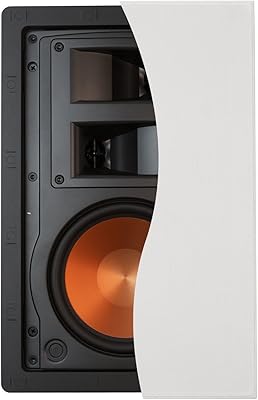
Klipsch R-5502-W II In-Wall Speaker
83%
91%
Sound Quality
78%
Ease of Installation
88%
Design and Aesthetics
85%
Build Quality
89%
Power Handling
More
Klipsch RB-81 II
Klipsch RB-81 II
80%
93%
Sound Dynamics & Punch
81%
High-Frequency Clarity
84%
Bass Performance
96%
Sensitivity & Amplifier Compatibility
78%
Build Quality
More
Klipsch RP-600M II
Klipsch RP-600M II
80%
91%
Sound Quality
88%
Treble & High-Frequency Detail
83%
Bass Performance
94%
Sensitivity & Efficiency
79%
Midrange Clarity
More
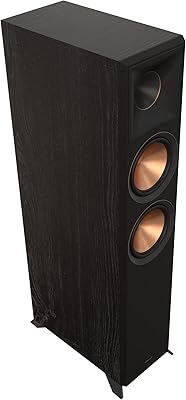
Klipsch RP-8000F II Floorstanding Speakers
82%
93%
Sound Quality
88%
Bass Performance
79%
Treble & Clarity
91%
Soundstage & Imaging
89%
Build Quality
More

FAQ

Not quite. The box includes both speakers, the magnetic grilles, a cutting template, and a manual — but you will need to supply your own speaker wire, an AV receiver or amplifier, and any installation hardware specific to your ceiling type. Budget for those separately before ordering.

For most home installations with moderate cable runs, 16-gauge wire is a practical starting point. If your runs exceed around 50 feet, stepping up to 14-gauge will help minimize resistance and preserve the full output quality. Avoid very thin wire like 22-gauge, which can cause audible power loss over longer distances.

The speakers require several inches of clearance behind the ceiling surface to accommodate the driver basket and mounting hardware. Before cutting, check the product installation sheet for the exact depth specification and measure your ceiling cavity — especially in rooms with HVAC ducts or floor joists running close overhead.

No. These in-ceiling speakers carry no moisture or weather resistance rating and are designed strictly for dry indoor spaces. Installing them in a humid bathroom or outdoor covered patio risks driver damage and potential safety issues. Klipsch makes separate product lines specifically for those environments.

Almost certainly yes, as long as your receiver has passive speaker output terminals — which covers the vast majority of home theater receivers on the market. Just confirm your receiver's impedance rating is compatible with the speakers' nominal impedance before connecting.

Yes, and buyers who have tried them tend to say so. Rooms with lots of hard surfaces can make the high end feel harsh, and dialing back the treble switch takes the edge off without needing to touch your receiver's EQ. Similarly, adjusting mid-bass helps in rooms where the ceiling cavity adds unwanted warmth. They are a small feature that solves a real problem.

The Klipsch CDT-5800-C II In-Ceiling Speakers are well-suited for 5.1 configurations, particularly as surround channels where you want clear, directional audio without physical speaker stands intruding on your room layout. Pair them with a quality receiver and a dedicated subwoofer for a complete system, since in-ceiling drivers alone will not reproduce the lowest bass frequencies.

Technically it can be a DIY project if you are comfortable working overhead, fishing wire through a ceiling cavity, and making clean cuts in drywall. That said, most buyers find the job easier and cleaner with a professional installer, especially when wire needs to be run through walls or across multiple rooms. The speakers themselves install without specialty tools once the wire is in place.

Very little, which is a genuine strength of this Klipsch ceiling speaker pair. The circular white grille sits close to flush with the ceiling surface, and the magnetic attachment means no visible screws or hardware. In a white ceiling they are easy to overlook, which is exactly the point for most buyers choosing in-ceiling over freestanding speakers.

A subwoofer is strongly recommended if you want a full home theater experience. The 8″ cerametallic driver does a respectable job in the mid-bass range for an in-ceiling format, but it cannot physically reproduce the deep low frequencies that an action film soundtrack or bass-heavy music demands. Think of these as handling everything from the midrange up, and let a dedicated sub cover the rest.