Overview

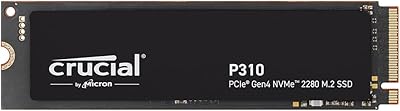
The Crucial P310 2TB NVMe SSD arrived in April 2025 and wasted little time earning a spot among the top-15 bestsellers in internal solid-state drives — a strong early signal for a drive priced squarely in the mid-range tier. Backed by Micron, Crucial has long been a trusted name for buyers who want reliability without overpaying for enthusiast-level specs. This NVMe upgrade is not trying to compete with flagship performance drives; it targets the far larger crowd of casual gamers, PS5 owners, and home users who just need fast, dependable storage. The included heatsink is a genuine differentiator at this price point.
Features & Benefits

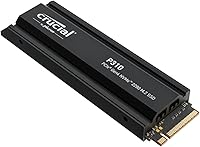
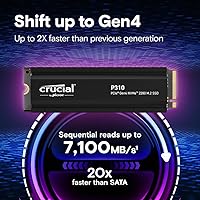
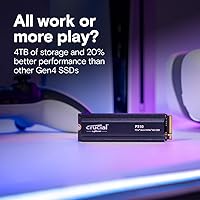
Push 7,100 MB/s sequential reads and 6,000 MB/s writes over a PCIe Gen4 x4 connection, and everyday tasks start feeling noticeably different — Windows boots before you have settled into your chair, and large game installs that used to drag become almost uneventful. The P310 2TB sits on the M.2 2280 form factor, uses Micron G8 NAND for long-term endurance, and ships with a heatsink already attached, so thermal stability inside a PS5 expansion bay or a compact laptop is handled out of the box. It also works with Gen3 systems, which makes it a practical choice if you are not quite ready to upgrade your entire platform.

Best For

PS5 owners are probably the most obvious fit here — the heatsink requirement for Sony's console is satisfied right out of the packaging, no extra purchase needed. Beyond that, this Crucial Gen4 drive makes a lot of sense for anyone pulling a laptop out of SATA-era storage and wanting a real performance jump without stretching a budget. Home office users who spend time in Adobe or Microsoft Office apps will notice the difference in application launch times. It is worth pointing out that this is not a drive built for workstation-level sustained workloads — it is engineered for practical, everyday use where reliable speed matters more than top-tier rankings.

User Feedback

Across more than 700 ratings, the P310 2TB holds a 4.6-star average, and the pattern in buyer sentiment is fairly consistent. Installation gets mentioned often — people appreciate that the process is straightforward, even for first-timers who have never cracked open a laptop or PS5. The jump from an older hard drive or SATA SSD is described as immediately noticeable in everyday use. On the critical side, some users flag that sustained heavy transfers can push temperatures higher than casual workloads, and a few note the absence of a software bundle. Overall, most buyers feel the value-to-performance ratio holds up well for the intended audience.

Pros

  • Gen4 PCIe speeds make boot times and game loads noticeably faster than any SATA-based drive.
  • 2TB of storage comfortably holds a large game library without constant juggling.
  • Heatsink is included in the box — no extra purchase required for PS5 installation.
  • Micron G8 NAND provides solid long-term reliability from a brand with a strong track record.
  • Backward compatible with Gen3 systems, so it works in older laptops and motherboards without issue.
  • Straightforward installation — most users report getting it up and running without any technical hurdles.
  • Rated 4.6 out of 5 stars across more than 700 buyers, indicating consistently positive real-world satisfaction.
  • Compact M.2 2280 form factor fits virtually every modern laptop and desktop slot.
  • Strong value-per-gigabyte ratio compared to premium-tier alternatives at higher price points.
  • Works across PS5, desktops, laptops, and workstations — one drive covers multiple upgrade scenarios.

Cons

  • Sustained heavy transfers can trigger thermal throttling, causing write speeds to drop below advertised peaks.
  • No bundled cloning or drive management software included, unlike some competing options.
  • Random read and write performance is not class-leading — noticeable in workloads beyond everyday tasks.
  • Users who need enterprise-grade endurance ratings will find the P310 2TB underpowered for that purpose.
  • Advertised peak speeds reflect ideal lab conditions; real-world sustained performance is more modest.
  • No official DRAM cache disclosed, which can affect performance consistency under mixed workload conditions.
  • Buyers in Gen3-only systems will not unlock the full speed potential the drive is capable of.
  • Limited warranty documentation visibility — some buyers want more transparency on rated TBW endurance figures.

Ratings

The Crucial P310 2TB NVMe SSD has been evaluated by our AI rating system after analyzing hundreds of verified global buyer reviews, with spam, bot submissions, and incentivized feedback actively filtered out to ensure the scores reflect genuine ownership experiences. Ratings cover everything from raw speed delivery to long-term reliability, giving equal weight to what buyers love and where the drive falls short. Both the strengths that earn this drive its strong bestseller standing and the friction points that prevent a perfect score are transparently reflected below.
Read & Write Speed
86%
Buyers upgrading from SATA drives consistently describe the speed difference as immediately obvious — games that used to take 30-plus seconds to load are up and running in a fraction of that time. Sequential read performance in particular lands close to advertised figures during everyday workloads like booting Windows or launching large creative applications.
Sustained write speeds under heavy continuous loads — like transferring a large game library in one session — drop noticeably from the 6,000 MB/s headline figure as thermal limits are approached. Users running benchmark tools back-to-back also report that scores vary more than expected between runs, suggesting the drive's performance ceiling is not rock-steady under pressure.
PS5 Compatibility
93%
This is one of the clearest strengths the P310 2TB has going for it: the included heatsink fits the PS5 expansion bay without modification, and buyers report a genuinely plug-and-play experience that matches Sony's installation guide step for step. Console users particularly appreciate not having to research heatsink dimensions or order a separate thermal accessory before getting started.
A small number of PS5 users noted that the heatsink's thickness sits close to the slot cover clearance limit, requiring careful alignment during installation. There are also isolated reports of the PS5 not recognizing the drive on the first insertion, though a re-seat resolved the issue in nearly every documented case.
Value for Money
84%
For buyers coming from Gen3 or SATA storage, the price-to-performance ratio at the 2TB tier feels genuinely fair — you are getting Gen4 speeds, Micron-backed NAND, and a heatsink in a single purchase without paying the premium attached to flagship drives. Home users and casual gamers repeatedly describe it as one of the more sensible storage investments they have made.
Buyers who compared prices carefully noted that the gap between this drive and some enthusiast-tier alternatives has narrowed, making the value case slightly less clear-cut than it was at launch. Those who prioritize raw benchmark performance over practical everyday use may feel they are paying mid-range money for performance that does not quite reach the top of the mid-range tier.
Thermal Management
71%
29%
The bundled heatsink does meaningful work during typical gaming sessions and productivity tasks, keeping temperatures in a stable range that most users never need to think about. Buyers running this NVMe upgrade inside well-ventilated desktop cases report consistent temperatures with no throttling during normal use.
Under prolonged sustained workloads — long file transfers, repeated large writes, or intensive video encoding — several buyers observed performance dips consistent with thermal throttling kicking in. Laptop users with limited airflow reported this more frequently than desktop users, and a few noted that the heatsink alone is not sufficient for chassis with very restricted M.2 slot ventilation.
Installation Experience
91%
First-time builders and PS5 upgraders alike consistently highlight how painless installation is — the M.2 2280 form factor is universally supported, the drive is light and compact, and there are no fiddly connectors or configuration steps required to get it recognized by a system. Many buyers with no prior hardware experience completed the full install in under ten minutes.
The absence of a quick-start guide or printed installation reference in the box was flagged by a handful of less experienced buyers who had to search online for torque guidance on the M.2 retention screw. This is a minor inconvenience rather than a real barrier, but it is a gap that competing drives at similar price points sometimes address.
Real-World Boot Performance
83%
Windows boot times are one of the areas where buyers most consistently notice a difference after installing this Crucial Gen4 drive, with cold boot durations dropping sharply compared to SATA SSDs. Application startup times for productivity software like Office and Adobe tools also improve in ways that users describe as genuinely impactful during a working day.
The improvements, while real, are less dramatic when the comparison baseline is already a Gen3 NVMe drive rather than an older SATA SSD. Users upgrading within the NVMe ecosystem may find the real-world boot time gains more subtle than the spec sheet difference implies.
Gaming Load Times
88%
Open-world games with large streaming assets — the type that hammered older drives with long initial loads — perform particularly well, and PS5 users note that the console's load time experience with this drive is essentially indistinguishable from Sony's internal storage. PC gamers also report that texture pop-in and level transition delays are reduced compared to their previous storage setup.
For competitive multiplayer games where load times are already short on most modern hardware, the practical difference is harder to perceive. A few buyers admitted they expected a more dramatic in-game transformation and found the gains more noticeable in content-heavy single-player titles than in faster-paced online games.
Build & Endurance
79%
21%
Micron G8 NAND gives this drive a more credible endurance story than many drives at this price point, and Crucial's manufacturing quality control — backed by a large-scale producer rather than a third-party NAND sourcer — adds a layer of long-term confidence. Buyers who have owned earlier Crucial drives report positive multi-year reliability experiences that inform their trust in the P310 2TB.
Official TBW endurance figures are not prominently disclosed in marketing materials, which leaves some technically informed buyers searching for documentation that should be front and center. Without a published endurance rating that is easy to find, it is harder to benchmark this drive's long-term durability against competitors who make those figures a headline spec.
Software & Extras
47%
53%
The drive works immediately upon installation without needing any software, firmware updater, or driver — for buyers who just want to plug in and go, the absence of a software requirement is actually a minor convenience in the short term.
There is no bundled cloning utility, drive health monitor, or migration tool in the package, which is a real gap for users who want to transfer an existing operating system or monitor write endurance over time. Competing drives in this price range occasionally bundle at least a lite version of a migration tool, making this omission feel like a missed opportunity rather than an intentional design choice.
Broad Device Compatibility
89%
The combination of M.2 2280 form factor, PCIe Gen4 interface, and Gen3 backward compatibility means this NVMe upgrade fits an unusually wide range of systems — from budget Gen3 laptops to current-gen desktops and the PS5 — without needing different variants or adapters. Buyers who own multiple devices appreciate the flexibility this gives them if they ever want to move the drive.
Mac compatibility is listed but practically limited, since most modern Apple silicon machines have soldered storage with no accessible M.2 slot. Buyers purchasing specifically for a Mac should verify their model's hardware before ordering, as the compatibility listing can create false expectations.
Packaging & Presentation
62%
38%
The drive arrives securely protected and in compact retail packaging that is easy to open without risk of damaging the unit. For buyers who care primarily about what is inside the box, the packaging does its job without any reported transit damage issues.
Several buyers described the unboxing experience as underwhelming relative to what they expected from a premium storage brand — minimal documentation, no accessories beyond the drive itself, and packaging that feels functional rather than considered. For a product at this price tier, a slightly more polished presentation would better match buyer expectations.
Noise & Vibration
96%
As a solid-state drive with no moving parts, the P310 2TB operates in complete silence under all conditions — a characteristic that buyers who previously lived with spinning hard drives consistently call out as one of the most satisfying aspects of the upgrade. There is zero vibration contribution to system acoustics.
There is nothing meaningful to criticize here from a noise standpoint — this is simply an inherent property of flash-based storage. The only adjacent concern is that silent operation can make it harder to notice when the drive is under load, which is relevant for users who rely on audio cues to gauge system activity.
Sequential vs. Random Performance Balance
68%
32%
Sequential read and write performance — the kind that matters for loading large game files, copying media, and booting an operating system — is genuinely competitive for a mid-range Gen4 drive and reflects well in everyday use scenarios that most of its target buyers encounter regularly.
Random read and write performance, which governs how the drive handles the fragmented, small-file access patterns typical of running an operating system with many background processes, is not class-leading at this price point. Power users who run demanding multitasking workloads may find this the area where the drive's mid-range positioning shows most clearly.

Suitable for:

The Crucial P310 2TB NVMe SSD is a well-matched choice for anyone who wants a meaningful storage upgrade without venturing into premium pricing territory. PS5 owners will find it particularly practical — the included heatsink satisfies Sony's installation requirement right out of the box, removing the extra step of sourcing a compatible thermal solution separately. Laptop users still running on a SATA SSD or spinning hard drive will notice a genuine, day-to-day difference in how quickly their system wakes, boots, and launches applications. Casual PC builders assembling a home or small-office machine benefit from the Gen4 speeds and Micron-backed reliability without the cost premium attached to top-tier drives. The 2TB capacity is also a deliberate sweet spot — enough room for a rotating library of large modern games or years of documents, photos, and project files without obsessive storage management.
Not suitable for:

Buyers chasing maximum benchmark numbers or sustained transfer performance for professional workloads — video editing pipelines, large database operations, or continuous high-speed file transfers — will likely find the Crucial P310 2TB NVMe SSD undersized for that ambition. Under prolonged heavy loads, thermal throttling has been noted by some users, which means sustained write performance can dip from the headline figures when the drive is pushed hard for extended periods. There is no bundled software for drive health monitoring or cloning utilities, which matters to users who prefer a managed migration from an older drive. If you are building a high-end desktop workstation and already have a robust cooling setup, a flagship drive with higher endurance ratings and a stronger warranty story may be worth the extra spend. This is a drive built for practical, everyday use — not for pushing boundaries.

Specifications

  • Capacity: This drive offers 2TB of usable storage, suitable for large game libraries, media collections, and productivity workloads.
  • Interface: Connects via PCIe Gen4 x4, delivering significantly higher bandwidth than older Gen3 implementations.
  • Protocol: Uses NVMe protocol, enabling lower latency and higher queue depth performance compared to legacy AHCI SATA drives.
  • Form Factor: Follows the standard M.2 2280 specification, measuring 80mm in length and fitting the vast majority of modern laptops, desktops, and the PS5 expansion slot.
  • Sequential Read: Rated for up to 7,100 MB/s sequential read speeds under optimal test conditions.
  • Sequential Write: Rated for up to 6,000 MB/s sequential write speeds under optimal test conditions.
  • NAND Type: Built on Micron G8 NAND flash, which contributes to the drive's endurance and consistent performance over its lifespan.
  • Heatsink: A thermal heatsink is included in the packaging and pre-compatible with the PS5 expansion bay height requirements.
  • Gen3 Compatibility: Fully backward compatible with PCIe Gen3 x4 slots, operating at reduced speeds on older platforms without requiring additional configuration.
  • Dimensions: The drive measures 3.15 x 0.92 x 0.38 inches (approximately 80 x 23.4 x 9.7 mm) with the heatsink attached.
  • Weight: Complete unit weighs approximately 1.23 ounces, making it light enough to install without stressing M.2 slot retention hardware.
  • Color: Ships in black with a matching heatsink finish that blends into most motherboard and PS5 expansion bay aesthetics.
  • Brand & Origin: Manufactured by Crucial, a consumer storage brand owned and operated by Micron Technology, one of the world's largest NAND flash producers.
  • Compatible Devices: Officially supported for use in PlayStation 5 consoles, desktop PCs, laptops, and compatible workstation platforms.
  • Availability Date: First became available for purchase in April 2025, positioning it as a recent-generation product with current NAND and firmware.
  • Bestseller Rank: Holds a top-15 ranking in the Internal Solid State Drives category on Amazon, reflecting strong early market adoption.
  • Customer Rating: Carries a 4.6 out of 5 star average rating based on over 700 verified buyer reviews at the time of publication.
  • Software Bundle: No proprietary drive management or cloning software is included in the package; third-party tools are required for data migration tasks.

Related Reviews
Crucial P310 500GB NVMe SSD
87%
93%
Read & Write Speed
91%
Value for Money
88%
Thermal Management
94%
Compatibility
92%
Installation Ease
More
Crucial P3 Plus 2TB NVMe SSD
85%
92%
Performance in Gaming
88%
Performance in Content Creation
94%
Read Speed (5000MB/s)
85%
Long-Term Reliability
89%
Compatibility (PCIe Gen 3.0 & 4.0)
More
Crucial T710 2TB Gen5 NVMe SSD
88%
96%
Performance
94%
Speed (Read/Write)
90%
Thermal Management (Cooling)
88%
Ease of Installation
70%
Software Experience
More
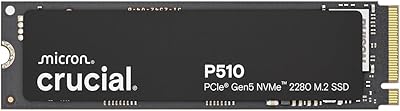
Crucial P510 2TB Gen5 NVMe SSD
89%
95%
Performance
92%
Speed (Read/Write)
88%
Compatibility with PCIe 4.0 and 3.0
90%
Ease of Installation
85%
Software (Acronis Migration Tool)
More
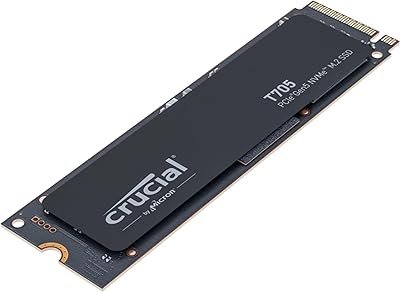
Crucial T705 2TB PCIe Gen5 NVMe SSD
84%
98%
Sequential Read Performance
91%
Game Loading Efficiency
56%
Thermal Management
94%
Video Rendering Speed
93%
DirectStorage Integration
More
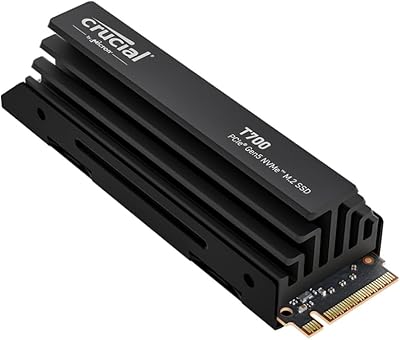
Crucial T700 2TB Gen5 NVMe M.2 SSD
82%
96%
Sequential Read Performance
93%
Sequential Write Performance
71%
Thermal Management
67%
Platform Compatibility
88%
Random I/O Performance
More
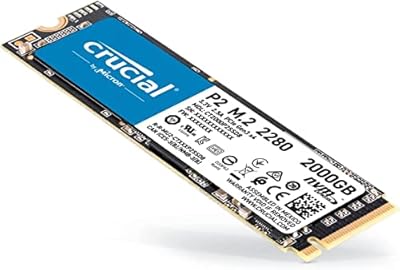
Crucial P2 2TB NVMe PCIe M.2 SSD
87%
91%
Performance
94%
Value for Money
89%
Reliability
90%
Speed (Read/Write)
88%
Ease of Installation
More
Crucial T500 2TB Gen4 NVMe M.2 SSD with Heatsink
89%
95%
Read Speed
92%
Write Speed
88%
Thermal Management
90%
Compatibility with PS5
83%
Ease of Installation
More
Crucial P310 4TB NVMe M.2 SSD
83%
91%
Sequential Read Performance
88%
Sequential Write Performance
73%
Random I/O Performance
94%
Storage Capacity Value
82%
Compatibility & System Fit
More
SanDisk 2TB SSD Plus M.2 NVMe SSD
86%
89%
Performance
92%
Ease of Installation
88%
Reliability
91%
Value for Money
90%
Capacity
More

FAQ

Yes, it does. The heatsink that ships with the P310 2TB meets Sony's size requirements for the PS5 M.2 expansion slot, so you can install it directly without sourcing additional cooling hardware. Just make sure to follow Sony's official installation guide for removing the slot cover and securing the drive correctly.

In most everyday situations, yes. Boot times, application launches, and game load screens are all noticeably faster when moving from a SATA drive to this NVMe upgrade. The gap is especially obvious on tasks that read large files in sequence, like loading an open-world game or launching a heavy creative app.

It is. The drive is backward compatible with PCIe Gen3 x4 slots and will simply operate at Gen3 speeds in that environment. You will not hit 7,100 MB/s, but you will still get a significant improvement over any SATA or hard drive you are replacing.

It holds up well for most players. Modern AAA titles typically run between 50GB and 100GB each, so 2TB gives you room for roughly 20 to 40 full games alongside saved data and system files. It is a practical size that avoids the constant juggling act that comes with smaller drives.

Peak sequential speeds like 7,100 MB/s are measured under controlled benchmark conditions and represent the ceiling, not the everyday average. Real-world performance during typical tasks — copying files, loading games, booting Windows — is still very fast but will land below those headline numbers. That is normal for any NVMe drive, not unique to this one.

For typical home and gaming use, probably not. Throttling tends to show up during sustained, heavy transfers that push the drive hard for extended periods — think moving hundreds of gigabytes in one session. For everyday gaming, browsing, and productivity tasks, most users do not encounter it. The included heatsink does help manage temperatures during moderate workloads.

It is listed as compatible with Mac platforms, provided the Mac has an M.2 NVMe slot — which most modern Apple silicon Macs do not, since storage is soldered directly to their boards. Older Intel-based Macs with accessible M.2 slots may work, but you should verify your specific model's slot type and physical compatibility before purchasing.

No software is included in the box. If you want to clone your current drive rather than doing a fresh install, you will need to use a free third-party tool like Macrium Reflect or the open-source Clonezilla. It is a minor inconvenience that a few buyers have flagged, but the software itself is free and widely used.

Crucial's use of Micron G8 NAND gives it a solid foundation — Micron manufactures its own flash, which typically means better quality control at the chip level compared to brands that source NAND from third parties. It is not rated for enterprise workloads, but for consumer use the reliability story is genuinely strong, and the brand's track record in the consumer SSD space backs that up.

Installation is straightforward for most builds. You need a small Phillips screwdriver to secure the M.2 retention screw, and that is about it. The drive slides into the slot at a slight angle and clicks into place before you fasten it down. Many buyers with no prior hardware experience report completing the install in under ten minutes.

Where to Buy

Best Buy
In stock $299.00
Walmart
In stock $299.99
Newegg.com
In stock $295.00
B&H Photo-Video-Audio
In stock $339.00
Adorama
In stock $359.99
Microless.com
In stock $268.49
Grooves-Inc.com
In stock $253.88
DirectDial
In stock $276.00