Overview

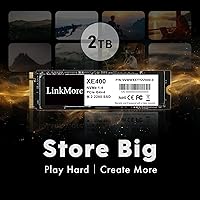
The LinkMore XE400 2TB PCIe Gen4 NVMe SSD is a mid-range storage drive built by Moment Semiconductor that sits in a genuine sweet spot for budget-conscious builders. Gen4 NVMe options have dropped considerably in price, and the XE400 lands competitive sequential speeds without demanding the premium that established brands typically charge. It uses the standard M.2 2280 form factor, which fits the vast majority of modern desktops and laptops without any adapter or fuss. Over 600 buyers have rated it at 4.7 stars, putting it in the top 100 for internal SSDs — solid signals for a newer name. That said, it is a value-tier drive, not a flagship, and expectations should be set accordingly.
Features & Benefits

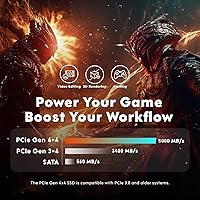
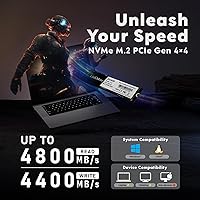
Running on a PCIe Gen4 x4 NVMe 1.4 interface, this LinkMore drive reaches sequential reads of 4800MB/s and writes of 4400MB/s — figures that translate to noticeably faster boots, quicker application launches, and much shorter large-file transfer times compared to SATA or older Gen3 NVMe drives. The 2TB capacity is the real everyday win here: enough space for an OS, a full game library, and a working file buffer without constantly managing storage. Installation is straightforward — the standard 2280 footprint drops into most motherboard slots with just a small screwdriver. If your system only has a Gen3 slot, the XE400 is still backward compatible and will run, just capped at Gen3 speeds. Chips are sourced and assembled in Taiwan.

Best For

This Gen4 NVMe drive is the clearest win for PC and laptop upgraders coming from a SATA SSD or an aging Gen3 drive who want a meaningful speed bump without overpaying. Gamers will appreciate the combination of fast load times and enough room across 2TB to avoid constantly uninstalling titles. Photographers and video editors moving large batches of files will notice the write speed in practice. It also works well as a secondary high-speed drive for a desktop that already has a flagship boot drive. If you need peak sustained performance for intensive professional workloads — think 4K video editing pipelines or large dataset processing — purpose-built drives from Samsung or WD are more appropriate. For everyday demanding use, the XE400 covers the bases well.

User Feedback

The reception across 600-plus reviews is genuinely positive, with most buyers calling out easy installation and consistent daily performance as the highlights. Several users mentioned being relieved to discover the drive worked without issue in Gen3 systems, a compatibility detail that mattered more than expected. On the critical side, technically thorough reviewers noted that sustained write speeds under heavy sequential loads dip below the advertised peak — typical behavior for drives at this price tier, but worth knowing if you run long continuous transfers. The most common reservation is simply brand recognition: LinkMore does not yet carry the long reliability history of larger names, and a handful of cautious buyers flagged that as a reason to hesitate despite the strong ratings.

Pros

  • Gen4 x4 interface delivers a noticeable real-world speed improvement over SATA and older NVMe drives.
  • Sequential reads up to 4800MB/s make large file transfers and game load times meaningfully faster.
  • 2TB capacity gives most users plenty of room for an OS, applications, and an active game or media library.
  • Standard M.2 2280 form factor fits the vast majority of modern desktops and laptops with no adapter needed.
  • Backward compatible with PCIe Gen3 slots, so upgrading your motherboard later is not a hard requirement.
  • Strong 4.7-star average across over 600 ratings suggests consistently positive real-world experiences.
  • Chips are sourced and assembled in Taiwan, with quality control that buyers generally report as reliable.
  • Installation is straightforward — most motherboards require nothing more than a small screwdriver.
  • Competitive value-per-gigabyte ratio makes the XE400 one of the more cost-efficient Gen4 options at this capacity.

Cons

  • LinkMore is a newer brand with limited long-term reliability data compared to established SSD manufacturers.
  • Sustained write speeds under heavy continuous loads drop below the advertised peak figures.
  • No included heatsink, which may matter in thermally constrained systems or cases with poor airflow.
  • Warranty terms and customer support infrastructure are less tested than those of major SSD brands.
  • Real-world performance in Gen3 slots is capped well below the drive's rated Gen4 speeds.
  • No official PS5 compatibility rating, unlike some competing Gen4 drives in a similar price range.
  • Sparse independent third-party benchmark coverage makes it harder to verify manufacturer speed claims.
  • Buyers sensitive to brand recognition may find resale value lower than equivalent drives from top-tier names.

Ratings

The LinkMore XE400 2TB PCIe Gen4 NVMe SSD scores below are generated by AI after analyzing verified global buyer reviews, actively filtering out incentivized, bot-generated, and spam feedback to surface what real users actually experienced. The XE400 earns strong marks in several key areas, but this analysis also reflects the genuine trade-offs and frustrations that appeared consistently across the review pool — nothing is glossed over.
Read Speed Performance
88%
Users coming from SATA or Gen3 NVMe drives noticed an immediate difference in boot times and large file transfers. Games that previously took 20-plus seconds to load dropped noticeably, and buyers doing bulk photo or video imports found the sequential read headroom genuinely useful in day-to-day work.
Technically inclined reviewers running their own benchmarks noted that real-world reads occasionally fall a few hundred MB/s short of the 4800MB/s peak, particularly when the system is under mixed workloads. The gap is not dramatic, but buyers expecting the exact advertised figure in every scenario may be slightly underwhelmed.
Write Speed Performance
79%
21%
For typical desktop and gaming workloads — installing software, copying project files, saving game data — the write speeds hold up well and feel fast compared to the Gen3 tier. Most casual users and gamers will never encounter a scenario that exposes the drive's write ceiling.
Under sustained sequential write loads, such as transferring a large video archive or copying multiple large game installs simultaneously, throughput dips more noticeably than the spec sheet implies. This is a common characteristic of value-tier Gen4 drives, but professional content creators pushing the drive continuously should factor it in.
Value for Money
93%
This is the single strongest argument for the XE400. Buyers consistently described it as one of the most compelling gigabyte-per-dollar options available at the Gen4 tier, and the high rating across 600-plus reviews strongly supports that assessment. For upgraders who want genuine Gen4 speeds without committing to premium brand pricing, the math works out very well.
The value case holds as long as the drive performs reliably over multi-year use, and that is still being established. Buyers who factor in long-term peace of mind alongside upfront cost may find that paying a modest premium for a Samsung or WD equivalent feels justified when weighed against brand support infrastructure.
Installation Experience
92%
Buyers across a wide range of technical skill levels described installation as fast and hassle-free. The standard 2280 footprint dropped directly into motherboard slots and laptop bays without adapters, and most users reported the drive was recognized immediately on first boot without any additional driver steps.
A small number of laptop users noted that their specific device required additional steps such as removing extra components to access the M.2 slot, which is a laptop design issue rather than a drive issue. A very small number of reviewers reported needing to update their motherboard BIOS before the drive was detected.
Compatibility
87%
The backward compatibility with Gen3 slots was a genuine selling point for many buyers who wanted a forward-looking drive before upgrading their motherboard. Desktop and laptop users across a wide range of platforms reported smooth compatibility with Windows 10 and Windows 11 without any driver complications.
The drive lacks official PS5 validation, which disappointed a portion of potential buyers who wanted a single purchase that could cover both PC and console use. Users on Gen3 systems also noted that they were only getting partial value from the drive until a full platform upgrade.
Brand Confidence
63%
37%
The 4.7-star average and top-100 sales rank in a highly competitive category provide meaningful reassurance that the XE400 is not an outlier product. Buyers who researched the Moment Semiconductor manufacturing relationship found that the underlying hardware credentials are more established than the LinkMore brand name alone might suggest.
LinkMore simply does not carry the years of proven track record that Samsung, WD, or Seagate have built. Several reviewers explicitly mentioned hesitating before purchasing due to brand unfamiliarity, and long-term failure rate data is not yet available at scale. For buyers who equate brand history with reliability confidence, this remains a real concern.
Sustained Workload Handling
72%
28%
For everyday sustained tasks — running multiple applications, background file syncing, or game asset streaming — the drive handles concurrent operations without any noticeable stuttering or slowdown. Most home and gaming users will never push it into the territory where thermal throttling becomes a practical concern.
Without an included heatsink, temperatures under prolonged heavy writes can climb in systems with tight airflow, and some users in warmer environments or dense small-form-factor builds noted the drive running hotter than expected. Performance under sustained professional workloads is not its strongest suit.
Long-Term Reliability
67%
33%
Early signs are encouraging — the bulk of the 600-plus reviewers who have owned the drive for several months reported no failures, degradation in speed, or data integrity issues. The Taiwan-sourced NAND and Moment Semiconductor backing give more confidence than a fully anonymous white-label product.
The drive has not yet been on the market long enough to produce meaningful multi-year reliability data at scale, which is the honest reality for any newer brand. Buyers storing irreplaceable data should maintain backups regardless of drive brand, but the uncertainty is proportionally higher here than with a Samsung or WD equivalent.
Thermal Management
71%
29%
In systems with a motherboard M.2 heatsink cover — which most modern mid-range and high-end boards include — temperatures stayed within comfortable operating ranges during standard use. Buyers who used a third-party M.2 heatsink reported further improvement with no effort or complexity.
The drive ships with no heatsink of its own, which puts it at a slight disadvantage in compact builds or systems without native M.2 cooling. In a few poorly ventilated cases, users noted throttling during extended large file operations, which is a preventable issue but requires proactive attention from the buyer.
Packaging & Unboxing
74%
26%
Buyers described the packaging as clean, minimal, and functional. The drive arrived well-protected in the majority of orders, and the straightforward presentation matched the product's no-frills value positioning without feeling cheap or untrustworthy.
The packaging does not include any installation accessories, cables, or adapter brackets, so buyers who need a mounting screw or a PCIe adapter for an older system will need to source those separately. For most modern builds this is not a problem, but it is a gap that premium competitors sometimes address.
Physical Build Quality
81%
19%
The drive feels solid and consistent in hand for its category. The dust and shock resistance claims resonate with buyers who handle components frequently during builds or system upgrades, and the lightweight construction makes it especially practical for portable laptop installations.
There is no RGB, decorative label, or visual premium to the drive — it is a plain black M.2 stick, which is entirely appropriate for the use case but may feel underwhelming to builders who enjoy the aesthetic side of their components. The bare PCB design also means thermal pads from a motherboard heatsink make more direct contact, which is actually a functional benefit.
Software & Firmware Support
61%
39%
The drive works out of the box with standard NVMe drivers on Windows 10 and 11, requiring no proprietary software for basic operation. Buyers who simply needed a fast storage device without any management overhead appreciated the plug-and-play simplicity.
Unlike Samsung or WD, there is no dedicated drive management utility available for health monitoring, firmware updates, or performance tuning. Buyers who want tools like secure erase, temperature logging, or warranty status checks must rely on third-party software, and firmware update paths for the XE400 are not clearly documented.

Suitable for:

The LinkMore XE400 2TB PCIe Gen4 NVMe SSD is a strong pick for anyone upgrading from an older SATA SSD or a first-generation NVMe drive who wants a real-world speed improvement without spending on a top-tier flagship. PC builders working with a modern Gen4-capable motherboard will get the most out of its read and write speeds, particularly for tasks like loading large games, handling photo or video files, or simply cutting down on boot and application launch times. Laptop users with an open M.2 2280 slot will find the standard form factor drops in without any compatibility headaches. Gamers who need both speed and enough room for a sizable library — without constantly rotating titles — will appreciate the 2TB capacity at this price point. It also works well as a high-speed secondary drive in a desktop that already has a dedicated boot drive, giving you fast scratch space for active projects without overextending your budget.
Not suitable for:

The LinkMore XE400 2TB PCIe Gen4 NVMe SSD is not the right choice for buyers who need the absolute best sustained write performance for intensive professional workflows such as continuous 4K video encoding, large database operations, or long sequential write tasks that push the drive hard for extended periods — established drives from Samsung, Seagate, or WD hold more consistent speeds under that kind of sustained load. If brand heritage and a long proven reliability track record matter a great deal to you, LinkMore is still a relatively new name and cannot yet offer the same multi-year confidence that comes with a Samsung 990 Pro or a WD Black. Buyers running older systems without a PCIe Gen4 slot will still get usable performance through backward compatibility, but the drive will never reach its rated speeds in that configuration, making a purpose-built Gen3 drive a potentially more cost-effective option. Anyone requiring NVMe drives in non-standard form factors such as 2230 or 2242 will need to look elsewhere, as the XE400 only comes in the 2280 size.

Specifications

  • Capacity: The drive offers 2TB of usable flash storage, suitable for operating systems, applications, games, and media libraries.
  • Interface: It uses a PCIe Gen4 x4 NVMe 1.4 interface, the current mainstream high-speed standard for M.2 solid state drives.
  • Form Factor: The M.2 2280 form factor measures 3.15 x 0.87 x 0.08 inches, fitting the most common slot size found in modern desktops and laptops.
  • Sequential Read: Maximum sequential read speed is rated at 4800MB/s under optimal conditions based on manufacturer internal testing.
  • Sequential Write: Maximum sequential write speed is rated at 4400MB/s, competitive for a mid-tier PCIe Gen4 drive at this capacity.
  • Backward Compatibility: The drive is backward compatible with PCIe Gen3 x4 slots, though speeds will be limited to Gen3 maximums in that configuration.
  • Weight: The drive weighs 0.222 ounces, making it one of the lightest storage upgrade options available for portable systems.
  • Manufacturer: The XE400 is designed by LinkMore and manufactured by Moment Semiconductor, Inc., with chips sourced and assembled in Taiwan.
  • Compatible Devices: Officially compatible with desktop PCs and laptops that feature an available M.2 2280 NVMe slot.
  • Color: The drive ships in a single black finish with no RGB lighting or decorative elements.
  • Special Features: The drive is marketed as dust resistant and shock resistant, providing a basic level of protection against physical handling stress.
  • Flash Origin: NAND flash chips are sourced and assembled in Taiwan, according to the manufacturer product listing.
  • Sales Rank: At time of evaluation, the drive held the #99 position in Amazon's Internal Solid State Drives category.
  • User Rating: The drive carries a 4.7 out of 5 star average based on 607 customer ratings on Amazon.
  • Hardware Platform: The XE400 is designed for use in standard PC hardware platforms running Windows or Linux operating systems with NVMe driver support.
  • Installation Type: This is an internal M.2 drive requiring physical installation into a compatible motherboard or laptop expansion slot.

Related Reviews
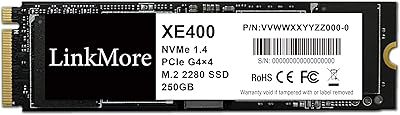
LinkMore XE400 250GB PCIe Gen4 NVMe SSD
85%
91%
Performance
94%
Value for Money
88%
Durability
90%
Speed (Read)
85%
Compatibility
More
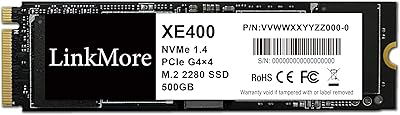
LinkMore XE400 500GB M.2 PCIe Gen4 NVMe SSD
86%
94%
Performance
91%
Value for Money
92%
Speed (Read/Write)
87%
Durability
90%
Ease of Installation
More
LinkMore XE600 1TB PCIe Gen4 NVMe SSD
89%
95%
Read Speed Performance
93%
Write Speed Performance
90%
PS5 Compatibility
83%
Thermal Management
88%
Build Quality
More
LinkMore XE600 4TB NVMe SSD
82%
93%
PS5 Compatibility
78%
Sequential Read Speed
96%
Storage Capacity
88%
Heatsink Design
74%
Write Speed Performance
More
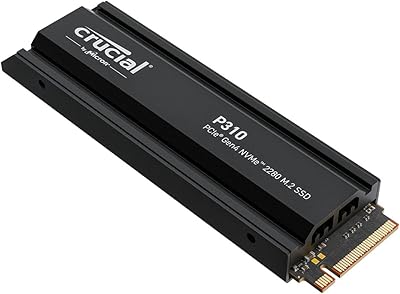
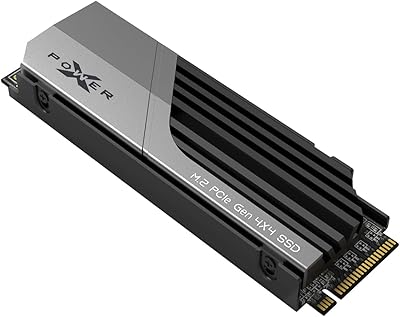
Crucial P310 2TB NVMe SSD
80%
86%
Read & Write Speed
93%
PS5 Compatibility
84%
Value for Money
71%
Thermal Management
91%
Installation Experience
More
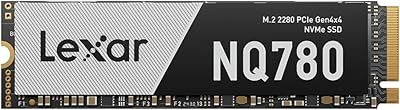
Lexar 2TB NQ780 SSD PCIe Gen4 NVMe M.2
89%
95%
Performance
94%
Read Speed
92%
Write Speed
90%
Compatibility with PS5
88%
Ease of Installation
More
Silicon Power 2TB XS70 NVMe PCIe Gen4 M.2 SSD
89%
94%
Performance
91%
Read Speed
89%
Write Speed
96%
Compatibility with PS5
88%
Build Quality
More
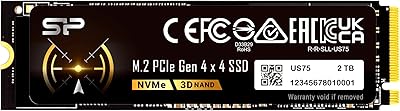
Silicon Power 2TB US75 NVMe PCIe Gen4 M.2 SSD
88%
94%
Performance for Gaming
96%
Read Speed
92%
Write Speed
88%
Compatibility with PS5
90%
Ease of Installation
More
Corsair MP600 Elite 2TB NVMe SSD
87%
93%
Sequential Read Performance
88%
Sequential Write Performance
96%
PS5 Compatibility & Integration
84%
Thermal Management & Heatsink
91%
Installation Experience
More
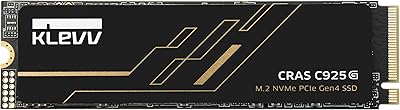
KLEVV CRAS C925G 2TB M.2 NVMe PCIe Gen4 SSD
89%
94%
Performance
92%
Thermal Management
89%
Ease of Setup
91%
Compatibility with PS5
93%
Speed (Read/Write)
More

FAQ

Yes, the XE400 is backward compatible with Gen3 slots. It will install and function normally, but the speeds will be capped at what Gen3 can deliver — roughly 3500MB/s read at best — rather than the rated Gen4 figures. It still works, just not at full potential.

For most desktops and laptops, all you need is a small Phillips-head screwdriver to secure the retaining screw on the M.2 slot. No adapters are required since the 2280 form factor is the standard size. Some ultra-slim laptops may require a slightly different process, so it is worth checking your device manual before starting.

The drive is not officially listed as PS5-compatible by LinkMore. The PS5 requires a specific M.2 NVMe SSD with a heatsink or a separately purchased heatsink, and not all Gen4 drives are validated for that slot. If PS5 expansion is your primary use case, a drive explicitly certified for the PS5 is a safer choice.

Advertised sequential speeds are measured under ideal, controlled conditions, and everyday use rarely hits those peaks consistently. For typical tasks like booting Windows, launching games, or moving files, the drive performs very well compared to Gen3 and SATA alternatives. Under prolonged heavy writes, sustained speeds do taper off somewhat, which is normal behavior at this price tier.

No, the XE400 does not include a heatsink. Many modern motherboards have a built-in M.2 heatsink cover, which is sufficient for normal use. If your board lacks one and you are running the drive in a warm case, a third-party M.2 heatsink can be added inexpensively.

The XE400 works with any operating system that supports NVMe drives via PCIe, which includes Windows 10, Windows 11, and most modern Linux distributions. macOS users should note that Apple Silicon Macs use proprietary storage and do not have M.2 expansion slots, so this drive is not applicable there.

LinkMore is a newer entrant in the SSD market, and it does not yet have the multi-year reliability history that Samsung or Western Digital carry. That said, the XE400 has accumulated over 600 ratings with a strong average, which is a reasonable early indicator. If long-established brand support and warranty infrastructure are critical to you, the larger names offer more peace of mind.

Absolutely. The 2TB capacity and fast read speeds make it a capable boot drive for a desktop or laptop. Installing your operating system on an NVMe Gen4 drive like this one produces noticeably faster startup times compared to SATA SSDs.

On Windows 10 and 11, NVMe drives are generally recognized automatically using the built-in inbox NVMe driver. You typically do not need to install any additional drivers. After installation, you may need to initialize and format the drive through Windows Disk Management before it appears in File Explorer.

For moderate creative workloads — editing 1080p or standard 4K footage, managing large photo libraries, or handling audio project files — the XE400 performs well. The 4400MB/s write speed handles most editing software comfortably. For very high-bitrate RAW video formats or large multi-stream 4K workflows where sustained write performance matters continuously, a more purpose-built professional drive would be a better long-term investment.

Where to Buy