Overview

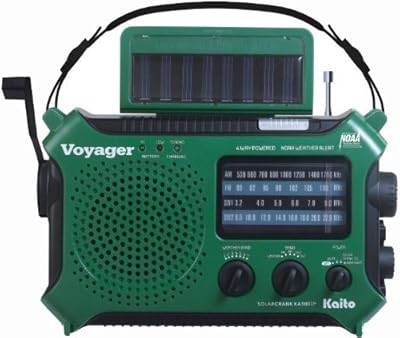
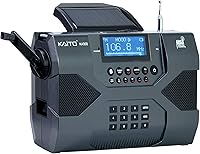
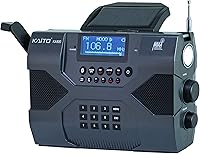
The Kaito Voyager Max KA900 Emergency Radio launched in 2018 and has held its ground as one of the more serious options in the mid-to-high range of the emergency radio market. What separates it from cheaper alternatives is straightforward: five independent power sources — solar, hand crank, USB input, DC wall adapter, and a built-in rechargeable battery — meaning you're rarely left without a way to keep it running. It doubles as a capable everyday home radio or campsite companion, not just a disaster shelf item. That said, this hand-crank radio is feature-dense and rewards patient users, not those wanting something they can operate without reading the manual.
Features & Benefits

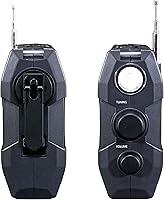
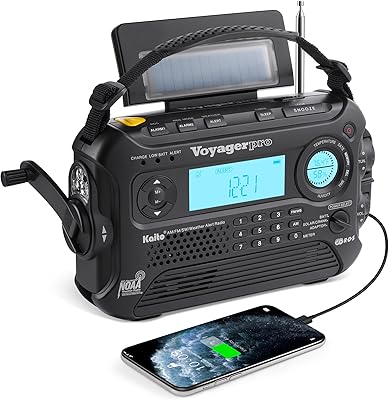
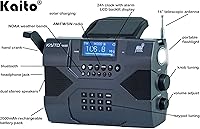
The Voyager Max covers AM, FM, seven shortwave bands, and seven pre-programmed NOAA weather channels, with PEAS real-time alerts that trigger automatically during declared emergencies — genuinely useful when a storm rolls in at 3 a.m. Shortwave access is worth calling out specifically: during a grid-down scenario, international broadcasts can carry news that domestic stations can't. Bluetooth, a 3.5mm aux input, and micro-SD playback make it usable well beyond emergencies. The dual stereo speakers with a digital equalizer produce surprisingly full sound for a radio this size. Rounding things out, a USB output port lets you top off a phone, and both an LED flashlight and a five-LED reading lamp are built right in.

Best For

This emergency radio is a strong fit for households that want a single device handling communication, weather monitoring, and basic power backup without juggling separate gear. Campers and overlanders will appreciate having reliable off-grid reception alongside a phone-charging option. Shortwave enthusiasts get genuine global broadcast access in a portable package — that's a niche but real audience. Users in hurricane corridors, tornado zones, or remote rural areas will likely get the most practical value from the NOAA alert system. Preppers who think in terms of redundancy will appreciate that if one power method fails, four others remain. This is not the radio for someone wanting something ultra-compact or dead simple.

User Feedback

Across roughly 864 reviews, the Voyager Max holds a 4.2-star average — respectable, though the spread tells a more nuanced story. Users frequently praise the audio quality and the reliability of solar charging in direct sunlight, along with a build that feels sturdy for the price tier. Criticism tends to cluster around a few consistent points: the hand crank charges the battery slowly, solar performance drops noticeably in overcast conditions, and the interface has a learning curve that some find frustrating. A recurring complaint worth noting is the missing wall adapter — at this price point, buyers reasonably expect it included. Bluetooth pairing works but has drawn occasional comments about limited range.

Pros

  • Five independent power sources mean you are almost never fully stranded without a way to run the radio.
  • NOAA real-time alerts can trigger automatically overnight, which is genuinely useful during fast-moving severe weather.
  • Shortwave coverage gives access to international broadcasts when domestic information sources go offline.
  • Dual stereo speakers produce noticeably fuller sound than most single-speaker competitors at this size.
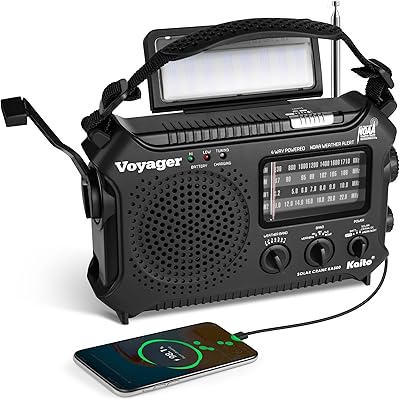
  • The built-in USB output port provides real, if limited, phone-charging capability during power outages.
  • Over 1,000 station memory slots make it practical for daily radio listeners, not just emergency use.
  • Bluetooth and micro-SD playback extend its everyday usefulness well beyond emergency scenarios.
  • The five-LED reading lamp and LED flashlight are genuinely handy additions that reduce the need for separate gear.
  • A 4.2-star average across nearly 900 real-world reviews signals dependable core performance for most buyers.
  • Build quality feels solid and dense, not hollow or cheap, for a device in this category.

Cons

  • The wall adapter is not included in the box, which is a notable omission at this price tier.
  • Hand crank charging is slow and laborious — it is a last resort, not a convenient daily top-up method.
  • Solar charging drops off sharply in overcast conditions, which is exactly when storms make it most relevant.
  • The interface has a real learning curve; advanced features like memory presets and alarm setup are not intuitive.
  • Bluetooth range is limited and pairing can be inconsistent with certain devices, making it feel like an afterthought.
  • At 1.69 pounds with no carry handle or strap mount, extended transport on foot becomes genuinely awkward.
  • The built-in battery capacity is modest, meaning heavy feature use drains it faster than most buyers expect.
  • The owner's manual does not do a good job explaining the more complex functions, leaving users to experiment.
  • The flashlight output is underwhelming as a primary light source and works best as a supplementary tool only.

Ratings

The Kaito Voyager Max KA900 Emergency Radio was scored by our AI system after processing hundreds of verified buyer reviews from global sources, with spam, bot-generated, and incentivized feedback actively filtered out. The result is a balanced snapshot that reflects what real owners genuinely love about this hand-crank radio — and where it falls short of expectations at its price point. Both strengths and frustrations are represented transparently in the category scores below.
Power Source Versatility
91%
Five independent charging methods is the real headline here. Owners consistently report peace of mind knowing that even if the grid is down, cloud cover is heavy, and USB power is unavailable, the hand crank is still there as a last resort. For emergency preparedness use cases, that redundancy is hard to overstate.
The hand crank is more of a safety net than a practical daily charger — users note it takes a significant amount of cranking to add meaningful battery percentage. Solar is effective outdoors but noticeably slower under overcast skies, which is exactly when storms make it most relevant.
Reception & Tuning
84%
AM and FM reception draws consistent praise, particularly in rural areas where signal quality matters most. The telescopic antenna, when fully extended, pulls in stations that cheaper radios simply cannot. Shortwave performance is a genuine differentiator, letting users tune into international broadcasts during domestic information blackouts.
Some users report that shortwave reception can be inconsistent depending on location and interference, requiring patience and repositioning. The four tuning methods, while comprehensive, can confuse new users who expect a simpler interface, and the ATS scan occasionally locks onto weak or unwanted stations.
NOAA Weather Alert System
88%
The PEAS real-time alert function is one of the most practically valued features among owners in hurricane and tornado-prone regions. Several reviewers specifically mentioned the radio waking them during nighttime severe weather warnings, which they credited as genuinely useful in a real emergency scenario.
NOAA alerts are limited to the US and Canada, which is a hard boundary worth knowing before purchase. A small number of users reported occasional false triggers or alert sensitivity issues, though these appear to be edge cases rather than a widespread pattern.
Audio & Speaker Quality
83%
Dual stereo speakers with a built-in digital equalizer is unusual hardware for a portable emergency radio, and owners notice. At moderate volumes the sound is noticeably fuller than single-speaker competitors, making the Voyager Max genuinely enjoyable for casual daily listening at home or at a campsite.
At higher volumes some users detect distortion creeping in, particularly in the mid-to-high frequency range. The equalizer settings, while a welcome addition, are not especially intuitive to adjust, and a handful of reviewers admitted they gave up and left it on the default setting.
Build Quality & Durability
78%
22%
The ABS plastic shell feels solid in hand and does not produce the hollow, cheap flex common in budget emergency radios. Owners who have taken this hand-crank radio camping or backpacking generally report it survives bumps and moderate outdoor handling without obvious damage to the casing or controls.
ABS plastic, however sturdy it feels, is not ruggedized or water-resistant, which is a meaningful gap for an emergency device. A subset of reviewers reported wear on the hand crank mechanism after extended use, and the battery compartment cover has drawn occasional comments about a loose fit.
Battery Life
74%
26%
The 2,000 mAh li-ion cell provides reasonable listening time on a full charge, enough for several hours of continuous radio use without needing to reach for the crank or find sunlight. Owners appreciate having a dedicated internal battery rather than relying solely on removable AA cells.
Two thousand milliamp-hours is modest by modern standards, especially given the number of power-hungry features — Bluetooth, backlit display, and the flashlight all draw from the same cell. Heavy users report the battery drains faster than expected, and the hand crank replenishment rate makes topping up a slow process.
Bluetooth Connectivity
66%
34%
Bluetooth works as advertised for basic wireless audio streaming from a phone or tablet, and owners who use it casually at home or in a stable campsite setting generally report no significant complaints about the connection quality itself.
Range is a recurring frustration — several reviewers note the connection becomes unreliable beyond a short distance, and pairing with certain devices requires repeated attempts. For a device at this price point, the Bluetooth implementation feels like a secondary feature that was added rather than engineered in.
Ease of Use & Interface
61%
39%
Once users invest time learning the interface, the depth of the feature set becomes accessible. The backlit LCD is readable in low light, the direct keypad entry for station tuning is quick when you know your frequencies, and the memory bank storing over 1,000 stations is genuinely handy for regular listeners.
The learning curve is steeper than buyers expect, and multiple reviewers explicitly mention that the owner's manual is not particularly helpful in clarifying the more advanced functions. For older users or those who want a radio they can hand to a family member in an emergency with no explanation, this is a real drawback.
MP3 Player & Recording
72%
28%
The micro-SD slot and 3.5mm aux input give this emergency radio a practical entertainment dimension that similar devices lack. Owners who load music or podcasts onto a memory card appreciate having offline audio without needing Bluetooth, which is useful when battery conservation matters.
The recording function, while present, is basic — audio quality from the built-in recorder is acceptable but not impressive, and file management through the device's own interface is cumbersome. Most users who tested recording did so out of curiosity and rarely returned to it as a regular feature.
Phone Charging Capability
63%
37%
Having a USB output port capable of charging a smartphone is a meaningful bonus in a genuine emergency. Owners who have used it during power outages confirm it does deliver charge to phones and small devices, making the Voyager Max a limited but real power hub when no other options exist.
The 2,000 mAh battery capacity means you can realistically give a modern smartphone perhaps a 30 to 50 percent top-up before the radio itself runs low. This is a backup measure, not a replacement for a proper power bank, and users expecting robust charging will come away disappointed.
Portability & Form Factor
71%
29%
At 1.69 pounds and roughly the size of a thick hardcover book, the Voyager Max is portable enough for a backpack or a vehicle emergency kit. Campers and overlanders generally consider the size a fair trade-off for the feature set packed inside.
It is not a compact grab-and-go device by any stretch. Users comparing it to smaller single-purpose emergency radios will find it bulky, and the lack of any carry handle or integrated strap mount makes one-handed transport awkward on longer hikes.
Lighting Features
76%
24%
The combination of a five-LED reading panel and a separate LED flashlight covers two distinct use cases well. The reading lamp is genuinely useful for navigating a tent or a dark room during a power outage without burning through battery as fast as the flashlight mode would.
Neither the flashlight nor the reading lamp is particularly powerful compared to a dedicated torch. Owners who expected a bright emergency beam were underwhelmed by the output, and the flashlight is better treated as a supplementary tool than a primary light source in dark or outdoor conditions.
Value for Money
69%
31%
For buyers who will genuinely use the shortwave bands, the NOAA alert system, and the multi-power inputs regularly, the feature-to-price ratio holds up reasonably well. There are very few competing devices that check as many boxes in a single unit at a comparable price.
The missing wall adapter is the most cited value complaint, and it is a fair one — including a DC adapter should be standard at this price tier. Users who only need basic AM/FM weather alert functionality will find cheaper, simpler options that do that narrower job just as well for significantly less.
Shortwave Performance
77%
23%
Shortwave reception is a feature that meaningfully sets the Voyager Max apart from the majority of emergency radios sold at any price. During extended emergencies when domestic broadcasts are disrupted, the ability to tune international stations gives users access to an entirely different information layer.
Shortwave performance is location-dependent and requires experimentation with antenna angle and positioning to get the best results. Users in dense urban environments with significant RF interference report more difficulty pulling in clean shortwave signals compared to those in suburban or rural settings.
Setup & Initial Configuration
58%
42%
Out of the box, basic functions like FM radio and flashlight work immediately without much setup. For users who just want to confirm the device works and tuck it into an emergency kit, the initial experience is straightforward enough.
Setting up the clock, alarm, memory presets, and NOAA alert preferences is where complexity sets in quickly. The configuration process is not intuitive, and without a well-written manual to guide them, many owners report skipping certain features entirely — meaning they are paying for capabilities they never actually use.

Suitable for:

The Kaito Voyager Max KA900 Emergency Radio was built for people who take preparedness seriously without wanting to carry five separate devices to cover it. Households in hurricane corridors, tornado zones, or wildfire regions will get the most out of the automatic NOAA alert system, which can wake you up with a real warning in the middle of the night when your phone is on silent. Campers, overlanders, and backpackers who venture beyond reliable cell coverage will appreciate having both off-grid reception and a backup phone-charging option in a single unit. Shortwave access is a niche but meaningful feature for anyone who wants a global information source when domestic broadcasts go dark during extended emergencies. Preppers and survivalists who think in terms of redundancy will find the five-way power system genuinely reassuring — if one method fails, the others remain. Casual shortwave hobbyists who also want solid FM reception for everyday listening will find this hand-crank radio pulls double duty with real competence.
Not suitable for:

The Kaito Voyager Max KA900 Emergency Radio is a poor match for buyers who want something simple, compact, and ready to use without a learning curve. If your emergency plan is to toss a radio in a bag and hand it to whoever needs it, the interface complexity alone will cause problems — this device rewards dedicated users, not occasional ones. People expecting a capable standalone power bank will be disappointed; the 2,000 mAh battery can nudge a smartphone's charge upward, but it is not a substitute for a proper external battery. Buyers who assumed the wall adapter is in the box will also feel the sting — it is not included, and that is a real frustration at this price. Anyone who needs a truly rugged, water-resistant device for harsh outdoor conditions should look elsewhere, since the ABS plastic shell offers no meaningful weather protection. Finally, if you only need basic AM/FM and NOAA weather alerts and nothing more, there are simpler, cheaper radios that do exactly that without the added complexity.
Specifications

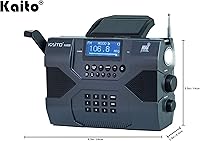
  • Dimensions: The unit measures 9.5″ long by 5.5″ wide by 2.5″ deep, roughly the footprint of a thick hardcover book.
  • Weight: It weighs 1.69 pounds, making it portable for a pack or vehicle kit but not ultralight for extended hiking.
  • Battery: A built-in 3.7V / 2,000 mAh rechargeable li-ion cell powers the unit and is not user-replaceable in the field.
  • Power Inputs: Five charging methods are supported: solar panel, hand crank generator, 5V USB input, 6V DC wall adapter, and the internal battery.
  • Wall Adapter: A 6V DC wall adapter is required for mains charging but is not included in the box and must be purchased separately.
  • Radio Bands: Receives AM, FM, seven shortwave bands, and seven pre-programmed NOAA weather channels for US and Canada coverage only.
  • Tuning Methods: Supports four tuning modes: manual rotary knob, direct numerical keypad entry, automatic tuning scan (ATS), and memory recall with over 1,000 station slots.
  • Antenna: A telescopic antenna extends up to 14″ to improve signal sensitivity and selectivity across AM, FM, and shortwave bands.
  • Connectivity: Includes Bluetooth wireless audio, a 3.5mm auxiliary input jack, and a micro-SD card slot for MP3 playback and audio recording.
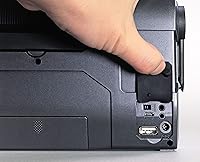
  • USB Output: A standard DC 5V USB output port allows the unit to charge smartphones, GPS units, and other small devices from its internal battery.
  • Speakers: Dual stereo speakers are built in, paired with a digital sound equalizer for adjustable audio output during radio and media playback.
  • Display: A backlit LCD screen shows the current station, time (24-hour clock), date, alarm status, and sleep timer countdown.
  • Alarm & Timer: Includes a programmable 24-hour clock alarm and a count-down sleep timer for timed listening or wake-up functions.
  • Lighting: Two integrated light sources are included: a five-LED reading panel for area illumination and a dedicated LED flashlight for directional use.
  • Emergency Alerts: The PEAS (Public Emergency Alert System) monitors pre-set NOAA channels and triggers an automatic audio alert during declared emergencies.
  • Construction: The outer shell is made from ABS plastic and offers no official water resistance or ruggedized impact rating.
  • Station Memory: Stores over 1,000 user-programmed station presets accessible via memory tuning mode for fast recall of saved frequencies.
  • Recording: Audio recording to a micro-SD card is supported via the built-in digital recorder, capturing radio broadcasts or auxiliary audio input.
  • First Available: The product was first listed for sale on September 26, 2018, and remains in active production as of the current date.
  • Manufacturer: Designed and sold by Kaito Electronics, a US-based company specializing in portable and emergency radio receivers.

Related Reviews

Kaito KA600 Emergency Radio
76%
91%
NOAA Weather Reception
88%
Power Source Versatility
51%
Hand Crank Charging Speed
79%
AM/FM Reception Quality
67%
Shortwave Reception
More
Kaito KA500 Emergency Weather Radio
77%
93%
Power Versatility
91%
NOAA Weather Alerts
78%
Build Quality
84%
Audio Quality
47%
Hand Crank Efficiency
More
Kaito KA500 Solar Dynamo NOAA Weather Radio
73%
88%
Power Versatility
84%
NOAA Weather Alert Reception
54%
Solar Charging Performance
67%
Hand-Crank Generator
79%
AM and FM Reception
More
TFTDOUP XSY330 Emergency Radio
86%
90%
Battery Life
88%
Charging Flexibility
72%
Flashlight Brightness
85%
SOS Alarm Effectiveness
95%
Portability
More
ROCAM 12000mAh Emergency Radio
86%
92%
Battery Life
89%
Portability & Size
95%
Charging Flexibility
88%
Waterproofing & Durability
90%
SOS Alarm Effectiveness
More
NEPIVEL H17 12000mAh Emergency Weather Radio
74%
91%
Value for Money
84%
Radio Reception
83%
Battery Capacity
72%
Solar Charging Performance
58%
Hand Crank Charging
More
Roxicosly CR1009Ultra 12000mAh Emergency Weather Radio
74%
88%
Battery Life
91%
Charging Versatility
86%
NOAA Alert Performance
58%
Hand Crank Durability
44%
Solar Charging Speed
More
Sangean MMR-99 Emergency Radio
87%
94%
Power Options Flexibility
91%
Portability & Size
89%
Build Quality & Durability
85%
Ease of Use
75%
Sound Quality
More
TFTDOUP Emergency Weather Alert Radio
86%
88%
Overall Performance
85%
Battery Life
90%
Charging Options
80%
Ease of Use
87%
Build Quality
More
QAUYYW Emergency Weather Radio XSY330
86%
89%
Battery Life
85%
Ease of Use
92%
Portability
75%
Radio Reception
88%
Build Quality
More

FAQ

No, it does not. The Kaito Voyager Max KA900 Emergency Radio requires a 6V DC wall adapter for mains charging, but Kaito does not include one in the package. You will need to source a compatible adapter separately, which is a genuine frustration at this price point and worth budgeting for upfront.
Quite a while, honestly. The hand crank is best thought of as an emergency backup rather than a practical charging method. Extended cranking produces only a modest charge — enough for short bursts of use — so it works best when combined with solar or USB input rather than relied on alone.

The PEAS alert system can be configured to monitor NOAA channels and trigger an alarm even when the radio is in standby mode, which is one of its most useful emergency features. You will need to set this up correctly through the menu first, and the owner's manual guides you through the process, though not always clearly.

Yes, a standard micro-SD card works for both playback and recording. There is no proprietary format required. Most users report cards up to 32GB working reliably, though it is worth formatting the card to FAT32 before first use to avoid compatibility issues.

In practice, expect reliable performance within about 10 to 15 feet in an open space. Beyond that, several owners report dropouts or pairing instability, particularly through walls. It is functional for stationary use at home or at a campsite but is not a long-range Bluetooth implementation by any measure.

The internal li-ion cell is not designed for casual user replacement — there is no external battery door for the main cell. Technically experienced users have opened the unit to replace the cell, but it is not a straightforward process and voids any remaining warranty. This is worth factoring in for long-term ownership.

It is a real and functional shortwave receiver, not just a marketing bullet point. That said, performance varies significantly by location and interference levels. In suburban or rural areas with a fully extended antenna, users pull in international broadcasts clearly. In dense urban environments, you may need to experiment with antenna angle and positioning to get clean signals.

It can, but manage expectations. The 2,000 mAh internal battery can deliver roughly a 30 to 50 percent charge to a modern smartphone before the radio itself runs low, depending on what else is drawing from the battery at the time. It is a useful emergency top-up, not a replacement for a dedicated power bank.

No. The Voyager Max uses a standard ABS plastic shell with no water resistance rating, no sealed ports, and no ruggedized construction. Light mist is unlikely to cause immediate damage, but you should not expose it to rain, splashing, or humid conditions for extended periods. Keep it protected in wet outdoor environments.

There is a real learning curve. Basic functions like FM radio and the flashlight work immediately out of the box, but setting up the clock, programming memory stations, configuring the NOAA alert, and navigating the equalizer require time and patience with the manual. Older users or those who want a truly simple interface may find it overwhelming. It is worth spending an afternoon with it before you actually need it in an emergency.

Where to Buy