Overview

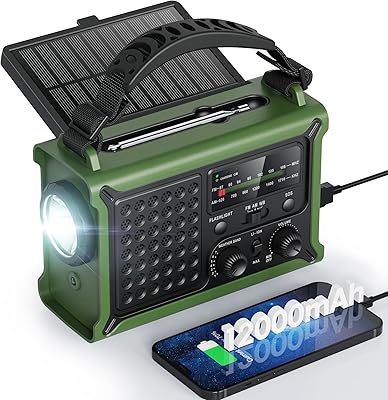
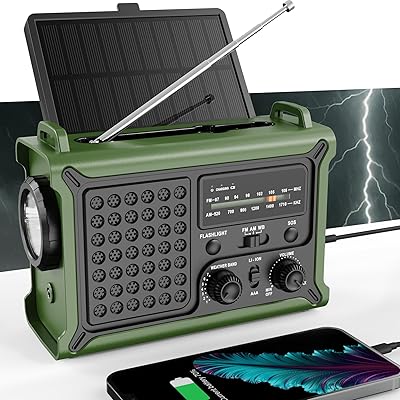
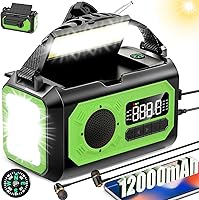
The NEPIVEL H17 12000mAh Emergency Weather Radio entered a crowded market in mid-2025 and has quietly built a solid reputation, accumulating over 500 ratings in just a few months. What stands out immediately is the dual solar panel setup — most budget radios ship with one small panel, so having two gives this unit a real charging edge when sunlight is your only option. It has a compact, outdoorsy build in grass green, light enough to toss in a go-bag without second-guessing. Think of it as a practical all-in-one for emergency kits, camping trips, or simply keeping a reliable backup when the power grid lets you down.
Features & Benefits

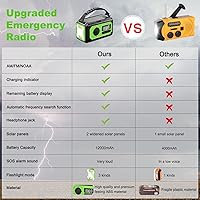
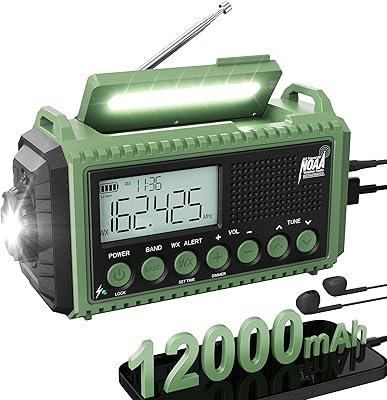
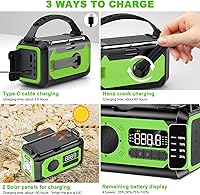
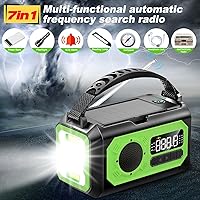
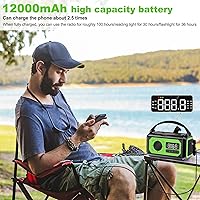
At its core, this survival radio offers three ways to stay powered: plug in via Type-C, prop it in sunlight with the dual solar panels, or use the hand crank when nothing else is available. The 12,000mAh battery can top up a smartphone — realistically expect one to two full charges depending on your phone — though the output wattage is modest, so don't expect fast charging. A 15.3-inch telescopic antenna pulls in AM, FM, and NOAA weather alerts with an auto-scan that locks onto the strongest signal and saves it. The built-in SOS alarm, 20-meter flashlight, reading lamp, compass, and headphone jack round out a surprisingly capable toolkit for its size and weight.

Best For

This hand-crank weather radio makes the most sense for people who want a dependable backup without buying five separate devices. It fits naturally into hurricane or tornado preparedness kits, where NOAA access and off-grid charging matter most. Campers and hikers who prefer traveling light will appreciate having a radio, flashlight, compass, and phone charger all in one unit that weighs under two pounds. It also suits rural households where cell coverage is spotty and a weather alert could genuinely matter. Budget-conscious buyers will find the feature-to-price ratio hard to argue with, as long as expectations around charging speed are kept realistic.

User Feedback

Across its 4.4-star rating, buyers consistently highlight the value for the price, praising the loud SOS alarm, responsive solar charging in direct sun, and clean FM reception. On the downside, hand-cranking is slow work — it takes considerable effort to generate meaningful charge, which is true of nearly every radio in this class. Phone charging is functional but unhurried. A few users were confused when the radio stopped responding after a knock or drop; this is actually a built-in self-protection feature that requires a reset, not a defect. Worth noting: neither headphones nor a wall charger are included in the box, which catches some buyers off guard. The 6-month warranty and fast refund policy do provide a reasonable safety net.

Pros

  • Dual solar panels give this survival radio a genuine charging edge over most single-panel competitors in its price range.
  • NOAA weather alert reception is reliable and easy to access, making it a practical tool during storm season.
  • The built-in SOS alarm is impressively loud and audible at distance — useful in real distress situations.
  • At under 1.7 pounds, this emergency radio is light enough to include in a go-bag without a second thought.
  • Auto-scan finds and stores the strongest available frequencies, reducing setup friction when time is short.
  • A 4-level LED battery indicator takes the guesswork out of knowing when to recharge before a trip.
  • The combination of flashlight, reading lamp, compass, and phone charging in one device genuinely reduces how much gear you need to carry.
  • Over 500 verified ratings in just a few months suggest real-world adoption, not just paper specs.
  • The included Type-C cable means you can charge the unit straight out of the box without hunting for accessories.
  • A 24-hour refund or exchange policy from the manufacturer provides reasonable peace of mind for a newer brand.

Cons

  • Hand-crank charging is slow and physically tiring — treat it as a last resort, not a routine power source.
  • Phone charging via USB is noticeably sluggish; do not expect power-bank-level speeds from this unit.
  • Neither a wall charger nor headphones are included, which is easy to overlook and frustrating to discover after purchase.
  • The self-protection reset feature — triggered by impact — is poorly understood by many buyers and leads to unnecessary return attempts.
  • AM reception is inconsistent, particularly in urban areas or locations with significant radio interference.
  • Solar charging works but requires direct, sustained sunlight; overcast conditions reduce it to near-irrelevance.
  • The six-month warranty is shorter than what competing radios in this category typically offer.
  • No waterproofing or ruggedized casing limits confidence for use in genuinely harsh outdoor or emergency conditions.
  • Antenna positioning requires trial and error to optimize NOAA signal quality in weaker broadcast areas.
  • Brand history is short, leaving long-term support and parts availability as open questions for buyers planning to store this unit for years.

Ratings

The NEPIVEL H17 12000mAh Emergency Weather Radio earns its strong standing through a combination of genuine utility and competitive pricing — but the scores below reflect the full picture, not a highlight reel. Our AI has analyzed verified global buyer reviews, actively filtering out incentivized and bot-generated feedback, to surface what real users consistently praise and where they run into friction. Both the standout strengths and the honest limitations are baked into every score.

Value for Money
91%
Buyers repeatedly express surprise at how much functionality this survival radio packs in at its price point. The combination of a large-capacity battery, dual solar panels, NOAA radio, flashlight, compass, and SOS alarm in a single compact unit genuinely competes with gear that costs significantly more.
A small segment of buyers who expected premium build quality or fast phone charging felt the value proposition weakened once they experienced the modest output speed. Managing expectations upfront matters here — this is a budget-tier device performing at the top of its class, not a mid-range one.
Radio Reception
84%
The 15.3-inch telescopic antenna pulls in FM stations cleanly, and the auto-scan feature does a solid job locking onto the strongest available signal without manual tuning. Several users in suburban and semi-rural areas noted they could receive NOAA weather alerts reliably during storm watches.
AM reception is more inconsistent, particularly in areas with significant interference or in urban settings with dense building coverage. A handful of rural users also reported that NOAA signal quality depended heavily on antenna angle and positioning, requiring some patience to dial in.
Battery Capacity
83%
A 12,000mAh internal battery is genuinely large for this device class, and users who needed to charge a phone during a power outage found it capable of delivering one to two full charges on a typical smartphone. The four-level LED indicator makes it easy to track remaining power without guessing.
The actual output wattage is not specified, and that matters in practice — charging a phone is slow compared to a dedicated power bank. Buyers expecting rapid top-ups will be disappointed, and the radio's own functions also draw from this same reserve, so heavy use shortens the available charging headroom.
Solar Charging Performance
72%
28%
Having two solar panels instead of one gives this hand-crank weather radio a real edge in direct sunlight conditions. Campers who set it on a tent or picnic table in full sun reported meaningful charge accumulation over a few hours, enough to keep the radio operational during extended outdoor stays.
Solar input is best treated as a supplemental trickle charge rather than a primary power source. Overcast skies dramatically reduce effectiveness, and even in bright conditions, fully recharging a depleted battery via solar alone would take an impractical amount of time. It works, but users should not rely on it exclusively.
Hand Crank Charging
58%
42%
The hand crank provides genuine off-grid charging capability when solar is not viable and there is no Type-C cable available. In a true emergency with zero other options, even a slow charge is far better than nothing, and users appreciate having this fallback.
Cranking is physically demanding and the energy return per minute of effort is low — this is a known limitation across nearly all radios in this category, not unique to this unit. Most honest users describe it as a last-resort option rather than a practical daily charging method.
SOS Alarm
89%
The SOS alarm consistently earns high marks for its volume and piercing tone. Users testing it in outdoor settings noted it was audible from a significant distance, which is exactly what matters in a genuine distress situation where visibility may be limited.
A few buyers found the alarm accidentally triggered during handling or when stored in a bag, which is startling and drains battery. There is no lockout mode or physical guard mentioned, so users packing this in a crowded kit may want to be mindful of how it is stored.
Flashlight Performance
76%
24%
The flashlight is bright enough to be practically useful around a campsite or during a home power outage, and the claimed 20-meter range holds up reasonably well in real-world conditions. Having it built in removes the need to carry a separate torch for basic tasks.
It is a single-mode light with no adjustable brightness, which limits its versatility. Extended flashlight use noticeably accelerates battery drain, so users relying on both the radio and the flashlight simultaneously should monitor the charge level more closely.
Build Quality & Durability
67%
33%
The ABS plastic housing feels solid enough for casual outdoor use and handled light bumps in most user reports without issue. The carrying strap and compact dimensions make it easy to pack without worrying about it being too fragile for a bag.
It is not ruggedized or waterproof, which limits confidence in genuinely harsh field conditions. The self-protection reset feature — where the radio locks up after a strong impact — confused a number of buyers who assumed the unit had failed, even though it is a deliberate safety circuit.
Portability & Design
86%
At under 1.7 pounds and roughly the size of a large paperback book, this emergency radio is easy to include in a go-bag without adding meaningful bulk. The carrying strap is a practical touch that makes it grabbable in a hurry, and the grass green color reads as intentionally outdoorsy rather than an afterthought.
The form factor is slightly thicker than some competing models, which may matter for buyers with very tight pack space. A few users wished the strap attachment points felt more reinforced for heavier use over time.
Ease of Use
79%
21%
Auto-scan frequency search is the kind of feature that makes a real difference when you're stressed or unfamiliar with local radio stations. The radio stores found frequencies and skips dead channels, which saves time and reduces frustration during an actual emergency.
The button layout and menu logic are not immediately intuitive to all users, particularly older buyers who found themselves consulting the manual more than once. The self-protection reset procedure, while documented, added an unnecessary layer of confusion for users who encountered it unexpectedly.
Phone Charging Speed
54%
46%
The USB output works and will charge a phone, which is a real convenience when grid power is unavailable. Users in longer-duration outages appreciated having any form of backup charging built into their emergency radio rather than carrying an entirely separate power bank.
Charging speed is genuinely slow — this is not a fast-charge unit, and using the radio functions simultaneously while charging further reduces throughput. Buyers expecting power-bank-level performance will be let down, and it is worth setting expectations clearly before relying on this feature in time-sensitive situations.
NOAA Weather Alert Coverage
81%
19%
For users in storm-prone coastal or inland regions, the NOAA reception is the radio's most critical function and it largely delivers. Multiple buyers in hurricane-prone areas specifically called out the NOAA tuning as reliable and easy to access when weather conditions deteriorated quickly.
Signal quality varies significantly by geography, and users in areas with weaker NOAA broadcast infrastructure may find reception inconsistent. Antenna positioning requires experimentation, and there is no memory preset for NOAA channels specifically, so users need to scan or tune manually each session.
Reading Lamp
71%
29%
The secondary reading lamp is a thoughtful addition that serves real practical use in tent camping or during home power outages where a harsh flashlight beam is too much. Several campers mentioned using it as a soft ambient light while reading or navigating a dark room.
The lamp is not adjustable in brightness and illuminates a relatively small area, making it better suited for close-up tasks than lighting a full room or trail. It is a useful bonus feature rather than a replacement for dedicated camp lighting.
Included Accessories
49%
51%
The Type-C cable included in the box is a practical inclusion that means buyers can charge the unit right away without hunting for a compatible cable. The owner's manual is present and does address the self-protection reset issue, which some users found helpful after the fact.
Neither a wall charger nor headphones are included, and this catches buyers off guard more than it should given the headphone jack is advertised as a feature. For a product positioned as a ready-to-use emergency kit companion, shipping without a charger feels like an incomplete package.
Warranty & Support
74%
26%
The six-month manufacturer warranty and stated 24-hour response window for defective units provide a reasonable level of confidence for a newer brand. Buyers who had to contact support generally reported positive resolution outcomes, which builds trust in the product's post-purchase experience.
Six months is shorter than the twelve-month coverage offered by several comparable radios in this category, which may give pause to buyers planning to store this unit long-term in an emergency kit. Brand recognition is still limited, so long-term parts and support availability remain uncertain.

Suitable for:

The NEPIVEL H17 12000mAh Emergency Weather Radio is a strong fit for anyone building out a practical emergency preparedness kit without wanting to spend heavily on individual components. Households in hurricane corridors, tornado alleys, or wildfire-prone regions will find the NOAA reception particularly valuable — having a reliable weather alert source that does not depend on cell towers or grid power is genuinely useful when conditions deteriorate fast. Campers and backpackers who prefer consolidating gear will appreciate that this survival radio replaces the need to pack a separate flashlight, compass, and emergency beacon, all while remaining light enough at under 1.7 pounds to not become a burden. It also makes practical sense for off-grid cabins or rural properties where broadcast radio remains the most dependable communication channel. Budget-conscious preparedness buyers who want real functionality without paying premium-brand prices will likely find this hand-crank weather radio hits a sensible sweet spot for everyday readiness.
Not suitable for:

The NEPIVEL H17 12000mAh Emergency Weather Radio is not the right call for buyers who need a dependable primary power bank for fast device charging during extended outages. The output wattage is unspecified and in practice slow, meaning anyone who needs to keep a phone charged through repeated daily cycles will quickly find this emergency radio frustrating as a sole charging solution. Serious outdoor adventurers operating in wet, muddy, or high-impact environments should also look elsewhere — this unit is not ruggedized or water-resistant, and its self-protection circuit, while a design safety feature, can cause the radio to stop responding after a solid knock, which is not ideal in demanding field conditions. Users expecting a wall charger or headphones in the box will be caught off guard, as neither is included. Finally, those who need long-range AM reception or consistent performance in heavily built-up urban areas may find the radio's signal handling less reliable than purpose-built communications equipment.
Specifications

  • Model Number: This unit is identified by the manufacturer as model H17, produced by Shenzhen Huashengtimes Electronic Technology Co., LTD under the NEPIVEL brand.
  • Battery Capacity: The internal rechargeable battery holds 12,000mAh (rated as 44,400mWh), shared across radio operation, USB device charging, and all onboard lighting functions.
  • Charging Inputs: Three input methods are supported: USB Type-C cable charging, hand crank mechanical charging, and solar charging via two built-in solar panels.
  • Solar Panels: The unit features dual integrated solar panels, offering improved solar charging efficiency compared to the single-panel design common in competing models at this price tier.
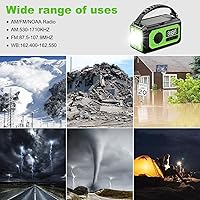
  • Radio Bands: The radio receives AM, FM, and NOAA Weather band signals, with a telescopic antenna that extends to 15.3 inches for improved signal sensitivity.
  • Auto-Scan: An automatic frequency scan function searches for available stations, tunes to the strongest signal, stores found frequencies, and skips channels with no detectable signal during playback.
  • USB Output: A USB output port allows the unit to charge smartphones and small tablets, though the specific output wattage is not published by the manufacturer.
  • Flashlight: The integrated flashlight is rated for illumination up to 20 meters in low-light conditions and operates as a single-mode beam without adjustable brightness settings.
  • Reading Lamp: A secondary LED reading lamp is built in, designed to provide softer, close-range illumination suitable for reading or navigating in dark environments.
  • SOS Alarm: A high-volume SOS alarm is included as a dedicated distress signaling feature, designed to attract attention from nearby individuals in emergency situations.
  • Compass: A basic directional compass is integrated into the unit, providing a non-electronic navigation reference when GPS or cell service is unavailable.
  • Headphone Jack: A standard headphone jack (3.5mm) is present for private listening; headphones are not included and must be purchased separately.
  • Battery Indicator: A 4-level LED display shows remaining battery capacity at 25%, 50%, 75%, and 100% intervals, allowing users to monitor power status at a glance.
  • Dimensions: The unit measures 5.94″ in length, 3.15″ in width, and 3.38″ in height, making it roughly the size of a thick paperback book.
  • Weight: The radio weighs approximately 1.63 pounds, a practical weight for inclusion in an emergency go-bag or camping pack without adding significant bulk.
  • Material: The outer housing is constructed from ABS (acrylonitrile butadiene styrene) plastic, a common impact-resistant thermoplastic used in consumer electronics enclosures.
  • Included Items: Each unit ships with the emergency radio, a carrying handle, a Type-C charging cable, and an owner’s manual; a wall charger and headphones are not included.
  • Warranty: NEPIVEL provides a 6-month manufacturer warranty covering defective units, with a stated commitment to respond to support inquiries and process replacements or refunds within 24 hours.
  • Availability Date: This model was first listed for sale on July 10, 2025, making it a relatively new entrant to the emergency radio market.
  • Self-Protection Circuit: The unit includes a built-in self-protection circuit that disables radio functions after significant physical impact, requiring a manual reset to restore normal operation.

Related Reviews

ROCAM 12000mAh Emergency Radio
86%
92%
Battery Life
89%
Portability & Size
95%
Charging Flexibility
88%
Waterproofing & Durability
90%
SOS Alarm Effectiveness
More
Raynic NOAA Weather Radio 12000mAh
86%
88%
Performance in Emergencies
91%
Charging Options
83%
Signal Reception
89%
Flashlight & Lamp Effectiveness
85%
Ease of Use
More
OnLyee CR1030 Emergency Weather Radio
76%
88%
Power Source Redundancy
83%
Hand Crank Durability
61%
Solar Charging Performance
79%
NOAA Reception Quality
67%
Battery Capacity & Phone Charging
More
QAUYYW Emergency Weather Radio XSY330
86%
89%
Battery Life
85%
Ease of Use
92%
Portability
75%
Radio Reception
88%
Build Quality
More
FosPower A6 5200mAh Emergency Weather Radio
77%
91%
NOAA Reception
84%
Build Quality
67%
Power Bank Utility
53%
Hand Crank Efficiency
49%
Solar Charging
More
TFTDOUP Emergency Weather Alert Radio
86%
88%
Overall Performance
85%
Battery Life
90%
Charging Options
80%
Ease of Use
87%
Build Quality
More
Sttfaishen F20 Emergency Hand Crank Weather Radio
72%
82%
NOAA Alert Reception
54%
Battery Capacity & Honesty
61%
Hand Crank Usability
57%
Solar Charging Performance
83%
USB-C Charging Speed
More
Roxicosly CR1009Ultra 12000mAh Emergency Weather Radio
74%
88%
Battery Life
91%
Charging Versatility
86%
NOAA Alert Performance
58%
Hand Crank Durability
44%
Solar Charging Speed
More
RAOUOEN 30000mAh Emergency Weather Radio
85%
89%
Battery Life & Charging
91%
Performance in Emergencies
75%
Portability & Weight
84%
Sound Quality & Reception
87%
Ease of Use
More
Leaton Emergency NOAA Weather Alert Radio
85%
88%
Battery Life & Charging Options
85%
Weather Alerts & Reception
90%
Build Quality & Durability
93%
Portability & Size
87%
Ease of Use
More

FAQ

Yes, the USB output does charge phones, but do not expect fast-charge speeds. The manufacturer has not published the output wattage, and real-world users report slow but steady charging. For a typical modern smartphone, count on a few hours for a meaningful top-up rather than a quick burst. Think of it as a backup option in an emergency, not a replacement for a dedicated power bank.

The hand crank works, but it takes real effort for a modest energy return. After several minutes of steady cranking you will gain enough charge to power the radio for a short period, but you are not going to meaningfully charge your phone this way. It is best treated as a true last-resort option when solar and Type-C charging are both unavailable, rather than a convenient daily method.

In strong, direct sunlight the dual panels do accumulate charge at a useful rate, particularly compared to the single-panel designs on many competing radios. That said, solar is still a supplemental input — on a cloudy day or in partial shade the output drops significantly. If you are camping in a sunny region and can leave the unit exposed during daylight hours, it will maintain a workable charge level.

Almost certainly not. The NEPIVEL H17 12000mAh Emergency Weather Radio includes a built-in self-protection circuit that intentionally disables the controls after a significant impact, to protect the internal components. The fix is a reset procedure described in the owner’s manual and demonstrated in a video on the product page. If the unit can still charge a phone via USB, the hardware is fine and a reset should restore full function.
You need to tune in manually or use the auto-scan feature to find your local NOAA channel. The radio does not automatically alert you the way dedicated NOAA alert radios with alarm outputs do. Once you find your regional NOAA frequency, you can store it for quick access, but passive background monitoring with an automatic alarm is not a feature this unit offers.

No, and this catches quite a few buyers off guard. The box includes the radio, a Type-C cable, a carrying handle, and an owner’s manual. You will need to supply your own USB wall adapter to charge via cable. Any standard USB-A to Type-C or USB-C wall charger will work fine.

Yes, there is a standard 3.5mm headphone jack built in. However, headphones are not included in the package, so you will need to bring your own. This is useful when you want to listen to a weather alert or FM station without broadcasting audio to everyone nearby, which is handy in a shared shelter or campsite situation.

The ABS plastic housing is reasonably sturdy for light outdoor use, but this survival radio is not waterproof or water-resistant by any stated rating. Light splashes are unlikely to cause immediate damage, but you should not expose it to rain, submersion, or consistently wet conditions. If you are building a kit for severe weather use, store it in a sealed bag or dry case as a precaution.

For casual FM listening it performs well, particularly once the auto-scan has found and saved local stations. The telescopic antenna at full extension improves signal quality noticeably. AM reception is more variable and can be inconsistent near urban interference sources, but FM is generally clean and listenable for everyday background radio use at home or while camping.

The manufacturer does not publish a specific runtime figure, which is a gap worth noting. Based on the 12,000mAh capacity and typical power draw of radios in this class, you can reasonably expect many hours of continuous radio-only playback on a full charge — likely in the range of 8 to 15 hours depending on volume and whether the flashlight or lamp is in use. Using the USB output to charge a device simultaneously will reduce radio runtime.