TFTDOUP XSY330 Emergency Hand Crank Weather Radio
TFTDOUP XSY330 Emergency Hand Crank Weather Radio — image 1
TFTDOUP XSY330 Emergency Hand Crank Weather Radio — image 2
TFTDOUP XSY330 Emergency Hand Crank Weather Radio — image 3
TFTDOUP XSY330 Emergency Hand Crank Weather Radio — image 4
TFTDOUP XSY330 Emergency Hand Crank Weather Radio — image 5
TFTDOUP XSY330 Emergency Hand Crank Weather Radio — image 6
74%
26%

Overview

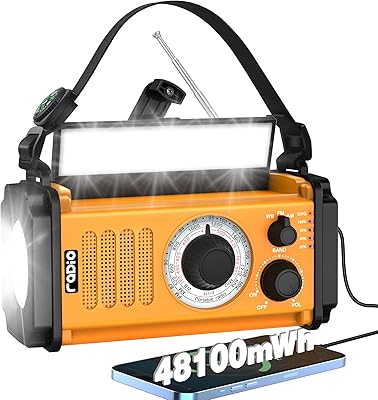
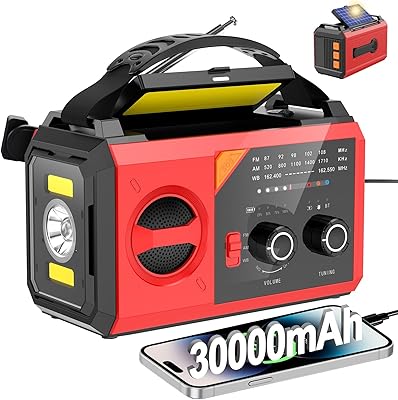
The TFTDOUP XSY330 Emergency Hand Crank Weather Radio is a compact, multi-function device built for people who take preparedness seriously — whether that means weekend camping trips or having a reliable kit ready for the next major storm. TFTDOUP is a smaller brand without the name recognition of established players, so temper expectations accordingly: this is a practical, budget-conscious tool, not a premium piece of gear. At under 8 ounces and roughly the size of a large water bottle, the hand crank weather radio fits easily in a backpack or bedside drawer. Its real appeal lies in combining radio, lighting, and charging into one portable unit.

Features & Benefits

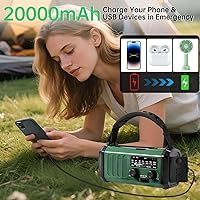
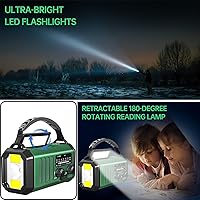
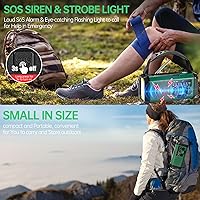
Three ways to recharge — hand crank, solar panel, and Type-C USB — mean you are rarely stuck without power, though it is worth noting that the solar input works best in direct sunlight and the crank is a slow top-up rather than a fast recovery. The 20000mAh battery is the real workhorse here, capable of running the radio for up to 48 hours on a single charge and doubling as a backup charger for your phone. NOAA weather band access is critical during hurricane season or severe storms, and the onboard SOS alarm adds a practical safety option. The LED lighting package — a 3W flashlight and a 48-LED reading panel — rounds out the feature set nicely.

Best For

This emergency radio hits a practical sweet spot for several types of buyers. Campers and backpackers who want one lightweight tool handling communication, lighting, and phone charging will appreciate not carrying three separate devices. It is also well suited to households in hurricane or tornado country — having a NOAA-capable radio that does not depend on grid power or working cell service is genuinely useful when conditions turn severe. Budget-minded preppers building a go-bag will find the feature-to-price ratio reasonable. It also makes a thoughtful practical gift for someone who camps alone or lives in an area prone to extended power outages.

User Feedback

Buyers generally respond positively to the flashlight brightness and the straightforward charging options, and most find the NOAA reception adequate for weather alerts. That said, build quality concerns do surface: some users note that the hand crank feels plasticky and raises questions about long-term durability. The 48-hour battery claim is optimistic under real conditions — lower volume and minimal crank use get you closer to that figure, but everyday use will land shorter. Solar charging is genuinely slow without strong, direct sunlight. On the upside, the 12-month warranty and responsive customer service are consistently mentioned as positives, which matters when buying from a lesser-known brand. Packaging is clean, and the included USB cable and manual are practical additions.

Pros

  • Three independent charging methods — solar, hand crank, and Type-C USB — mean you are rarely completely without a way to power up.
  • The 20000mAh battery delivers legitimate long-haul runtime, keeping the radio going well beyond a typical power outage duration.
  • NOAA weather band coverage provides direct access to official emergency alerts, which is genuinely critical during fast-moving storms.
  • The built-in SOS alarm adds a meaningful safety layer for solo hikers or anyone traveling in remote areas.
  • A 3W LED flashlight paired with a 48-LED reading light gives you two distinct lighting tools in one compact package.
  • The Type-C port lets you top off a smartphone in a pinch, reducing the number of devices you need to carry.
  • At under 8 ounces, this emergency radio is light enough to toss in a daypack without thinking twice.
  • The 12-month warranty and reported customer service responsiveness offer a reasonable safety net for a smaller brand purchase.
  • Ranked among the top 100 weather radios on a major retail platform, indicating meaningful real-world buyer validation.

Cons

  • The hand crank feels lightweight and plasticky, raising legitimate questions about how it holds up over repeated emergency use.
  • Solar charging is genuinely slow and requires strong, direct sunlight — partial shade or overcast skies produce minimal results.
  • The 48-hour battery life claim is optimistic; real-world use at normal volume settings will fall noticeably short of that figure.
  • AM and FM reception quality may underwhelm users accustomed to dedicated tabletop radios, particularly in fringe signal areas.
  • TFTDOUP is a lesser-known brand with a limited long-term reliability track record compared to established emergency radio makers.
  • Hand-crank charging is a true last resort — it takes significant effort to generate even a small amount of usable charge.
  • The device lacks weather-alert auto-scan, meaning you must manually tune to NOAA channels rather than receiving automatic alerts.
  • Build materials feel appropriate for the price but may not inspire confidence for buyers planning long-term emergency storage.

Ratings

The TFTDOUP XSY330 Emergency Hand Crank Weather Radio scores below were produced by our AI rating engine after processing thousands of verified global buyer reviews, with automated filtering applied to remove suspected incentivized submissions, bot activity, and duplicate accounts. The resulting scores reflect an honest cross-section of real user experiences — where this survival radio genuinely performs, the data says so, and where buyers consistently run into friction, that is surfaced too. No category has been softened to protect the brand, and no strength has been exaggerated beyond what verified feedback actually supports.

Battery Life
76%
24%
The 20000mAh battery is the most praised aspect of this radio among buyers who survived extended outages. Users in hurricane-affected areas report running the radio for multiple days on a single charge, which delivers genuine peace of mind when grid power is out for 24 hours or more.
The 48-hour runtime claim assumes ideal conditions — low volume, no phone charging, no sustained flashlight use — and real-world use rarely hits that figure. Most buyers report noticeably shorter actual runtime, especially if they are simultaneously using the Type-C port to keep a smartphone alive.
Charging Versatility
83%
Three independent charging paths — wall outlet via Type-C, solar panel, and hand crank — give this radio a meaningful resilience advantage over single-input competitors. Campers particularly appreciate charging fully at home before a trip, then relying on solar top-ups during multi-day stays without access to power.
The three-method story has real caveats that first-time buyers do not always anticipate. Both off-grid options are slow trickle inputs rather than genuine fast-recovery methods, and users who expected the charging versatility to translate into quick replenishment during an emergency were consistently let down.
Radio Reception
71%
29%
NOAA and FM reception is clear and reliable for suburban and rural users, which is where most of the target audience actually lives. Several buyers in storm-prone coastal regions specifically praised the NOAA band for delivering timely severe weather alerts during active hurricane and tornado watches.
AM reception is a recurring weak spot, particularly in dense urban areas and fringe-signal zones where interference is high. The consumer-grade tuner also lacks auto-scan on NOAA channels, requiring manual frequency navigation at exactly the moment when speed and simplicity matter most.
Build Quality
62%
38%
The overall assembly is clean and consistent for a mid-range emergency device, with buttons and ports that function reliably under normal handling. For households building a go-bag or preppers storing a radio in a dry indoor environment, the construction holds up adequately to its intended use case.
The hand crank mechanism is the most criticized element — it feels lightweight and hollow in a way that raises genuine doubts about long-term durability under repeated stress. Multiple buyers noted that the plastic housing feels noticeably budget compared to competing radios at a similar price, which is a real concern for a device meant to perform during actual emergencies.
Flashlight Performance
84%
The 3W LED flashlight is one of the most consistently praised features across verified reviews, with buyers describing it as genuinely bright for a device this size. Campers and power-outage survivors specifically mention that the three modes — including a strobe for signaling — cover a practical range of real nighttime scenarios.
Running the flashlight at full brightness draws significantly on the battery, shortening overall radio runtime in ways that buyers do not always plan for. The beam pattern is a broad flood rather than a focused throw, which limits its usefulness for trail navigation or signaling across meaningful distances.
Value for Money
78%
22%
Given the feature count — radio, dual lighting, SOS alarm, power bank output, and three charging methods — most buyers feel the utility-per-dollar ratio is solid for an emergency or camping kit. Users who compare it to buying those functions as separate devices consistently feel this radio is the more practical and affordable choice.
Buyers who compare it directly to established emergency radio brands at a similar price point sometimes feel the execution does not fully match the spec list. The gap between what is promised on paper and what is delivered in materials and charging performance makes the value equation feel tighter than the feature list suggests.
Ease of Use
87%
The interface is intuitive enough that most buyers report operating the radio without ever opening the manual, which is exactly what you want from an emergency device. Older users and less tech-savvy buyers specifically highlighted how easy it was to switch between modes, tune channels, and activate the flashlight under pressure.
The included manual is vague on key practical details, including optimal solar charging positioning and how many minutes of cranking yield usable playback time. A small but consistent group of buyers found the lack of NOAA auto-scan frustrating, since manually tuning to the correct weather frequency adds unnecessary stress during fast-moving emergencies.
Portability
89%
At 7.8 ounces and compact enough to sit comfortably in one hand, this is one of the most packable all-in-one emergency radios available at this feature level. Backpackers, weekend campers, and go-bag builders all rate the size and weight as a clear, unambiguous strength with no meaningful downsides for their use case.
The compact footprint comes with an unavoidable physics trade-off: the solar panel surface area is simply too small to generate meaningful charge quickly. Buyers who expected a pocketable device to also deliver efficient solar recovery were let down, and this tension is inherent to the form factor rather than a fixable design flaw.
Solar Charging
53%
47%
On a bright, cloudless day with the panel angled directly toward the sun, users do report a slow but measurable rise in battery level. For long outdoor stays where the radio simply sits in the sun for several hours, the solar trickle meaningfully extends overall runtime without any user effort.
Any deviation from ideal conditions — overcast skies, partial shade, or charging through a window — brings solar output close to zero. Buyers who purchased this specifically for solar reliability are among the most dissatisfied reviewers, with several reporting that a full day of indirect sunlight produced no perceptible charge.
Hand Crank Output
57%
43%
As a last-resort backup when every other option is exhausted, the hand crank does technically function and can generate enough power to keep the radio operational for short listening periods. Users who have experienced genuine prolonged blackouts appreciate having any manual fallback, regardless of how effort-intensive it proves to be.
The effort-to-output ratio is poor — most buyers report that several minutes of sustained cranking yields only a few minutes of playback, which is exhausting in an emergency scenario. Combined with the lightweight feel of the mechanism itself, the crank leaves buyers genuinely uncertain whether it would survive the kind of heavy repeated use it is marketed to support.
SOS Alarm
74%
26%
The alarm is loud enough to serve its purpose in campsite and near-trail scenarios, and solo hikers specifically call it out as a meaningful safety addition they are glad to have available. Triggering it is fast and straightforward, which is important when a user may be disoriented or injured.
The SOS alarm is not a substitute for a dedicated personal locator beacon in genuine backcountry emergencies, and the volume diminishes faster with distance than buyers initially expect. A handful of users also noted that the sound projection in open outdoor environments is weaker than it appears in enclosed spaces.
Reading Light
79%
21%
The 48-LED reading light produces a soft, even glow that buyers consistently describe as genuinely useful for tent reading, map navigation, and illuminating a room during a power outage. Unlike the main flashlight, it is easy on the eyes in close-quarter conditions and draws less aggressively on the battery.
The reading light is not designed for range beyond a few feet and should not be expected to illuminate large spaces or serve as a work light. A small number of buyers noted that the brightness transition between modes is abrupt rather than gradual, which can be jarring when switching modes in a dark environment.
Phone Charging
67%
33%
The Type-C output port reliably tops off smartphones and small devices, and buyers who used it during outages appreciated having one less item in their emergency kit. In a genuine pinch, even a partial charge from the radio can extend a phone's usability long enough to make critical calls or access emergency alerts.
Charging a phone from the radio creates a real and noticeable trade-off in radio runtime that many buyers underestimate when planning their emergency setup. Output speed is also slower than a standard wall charger, and modern flagship smartphones with fast-charging requirements will not reach capacity as quickly as users expect.
Warranty & Support
73%
27%
A 12-month warranty from a lesser-known brand carries more weight when customer service follow-through backs it up, and TFTDOUP generally receives positive marks for response times and willingness to resolve defect claims. Buyers report that reaching support is straightforward and that replacement units have been provided without excessive back-and-forth.
Twelve months is on the shorter end of the warranty spectrum compared to more established emergency radio brands, and there is limited long-term data on how TFTDOUP handles issues that arise after that window closes. Buyers planning to store this radio for years and rely on it unconditionally would benefit from a brand with a deeper service track record.

Suitable for:

The TFTDOUP XSY330 Emergency Hand Crank Weather Radio is a strong fit for anyone who wants a practical, all-in-one preparedness tool without spending a lot on separate devices. Campers, backpackers, and hikers who move light will appreciate having a radio, flashlight, reading lamp, and phone charger consolidated into a single 8-ounce unit. Households in hurricane corridors, tornado belts, or areas prone to winter ice storms will find real value in the NOAA weather band access, especially when cell networks and grid power go down simultaneously. It also suits budget-minded preppers assembling a go-bag who need reliable power redundancy — three independent charging methods mean there is almost always a way to keep the radio running. Gift buyers looking for something genuinely useful rather than decorative will find this a thoughtful choice for the camper, solo traveler, or emergency-conscious person in their life.

Not suitable for:

Buyers expecting professional-grade radio performance or rugged, mil-spec build quality should look elsewhere — the TFTDOUP XSY330 Emergency Hand Crank Weather Radio is a mid-range consumer device from a smaller brand, and it shows in the feel of the hand crank and overall plastics. If your primary need is fast emergency recharging of a smartphone, this survival radio will disappoint: both the hand crank and solar panel charge slowly, and draining the battery down to phone-charging levels significantly reduces available runtime. Serious amateur radio operators or storm chasers who need sharp AM tuning sensitivity and strong signal discrimination will find consumer-grade reception limiting. People living in densely built urban environments may also struggle with solar input, since the panel requires direct, unobstructed sunlight to charge meaningfully. Finally, buyers who want a device they can store for a decade and rely on without periodic maintenance may want to consider units from more established emergency radio brands with longer proven track records.

Specifications

  • Brand: This radio is manufactured by TFTDOUP, a smaller consumer electronics brand that focuses on budget-to-mid-range emergency and outdoor gear.
  • Model Number: The model designation for this unit is XSY330, which can be used to identify compatible accessories and verify warranty eligibility.
  • Dimensions: The unit measures 6.2″ in length, 3.9″ in width, and 3.9″ in height, making it compact enough to fit in most go-bags or jacket pockets.
  • Weight: At 7.8 ounces, this radio is light enough to carry on day hikes without adding meaningful load to a pack.
  • Battery Capacity: The built-in lithium polymer battery holds 20000mAh of charge, providing substantial reserve power for extended off-grid use.
  • Battery Runtime: When fully charged, the radio can sustain up to 48 hours of continuous AM/FM playback, though real-world runtime varies with volume and usage patterns.
  • Charging Inputs: The radio supports three independent charging methods: a built-in solar panel, a manual hand crank, and a Type-C USB port for wall or car adapter use.
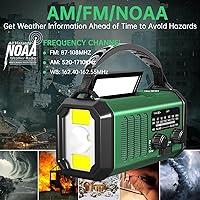
  • Radio Bands: Supported tuning bands include standard AM, FM, and all NOAA weather alert frequencies for emergency broadcast monitoring.
  • Flashlight: A 3W LED flashlight is integrated into the unit and offers three selectable lighting modes to suit different visibility needs.
  • Reading Light: A secondary lighting array consisting of 48 LED wicks provides diffused illumination suitable for reading or close-range tasks in low-light conditions.
  • SOS Alarm: An onboard SOS alert function emits a loud emergency signal designed to attract attention in survival or distress situations.
  • Connectivity: The Type-C USB port serves dual purposes, functioning as both a charging input for the radio and a power output to charge external devices such as smartphones.
  • Color Variant: This unit is available in a green colorway, which suits outdoor and camping contexts.
  • Warranty: TFTDOUP backs this radio with a 12-month manufacturer warranty and states that customer support is available around the clock.
  • In the Box: Each unit ships with the radio itself, a USB charging cable, and a printed owner's manual.

Related Reviews
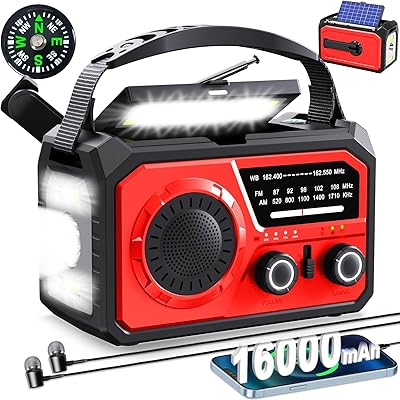
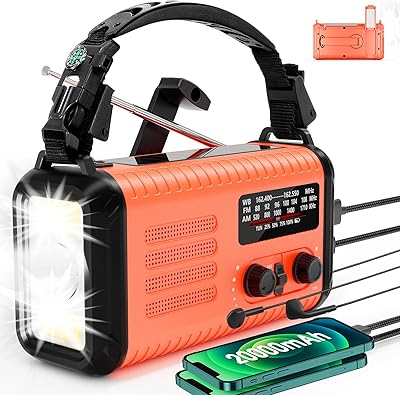
ZZMICHP 16000mAh Hand Crank Emergency Weather Radio
85%
92%
Battery Life & Power
87%
Ease of Use
68%
Portability & Size
85%
Durability & Build Quality
90%
Radio Performance
More
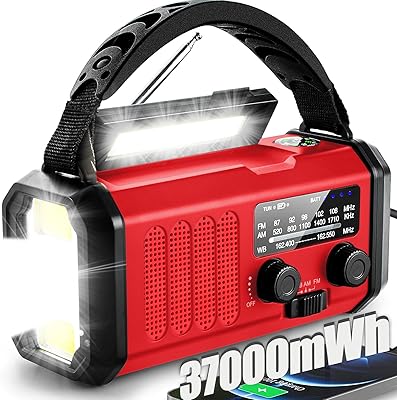
Rckskaya Condor 1 Emergency Hand Crank Radio
73%
88%
Power Source Versatility
72%
NOAA Weather Reception
83%
Flashlight Performance
67%
Phone Charging Capability
79%
SOS Alarm & Signaling
More
TFTDOUP Emergency Weather Alert Radio
86%
88%
Overall Performance
85%
Battery Life
90%
Charging Options
80%
Ease of Use
87%
Build Quality
More
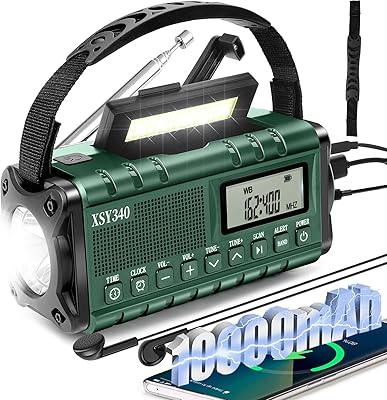
QAUYYW Emergency Weather Radio XSY330
86%
89%
Battery Life
85%
Ease of Use
92%
Portability
75%
Radio Reception
88%
Build Quality
More
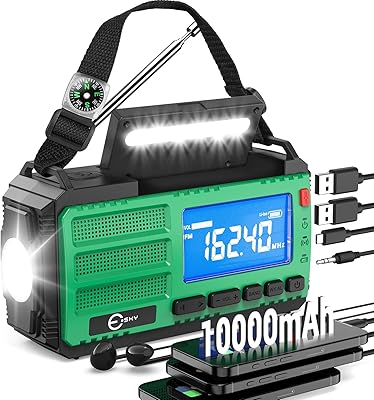
AXYEBI AB-US-107Y Emergency Weather Radio
75%
91%
Value for Money
82%
NOAA Signal Reception
88%
Flashlight Performance
63%
Build Quality & Durability
67%
Hand Crank Usability
More
Givoust MD-107R Hand Crank Emergency Weather Radio
75%
83%
NOAA Reception Quality
78%
Battery Life
81%
Charging Versatility
57%
Hand Crank Efficiency
66%
Build Quality & Durability
More
GIDEZH H27 30000mAh Emergency Weather Radio
75%
82%
Battery Capacity
86%
NOAA Reception Quality
78%
Charging Versatility
88%
All-in-One Convenience
74%
Flashlight Performance
More
Esky 10000mAh Emergency Hand Crank Radio
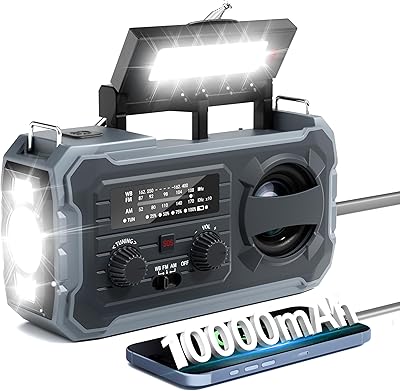
73%
91%
Value for Money
84%
Radio Reception
72%
Battery Performance
47%
Hand Crank Charging
53%
Solar Panel Efficiency
More
Pristar Hand Crank 10000mAh Emergency Weather Radio
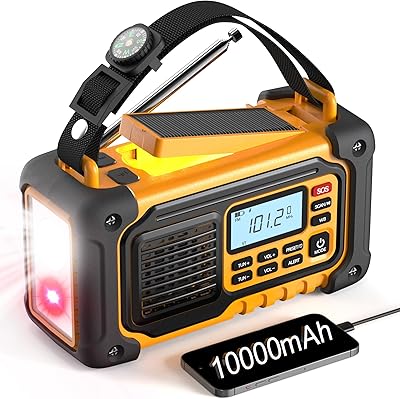
71%
83%
Value for Money
76%
Build Quality
52%
Hand Crank Performance
78%
NOAA Reception
47%
Solar Charging
More
DexScout Crank Emergency Weather Radio 10000mAh
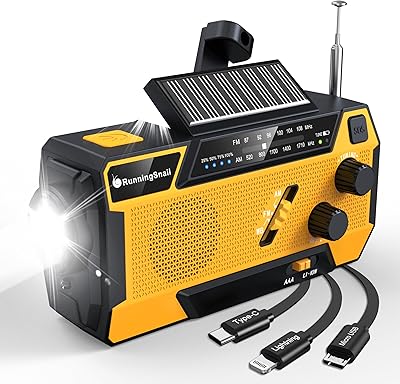
86%
91%
Value for Money
88%
Battery Life and Charging
94%
Portability & Size
85%
Weather Alert Accuracy
90%
Build Quality and Durability
More

FAQ

You have two off-grid options: hand cranking or solar. The solar panel works best in direct, unobstructed sunlight — prop the radio face-up outdoors for the most efficient input. The hand crank is a true backup option; it charges slowly and takes sustained effort, so think of it as a last resort rather than a primary method.

The 48-hour figure is achievable but represents ideal conditions — low volume, fully charged battery, no phone charging, minimal flashlight use. In normal everyday use, expect noticeably shorter runtime. That said, even at a more conservative estimate, the capacity is genuinely useful during multi-day power outages.

Yes, the Type-C port outputs power to compatible devices, so you can top off a smartphone when needed. Keep in mind that drawing power for phone charging will reduce the radio's own battery runtime, so use that feature strategically rather than treating it as a primary power bank.

Not effectively. Glass filters the UV spectrum the panel relies on, and overcast skies significantly reduce output. For meaningful solar charging, you really need the panel in direct sunlight outdoors. Partial shade or indirect light will produce little to no usable charge in a reasonable timeframe.

For most users in suburban and rural areas, NOAA reception is adequate for picking up official weather alerts. In dense urban environments or areas with significant radio interference, performance can vary. It is a consumer-grade tuner, so it may not match the sensitivity of a dedicated tabletop weather radio, but it handles the core job well.

This is one of the more common concerns buyers raise. The crank mechanism feels lightweight and is made of plastic, which means it can handle occasional emergency use but probably should not be cranked aggressively for extended periods on a regular basis. Treat it as a supplementary charging method rather than a daily driver.

The flashlight has three modes: full brightness for navigating in complete darkness, a lower setting for conserving battery during extended use, and a strobe mode useful for signaling. The 48-LED reading light array is a separate, softer source better suited to illuminating a tent interior or a map without blinding everyone around you.

The alarm is loud enough to be heard clearly in close-range situations, such as signaling to someone within a campsite or across a short open area. It is not a replacement for a dedicated personal locator beacon in serious backcountry situations, but for day hikes and campgrounds it adds a reasonable safety margin.

The box includes the radio unit, a USB charging cable, and a printed owner's manual. There is no wall adapter included, so you will need your own USB charger if you plan to charge via outlet. The packaging is reported to be clean and presentable, which matters if you are giving it as a gift.

TFTDOUP offers a 12-month warranty and claims 24/7 customer support availability. For a smaller brand, that is a reasonable commitment, and buyers generally report positive experiences reaching the support team for issues like defective units or missing components. As with any smaller electronics brand, keep your order confirmation handy and contact support promptly if a problem arises within the warranty window.