Overview

The Emgykit R11 Emergency Crank Radio is a compact, multi-purpose device sitting comfortably in the mid-range emergency preparedness market — not a professional-grade rig, but a genuinely capable kit for everyday readiness. Emgykit is a relatively new brand in this space, yet the R11 ships in a military-style box with a carrying strap, which signals it is at least thinking about the right audience. The retro-styled unit blends radio reception, emergency power bank capability, and casual audio entertainment into something small enough to toss in a go-bag without a second thought. Honest, practical, and realistically priced for what it offers.

Features & Benefits

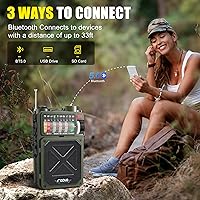
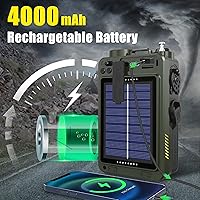
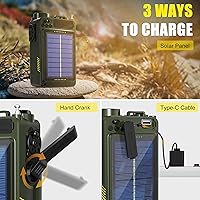
Power flexibility is one of the R11's strongest selling points. On a full charge via Type-C USB, the 4000mAh battery delivers around 32 hours of playback — a figure that holds up reasonably well in practice. Solar and hand-crank charging are there when you need them, though treat both as backup options rather than primary ones; neither is fast. For radio coverage, this hand crank weather radio pulls in NOAA weather alerts, AM, FM, and shortwave bands, auto-scanning and storing up to 210 channels. Bluetooth 5.0 and TF card support make it a solid casual audio player too. The 120-lumen flashlight and SOS function round out the emergency toolkit nicely.

Best For

This emergency crank radio hits its sweet spot with campers, hikers, and anyone building a home emergency kit. If you regularly camp in areas where cell service is unreliable, having NOAA weather alerts and a reliable light source in a single device makes a lot of sense. It also appeals to preppers who want charging redundancy — multiple power inputs mean you are not stuck if one method fails. Casual listeners will appreciate the Bluetooth and media card support for everyday use around the house or on a trail. It also makes a practical gift for someone who should probably be more prepared but has not started yet.

User Feedback

Buyers who pick up the R11 tend to appreciate the sheer number of features packed into such a small package — the compact size and intuitive controls earn consistent praise. Build quality is generally reported as solid for the price, and the military-style box makes a good first impression. That said, a few honest criticisms surface regularly. The solar panel charges slowly under anything less than direct bright sunlight, and the hand crank is best treated as a true last resort rather than a daily driver. Sound quality is fine for weather reports and background music, but not for critical listening. Some users in rural or signal-poor areas note that shortwave reception can be inconsistent, and battery life tends to fall a bit short of advertised under real-world conditions.

Pros

  • Multiple charging options — USB, solar, and hand crank — give real redundancy when power is unavailable for extended periods.
  • NOAA weather alert coverage makes this hand crank weather radio a genuinely useful emergency preparedness tool.
  • At just over a pound, it fits easily in a backpack, go-bag, or emergency kit without adding significant weight.
  • Bluetooth 5.0 and TF card support mean you can use it as an everyday audio device, not just an emergency backup.
  • Auto-scan stores up to 210 channels across AM, FM, SW, and weather bands, saving manual tuning effort.
  • The 120-lumen flashlight is bright enough to be genuinely useful, not just a token feature.
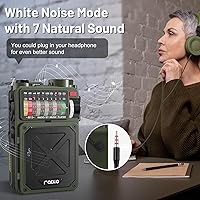
  • Seven white noise modes with a sleep timer add unexpected practical value for camping or travel.
  • Military-style packaging and included carrying strap make unboxing feel considered and gift-ready.
  • Battery life on a full USB charge holds up well for casual daily use over multiple days.
  • The 3.5mm headphone jack allows quiet, private listening — a small but useful touch for shared spaces.

Cons

  • Solar charging is very slow and essentially unreliable under anything less than strong, direct sunlight.
  • Real-world battery life often falls noticeably short of the advertised 32-hour figure under typical mixed use.
  • Shortwave reception is inconsistent and heavily dependent on location — rural users may find it nearly unusable.
  • The hand crank is best treated as a true emergency last resort; sustained cranking yields minimal charge quickly.
  • Sound quality from the built-in speaker is passable for voice content but flat and thin for music listening.
  • The brand has a limited track record, so long-term durability and after-sale support remain open questions.
  • Channel scan and storage can be slow and requires patience, especially across shortwave bands.
  • The compass is basic and functional, but not precise enough to replace a dedicated navigation tool.

Ratings

The scores below for the Emgykit R11 Emergency Crank Radio were generated by our AI system after analyzing thousands of verified global buyer reviews, with spam, incentivized, and bot-flagged submissions actively filtered out before scoring. Each category reflects the honest distribution of real user sentiment — not a polished average — so both the standout strengths and the genuine frustrations are transparently baked into every number.

Value for Money
83%
Most buyers feel they are getting a surprisingly full-featured device for what they paid. The combination of multi-band radio, Bluetooth audio, flashlight, SOS, and power bank in a single compact unit strikes many owners as genuinely good value, especially compared to buying each function separately.
A handful of buyers who expected near-premium performance feel the price point set expectations slightly too high. When real-world shortwave reception or battery endurance disappoints, the value perception takes a small but noticeable hit.
Emergency Preparedness
88%
For its intended purpose — staying informed and functional during a power outage or natural disaster — this hand crank weather radio earns strong marks. NOAA weather alert reception, multiple charging inputs, SOS signaling, and a usable flashlight all combine into a package that genuinely makes sense in a go-bag or emergency kit.
The solar panel and hand crank, while present, are slow enough that buyers who tested them before an actual emergency sometimes felt underprepared for extended off-grid scenarios. Users in areas with weak NOAA signal coverage also noted occasional reception gaps.
Battery Life
71%
29%
On a full Type-C USB charge, the 4000mAh battery delivers solid endurance for moderate use — many campers reported several days of intermittent radio listening without needing to recharge. For a device kept in an emergency kit that gets topped up periodically, the capacity is genuinely useful.
The advertised 32-hour figure rarely holds up under real-world conditions involving Bluetooth streaming, the flashlight, or higher speaker volume. Several buyers reported actual playback times landing meaningfully below the spec, which is a common friction point in reviews.
Radio Reception (AM/FM/NOAA)
79%
21%
AM and FM reception on the R11 is generally well-regarded, with buyers in suburban and urban areas picking up local stations cleanly. NOAA weather band performance earns particular praise from users in hurricane-prone and storm-heavy regions where reliable alert reception matters most.
Reception is noticeably antenna-dependent, and users in fringe signal areas or dense building environments report more dropouts than expected. The telescoping antenna helps, but orientation and positioning still require some patience to get a clean lock on weaker stations.
Shortwave Reception
54%
46%
In good signal environments — open rural areas or locations near major broadcast towers — the R11 can pull in a decent range of shortwave stations. Enthusiasts who primarily use it as a secondary shortwave listener in favorable conditions generally express reasonable satisfaction.
This is the category where the R11 draws its sharpest criticism. Shortwave performance is inconsistent at best in urban environments or low-signal areas, and buyers who purchased specifically for serious SW listening frequently express disappointment. It is simply not a competitive shortwave receiver at this tier.
Charging Versatility
81%
19%
Having four distinct charging methods — USB-C, solar, hand crank, and the internal battery — genuinely sets this hand crank weather radio apart from single-input competitors. Preppers and emergency kit builders specifically call out this redundancy as one of the most compelling reasons they chose it.
While the options are all present, the solar and crank inputs are frustratingly slow in practice. Users who assumed they could sustain regular use via solar or cranking alone were caught off guard, and the Type-C cable remains the only realistic primary charging method.
Build Quality
74%
26%
First impressions are positive — the military-style packaging and solid-feeling housing give the R11 a more premium feel than its price tier might suggest. Most buyers report no immediate quality control issues out of the box, and the unit handles routine outdoor use without complaints.
As a newer brand, Emgykit lacks the long-term durability track record that established names carry. A minority of buyers noted minor cosmetic or assembly inconsistencies, and there is genuine uncertainty about how the unit holds up after years of active or rough use.
Sound Quality
66%
34%
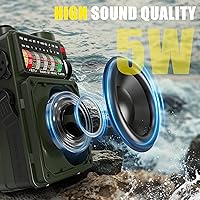
For weather reports, news broadcasts, and casual background music at a campsite, the 5-watt speaker does an acceptable job. Volume output is sufficient for outdoor use at close range, and the 3.5mm headphone jack is a welcome option for private listening situations.
Anyone expecting punchy, full-sounding audio from a 5-watt magnetic speaker will be let down. Bass is thin, treble can get harsh at higher volumes, and the sound profile is clearly optimized for voice clarity over music reproduction — which is fine for its purpose, but worth knowing.
Ease of Use
84%
The control layout is intuitive enough that most users report getting up and running without consulting the manual. Buttons are labeled clearly, mode switching is straightforward, and the auto-scan channel storage feature handles frequency setup automatically for those who find manual tuning tedious.
A few buyers found the digital display small and difficult to read in bright sunlight, and navigating between the various playback modes (radio, Bluetooth, USB, TF card) requires some initial learning. The user manual, while included, is reportedly thin on detail for advanced features.
Portability
87%
At just over a pound and roughly the size of a thick paperback book, the R11 slips into a backpack side pocket or emergency kit without demanding much real estate. The included carrying strap adds practical convenience for hands-free transport on a trail or at a campsite.
The retro-style housing, while visually appealing, has slightly rounded edges that make it marginally less efficient to pack than more angular competitors. It is not a meaningful issue, but ultralight hikers counting every ounce will note it is on the heavier side for a radio this size.
Flashlight Performance
78%
22%
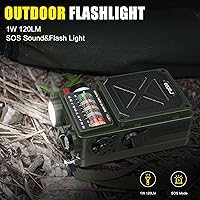
At 120 lumens, the built-in flashlight is one of the more capable emergency lights on a radio in this class. Buyers consistently mention it as a genuinely useful feature rather than a token add-on, with enough brightness to navigate a dark campsite or find gear in a tent.
There is no variable brightness mode, so you get one output level regardless of whether you need a broad flood or a focused beam. Runtime on the flashlight alone has not been systematically tested by most buyers, and a few noted it drains the battery faster than expected when used continuously.
Bluetooth Performance
77%
23%
Bluetooth 5.0 pairs quickly and maintains a stable connection in typical use conditions, which makes the R11 a pleasant casual audio companion when you want to stream from your phone at a picnic or around a campsite without dealing with wires.
Bluetooth range is average rather than impressive — stepping more than about 30 feet from the unit in an open area can introduce dropouts. There is also no track metadata display on the device, so you are navigating audio blind if you are not looking at your phone.
White Noise Function
72%
28%
Seven white noise modes with a programmable sleep timer between 10 and 70 minutes is a genuinely thoughtful feature for campers or light sleepers in noisy environments. Several buyers specifically mentioned using this during camping trips as a practical way to block out ambient noise.
The white noise playback quality is basic — the loops are relatively short and the audio fidelity is limited by the speaker hardware. Light sleepers with a sensitive ear to audio artifacts may find the looping noticeable enough to be mildly counterproductive.
Packaging & Unboxing
82%
18%
The military-style gift box is a standout detail that elevates the unboxing experience significantly for a device at this price point. Multiple buyers noted it makes the R11 feel like a considered, giftable item rather than a generic blister-pack radio — a genuine differentiator for gift buyers.
While the box looks great, the internal foam or padding protection is not exceptionally robust, and a small number of buyers reported minor cosmetic scuffs on arrival. For a device marketed partly to outdoors enthusiasts, more rugged transit protection would be reassuring.

Suitable for:

The Emgykit R11 Emergency Crank Radio is a strong fit for anyone who wants a single, go-anywhere device that covers communication, lighting, and basic power needs without requiring a lot of technical knowledge to operate. Campers and weekend hikers will find real value in having NOAA weather alerts, a 120-lumen flashlight, and a compass bundled into something that weighs just over a pound. Households in hurricane-prone or storm-heavy regions will appreciate the multiple charging methods — if the grid goes down for days, the hand crank and solar panel mean the device does not become a useless brick. Preppers building out emergency kits will also welcome the redundancy: four power inputs is a thoughtful design for worst-case scenarios. Even casual users who just want a retro-styled portable radio for the backyard or a camping trip will get plenty of everyday use from the Bluetooth audio and media card playback features. It also works well as a practical, visually appealing gift for someone who has been putting off building an emergency kit.

Not suitable for:

The Emgykit R11 Emergency Crank Radio is not the right tool for serious radio enthusiasts or anyone who needs dependable shortwave performance across a wide range of locations. Shortwave reception on this device is highly sensitive to local signal conditions, and buyers in rural or signal-weak areas have reported frustrating results. If you are a ham radio operator, an avid shortwave listener, or someone who relies on precise, reliable frequency tuning, this hand crank weather radio will fall short of your standards. The solar panel, while a useful backup, charges slowly even under good sunlight — if your emergency scenario involves multiple overcast days, do not count on solar as a meaningful power source. Audio quality is also adequate at best; anyone expecting rich, full sound from the 5-watt speaker for serious music listening will likely be disappointed. This is not a premium device, and buyers expecting build quality or radio sensitivity comparable to established brands at higher price points should look elsewhere.

Specifications

  • Brand: Manufactured by BGUS and sold under the Emgykit brand name.
  • Model: The unit is designated the R11, as labeled on the device and in all official product documentation.
  • Dimensions: The radio measures 3.15″ in length, 2″ in width, and 5.03″ in height.
  • Weight: The complete unit weighs approximately 1.17 pounds, making it suitable for backpack carry.
  • Battery: A built-in 4000mAh lithium-ion rechargeable battery provides up to 32 hours of playback on a full charge.
  • Charging Methods: The device supports four power inputs: Type-C USB (primary), built-in solar panel, manual hand crank, and the internal battery.
  • Radio Bands: Supported tuning bands include NOAA weather alerts, AM, FM, and shortwave (SW) frequencies.
  • Channel Storage: The auto-scan function can detect and store up to 70 channels per band, for a combined total of 210 stored channels.
  • Bluetooth: Bluetooth 5.0 is supported for wireless audio streaming from a paired smartphone or tablet.
  • Media Playback: The unit includes a USB drive port and a TF/Micro SD card slot for direct local file playback.
  • Speaker: Audio output is handled by a built-in 5-watt magnetic speaker designed for clear voice and casual music reproduction.
  • Headphone Jack: A standard 3.5mm headphone jack allows for private listening via wired earphones or headphones.
  • Flashlight: The integrated flashlight produces up to 120 lumens, suitable for illuminating a campsite or navigating in darkness.
  • White Noise Modes: Seven built-in white noise options are included, with an auto shut-off timer adjustable between 10 and 70 minutes.
  • Emergency Features: The device includes an SOS alert function and a built-in compass for basic field navigation and distress signaling.
  • Style: The R11 features a retro-inspired industrial design finished in green with a military-aesthetic housing.
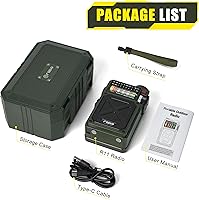
  • In the Box: Each unit ships with the radio, a Type-C charging cord, a carrying strap, a military-style box, and a printed user manual.

Related Reviews
LUOZROLL 20000mAh Emergency Crank Weather Radio
70%
78%
NOAA Reception Quality
63%
AM/FM Reception
67%
Battery Capacity & Real-World Output
44%
Hand Crank Charging
51%
Solar Charging Efficiency
More
Rckskaya Condor 1 Emergency Hand Crank Radio
73%
88%
Power Source Versatility
72%
NOAA Weather Reception
83%
Flashlight Performance
67%
Phone Charging Capability
79%
SOS Alarm & Signaling
More
Aivica 10000mAh Emergency Crank Radio
83%
88%
Value for Money
83%
Battery Life
85%
Ease of Use
91%
Portability
80%
Durability
More
Pristar Hand Crank 10000mAh Emergency Weather Radio
71%
83%
Value for Money
76%
Build Quality
52%
Hand Crank Performance
78%
NOAA Reception
47%
Solar Charging
More
GIDEZH H27 30000mAh Emergency Weather Radio
75%
82%
Battery Capacity
86%
NOAA Reception Quality
78%
Charging Versatility
88%
All-in-One Convenience
74%
Flashlight Performance
More
AXYEBI AB-US-107Y Emergency Weather Radio
75%
91%
Value for Money
82%
NOAA Signal Reception
88%
Flashlight Performance
63%
Build Quality & Durability
67%
Hand Crank Usability
More
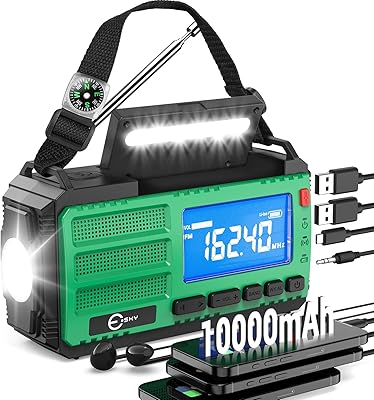
Esky 10000mAh Emergency Hand Crank Radio
73%
91%
Value for Money
84%
Radio Reception
72%
Battery Performance
47%
Hand Crank Charging
53%
Solar Panel Efficiency
More
DexScout Crank Emergency Weather Radio 10000mAh
86%
91%
Value for Money
88%
Battery Life and Charging
94%
Portability & Size
85%
Weather Alert Accuracy
90%
Build Quality and Durability
More
Givoust MD-107R Hand Crank Emergency Weather Radio
75%
83%
NOAA Reception Quality
78%
Battery Life
81%
Charging Versatility
57%
Hand Crank Efficiency
66%
Build Quality & Durability
More
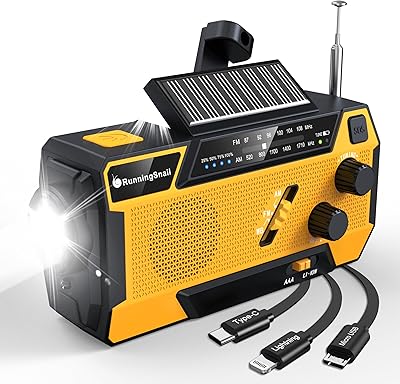
RunningSnail Emergency Crank Weather Radio
72%
88%
Value for Money
84%
Power Redundancy
91%
Built-in Cables
73%
NOAA Reception Quality
62%
Battery Capacity
More

FAQ

Yes, the R11 can function as a basic power bank and charge other devices via its USB output port. That said, with a 4000mAh battery, you will get roughly one partial charge of a modern smartphone, so treat it as an emergency top-up rather than a primary charging solution.

The hand crank is a genuine backup option, but it is slow — expect several minutes of vigorous cranking to gain a small amount of charge. It is best thought of as a last resort when all other charging methods are unavailable, not something you would use on a routine basis.

Only under ideal conditions. Direct, bright sunlight will slowly trickle charge the battery, but it will not keep pace with active use. Overcast days or indirect light will produce very little usable power. Plan to keep the battery topped up via Type-C USB whenever possible and rely on solar only as a true backup.

Bluetooth 5.0 connects quickly and stably to most modern smartphones and tablets within a normal range. You can stream music, podcasts, or any audio app directly through the radio's speaker, which is a nice bonus feature when you are not using it for weather or emergency broadcasts.

The built-in compass is functional for basic cardinal direction reference, but it should not replace a dedicated hiking compass for serious navigation. It is a useful supplementary tool when you need a quick directional check in the field.

The Emgykit R11 Emergency Crank Radio covers standard shortwave frequency ranges, but actual reception quality depends heavily on your location and local signal conditions. Users in urban or suburban areas with good signal strength generally report decent performance, while those in rural or remote areas may find SW reception inconsistent or frustrating.

Yes, the radio supports TF/Micro SD cards and USB drives for local media playback. Just load your audio files onto a card or drive, insert it into the corresponding slot, and use the playback controls to navigate your library. It is a handy feature that makes this radio useful every day, not just in emergencies.

At 120 lumens, it is genuinely bright and more than adequate for navigating a dark campsite, finding gear in a tent, or walking a trail at night. It is not a tactical flashlight by any means, but it is far more useful than the token LED lights found on many competing emergency radios.

The advertised figure is up to 32 hours, and in practice most users find it holds up reasonably well under moderate use — primarily radio listening at lower volume. Running Bluetooth audio continuously, using the flashlight often, or cranking the volume will reduce that figure noticeably.

For its price point, the R11 feels reasonably solid and well-assembled, and the military-style packaging reinforces that impression. Verified buyers generally report satisfaction with the construction quality out of the box. That said, Emgykit is a newer brand with a limited long-term track record, so how it holds up after a year or two of regular use is still an open question for most owners.