Overview

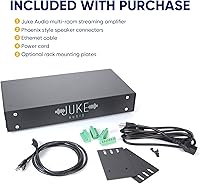
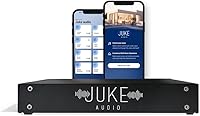
The Juke Audio Juke-6 6-Zone Multi-Room Amplifier is built for one specific job: powering passive speakers across an entire home or building, and doing it without the usual tangle of proprietary apps or dedicated controllers. This is not a plug-and-play streaming speaker — it is infrastructure. You wire your existing in-ceiling, in-wall, or landscape speakers directly into it, and the Juke-6 amplifier handles the rest. The metal chassis is compact enough for a rack shelf or equipment closet, and setup is refreshingly direct for what the hardware actually does. If you are expecting a budget buy, adjust those expectations — this sits firmly in premium territory, and the price reflects genuine multi-zone capability.
Features & Benefits

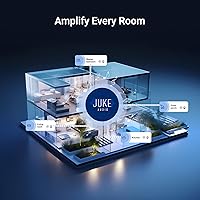
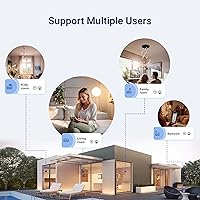
The heart of the Juke-6 amplifier is its six truly independent audio zones — each one can play a different source at a different volume at the same time. That means 40 watts per channel across 12 channels, stable down to 2 ohms, covering the vast majority of passive speaker loads you would realistically install. What makes this multi-room amp worth attention is how it handles AirPlay 2 and Spotify Connect: each zone appears as an individual room inside those apps, not as one merged device. Pick the room, pick the music, done. Bluetooth and DLNA cover non-Apple and non-Spotify users, and if six zones are not enough, link multiple units on the same Wi-Fi network to expand further.

Best For

This multi-room amp is purpose-built for a specific kind of buyer. If you are renovating or building and already have in-ceiling or in-wall speakers planned, the Juke Audio unit starts to make real sense. Apple ecosystem households get the most from it — AirPlay 2 lets anyone in the house beam audio from virtually any app directly to a chosen room. Spotify users get the same per-room control through Spotify Connect. It also holds up well in smaller commercial settings like a café, a boutique, or a professional waiting room that needs clean, zoned background audio. What it is not suited for is the casual listener who just wants to fill one room without any wiring involved.

User Feedback

People who have installed the Juke Audio unit consistently note how much more approachable it is compared to traditional matrix amplifiers — the Wi-Fi performance holds up reliably, even in larger homes, and AirPlay 2 stability draws repeated praise. On the downside, the price is a genuine obstacle for many, and the absence of built-in EQ controls frustrates buyers who care about fine-tuning. Customer support — reachable by both phone and email — earns positive marks for responsiveness, which matters at this tier. Those comparing the Juke-6 amplifier against Sonos Amp or Russound generally find the per-zone cost reasonable given the feature set. The unit has been on the market since 2020, with firmware updates released over time, though long-term reliability data continues to build.

Pros

  • Each of the 6 zones operates completely independently, so multiple users can stream different sources at the same time without interference.
  • AirPlay 2 and Spotify Connect expose every zone natively inside their respective apps — no separate control app to download or maintain.
  • At 40W per channel across 12 channels, the Juke-6 amplifier handles a wide range of passive speakers, including lower-impedance loads down to 2 ohms.
  • Expanding beyond 6 zones is straightforward — just add another unit to the same Wi-Fi network.
  • Setup is significantly less intimidating than traditional matrix amplifiers, according to owners who have used both.
  • AppleTV integration lets you route TV audio wirelessly to any zone and control volume from the standard TV remote.
  • The compact metal chassis fits neatly on a rack shelf or in an equipment closet without dominating the space.
  • Customer support is reachable by both phone and email, and response quality draws consistent praise from buyers.
  • No recurring subscription or proprietary hub is required — the hardware works with platforms you already use.
  • For buyers comparing per-zone cost, this multi-room amp holds up well against Sonos Amp and Russound alternatives.

Cons

  • Passive speakers are required and sold separately — buyers who lack an existing speaker installation face a significant additional investment.
  • No built-in EQ or tone controls, which can be frustrating in rooms where speaker placement is less than ideal.
  • The premium price puts it out of reach for casual buyers who only need audio in one or two rooms.
  • Android users who do not use Spotify Connect get a noticeably limited experience compared to Apple or Spotify households.
  • Long-term reliability data is still accumulating, as the unit only entered the market in 2020.
  • DLNA support, while present, feels secondary — the interface and control experience is less polished than AirPlay 2 or Spotify Connect.
  • No onboard display or physical zone controls; management depends entirely on connected devices and streaming platforms.
  • Compatibility with third-party smart home automation platforms is not guaranteed and should be verified before purchase.

Ratings

The scores below for the Juke Audio Juke-6 6-Zone Multi-Room Amplifier were generated by AI after analyzing verified purchaser reviews from multiple global sources, with spam, bot activity, and incentivized feedback actively filtered out. Every category reflects the honest distribution of buyer sentiment — both where this multi-room amp genuinely impresses and where real users have hit frustrating walls.
Ease of Setup
83%
Buyers with some technical confidence consistently report that getting the Juke-6 amplifier up and running is far less painful than comparable matrix amplifiers. Connecting to Wi-Fi and having zones appear automatically in AirPlay 2 within minutes is a recurring positive highlight across reviews.
The experience drops noticeably for users who have never run speaker wire before or who expect a truly plug-and-play process. A handful of buyers encountered Wi-Fi configuration hiccups that required a call to support to resolve, which stings at this price tier.
AirPlay 2 Integration
91%
The per-room zone exposure inside the native AirPlay 2 interface is where this multi-room amp earns its strongest praise. Apple household users love being able to beam audio from any app — not just Apple Music — directly to a specific room without launching a separate controller app.
Occasional AirPlay 2 dropouts are mentioned by a minority of users, typically linked to router configuration rather than the unit itself, though troubleshooting without onboard diagnostics can be frustrating. Buyers using older Wi-Fi hardware report a less stable experience overall.
Spotify Connect Performance
86%
Spotify users on any device — iOS, Android, desktop — can select individual zones directly from the Spotify app, which is a genuine usability advantage over setups requiring a hub. Families with multiple Spotify accounts consistently praise the ability to have separate streams running room by room without coordination.
Spotify Connect's per-zone granularity works cleanly, but users on free Spotify tiers run into the platform's own limitations, which some mistakenly attribute to the amp. A small number of reviews also note that Spotify zone labeling can occasionally desync after firmware updates.
Audio Output Quality
78%
22%
At 40 watts per channel, the Juke Audio unit delivers clean, unfatiguing sound that pairs well with quality in-ceiling or in-wall speakers. Buyers using it with mid-to-high-end passive speakers report a sound floor that comfortably exceeds what most consumer streaming systems produce.
Without any onboard EQ or tone shaping, the amp is entirely dependent on speaker placement and the acoustic properties of each room. Users in live, hard-surface rooms note that harshness in the high frequencies cannot be corrected at the amp level, requiring workarounds in software.
Multi-Zone Independence
93%
The ability to run six genuinely separate audio streams — different sources, different volumes, different users — without any zone bleeding or priority conflicts is the feature buyers cite most enthusiastically. Real-world household scenarios like simultaneous use across kitchen, garage, and outdoor patio work exactly as described.
Physical zone control (volume knobs, source buttons per room) does not exist, meaning control relies entirely on connected devices. If a household member is not comfortable navigating AirPlay 2 or Spotify Connect, they are essentially locked out of adjusting their own zone independently.
Build Quality
81%
19%
The all-metal chassis feels appropriately solid for an infrastructure-grade product and holds up well in equipment closets or rack shelves where temperatures can fluctuate. Buyers who have owned the unit for two or more years generally report no physical degradation or connector issues.
The unit runs noticeably warm under sustained multi-zone loads, and a few buyers in enclosed rack cabinets without ventilation reported thermal throttling concerns. The aesthetic is purely utilitarian — it looks like a piece of rack gear, not a living room showpiece.
Value for Money
69%
31%
Technically savvy buyers who compare price-per-zone against Sonos Amp, Russound, or traditional matrix amplifiers tend to find the Juke-6 amplifier competitively positioned for what it delivers. The absence of a required subscription or proprietary hub also removes ongoing costs that competitors quietly add.
For buyers who discover mid-purchase that they still need to budget for passive speakers, speaker wire, and potentially professional installation on top of the unit price, the total cost of entry becomes a significant shock. Casual or first-time buyers often feel the price is simply not justified for their scale of use.
Bluetooth & DLNA Support
62%
38%
Bluetooth and DLNA provide a genuine fallback for guests or household members outside the Apple and Spotify ecosystems, and buyers appreciate that the option exists without needing a separate input device. It works adequately for background listening scenarios.
Neither Bluetooth nor DLNA offers the per-room zone selection that AirPlay 2 and Spotify Connect provide, which makes them feel like secondary afterthoughts rather than fully realized features. Android-primary households expecting parity with the Apple experience are frequently disappointed.
Scalability
84%
The ability to link multiple units on the same Wi-Fi network to expand beyond 6 zones is a meaningful architectural advantage for larger homes or light commercial installs. Buyers who have deployed two-unit setups report that zone management remains clean and organized within the streaming apps.
Expanding to a second unit doubles the hardware cost, and the total-system management experience — while functional — lacks the unified dashboard that some competing whole-home platforms offer. Coordination between units relies on the streaming platform interface, which not all family members find intuitive.
AppleTV Integration
77%
23%
Routing TV audio wirelessly from an AppleTV to any zone via AirPlay 2 — and controlling it with the standard TV remote — is a feature that genuinely delights buyers who discover it. Home theater rooms that feed audio to adjacent spaces like a covered patio benefit meaningfully from this capability.
The integration requires an AppleTV adapter as an additional purchase, which is not immediately obvious from the product listing and catches some buyers off guard. Users without an AppleTV in their setup cannot access this feature at all, and there is no equivalent for other TV streaming platforms.
EQ & Sound Tuning
41%
59%
For buyers who do their tone shaping at the source — through their streaming app, DAC, or speaker crossover settings — the absence of onboard EQ is a non-issue, and they appreciate the signal path remaining clean.
This is one of the most consistently cited frustrations in user reviews. Buyers in acoustically challenging rooms — high ceilings, hard floors, irregular shapes — have no mechanism at the amp level to compensate, which limits the achievable sound quality regardless of speaker or streaming quality.
Long-Term Reliability
74%
26%
The majority of buyers who purchased the Juke Audio unit in its earlier release years report continued stable operation, and firmware updates have been issued to address bugs and add improvements over time. Customer longevity feedback is generally positive for a product in this category.
The product has only been available since 2020, so the long-term reliability data pool is still relatively shallow compared to established competitors. A small but notable subset of reviews mention firmware update issues that temporarily disrupted zone connectivity until resolved manually.
Customer Support
82%
18%
Having both phone and email support available from the manufacturer is a genuine differentiator at this tier, and buyers who have contacted Juke Audio report response times and resolution quality that exceed typical consumer electronics experiences. The direct-to-manufacturer support model builds real trust.
Support quality is inherently dependent on staffing and availability, and a smaller company serving a niche product category may face capacity constraints during high-demand periods. A few buyers report longer-than-expected callbacks during peak seasons or after major firmware releases.
Physical Footprint
79%
21%
At 15 x 8 x 3 inches and 6.5 pounds, the unit is compact enough to fit a standard equipment shelf or closet rack without dominating the space. Installers appreciate that it does not require a full 2U rack slot and leaves room for other components in tighter installations.
Tabletop placement in a living space is realistic only if the unit can be hidden or integrated into a media cabinet — the industrial aesthetic is not designed for display. Buyers in apartments or smaller homes without a dedicated equipment closet sometimes struggle to find a clean placement solution.

Suitable for:

The Juke Audio Juke-6 6-Zone Multi-Room Amplifier is purpose-built for homeowners who are serious about whole-home audio and already have passive in-ceiling, in-wall, or landscape speakers installed — or are actively planning to. It is an especially strong fit for households deep in the Apple ecosystem, where AirPlay 2 lets every family member stream from their own device to their own room without any coordination or shared queue drama. Picture one person playing a podcast in the kitchen, another running a workout playlist in the garage, and a third streaming TV audio to the back patio — all simultaneously, all independently. Spotify users get the same per-room autonomy through native Spotify Connect, which is a real advantage over setups that require a third-party controller to manage zones. Tech-confident DIYers who want a clean, app-free infrastructure solution will find the setup process more approachable than traditional matrix amplifiers. Small commercial spaces — a boutique, a café, a professional office — looking for dependable, zoned background audio without complex AV hardware will also get solid value out of the Juke-6 amplifier.

Not suitable for:

If you do not already own passive speakers and have no plans to run speaker wire through walls or ceilings, the Juke Audio Juke-6 6-Zone Multi-Room Amplifier is the wrong starting point entirely — it amplifies passive speakers and nothing else comes in the box. Casual listeners who just want to fill a single room with music will find this multi-room amp dramatically over-specified and over-priced for their needs; a simple streaming speaker or a single-zone amp would serve them far better. Buyers who need granular tone shaping will run into frustration, as the unit offers no built-in EQ controls to compensate for room acoustics or speaker characteristics. Anyone hoping to integrate this into a sophisticated smart home control system like Control4 or Crestron should verify compatibility carefully before committing, as the Juke-6 amplifier is designed around native streaming protocols rather than third-party automation ecosystems. Android-only households that rely neither on AirPlay 2 nor Spotify Connect will get a noticeably reduced experience, since Bluetooth and DLNA — while supported — lack the per-room granularity that makes this unit stand out.
Specifications

  • Audio Zones: The unit supports 6 fully independent audio zones, each capable of playing a different source at a different volume simultaneously.
  • Speaker Channels: A total of 12 speaker channels are provided, with 2 channels (stereo) dedicated to each of the 6 zones.
  • Power Output: Each channel delivers 40 watts into 8 ohms, for a combined total system output of 480 watts across all 12 channels.
  • Impedance Range: Each speaker channel is stable down to 2 ohms, making the unit compatible with a wide range of passive in-ceiling, in-wall, and landscape speakers.
  • Wireless Protocols: Supported wireless streaming protocols include AirPlay 2, Spotify Connect, Bluetooth, and DLNA.
  • Zone Appearance: Each zone is exposed individually within AirPlay 2 and Spotify Connect, allowing per-room source and volume selection directly inside those native apps.
  • Expandability: Multiple units can be connected to the same Wi-Fi network to expand the total number of zones beyond 6.
  • Power Supply: The unit operates on a 12V DC power supply.
  • Dimensions: Physical dimensions are 15 x 8 x 3 inches (L x W x H), suitable for tabletop placement or rack shelf installation.
  • Weight: The unit weighs 6.5 pounds, making it manageable for a single-person installation.
  • Chassis Material: The enclosure is constructed from metal, providing durability and passive heat dissipation during extended use.
  • Mounting Type: The unit is designed for tabletop mounting and fits standard equipment shelving or rack furniture.
  • Certifications: The Juke-6 amplifier carries CE and FCC certifications, confirming compliance with electromagnetic and safety standards for both European and North American markets.
  • App Requirement: No proprietary app is required — zone control is handled entirely through the native AirPlay 2 and Spotify Connect interfaces on the user's existing devices.
  • TV Integration: Television audio can be routed wirelessly to any connected zone using an Apple TV adapter, with volume and room selection managed via the standard TV remote.
  • Manufacturer: The unit is designed and sold by Juke Audio Inc., a U.S.-based audio technology company reachable by phone and email for support.
  • Availability: The product has been commercially available since July 2020 and has received firmware updates since its initial release.

Related Reviews

Dayton Audio MA1240A
83%
93%
Channel Count & Zone Flexibility
87%
Power Output & Headroom
91%
Signal Flexibility & Input Options
89%
Independent Gain Control
84%
Build Quality & Chassis Durability
More
Rockville RCS2-320-6
77%
83%
Zone Independence & Control
86%
Ease of Installation
88%
70V Output Performance
67%
Bluetooth Connectivity
71%
Mic Input & Echo Control
More
Rockville RCS350-6
Rockville RCS350-6
74%
84%
Ease of Setup
88%
Zone Control Flexibility
73%
Audio Output Quality
66%
Bluetooth Stability
61%
Build Quality & Durability
More
Rockville RCS650-6
Rockville RCS650-6
74%
88%
Value for Money
91%
Ease of Installation
86%
Multi-Zone Functionality
74%
Audio Quality
77%
Build Quality
More
Pyle PFA540BT.6 5-Channel Home Theater Amplifier
64%
71%
Value for Money
58%
Audio Performance
61%
Bluetooth Stability
54%
HDMI Functionality
52%
Build Quality
More
Rockville Home Matrix 4
76%
88%
Value for Money
91%
Zone Independence & Source Assignment
67%
Amplifier Power & Headroom
93%
Input Variety & Connectivity
86%
Mic Input & Announcement Features
More
Sound Town STCA360-6Z 360W 6-Zone Commercial Power Amplifier
84%
91%
Ease of Setup
94%
Multi-Zone Performance
88%
Sound Quality
82%
Cooling Efficiency
90%
Build Quality
More
OSD Audio MX880 Gen2 4-Zone Amplifier
76%
88%
Build Quality
84%
Audio Performance
79%
Power Output & Headroom
91%
Zone Control Usability
86%
Thermal Management & Efficiency
More
Fosi Audio TDA7498E
Fosi Audio TDA7498E
83%
88%
Sound Quality
93%
Value for Money
71%
Build Quality
74%
Power Output & Headroom
66%
Noise Floor & Background Hiss
More
Fosi Audio BT10A
Fosi Audio BT10A
81%
93%
Value for Money
82%
Sound Quality
91%
Noise Floor
84%
Bluetooth Performance
67%
Power Output
More

FAQ

Speakers are not included — this is a pure amplifier. The Juke-6 amplifier is designed to power passive speakers that you already own or plan to install, such as in-ceiling, in-wall, or outdoor landscape models. You will need to run speaker wire from the unit to each speaker pair, so factor that into your planning if you are starting from scratch.

No, and that is actually one of the stronger selling points here. The Juke Audio Juke-6 6-Zone Multi-Room Amplifier works directly through AirPlay 2 and Spotify Connect, so you control it from the same Apple Music, Spotify, or other streaming app you already use. There is no proprietary companion app to set up or maintain.

Yes, that is exactly what it is built for. Each zone operates independently, so one person can play a podcast in the kitchen while someone else runs a workout playlist in the garage and a third person streams something different on the back patio — all at the same time, with no interference between zones.

Any passive speakers with an impedance between 2 and 8 ohms will work, which covers the vast majority of in-ceiling, in-wall, and outdoor landscape speakers on the market. Just avoid pairing it with active or powered speakers, which have their own built-in amplification and are not designed to be driven by an external amp.

Yes, though the experience is richer if you use Apple devices or Spotify. Bluetooth and DLNA are both supported, so Android users and those using other streaming platforms can still connect. That said, those protocols do not offer the same per-room zone selection that AirPlay 2 and Spotify Connect provide, so the full multi-zone flexibility is somewhat reduced outside those two platforms.

You can add more zones by connecting additional units to the same Wi-Fi network. Each unit adds another 6 zones, so a two-unit setup covers 12 zones, and so on. They work together without requiring a central controller, which keeps the expansion process relatively straightforward.

Most tech-confident DIYers report that setup is more approachable than traditional matrix amplifiers or whole-home audio systems. You connect your speaker wire runs to the binding posts, join the unit to your Wi-Fi network, and the zones appear in AirPlay 2 or Spotify Connect automatically. That said, if you are not comfortable running speaker wire through walls or ceilings, hiring an installer for that part is worth considering.

Yes — each zone has its own independent volume control, managed directly from whatever app you are streaming through. If you are using AirPlay 2, each room shows up as a separate destination, and you adjust volume per room from there. There is no physical volume knob on the unit itself, so control is always through a connected device.

No, and this is a noted limitation. The Juke-6 amplifier does not include onboard equalization controls. If room acoustics or speaker placement result in an unbalanced sound, you would need to address that through EQ settings within your streaming app or player software, not through the amp itself.

Juke Audio provides support by both phone and email, and the brand has a reputation for being reasonably responsive — which matters for a product at this price level. For specific warranty terms and duration, it is best to check directly with Juke Audio, as those details can vary and may have been updated since the product launched in 2020.

Where to Buy