

Overview

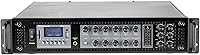
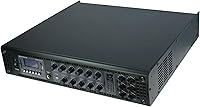
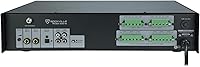
The Rockville RCS2-320-6 is a rack-mount commercial amplifier built for venues that need organized, multi-zone audio without bringing in a full AV integration team. Delivering 320 watts across up to six mono zones or three stereo zones, this commercial zone amplifier sits in a practical middle ground — capable enough for genuine commercial use, but approachable enough for an owner-operator to install without specialized training. It handles Bluetooth, USB/SD, optical, RCA, and FM radio inputs from a single chassis. At nearly 39 pounds, this is clearly a permanently installed unit, not something you casually move around — plan the rack space before it arrives.

Features & Benefits

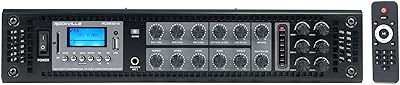
The standout capability of this multi-zone unit is its six independent zones, each with its own volume knob, so the dining room does not have to match the bar level. The 70V output architecture is what separates commercial-grade gear from consumer equipment; it lets you run speakers over long cable distances without signal degrading, which matters in a school hallway or a sprawling restaurant floor. Three mic inputs with basic echo control handle announcements or karaoke without additional dedicated hardware. Bluetooth and USB/SD playback mean staff can manage music directly without a laptop or streaming device sitting nearby.

Best For

This commercial zone amplifier makes the most sense for restaurant or bar owners managing background music across multiple dining areas, private rooms, or a patio from one central control point. It also fits well in schools or houses of worship where mic-based announcements need to coexist with zoned playback. Smaller offices looking to add overhead audio without calling in an AV contractor will find the setup accessible. What ties all these use cases together is the need for per-zone volume control handled physically at the amp itself — a real advantage in environments where non-technical staff run day-to-day audio.

User Feedback

Users who install the Rockville six-zone amp tend to praise how approachable the setup is compared to hiring a professional AV integrator, particularly for first-time commercial audio buyers. The rear-panel labeling gets positive marks for being logical and clear during initial wiring. On the critical side, some users flag concerns about heat management under extended high-volume use across all zones simultaneously. A handful of reviewers have also questioned Bluetooth stability in larger open spaces. The mic echo control is serviceable for PA announcements but should not be mistaken for anything studio-grade. Overall, feedback consistently describes it as a capable workhorse with straightforward, honest limitations.

Pros

  • Six genuinely independent volume zones let you tailor audio levels room by room without a single compromise.
  • The 70V output handles long cable runs cleanly, which is exactly what distributed commercial speaker systems require.
  • Three mic inputs with echo control cover PA announcements and basic karaoke without needing a separate mixer.
  • Clear rear-panel labeling makes initial wiring approachable even for non-technical owner-operators doing a DIY install.
  • USB and SD card playback lets staff set a music loop and walk away without any connected device or streaming account.
  • The sheer variety of input options — optical, RCA, Bluetooth, FM, USB/SD — means you are unlikely to encounter a source it cannot handle.
  • Built-in FM tuner provides a zero-effort, always-available fallback music source with no subscription or device required.
  • At its price point, this multi-zone unit delivers commercial 70V zone capability that would otherwise require significantly more expensive separates.
  • Front-panel bass, treble, and balance controls give staff practical day-to-day sound adjustment without touching a computer or app.

Cons

  • Bluetooth signal drops noticeably in larger spaces, limiting its usefulness beyond smaller or single-room deployments.
  • Heat buildup under sustained high-output operation across all zones is a documented concern in real-world installs.
  • The mic echo control sounds artificial at higher settings and is clearly insufficient for anything beyond basic PA use.
  • At nearly 39 pounds, solo rack installation is genuinely awkward and almost always requires a second person.
  • No network streaming, app control, or smart home integration leaves modern AV-minded buyers without any remote management option.
  • FM reception quality varies significantly by location and antenna placement, making it unreliable in urban or basement installs.
  • Build quality feels solidly adequate but not premium — cosmetic finish and smaller knobs have a prosumer feel rather than true commercial-grade construction.
  • USB and SD file compatibility has edge cases; high-bitrate or uncommon audio formats have caused playback issues for some users.

Ratings

The Rockville RCS2-320-6 earns its scores from an AI-driven analysis of verified buyer reviews collected globally, with spam, bot activity, and incentivized feedback actively filtered out before scoring. Across categories ranging from zone control reliability to long-term heat management, both the genuine strengths and the real-world frustrations are reflected without sugarcoating. The result is a transparent snapshot of what actual commercial installers, restaurant owners, and school administrators consistently report after putting this multi-zone unit through its paces.

Zone Independence & Control
83%
Buyers consistently report that all six zones hold their individual volume levels without bleeding into adjacent zones during normal operation. Restaurant owners specifically call out the per-zone knobs as intuitive enough for non-technical floor staff to manage during a busy service shift without confusion.
A smaller subset of users running all six zones at high output simultaneously noted occasional inconsistency between zones. It is not a dealbreaker for most installs, but venues pushing every zone hard for hours at a time may notice it.
Ease of Installation
86%
One of the most praised aspects among first-time commercial audio buyers is how straightforward the rear-panel layout is. Several reviewers specifically mention that clear labeling made the initial wiring process approachable without hiring a dedicated AV professional, saving meaningful setup costs.
The unit weighs nearly 39 pounds, which makes solo rack installation genuinely awkward. A few installers flagged that the depth of the chassis required careful measurement before committing to an existing rack enclosure.
70V Output Performance
88%
Users running ceiling speakers across long cable runs in schools and retail stores report clean, stable signal delivery without noticeable degradation. The 70V architecture behaves exactly as expected for the commercial environments this unit targets, which earns consistent trust from experienced installers.
Buyers unfamiliar with 70V systems occasionally underestimate the transformer-tapped speaker requirement, leading to setup confusion. This is a user knowledge gap rather than a product flaw, but it does surface in negative reviews from less experienced buyers.
Bluetooth Connectivity
67%
33%
For smaller spaces like private dining rooms or single-floor offices, Bluetooth connectivity is praised as a convenient, cable-free source option that lets staff play music from a phone without any additional hardware or streaming devices plugged in.
In larger commercial spaces with thick walls or significant ambient RF interference, Bluetooth range and stability take a real hit. Several restaurant and school users report dropout issues beyond roughly 30 feet, which limits its practical value in bigger deployments.
Mic Input & Echo Control
71%
29%
Having three mic inputs on a zone amplifier at this price tier is genuinely appreciated by schools and houses of worship that need announcement capability without adding a separate mixer. The echo control adds enough presence for PA-style use without requiring additional processing gear.
Anyone expecting studio-grade echo control will be disappointed. The effect is basic and can sound artificial at higher echo settings. It works cleanly for spoken announcements but becomes noticeably rough during karaoke or vocal performances in acoustically live rooms.
Heat Management
61%
39%
Under moderate loads across three or four zones, the unit runs at an acceptable temperature level and stays within normal operating range for rack-mounted commercial gear. Buyers in climate-controlled server rooms or ventilated equipment closets report no issues during normal business hours.
Under sustained high-output use across all six zones in warmer environments, heat buildup becomes a legitimate concern. Several users report the chassis running uncomfortably hot after four or more consecutive hours, with a small number flagging this as a reliability concern for always-on installs.
Input Source Variety
89%
The breadth of input options — Bluetooth, USB, SD card, RCA, optical, and FM radio — gives venue operators genuine flexibility to choose whatever source fits their workflow on any given day. The FM tuner in particular is appreciated as a zero-effort fallback when primary sources are unavailable.
There is no network streaming or app-based control, which feels like an omission for buyers accustomed to modern commercial AV systems. For a venue that relies heavily on Spotify or similar services, a dedicated streaming device is still required as an intermediary.
Build Quality
69%
31%
The rack-mount chassis feels solid enough for a fixed commercial install, and the front-panel controls have a tactile firmness that inspires reasonable confidence during daily use. Buyers who install it and leave it in place generally do not report structural complaints.
Several buyers describe the overall construction as adequate rather than impressive, noting that the cosmetic finish and some of the smaller knobs feel closer to prosumer quality than true commercial-grade hardware. It holds up fine when stationary but would likely struggle with repeated moves or touring use.
Tone & Audio Controls
78%
22%
The on-board bass, treble, balance, and master volume controls give non-technical staff enough adjustment range to handle a wide variety of room acoustics without an external equalizer. Day-to-day tweaks for music genre changes are straightforward and responsive.
The tone controls are practical rather than precise. Audiophile buyers or venues with demanding acoustic requirements will find the control range limited compared to a dedicated EQ or DSP unit. They solve 80 percent of real-world tuning needs but not the remaining 20 percent.
Value for Money
84%
Compared to assembling a comparable multi-zone 70V system from separate components, the all-in-one format at this price point represents meaningful savings in both hardware cost and installation complexity. Budget-conscious buyers repeatedly cite this as the primary reason they chose it over alternatives.
Buyers who push into higher-end use cases, such as permanent high-volume clubs or large-campus PA systems, will eventually feel the ceiling of what this unit can deliver. The value equation holds strongly for its intended audience but softens quickly outside that range.
FM Tuner Quality
72%
28%
The built-in FM tuner is a low-friction, always-available background music source that requires no subscription, no device, and no staff intervention. In waiting rooms and low-key retail environments, several buyers say it ends up being the primary source used day-to-day.
Reception quality is highly dependent on antenna placement and local signal strength. In basements, concrete buildings, or signal-poor urban environments, the FM tuner becomes practically unusable, and Rockville does not include an external antenna in the box.
USB & SD Playback
76%
24%
Buyers managing curated background music playlists appreciate loading audio files onto an SD card and leaving the unit to loop without any connected device. It is a practical, set-and-forget solution for venues that want consistent music without relying on Bluetooth or internet.
Format support is adequate but not exhaustive. A small number of users ran into compatibility issues with certain high-bitrate files or uncommon audio formats, requiring re-encoding before playback. File navigation is also basic, with no display-based browsing interface.
Rack Fit & Form Factor
74%
26%
The standard rack-mount form factor integrates cleanly into existing AV enclosures, and most installers report that the physical dimensions match published specs accurately. Buyers with pre-built rack setups appreciate that no custom mounting adaptation is needed.
At 24 inches deep and nearly 39 pounds, the unit demands a full-depth rack and ideally a second pair of hands during installation. Shallow rack cabinets and wall-mount enclosures are essentially incompatible, which caught a handful of buyers off guard after purchase.

Suitable for:

The Rockville RCS2-320-6 is purpose-built for owner-operators and facilities managers who need to distribute audio across multiple rooms or zones without the cost and complexity of a full commercial AV installation. Restaurant and bar owners managing separate dining areas, a patio, and a bar counter from a single unit will find the six-zone layout maps naturally to how real hospitality venues are actually laid out. Schools and houses of worship that need both background music playback and mic-based announcements in the same system will appreciate having those capabilities consolidated into one chassis. Small-to-medium offices looking to add overhead audio on a budget can realistically self-install this commercial zone amplifier with a basic understanding of speaker wiring, skipping the expense of a professional integrator entirely. Multi-room retail environments where floor staff need to quickly adjust individual zone volumes — without unlocking an app or logging into a control system — will find the physical per-zone knobs a practical everyday tool. Essentially, if your use case involves a fixed, permanently installed audio system in a commercial or semi-commercial space with moderate acoustic demands, this multi-zone unit punches well above what its price tier would suggest.

Not suitable for:

The Rockville RCS2-320-6 is not the right choice for buyers who expect plug-and-play convenience, audiophile-grade sound reproduction, or enterprise-level reliability under extreme 24/7 operating conditions. At nearly 39 pounds and requiring a full-depth rack enclosure, this is strictly a permanent installation product — anyone hoping to move it between venues or use it without a proper rack setup will run into immediate practical problems. Venues with large open floor plans or thick concrete walls will likely find Bluetooth range frustrating and unreliable, which undermines one of the unit's more convenient source options. Buyers looking for network-based control, app integration, or Dante audio networking will find nothing of the sort here — this commercial zone amplifier operates entirely through physical inputs and front-panel controls. Sound engineers or venue operators who demand precise parametric EQ, DSP processing, or studio-quality mic preamps should look at dedicated commercial AV processors instead, as the on-board tone controls and mic echo handling are utilitarian at best. Finally, installations requiring sustained full-load operation across all six zones in poorly ventilated equipment rooms should factor in heat management carefully, as prolonged high-output use in warm environments has been a documented concern among real-world users.

Specifications

  • Model Number: The unit is manufactured by Rockville under the model designation RCS2-320-6.
  • Total Output Power: This amplifier delivers a total of 320 watts of audio output across all active zones.
  • Zone Configuration: Supports up to 6 independent mono zones or 3 stereo zones, each with its own dedicated volume control.
  • Output Voltage: Operates on the commercial-standard 70V (AC) output architecture, designed for distributed speaker systems.
  • Mic Inputs: Equipped with 3 microphone inputs, each featuring adjustable echo control for PA and announcement use.
  • Wireless Connectivity: Includes Bluetooth for wireless audio streaming from compatible phones, tablets, and other source devices.
  • Media Playback: Onboard USB and SD card slots allow direct playback of locally stored audio files without an external device.
  • Audio Inputs: Accepts line-level audio via RCA and optical (TOSLINK) inputs for connecting external source components.
  • FM Tuner: Features a built-in FM radio tuner for passive, device-free background music reception.
  • Tone Controls: Front-panel controls include independent bass, treble, and balance adjustments alongside a master volume knob.
  • Form Factor: Designed as a standard rack-mount unit for permanent installation in AV equipment racks or enclosures.
  • Package Dimensions: Ships in a box measuring 24 x 23 x 8 inches, accommodating the chassis and packing materials.
  • Unit Weight: The amplifier weighs 38.85 pounds, requiring adequate rack support and ideally a two-person installation.
  • Number of Channels: The unit provides 6 audio output channels, configurable as mono zones or paired into stereo zones.
  • Input Compatibility: Compatible with a wide range of audio sources including smartphones, media players, mixers, and broadcast receivers.
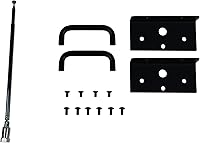
  • Rack Mounting: Standard rack-mount ears are included, allowing integration into any standard 19-inch equipment rack.
  • Manufacturer: Designed and sold by Rockville, a brand focused on professional and commercial audio equipment.

Related Reviews

Rockville RCS350-6
Rockville RCS350-6
74%
84%
Ease of Setup
88%
Zone Control Flexibility
73%
Audio Output Quality
66%
Bluetooth Stability
61%
Build Quality & Durability
More
Rockville RCS650-6
Rockville RCS650-6
74%
88%
Value for Money
91%
Ease of Installation
86%
Multi-Zone Functionality
74%
Audio Quality
77%
Build Quality
More
Rockville RMSTS65B 6.5″ Marine Speakers
88%
91%
Sound Quality
95%
Durability
89%
Ease of Installation
94%
Waterproof Performance
87%
Bass Response
More
Rockville RTB65A 6.5″ Powered Subwoofer
85%
88%
Bass Performance
91%
Installation Ease
85%
Build Quality & Durability
92%
Value for Money
83%
Power Output
More
Rockville DBM65 6-Channel Marine Amplifier
86%
89%
Sound Quality
94%
Build Quality
91%
Waterproof Durability
75%
Installation Ease
88%
Power Output
More
Rockville Rock Party 6 Bluetooth Speaker
85%
88%
Sound Quality
90%
Battery Life
85%
Portability
78%
LED Light Effects
84%
Build Quality
More
Rockville UT65B 6.5″ Marine Speakers
83%
88%
Sound Quality
93%
Waterproof Performance
85%
Build Quality
80%
Installation Ease
76%
Durability
More
Rockville RSM65B 6.5″ Marine Speakers
85%
88%
Sound Quality
85%
Build Durability
91%
Ease of Installation
87%
Waterproofing Performance
83%
Bass Performance
More
Rockville ROCKBOX 6.5″ 100W Bluetooth Speaker
83%
88%
Sound Quality
91%
Battery Life
84%
Portability
86%
Build Quality
89%
Ease of Use
More
Rockville RVL6KIT 6.5″ Component Car Speakers
84%
88%
Sound Clarity
80%
Bass Performance
94%
Ease of Installation
86%
Build Quality
92%
Value for Money
More

FAQ

Yes, because this commercial zone amplifier uses a 70V output architecture, you need ceiling or wall speakers that are specifically rated for 70V distributed audio systems. These speakers have a small built-in transformer that taps into the 70V line. Standard 4-ohm or 8-ohm home speakers will not work correctly and could damage the unit or the speakers.

Not independently — all zones share the same selected input source, but each zone has its own volume control so you can set different loudness levels in different rooms. If you need each zone to play completely different audio simultaneously, you would need a more advanced matrix amplifier system rather than this multi-zone unit.

Most owner-operators with basic wiring confidence handle it without professional help. The rear-panel labeling is clear enough that identifying which terminals do what is straightforward. The bigger challenge is the physical installation — at nearly 39 pounds, getting it seated cleanly into a rack by yourself is awkward, and you should have a second person assist with the lifting and alignment.

It works well in smaller spaces — think a single-room cafe or a private dining room — but in larger venues with thick walls or lots of wireless interference, Bluetooth signal can drop or become unstable. For critical, always-on background music in a large or complex space, a wired source like USB, SD card, or RCA line input is a more dependable choice.

It adds a short reverb-style effect that gives spoken announcements a slightly fuller, more projected quality in a live room. It is perfectly serviceable for PA-style use in a school hallway or a restaurant. Do not expect anything close to professional vocal processing — at higher echo settings it can sound artificial, so most users leave it at a conservative level.

The amplifier itself is designed for indoor rack installation, but the 70V output can absolutely drive outdoor-rated 70V speakers installed on a patio. Just make sure the speakers you choose are weatherproof and 70V compatible. Keep the amp unit itself indoors in a ventilated equipment area rather than exposing it to the elements.

No, this unit has no network connectivity, app integration, or remote control capability. All adjustments are made physically at the front panel. If remote zone management is important for your setup, you would need to look at commercially networked amplifier systems, which sit at a significantly higher price point.

Under moderate load across a few zones, it runs warm but within normal range for rack-mount commercial gear. If you are pushing all six zones at high volume for many consecutive hours, especially in a poorly ventilated equipment closet, heat becomes a real concern. Make sure the rack enclosure has adequate airflow, and leave at least one rack unit of clearance above the chassis if possible.

It handles the most common formats including MP3 and WAV files, which covers the vast majority of everyday use cases. Some users have reported compatibility issues with high-bitrate files or less common formats like FLAC or AIFF. If you run into playback problems, converting your files to standard MP3 at 320kbps typically resolves it.

It can work well in that setting, particularly if you have separate zones for a main floor, a stretching area, and a reception desk. The physical volume knobs per zone are practical for staff adjustments between classes. Just be aware that gyms tend to run audio at sustained high volumes for long periods, so ventilation around the unit matters more in that environment than in a quieter office setting.