Overview

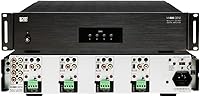
The OSD Audio MX880 Gen2 4-Zone Amplifier sits in a practical middle ground between prosumer and professional distributed audio hardware, built primarily for installers and serious enthusiasts who need clean, reliable power across multiple rooms. OSD Audio has carved out a solid niche in the custom install world, and this multi-zone amp reflects that focused approach. Four stereo zones, eight channels, Class D architecture — it is designed to live in a rack or equipment closet, not on a living room shelf. If you are expecting something you can unbox and configure via an app in twenty minutes, recalibrate your expectations. This is deliberate, hardware-first design aimed at people who know exactly what they need.
Features & Benefits

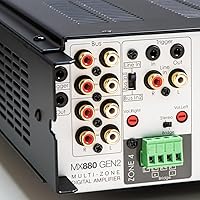
Class D amplification means this distributed audio amplifier runs cooler and draws less power than older Class AB designs — a real advantage when it is tucked into a closet rack alongside other gear running around the clock. Output is rated at 80W per channel into 4 ohms, dropping to 50W into 8 ohms, so speaker matching genuinely matters here. Pairs of channels can be bridged to 160W if one zone needs extra headroom. RCA inputs on every channel keep source integration clean and uncomplicated with most matrix switchers. The front-panel zone switches are a small but genuinely useful addition. Built-in thermal and short-circuit protection lets the amp run continuously without supervision.

Best For

This multi-zone amp is a natural fit for whole-home audio builds with two to four active zones — think in-ceiling speakers spread across a kitchen, living room, covered patio, and home office. It also works well in light commercial settings: small restaurants, boutique retail, or a gym where background music needs to run reliably all day. Custom AV integrators will appreciate the clean 2U rack footprint and straightforward wiring. Home theater builders configuring a 5.1 or 7.2 system can leverage the eight discrete channels for dedicated amplification. One clear caveat: if your installation depends on app-based control, look elsewhere — the MX880 Gen2 is resolutely hardware-operated by design.

User Feedback

Owners consistently point to solid build quality and clean output as standout strengths, with many noting the amp runs noticeably cooler than the Class AB units they replaced. The front-panel zone switches earn repeated praise — users upgrading from the first generation call it a clear and welcome improvement. The most common criticism is the absence of any network or app control, which is a genuine limitation for smart-home integrators expecting that capability at this price tier. A handful of buyers also question the value relative to watt-per-dollar alternatives. That said, the installer community tends to weigh long-term reliability and rack compatibility more heavily than raw wattage per dollar, and on both fronts, feedback skews decidedly positive.

Pros

  • Slim 2U rack profile with included mounting hardware makes installation quick and clean in professional setups.
  • Class D design runs noticeably cooler than Class AB alternatives, a real advantage in enclosed rack cabinets.
  • Front-panel per-zone on/off switches offer instant, reliable zone control without any software or remote needed.
  • Channels can be bridged to 160W RMS for zones that genuinely need extra headroom, like large open-plan spaces.
  • Built-in thermal overload and short-circuit protection supports always-on commercial deployments with minimal intervention.
  • Clean, low-distortion output performs consistently well for background music and whole-home audio across multiple zones.
  • RCA inputs on all channels integrate easily with virtually any matrix switcher or source device an installer might use.
  • Solid, professional-grade build quality holds up over years of continuous use in both residential and light commercial installs.
  • The 8-channel architecture gives installers genuine flexibility across four independent stereo zones in a single 2U unit.

Cons

  • No app, network, or smart-home control of any kind — a hard limitation for modern integrated AV systems.
  • RCA-only inputs exclude digital and networked audio sources without additional external conversion hardware.
  • Documentation is thin for DIY buyers unfamiliar with distributed audio wiring and impedance considerations.
  • At 50W per channel into 8 ohms, real-world headroom is more modest than the headline wattage figure suggests.
  • The 16.41-inch rack depth can be too long for shallow furniture-style AV consoles common in residential installs.
  • No onboard per-zone volume control — separate attenuation hardware is required at the speaker or source level.
  • Budget multi-zone amplifiers offer comparable wattage specs at significantly lower price points for cost-focused buyers.
  • At 19 lbs, solo rack mounting without a second person is awkward and risks improper seating in the rack.
  • No digital input options means buyers integrating streaming sources often need an extra DAC or converter in the chain.

Ratings

The OSD Audio MX880 Gen2 4-Zone Amplifier earns its place as one of the more thoughtfully engineered distributed audio amplifiers in its class, and the scores below reflect exactly that — strengths and shortcomings alike. Our AI has analyzed verified buyer reviews from multiple global markets, actively filtering out incentivized, bot-generated, and outlier feedback to surface what real installers, integrators, and enthusiasts actually experience. The result is a transparent, balanced picture of where this multi-zone amp genuinely delivers and where it asks you to make trade-offs.
Build Quality
88%
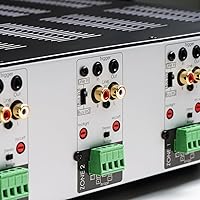
Owners consistently describe the chassis as reassuringly solid — not lightweight or plasticky like some competitors at lower price points. The rack hardware fits cleanly, and the front panel buttons feel purposeful rather than cheap. Installers who routinely handle equipment note it holds up well in closet rack environments over extended use.
A small number of buyers report that the front-panel labeling can wear over time in high-touch commercial installations. The unit is also fairly heavy at 19 lbs, which can be awkward during solo rack mounting without a second set of hands.
Audio Performance
84%
For background music distribution and whole-home audio, the MX880 Gen2 delivers clean, low-distortion output that satisfies most installers working with quality in-ceiling speakers. The full 20Hz to 20kHz frequency response holds up well across listening zones without obvious coloration or harshness at moderate listening levels.
Dedicated audiophiles running high-sensitivity speakers in critical listening rooms may find the Class D output slightly less nuanced than a premium linear amplifier. At max output levels into 8-ohm loads, headroom feels tighter than the spec sheet implies in some real-world multi-zone scenarios.
Power Output & Headroom
79%
21%
The 80W per channel rating into 4 ohms is sufficient for most residential zones running standard in-ceiling or in-wall speakers. The bridging capability to 160W per zone is a practical option when one room genuinely needs more punch, such as a large open-plan kitchen or covered outdoor space.
The 50W per channel figure into 8 ohms is the more common real-world rating for typical residential speakers, and buyers comparing on raw wattage may feel underwhelmed. Budget-oriented alternatives can offer comparable figures at notably lower cost, making this a harder sell on power alone.
Zone Control Usability
91%
The front-panel per-zone on/off switches are the most praised Gen2 upgrade by a clear margin. Homeowners managing a four-zone system day-to-day find the direct hardware switches far more intuitive than navigating an app or remote. Installers also appreciate being able to silence a zone instantly during setup or troubleshooting.
There is no fine-grained volume control per zone at the front panel — users still need a separate volume control mechanism at the speaker or source level. For installations where zone volumes change frequently, this limitation adds complexity to the overall system design.
Thermal Management & Efficiency
86%
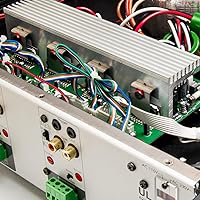
Class D operation keeps the unit noticeably cooler than Class AB alternatives running similar loads, which matters enormously in closed rack enclosures or equipment closets with limited airflow. Owners transitioning from older amplifiers specifically call out the reduced heat as a practical, daily benefit for always-on deployments.
A small subset of reviewers note the unit still generates moderate warmth under sustained heavy loads across all four zones simultaneously. In very tight rack builds with minimal ventilation, active cooling may still be advisable to maintain long-term reliability.
Rack Integration
93%
The 2U profile is genuinely slim for an 8-channel amplifier, and the included rack hardware means installers can go from box to rack without a parts run. The clean rear-panel layout keeps cable management orderly, which experienced integrators consistently highlight as a sign of thoughtful engineering.
The depth of 16.41 inches is on the longer side and can be tight in shallow rack cabinets common in some residential furniture-style AV consoles. Buyers should verify rack depth before ordering, as a few reviewers discovered this fit issue only after delivery.
App & Smart Home Integration
31%
69%
For buyers who specifically want a hardware-only solution with no dependency on apps, firmware updates, or cloud connectivity, the absence of network control is actually a deliberate and appreciated feature. It simplifies troubleshooting and eliminates potential points of failure in mission-critical installations.
The complete lack of app or network control is the single most polarizing aspect of the MX880 Gen2. Smart-home integrators building Control4, Savant, or similar ecosystems will need to work around this limitation or choose a different amplifier entirely. For the growing segment of buyers expecting app-based zone management, this is a genuine disqualifier.
Value for Money
67%
33%
When evaluated against professional-grade distributed audio amplifiers from brands like Crown or QSC, the MX880 Gen2 lands at a competitive price point with a more install-friendly feature set. Integrators who factor in long-term reliability and rack-ready form tend to view the cost as justified over a multi-year installation lifecycle.
Buyers shopping purely on specs will find budget multi-zone amplifiers offering similar wattage figures for significantly less money. The value proposition here rests on build quality and reliability rather than raw performance-per-dollar, which not every buyer prioritizes or is willing to pay for.
Setup & Installation Experience
77%
23%
For experienced AV installers and prosumers comfortable with rack equipment, the setup process is straightforward — RCA inputs, speaker terminals, and zone switches are all logically laid out. The included rack hardware and clear rear-panel labeling reduce installation time on professional jobs.
First-time DIY buyers without prior experience in distributed audio installations will likely find the lack of a guided setup process or companion app frustrating. There is no onboard configuration wizard, and the documentation, while adequate for professionals, can feel sparse for newcomers.
Input Flexibility
62%
38%
RCA inputs are universally compatible with virtually every source device, matrix switcher, or audio distribution hub that installers commonly work with. For traditional signal-flow architectures, this keeps wiring clean and sourcing replacement cables straightforward anywhere in the world.
RCA-only inputs are increasingly seen as a limitation as the broader audio industry moves toward digital and networked audio formats. Buyers hoping to integrate Dante, AES3, or optical sources without an external converter will be disappointed by the absence of any digital input options.
Reliability & Longevity
89%
The onboard thermal overload and short-circuit protection circuitry gives integrators real confidence when deploying the unit in always-on commercial settings such as restaurants or retail environments. Multiple long-term owners report years of continuous operation without failure, which carries significant weight in professional installation contexts.
The long-term track record is still building given the Gen2 is a relatively recent revision. A small number of buyers report unit failures after extended heavy-load use, though these appear to be outliers rather than a systemic pattern based on the volume of positive long-term reports.
Physical Dimensions & Form Factor
82%
18%
The slim 3.46-inch height keeps the unit to a proper 2U rack space, preserving valuable real estate in equipment racks shared with receivers, switchers, and patch panels. At 19 lbs, it feels substantial without being unwieldy during transport to an installation site.
The footprint is not particularly compact outside of a rack context — it is not the kind of amplifier you can tuck discreetly into an AV furniture cabinet without rack rails. Buyers without rack infrastructure will need to account for ventilation and physical support separately.
Documentation & Support
58%
42%
OSD Audio provides baseline product documentation that covers the essentials for professional installers who already understand distributed audio architecture. The brand does have an accessible customer support channel that experienced users report as reasonably responsive for technical questions.
The documentation is thin for buyers without a background in AV installation, and there is no robust online knowledge base or video library to bridge that gap. Several reviewers specifically mention that clearer guidance on bridging configurations and impedance matching would reduce setup errors for less experienced users.

Suitable for:

The OSD Audio MX880 Gen2 4-Zone Amplifier is purpose-built for people who take distributed audio seriously — whether that means wiring up a four-zone whole-home system with in-ceiling speakers or powering background music across a small restaurant or boutique retail space. Custom AV integrators and semi-professional installers will feel right at home with the clean rack-mount design, logical rear-panel layout, and front-panel zone switches that make day-to-day operation straightforward without any software dependency. Homeowners who have already invested in a proper equipment rack and want a reliable, always-on amplifier backbone will find this multi-zone amp fits neatly into that infrastructure. It also works well for home theater enthusiasts who want dedicated, discrete amplification across eight channels for a 5.1 or 7.2 setup and prefer hardware control over app-based management. If your priority is long-term reliability in a rack environment and you are comfortable working with RCA sources and external volume controls, this distributed audio amplifier is a genuinely strong fit.
Not suitable for:

The OSD Audio MX880 Gen2 4-Zone Amplifier is not the right choice for buyers who expect app control, smart-home integration, or any form of network connectivity out of the box — there is none, and that will not change with a firmware update because it is a hardware-only design by intent. If you are building a Control4, Savant, or similar ecosystem where zone switching and volume management are handled through a central controller or smartphone app, you will need to work around this gap or choose a different amplifier entirely. Casual buyers looking for a simple plug-and-play solution to add music in a couple of rooms will likely find the installation complexity and the lack of guided setup tools frustrating. Those shopping primarily on a wattage-per-dollar basis will also find budget alternatives more compelling on paper, since the value here is rooted in build quality and reliability rather than raw output figures. And if you need digital inputs — optical, Dante, or AES3 — the RCA-only input stage means you will require external conversion hardware, adding both cost and complexity to your signal chain.
Specifications

  • Amplifier Class: Uses Class D topology for high efficiency, lower heat output, and reduced power draw compared to traditional Class AB designs.
  • Channels: Delivers 8 discrete channels of amplification organized as 4 independent stereo zones.
  • Output at 4 Ohms: Rated at 80W RMS per channel when driving 4-ohm speaker loads at 1kHz.
  • Output at 8 Ohms: Rated at 50W RMS per channel when driving 8-ohm speaker loads, which is the more common impedance in residential installations.
  • Bridged Output: Any stereo channel pair can be bridged to deliver 160W RMS into a single zone for applications requiring greater headroom.
  • Frequency Response: Covers the full audible spectrum from 20Hz to 20kHz for accurate music reproduction across all zones.
  • Inputs: All channels accept standard RCA analog inputs, compatible with virtually any consumer or professional source device or matrix switcher.
  • Zone Control: Individual front-panel on/off toggle switches provide direct, hardware-level activation or silencing of each of the four zones.
  • Rack Size: Occupies exactly 2U of rack space, fitting standard 19-inch equipment racks with the included mounting hardware.
  • Dimensions: Measures 16.81″ long by 16.41″ wide by 3.46″ tall, with the depth requiring verification against shallow rack cabinets before installation.
  • Weight: Weighs 19 lbs, which is substantial for a 2U unit and may require two people for comfortable rack mounting.
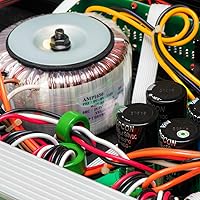
  • Protection Circuits: Onboard thermal overload and short-circuit protection circuitry safeguards both the amplifier and connected speakers during sustained or fault conditions.
  • App Control: No app, network interface, or wireless control of any kind is included or supported — operation is entirely hardware-based.
  • Mounting: Designed for 2U rack mounting with all necessary rack hardware included in the box.
  • Model: Officially designated as the MX880 GEN2, representing the second-generation revision of OSD Audio's MX880 platform.
  • Brand: Manufactured and sold by OSD Audio, a brand focused on the custom installation and distributed audio market.
  • ASIN: Listed on Amazon under ASIN B083KP5QDH for reference when cross-checking pricing or availability.

Related Reviews
OSD Audio MX1280 Gen2
79%
88%
Audio Performance
84%
Power Output & Headroom
86%
Zone Control & Flexibility
91%
Build Quality & Durability
78%
Thermal Management
More
Recoil DI800.4 4-Channel Car Audio Amplifier
83%
88%
Sound Quality
92%
Power Output
65%
Thermal Management
84%
Build Quality
91%
Ease of Installation
More
Planet Audio AC2400.4 4-Channel Car Amplifier
84%
95%
Power Output
89%
Sound Clarity
87%
Bass Performance
82%
Ease of Installation
65%
Thermals/Heat Management
More
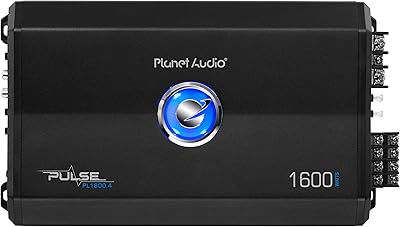
Planet Audio PL1600.4 4-Channel Car Amplifier
72%
88%
Value for Money
84%
Ease of Installation
74%
Sound Quality
58%
Power Output (Real-World)
61%
Build Quality
More
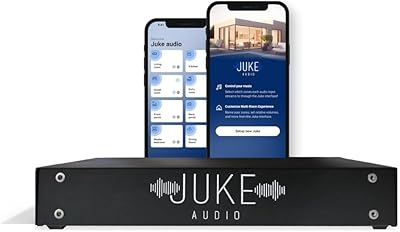
Juke Audio Juke-6 6-Zone Multi-Room Amplifier
77%
83%
Ease of Setup
91%
AirPlay 2 Integration
86%
Spotify Connect Performance
78%
Audio Output Quality
93%
Multi-Zone Independence
More
Recoil REA600.4 4-Channel Car Audio Amplifier
84%
89%
Audio Performance
91%
Ease of Installation
85%
Sound Quality at High Volumes
62%
Heat Management
90%
Power Output
More
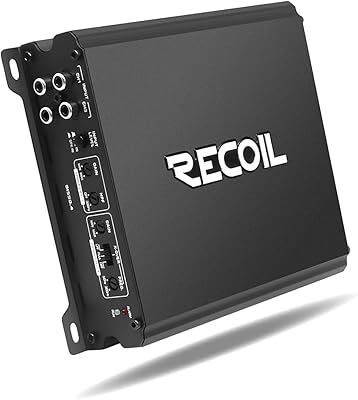
Recoil DI550.4 4-Channel Car Audio Amplifier
74%
91%
Value for Money
78%
Power Output
86%
Ease of Installation
74%
Sound Quality
67%
Build Quality
More
Planet Audio AC1200.4 4-Channel Car Amplifier
73%
88%
Value for Money
67%
Power Output
83%
Installation Ease
74%
Sound Quality
61%
Build Quality
More
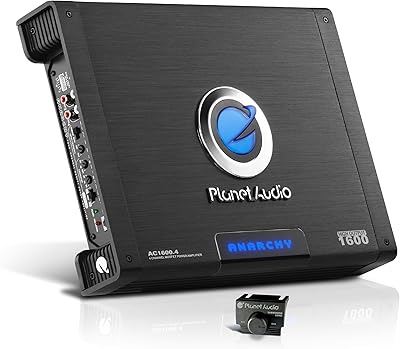
Planet Audio AC1600.4 Anarchy Series 4-Channel Car Amplifier
82%
94%
Power Output
88%
Sound Quality
70%
Ease of Installation
92%
Value for Money
85%
Build Quality
More
Soundfy SA 400.4 4-Channel Car Amplifier
71%
78%
Value for Money
72%
Sound Quality
63%
Power Output
58%
Build Quality
81%
Thermal Management
More

FAQ

Not directly — the front-panel switches only turn each zone on or off. For per-zone volume adjustment, you will need separate in-wall volume controls or attenuators wired between the amplifier and each set of speakers. Most distributed audio installations pair this amp with dedicated impedance-matching volume controls for exactly that reason.

Yes, and that is actually the most common pairing in residential installs. Just keep in mind that the output rating drops to 50W per channel at 8 ohms rather than the headline 80W figure, which applies to 4-ohm loads. For typical background music in a bedroom or kitchen, 50W per channel into standard in-ceiling speakers is more than adequate.

It can work alongside those systems, but not natively — there is no IP control, RS-232, or IR control input on this unit. You would need to use an external relay or switching solution to automate zone power through a control system. If seamless third-party integration is a core requirement for your build, a network-controllable amplifier may be a better fit.

The Class D design runs considerably cooler than older Class AB amplifiers, which is one of its practical advantages in rack or closet installations. Under normal multi-zone loads it stays warm but not alarmingly hot. That said, if you are stacking equipment tightly in an enclosed rack, leaving at least 1U of ventilation space above or below the unit is still a sensible precaution.

Yes, that is exactly what it is designed for. The Class D topology handles continuous multi-zone operation efficiently, and the onboard protection circuitry monitors thermal conditions automatically. Just make sure your speaker impedance loads per zone stay within spec — running multiple speakers in parallel per zone without checking the combined impedance is a common installation mistake that can stress any amplifier.

The amp is rated and tested into 4-ohm loads, so 4 ohms per channel is the safe lower limit. Dropping below that — for example by wiring two 8-ohm speakers in parallel per channel without an impedance-matching volume control — risks tripping the protection circuits or causing long-term damage. Always verify your combined speaker impedance before finalizing your wiring.

Rack mounting hardware is included in the box, which is one of the small but appreciated details that installers notice. You should be able to go straight from unboxing to rack without a trip to the hardware store.

The MX880 Gen2 does not use an active cooling fan — the Class D design is efficient enough that passive operation is sufficient under typical loads. This makes it a good choice for equipment closets adjacent to listening rooms where fan noise from active-cooled gear can be an annoyance.

Yes, the eight discrete channels map cleanly to a 7.2 configuration if you have a processor handling decoding and preamp duties. Each channel operates independently, so you can drive front left, front right, center, surround left, surround right, rear surround left, and rear surround right from a single unit. It is a cost-effective option for people who want dedicated amplification without buying a multi-channel AV receiver with built-in amplification they may not trust for critical listening.

The core difference comes down to build quality, thermal management, and long-term reliability rather than raw output figures. Budget alternatives can match the wattage spec on paper, but professional installers who have used both categories consistently report that mid-tier and higher units like this one hold up better in always-on environments over a multi-year deployment. If the amplifier is going into a permanent rack installation — particularly in a commercial setting — the reliability margin tends to justify the price difference for most experienced buyers.

Where to Buy