Overview

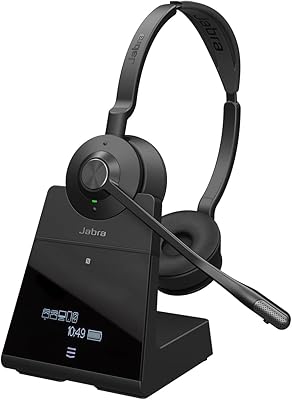
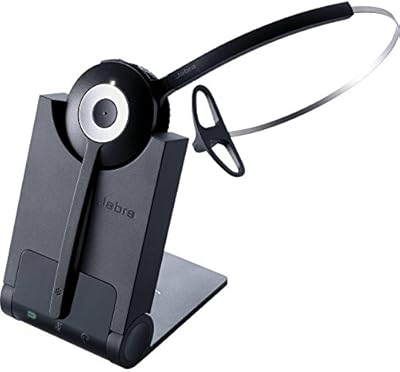
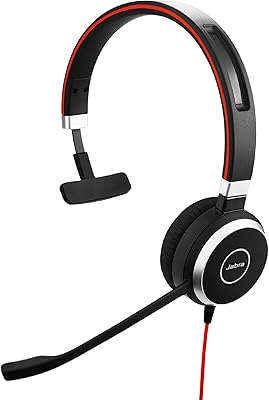
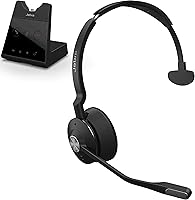
The Jabra Engage 65 Mono Wireless Headset is a professional DECT headset built specifically for contact center agents, heavy desk phone users, and remote workers who spend a significant portion of their day on calls. This is not a music headset or an everyday consumer product — it is a work tool, designed with shift-length durability and voice clarity as the primary objectives. The mono form factor is a deliberate choice: keeping one ear open helps agents stay aware of their surroundings while remaining locked into calls. At its premium price point, buyers should expect enterprise-grade reliability rather than flashy extras.
Features & Benefits

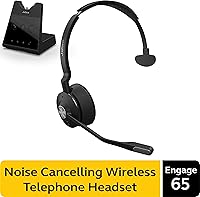
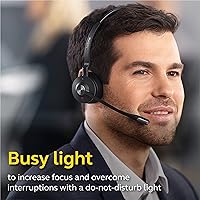
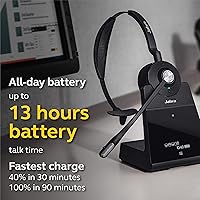
The DECT wireless range — rated up to 150 meters — is one of the standout practical advantages here. In a real office with walls and equipment, expect that figure to be lower, but most agents still report stable connectivity when stepping into a nearby room or common area. The directional noise-cancelling microphone does a solid job filtering out background chatter in open-plan floors, making your voice come through clearly on the other end. The integrated busylight is a small but genuinely useful feature in shared workspaces. Battery life runs to 13 hours of talk time, with fast charging getting you to 40% in just 30 minutes — practical for shift handoffs.

Best For

This DECT call center headset makes the most sense for agents logging six or more hours of phone time daily — people who need a headset that holds up through an entire shift without a mid-day recharge. It is also a strong fit for open-plan offices where the busylight helps signal availability and the noise-cancelling mic keeps background noise from bleeding into customer calls. Professionals juggling both a desk phone and a PC softphone will appreciate the ability to pair two devices at once. Teams running Skype for Business or similar certified UC platforms will find it a natural, hassle-free hardware choice.

User Feedback

With a 4.2-star rating across roughly 240 reviews, the Engage 65 Mono lands in solidly positive territory, though not without reservations. Buyers consistently praise the wireless range stability and microphone clarity in noisy environments, with several noting the battery holds up reliably across full shifts. Comfort over long wear periods gets mixed mentions — most find it acceptable, but headband fit can vary by head size and wearing style. The recurring concern is cost: for individual buyers or smaller teams, the price requires real justification. Those switching from Bluetooth-based alternatives tend to value the DECT connection's consistency, though some question whether the difference truly warrants the premium investment.

Pros

  • DECT wireless delivers a consistently stable connection that Bluetooth-based headsets in the same price range rarely match.
  • The directional noise-cancelling microphone keeps voice transmission clear even in loud, open-plan call center environments.
  • Thirteen hours of talk time comfortably covers a full work shift without needing a mid-day charge.
  • Fast charging gets the Engage 65 Mono back to 40% in roughly 30 minutes — practical during shift handoffs.
  • The integrated busylight genuinely reduces desk interruptions once colleagues recognize and respect the signal.
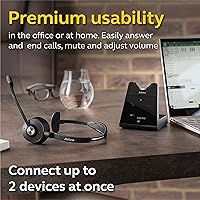
  • Dual-device pairing lets agents stay connected to both a desk phone and a PC softphone simultaneously.
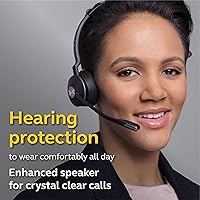
  • Hearing protection features make all-day intensive phone use safer and more sustainable over time.
  • Skype for Business certification means straightforward deployment for IT teams in Microsoft UC environments.
  • The mono design keeps one ear open, which helps agents stay aware of their surroundings during long call sessions.
  • Build quality holds up well in daily call center use, including repeated docking and desk handling over months.

Cons

  • The premium price point is hard to justify for individual buyers or small teams with limited hardware budgets.
  • Real-world wireless range falls well short of the 150-meter spec in typical offices with walls and dense equipment.
  • On-ear comfort becomes a noticeable issue during shifts exceeding eight hours, particularly for users with larger heads.
  • Battery life degrades after 12 to 18 months of intensive daily use, which matters for long-term fleet deployments.
  • There is no on-device battery percentage display — users depend on audio alerts that can be easy to miss in noisy settings.
  • Switching between two simultaneously paired devices during overlapping calls can be confusing without practice.
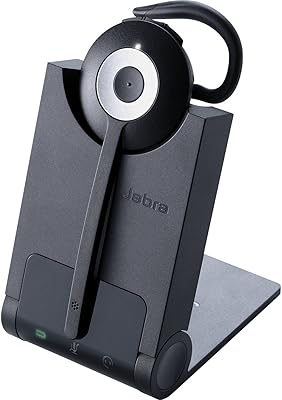
  • The charging base adds a permanent desk footprint that remote workers with compact setups may find inconvenient.
  • Audio quality is strictly voice-optimized — there is no meaningful stereo or music listening capability.
  • Compatibility outside traditional desk phone and Microsoft UC platforms may require additional configuration effort.
  • The microphone boom positioning is more sensitive than expected — slight misalignment noticeably affects transmission quality.

Ratings

The Jabra Engage 65 Mono Wireless Headset has been evaluated using AI-assisted analysis of verified global user reviews, with spam, bot-generated, and incentivized feedback actively filtered out to ensure the scores reflect genuine buyer experiences. Ratings cover everything from wireless reliability and microphone performance to long-shift comfort and value — both the strengths and the frustrations are reflected transparently below.
Wireless Range & Stability
88%
Most agents report that the DECT connection holds up reliably when moving between their desk, a nearby printer, or a small break room. In moderately dense office environments, the range is consistently praised as one of the strongest arguments for choosing this headset over Bluetooth alternatives.
The advertised 150-meter figure assumes open-air conditions that most offices simply do not offer. In buildings with thick walls, metal shelving, or heavy wireless interference, real-world range can drop noticeably, and a handful of users in dense corporate environments reported occasional dropouts.
Microphone Clarity
91%
Call recipients on the other end consistently report hearing agents clearly even in loud open-plan environments. The directional noise-cancelling design does a strong job of isolating the speaker's voice from surrounding desk chatter, keyboard noise, and ambient office sound during active calls.
Under extreme noise conditions — think a loud sales floor during peak hours — some residual background bleed can still occur. A small number of users also noted that the microphone boom needs to be positioned carefully; leaving it slightly off-angle reduces transmission quality more than expected.
Battery Life
93%
Thirteen hours of rated talk time comfortably covers a full shift for most agents, and buyers frequently confirm this holds up in day-to-day use rather than being just a spec sheet number. The fast-charge feature — reaching 40% in around 30 minutes — is particularly appreciated during shift handoffs.
Battery performance can degrade gradually after 12 to 18 months of intensive daily use, which is worth factoring in for high-volume call center deployments. There is no visible battery percentage indicator on the headset itself, so users rely on audio alerts to gauge remaining charge.
Comfort Over Long Shifts
74%
26%
For agents with an average head size, the on-ear headband design is generally described as comfortable enough for a standard 6 to 8-hour shift. The overall weight is relatively low for a DECT unit, and the hearing protection features reduce ear fatigue during extended use.
Headband fit becomes a more common complaint at the extremes — users with larger heads or those who wear it for 10-plus hours report noticeable pressure points. The on-ear cushioning is functional but not plush, and some buyers feel it compares poorly to higher-end over-ear alternatives in pure comfort terms.
Value for Money
67%
33%
For IT procurement managers outfitting a full contact center team, the reliability and low maintenance overhead do justify the cost over time. Buyers who have previously dealt with dropped Bluetooth connections or failed budget headsets tend to view the pricing as reasonable given the consistency this unit delivers.
Individual buyers and small teams with limited budgets frequently question whether the premium is justified versus mid-range Bluetooth options. When purchased by a single remote worker rather than as part of a bulk enterprise order, the cost-to-benefit ratio feels less compelling.
Busylight Effectiveness
83%
In open-plan offices, the integrated busylight genuinely reduces unwanted interruptions. Colleagues quickly learn to recognize the signal, and agents report fewer tap-on-the-shoulder disruptions during active calls once the visual cue becomes part of the team's working culture.
The busylight is only effective if colleagues are trained to respect it, which requires some onboarding effort. It is also only visible from certain angles, so agents seated in positions where the light faces away from foot traffic get less practical benefit from the feature.
Build Quality & Durability
82%
18%
The plastic construction feels purposefully solid rather than brittle, and users in call center environments report that the headset holds up well to daily handling, desk drops, and repeated docking over months of use. The charging base is sturdy and the connection mechanism feels reliable.
The all-plastic build does not feel particularly premium at this price tier when held next to competitors that use metal reinforcement in the headband. Long-term durability beyond 18 to 24 months of heavy daily use is where some buyers have reported hinge and band wear beginning to show.
Ease of Setup & Pairing
86%
Most users describe the initial setup as straightforward, with the base station and USB connection requiring minimal configuration for standard desk phone and softphone use. IT administrators generally appreciate that it does not demand complex driver installation for basic functionality.
Connecting to two devices simultaneously can require a bit more configuration patience than the product implies, and some users found the initial softphone pairing less intuitive without consulting the documentation. The setup experience is smoother for experienced IT staff than for end users self-installing.
Hearing Protection
87%
Heavy phone users and occupational health-conscious buyers specifically mention the hearing protection features as a meaningful differentiator. The safeguards against sudden loud sounds and prolonged high-volume exposure are real and relevant for agents on calls most of their working day.
The protection features work in the background without user control or visibility, which some buyers would prefer to have more transparency over. Users who push call volume to the maximum level to compensate for loud environments may partially undermine the protection the system provides.
Multi-Device Connectivity
78%
22%
The ability to stay paired to both a desk phone and a PC softphone simultaneously is a genuine workflow advantage for agents who need to switch between channels without re-pairing. It reduces friction in blended environments where both traditional and VoIP calls are common.
The multi-device feature works best in controlled setups. Some users note that switching between active calls on two paired devices is not always intuitive, and the behavior during overlapping incoming calls from both sources can be confusing without familiarity with the controls.
Controls & Usability
81%
19%
Call answer, end, mute, and volume controls are accessible directly on the headset, which most agents find sufficient for their daily workflow without needing to touch the base or the computer. The learning curve is short even for less tech-savvy users.
The controls are functional rather than intuitive by design, and some users note that muting without looking at the device can take a few days to get consistently right. There is no on-device display, so confirming mute status relies on audio cues that can be easy to miss in a noisy environment.
Compatibility & Certification
89%
Skype for Business certification and broad desk phone compatibility make deployment straightforward for enterprise IT teams. Organizations already standardized on Microsoft UC platforms can onboard this headset with confidence that it will behave predictably within their existing infrastructure.
Compatibility is strongest within the Microsoft and traditional desk phone ecosystem. Users expecting plug-and-play performance with less common UC platforms or newer cloud-based telephony systems occasionally report needing additional configuration steps or discovering feature limitations.
Audio Quality for Listening
71%
29%
For voice calls — the primary use case — audio is clear and intelligible, with enough fidelity to handle both customer service conversations and internal conference calls comfortably throughout a shift.
This is a mono call headset with a 32-ohm dynamic driver, and buyers who expect richer audio for music or video content will be disappointed. The frequency response and audio tuning are optimized entirely for voice, not for broad listening enjoyment.
Charging Base Design
80%
20%
The included charging base is well-designed for a desk environment — stable, clearly indicating charge status, and equipped with its own buttons for call management. Agents appreciate being able to dock the headset at end of shift without thinking about it.
The base adds a permanent footprint to the desk that not all users welcome, particularly remote workers with compact home setups. Cable management around the base can also get untidy in cramped workspaces, which is a minor but recurring mention in feedback.

Suitable for:

The Jabra Engage 65 Mono Wireless Headset is purpose-built for professionals who live on the phone — specifically contact center agents, customer support teams, and heavy desk phone users who routinely log six or more hours of call time per day. If your work involves an open-plan office where background noise is constant and interruptions are frequent, this DECT call center headset addresses both problems directly with its noise-cancelling microphone and integrated busylight. IT managers and operations leads outfitting teams that use both traditional desk phones and PC-based softphones will find the dual-device pairing and Skype for Business certification genuinely useful rather than just box-checking features. Remote workers who need to move freely around their home or small office during calls — grabbing a coffee, stepping into another room — will benefit from the DECT connection's stability and range in a way that Bluetooth headsets rarely match. For enterprise deployments where reliability and consistent audio quality across dozens or hundreds of units matters more than any single flashy feature, this Jabra headset makes a strong case for itself.

Not suitable for:

If you are an individual buyer working from a quiet home office on a tight budget, the Jabra Engage 65 Mono Wireless Headset is a difficult purchase to justify — the core features it excels at simply do not require this level of investment for light or moderate phone use. Buyers looking for a headset to also handle music, video calls with rich audio, or casual listening during breaks will find the mono form factor and voice-tuned driver limiting for anything beyond spoken communication. Those who prefer a completely wireless experience without a dedicated charging base on their desk may find the setup footprint more intrusive than expected in compact workspaces. Users with larger head sizes or those sensitive to on-ear pressure should be cautious, as comfort complaints tend to cluster around extended wear beyond eight hours. If your telephony environment runs on newer cloud-based platforms outside the Microsoft UC ecosystem, it is worth verifying compatibility before committing, as the headset's certified performance is most reliable within traditional desk phone and Skype for Business setups.
Specifications

  • Wireless Technology: Uses DECT (Digital Enhanced Cordless Telecommunications) wireless, which operates on a dedicated frequency band separate from Wi-Fi and Bluetooth to minimize interference.
  • Wireless Range: Rated up to 150 meters (490 feet) in open-air conditions; real-world range in standard office environments with walls and obstacles will typically be lower.
  • Form Factor: Mono on-ear headband design, worn over one ear to keep the other ear open for environmental awareness during calls.
  • Talk Time: Delivers up to 13 hours of continuous talk time on a full charge, sufficient to cover a standard full-day work shift.
  • Charging Time: Reaches a full charge in approximately 90 minutes; fast-charge capability brings the battery to 40% in roughly 30 minutes.
  • Microphone Type: Directional noise-cancelling microphone designed to isolate the speaker's voice and reduce ambient background sounds during calls.
  • Audio Driver: Dynamic driver with a frequency response extending up to 16,000 Hz, tuned specifically for voice call clarity rather than broad audio reproduction.
  • Impedance: Headset impedance is rated at 32 Ohm, standard for professional telephony headsets in this category.
  • Multi-Device Pairing: Supports simultaneous connection to up to 2 devices, allowing use across both a desk phone and a PC softphone without manual re-pairing.
  • Busylight: Integrated busylight indicator signals active call status to nearby colleagues, functioning as a visual do-not-disturb cue in shared workspaces.
  • Certifications: Certified for Skype for Business, ensuring reliable compatibility and feature performance within Microsoft Unified Communications environments.
  • Hearing Protection: Built-in hearing protection safeguards users against sudden loud sounds and sustained high-volume exposure, designed for intensive daily phone use.
  • Compatibility: Compatible with desk phones and PC-based softphones; connects via the included base station using USB or desk phone cable.
  • Included Components: Package includes the headset, charging base with call control buttons, USB cable, desk phone cable, and power supply.
  • Dimensions: Overall unit dimensions are 5.8 x 7.5 x 3.7 inches, covering both the headset and its footprint when docked on the charging base.
  • Weight: Headset weighs 1.12 pounds, which is within the typical range for DECT professional headsets with an integrated battery.
  • Material: Primary construction uses plastic throughout the headband and earcup housing, with no metal reinforcement in the structural components.
  • Cable Requirement: No cable is required during active use; the headset operates wirelessly from the base station once paired and charged.
  • Power Source: Powered by a built-in rechargeable lithium-ion battery; an external power supply for the charging base is included in the box.
  • User Rating: Holds a 4.2 out of 5 star rating based on approximately 240 verified ratings, reflecting generally positive reception with some noted reservations.

Related Reviews

Jabra Engage 75 SE Dual-Ear Wireless Headset
78%
93%
Wireless Range & Reliability
88%
Call Clarity & Microphone Performance
79%
Battery Life & Charging
74%
Multi-Device Connectivity
83%
Comfort & Wearability
More
Jabra Evolve 65 MS Stereo Wireless Headset
81%
91%
Microphone Quality
88%
Wireless Connectivity Stability
87%
Battery Life
72%
Comfort & Wearability
84%
Call Audio Clarity (Receive)
More
Jabra PRO 920 Mono Wireless Desk Headset
79%
91%
Wireless Range & Stability
88%
Microphone Clarity
72%
Comfort & Wearability
84%
Call Audio Quality
89%
Peak Stop & Hearing Protection
More
Jabra PRO 930 MS Mono Wireless Headset
86%
89%
Battery Life
90%
Audio Quality
84%
Wireless Range
74%
Comfort & Ergonomics
88%
Noise Cancellation
More
Jabra Evolve2 65 MS Teams Stereo Wireless Headset
86%
94%
Audio Quality
90%
Noise Cancellation
82%
Comfort for Extended Use
87%
Battery Life
91%
Bluetooth Range
More
Jabra Motion UC Wireless Headset
84%
92%
Comfort and Fit
88%
Sound Quality and Clarity
85%
Battery Life
90%
Noise Cancellation Performance
80%
Connectivity and Integration
More
Jabra Evolve2 75
Jabra Evolve2 75
78%
91%
Microphone Quality
72%
Active Noise Cancellation
93%
Battery Life
61%
Comfort & Fit
94%
Call Platform Compatibility
More
Jabra PRO 9460 Duo Wireless Headset
86%
92%
Sound Quality
88%
Comfort for All-Day Wear
90%
Wireless Range
85%
Noise Cancellation
91%
Ease of Use
More
Jabra Evolve2 55 Stereo
79%
91%
Call & Microphone Quality
71%
Active Noise Cancellation
78%
Wearing Comfort
88%
Battery Life
74%
Dual-Device Connectivity
More
Jabra Engage 50 Stereo Wired Headset
88%
94%
Call Clarity
90%
Noise Cancellation Effectiveness
88%
Comfort for Long Use
93%
Microphone Quality
85%
Build Quality
More

FAQ

DECT operates on a dedicated radio frequency that does not compete with your office Wi-Fi or other Bluetooth devices, which means fewer dropouts and more consistent range. For a call center or busy office environment, that stability difference is genuinely noticeable compared to Bluetooth alternatives that can struggle in signal-dense spaces.

Probably not, and that is worth being realistic about before purchasing. The 150-meter figure is measured in open-air conditions with no obstructions. In a typical office with walls, partitions, metal equipment racks, and other wireless devices, most users experience reliable connectivity in the 30 to 60-meter range. That is still more than enough to walk to a nearby room, a printer, or a break area without dropping a call.

Yes. The Engage 65 Mono supports pairing with up to two devices simultaneously, so you can keep it connected to a traditional desk phone and a PC softphone like Teams or Cisco Jabber at the same time. Switching between the two during a call requires some familiarity with the controls, but it works without needing to re-pair each time.

The Jabra Engage 65 Mono Wireless Headset is certified for Skype for Business, and it functions reliably with Microsoft Teams as well since Teams succeeded Skype for Business in most enterprise environments. Basic call controls work as expected, though the level of deep Teams integration may differ from headsets specifically certified for the newer platform.
Most users with an average head size find it comfortable enough for a standard shift, particularly because the overall weight is relatively low for a DECT unit. That said, the on-ear cushioning is functional rather than plush, and users with larger heads or those particularly sensitive to headband pressure sometimes report discomfort setting in after 6 to 7 hours. It is worth trying if comfort over long periods is a priority.

It works well once colleagues are aware of what it signals — which does require a brief onboarding conversation when first deploying it in a team. In offices that adopt it properly, agents report a meaningful drop in unwanted interruptions during calls. The main limitation is that it is only visible from certain angles, so its effectiveness depends somewhat on where you are seated relative to foot traffic.

Like most lithium-ion batteries, performance does degrade over time with daily intensive use. Most users report the battery holding up reliably through the first 12 months, but noticeable capacity reduction can start appearing between 12 and 18 months of heavy shift-length use. For large call center deployments, it is worth factoring in a battery replacement or unit refresh cycle when planning long-term hardware costs.

The box includes the headset, charging base, USB cable, desk phone cable, and power supply — everything you need for a standard setup out of the box. No additional adapters are typically required for common desk phone and PC configurations, though specific enterprise phone systems may occasionally need a compatibility check before ordering.

Technically it works fine in a home environment, but the value proposition is harder to justify for light phone use. This DECT call center headset is designed around the needs of someone on calls for 6 or more hours a day. If your phone use is moderate — a few calls a day in a reasonably quiet space — there are capable alternatives at a significantly lower price point that will serve you just as well.

You can route audio through it, but the experience will be underwhelming compared to what you would expect from a consumer audio product. The Engage 65 Mono is a mono headset with a driver tuned specifically for voice call clarity — it has no stereo capability and the audio profile is not designed for music or media. For calls, it excels; for anything else, it falls short.

Where to Buy