Overview

The Intel Core i5-12500 12th Gen Desktop Processor is Intel's answer to the mainstream builder who wants modern platform performance without paying flagship prices. Built on the Alder Lake architecture, the i5-12500 slots into the LGA-1700 socket, meaning you will need a 600-series motherboard — a real cost to factor into your budget. It ships in a retail box with a stock cooler included, which is genuinely useful for first-time builders not ready to spec out aftermarket cooling. This is a capable workhorse chip, not a processor built for overclocking enthusiasts chasing benchmark records.
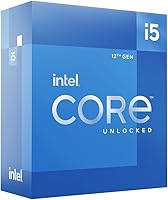
Features & Benefits

The i5-12500 runs six performance cores with Hyper-Threading, which in practice means your system handles 12 simultaneous threads — keeping multiple apps, browser tabs, and background tasks from competing for resources. It starts at 3.0 GHz and climbs to 4.6 GHz under load via Turbo Boost, so everyday tasks feel responsive. The 18MB Smart Cache cuts down on memory latency for frequently accessed data, which matters during sustained workloads like compiling code or editing files. Integrated UHD Graphics 770 handles basic display output without a discrete GPU, and a 65W power envelope keeps heat and electricity draw well within budget-build territory. DDR4 and DDR5 support adds useful platform flexibility.

Best For

This 12th Gen processor suits people building or upgrading a home office PC where reliability and consistent multi-threaded performance matter more than raw gaming throughput. Students running creative software, developers compiling projects, and content creators doing light video editing will find it comfortably handles their daily workflows. It is also a solid pick for anyone moving off an older Intel platform who wants a modern LGA-1700 foundation with room to drop in a faster CPU later if needs grow. If you do not have a dedicated GPU yet, the integrated graphics buy you time. Just budget for a compatible B660 or Z690 motherboard alongside it.

User Feedback

Across 73 ratings, the i5-12500 holds a 4.7 out of 5 score — a strong result, though the sample size is modest enough to read with some caution. Buyers consistently highlight stable out-of-box operation and straightforward installation. The bundled stock cooler gets mixed marks: fine for standard workloads, but users running the chip hard for extended periods often swap it out for something aftermarket. A handful of reviewers note the importance of pairing it with a 600-series board, which can catch first-time Alder Lake buyers off guard. Some owners mention it holds its own against comparable AMD Ryzen 5 chips — a reassuring sign for those cross-shopping.

Pros

  • Six cores and 12 threads handle real multitasking workloads without the sluggishness of older quad-core builds.
  • Turbo Boost to 4.6 GHz keeps everyday desktop responsiveness feeling sharp and immediate.
  • The 65W TDP makes this Alder Lake chip a practical choice for compact cases and modest PSUs.
  • Retail box includes a stock cooler, which saves first-time builders an extra purchase at the start.
  • DDR4 and DDR5 memory support gives genuine flexibility when budgeting a complete system.
  • Integrated UHD Graphics 770 means the system displays output on day one, even without a discrete GPU.
  • The i5-12500 holds up well against Ryzen 5 competition at similar price points, per real buyer comparisons.
  • 18MB Smart Cache noticeably reduces latency during sustained productivity tasks like compiling or file processing.
  • No widespread defect or reliability complaints across the verified review pool — solid manufacturing consistency.
  • PCIe 5.0 support keeps the platform relevant for fast NVMe storage upgrades down the line.

Cons

  • The chip is locked — no overclocking headroom whatsoever for performance enthusiasts.
  • A compatible 600-series motherboard is mandatory, which significantly raises the true cost of entry.
  • The bundled stock cooler struggles under sustained heavy workloads and often prompts an aftermarket upgrade.
  • Integrated graphics are a stopgap only — completely inadequate for gaming or serious GPU-accelerated tasks.
  • The 73-rating review base is too small to draw firm long-term reliability conclusions with confidence.
  • Single-core performance gains over well-maintained older Intel platforms are less dramatic than the platform shift suggests.
  • DDR5 and PCIe 5.0 benefits require a pricier Z690 board, which conflicts with budget-build positioning.
  • Under Turbo Boost, real-world power draw spikes noticeably above the rated 65W TDP figure.
  • Buyers on legacy Intel platforms face replacing CPU, motherboard, and potentially RAM all at once.
  • Fan noise from the stock cooler becomes a real presence during any sustained processing task.

Ratings

Our AI rating system analyzed verified global buyer reviews for the Intel Core i5-12500 12th Gen Desktop Processor, actively filtering out incentivized, bot-generated, and outlier feedback to surface what real users consistently experience. The scores below reflect a balanced picture — genuine strengths alongside the friction points that matter to everyday builders and upgraders. Nothing is glossed over.

Multi-Threaded Performance
88%
Users running productivity-heavy workloads — compiling code, juggling spreadsheets, or keeping a dozen browser tabs open alongside communication apps — report the chip handles it without hesitation. The 12-thread capability means sustained parallel tasks rarely cause the sluggishness common on older quad-core platforms.
For users pushing into heavier creative workloads like 4K video exports or large 3D renders, the i5-12500 begins to show its mid-range ceiling. It handles the job, but render times remind you this is not a workstation-class chip.
Single-Core Responsiveness
84%
Day-to-day desktop use feels snappy. Launching apps, switching windows, and loading web-heavy pages all benefit from the Turbo Boost headroom reaching up to 4.6 GHz, which keeps the system feeling lively even under modest loads.
The base clock of 3.0 GHz is not remarkable on paper, and in lightly threaded legacy software that cannot leverage Turbo Boost efficiently, some users notice the chip is not dramatically faster than well-maintained older-gen Intel builds.
Thermal Management
79%
21%
At 65 watts TDP, the i5-12500 runs cool enough during typical office and productivity use that the included stock cooler handles things without complaint. Compact micro-ATX and budget mid-tower builds appreciate how forgiving this chip is on airflow requirements.
Push it into sustained heavy workloads and the stock cooler starts hitting its limits — some users report thermal throttling during extended video encoding sessions. An aftermarket cooler is a practical recommendation for anyone doing more than light daily use.
Value for Money
86%
Buyers consistently frame the i5-12500 as a smart spend for a mainstream build. You get a genuinely modern platform — PCIe 5.0 support, DDR5 compatibility, solid multi-threading — without paying the premium attached to K-series or higher-tier chips.
The chip itself is competitively priced, but the LGA-1700 platform adds real cost. Pairing it with a B660 or Z690 motherboard means the total outlay is meaningfully higher than just the CPU price, which surprises some first-time Alder Lake buyers.
Platform Compatibility & Upgrade Path
74%
26%
LGA-1700 is a capable, forward-looking socket that supports both DDR4 and DDR5 memory, giving builders flexibility in how they budget their RAM. Users who plan ahead appreciate that the platform leaves room to step up to a higher-tier processor later.
The 600-series motherboard requirement is a genuine barrier. Reviewers on older Intel platforms note that nothing carries over — CPU, board, and potentially RAM all need replacing simultaneously, which front-loads the cost of an Alder Lake upgrade significantly.
Integrated Graphics (UHD 770)
62%
38%
The UHD Graphics 770 is a solid safety net — useful for initial system builds before a discrete GPU arrives, troubleshooting display issues, or running a basic home office setup that does not touch gaming or creative rendering at all.
As a primary graphics solution, it falls short fast. Users who tried leaning on the integrated graphics for anything beyond 1080p video playback or basic 2D applications found performance limiting. It is a fallback, not a feature you build around.
Out-of-Box Setup Experience
91%
The retail box package is well-regarded among first-time builders. The stock cooler is pre-mounted-ready, the documentation is clear, and buyers report the chip seated and posted without drama on compatible boards right from the start.
A small number of users encountered BIOS update requirements on older 600-series boards before the chip was recognized, which can be a confusing extra step for builders who have never done a CPU-less BIOS flash before.
Power Efficiency
83%
The 65W TDP is genuinely practical for small form factor and budget builds where PSU headroom is limited. Users building home office machines appreciate keeping electricity draw low during long workdays without sacrificing meaningful performance.
Compared to some competing Ryzen 5 chips that push efficiency further, the i5-12500 is not class-leading on performance-per-watt. Under Turbo Boost the actual power draw can spike noticeably above the rated TDP, which matters in thermally constrained cases.
Build & Manufacturing Quality
89%
No widespread defect reports across the reviewed sample — zero dead cores, no shipping damage patterns, and IHS quality is consistently described as solid. Intel's manufacturing consistency at this tier is something buyers across the 73-rating pool appear to trust.
The sample size of 73 ratings, while positive, is not large enough to draw sweeping quality conclusions. Edge cases around bent pins during installation have been reported anecdotally on LGA-1700 platform boards, though this is typically a motherboard socket issue rather than the CPU itself.
Multitasking for Productivity Workflows
87%
Home office users running video calls alongside document editing, cloud sync tools, and browser-based apps report the i5-12500 handles it all without the background churn that older dual-core or quad-core chips struggled with. The 12-thread headroom genuinely shows up in real daily use.
Heavy simultaneous workloads — like running a virtual machine alongside active development tools — start to reveal the mid-range nature of this chip. It copes, but users coming from higher-core-count processors may notice the ceiling during genuinely dense multitasking sessions.
Competitive Positioning vs AMD Ryzen 5
76%
24%
Several buyers who cross-shopped against Ryzen 5 alternatives at similar price points landed on the i5-12500 and expressed satisfaction with the decision. Intel's single-core performance and platform maturity were cited as tipping factors for those already in the Intel ecosystem.
AMD's Ryzen 5 chips in the same bracket offer competitive multi-threaded performance and in some configurations better value when factoring in bundled cooler quality and AM5 platform costs. The i5-12500 wins on some benchmarks but does not dominate the competition decisively.
Noise Levels (Stock Cooler)
67%
33%
Under light workloads — web browsing, document work, media playback — the stock cooler runs quietly enough that most users in home office environments do not notice it. Idle and low-load noise is genuinely unobtrusive for a bundled cooling solution.
Ramp up the workload and the stock cooler fan becomes audible. Users in quiet environments doing sustained tasks like video encoding or large file transfers report fan noise that, while not alarming, is noticeably present and motivates the aftermarket cooler upgrade conversation.
Memory & Storage Expandability
81%
19%
Support for both DDR4 and DDR5 gives builders genuine flexibility — you can start with more affordable DDR4 kits on a B660 board and still be on a modern platform. PCIe 5.0 support also means fast NVMe storage options are accessible without a platform bottleneck.
Extracting the best from DDR5 or PCIe 5.0 requires a higher-end Z690 board, adding cost. Buyers on strict budgets often end up capping themselves at DDR4 speeds on entry-level B660 boards, which softens the headline expandability story in practice.

Suitable for:

The Intel Core i5-12500 12th Gen Desktop Processor is a strong fit for home office users, students, and everyday PC builders who need a dependable, modern platform without overspending on flagship hardware. If your typical workload involves document editing, video calls, web research, light coding, or occasional content creation, the i5-12500 delivers comfortably without breaking a sweat. Students studying computer science or media production who need a capable daily driver will find it handles their software stack well. It also makes sense for budget-conscious builders migrating from aging Intel systems who want to land on a platform with genuine longevity — the LGA-1700 socket and DDR4/DDR5 support mean you have room to upgrade components over time. Anyone who needs integrated graphics as a temporary measure before adding a discrete GPU will appreciate the UHD 770 keeping the system functional out of the box.

Not suitable for:

The Intel Core i5-12500 12th Gen Desktop Processor is not the right call for enthusiasts who want to push clocks and squeeze every drop of performance from their hardware — this chip is locked and does not support overclocking. Serious gamers chasing high frame rates at demanding settings will quickly hit the ceiling here, and the integrated graphics offer no viable path for gaming beyond the most basic titles. Content creators working regularly with 4K footage, complex motion graphics, or large 3D scenes will find render and export times frustrating compared to higher-core-count alternatives. Anyone already sitting on a compatible 12th or 13th Gen setup will see little practical reason to make a lateral move. And buyers on very tight all-in budgets should do the full math first — factoring in a 600-series motherboard alongside this chip can push the total platform cost well beyond initial expectations.

Specifications

  • Brand: Manufactured and sold by Intel Corporation under the Core i5 product line.
  • Model: The processor model number is i5-12500, with retail SKU BX8071512500.
  • Architecture: Built on Intel's 12th Gen Alder Lake architecture using the Intel 7 process node (10nm Enhanced SuperFin lithography).
  • Base Clock: The processor operates at a base frequency of 3.0 GHz across all performance cores under sustained load.
  • Boost Clock: Intel Turbo Boost Technology 2.0 allows the chip to reach up to 4.6 GHz on a single core when thermal headroom permits.
  • Cores & Threads: Features 6 Performance cores with Hyper-Threading enabled, delivering 12 total processing threads for parallel workloads.
  • L3 Cache: Equipped with 18MB of Intel Smart Cache shared across all cores to reduce memory latency during data-intensive tasks.
  • Socket: Designed for the LGA-1700 socket, requiring a compatible Intel 600-series motherboard such as B660, H670, or Z690.
  • TDP: Rated at a 65W Processor Base Power, keeping thermal output manageable for standard air-cooled builds.
  • Integrated Graphics: Includes Intel UHD Graphics 770 with 32 execution units, suitable for basic display output and light media playback.
  • Memory Support: Compatible with both DDR4 (up to 3200 MHz) and DDR5 (up to 4800 MHz) depending on the motherboard platform chosen.
  • PCIe Version: Supports PCIe 5.0 lanes for high-bandwidth connectivity with compatible graphics cards and NVMe storage devices.
  • Max Memory: Supports up to 128GB of dual-channel system memory across two memory channels.
  • Overclocking: The i5-12500 is a locked processor and does not support CPU core frequency overclocking on any supported motherboard.
  • Package Contents: Ships as a Retail Box (boxed) including the processor and the Intel Laminar RM1 stock air cooler with pre-applied thermal paste.
  • Item Weight: The retail package weighs approximately 15.8 ounces including the bundled cooler and packaging.
  • Dimensions: Retail box measures approximately 5.2 x 4.8 x 3.1 inches, housing the chip and stock cooling solution.
  • Release Date: The processor was first made available for purchase in November 2021 as part of the initial 12th Gen Alder Lake desktop lineup.

Related Reviews
Intel Core i5-7600 7th Gen Desktop Processor
83%
87%
Overall Performance
90%
Gaming Performance
88%
Multitasking Capability
85%
Turbo Boost Effectiveness
91%
Price to Performance Ratio
More
Dell Inspiron 3910 Desktop Tower
76%
84%
Performance for Everyday Tasks
81%
Storage Configuration
58%
Graphics & Display Output
79%
Build Quality & Physical Design
83%
Connectivity & Port Selection
More
Acer Aspire TC-1760-UA92 Desktop | 12th Gen Intel Core i5 | 12GB RAM | 512GB SSD
86%
88%
Performance for Everyday Tasks
92%
Value for Money
70%
Graphics Performance
84%
Build Quality
90%
Connectivity (Wi-Fi, Bluetooth)
More
Intel Core i5-13400F 2.5GHz 10-Core Desktop Processor
87%
88%
Performance
92%
Value for Money
84%
Gaming Performance
89%
Multi-core Efficiency
91%
Ease of Installation
More
Intel Core i5-9500 Desktop Processor 6 Cores 3.0 GHz
82%
85%
Performance for Everyday Use
80%
Gaming Performance
82%
Multitasking Efficiency
88%
Power Efficiency (TDP)
91%
Value for Money
More
Intel Core i5-8600 Desktop Processor 6-Core 3.1 GHz (BX80684I58600)
86%
88%
Performance
92%
Value for Money
85%
Gaming Performance
87%
Multitasking Ability
91%
Energy Efficiency
More
Intel Core i5-9400 Desktop Processor
87%
88%
Performance
91%
Value for Money
85%
Gaming Performance
86%
Multitasking Efficiency
90%
Energy Efficiency
More
Intel Core i5-13600K Desktop Processor
79%
93%
Gaming Performance
88%
Multi-Threaded Throughput
61%
Thermal Management
91%
Value for Money
79%
Overclocking Headroom
More
Intel Core i5-10600K Desktop Processor
85%
93%
Gaming Performance
89%
Overclocking Potential
86%
Multi-tasking Performance
90%
Price-to-Performance Ratio
75%
Thermal Performance
More
Intel Core i5-10400 Desktop Processor
76%
91%
Everyday Performance
88%
Multitasking Capability
93%
Value for Money
74%
Thermal Management
77%
Gaming Performance
More

FAQ

You need a motherboard with an LGA-1700 socket, which means any Intel 600-series board — B660, H670, H610, or Z690 all work. Most users on a budget pair it with a B660 board, which hits a reasonable balance between features and cost. Just make sure your chosen board supports the memory type (DDR4 or DDR5) you plan to use, since not all 600-series boards support both.

Yes, the retail box includes the Intel Laminar RM1 air cooler with pre-applied thermal paste, so you can install and boot the system straight away. It handles everyday workloads just fine. If you plan on running sustained heavy tasks like long video encodes or compilations, most experienced builders recommend budgeting for an aftermarket cooler to keep temperatures comfortable.

No, this chip is locked, meaning Intel does not allow you to push core frequencies beyond the factory Turbo Boost ceiling. If overclocking is important to your build, you would need to look at a K-series processor like the i5-12600K paired with a Z690 motherboard instead.

For light to moderate video editing — trimming clips, color grading 1080p footage, or working on short 4K timelines — the i5-12500 handles it reasonably well. Where it starts to feel its limits is during long 4K export queues or complex multi-layer projects with heavy effects. It is a solid choice for students and hobbyist creators but not ideal if video production is your primary professional workload.

It depends on the motherboard. The processor itself supports both DDR4 and DDR5, but the board determines which one you can use — most B660 boards ship as either DDR4 or DDR5 variants, not both. Check your specific motherboard's spec sheet before purchasing memory.

It is a genuinely competitive matchup. The i5-12500 tends to edge out comparable Ryzen 5 chips in single-core tasks and benefits from a mature platform ecosystem. AMD's Ryzen 5 alternatives can offer strong multi-threaded performance per dollar, and the AM5 platform has its own upgrade appeal. In practice, both are solid choices — the decision often comes down to which platform ecosystem fits your existing components or future plans.

Yes, it includes Intel UHD Graphics 770. This is enough to drive a monitor, watch video, and handle basic 2D desktop work without a discrete GPU. It is not a substitute for a dedicated graphics card if you want to do any gaming, GPU-accelerated rendering, or serious creative work — but it is a useful fallback while you wait to add a GPU later.

The chip itself is rated at 65W TDP, so it is not power-hungry on its own. For a complete system, a quality 450W to 550W PSU is generally more than sufficient unless you are pairing it with a power-hungry discrete GPU — in that case, size the PSU around the GPU's requirements instead.

It is a reasonable platform investment. LGA-1700 supports 12th and 13th Gen Intel processors, so there is some upgrade flexibility if you want to step up the CPU later without replacing the board. DDR5 and PCIe 5.0 support also keep it relevant for fast storage options going forward. That said, no mid-range chip lasts forever — if your workloads grow significantly in a few years, you may find yourself wanting more cores.

For a light home server — file sharing, running a media server like Plex, or hosting a personal website — the i5-12500 is perfectly capable. The 12-thread capability and low 65W TDP make it a reasonable low-maintenance server chip. Just keep in mind that the LGA-1700 platform adds some cost compared to purpose-built server hardware or older-generation used alternatives that are sometimes better value for purely headless server roles.