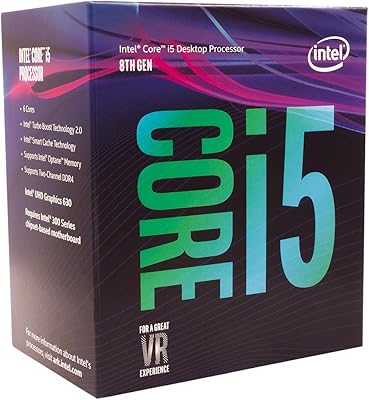
Intel Core i5-8400 8th Gen Processor
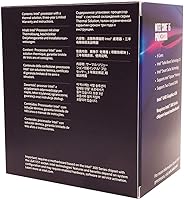
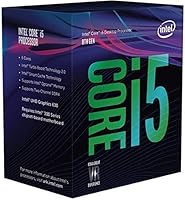
Overview
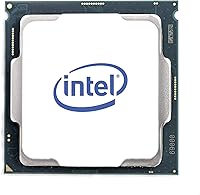
The Intel Core i5-8400 8th Gen Processor was Intel's answer to mainstream desktop builders who wanted real multi-core muscle without paying a premium price when it launched in late 2017. Part of the Coffee Lake lineup, it landed in a competitive mid-range space and quickly built a loyal following. One firm caveat worth knowing upfront: it only works with Intel 300 Series chipsets, so dropping it into an older Z270 board simply isn't possible. Today, with nearly 3,000 ratings averaging 4.6 stars, this Coffee Lake chip has a well-documented track record. It's now primarily a used or platform-upgrade buy, and keeping that context in mind is important before pulling the trigger.
Features & Benefits
Six physical cores without Hyper-Threading sounds limiting on paper, but in practice the i5-8400 handles everyday multitasking confidently for its class. The base clock sits at 2.8 GHz, climbing to 4.0 GHz under Turbo Boost for burst-heavy workloads like compiling code or loading large project files. A 9 MB Intel Smart Cache keeps frequently accessed data close to the cores, trimming latency during demanding sessions. Intel UHD Graphics 630 is onboard — not intended for gaming, but genuinely useful for display output or as a fallback option. DDR4 support pairs with Intel Optane Memory compatibility for storage flexibility, and a 65W TDP keeps cooling demands manageable even inside compact enclosures.
Best For
This 8th Gen processor makes the most sense for a handful of specific buyer types. If you're already running a Z370 or B360 board and want a meaningful CPU bump without scrapping the entire platform, it's a cost-effective move that's hard to argue with. Home office and productivity users will find six cores more than sufficient for spreadsheets, video calls, light photo editing, and general multitasking. Casual gamers pairing it with a mid-range discrete GPU can expect solid 1080p results across most titles. It also slots naturally into small form factor builds where the lower TDP and onboard graphics add real flexibility. For value-focused buyers shopping the used market, this Coffee Lake chip consistently delivers.
User Feedback
Across nearly 3,000 reviews, stability and compatibility are the phrases that surface most often. Buyers upgrading from older dual- or quad-core systems consistently describe a noticeable jump in day-to-day responsiveness. Long-term owners running this 8th Gen processor for several years report it still holds up for 1080p gaming and everyday computing without complaint. The recurring criticism isn't about performance — it's about thermals. Under sustained load, temperatures can creep up, and a number of users strongly recommend budgeting for an aftermarket cooler rather than depending on whatever ships in the box. A few buyers also flag the dead-end upgrade path within LGA 1151 as something worth weighing before committing to the platform.
Pros
- Six physical cores handle everyday multitasking, productivity apps, and light content work without breaking a sweat.
- Turbo Boost up to 4.0 GHz delivers snappy responsiveness for burst-heavy tasks like loading projects or compiling code.
- Proven long-term stability — owners running this Coffee Lake chip for several years report no performance degradation.
- A 65W TDP makes it genuinely practical for compact and small form factor builds with limited airflow.
- Plug-and-play compatibility with Z370 and B360 boards means installation is clean and straightforward for most upgraders.
- Intel UHD Graphics 630 provides a reliable display output fallback for builds waiting on a dedicated GPU.
- DDR4 and Intel Optane Memory support give budget builders flexible storage upgrade options without major extra investment.
- At used-market prices, the i5-8400 offers a strong performance-per-dollar ratio for buyers already on a compatible platform.
- Nearly 3,000 verified ratings averaging 4.6 stars reflect a rare consistency of positive real-world experience across diverse use cases.
Cons
- No Hyper-Threading limits parallel workload efficiency, putting it behind thread-rich competitors in encoding and streaming tasks.
- Restricted exclusively to Intel 300 Series chipsets — incompatible with older Z270 or Z170 boards many users already own.
- Runs noticeably warm under sustained load; budgeting for an aftermarket cooler is a practical necessity, not optional.
- The stock cooler bundled in some boxed versions struggles under heavy use and becomes audibly intrusive at full load.
- LGA 1151 is a closed platform — no upgrade path exists without replacing the motherboard entirely.
- Newer budget-tier CPUs at comparable used prices now match or beat this 8th Gen processor in several real-world benchmarks.
- No support for faster memory speeds limits performance gains from high-frequency DDR4 kits enthusiasts may already own.
- Buyers starting from scratch without a compatible board face a significantly higher total platform cost that weakens the value case.
Ratings
The Intel Core i5-8400 8th Gen Processor has been stress-tested by time and thousands of real-world buyers — our AI-generated scores below are drawn from verified global user reviews, with spam, bot activity, and incentivized feedback actively filtered out. What remains is an honest picture of where this Coffee Lake chip genuinely delivers and where it falls short. Both strengths and frustrations are reflected transparently in every category.
Multi-Core Performance
Single-Core Speed
Gaming Performance
Platform Compatibility
Thermal Management
Integrated Graphics
Value for Money
Power Efficiency
Memory Support
Installation & Setup
Long-Term Reliability
Noise Levels
Software & Driver Ecosystem
Upgrade Path
Suitable for:
The Intel Core i5-8400 8th Gen Processor is a practical choice for a well-defined group of buyers who know exactly what they need. If you already own a Z370, B360, or H370 motherboard and want to breathe new life into an existing system without rebuilding it from scratch, this Coffee Lake chip delivers a meaningful and cost-effective performance upgrade. Home office users handling video calls, browser-heavy workflows, spreadsheets, and background file syncing will find six cores more than capable for sustained daily productivity. Casual gamers pairing the i5-8400 with a mid-range discrete GPU can expect solid, stable 1080p performance across a wide range of popular titles without obvious CPU-side bottlenecking. It also fits naturally into small form factor and HTPC builds where the 65W TDP helps keep thermals and noise levels under control. Buyers shopping the used and refurbished market who prioritize proven reliability over cutting-edge specs will find this chip has aged gracefully relative to its price point.
Not suitable for:
The Intel Core i5-8400 8th Gen Processor is the wrong choice for buyers who do not already own a compatible Intel 300 Series motherboard, since the total cost of a new board plus chip quickly erodes the value advantage over fresher platforms. Enthusiasts chasing high-refresh-rate competitive gaming or running CPU-bound workloads — such as heavy video encoding, 3D rendering, or large compilation tasks — will hit the ceiling of six threads faster than they would on newer architectures with similar or lower market prices. Content creators and streamers who rely on simultaneous encoding and gaming will feel the absence of Hyper-Threading more acutely than general users. Anyone planning to upgrade their CPU again in two or three years should note that LGA 1151 is a dead-end socket — there is no meaningful next step within the platform without a full motherboard replacement. Buyers sensitive to thermals in fanless or near-passive builds should also look elsewhere, as this 8th Gen processor requires active cooling and runs warm under sustained load.
Specifications
- Brand: This processor is manufactured by Intel, one of the longest-established names in consumer and professional desktop CPU production.
- Model Number: The official model number is BX80684I58400, which identifies the retail boxed version of this Coffee Lake chip.
- Generation: The i5-8400 belongs to Intel's 8th Generation Coffee Lake microarchitecture, released in October 2017.
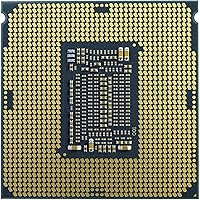
- CPU Socket: This chip uses the LGA 1151 socket, which physically fits both 100, 200, and 300 Series Intel motherboards, but is electrically compatible only with 300 Series chipsets.
- Chipset Support: Compatible chipsets are strictly limited to Intel's 300 Series, including Z370, B360, H370, H310, and Z390 boards.
- Core Count: The processor features 6 physical cores with no Hyper-Threading, meaning it runs exactly 6 threads simultaneously under full load.
- Base Clock: The base operating frequency is 2.8 GHz, which represents the guaranteed sustained clock speed under continuous all-core workloads.
- Turbo Frequency: Intel Turbo Boost 2.0 allows the chip to reach up to 4.0 GHz on a single core when thermal and power headroom permits.
- Cache: A 9 MB Intel Smart Cache is shared across all six cores, reducing memory latency during data-intensive and multitasking workloads.
- TDP: The rated thermal design power is 65W, which defines the baseline cooling solution requirement under normal operating conditions.
- Integrated Graphics: Intel UHD Graphics 630 is integrated into the die, supporting up to three simultaneous displays and hardware 4K video decode.
- Memory Type: The processor officially supports DDR4 SDRAM with a rated memory speed of 2400 MHz in dual-channel configuration.
- Optane Support: Intel Optane Memory is supported, allowing compatible M.2 Optane modules to be used as a caching layer for traditional hard drives.
- Instruction Sets: The i5-8400 supports key instruction set extensions including SSE4.1, SSE4.2, AVX2, and AES-NI for accelerated cryptographic operations.
- PCIe Version: The processor provides PCIe 3.0 lanes for connecting discrete graphics cards and NVMe storage devices at full bandwidth.
- Item Weight: The retail package weighs approximately 2.11 ounces, reflecting the compact physical footprint of the LGA 1151 processor die and IHS.
- Lithography: The i5-8400 is manufactured on Intel's 14nm++ process node, a refined iteration that improved power efficiency over earlier 14nm designs.
- Amazon Rating: The chip holds a 4.6 out of 5 star rating based on approximately 2,970 verified ratings on Amazon at the time of publication.
Related Reviews
Intel Core i5-11600K 11th Gen Processor
Intel Core i5-7500 7th Gen Desktop Processor
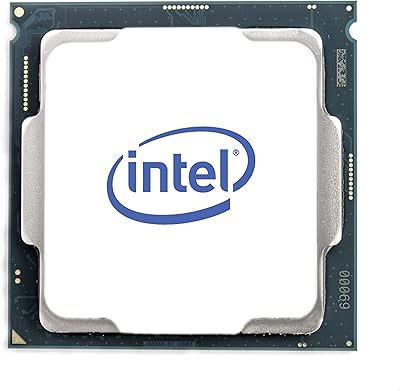
Intel Core i7-8700 8th Gen Processor
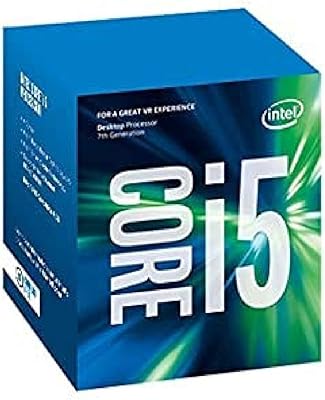
Intel Core i5-7600 7th Gen Desktop Processor
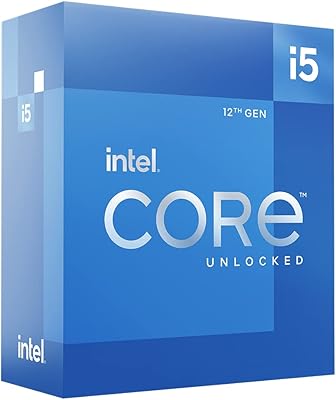
Intel Core i5-12500 12th Gen Desktop Processor

Apple MacBook Pro 13-inch (2019) 256GB
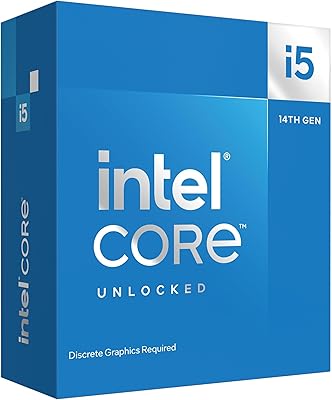
Intel Core i5-14600KF Desktop Processor
Intel Core i5-13400F Raptor Lake Desktop Processor
Intel Core i5-9500 Desktop Processor