Overview

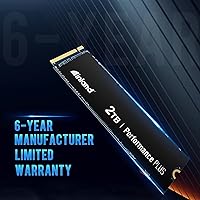
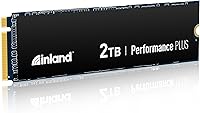
The INLAND Performance Plus 2TB NVMe SSD enters a crowded Gen4 market dominated by Samsung, WD, and Seagate, yet it holds its ground by pairing the capable Phison E18 controller with competitive pricing and a 6-year limited warranty that most rivals skip at this tier. Inland is a Micro Center house brand, which means actual retail availability — not just an online listing. PS5 owners get a practical win here: this drive slots directly into the console's expansion bay without any adapter or modification. Just keep expectations grounded — the 7,100 MB/s peak read figure reflects ideal lab conditions; real-world mixed workloads will land meaningfully lower, as they do across every drive in this class.
Features & Benefits

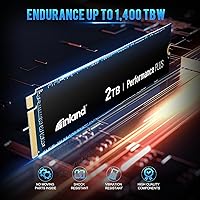
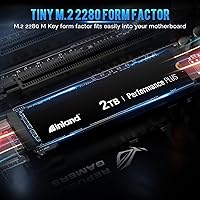
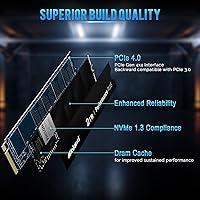
The Performance Plus 2TB is built on 176-layer 3D TLC NAND — TLC means three bits stored per cell, striking a reliable balance of speed, endurance, and cost — paired with dedicated DRAM cache that prevents the sharp performance drop-off common in cheaper, DRAMless budget drives under sustained load. PCIe Gen4 (the fourth-generation interface) delivers roughly double the theoretical bandwidth of Gen3, and backward compatibility means it works in older slots at reduced speeds. The 1,400 TBW endurance rating translates to writing around 200GB daily for nearly two decades. Power management protocols including APST and L1.2 help trim battery drain in laptops, and the standard 2280 form factor fits desktops, laptops, and mini PCs without modification.

Best For

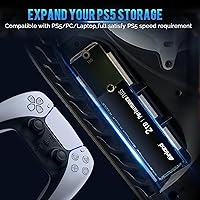
This Inland Gen4 drive makes the clearest case for PS5 storage expansion — it meets Sony's minimum speed requirements, fits the console's slot natively, and undercuts the price of many branded alternatives by a noticeable margin. PC gamers upgrading from a SATA SSD or older Gen3 drive will feel a real difference in game load times and large asset streaming. Content creators regularly moving high-resolution video files will benefit from the sustained write performance the DRAM cache enables. It also suits compact and mini PC builds well since the caseless design works without a heatsink. Buyers chasing absolute flagship performance may want to look elsewhere, but for value-focused upgrades it's hard to argue with.

User Feedback

With over 440 ratings averaging 4.6 stars, this NVMe SSD has built a genuinely strong reputation. Most praise clusters around easy installation, confirmed PS5 compatibility out of the box, and speeds that feel noticeably faster than whatever users replaced. On the critical side, a handful of owners flag that thermals can creep up during extended sequential writes without a heatsink — worth noting for warm or enclosed builds. A few buyers mention the absence of companion software. Those who compared it directly to the Samsung 980 Pro generally found the Inland offering solid on price-to-performance value. Given it launched in late 2021, the competitive landscape has tightened, but long-term reliability reports from early adopters have remained largely positive.

Pros

  • Confirmed PS5 compatibility right out of the box — no adapters, no guesswork.
  • DRAM cache keeps sustained write speeds from collapsing during long file transfers.
  • The 6-year limited warranty is genuinely rare at this price tier and adds real peace of mind.
  • Phison E18 controller is a proven, widely respected platform with a strong reliability track record.
  • Backward compatible with Gen3 slots, so it works in older systems without needing a new motherboard.
  • 1,400 TBW endurance is more than enough for the vast majority of everyday and gaming use cases.
  • Available in physical retail stores, which means easier returns and no waiting on shipping.
  • The caseless 2280 form factor fits nearly every desktop, laptop, mini PC, and console expansion slot.
  • Power management support helps reduce battery drain in laptops during light workloads.
  • Over 440 user ratings averaging 4.6 stars reflects consistently positive real-world experience since 2021.

Cons

  • No heatsink included — thermally constrained builds may see throttling during prolonged writes.
  • Companion software for firmware updates and health monitoring is minimal compared to Samsung or WD.
  • Peak 7,100 MB/s read speed is a best-case figure; mixed real-world workloads land noticeably lower.
  • The competitive landscape has shifted since 2021, and newer drives now challenge it at similar price points.
  • Random read and write performance at low queue depths trails some newer Gen4 alternatives.
  • No bundled cloning software makes migrating from an existing drive a slightly more manual process.
  • Buyers in regions outside Micro Center's footprint lose the brick-and-mortar advantage entirely.
  • No option for an integrated heatsink variant, unlike some competing drives that offer one in the box.

Ratings

The scores below reflect an AI-driven analysis of verified global user reviews for the INLAND Performance Plus 2TB NVMe SSD, with spam, bot-generated, and incentivized feedback actively filtered out before scoring. Each category is assessed against real-world usage patterns reported by buyers — not manufacturer claims — so both the strengths and the friction points are represented honestly. The result is a transparent, balanced scorecard that helps you cut through the noise and make a confident buying decision.

Sequential Read Performance
84%
Users upgrading from SATA or Gen3 NVMe drives consistently describe noticeably faster large file transfers and game installation times. In sequential benchmarks, the Performance Plus 2TB routinely posts results that impress at its price tier, validating the Phison E18 controller's reputation.
The advertised 7,100 MB/s figure is a ceiling, not a typical result — real-world sequential reads under mixed system load tend to land in the 6,400–6,800 MB/s range. A handful of reviewers noted disappointment after expecting the headline spec to appear in everyday usage.
Sustained Write Consistency
77%
23%
The DRAM cache does meaningful work here — users copying large video projects or running extended write operations report solid consistency compared to DRAMless budget alternatives that drop off sharply. Content creators specifically praised stability during multi-gigabyte file moves.
Under prolonged sequential write workloads without adequate cooling, some users observed speed throttling as the drive heats up — an issue more common in enclosed PS5 bays and slim laptops than in open desktop builds. The lack of an included heatsink makes this more likely in thermally restricted environments.
PS5 Compatibility
93%
This is one of the clearest wins for the drive — users across dozens of reviews confirm it installs in the PS5 expansion slot without adapters, registers correctly, and delivers a meaningful real-world improvement in game load times compared to the console's internal storage. Setup took most buyers under ten minutes.
A small number of PS5 users flagged that the drive runs warm during intensive gaming sessions without a heatsink attached, and Sony's bay offers limited airflow. It is not a widespread failure point, but buyers planning to run the drive hard in a PS5 should budget for a thin M.2 heatsink.
Random Read/Write Speed
71%
29%
For gaming and general desktop use — where the OS is constantly juggling small, scattered file accesses — the drive performs well enough that most users notice no lag or hesitation during normal multitasking and game traversal.
Random IOPS at low queue depths is where newer Gen4 competitors have pulled ahead since this drive launched in 2021. Users running database workloads or heavy virtualization may find the random performance less impressive relative to newer entrants at a similar price point.
Thermal Management
63%
37%
In well-ventilated desktop builds with M.2 heatsinks or active airflow across the slot, reviewers report stable temperatures even during extended file operations, and the drive maintains its performance without significant throttling.
Without a heatsink — which is not included — temperatures can climb fast under sustained writes in enclosed systems. This was one of the more consistent criticisms in long-form reviews, particularly from users in compact mini-PC builds or those who installed it in the PS5 without any thermal pad.
Value for Money
88%
Buyers who cross-shopped the Performance Plus 2TB against Samsung and WD equivalents repeatedly landed on it as the better deal — similar real-world performance, more storage per dollar, and a longer warranty. The price-to-performance ratio is the single most praised aspect across the entire review pool.
The Gen4 NVMe market has gotten more competitive since 2021, and a few newer drives now offer comparable or better specs at overlapping prices. The value proposition remains strong, but it is no longer the runaway deal it once was when fewer high-quality options existed at this tier.
Build & Reliability
86%
Long-term owners who have had the drive since its 2021 launch report no failures or data integrity issues after years of daily use. The 1,400 TBW rating and 1.6 million hour MTBF translate into genuine confidence, and the 4.6-star aggregate reflects a solid defect rate.
A small percentage of buyers reported dead-on-arrival units or early failures, which is within normal industry variance but worth flagging. Inland's RMA process, while backed by the 6-year warranty, is less streamlined than Samsung's or WD's dedicated support portals.
Installation Experience
91%
Reviewers across skill levels — from first-time PC builders to seasoned enthusiasts — described installation as straightforward. The standard 2280 form factor means it drops into virtually any compatible slot with no surprises, and PS5 users specifically appreciated that no screwdriver confusion or bracket frustration was involved.
The absence of bundled cloning software is a recurring minor complaint. Users migrating from an existing drive had to source their own migration tools, which added an extra step that cheaper or comparably priced competitors sometimes cover with included licenses.
Software Ecosystem
52%
48%
The drive works immediately without any software installation — it is fully plug-and-play across Windows, macOS, and Linux. For users who simply want storage that works, the absence of mandatory software is not a problem.
Inland provides no proprietary drive management utility, meaning users who want firmware updates, SMART health dashboards, or secure erase tools must rely on generic third-party solutions. This is a genuine gap compared to Samsung Magician or WD Dashboard, and it surfaces repeatedly in critical reviews.
Warranty & Support
89%
The 6-year limited warranty is above average for this product category and gives buyers real peace of mind — especially those purchasing for a console or long-term workstation where swapping drives frequently is not practical. Retail availability at Micro Center also simplifies in-person warranty resolution.
Outside of Micro Center's physical footprint, warranty support becomes entirely mail-based, and some users found communication slower than they expected from a consumer-facing brand. Inland does not yet match the responsiveness of Samsung or WD's dedicated support infrastructure.
Gaming Load Times
87%
On both PS5 and PC, reviewers noted genuine, measurable improvements in load times versus SATA SSDs and older Gen3 drives. Open-world games with heavy streaming assets were the most cited use case where the speed advantage felt tangible during actual play.
The gap between a Gen4 drive at 7,000 MB/s and a mid-tier Gen4 drive at 5,000 MB/s is nearly imperceptible in most game load scenarios — a reality some buyers only realized post-purchase. The drive is fast for gaming, but the top-tier spec does not always translate to top-tier in-game time savings.
Compatibility Breadth
92%
Users reported successful installs across a wide range of platforms — Windows desktops, MacBooks with M.2 slots, Linux workstations, PS5, mini PCs, and ultrabooks. Backward compatibility with Gen3 slots was specifically called out as a practical convenience by users upgrading incrementally.
A small number of users with older motherboards encountered initial recognition issues that required BIOS updates before the drive was detected — not unique to this brand, but worth noting for anyone running legacy hardware without recent firmware.
Power Efficiency
74%
26%
Laptop users who prioritized the L1.2 and ASPM power states found that the drive ran cooler and had a lighter impact on battery life during light browsing and document work than older NVMe drives they had used previously.
Under sustained workloads the drive draws more power, which is expected but can be noticeable in slim ultrabooks without active cooling. Users running this NVMe SSD in fanless or passively cooled portable systems flagged occasional thermal-related slowdowns during extended transfers.
Packaging & Presentation
66%
34%
The packaging is functional and protective — the drive arrived undamaged for the vast majority of buyers, and the retail box format is appropriate for an item stocked in physical stores.
Several reviewers described the packaging as sparse compared to premium-branded competitors. No accessories, no mounting screw for most buyers, and no documentation beyond a basic insert — which is fine for experienced users but felt underwhelming to those expecting a more complete unboxing experience.

Suitable for:

The INLAND Performance Plus 2TB NVMe SSD is a strong fit for PS5 owners who want to meaningfully expand their console's storage without paying a premium for a branded alternative — it slots in natively and meets Sony's speed requirements without fuss. PC gamers upgrading from an older SATA or Gen3 NVMe drive will notice a genuine improvement in game load times and large file handling, making it a worthwhile step up at a realistic price point. Content creators who regularly work with high-resolution video or large photo libraries will appreciate the DRAM cache keeping sustained write speeds from falling off a cliff mid-transfer, unlike cheaper DRAMless options. Mini PC builders and compact system enthusiasts benefit from the caseless 2280 form factor, which drops in without needing a heatsink or bracket adapter. Anyone who values buying from a physical store and wants long-term peace of mind from a 6-year warranty will also find this drive a sensible, low-risk choice.
Not suitable for:

Buyers chasing true flagship Gen4 performance — the kind that shows up in professional NVMe benchmarks and workstation-class workloads — will find that the INLAND Performance Plus 2TB NVMe SSD, while fast, sits a step below the absolute top tier in sustained random read performance under heavy mixed loads. Users running thermally constrained builds, particularly slim laptops or tightly packed cases with no airflow near the M.2 slot, should be aware that this drive ships without a heatsink and can throttle during prolonged sequential writes if temperatures climb. Those who rely on manufacturer companion software for drive health monitoring and firmware updates may be disappointed, as Inland's software ecosystem is thinner than what Samsung or WD offer. Buyers on the tightest possible budget may also find that newer competitors have entered this price bracket since this drive launched in 2021, sometimes offering comparable specs with fresher firmware. Finally, anyone who needs a U.2 or PCIe add-in card form factor will need to look elsewhere entirely.

Specifications

  • Capacity: This drive is available in a 2TB configuration, offering ample space for large game libraries, video projects, or mixed storage workloads.
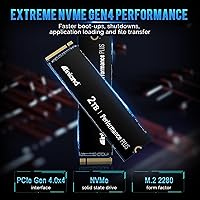
  • Interface: It uses a PCIe Gen4 x4 interface with NVMe 1.4 compliance, delivering roughly double the theoretical bandwidth of the previous Gen3 standard.
  • Form Factor: The drive follows the M.2 2280 specification, meaning it is 22mm wide and 80mm long — the most widely supported M.2 size across desktops, laptops, and the PS5.
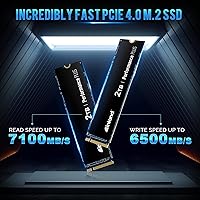
  • Read Speed: Sequential read speeds reach up to 7,100 MB/s under optimal conditions, though real-world mixed workloads will typically produce lower figures.
  • Write Speed: Sequential write speeds top out at up to 6,500 MB/s, again under ideal sequential test conditions rather than everyday mixed-use scenarios.
  • NAND Type: Storage cells are built on 176-layer 3D TLC (Triple-Level Cell) NAND flash, a mature technology balancing write endurance, speed, and cost.
  • Controller: The Phison E18 controller manages data operations and is one of the most established Gen4 NVMe controllers available, known for stable firmware and broad compatibility.
  • Cache: A dedicated DRAM cache is included, which helps sustain consistent performance during heavy sequential workloads and prevents the slowdowns common in DRAMless budget drives.
  • Endurance: The drive is rated for 1,400 TBW (Terabytes Written), which equates to writing approximately 200GB of data daily for nearly two decades under typical use.
  • MTBF: Mean Time Between Failures is rated at 1.6 million hours, reflecting the manufacturer's confidence in the drive's long-term operational stability.
  • Warranty: Inland backs this drive with a 6-year limited warranty, which is notably longer than the 5-year coverage offered by many competing Gen4 NVMe drives.
  • Heatsink: No heatsink is included in the box; buyers with thermally constrained builds or high sustained write workloads may want to source a compatible aftermarket heatsink separately.
  • Weight: The drive weighs 1.13 ounces (approximately 32 grams), making it light enough for any portable or compact system build.
  • PS5 Support: This drive is confirmed compatible with the PS5 expansion bay, meeting Sony's minimum speed threshold and fitting the slot natively without any adapter.
  • Power Management: It supports APST, ASPM, and L1.2 power management protocols, which help reduce idle power draw — a practical benefit for laptop installations.
  • Health Features: The drive supports SMART monitoring, TRIM commands, advanced wear leveling, bad block management, and over-provisioning for sustained drive health over time.
  • Availability: Unlike many online-only SSD brands, this drive is stocked in physical Micro Center retail locations, making in-person purchase and return straightforward.
  • Compatibility: Beyond PS5, it is broadly compatible with Windows, macOS, and Linux systems, and works in Gen3 M.2 slots at reduced speeds thanks to backward compatibility.

Related Reviews

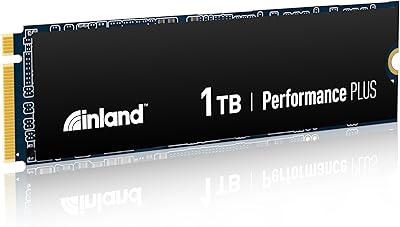
INLAND Performance Plus 1TB Gen4 NVMe SSD
82%
91%
Sequential Read Speed
83%
Sequential Write Speed
93%
PS5 Compatibility
61%
Thermal Performance
78%
Long-Term Reliability
More
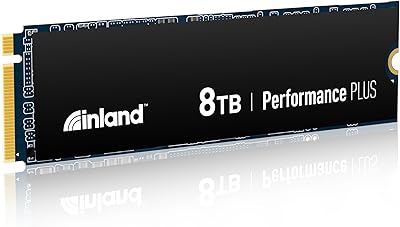
INLAND Performance Plus 8TB NVMe SSD
84%
93%
Sequential Read Performance
89%
Sequential Write Performance
84%
Random I/O Responsiveness
61%
Thermal Management
86%
Build & Hardware Quality
More
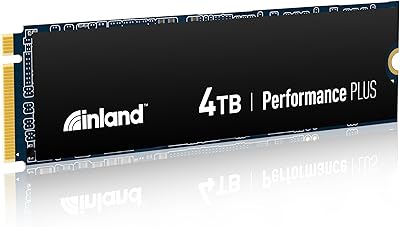
INLAND 4TB Performance Plus NVMe SSD
87%
91%
Performance
88%
Durability
87%
Ease of Installation
93%
Speed (Read/Write)
68%
Thermal Management
More
SanDisk 2TB SSD Plus M.2 NVMe SSD
86%
89%
Performance
92%
Ease of Installation
88%
Reliability
91%
Value for Money
90%
Capacity
More
Crucial P3 Plus 2TB NVMe SSD
80%
88%
Sequential Read Speed
61%
Sustained Write Performance
69%
Random Access Performance
91%
Value for Money
87%
Gaming Load Times
More
SABRENT Rocket 4 Plus 2TB NVMe SSD
83%
94%
Read/Write Performance
91%
Heatsink Build Quality
96%
PS5 Compatibility
88%
Thermal Management
83%
Value for Money
More
Inland TN470 2TB Gen4 NVMe M.2 SSD
82%
93%
Sequential Speed
91%
Value for Money
62%
Thermal Performance
96%
Installation Ease
78%
Random I/O Performance
More
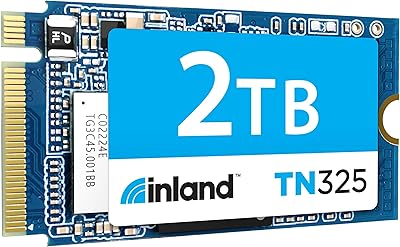
Inland TN325 2TB M.2 2242 NVMe SSD
84%
96%
Form Factor Fit
83%
Sequential Read Speed
78%
Sequential Write Speed
91%
Endurance & Longevity
93%
Installation Experience
More
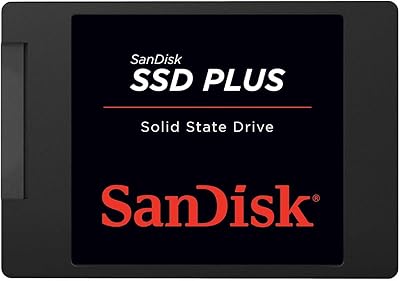
SanDisk SSD Plus 2TB Internal SSD
82%
88%
Read Speed Performance
74%
Write Speed Performance
94%
Installation & Compatibility
91%
Value for Money
86%
Long-Term Durability & Reliability
More
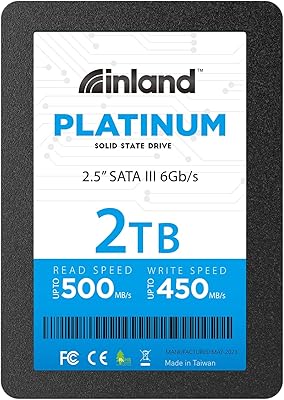
INLAND Platinum 2TB SATA III Internal SSD
84%
91%
Value for Money
78%
Read & Write Performance
93%
Installation Ease
71%
Long-Term Reliability
89%
Compatibility
More

FAQ

Yes, the INLAND Performance Plus 2TB NVMe SSD fits the PS5 expansion slot natively and functions without a heatsink — Sony's own guidelines say a heatsink is recommended but not required. That said, if you plan on long gaming sessions in a warm room or enclosed entertainment cabinet, adding a low-profile heatsink is a cheap precaution worth taking.
It will work fine — the drive is backward compatible with PCIe Gen3 slots. You just will not get Gen4 speeds; it will operate at Gen3 bandwidth instead, which is still significantly faster than a SATA SSD.

That peak figure is measured under ideal sequential read conditions in a controlled benchmark. In everyday use — game loading, file copying, OS tasks — you will typically see lower numbers, especially for random read and write operations at low queue depths. It is still a fast drive; just do not expect that headline number in your daily usage stats.

Inland is Micro Center's house SSD brand, and the Performance Plus line is built on the Phison E18 controller — the same platform used inside drives from much more expensive brands. It has been on the market since late 2021 with consistently positive user feedback and a 4.6-star average across hundreds of reviews. The 6-year warranty also signals the manufacturer is confident in longevity.

No software is required. The drive is plug-and-play once installed in a compatible slot. However, Inland does not offer robust companion software for drive health monitoring or firmware updates, so if you want to check SMART data you will need a third-party tool like CrystalDiskInfo on Windows.

The 1,400 TBW endurance rating is very generous for typical home or gaming use. If you write around 50GB per day — which is already a heavy workload for most users — the drive would take over 75 years to hit that limit. For practical purposes, you are far more likely to upgrade before the drive wears out.

The drive ships without a heatsink. If you need one — for example in a PS5 or a tightly packed PC case — you will need to purchase a compatible M.2 heatsink separately. They are inexpensive and widely available. For most standard desktop or laptop installs with reasonable airflow, the drive handles heat adequately on its own.

In sequential speed benchmarks they perform similarly, since both use high-tier Gen4 controllers. The Samsung 980 Pro offers a more polished software ecosystem including Samsung Magician for monitoring and firmware updates. The Inland option generally comes in at a lower price point and offers a longer warranty, making it a compelling alternative if software tools are not a priority for you.

Technically you can put it in an M.2 NVMe USB enclosure, and it will work as an external drive. Just keep in mind the drive is designed and optimized for internal installation, and USB bandwidth will bottleneck its performance well below its Gen4 capability. It is not the most cost-efficient choice for external storage use specifically.

No cloning software is bundled in the box. If you want to migrate your existing OS or data without a fresh install, you will need a free third-party tool like Macrium Reflect Free or Clonezilla, or a paid option like Acronis. It is a small inconvenience, but worth planning for before you pull your old drive.

Where to Buy