Overview

The Ilford Simplicity B&W Film Development Kit is Ilford's answer to one of analog photography's biggest friction points: getting your first roll developed without a chemistry degree. What makes it distinct from most darkroom starter options is the single-use sachet format — no measuring jugs, no wondering whether that bottle of developer is still good. Everything needed to take a 120 roll from exposed to fixed negative is included: developer, stop bath, and fixer. This is not a kit built for high-volume shooters watching their cost-per-roll. It is built for consistency, simplicity, and giving medium-format beginners a reliable first experience in the darkroom.
Features & Benefits

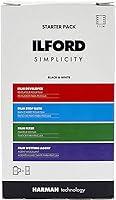
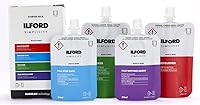
The most practical aspect of the Ilford Simplicity kit is what it removes from the equation. There is no need for a digital scale, a set of graduated cylinders, or a mixing chart taped to the wall. Each sachet holds a pre-measured liquid concentrate that you simply dilute with water — correct ratios, every time, without thinking about it. Because the chemistry is single-use, there is no risk of pouring from a half-exhausted developer and ending up with thin, underdeveloped negatives. The complete set covers every stage of the process, and the compact box takes up almost no shelf space, which matters more than people expect when working in a small bathroom darkroom.

Best For

This sachet-based developing kit makes the most sense for a few specific types of photographers. If you are just starting out and have never touched darkroom chemicals before, the pre-measured format is genuinely reassuring — there is no way to accidentally overdose or under-dilute. It suits shooters who only develop a handful of rolls per year just as well; bulk chemistry like D-76 or HC-110 goes stale, and this kit sidesteps that problem entirely. Medium-format photographers shooting 120 film will find it fits their workflow without any conversion math. Workshop instructors also find real value here, since every participant gets identical chemistry and consistent results are easier to troubleshoot and teach from.

User Feedback

With over a hundred ratings averaging 4.6 out of 5 stars, the Ilford Simplicity kit earns its reputation mostly on predictability. Beginners frequently mention that their first roll came out correctly exposed and well-fixed, which is far from guaranteed with other entry-level chemistry setups. The most consistent criticism comes from experienced film photographers who point out the higher cost per roll compared to mixing bulk chemistry yourself — a fair observation, since this kit was never positioned for heavy shooters. A few reviewers also noted that the instructions, while clear, assume you already have a development tank and thermometer on hand, neither of which are included in the box.

Pros

  • Pre-measured sachets mean you cannot accidentally mis-dilute your chemistry, which is a genuine risk for first-time developers.
  • Everything needed for a complete development cycle — developer, stop bath, and fixer — comes in a single box.
  • Single-use format eliminates the worry of working with exhausted or contaminated chemistry.
  • Ilford is one of the most respected names in analog photography, and the chemistry quality reflects that reputation.
  • The compact packaging fits easily in a camera bag or a small storage drawer.
  • Mixing is as straightforward as it gets: add water, develop film.
  • Negatives processed with this starter chemistry kit are archival-stable when fixed correctly.
  • Rated 4.6 out of 5 stars across over 100 real buyer reviews, with consistent praise for reliable results.
  • An excellent option for workshop settings where repeatable, uniform chemistry is important.
  • Removes the intimidation factor of darkroom chemistry for photographers just getting started.

Cons

  • Cost per roll is noticeably higher than mixing from bulk chemistry like HC-110 or D-76.
  • No developing tank, thermometer, or film retrieval tools are included, which surprises some first-time buyers.
  • Single-use sachets generate more packaging waste than reusable bulk chemistry bottles.
  • Experienced photographers have no ability to adjust the developer formula for creative or technical effects.
  • The kit does not offer flexibility for pushing or pulling film with modified development times and dilutions.
  • Buying enough sachets for a high-volume shooting habit adds up quickly in cost.
  • Limited to a specific chemistry profile, so it cannot replace a more versatile darkroom setup long-term.
  • Some buyers have noted that instructions, while clear, assume a basic familiarity with the development process that true beginners may not have.

Ratings

The scores below were generated by AI after analyzing verified buyer reviews for the Ilford Simplicity B&W Film Development Kit from multiple global sources, with spam, incentivized, and bot-flagged submissions actively filtered out. Both the genuine strengths and the recurring frustrations reported by real photographers are transparently reflected in each category. This sachet-based developing kit earns high marks in some areas and shows clear limitations in others — and the breakdown below tells you exactly where it lands.
Ease of Use
93%
Photographers who had never touched darkroom chemistry before consistently reported successful first-roll results, largely because the pre-measured sachets remove every step where measurement errors typically occur. There is no calculating dilution ratios or second-guessing whether a concentrate is still active — you open, mix with water, and develop.
A small number of reviewers noted that the instructions, while accurate, assume you already understand the basic sequence of film development, which left a handful of complete novices momentarily confused about the order of steps. A short beginner-oriented diagram in the packaging would address this gap.
Consistency of Results
91%
Repeat buyers were notably vocal about how repeatable their negatives came out across different rolls and sessions, which is not always guaranteed when manually measuring bulk chemistry. Workshop instructors in particular praised the uniformity it produced across multiple participants using separate kits simultaneously.
A few experienced photographers pointed out that because the chemistry formula is fixed, there is no way to push or pull film development by adjusting dilutions, which means results can feel rigid compared to a more hands-on chemistry workflow using developers like Rodinal or HC-110.
Value for Money
58%
42%
For a first-time developer who would otherwise need to purchase a developer, stop bath, and fixer separately — plus measuring equipment — the all-in-one format represents a reasonable initial outlay. The convenience factor genuinely justifies the price for occasional shooters who develop only a few rolls per year.
The cost-per-roll is significantly higher than bulk chemistry alternatives; experienced photographers noted that switching to a concentrate like HC-110 or mixing D-76 from powder can reduce per-roll chemical costs by a factor of three or more. Anyone developing more than ten rolls a year will feel the cost gap quickly.
Chemistry Quality
88%
Ilford's formulation produces clean, well-developed negatives with solid shadow detail and highlight control across a range of commonly shot films including HP5 Plus and Kodak Tri-X. The fixer stage produces stable, properly cleared negatives that hold up well under normal archival storage conditions.
The developer included is a general-purpose formula, not a fine-grain or high-acutance specialist chemistry, so photographers chasing the absolute sharpest grain structure for large prints may find it less satisfying than dedicated developers tuned for specific film stocks.
Packaging & Storage
84%
The overall package is genuinely compact and lightweight, which makes it easy to store in a small bathroom cabinet or tuck into a camera bag for travel. Individual sachets are sealed well enough that buyers reported no leakage issues during shipping, even internationally.
Because each kit is single-use, the packaging generates more waste per roll developed than a bulk chemistry system. Some environmentally conscious buyers flagged this as a meaningful downside over time, particularly when developing more than a handful of rolls per season.
Film Format Compatibility
74%
26%
For medium-format photographers working with 120 film, the kit slots directly into their workflow without any volume conversion or adjustment. The sachet volumes are well-calibrated for standard 120 roll development in commonly used tank sizes.
Buyers shooting 35mm film found the kit less economically sensible, since the sachet volumes are sized around 120 rolls and result in leftover mixed chemistry that must be discarded. The kit is not positioned or optimized for 35mm use, and this catches some buyers off guard.
Beginner Accessibility
92%
The single biggest source of positive feedback from first-time developers was the confidence the format gives them — knowing the chemistry ratio is already correct removes a genuine source of anxiety for anyone new to the darkroom. Several reviewers mentioned developing their very first roll successfully on the first attempt.
The kit does not come with any of the physical equipment needed to actually develop a roll, and a few buyers were surprised to discover they still needed a developing tank, thermometer, and changing bag before they could use it. Clearer labeling about required accessories would help set expectations.
Sachet Integrity
82%
18%
The vast majority of buyers reported receiving sachets in perfect condition with no signs of leakage, swelling, or prior activation. The liquid concentrate format holds up well during standard postal and courier handling, which is a legitimate concern with any liquid chemistry shipment.
A small number of reviewers across different purchase dates mentioned receiving one sachet that appeared slightly compromised on arrival, though this appeared to be an isolated shipping handling issue rather than a systemic packaging defect. It was not a widespread complaint.
Development Time Guidance
77%
23%
The included instructions provide clear baseline development times for commonly used film stocks, which is enough to get beginners started with confidence. Ilford's online massive dev chart also supplements the kit with more comprehensive time and temperature data.
Photographers working with less common or newer film stocks found the printed guidance limited, requiring them to consult external resources for accurate development times. The kit would benefit from directing buyers more explicitly to Ilford's online resources for expanded film data.
Environmental Impact
51%
49%
The small overall package size does reduce raw material use compared to purchasing three separate full-size bottles of chemistry, and the compact format means lower shipping weight per session when ordered online.
Single-use sachets inherently produce more waste per roll than reusable bulk chemistry bottles, and the mixed chemistry still requires responsible disposal following local hazardous waste guidelines. Environmentally focused photographers consistently flagged this trade-off as a meaningful concern with this format.
Brand Reputation
94%
Ilford carries genuine credibility in the analog photography community built over decades of producing film and chemistry trusted by professionals and hobbyists alike. Buyers explicitly cited the Ilford name as a factor in their purchase decision, particularly when comparing against lesser-known chemistry alternatives.
The strong brand name means some buyers arrive with very high expectations that the simplified kit format cannot fully meet, particularly experienced photographers who are used to the broader control that Ilford's more advanced chemistry lines offer.
Instruction Clarity
79%
21%
Most buyers found the step-by-step mixing and development instructions clear and straightforward enough to follow on a first attempt, with logical sequencing that mirrors the actual development process. The language avoids unnecessary technical jargon for beginners.
A recurring observation was that the instructions do not cover temperature correction tables or alternative development times for different temperatures, which can be important when working in a home environment where water temperature is not always easy to control precisely.
Archival Performance
83%
Negatives processed through the complete developer-stop-fixer cycle in this kit show good long-term stability under standard cool, dry storage conditions. Photographers who scanned their negatives months after development reported no visible deterioration or silver mirroring.
Archival quality ultimately depends as much on the fixer wash stage and storage conditions as on the chemistry itself, and the kit does not include a hypo-clearing agent or washing aid, which some photographers consider essential for maximum long-term negative stability.

Suitable for:

The Ilford Simplicity B&W Film Development Kit is the right choice for anyone who wants to start developing their own film at home without investing heavily in equipment or chemical knowledge upfront. If you have shot your first few rolls of 120 medium-format film and want to process them yourself, this kit removes nearly every logistical obstacle that typically stops beginners cold — no scale, no measuring cylinders, no sourcing three separate chemicals. It also makes a lot of sense for casual or infrequent shooters who develop maybe five or ten rolls a year; bulk chemistry like HC-110 or D-76 has a shelf life once opened, and this sachet format sidesteps that waste problem entirely. Photography educators and workshop instructors will find it particularly useful because every participant works with identical, pre-measured chemistry, which means consistent results across the board and fewer variables to troubleshoot. If you travel and want to process film on the road with minimal kit, the compact, lightweight packaging makes this a genuinely practical option.

Not suitable for:

The Ilford Simplicity B&W Film Development Kit is not the right fit for photographers who develop regularly and are paying close attention to their cost per roll. Once you are running ten or more rolls a month, the economics of single-use sachets become difficult to justify compared to bulk concentrates, where the cost difference can be substantial over time. Experienced darkroom workers who already have a preferred developer — whether that is Rodinal for its sharpness, or a compensating developer for pushing film — will find this kit too limiting in terms of creative chemistry control. It also does not include the hardware side of the process: no developing tank, no thermometer, no film retrieval tool. First-time buyers who assume everything needed to process a roll is in the box may be caught off guard. If you primarily shoot 35mm rather than 120 format, you should verify compatibility before purchasing, as the kit is specifically formulated and packaged around medium-format use.

Specifications

  • Brand: Manufactured by Ilford, a UK-based company with a long-standing reputation in black-and-white analog photography materials.
  • Model: Ilford Simplicity, a single-use chemistry line designed specifically for straightforward home film development.
  • Film Format: Formulated and packaged for 120 medium-format film, the standard roll size used in most medium-format cameras.
  • Chemistry Included: Each kit contains three chemical stages: a black-and-white film developer, a stop bath, and a fixer, covering the full development process.
  • Sachet Format: Chemistry is supplied as pre-measured liquid concentrate sachets that are diluted with water immediately before use.
  • Mixing Method: Each sachet is designed to be mixed with a specified volume of water at the point of use, requiring no measuring equipment.
  • Single-Use Design: Each sachet provides one complete development session and is discarded after use, eliminating the risk of degraded or exhausted chemistry.
  • Dimensions: The retail package measures 6.4 x 3.6 x 3.3 inches, making it compact enough for small storage spaces or camera bags.
  • Item Weight: The package weighs 0.16 ounces, making it one of the lightest darkroom chemistry options available for travel or field use.
  • Negative Stability: Negatives developed and fixed with this kit are archival-stable under proper storage conditions, resisting deterioration over time.
  • Skill Level: Designed to be accessible to first-time developers while remaining reliable enough for experienced photographers who prioritize convenience.
  • Best Sellers Rank: Ranked #11 in the Darkroom Chemicals category on Amazon, reflecting sustained buyer demand since its introduction.
  • Average Rating: Holds a 4.6 out of 5 star average rating based on 101 verified customer ratings at the time of this review.
  • First Available: The product was first listed for sale in April 2019 and has maintained consistent availability since launch.
  • ASIN: The Amazon Standard Identification Number for this product is B07QKFWMX8, useful for locating the correct listing.

Related Reviews
CineStill CS41 32oz C-41 Film Developing Kit
84%
88%
Ease of Use
91%
Color Accuracy
89%
Value for Money
86%
Process Reliability
84%
Kit Completeness
More
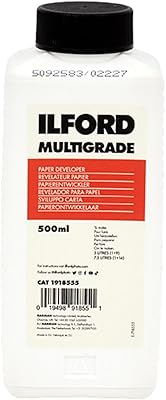
Ilford Multigrade Paper Developer 500ml
84%
94%
Result Consistency
91%
Tonal Range & Contrast
88%
Archival Stability
89%
Ease of Use
71%
Value for Volume
More
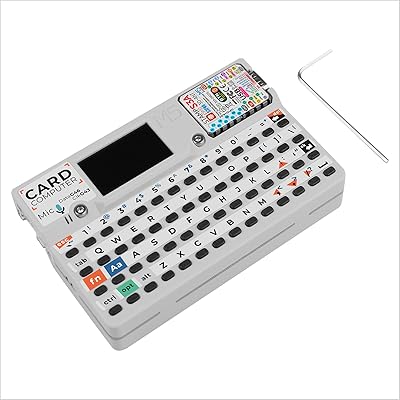
M5Stack Cardputer v1.1 Development Kit
84%
88%
Performance
94%
Connectivity Options
91%
Portability & Size
60%
Battery Life
85%
Ease of Use
More
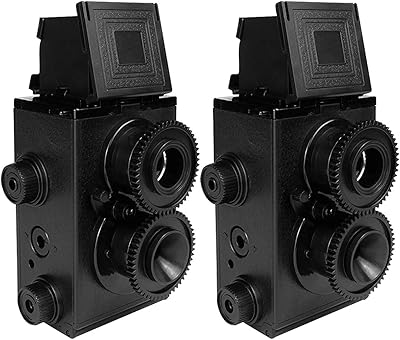
DEVMO Recesky TLR Camera Kit 2-Pack
74%
78%
Assembly Experience
44%
Instruction Clarity
81%
Value for Money
53%
Image Quality
51%
Build Quality & Durability
More
Ilford Sprite 35-II 35mm Film Camera
70%
93%
Ease of Use
61%
Image Quality
58%
Build Quality
63%
Flash Performance
82%
Value for Money
More
NVIDIA Jetson Orin Nano Super Developer Kit (8GB)
84%
94%
AI Inference Throughput
91%
Prototyping Versatility
88%
Software Ecosystem & SDKs
86%
Robotics Integration
83%
Edge Computing Efficiency
More
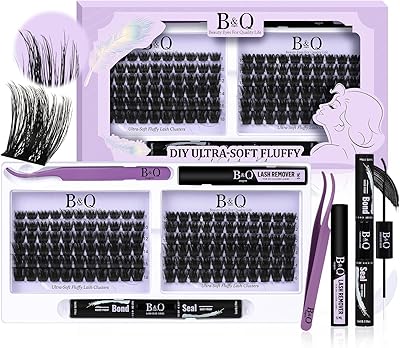
B&Qaugen Lash Extension Kit F01 144 PCS
87%
88%
Ease of Application
90%
Customizability of Lash Length
94%
Natural Look & Feel
92%
Kit's Value for Money
86%
Lash Durability
More
Vilros Raspberry Pi Zero 2 W Starter Kit
86%
91%
Value for Money
88%
Build Quality
85%
Setup & Installation
84%
Performance
90%
Accessories Included
More
Adafruit Circuit Playground Express
85%
93%
Beginner Accessibility
91%
Onboard Feature Density
89%
CircuitPython Experience
84%
Build Quality & Durability
96%
Documentation & Community Support
More
SunFounder Raspberry Pi Pico W Ultimate Starter Kit
81%
91%
Curriculum Quality
88%
Component Variety
78%
Beginner Accessibility
86%
IoT & Connectivity Features
84%
Value for Money
More

FAQ

The kit is specifically packaged and marketed for 120 medium-format film. While the chemistry itself is not physically incompatible with 35mm, the sachet volumes are sized for 120 rolls, so using it for 35mm may result in more chemistry than you actually need per session, which adds to the cost without benefit.

Yes, the kit only covers the chemistry side of the process. You will still need a daylight-loading developing tank compatible with 120 film, a thermometer to monitor solution temperature, and a film retrieval tool or changing bag to load the film onto the reel in complete darkness. None of those are included.

Each kit is designed as a single-use set, meaning one purchase covers one complete development session for one 120 roll. If you plan to develop multiple rolls, you will need to buy multiple kits, which is worth factoring into your cost calculations.

It is one of the more approachable options available for first-timers. The Ilford Simplicity B&W Film Development Kit removes the most error-prone steps, like measuring chemical concentrations, by providing everything pre-measured in individual sachets. That said, you still need to follow correct development times and temperatures, so reading Ilford's official instructions beforehand is strongly recommended.

Standard black-and-white film development is typically carried out at 20°C (68°F). Ilford's chemistry for this kit follows that convention. Deviating significantly from the recommended temperature will affect your development times and can lead to under- or over-developed negatives, so a reliable thermometer is essential.

The sachets are formulated as a single-use system, and the chemistry should be discarded after one development session. Trying to store mixed chemistry for reuse is not recommended; the concentrations and activity levels are calibrated for one-time use, and reusing spent chemistry is a common cause of thin, underdeveloped negatives.

Used darkroom chemistry should never be poured down a household drain in large quantities. The fixer in particular contains silver compounds after use and should be disposed of according to your local hazardous waste guidelines. For occasional home use at these small volumes, many municipalities permit diluted disposal with running water, but checking local regulations first is the responsible approach.

On a cost-per-roll basis, no. Bulk developers like HC-110 or D-76 work out significantly cheaper once you account for how many rolls they can process. This starter chemistry kit trades cost efficiency for convenience and consistency, which is a worthwhile trade-off for beginners or infrequent shooters, but less so for anyone developing regularly.

Unopened liquid concentrate sachets from Ilford generally have a shelf life of around two years when stored in a cool, dark place away from temperature extremes. Always check the packaging for any printed expiry date, and avoid storing the kit in a car or anywhere subject to heat fluctuations, as this can degrade the chemistry faster.

The chemistry is compatible with the vast majority of standard black-and-white film stocks, including popular options like Ilford HP5 Plus, Kodak Tri-X, and similar chromogenic-free films. It is not suitable for C-41 process black-and-white films like Kodak BW400CN or Ilford XP2, which require color chemistry to develop correctly.

Where to Buy