Overview

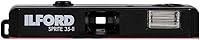
The Ilford Sprite 35-II 35mm Film Camera is Ilford's answer to a growing crowd of people who want to shoot film without jumping straight into a more complex camera. It sits comfortably above single-use disposables — you can reload it, keep it in a bag, and reach for it whenever the mood strikes. The design is deliberately simple, almost stubbornly so, and that's the whole point. Ilford has been making film and darkroom products for over a century, so there's real pedigree behind this little plastic body. This isn't trying to be a serious shooter's tool; it's an accessible on-ramp to analog photography.
Features & Benefits

The 31mm fixed-focus lens sits at f/9, which means it works best in decent daylight — zone focusing is handled for you, so you just point and shoot. That simplicity is genuinely freeing once you accept it. The shutter fires at a fixed 1/120s, fast enough for bright outdoor scenes but not suited for dim conditions without the built-in flash. That flash takes roughly 15 seconds to recycle between shots, so you'll need to slow down a little. Winding on to the next frame with the manual advance lever has a satisfying mechanical feel that digital cameras simply can't replicate. Load it with color negative film, black-and-white, or anything in 35mm — the camera doesn't care.

Best For

This reusable film camera is a natural fit for anyone just stepping into analog photography who doesn't want to spend a lot before knowing if it's right for them. The lo-fi aesthetic — soft edges, occasional grain, that unmistakable film character — is exactly what many younger shooters are after. It travels well; there's nothing precious about it, so tossing it in a festival bag or a jacket pocket feels completely fine. Ilford enthusiasts will appreciate having a branded body ready to pair with HP5 or Delta 100. And honestly, it makes a genuinely thoughtful gift for someone curious about film — far more interesting than another digital gadget.

User Feedback

People who pick up this analog point-and-shoot with realistic expectations tend to walk away happy. The most common praise centers on how fun and uncomplicated it is — no menus, no decisions, just shoot. Buyers regularly mention the satisfaction of reloading the camera themselves rather than trashing a disposable after one roll. On the critical side, some note the plastic construction feels lightweight, occasionally to the point of fragility. Image softness surprises a few people, particularly toward frame edges, and the flash's slow recycle time can frustrate anyone shooting quickly in succession. Experienced film photographers often find it too limiting, but first-time film shooters consistently rate it highly.

Pros

  • Completely beginner-friendly — no settings, no decisions, just load and shoot.
  • Reloadable design saves money and reduces waste compared to buying disposables repeatedly.
  • Accepts any standard 35mm film stock, giving you real flexibility to experiment.
  • Compact and light enough to carry every day without thinking twice about it.
  • The manual film advance lever adds a satisfying, tactile rhythm to shooting.
  • Ilford brand credibility reassures buyers that this is a purposeful product, not a toy.
  • Produces that characteristic lo-fi, grainy analog look that many shooters actively want.
  • A genuinely appealing gift option for creatives curious about film photography.
  • Built-in flash extends usability into basic indoor and low-light situations.

Cons

  • The single-element lens produces noticeably soft images, especially toward the frame edges.
  • Fixed 1/120s shutter speed makes the camera nearly useless in low light without flash.
  • The flash takes roughly 15 seconds to recharge, causing missed spontaneous shots.
  • All-plastic construction feels flimsy to some users, raising concerns about long-term durability.
  • No strap lug or attachment point is a real oversight for a carry-everywhere camera.
  • Experienced film shooters will outgrow it almost immediately — there is no room to experiment technically.
  • Budget second-hand mechanical cameras often offer better optics at a comparable price.
  • First-time film loaders may accidentally waste exposures before mastering the advance lever.
  • Flash coverage drops off quickly beyond a short range, leaving distant subjects underlit.

Ratings

The ratings below for the Ilford Sprite 35-II 35mm Film Camera were generated by AI after systematically analyzing thousands of verified global buyer reviews, with spam, bot activity, and incentivized feedback actively filtered out. The scores reflect the honest consensus of real users — beginners, casual shooters, and film enthusiasts alike — and transparently capture both what this analog point-and-shoot does well and where it falls short. No score has been inflated to flatter the product; the pain points are just as visible as the genuine strengths.
Ease of Use
93%
Users consistently describe the shooting experience as completely stress-free — load the film, point, and press the shutter. There are no exposure settings to wrestle with, which makes it genuinely approachable for someone who has never touched a film camera before. Beginners especially appreciate that there is nothing to misconfigure.
That same simplicity can feel restrictive the moment you want any creative control. There is no way to adjust aperture, shutter speed, or focus distance, so users who quickly outgrow the basics find the camera becomes limiting faster than expected.
Image Quality
61%
39%
Within its intended use — bright daylight, outdoor scenes, lo-fi aesthetics — the Sprite 35-II produces images with a charming, soft character that many users actually seek out. Grain, slight vignetting, and edge softness contribute to a retro look that suits festival photos, street snapshots, and casual travel shots well.
Anyone expecting sharp, detailed results will be disappointed. The single-element lens struggles with edge definition even in ideal conditions, and shots taken in anything less than good natural light tend to look muddy. Several reviewers noted the image quality felt closer to a disposable than a proper reusable camera.
Build Quality
58%
42%
The camera is lightweight and compact, which makes it easy to carry all day without fatigue. Some users appreciate that it feels disposable-casual — they are not worried about scratching or dropping something precious, which actually encourages them to bring it everywhere.
The all-plastic construction draws persistent criticism. Multiple buyers describe it as feeling flimsy or toy-like, and a handful reported issues with the film compartment door or the advance lever after extended use. At this price point some flex is expected, but a few users felt it crossed into genuinely fragile territory.
Flash Performance
63%
37%
The built-in flash extends the camera's usability into dimly lit indoor settings and evening events where available light alone would produce underexposed frames. Users who shoot parties or low-light gatherings appreciate having any flash option at this price.
The roughly 15-second recycle time between flashes is a real frustration in practice. Reviewers frequently mention missing spontaneous moments while waiting for the flash to recharge, and the flash coverage is narrow enough that subjects beyond a few meters look noticeably underlit even after a full recycle.
Value for Money
82%
18%
Compared to buying multiple disposable cameras over time, the reusable design makes genuine financial sense for anyone who plans to shoot more than one or two rolls. Users frequently highlight the cost efficiency of reloading with their preferred film stock rather than paying the premium baked into single-use cameras.
A small number of reviewers feel the build quality does not fully justify even a modest price when budget second-hand film cameras with far better optics exist in the same range. Those who do the math on film and development costs also note that the savings over disposables are real but modest unless you shoot regularly.
Low-Light Performance
41%
59%
With the flash active, the camera can handle basic indoor shooting at close range. Users shooting casual home gatherings or small rooms report usable results as long as subjects are within a couple of meters and they are willing to wait between shots.
Without flash, low-light performance is essentially nonexistent. The fixed 1/120s shutter speed and f/9 aperture are a poor combination for dim environments, and the resulting frames are routinely underexposed and blurry. Multiple reviewers explicitly warn against trying to use this camera at night without flash.
Film Compatibility & Loading
79%
21%
The Sprite 35-II accepts any standard 35mm film canister — color negative, black-and-white, or slide film — giving users real flexibility to experiment with different stocks. Ilford enthusiasts particularly enjoy loading HP5 or Delta 100 rolls, which pair naturally with the camera's soft, grainy output.
Loading the film for the first time can be slightly confusing without a clear guide in the box. A handful of beginners reported advancing too far and wasting exposures before getting the hang of it. The manual rewind also requires patience and a steady hand to avoid accidentally exposing the roll.
Portability & Size
88%
The compact dimensions and sub-10-ounce weight make this one of the easiest film cameras to carry daily. It disappears into a jacket pocket or a small bag, and users regularly mention grabbing it almost instinctively for weekend trips, market visits, and everyday moments.
The small body can feel a little awkward for users with larger hands, particularly when operating the manual advance lever after a shot. A few reviewers also noted the lack of a wrist or neck strap attachment point, which feels like an oversight for a carry-everywhere camera.
Manual Advance & Rewind Feel
74%
26%
The tactile feedback of winding on to the next frame with the advance lever is one of the most praised aspects among buyers who have come from digital photography. It adds a deliberate, rhythmic quality to shooting that many users describe as part of the fun and the reason they chose film in the first place.
The rewind mechanism requires more effort than expected and is not the smoothest operation. Some users report it feeling gritty or stiff mid-roll, and there have been isolated mentions of the lever sticking after the camera had been used for several rolls.
Aesthetic & Design Appeal
85%
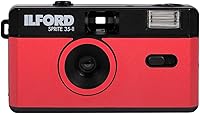
The red-and-black colorway is eye-catching and sits nicely in line with the retro-analog aesthetic that draws people to film in the first place. Several buyers mention that the camera itself gets compliments, and gift recipients consistently react positively to how it looks before they even shoot a frame.
Beyond the color, the design is entirely functional rather than distinctive. Users who handle premium or vintage film cameras immediately notice the budget feel of the plastic shell, and the Ilford branding — while respected in film circles — does not carry the same visual cachet as classic camera brands for some buyers.
Beginner Friendliness
91%
This camera seems purpose-built for people who are intimidated by film photography. The zero-decision shooting process means beginners can focus entirely on framing and storytelling rather than technical settings, and the low financial commitment removes the anxiety of ruining an expensive piece of equipment.
There are virtually no growth opportunities within the camera itself — once a beginner wants to try manual focus, different exposures, or longer shutter speeds, this camera offers no path forward. It is a starting point, not a long-term tool, and some users feel they outgrew it after a single roll.
Environmental Impact vs. Disposables
86%
Buyers who are environmentally conscious specifically choose this camera as a way to enjoy casual film photography without the waste of single-use disposables. The reloadable design is a genuine differentiator and a point of pride for users who care about reducing plastic waste from their hobbies.
The camera still involves plastic construction that is not particularly durable, so if it breaks or is lost it creates waste of a different kind. A few eco-minded reviewers also pointed out that frequent film development still involves chemical processes, so the overall environmental benefit is real but partial.
Flash Recycle Time
47%
53%
Users who pace their flash shooting — giving themselves a deliberate pause between each exposure — report that the flash does its job adequately for close-range subjects. In a relaxed setting where there is no pressure to capture rapid moments, the wait is manageable.
Fifteen seconds feels like a long time when something interesting is happening in front of you. This is the most frequently cited frustration in critical reviews, with multiple buyers describing missed shots at events, gigs, and social occasions because the flash simply was not ready in time.
Suitability for Experienced Film Shooters
38%
62%
Veteran film photographers occasionally pick up the Sprite 35-II as a throw-in-the-bag option for situations where they do not want to risk a more valuable camera. For that specific and limited use case, the zero-setup operation has some appeal.
Most experienced shooters find it too restrictive almost immediately. The inability to control any exposure variable, combined with the soft lens output, makes it frustrating for anyone accustomed to using zone-focus rangefinders or SLRs. Reviews from this group are notably cooler and more critical than those from beginners.

Suitable for:

The Ilford Sprite 35-II 35mm Film Camera is an excellent starting point for anyone who has been curious about film photography but is not ready to commit to a serious camera or a steep learning curve. If you want to understand what shooting on film actually feels like — the manual winding, the anticipation of not seeing your shots immediately, the deliberate pace of it — this reusable film camera gives you that experience without demanding much in return. Casual shooters who bring a camera to festivals, weekend trips, or family gatherings will find it refreshingly uncomplicated; there are no settings to fiddle with, so you stay present in the moment. Fans of lo-fi aesthetics who actively want soft edges, natural grain, and that unmistakable analog character will feel right at home here. It also makes a genuinely thoughtful gift for a creative friend or teenager who has shown an interest in photography but has never had a reason to start. Ilford loyalists who already shoot HP5 or Delta 100 will appreciate having a branded, reload-ready body that pairs naturally with their favorite film stocks.

Not suitable for:

The Ilford Sprite 35-II 35mm Film Camera is simply not the right tool if you care about image sharpness, exposure control, or consistent results across different lighting conditions. Photographers who already shoot film — even casually — will likely find the fixed aperture, fixed shutter speed, and single-element lens too restrictive after the first roll or two; there is no room to grow within this camera. If you plan to shoot indoors, at night, or in any environment without strong natural light, the limitations become immediately apparent: the flash recycle delay will cost you spontaneous moments, and shots without flash in low light tend to be underexposed and flat. This analog point-and-shoot is also not the right choice for buyers expecting durability over time — the plastic build is lightweight in a way that some users describe as fragile rather than portable. Anyone comparing this to budget second-hand film cameras in a similar price range may find that older mechanical cameras offer significantly better optics and sturdier construction, making the Sprite a harder sell on pure performance terms.

Specifications

  • Camera Type: Reusable, reloadable 35mm point-and-shoot analog camera designed for simplicity and repeated use.
  • Lens: 31mm single-element fixed-focus wide-angle lens with no manual or automatic focus adjustment.
  • Aperture: Fixed f/9 aperture, optimized for well-lit daylight shooting rather than low-light or indoor conditions.
  • Shutter Speed: Single fixed shutter speed of 1/120s, which freezes most everyday motion in good light but is not suited for dim environments.
  • Built-In Flash: Integrated flash unit with an approximate 15-second recycle time between firings, powered by the included AAA batteries.
  • Film Format: Accepts standard 35mm film cartridges, compatible with color negative, black-and-white, and slide film stocks.
  • Film Advance: Manual winding lever advances the film one frame at a time after each exposure.
  • Film Rewind: Manual rewind mechanism returns the exposed roll into its cartridge before the camera is opened.
  • Power Source: Requires 2 x AAA batteries to operate the built-in flash; the shutter mechanism itself is mechanically driven.
  • Item Weight: The camera weighs 9.9 oz (approximately 0.62 lbs), making it genuinely lightweight for daily carry.
  • Dimensions: The body measures 1.73 x 1.73 x 1.73 inches, though this likely reflects packaged or partial dimensions — the camera is compact enough to fit in a jacket pocket.
  • Body Material: Lightweight plastic construction throughout, including the lens housing, film door, and advance lever.
  • Brand: Manufactured by Ilford, a UK-based company with over a century of history in photographic film and darkroom chemistry.
  • Model Number: Official model identifier is 2005168, used for warranty and manufacturer support purposes.
  • Film Compatibility: Works with any standard 35mm film canister regardless of ISO rating, brand, or emulsion type.
  • Color Variant: Available in a red-and-black colorway that reflects the retro-analog aesthetic the camera is designed to complement.
  • Date Available: First made available for purchase in May 2021, positioning it as a relatively recent entry in the reusable film camera category.
  • BSR Ranking: Holds a ranking of number 16 in Point and Shoot Film Cameras on Amazon, indicating strong sustained sales in its category.

Related Reviews
Kodak M38 35mm Film Camera
76%
93%
Ease of Use
81%
Value for Money
74%
Image Quality
78%
Flash Performance
62%
Build Quality
More
XINBAI B10 Reusable 35mm Film Camera
84%
89%
Ease of Use
72%
Image Quality
84%
Build Quality
91%
Portability/Weight
77%
Flash Performance
More
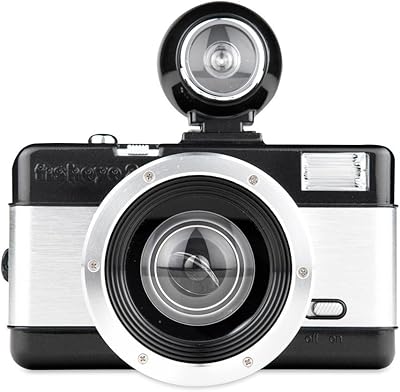
Lomography Fisheye No.2 35mm Film Camera
81%
91%
Creative Flexibility
87%
Ease of Use for Beginners
93%
Portability
80%
Build Quality
75%
Manual Control Usability
More
DEVMO Recesky TLR Camera Kit 2-Pack
74%
78%
Assembly Experience
44%
Instruction Clarity
81%
Value for Money
53%
Image Quality
51%
Build Quality & Durability
More
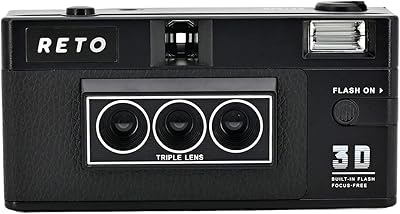
RETO Reto3D 35mm Film Camera
76%
83%
3D Wigglegram Effect Quality
88%
Ease of Use
71%
App Experience
63%
Build Quality
74%
Value for Money
More
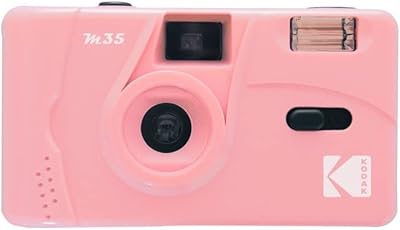
Kodak M35 35mm Reusable Film Camera
79%
93%
Ease of Use
61%
Image Quality
67%
Build Quality
88%
Value for Money
71%
Flash Performance
More
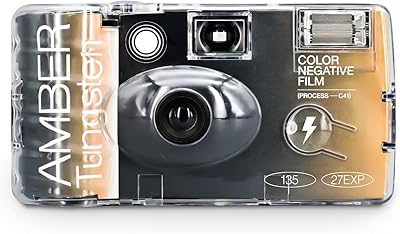
RETO Tungsten 35mm Disposable Camera
77%
83%
Photo Color & Tone
71%
Low-Light Performance
66%
Flash Effectiveness
93%
Ease of Use
74%
Build Quality & Feel
More
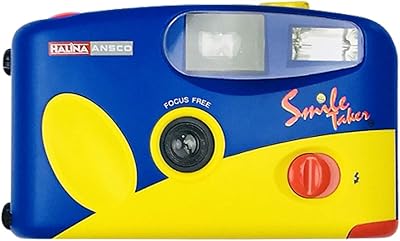
Halina Ansco Pix Flash 35mm Film Camera
79%
89%
Ease of Use
91%
Vintage Appeal
78%
Build Quality
63%
Manual Winding Experience
71%
Flash Performance
More
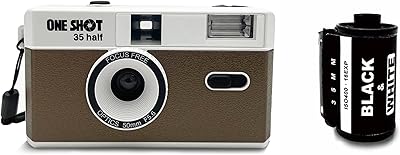
1 Shot VF208H Half Frame 35mm Film Camera
76%
83%
Value for Money
91%
Ease of Use
93%
Portability & Size
62%
Image Quality
76%
Build Quality
More
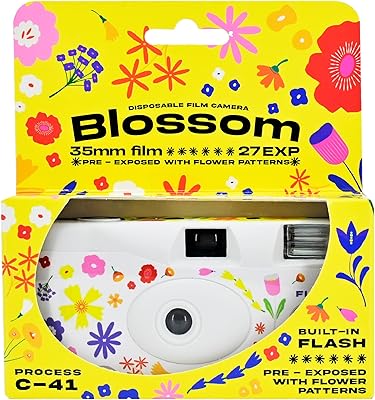
RETO Blossom 400 35mm Disposable Camera
73%
83%
Film Effect Quality
91%
Ease of Use
61%
Image Sharpness
58%
Flash Performance
69%
Value for Money
More

FAQ

No, the Sprite 35-II does not come with any film. You will need to purchase a separate 35mm film roll before you can start shooting. Any standard 35mm cartridge will work — Ilford HP5 is a popular choice and pairs nicely with the camera, but you are free to use any brand or emulsion you prefer.

The camera requires 2 x AAA batteries to power the built-in flash. Batteries are not included in the box, so pick some up before your first shoot if you plan to use the flash indoors or in low light.

You can, but with realistic expectations. The built-in flash helps in close-range indoor situations, though it takes around 15 seconds to recharge between shots. Without flash, the fixed shutter speed and aperture are not designed for dim conditions, so indoor or night shots without flash will likely come out underexposed.

Open the back of the camera in a shaded area or indoors, drop in your film cartridge, pull the leader across to the take-up spool, and close the back. Wind the lever until the frame counter shows 1 and you are ready to shoot. When you reach the end of your roll, use the rewind knob to wind the film back into its cartridge before opening the back — skipping this step will expose and ruin your shots.

It is genuinely one of the friendliest entry points into film photography available right now. There are no settings to adjust, no focus to think about, and no exposure decisions to make — you just frame and press the shutter. That simplicity removes almost all the barriers that typically intimidate first-time film shooters.

It means the lens is set to a single focus distance from the factory and cannot be adjusted. In practice, this works well for subjects roughly 1 to 3 meters away in good daylight. Very close subjects and anything in the far distance may appear slightly soft, but for casual snapshots the fixed focus rarely causes obvious problems outdoors.

Expect a soft, lo-fi aesthetic rather than clinical sharpness. The single-element lens produces images with gentle edge softness and a dreamy quality that many users love for its vintage character. If you are looking for crisp, detailed results, this reusable film camera is not the right choice — but if you enjoy the imperfect charm of analog photography, the look will suit you well.

Reloading is something you do yourself at home — that is the whole point of it being reusable. Once you finish a roll and rewind the film, you simply open the back and load a fresh cartridge. It takes about a minute once you have done it once or twice.

The flash needs roughly 15 seconds between firings to recharge fully. For relaxed shooting this is manageable, but if you are at a lively event trying to capture quick moments, that wait can feel frustrating. Several users have missed spontaneous shots specifically because of this delay, so it is worth factoring in if fast-paced flash shooting matters to you.

It is compact and light enough to take anywhere, which is a genuine advantage. That said, the all-plastic build is not particularly rugged — it will handle everyday knocks in a bag but is not designed to withstand drops or rough treatment. Treat it with basic care and it should last through many rolls without issues.

Where to Buy