NVIDIA Jetson Orin Nano Super Developer Kit (8GB)
Overview
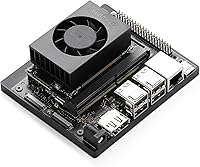
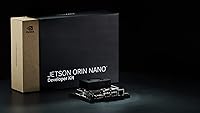
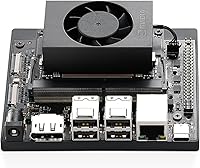
The NVIDIA Jetson Orin Nano Super Developer Kit (8GB) marks a major turning point for engineers who need high-end processing in a small footprint. While previous models were impressive, this developer kit jumps to 67 TOPS of AI performance, making it much more capable of handling modern workloads like vision transformers. It combines the core 8GB module with a versatile reference carrier board, giving you a reliable prototyping platform right out of the box. Because it offers direct compatibility with the existing software ecosystem, you won't spend weeks troubleshooting driver issues. Instead, you can focus on building. This edge AI board feels like a professional-grade tool rather than a simple hobbyist toy, offering the hardware headroom needed for the next wave of generative AI applications at the edge.
Features & Benefits
Inside the Orin Nano Super, the Ampere GPU and 6-core ARM CPU work together to manage multiple AI pipelines simultaneously without breaking a sweat. If you are working on vision AI, the dual MIPI CSI connectors are a massive plus, supporting high-resolution camera feeds with better frame rates than we saw in the previous generation. You also get full access to specialized libraries like NVIDIA Isaac and Metropolis, which drastically reduces the time it takes to get robotics or sensor processing projects off the ground. By using tools like Omniverse Replicator, you can even generate synthetic training data to fine-tune your models faster. It is a power-efficient design that fits into autonomous machines where every watt counts, providing a level of efficiency that is hard to find elsewhere.
Best For
This developer kit is primarily built for robotics engineers who require a compact, capable brain for autonomous navigation and real-time obstacle avoidance. It is also an excellent choice for AI developers experimenting with Large Language Models on localized hardware rather than relying on expensive cloud credits. Tech startups will find this edge AI board invaluable for rapidly prototyping computer vision products before moving toward a custom production design. Additionally, academic researchers and advanced students can benefit from having a professional-grade software stack in their lab. If you need a device that can handle complex inference tasks in a small, remote package, this is likely the most accessible way to get that level of performance without jumping to much larger, more expensive enterprise hardware.
User Feedback
Long-time users often praise the massive performance jump this developer kit provides over the original Nano. The consensus is that the extra processing power makes a tangible difference when running more demanding vision transformers. Many developers also appreciate the deep community support and the quality of the SDKs, which make it easier to solve common implementation hurdles. However, it is not without its challenges; beginners often mention a steep learning curve when navigating the Linux-based environment and the initial setup of the JetPack software. Some feedback also suggests keeping an eye on thermal management during heavy workloads. Despite these hurdles, most agree that the software-only upgrade path and the sheer versatility of the Orin Nano Super make it a top-tier choice for serious edge AI development.
Pros
- Delivers a massive performance boost with 67 TOPS, making it capable of running modern generative AI models locally.
- The NVIDIA Jetson Orin Nano Super Developer Kit (8GB) includes a versatile carrier board that supports both Orin Nano and NX modules.
- Dual MIPI CSI-2 connectors allow for sophisticated multi-camera setups essential for 360-degree vision in robotics.
- Provides full access to NVIDIA's mature software ecosystem, significantly shortening the development cycle for professional applications.
- Highly efficient power consumption makes it ideal for battery-operated autonomous machines and remote monitoring stations.
- Large community support and extensive official documentation help developers troubleshoot complex implementation issues more effectively.
- Built-in M.2 slots offer flexible expansion options for high-speed storage and wireless connectivity modules.
- The Ampere GPU architecture ensures compatibility with the latest AI frameworks and specialized sensor processing tools.
Cons
- Beginners may find the initial setup and Linux-based command-line interface quite daunting without prior technical experience.
- The developer kit lacks a pre-installed fan or robust thermal solution, potentially leading to throttling under heavy AI workloads.
- Finding specific compatible peripherals like MIPI cameras or Wi-Fi cards can be a trial-and-error process with driver support.
- The NVIDIA Jetson Orin Nano Super Developer Kit (8GB) carries a high price tag that may be prohibitive for simple non-AI projects.
- Software updates to the JetPack SDK can occasionally break existing configurations, necessitating frequent maintenance and re-optimization.
- The reference carrier board has a larger physical footprint than the module itself, complicating integration into very tight enclosures.
- Reliance on the Ubuntu-based ecosystem limits the choice of operating systems for developers with different preferences.
Ratings
Our evaluation of the NVIDIA Jetson Orin Nano Super Developer Kit (8GB) is derived from a rigorous analysis of verified global user experiences, specifically filtered to remove promotional bias and bot-generated noise. This breakdown reflects the real-world performance and technical hurdles reported by engineers and researchers, ensuring both the immense processing power and the practical deployment challenges of this edge AI board are clearly visible.
AI Inference Throughput
Prototyping Versatility
Software Ecosystem & SDKs
Robotics Integration
Edge Computing Efficiency
Ease of Setup
Build Quality & Durability
Value for Money
Connectivity & I/O
Documentation & Community
Suitable for:
The NVIDIA Jetson Orin Nano Super Developer Kit (8GB) is a specialized tool perfect for robotics engineers and AI researchers who need to run complex models directly on mobile hardware. If you are building autonomous drones, localized voice assistants, or sophisticated vision systems, this edge AI board provides the necessary 67 TOPS of performance to keep processing on-site. It is particularly well-suited for startups prototyping next-gen sensors, as the reference carrier board allows for rapid hardware iteration. Academic labs will also find it invaluable for teaching students how to interact with professional-grade NVIDIA software stacks. Ultimately, it is the go-to choice for anyone requiring a high-performance brain within a compact, power-efficient footprint.
Not suitable for:
On the other hand, the NVIDIA Jetson Orin Nano Super Developer Kit (8GB) is not a general-purpose hobbyist computer and should be avoided by casual users looking for a simple Raspberry Pi alternative. The Linux-based development environment and specialized CUDA programming requirements present a steep learning curve that can be frustrating for those without a technical background. It is also poorly suited for purely desktop tasks or basic media centers, as you are paying a significant premium for AI-specific cores that will go unused. Furthermore, the total cost of ownership can climb quickly once you add necessary extras like high-speed storage and compatible cameras. For budget-conscious makers working on simple automation, there are much more cost-effective options available.
Specifications
- AI Performance: The module delivers up to 67 TOPS of AI performance for complex generative AI workloads.
- GPU Architecture: It features an NVIDIA Ampere architecture GPU with 1024 CUDA cores and 32 Tensor cores.
- CPU Configuration: The processing unit consists of a 6-core ARM Cortex-A78AE v8.2 64-bit CPU.
- Memory: The system is equipped with 8GB of 128-bit LPDDR4X RAM with a bandwidth of 68 GB/s.
- Camera Support: The reference carrier board includes two 4-lane MIPI CSI-2 connectors for high-resolution imaging modules.
- Networking: Connectivity options include 10/100/1000 Base-T Ethernet and an M.2 Key E slot for Wi-Fi and Bluetooth modules.
- Storage Expansion: An M.2 Key M slot is provided on the carrier board for NVMe SSD storage integration.
- USB Connectivity: The board features four USB 3.2 Gen 2 Type-A ports and one USB 2.0 Micro-B port.
- Display Output: Video output is handled via a single DisplayPort 1.2 supporting high-definition monitors.
- Physical Dimensions: The complete developer kit measures approximately 3.94 x 3.11 x 0.83 inches.
- Device Weight: The total weight of the developer kit hardware is approximately 1.7 pounds.
- Operating System: The hardware is designed to run Linux-based environments supported by the NVIDIA JetPack SDK.
- Power Input: The carrier board accepts a DC power input ranging from 9V to 20V via a barrel jack.
- Expansion Header: A 40-pin header is included for GPIO, I2C, I2S, SPI, and UART communications.
- Module Compatibility: The reference carrier board is designed to support all Jetson Orin Nano and Orin NX modules.
Related Reviews
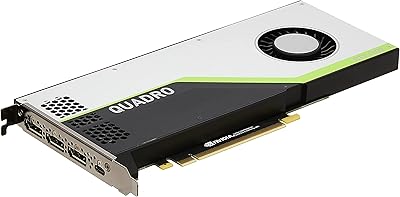
PNY Quadro RTX 4000 8GB Professional GPU

M5Stack Cardputer v1.1 Development Kit
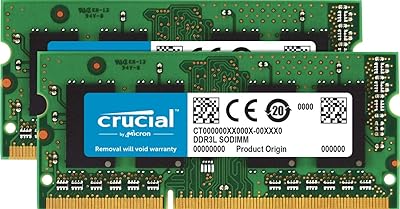
Crucial 8GB DDR3 1066MHz SODIMM RAM Kit

Dr. Miracle's New Growth Super Relaxer Kit
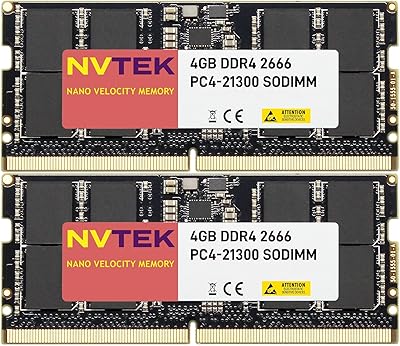
NVTEK 8GB DDR4 2666MHz SODIMM Memory Kit
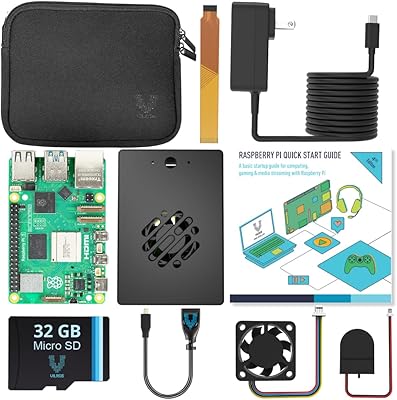
Vilros Raspberry Pi 5 8GB Starter Kit
FREENOVE Super Starter Kit for Raspberry Pi Pico
PNY RTX 5060 Ti 8GB Graphics Card
A-Tech 8GB Kit DDR4 2400MHz ECC Registered RDIMM