Overview

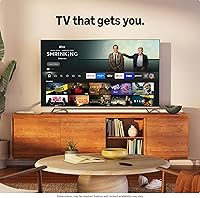
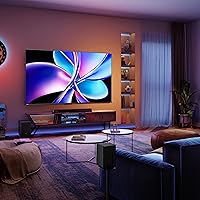
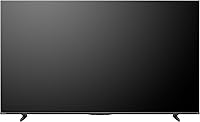
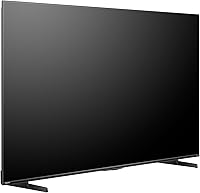
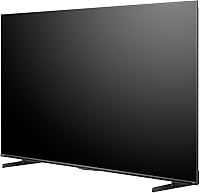
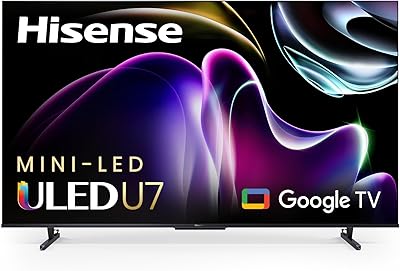
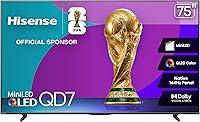
The Hisense 75-inch QD7 Mini-LED 4K Smart TV sits in a sweet spot within Hisense's 2025 lineup — big enough to anchor a living room, priced well below what flagship sets command. Running Amazon's Fire TV platform rather than Roku or Google TV gives it a distinct identity: a single home screen pulling together streaming apps, live TV, and Alexa voice control without much fuss. Setup is straightforward, and the slim bezels give the panel a cleaner look than you might expect at this price tier. This is a set built for buyers who want genuine large-screen impact without a painful compromise on the wallet.
Features & Benefits

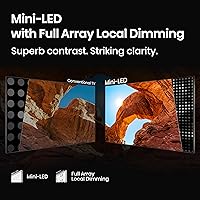
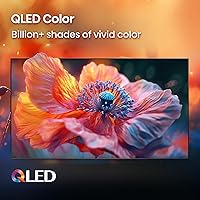
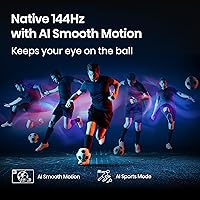
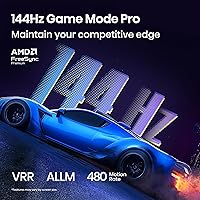
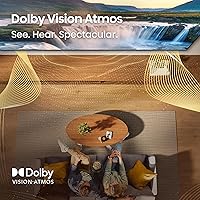
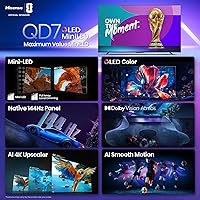
The Mini-LED backlight is the headline here. Thousands of tiny LEDs grouped into local dimming zones let the panel crush dark areas while keeping bright highlights punchy — a real step up over edge-lit sets for night scenes and starfields. Pair that with the QLED quantum dot filter and colors land with genuine richness on grass-heavy sports or vibrant animation. The native 144Hz panel matters most for gaming: console players at 60fps will notice smoother motion during fast breaks, while PC players can push the full 144Hz with AMD FreeSync Premium keeping tearing in check. Dolby Vision and HDR10+ cover nearly every streaming platform's HDR format, and Dolby Atmos handles the audio side.

Best For

This 75-inch Hisense Mini-LED makes the most sense for a few specific kinds of buyers. Console and PC gamers will appreciate Game Mode Pro and VRR support across a wide 48–144Hz range, while sports fans get a legitimate upgrade in motion clarity — fast breaks and tracking shots stay crisp where lesser panels blur. If your household already relies on Alexa for smart home control, the voice remote slots right in. Anyone trading up from a 55- or 65-inch set will feel the size jump immediately. Streaming-heavy households also benefit from broad HDR compatibility, meaning content from most major platforms looks as intended without any extra fiddling.

User Feedback

The QD7 series set holds a solid 4.1-star average, and the praise is consistent: buyers love the picture quality relative to what they paid, and the size-for-money proposition keeps satisfaction high. That said, some users report noticeable blooming around bright objects against dark backgrounds — not unexpected at this price tier, but worth knowing if pristine black levels are a priority. The Fire TV interface draws gripes too; ads on the home screen bother a meaningful share of owners. Gaming feedback skews positive for console use, though a handful of PC users note inconsistent VRR behavior at higher frame rates. A few critical reviews flag slow Hisense customer support, which is worth factoring in if post-purchase service matters to you.

Pros

  • Mini-LED backlighting delivers noticeably better contrast and shadow detail than edge-lit sets at this price range.
  • The 75-inch screen size creates a genuinely cinematic living-room presence without a flagship-level price tag.
  • Native 144Hz refresh rate keeps fast sports and gaming motion sharp and blur-free.
  • AMD FreeSync Premium and a wide VRR range make this big-screen Hisense a capable console gaming display.
  • Dolby Vision and HDR10+ support covers HDR formats across nearly every major streaming platform.
  • Fire TV puts hundreds of streaming apps on one organized home screen with strong search functionality.
  • Alexa voice control extends beyond TV functions — timers, smart home commands, and sports scores all work hands-free.
  • QLED quantum dot color produces rich, saturated hues that hold up well on bright sports broadcasts and nature content.
  • Dolby Atmos passthrough ensures compatibility with soundbars and AV receivers for a fuller audio setup.
  • Strong Amazon bestseller ranking reflects real purchase volume, suggesting broad owner satisfaction.

Cons

  • Blooming around bright objects on dark backgrounds is noticeable and a genuine issue for dark-room movie watching.
  • Peak brightness tops out around 600 nits, which falls short of true high-brightness HDR performance in well-lit rooms.
  • Fire TV displays ads on the home screen, which bothers a meaningful portion of owners and cannot be fully disabled.
  • Local dimming zone count is not publicly disclosed, making it difficult to compare objectively against rival Mini-LED sets.
  • VRR consistency at higher PC frame rates has drawn complaints from a subset of enthusiast users.
  • The included remote feels basic relative to what some competing brands offer at this price point.
  • At nearly 82 pounds, wall-mounting requires a second person and a robust mount rated for the weight.
  • Hisense customer support responsiveness receives mixed reviews, which is a risk if hardware issues arise post-purchase.
  • 250-watt power draw is relatively high for everyday use compared to similarly sized OLED alternatives.
  • The QD7 series set lacks the processing transparency and zone performance of pricier Mini-LED competitors from Samsung or TCL.

Ratings

Our scores for the Hisense 75-inch QD7 Mini-LED 4K Smart TV were generated by AI after analyzing thousands of verified global buyer reviews, with spam, incentivized submissions, and bot activity actively filtered out before any scoring was applied. The results reflect a candid picture of real ownership — where this set genuinely delivers and where it falls short of expectations. Both the strengths that drive repeat recommendations and the frustrations that surface in critical reviews are transparently baked into every number below.
Picture Quality
83%
Most owners are genuinely impressed by how much contrast and color depth the Mini-LED backlight unlocks at this price point. Sports broadcasts and HDR nature documentaries draw the most consistent praise — colors pop with a richness that owners upgrading from budget LED sets find immediately striking.
Dark-room performance is where the cracks show. Blooming around bright objects on black backgrounds — think subtitles, scoreboards, or starfields — is a recurring complaint that keeps this panel from feeling truly premium for dedicated movie-watching in a dark home theater setup.
Gaming Performance
81%
19%
Console gamers on PS5 and Xbox Series X report a responsive, smooth experience with Game Mode Pro enabled, and the native 144Hz panel genuinely benefits fast-action titles at higher frame rates. ALLM works reliably, switching the TV into low-latency mode automatically when a console is detected.
PC gamers pushing above 60fps at 4K have flagged occasional VRR inconsistencies, particularly at the upper end of the refresh rate range. Input lag figures are competitive but not class-leading, and a handful of enthusiast users feel the QD7 series set is better suited to console play than to a high-refresh PC gaming rig.
Motion Handling
78%
22%
Fast sports content — basketball fast breaks, soccer tracking shots, tennis rallies — holds together well with MEMC processing engaged, and most owners find the default motion settings acceptable straight out of the box. The native 144Hz foundation gives the processing genuine hardware to work with, rather than artificially interpolating from 60Hz.
MEMC interpolation introduces the classic soap-opera effect on cinematic content if left on its default setting, and some owners report it takes trial and error to find a motion setting that works across different content types without looking either too smooth or too juddery.
HDR Experience
79%
21%
Supporting Dolby Vision, HDR10+, and HDR10+ Adaptive means this big-screen Hisense covers the format requirements of virtually every major streaming platform without the owner needing to think about compatibility. Dolby Vision in particular looks punchy and well-toned on Prime Video and Netflix content.
Peak brightness capped at around 600 nits limits how spectacular specular highlights actually look — bright sunlight reflections, explosions, or stadium lights never quite reach the dazzling peak performance that true high-brightness sets in the 1000-nit-plus range can achieve in the same HDR content.
Color Accuracy
82%
18%
The QLED quantum dot layer produces vibrant, saturated color that reads as natural rather than oversaturated for most content types. Owners watching Premier League matches or nature documentaries specifically call out how lifelike grass greens and skin tones look compared to their previous non-QLED sets.
Out-of-the-box calibration leans slightly warm for some users, and while the picture modes offer adjustment options, buyers who want accurate color without manual calibration may find the default modes push saturation a little higher than purists prefer.
Smart TV Software
71%
29%
Fire TV's app library is extensive, and the integration with Alexa genuinely adds utility beyond TV control — setting timers, checking sports scores, and managing smart home devices all work through the voice remote without switching inputs. Finding content across multiple streaming services through universal search is fast and practical.
The home screen advertising is the single most-complained-about software issue in user reviews, with many owners expressing frustration that promoted content and sponsored rows cannot be removed. Some users also report that the Fire TV interface occasionally feels sluggish when navigating between apps or loading the home screen after inactivity.
Audio Quality
67%
33%
Dolby Atmos passthrough works cleanly with compatible soundbars, and owners who pair this set with external audio equipment report a genuinely immersive experience without needing additional configuration. For casual TV watching without a soundbar, the built-in speakers are serviceable for dialogue-heavy content.
Built-in speaker performance is unremarkable for a screen this large — bass is thin, and volume at higher settings can introduce distortion. The consensus among owners is clear: at 75 inches, budget at least something for a soundbar, because the integrated speakers do not match what the display itself delivers.
Value for Money
88%
This is where the QD7 series set earns its strongest scores across the board. Buyers consistently express surprise at how much display technology — Mini-LED, QLED, native 144Hz, Dolby Vision — is packed into a 75-inch panel at this price tier, and the strong sales ranking reflects broad market agreement on the value proposition.
Value perception drops among buyers who specifically needed reference-grade dark-room performance or who encountered reliability or support issues post-purchase. For that subset, the initial price advantage feels less meaningful when weighed against the limitations of the local dimming implementation or difficulty reaching customer service.
Build & Design
74%
26%
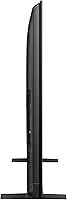
Bezels are slim for a mid-range set at this size, and the overall look is clean enough to feel at home in a modern living room without the TV dominating the space aesthetically. Assembly of the stand is generally described as manageable by owners who tackled it solo, though two people makes it significantly easier.
At close to 82 pounds, the physical handling of this set is demanding, and the build materials — while not feeling cheap — do not have the premium solidity of flagship-tier panels. A few owners note minor backlight uniformity issues visible on grey test patterns, though these are rarely distracting during normal content.
Setup & Usability
80%
20%
Fire TV's guided setup process is one of the smoother onboarding experiences in the smart TV space, and owners with existing Amazon accounts find that app preferences, Prime Video watchlists, and Alexa routines carry over with minimal friction. Most buyers describe the initial setup as taking under 20 minutes.
Wi-Fi connectivity complaints appear in a small but consistent portion of reviews, with some owners reporting signal drops or difficulty maintaining a stable 5GHz connection from a distance. Running an Ethernet cable resolves this, but at 75 inches placement flexibility is limited, making wired connection not always practical.
Remote Control
63%
37%
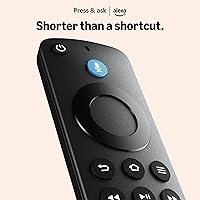
The Alexa voice button works reliably and responds quickly to commands, which owners who use voice search regularly appreciate. Dedicated app shortcut buttons for Prime Video and a few other services reduce the number of navigation steps to reach frequently used content.
The remote itself feels lightweight and plasticky relative to what competitors like Samsung or LG include with large-format sets. Button travel is shallow, and some owners report that the remote needs to be pointed more precisely at the TV than expected — a minor but recurring frustration in daily use.
Brightness & Glare
69%
31%
For evening and night-time viewing — which covers the majority of actual TV consumption for most households — 600 nits is comfortably bright, and the screen does not produce an uncomfortable eye-strain level of light even during extended sessions. HDR highlights on streaming content look impactful under normal ambient conditions.
In rooms with windows that let in direct afternoon sunlight, the 600-nit ceiling shows its limits clearly. The anti-reflective coating reduces but does not eliminate glare, and some owners in bright living rooms report they need to close blinds or wait for evening to get the picture quality the spec sheet implies.
Connectivity
77%
23%
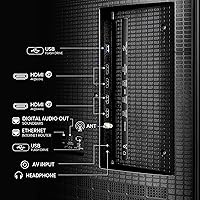
The port selection is practical for a modern home theater — HDMI inputs accommodate consoles, streaming sticks, and AV receivers simultaneously, while USB ports handle external drives for local media playback. Bluetooth connectivity lets owners pair headphones for late-night watching without disturbing others.
Some buyers note that the HDMI port layout makes cable management awkward depending on wall-mount position, as the ports face directions that are not ideal for flush mounting. HDMI 2.1 bandwidth capability details are not clearly communicated in official documentation, which causes confusion among PC gamers planning high-refresh setups.
After-Sales Support
54%
46%
Hisense does honor warranty claims, and buyers with straightforward defect issues — dead pixels, panel faults — generally report that replacements are eventually processed. The brand's growing market presence means parts and service availability has improved compared to a few years ago.
Response time and agent accessibility are the consistent weak points in negative reviews. Owners dealing with more complex issues describe long wait times and difficulty escalating beyond initial contact, which is a real concern for a product this large and expensive to return or replace through a retailer.

Suitable for:

The Hisense 75-inch QD7 Mini-LED 4K Smart TV is purpose-built for buyers who want a genuinely large living-room display without crossing into flagship-TV territory on price. Console gamers in particular will feel at home here — the native 144Hz panel, VRR support, and Game Mode Pro combine to make fast-paced titles feel responsive on a screen that actually fills a room. Sports households benefit too, since the motion handling keeps fast breaks and sideline action cleaner than what a standard 60Hz panel can manage. Families already running Alexa devices throughout the house will find the Fire TV integration natural, with voice control extending well beyond just changing channels. Streamers who hop between Netflix, Prime Video, Disney+, and live apps will appreciate that Dolby Vision and HDR10+ cover the HDR formats used across virtually every major platform, so content generally looks as the creator intended without manual adjustments.
Not suitable for:

Buyers chasing reference-grade picture quality in dark rooms will hit the limits of the QD7 series set fairly quickly. At up to 600 nits of peak brightness and with an undisclosed local dimming zone count, this panel cannot match the black levels or specular highlight performance of premium Mini-LED sets or OLED displays — blooming around bright objects on dark backgrounds is a documented real-world issue, not just a spec-sheet footnote. Enthusiast PC gamers pushing 4K at frame rates above 60fps may also run into inconsistencies with VRR behavior that console players are less likely to notice. Anyone who finds ad-supported smart TV interfaces genuinely frustrating should know upfront that Fire TV surfaces promotional content on its home screen, and there is no straightforward way to eliminate it entirely. Finally, if reliable post-purchase customer support is a deciding factor, the mixed feedback around Hisense's service responsiveness is a legitimate consideration before committing.

Specifications

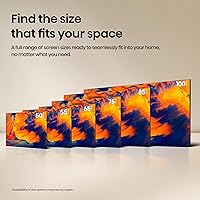
  • Screen Size: The panel measures 75 inches diagonally, designed for large living rooms or dedicated home theater spaces.
  • Display Tech: Uses a Mini-LED backlight combined with a QLED quantum dot filter layer for improved color volume and contrast over standard LED panels.
  • Resolution: Native 4K UHD (3840 x 2160) resolution delivers four times the pixel density of a standard 1080p display.
  • Refresh Rate: The panel runs at a native 144Hz, with a Motion Rate of 480 achieved through MEMC frame interpolation processing.
  • Peak Brightness: Rated at up to 600 nits peak brightness, which is adequate for moderately lit rooms but below the threshold of high-brightness flagship sets.
  • HDR Support: Compatible with Dolby Vision, HDR10+, and HDR10+ Adaptive, covering the dominant HDR formats used across major streaming platforms and physical media.
  • Local Dimming: Full Array Local Dimming is enabled via the Mini-LED backlight, allowing independent zone control for deeper blacks and reduced blooming compared to edge-lit designs.
  • Audio: Supports Dolby Atmos decoding and passthrough, making it compatible with Atmos-encoded streaming content and external Atmos soundbars or AV receivers.
  • Smart Platform: Runs Amazon's Fire TV operating system with Alexa built into the voice remote, providing access to thousands of streaming apps and smart home controls.
  • Gaming Features: Includes AMD FreeSync Premium, Variable Refresh Rate from 48Hz to 144Hz, Auto Low Latency Mode (ALLM), and a dedicated Game Mode Pro for reduced input lag.
  • Connectivity: Offers HDMI, USB, Ethernet, dual-band Wi-Fi, and Bluetooth connectivity for a broad range of devices and network setups.
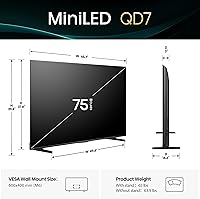
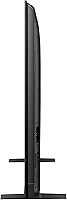
  • Dimensions: The set measures 3″ deep, 56.7″ wide, and 37.8″ tall with the stand attached.
  • Weight: The TV weighs 81.8 pounds, which requires at minimum two people for safe installation or wall-mounting.
  • Power Draw: Rated at 250 watts during typical operation, running on a standard 120-volt household circuit.
  • In the Box: Includes the TV panel, power cable, remote control, stand hardware, a quick start guide, and two AAA batteries for the remote.
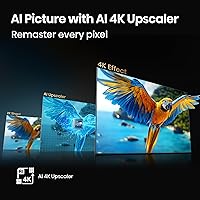
  • AI Processing: The Hi-View AI Engine handles AI Noise Reduction and AI Smooth Motion processing to sharpen fine detail and reduce artifacts in lower-quality source content.
  • Aspect Ratio: Standard 16:9 widescreen aspect ratio, matching the format used by broadcast TV, streaming platforms, and modern gaming consoles.
  • Remote: Ships with an Alexa voice remote that requires two AAA batteries, which are included in the box.

Related Reviews

Hisense 75U7K 75-inch Mini-LED QLED TV
79%
88%
Picture Quality
79%
Contrast & Local Dimming
83%
Brightness
91%
Gaming Performance
86%
Motion Handling
More
LG QNED80 Series 75-Inch 4K Mini LED Smart TV
84%
91%
Picture Quality
88%
Gaming Performance
84%
Smart Features & Usability
79%
Sound Quality
93%
Build Quality
More
Hisense 85-inch U8QG Mini-LED Smart TV
81%
91%
Picture Quality
93%
Brightness & HDR Performance
84%
Contrast & Local Dimming
89%
Gaming Performance
86%
Motion Handling
More
Hisense 75-Inch U8 Series Mini-LED ULED 4K TV
85%
94%
Display Quality
89%
Gaming Performance
85%
Smart Features
91%
Build Quality
71%
Sound Quality
More
Hisense QD7 50-inch Mini-LED 4K Smart TV
77%
83%
Picture Quality
79%
Brightness & HDR Performance
81%
Color Accuracy
72%
Motion Handling
68%
Gaming Performance
More
TCL 75-inch QM7K Mini LED QLED TV
80%
88%
Picture Quality
82%
Local Dimming Performance
91%
Gaming Performance
86%
Anti-Reflective Panel
71%
Smart TV Experience
More
Hisense 85-inch U7 Mini-LED 4K TV
83%
88%
Picture Quality
91%
Gaming Performance
93%
Brightness & HDR
82%
Contrast & Local Dimming
86%
Color Accuracy
More
Hisense U6 65-inch Mini-LED 4K Smart TV
78%
84%
Picture Quality
91%
Gaming Performance
82%
HDR Performance
79%
Motion Handling
76%
Local Dimming & Contrast
More
LG 75UM7570PUD 75-inch 4K Smart LED TV
73%
78%
Picture Quality
91%
Viewing Angles
82%
Smart TV Platform
76%
Voice Assistant Integration
62%
Motion Handling
More
Hisense 43R7E 43-inch 4K Roku Smart LED TV
81%
87%
Picture Quality
92%
Value for Money
91%
Ease of Setup
85%
Streaming Performance
61%
Sound Quality
More

FAQ

The panel itself is genuinely native 144Hz — not an interpolated or effective rate. That means the screen physically refreshes 144 times per second, which benefits both high-frame-rate gaming and fast motion content. The Motion Rate 480 figure refers to Hisense's combined processing score, not the raw panel spec, so focus on the native 144Hz number when making comparisons.

Yes, it works well for current-gen console gaming. Both the PS5 and Xbox Series X output at 4K 60fps for most titles, and the QD7 handles that comfortably with ALLM and Game Mode Pro engaged to keep input lag low. If you want to push 4K at 120fps, the native 144Hz panel has headroom for that on supported titles too. VRR support via FreeSync Premium also helps when frame rates fluctuate.

It depends on the content. For most normal viewing — sports, bright streaming shows, daytime scenes — you will not notice it at all. Where it becomes visible is in high-contrast scenes with small bright objects on very dark backgrounds, like stars in space or a lamp in a dark room. Hisense has not disclosed the exact number of local dimming zones in this model, so blooming control is decent but not on par with higher-zone-count premium Mini-LED sets from Samsung or TCL at twice the price.

Not fully. Fire TV displays sponsored content and promoted apps as part of its default home screen layout, and Amazon does not offer a built-in toggle to eliminate it entirely. You can minimize exposure by pinning your most-used apps and navigating directly to them, but the ad rows will still be present in the background. If an ad-free interface is a firm requirement, a Roku or Google TV-based set might suit you better.

Almost certainly yes. The QD7 series set supports HDMI ARC and eARC for connecting soundbars, and it passes through Dolby Atmos to compatible audio equipment. If your soundbar supports Atmos, you will get object-based surround sound from streaming content that carries an Atmos track. Optical audio output is also typically available for older soundbar connections.

Peak brightness tops out around 600 nits, which performs reasonably well in moderately lit rooms but can look washed out in a very bright space with direct sunlight hitting the screen. If your living room gets intense afternoon sun and you watch a lot of HDR content, you may want to look at sets in the 1000-nit-plus range for better daylight visibility. For evening viewing or rooms with controllable lighting, 600 nits is more than adequate.

For a 4K panel at 75 inches, most home theater guidelines suggest sitting between 6 and 9 feet away to resolve the full pixel detail without the screen appearing too large. At 4K resolution, you can sit closer than you could with a 1080p set — around 6 feet is comfortable for many people. Beyond 10 feet you will still get a great picture, but you start losing the resolution advantage of 4K.

Fire TV supports AirPlay 2 natively, so iPhone and Mac users can mirror or cast content directly to this big-screen Hisense without additional hardware. Google Cast is not natively supported on Fire TV, but some individual apps like YouTube include built-in cast functionality regardless of platform. For Android users, Bluetooth and USB connections remain options for direct media playback.

The TV uses a standard VESA mount pattern, so any compatible VESA bracket designed for large-format panels will work. That said, at just under 82 pounds, this is not a one-person job — plan to have at least two people for safe installation. Make sure your wall bracket is rated for the weight and that it is anchored into studs, not just drywall, at this size.

Feedback here is mixed. Buyers who had straightforward warranty claims generally report an adequate experience, but a recurring thread in negative reviews is slow response times and difficulty reaching a live agent. If you are buying a large TV and peace of mind matters, it is worth registering the product immediately after setup and keeping your purchase receipt handy. Extended warranty options through the retailer can also provide an additional safety net.