

Overview

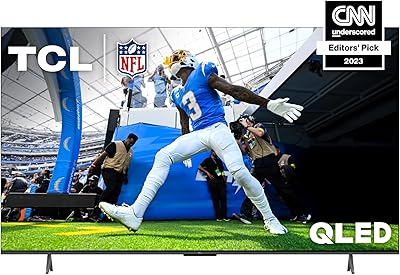
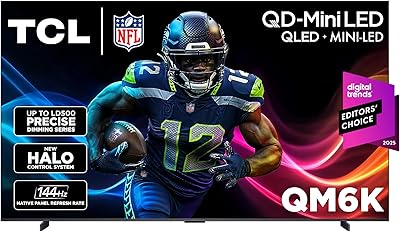
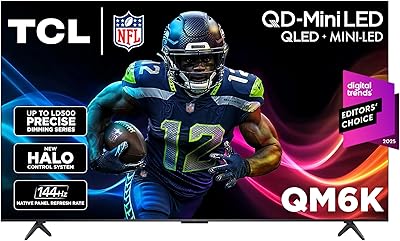
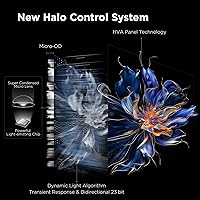
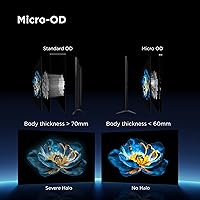
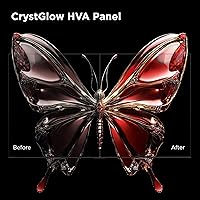
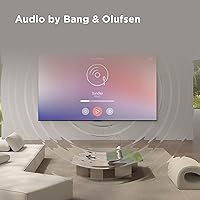
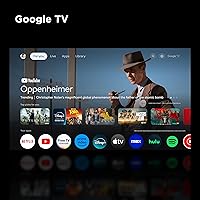
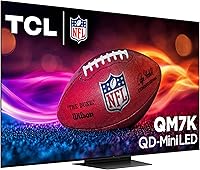
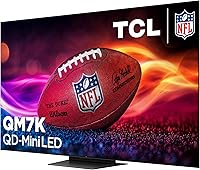
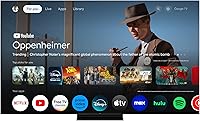
The TCL 75-inch QM7K Mini LED QLED TV is TCL's 2025 push into premium large-screen territory, offering a compelling alternative to OLED without the OLED price tag. It pairs QD-Mini LED backlighting with the proprietary Halo Control System, which works to keep light precisely where it belongs rather than bleeding into surrounding areas. Google TV handles the smart platform duties, giving you a clean interface with broad app coverage and an Alexa-enabled voice remote included. The CrystGlow HVA panel is a notable addition for anyone dealing with windows or overhead lighting — anti-reflective coatings on TVs this size genuinely matter. Onkyo handles audio at 40 watts with Dolby Atmos support rounding things out.

Features & Benefits

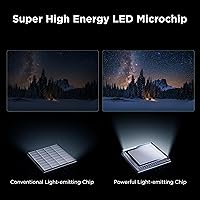
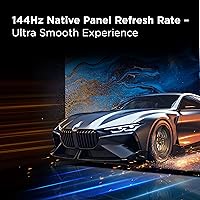
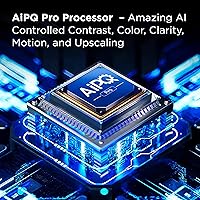
The QM7K uses full-array backlighting with up to 2500 local dimming zones — a number that translates in practice to noticeably tighter control over bright objects sitting against dark backgrounds. Blooming is reduced, though not entirely eliminated, which is worth knowing going in. The 144Hz native panel keeps motion crisp during sports and action sequences, and for gamers the 288Hz variable refresh rate means fast-paced titles respond with minimal tearing or stutter. HDR coverage is comprehensive, including Dolby Vision and HDR10+, covering virtually every format in active use. The AiPQ processor handles upscaling reasonably well for streaming content that isn't native 4K, and connectivity covers all expected inputs without any glaring omissions.

Best For

This 75-inch TCL makes the most sense for a few specific buyers. If you've been eyeing OLED but can't justify the price gap at this screen size, the QM7K offers a practical middle ground with strong peak brightness that OLED often can't match. Gamers with a current-gen console or high-end PC will appreciate the high-refresh gaming support — it actually affects how responsive fast titles feel, not just a spec sheet number. It's also a solid pick for living rooms that get afternoon sun, where most TVs struggle with washed-out images. And if you want decent built-in audio without immediately shopping for a soundbar, the Onkyo system clears a reasonable bar for everyday viewing.

User Feedback

Owners broadly praise the out-of-box picture quality — brightness and color impress right away without much fiddling, which matters for buyers who don't want to spend an evening in calibration menus. Gaming performance earns consistently positive mentions. On the other side, some users report visible blooming during very dark scenes containing bright objects, a known trade-off with Mini LED technology at this dimming zone count. The Google TV interface draws occasional complaints about sluggishness, and a few owners wish the remote felt more refined. Built-in audio holds up for casual watching but won't replace a proper soundbar for serious movie nights. Overall, buyer satisfaction sits solidly positive, though not without real caveats worth weighing before purchasing.

Pros

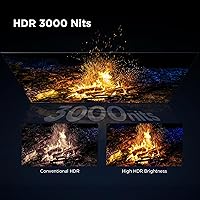
  • Peak brightness is a genuine strength — HDR highlights pop in a way that impresses even in well-lit rooms.
  • The anti-reflective panel handles afternoon sun and overhead lighting far better than most TVs at this size.
  • Full-array backlighting produces noticeably more uniform brightness compared to edge-lit alternatives.
  • High-refresh gaming performance is real and tangible, not just a spec sheet number — fast titles respond well.
  • Comprehensive HDR format support means no compatibility headaches regardless of your streaming platform.
  • Google TV gives cord-cutters a clean, centralized interface without needing an external streaming stick.
  • Out-of-box picture quality earns consistent praise from owners who do not want to spend time in settings menus.
  • The Onkyo audio system handles everyday TV watching without immediately pushing you toward a separate purchase.
  • Setup is reported to be straightforward, with the stand assembly and initial configuration taking minimal time.
  • At its price point, the QM7K delivers a level of Mini LED refinement that would have cost significantly more just a year prior.

Cons

  • Blooming around bright objects in dark scenes is visible and bothers owners who watch in fully darkened rooms.
  • The Google TV interface can feel sluggish at times, interrupting the otherwise smooth experience.
  • The included remote feels underwhelming relative to what competitors offer at a similar price tier.
  • Built-in audio, while decent for casual use, falls short for anyone serious about movie night sound quality.
  • Firmware updates have drawn mixed reactions, with some users noting inconsistent results post-update.
  • The AiPQ upscaling handles most content well but can struggle with lower-quality source material.
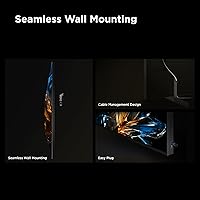
  • At 58.6 pounds, wall-mounting without a second pair of hands is genuinely awkward and worth planning for.
  • Some owners report the smart TV interface occasionally requires a reboot to recover normal responsiveness.

Ratings

The TCL 75-inch QM7K Mini LED QLED TV earns a strong overall standing in our AI-generated scorecard, built by analyzing thousands of verified global buyer reviews with active filtering applied to remove incentivized, bot-generated, and outlier submissions. Scores reflect where real owners consistently agree — including the areas where this set genuinely impresses and the friction points that surface repeatedly across different household setups. Both sides of the ownership experience are represented here without softening the categories that divide opinion.

Picture Quality
88%
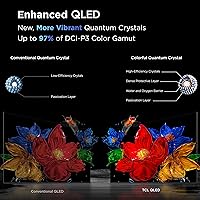
Owners consistently describe the brightness as one of the first things that stands out — HDR highlights in films and sports look vivid and punchy in a way that catches the eye even in well-lit rooms. The quantum dot color layer adds richness to skin tones and natural landscapes that basic LED panels simply cannot match.
In very dark scenes with isolated bright elements, a soft glow around those objects is visible to attentive viewers. It does not ruin the experience for most people, but buyers who watch a lot of dark, cinematic content in a blacked-out room will notice it.
Local Dimming Performance
82%
18%
The density of dimming zones means the TV handles mixed-brightness scenes — think a night cityscape or a candlelit interior — with noticeably tighter control than most competing Mini LED sets in this price range. Transitions between bright and dark areas feel smooth rather than abrupt.
Pure black uniformity in full-screen dark content still shows some backlight variation, and fast-moving bright objects can trigger brief blooming trails in demanding scenes. It is better than average for the category, but it is not a solved problem at this price tier.
Gaming Performance
91%
Console and PC gamers respond very positively to the responsiveness in game mode — input lag drops to competitive levels, and the VRR support works reliably with both PlayStation and Xbox without requiring manual workarounds. Fast-paced titles feel fluid in a way that makes the high refresh rate tangibly worthwhile.
The 288Hz ceiling is only accessible to PC gamers with hardware capable of pushing those frame rates; console owners are effectively capped at 120fps regardless. Some users also report that enabling VRR occasionally introduces minor brightness fluctuations in darker game environments.
Anti-Reflective Panel
86%
The CrystGlow coating makes a real difference for living rooms with large windows or overhead lighting that would otherwise wash out the image on a standard glossy screen. Multiple buyers specifically mention this as a reason they chose the QM7K over alternatives that looked better in a dark showroom but struggled at home.
The matte-style coating does soften perceived sharpness very slightly compared to a glossy panel under identical controlled conditions. It is a minor trade-off most users accept happily, but it is worth knowing if showroom-sharp clarity is your benchmark.
Smart TV Experience
71%
29%
Google TV provides a well-organized interface that pulls together all major streaming services, integrates Google Assistant naturally, and handles voice search across apps cleanly. Cord-cutters who rely on Netflix, Disney+, and YouTube find everything accessible without hunting through cluttered menus.
A recurring complaint involves interface sluggishness — particularly when switching between apps quickly or waking the TV from standby. It is not consistent across all units, but enough owners mention it to make it a genuine consideration rather than an isolated incident.
Audio Quality
67%
33%
For everyday viewing — news, casual streaming, daytime sports — the Onkyo-tuned 40-watt system delivers above-average clarity for built-in TV audio, with dialogue staying intelligible even at lower volumes. Dolby Atmos processing adds a modest sense of spatial width to movie soundtracks.
Anyone expecting the Onkyo branding to translate into truly impressive sound will be underwhelmed during demanding content like action films or live concerts. The bass response in particular feels thin, and most serious listeners will find themselves shopping for a soundbar within the first month.
HDR Performance
87%
Full support for Dolby Vision, HDR10+, HDR10, and HLG means the TV adapts correctly to virtually every HDR source without the viewer needing to manually adjust settings. The peak brightness headroom gives HDR highlights genuine impact, particularly in nature documentaries and blockbuster films.
Dolby Vision performance in particular depends heavily on the source quality — lower-bitrate streams on Dolby Vision-enabled platforms do not always show a dramatic improvement over standard HDR10. The TV handles the formats correctly, but the source material remains the limiting factor.
Build & Design
79%
21%
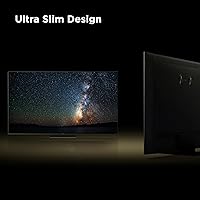
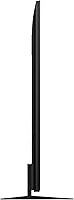
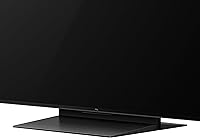
The slim profile and clean bezel design look appropriately premium for the price segment, and the panel sits confidently on its stand without wobble. Owners moving from older, bulkier sets frequently comment on how much more modern the physical footprint feels.
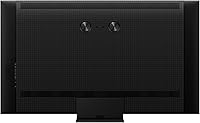
At 58.6 pounds, the set is on the heavier side for solo installation, and the stand leg placement requires a wide media console to support it safely. The remote, while functional, feels plasticky relative to what some competitors include at a comparable price point.
Upscaling Quality
76%
24%
The AiPQ processor handles 1080p streaming content reasonably well, adding detail and reducing compression artifacts in a way that looks natural on the 75-inch canvas. Standard-definition sources upscale acceptably for casual viewing without looking aggressively processed.
Lower-quality source material — older broadcast content or heavily compressed streams — can still look soft or slightly unnatural after processing. The upscaling is good but not class-leading, and buyers accustomed to high-end processors from Samsung or Sony may notice the difference on problematic sources.
Setup Experience
83%
Stand assembly is widely described as quick and intuitive, with the initial software setup guided clearly by the Google TV onboarding flow. Most owners report being fully up and running within 20 to 30 minutes of opening the box.
The initial Google account setup and permissions process can feel lengthy for buyers who are not already in the Google ecosystem. A small number of owners also report that the first firmware update, which downloads automatically on setup, adds meaningful time to getting the TV into its final state.
Connectivity
84%
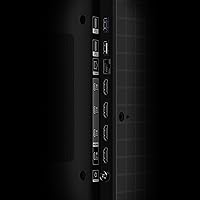
The input selection covers all current-generation needs — multiple HDMI ports, USB connections for media playback, dual-band Wi-Fi, and an Ethernet port for wired network stability. Console gamers especially appreciate not having to choose between devices.
The specific HDMI port capable of full bandwidth for 4K at 144Hz is limited to one port on the set, which can create prioritization headaches for buyers running two high-performance gaming systems simultaneously. Port labeling on the back panel is also reported as hard to read during installation.
Value for Money
81%
19%
Relative to what Mini LED panels with comparable dimming zone counts and gaming specs cost from Samsung or Sony, the QM7K represents a meaningful price advantage without sacrificing the features that matter most to its target audience. Buyers who researched alternatives typically feel they made a smart trade-off.
The price sits at a level where buyer expectations are high, and the audio and smart TV interface shortcomings feel more jarring than they would on a budget set. Owners who did not factor in the likely cost of a soundbar occasionally feel the total investment exceeded their plan.
Remote Control
58%
42%
The voice remote works reliably for its core functions — launching apps, adjusting volume, and triggering Google Assistant or Alexa search — and the button layout is straightforward enough that most users learn it quickly without consulting the manual.
Build quality of the remote feels noticeably below the premium the TV commands, with a lightweight plastic construction that does not inspire confidence. Several owners report that the shortcut buttons are assigned to streaming services they do not use, with no way to reassign them.
Motion Handling
83%
Sports and live action content benefit clearly from the 144Hz panel, with on-screen movement staying sharp and defined during fast lateral motion. The motion interpolation options in the settings menu give users control over how processed or natural the result looks.
Motion smoothing at its higher settings can introduce the classic soap-opera effect that bothers experienced viewers, and finding the sweet spot in the menu takes some trial and error. Some owners leave interpolation off entirely and rely on the native 144Hz refresh without enhancement.

Suitable for:

The TCL 75-inch QM7K Mini LED QLED TV is built for buyers who want a large, high-performance screen without paying the premium that OLED commands at this size. It fits particularly well in living rooms that see a lot of natural light — the anti-reflective panel is a genuine practical advantage, not just a marketing checkbox. Gamers with a PlayStation 5, Xbox Series X, or a capable PC will find the high-refresh-rate support meaningfully useful, especially in fast-paced titles where input responsiveness actually changes how the game feels. Home theater fans who prioritize peak brightness and HDR pop over the absolute black levels of OLED will also feel well served. It suits cord-cutters too, since Google TV keeps streaming apps organized and accessible without needing an external device.

Not suitable for:

The TCL 75-inch QM7K Mini LED QLED TV is not the right call for buyers who watch a lot of content in a fully darkened room and are particularly sensitive to blooming — the kind of soft glow that can appear around subtitles or bright objects against a black background is a known Mini LED trade-off, and this set does not fully escape it. If pristine black uniformity is your single most important picture quality criterion, an OLED panel will still hold the edge at any price. Buyers hoping to skip a soundbar entirely for serious movie nights may find the built-in audio adequate for casual viewing but underwhelming for cinematic listening. Those who find smart TV interfaces frustrating should also know that some owners report occasional sluggishness in the Google TV interface, which can interrupt the experience. Finally, anyone needing a TV for a smaller room might find 75 inches simply too large for comfortable viewing at close range.

Specifications

  • Screen Size: The panel measures 75 inches diagonally, making it a large-format display suited for living rooms with generous viewing distances of 8 feet or more.
  • Display Type: Uses QD-Mini LED QLED technology, combining quantum dot color enhancement with a miniaturized LED backlight array for improved brightness and color accuracy over conventional LED panels.
  • Resolution: Delivers native 4K UHD resolution at 3840×2160 pixels, providing sharp detail on compatible streaming, Blu-ray, and gaming sources.
  • Refresh Rate: The native panel runs at 144Hz, with a variable gaming refresh rate that scales up to 288Hz VRR for supported devices and content.
  • Local Dimming: Full-array local dimming operates with up to 2500 independently controlled zones, allowing the TV to raise and lower backlight intensity at a granular level across the screen.
  • HDR Support: Compatible with Dolby Vision, HDR10+, HDR10, and HLG, covering the full range of HDR formats used by major streaming platforms and physical media.
  • Panel Technology: The CrystGlow HVA panel incorporates an anti-reflective coating designed to reduce glare and maintain image clarity in rooms with ambient or direct light sources.
  • Processor: Powered by the TCL AiPQ processor, which handles real-time scene analysis, upscaling of non-native 4K content, and dynamic picture optimization.
  • Audio System: Onkyo-tuned 40-watt speaker system with Dolby Atmos support provides multi-channel virtual surround audio from the built-in drivers.
  • Smart Platform: Runs Google TV, offering a unified interface for streaming apps, live TV, and Google Assistant integration alongside the included Alexa-compatible voice remote.
  • Connectivity: Inputs include HDMI, USB, Ethernet, Wi-Fi, and RF, covering wired and wireless connections for consoles, streaming devices, antennas, and home networks.
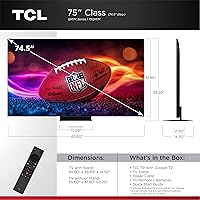
  • Dimensions: With the stand attached, the TV measures 65.6″ wide, 39.2″ tall, and 2.2″ deep.
  • Weight: The set weighs 58.6 pounds with the stand, which is worth factoring in if you plan to wall-mount it without assistance.
  • Power Output: Rated at 40 watts total audio output, distributed across the built-in speaker configuration.
  • Model Number: The exact model designation is 75QM7K, specific to the 75-inch variant of the QM7K series.
  • Release Year: This model was first made available in March 2025 as part of TCL's updated QM7K lineup.
  • Remote & Batteries: Includes a voice remote with Alexa support; the remote requires two AAA batteries, which are included in the box.
  • Included Items: The box contains the TV panel, stand hardware, power cable, voice remote, two AAA batteries, and a printed user manual.

Related Reviews
TCL 85-Inch QM8 QLED Mini LED TV
76%
93%
Picture Brightness
76%
Contrast & Black Levels
84%
Color Accuracy
89%
Gaming Performance
78%
Motion Handling
More
Sony BRAVIA 7 75-inch Mini LED TV
79%
91%
Picture Quality
88%
Gaming Performance
86%
HDR Performance
72%
Smart TV Experience
78%
Contrast & Black Levels
More
TCL 98-inch QM7K Mini LED QLED TV
80%
88%
Picture Quality
79%
Contrast & Black Levels
92%
Brightness & HDR Performance
91%
Gaming Performance
84%
Anti-Reflective Performance
More
TCL 85-Inch QM6K QD-Mini LED TV
86%
93%
Picture Quality
90%
Gaming Performance
75%
Sound Quality
87%
Build Quality
88%
Smart TV Features
More
TCL 65-Inch QM6K QD-Mini LED 4K TV
86%
94%
Display Quality
89%
Gaming Performance
85%
Sound Quality
92%
Value for Money
80%
Smart TV Features
More
TCL 55-inch QM6K Mini LED 4K TV
83%
88%
Picture Quality
76%
Local Dimming Performance
91%
Gaming Performance
93%
Sports Viewing
87%
HDR Compatibility
More
TCL Q6 75-Inch QLED 4K Smart TV
74%
78%
Picture Quality
58%
Contrast & Black Levels
81%
Color Accuracy
83%
Brightness
67%
Motion Handling
More
TCL 98QM6K Mini LED QLED 4K TV
78%
88%
Picture Quality
76%
Local Dimming Performance
91%
Motion & Refresh Rate
89%
Gaming Performance
86%
HDR Experience
More
LG QNED80 Series 75-Inch 4K Mini LED Smart TV
84%
91%
Picture Quality
88%
Gaming Performance
84%
Smart Features & Usability
79%
Sound Quality
93%
Build Quality
More
Sony BRAVIA 7 55-inch 4K QLED TV
77%
88%
Picture Quality
91%
Gaming Performance
86%
Brightness & HDR
84%
Color Accuracy
77%
Smart TV Experience
More

FAQ

It depends on your sensitivity and viewing habits. The QM7K does a solid job controlling blooming compared to TVs with fewer dimming zones, but if you regularly watch content with bright text or objects against a pure black background — think subtitles during a dark movie scene — you will occasionally notice a faint glow around those elements. It is not distracting for most people, but if perfect black uniformity is a priority, an OLED panel will still have an edge.

It is genuinely useful for gaming, though with some context. The native panel runs at 144Hz, and the 288Hz figure refers to the variable refresh rate ceiling available when using compatible gaming sources. In practice, this means the TV can sync with frame rates up to 288fps from a PC, reducing tearing and delivering smoother motion. For console gaming, current hardware typically outputs at 60 or 120fps, so the ceiling matters less there, but the low-latency VRR support still makes a noticeable difference in responsiveness.

Yes, it pairs well with both consoles. The HDMI inputs support the bandwidth needed for 4K at high refresh rates, and the VRR support is compatible with both Sony and Microsoft implementations. You will want to enable the relevant game mode settings in the picture menu to get the lowest input lag, which the TV handles without much fuss.

For casual everyday viewing — news, sitcoms, general streaming — the 40-watt Onkyo system is genuinely decent and better than what most TVs offer at this size. If you are planning dedicated movie nights with action films or music-heavy content, you will probably want a soundbar or a proper audio setup eventually. It will not embarrass you out of the box, but it is not a substitute for a dedicated audio solution if sound quality matters to you.

Google TV is one of the better smart TV operating systems available, with a clean interface that pulls together your streaming services, live TV, and app library in one place. On the QM7K, some owners have noted occasional sluggishness, particularly when switching between apps quickly. A quick reboot resolves it in most cases. If you are used to a Roku or Fire TV stick, the experience is comparable — just expect a mild learning curve with the interface layout.

Technically possible, but not recommended. At 58.6 pounds and 65.6 inches wide, safely maneuvering the panel onto a wall mount without scratching the screen or risking a drop is genuinely awkward solo. Two people make the process straightforward. Also make sure your mount is rated for the TV's weight and VESA pattern before purchasing hardware.

For a 4K panel at 75 inches, most guidelines suggest a viewing distance of roughly 6.5 to 9.5 feet for an immersive experience that takes advantage of the resolution. Sitting closer than 6 feet can make the screen feel overwhelming for some viewers, while sitting much farther than 10 feet reduces the perceptible benefit of 4K detail.

Google TV includes built-in Chromecast support, so Android and Chrome browser casting works natively without any additional hardware. AirPlay support on TCL Google TV sets can vary by model and firmware, so it is worth checking the current software notes for the QM7K specifically if AirPlay is essential to how you plan to use the TV.

Most owners report the picture is quite good straight out of the box, which is a real advantage for buyers who do not want to spend time in settings menus. That said, the default mode tends to prioritize brightness over accuracy, so if you have a dedicated viewing room with controlled lighting, switching to a calibrated or cinema-style picture mode will get you closer to what the panel is actually capable of.

The stand spreads the TV's weight across two legs positioned toward the outer edges of the panel rather than a central pedestal. For a 75-inch set, you will need a media console or TV stand that is at least 55 to 60 inches wide to comfortably support both feet. Check the exact stand leg spacing in TCL's installation documentation before assuming your existing furniture will work.