Overview

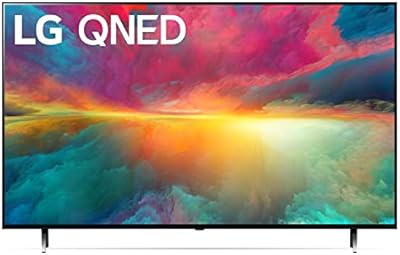
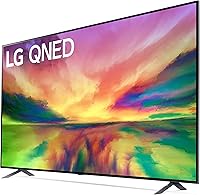
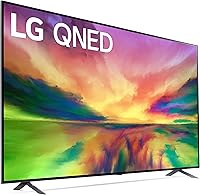
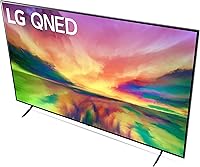
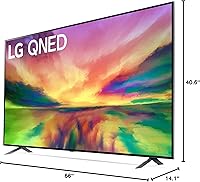
The LG QNED80 75-inch 4K Mini LED TV sits in an interesting spot — it's not trying to be an OLED, and it's not content being a budget LCD either. Launched in 2023, it pairs Quantum Dot technology with LG's NanoCell layer under the QNED label, putting it meaningfully above standard LED sets in both color accuracy and contrast. Honest expectations matter here: this is a strong, well-rounded performer, not a reference-grade display. At its price point, it competes directly with mid-range Samsung QLED and Sony X90-class sets. What makes it worth considering is its dual identity — equally at home in a movie night setup as it is running a gaming console at full throttle.

Features & Benefits

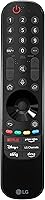
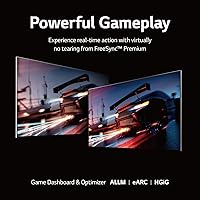
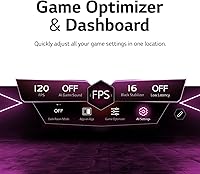
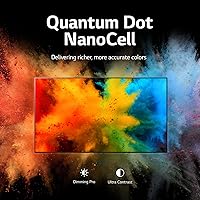
The backlighting is where this 75-inch Mini LED immediately pulls ahead of conventional LED TVs. LG's Dimming Pro uses local dimming zones to push blacks noticeably deeper, though it stops short of OLED territory — bright objects near dark areas can still cause some light bleed. The Quantum Dot and NanoCell combination produces wide color gamut coverage that looks vivid without feeling oversaturated. The a7 AI Processor Gen6 handles upscaling from 1080p sources convincingly and adjusts picture modes on the fly based on content type. Gamers get native 120Hz, two HDMI 2.1 ports (the other two are standard HDMI), VRR, FreeSync, and a dedicated Game Optimizer dashboard. The webOS 23 platform is clean, and the Magic Remote makes navigation genuinely quick.

Best For

The LG QNED80 makes the most sense for a few specific types of buyers. Console and PC gamers will appreciate the native 120Hz panel combined with two HDMI 2.1 ports, VRR, and FreeSync — that's a genuinely capable setup for next-gen gaming at 75 inches. It also suits households that want one TV to handle everything: sports on the weekend, streaming series, and the occasional gaming session, without immediately needing a separate soundbar. If your living room gets a fair amount of ambient light, the Mini LED brightness gives this large-screen LG a real advantage over OLED panels, which can struggle in brighter rooms. And if you're upgrading from an older 55-inch or 65-inch LCD, the improvement in contrast and color depth will be immediately noticeable.

User Feedback

Buyers consistently praise the picture brightness and how well it handles fast-moving sports content, with gaming responsiveness getting frequent positive mentions from console users. The webOS interface earns approval for being intuitive, though a handful of reviewers note the Magic Remote takes a few days to adapt to, and the app library shows some gaps compared to Roku or Fire TV platforms. The most common complaint centers on local dimming blooming — halos around bright subtitles or light sources against dark backgrounds, which is a known Mini LED limitation rather than a flaw specific to this set. Opinions on overall value are split; buyers coming from budget LCDs tend to feel the upgrade is well justified, while those cross-shopping with OLED options at a similar price are more divided.

Pros

  • Mini LED backlighting produces noticeably better contrast than conventional LED TVs at this screen size.
  • Native 120Hz refresh rate keeps fast sports and gaming content looking sharp and fluid.
  • Two HDMI 2.1 ports support next-gen console and PC gaming at full bandwidth.
  • VRR and FreeSync support reduces screen tearing without requiring any manual configuration.
  • The a7 AI Processor upscales older 1080p content convincingly, making it useful beyond 4K sources.
  • Quantum Dot and NanoCell technology combine to deliver wide color gamut coverage with accurate saturation.
  • webOS 23 is a clean, responsive platform with an intuitive layout that most users pick up quickly.
  • Over 300 free LG Channels provide genuine no-subscription value out of the box.
  • Peak brightness gives this 75-inch Mini LED a clear advantage in rooms with significant ambient light.
  • FILMMAKER MODE preserves director-intended color grading without post-processing interference.

Cons

  • Local dimming blooming around bright subtitles or light sources in dark scenes is a consistent and noticeable issue.
  • Only two of the four HDMI ports are 2.1-spec; the others are standard, which limits multi-device gaming setups.
  • The Magic Remote has a learning curve that frustrates some users during the first week of ownership.
  • The webOS app library has gaps, and a handful of niche streaming services are missing entirely.
  • Black levels, while improved over standard LED, still do not match what an OLED panel delivers.
  • Out-of-the-box picture mode settings lean toward over-brightness and may require manual calibration to look their best.
  • Built-in audio, while adequate for casual use, will leave buyers who watch movies regularly wanting a soundbar.
  • The 2023 model year means it may be harder to find at its original retail price as newer QNED generations appear.
  • Power consumption at 109.6 watts is moderate but worth noting for buyers mindful of long-term energy costs.

Ratings

Our AI rating system analyzed thousands of verified global buyer reviews for the LG QNED80 75-inch 4K Mini LED TV, actively filtering out incentivized, duplicate, and bot-generated submissions to surface what real owners actually experience. Scores reflect a balanced synthesis of both consistent praise and recurring frustrations — nothing is glossed over. Whether this large-screen LG earns a place in your living room or falls short of your expectations, the breakdown below tells the full story.

Picture Quality
83%
In well-lit rooms, the Mini LED backlighting produces vivid, punchy images that consistently impress owners upgrading from older LCD panels. Sports content in particular looks sharp and colorful, with the Quantum Dot and NanoCell combo contributing to wide color gamut coverage that feels natural rather than overdone.
In darker viewing environments, the gap between this panel and an OLED becomes harder to ignore — local dimming zones produce visible blooming around bright objects set against dark backgrounds. Users who watch a lot of cinematic content in a blacked-out room report that the contrast performance, while improved over standard LED, still feels like a compromise.
Black Levels & Contrast
71%
29%
Compared to conventional edge-lit or full-array LED sets at a similar price, the Dimming Pro system delivers a genuinely noticeable improvement in shadow detail and depth. Owners watching HDR content in a moderately lit room report that the image looks punchy and three-dimensional in a way that budget LCD panels simply cannot match.
The local dimming zone count is not high enough to eliminate blooming in demanding scenes, and this is the most frequently cited complaint across user reviews. Subtitles against a dark sky, or a single lamp in a dark room, will produce a halo of elevated backlight that breaks immersion for attentive viewers.
Gaming Performance
91%
The combination of native 120Hz, two HDMI 2.1 ports, VRR, and FreeSync makes this one of the more capable large-format gaming displays in its class. PS5 and Xbox Series X owners consistently report that the Game Optimizer dashboard simplifies setup, and input lag in game mode is low enough that competitive and action-heavy titles feel genuinely responsive.
The two standard HDMI ports being non-2.1 spec catches some multi-console owners off guard, limiting full-bandwidth connections to just two devices simultaneously. A small number of users also report that the Game Optimizer auto-detection occasionally fails to trigger, requiring a manual mode switch.
Brightness
86%
Peak brightness is one of the LG QNED80's clearest strengths, and owners in bright living rooms or open-plan spaces consistently praise how well it holds up under overhead lighting and near windows. HDR highlights in streaming content pop convincingly, and the panel does not look washed out the way many OLED sets can in the same conditions.
At sustained average brightness across the full panel — rather than small highlight peaks — some users note that the screen can throttle output over time, particularly in very bright picture modes during extended use. This is a standard behavior for Mini LED panels managing heat, but it can be surprising to buyers who expected uniform peak output throughout.
Color Accuracy
79%
21%
Out of the box, colors are vibrant and pleasing for the majority of content types, and the Quantum Dot layer gives the set a broader color palette than NanoCell-only panels from earlier LG generations. Owners who use FILMMAKER MODE or Cinema preset report accurate, restrained color reproduction that works well for streaming services with proper color metadata.
The default Standard and Vivid modes push saturation beyond what most content actually calls for, which looks great in a store but can feel cartoonish at home. Buyers who do not take the time to calibrate or switch presets may live with an inaccurate picture without realizing it.
Motion Handling
82%
18%
The native 120Hz panel handles fast-moving sports and action content cleanly, and owners regularly highlight how smooth the Premier League, NFL, and NBA look without needing to rely heavily on motion interpolation. For gaming, the high refresh rate combined with VRR means frame pacing feels consistent during demanding scenes.
LG's TruMotion processing, when left on higher settings, introduces the classic soap-opera effect that bothers many viewers during movie watching. Turning it off or reducing it is a simple fix, but the out-of-the-box default setting is too aggressive for most cinematic content.
Smart TV Platform
77%
23%
WebOS 23 is among the more polished smart TV operating systems available, and owners appreciate the Quick Cards feature for organizing apps into categories without endless scrolling. The interface is fast and responsive, and the 300-plus free LG Channels give buyers genuine no-subscription content on day one.
The app library has gaps that frustrate users who rely on niche or regional streaming services not yet available in the LG Content Store. Compared to Roku or Google TV ecosystems, webOS trails slightly in third-party app breadth, and a handful of reviewers noted that certain apps feel slower or less polished than their counterparts on other platforms.
Magic Remote Usability
74%
26%
Once users adjust to the pointer-style control, most find it faster for navigating streaming menus than a traditional directional-pad remote. Voice search via the built-in Alexa button works reliably for quick app launches and content searches, which owners coming from basic remotes find surprisingly useful.
The learning curve is steeper than expected for users accustomed to conventional TV remotes, and early reviews frequently mention accidental clicks or overshooting menu items during the first week. The remote's gyroscope pointer also frustrates some users when used from awkward seating angles.
Upscaling Quality
81%
19%
The a7 AI Processor Gen6 handles 1080p and even 720p source upscaling better than most buyers anticipate, making older cable broadcasts and non-4K streaming content look respectable on the large panel. Owners who watch a mix of 4K and legacy content appreciate that the quality drop-off between sources is not jarring.
Very low-resolution sources — particularly older cable channels or heavily compressed streaming — can still look soft or artifact-heavy despite the AI processing. The upscaling is solid for its class but should not be mistaken for a substitute for native 4K content.
Built-in Audio
59%
41%
The virtual 5.1 processing adds some width and spatial presence that makes dialogue intelligibility above average for a built-in TV speaker system. For everyday news viewing, casual YouTube browsing, and daytime streaming, most owners find it perfectly adequate without any additional equipment.
Bass depth is limited by the physical constraints of a slim panel, and at higher volumes the speakers can sound thin or strained during action sequences. The majority of users who care about movie or music audio quality add a soundbar within the first few months, suggesting the built-in system rarely satisfies long-term.
Build & Design
78%
22%
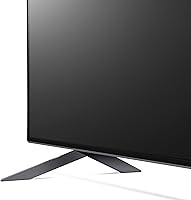
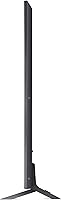
The slim profile and clean bezel design look premium in person, and owners consistently describe the physical build as feeling substantial and well-assembled for its price tier. The stand design is stable at this screen size and does not wobble noticeably during normal use.
At 34 pounds and 66 inches wide, this is not a one-person installation — several reviewers note that the unboxing and stand assembly process is awkward without a second pair of hands. The stand footprint is also fairly wide, which can be a problem for furniture with narrower surfaces.
Setup & Calibration
72%
28%
Initial setup through webOS 23 is guided and straightforward, and most owners report being up and running with their streaming accounts within 20 to 30 minutes. The AI Picture Pro mode does a reasonable automatic calibration job for buyers who prefer not to manually adjust settings.
Out-of-the-box picture modes are tuned for showroom appeal rather than accurate home viewing, and owners who do not adjust settings may unknowingly watch with inflated brightness and unnatural color. Getting the best out of the panel typically requires at least some manual adjustment or a willingness to explore the picture settings menu.
Value for Money
68%
32%
For buyers stepping up from a budget or mid-range LCD, the jump in color depth, contrast, and gaming capability makes the price feel well-justified. The gaming feature set in particular — HDMI 2.1, VRR, 120Hz — represents strong value relative to what competing brands charge for equivalent specs at 75 inches.
Buyers who cross-shop against entry-level OLED options at a similar price point are genuinely divided on whether the brightness advantage of this 75-inch Mini LED outweighs the superior contrast of OLED. Several reviewers express post-purchase uncertainty, noting they might have chosen differently with more time to compare both technologies side by side.
Energy Efficiency
63%
37%
At 109.6 watts under standard viewing conditions, consumption is reasonable for a 75-inch Mini LED panel, and owners in average use scenarios report that energy bills do not spike noticeably after installation. The auto-brightness adjustment feature helps moderate power draw during extended viewing sessions.
In high-brightness or HDR peak modes, power draw climbs beyond the rated figure, which some owners notice on their electricity bills over time. Buyers who leave the TV on for long periods as a background screen will find it less economical than a smaller or lower-brightness set.

Suitable for:

The LG QNED80 75-inch 4K Mini LED TV is a strong match for buyers who want a meaningful step up from a standard LCD without committing to OLED pricing. It's particularly well-suited for households with mixed lighting conditions — the Mini LED backlighting delivers enough peak brightness to hold up in a sunlit living room where OLED panels can look washed out. Console and PC gamers will find the combination of native 120Hz, two HDMI 2.1 ports, VRR, and FreeSync genuinely useful at this screen size, making it a practical large-format gaming display without requiring a dedicated gaming monitor. Sports fans benefit from the smooth motion handling and vivid color reproduction that makes fast-moving content look sharp rather than smeared. If you're upgrading from a 55-inch or 65-inch LCD that's several years old, the contrast and color depth improvement will feel substantial and immediately worthwhile.

Not suitable for:

Buyers who prioritize absolute black levels and near-perfect contrast ratios for dark-room viewing will find the LG QNED80 75-inch 4K Mini LED TV falls short of what a good OLED delivers — local dimming blooming around bright objects in dark scenes is a real and persistent limitation of Mini LED technology at this tier. Dedicated cinephiles who watch a lot of dark, moody content in a blacked-out room are better served by spending more on an OLED panel. Those expecting a full four-port HDMI 2.1 setup will be disappointed, as only two of the HDMI ports support 2.1 bandwidth — a consideration worth weighing if you run multiple high-refresh-rate gaming devices simultaneously. Buyers looking for the deepest smart TV app ecosystem may also find webOS 23 slightly limiting compared to Roku or Google TV platforms, particularly for niche streaming services. Finally, anyone sensitive to the upfront investment and already considering OLED alternatives at a comparable price point should carefully evaluate whether the brightness advantage justifies choosing Mini LED over the superior contrast of an entry-level OLED.

Specifications

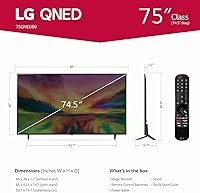
  • Screen Size: The panel measures 75 inches diagonally, confirmed by the model number 75QNED80URA.
  • Display Tech: Mini LED backlighting is combined with Quantum Dot and NanoCell filter layers to improve color volume and contrast over standard LED panels.
  • Resolution: Native 4K UHD resolution (3840 x 2160 pixels) across the full panel area.
  • Refresh Rate: Native 120Hz panel refresh rate with no frame interpolation required to reach that figure.
  • Processor: Powered by LG's a7 AI Processor Gen6, which handles upscaling, scene detection, and automatic audio adjustment.
  • HDR Support: Compatible with HDR10, HLG, and Dolby Vision IQ formats for broad streaming and disc playback coverage.
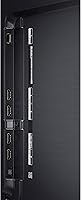
  • HDMI Ports: Four HDMI ports total, of which two are HDMI 2.1 spec supporting 4K at 120Hz and full VRR bandwidth; the remaining two are standard HDMI.
  • Gaming Features: Includes VRR, AMD FreeSync Premium, GeForce NOW cloud gaming support, Game Optimizer dashboard, and low input lag mode.
  • Smart Platform: Runs webOS 23 with Quick Cards content organization, built-in Alexa, and access to over 300 free LG Channels.
  • Audio Output: Built-in speaker system with virtual 5.1 channel processing and support for FILMMAKER MODE audio passthrough.
  • Connectivity: Built-in Wi-Fi, Bluetooth, USB ports, and an optical digital audio output for external audio equipment.
  • Dimensions: With stand, the set measures 14.1″ deep, 66″ wide, and 40.6″ tall.
  • Weight: The TV weighs approximately 34 pounds with stand, making two-person installation strongly advisable at this size.
  • Power Draw: Rated power consumption is 109.6 watts under standard viewing conditions at 120 volts AC.
  • Aspect Ratio: Standard widescreen 16:9 aspect ratio covering the full panel.
  • In the Box: Package includes the television, Magic Remote, batteries, power cable, stand with hardware, and a quick start guide.
  • Voice Assistants: Alexa is built in natively; Google Assistant and ThinQ AI are also accessible through the platform.
  • Availability: First listed for sale in March 2023 as part of LG's 2023 QNED lineup.

Related Reviews
LG QNED80 Series 55-Inch 4K Mini LED Smart TV
85%
94%
Picture Quality
89%
Gaming Performance
80%
Sound Quality
85%
Ease of Use
88%
Design & Build Quality
More
LG 75UM7570PUD 75-inch 4K Smart LED TV
73%
78%
Picture Quality
91%
Viewing Angles
82%
Smart TV Platform
76%
Voice Assistant Integration
62%
Motion Handling
More
Hisense 75U8K Mini-LED 4K TV
80%
88%
Picture Quality
91%
HDR Performance
93%
Gaming Performance
66%
Contrast & Blacks
94%
Brightness
More
LG QNED85 65-inch Mini-LED Smart TV
79%
91%
Picture Brightness
88%
Color Accuracy
67%
Contrast & Black Levels
84%
HDR Performance
82%
Gaming Performance
More
LG QNED75 50-Inch Mini-LED Smart TV
78%
83%
Picture Quality
71%
Local Dimming & Contrast
84%
Upscaling Performance
88%
Smart TV Experience
81%
Magic Remote Usability
More
TCL 75-inch QM7K Mini LED QLED TV
80%
88%
Picture Quality
82%
Local Dimming Performance
91%
Gaming Performance
86%
Anti-Reflective Panel
71%
Smart TV Experience
More
Hisense 75U7K 75-inch Mini-LED QLED TV
79%
88%
Picture Quality
79%
Contrast & Local Dimming
83%
Brightness
91%
Gaming Performance
86%
Motion Handling
More
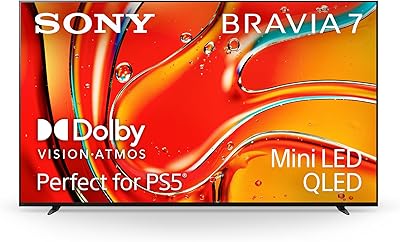
Sony BRAVIA 7 75-inch Mini LED TV
79%
91%
Picture Quality
88%
Gaming Performance
86%
HDR Performance
72%
Smart TV Experience
78%
Contrast & Black Levels
More
LG 75-Inch UQ7590 4K Smart TV
69%
74%
Picture Quality
58%
Motion & Refresh Rate
83%
Smart TV Platform
81%
Value for Money
62%
Gaming Performance
More
Sony X750H 75-inch 4K LED TV
87%
93%
Picture Quality
90%
Gaming Performance (Game Mode)
65%
Sound Quality
88%
Value for Money
91%
Ease of Setup
More

FAQ

No, and this is worth knowing before you buy. Only two of the four HDMI ports are HDMI 2.1 spec, which means only those two support 4K at 120Hz and full VRR bandwidth. The other two are standard HDMI ports, which cap out at 4K 60Hz. If you're running a PS5 and an Xbox Series X simultaneously, plan your connections accordingly.

It's noticeable if you watch a lot of dark content in a dim room. Mini LED local dimming is a real improvement over older full-array LED tech, but bright subtitles or light sources against a very dark background will produce a visible halo of light around them. It's not a defect — it's a known characteristic of Mini LED at this price tier. If you mostly watch in a brighter room or during the day, it's far less obvious.

Yes, it's genuinely well-suited for either console. You get native 120Hz, HDMI 2.1 on two ports, VRR support, and a dedicated Game Optimizer mode that consolidates lag and refresh settings in one place. Input lag in game mode is low enough that it won't be a complaint for the vast majority of players.

Quite well, actually. The Mini LED backlighting gives it enough peak brightness to hold its own in a room with windows or overhead lighting, which is one area where it has a practical advantage over OLED panels. Colors stay relatively vivid and contrast holds up better than a conventional edge-lit LED would under the same conditions.

It covers the big ones — Netflix, Disney+, Prime Video, Apple TV+, HBO Max, Hulu, and YouTube are all present. The gaps tend to show up with more niche or regional services. If you rely on a less mainstream app, it's worth double-checking the LG Content Store before purchasing. In general, the platform is solid, just not quite as broad as Roku.

The default Standard mode tends to run a bit bright and oversaturated, which looks impressive in a showroom but isn't the most accurate for home viewing. Most users who have put time into calibration recommend switching to Filmmaker Mode or Cinema mode for movies and TV, and leaving Standard or Vivid for sports in bright rooms. The AI Picture Pro setting does a decent automatic job if you'd rather not dig into the menus.

For everyday TV watching, news, and casual streaming it's adequate. The virtual 5.1 processing adds some width, but the physical speaker drivers in a slim 75-inch panel have real limitations in bass depth and overall volume. If you watch movies regularly or care about audio quality, a soundbar — even a mid-range one — will make a meaningful difference.

It pairs automatically on first boot, so there's no complex setup involved. The pointer-style control is intuitive for most users within a day or two, though people who are used to a traditional directional-pad remote sometimes find it awkward at first. The voice button works reliably for Alexa commands and quick searches, which speeds things up considerably once you get comfortable with it.

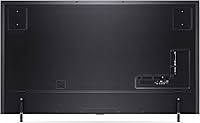
Yes, it supports wall mounting. The VESA mounting pattern for this 75-inch model is 300 x 300mm. You will need a compatible wall mount bracket, which is sold separately — nothing beyond the stand is included in the box. Given the size and weight, professional installation is worth considering.

It depends entirely on your room and how you use it. If your viewing space gets significant ambient light, the QNED80 is the more practical choice — brightness is its strength. If you watch in a dark room and care deeply about black levels and contrast for movies, an entry-level OLED at a comparable price will deliver a noticeably better picture. The large-screen LG wins on brightness and gaming features; OLED wins on pure image quality in controlled lighting.