

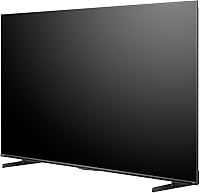
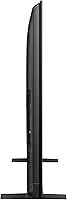
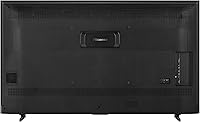

Overview

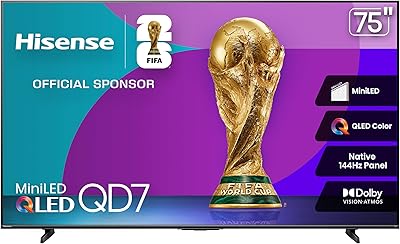
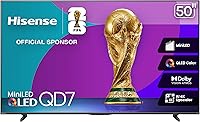
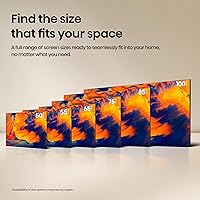
The Hisense QD7 50-inch Mini-LED 4K Smart TV arrived in early 2025 as one of the more interesting value plays in the TV market — sitting comfortably between stripped-down budget panels and the kind of premium flagships that cost three times as much. Hisense built this one around Fire TV, which is a meaningful choice for anyone already living in the Amazon ecosystem. Against direct rivals like TCL's Q-series and Samsung's entry-level QLED lineup, this Hisense Mini-LED TV holds its own on paper and, more importantly, in practice. Available in sizes ranging from 50 to 100 inches, we're keeping focus here squarely on the 50-inch variant.

Features & Benefits

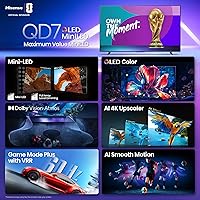
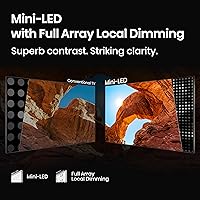
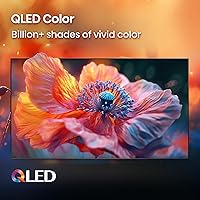
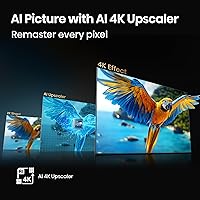
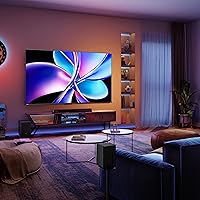
The picture quality story starts with Mini-LED backlighting paired with Full Array Local Dimming, which noticeably tightens contrast compared to a conventional edge-lit panel — dark scenes stay dark without that familiar glow bleeding into the frame. The QLED quantum dot layer pushes color reproduction into genuinely impressive territory for this price tier. HDR coverage is broad, with Dolby Vision and HDR10+ both supported, meaning most streaming content renders with proper tone mapping. The AI upscaler handles older or compressed footage better than you might expect, and MEMC keeps fast motion reasonably sharp. Dolby Atmos processing adds some dimension to the built-in audio, though it has its limits.

Best For

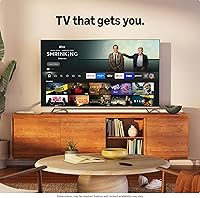
This Fire TV-powered display makes the most sense for people who spend the majority of their time streaming. If your nightly routine involves Prime Video, Netflix, or a few other major apps, the interface puts everything right where you want it without needing external hardware. Alexa integration is genuinely useful here if your home already runs on Amazon devices — controlling lights, checking the weather, or switching inputs becomes almost effortless. Casual gamers will appreciate Game Mode Plus and ALLM support, but anyone serious about competitive gaming should note the 60Hz refresh rate on this size. It also works well as a secondary room TV where value-to-quality ratio matters most.

User Feedback

Buyers consistently point to picture brightness and color as standout strengths, with many noting that the vibrancy at this price tier genuinely surprised them. The Fire TV interface earns mixed reactions — it's intuitive and fast, but a fair number of users find the ad-heavy home screen irritating over time. Out-of-box calibration gets some criticism too; a few owners report the image looks oversaturated until they manually adjust the settings. Audio is the area where expectations need managing — the built-in speakers are passable for casual viewing, but adding a soundbar is something multiple reviewers recommend fairly quickly. Overall sentiment skews positive, with the 60Hz ceiling being the most cited limitation.

Pros

  • Mini-LED backlighting produces noticeably better contrast and reduced blooming versus standard LED panels at this price tier.
  • QLED quantum dot color makes HDR content look vibrant and punchy without requiring any manual tweaking.
  • Dolby Vision and HDR10+ support covers virtually every major streaming platform's HDR format.
  • Fire TV is one of the most intuitive smart TV platforms available, especially for Amazon Prime subscribers.
  • Alexa voice control works reliably for hands-free commands and smart home integration.
  • The AI upscaler handles lower-resolution and compressed streaming content better than expected for an entry-level set.
  • Game Mode Plus and ALLM reduce input lag enough for casual and single-player gaming to feel responsive.
  • Available in a wide range of sizes, so upgrading to a larger screen with the same ecosystem is straightforward.
  • Build quality feels solid for the price, with a clean, minimal design that fits most room setups without looking cheap.

Cons

  • The 50-inch panel is limited to 60Hz, making it a poor choice for fast-paced competitive gaming or high-motion sports.
  • Out-of-box picture calibration skews oversaturated; getting accurate colors requires manual adjustment in the settings menu.
  • Built-in audio is underwhelming for the size — most buyers will want to add a soundbar for a satisfying listening experience.
  • The Fire TV home screen pushes promoted content and ads prominently, which can feel intrusive during daily use.
  • Local dimming performance, while improved over standard LED, is still entry-level and falls short of high-end Mini-LED panels with more dimming zones.
  • The Hi-View AI Engine, while capable, occasionally introduces processing artifacts on very fast or complex motion.
  • No support for Apple AirPlay or Google Cast natively, limiting mirroring options for non-Amazon device users.
  • At 34.9 pounds, the set is not particularly heavy, but the stand footprint is wide enough to be awkward on smaller TV stands.

Ratings

Our AI rating system analyzed thousands of verified global buyer reviews for the Hisense QD7 50-inch Mini-LED 4K Smart TV, actively filtering out incentivized, duplicate, and bot-generated submissions to surface what real owners genuinely think. The scores below reflect both the consistent strengths that keep buyers satisfied long-term and the friction points that show up repeatedly across different households and use cases. Nothing has been smoothed over — if a category divides opinion, the score and commentary reflect that honestly.

Picture Quality
83%
Buyers consistently describe the image as punching well above its price tier, especially during HDR streaming on Prime Video and Netflix. The QLED layer gives colors a richness that makes nature documentaries and sports broadcasts look genuinely vibrant, and the Mini-LED backlighting keeps dark scenes from looking washed out the way cheaper panels do.
It is worth tempering expectations — this is an entry-level Mini-LED implementation, not a high-zone flagship panel. Some owners notice mild blooming around bright objects on dark backgrounds, particularly during movie credits or night scenes, which is less common on more expensive Mini-LED sets.
Brightness & HDR Performance
79%
21%
At up to 600 nits peak brightness, the QD7 50-inch set handles HDR content confidently in typical indoor lighting conditions. Dolby Vision and HDR10+ compatibility means most streaming platforms deliver properly tone-mapped HDR without any setup fuss.
In very bright rooms or spaces with large south-facing windows, 600 nits can feel limiting compared to premium sets pushing 1000 nits or more. A handful of buyers in sunny climates specifically noted that afternoon glare required adjusting the TV's position rather than relying on brightness alone.
Color Accuracy
81%
19%
Out-of-box color in the default mode is eye-catching and vivid — great for a showroom, and genuinely enjoyable for casual streaming. Switching to Filmmaker Mode or Cinema mode brings colors much closer to accurate, and several buyers who made that adjustment reported being impressed by how natural skin tones and landscapes looked afterward.
The default picture settings lean heavily oversaturated and over-sharpened, which some buyers never correct because they do not know it is an option. Those who watch without adjusting settings may be getting a visually fatiguing experience that does not reflect what the panel is actually capable of.
Motion Handling
72%
28%
For everyday streaming — sitcoms, dramas, nature docs — the MEMC motion processing keeps things looking smooth and sharp without obvious artifacts. Sports fans watching mid-paced games like baseball or basketball generally report a clean, blur-free picture during standard play.
Fast-action content like hockey, Formula 1, or high-speed action sequences occasionally shows processing artifacts, particularly if motion smoothing is set to its more aggressive modes. The 60Hz native panel also means there is an inherent ceiling on how fluid very fast motion can look, regardless of processing.
Gaming Performance
68%
32%
Game Mode Plus measurably drops input lag to levels that feel responsive for casual and single-player gaming on PS5, Xbox, or Switch. ALLM automatically switches the TV into low-latency mode the moment a game console is detected, which is a genuinely convenient touch that removes one setup headache.
The 60Hz refresh rate cap on this size is a hard limitation for competitive gamers — players used to 120fps gaming on a higher-refresh display will feel the difference immediately. VRR support helps smooth out frame rate inconsistencies, but it cannot compensate for the underlying 60Hz ceiling during fast-paced multiplayer titles.
Audio Quality
61%
39%
For background TV viewing, news, and talk shows, the built-in speakers with Dolby Atmos processing are perfectly adequate. Dialogue clarity is solid, and at moderate listening volumes the sound does not feel thin or tinny for everyday use.
At higher volumes or during action-heavy content, the bass is noticeably absent and the overall soundstage feels compressed. This is one of the most consistent buyer complaints — a significant share of owners mention purchasing a soundbar within the first few weeks, which suggests the built-in audio undersells the quality of the display it accompanies.
Smart TV Interface
74%
26%
Fire TV is genuinely fast, app loading times are snappy, and the overall layout is intuitive — especially for Amazon Prime subscribers who get deep integration with their watchlists and recommendations. Alexa voice search across apps works reliably and saves real time when hunting for specific titles.
The home screen prominently features promoted and sponsored content that cannot be fully disabled, which irritates a vocal share of buyers who feel like they are being advertised to every time they turn the TV on. Users outside the Amazon ecosystem — particularly those invested in Google or Apple services — will find the interface less naturally suited to their habits.
Alexa & Smart Home Integration
82%
18%
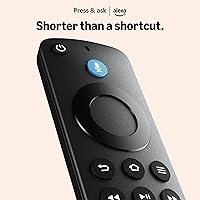
For households running Alexa-compatible smart home devices, the built-in voice assistant works exactly as expected — controlling lights, thermostats, and routines without needing to pick up a phone or a separate Echo device. The dedicated voice button on the remote makes triggering Alexa fast and reliable during daily use.
Users not invested in the Amazon ecosystem get significantly less value from this feature. Google Home and Apple HomeKit compatibility is limited, and those relying on those platforms for smart home control will find the Alexa integration more of a curiosity than a useful tool.
Ease of Setup
86%
Most buyers report the out-of-box setup as straightforward — the stand attaches quickly, Fire TV walks you through Wi-Fi and account login with a simple guided flow, and the voice remote is paired before you even start. The process from box to first picture typically takes under 20 minutes.
A small number of users encountered Wi-Fi connectivity hiccups during initial setup, particularly on crowded 2.4GHz networks. Firmware update prompts immediately after setup can also add a few unexpected minutes to the process, which occasionally frustrates buyers eager to start watching right away.
Build & Design
77%
23%
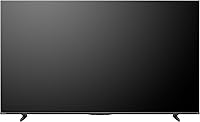
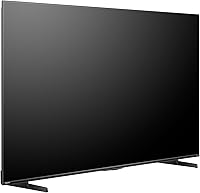
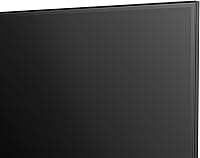
The slim profile and matte black finish look clean and unobtrusive in most room setups — this is not a TV that looks cheap on the wall or on a stand. The bezels are thin enough to keep the focus on the screen rather than the frame.
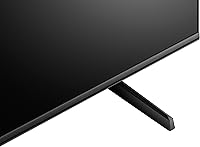
The stand has a wide footprint that does not work well on narrower TV consoles or media units, which some buyers only discover after assembly. The plastic rear casing, while fine for the price tier, does not convey the same premium build feel as more expensive competitors.
Remote Control
75%
25%
The included voice remote is well-designed for a TV in this category — the dedicated Alexa button, streaming service shortcuts, and backlit keys make it practical for everyday use in dim rooms. Button layout is logical and most users adapt to it quickly.
Some buyers find the shortcut buttons for specific streaming services feel like advertising rather than a convenience, and the remote does not support all third-party devices via IR as comprehensively as universal remotes do. A few users also noted the remote feels slightly light and hollow compared to higher-end competitors.
Connectivity
80%
20%
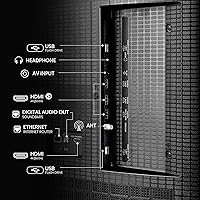
The combination of multiple HDMI ports, USB inputs, Ethernet, dual-band Wi-Fi, and Bluetooth covers virtually every connection scenario a typical household needs. Ethernet support is a notable plus for buyers who prefer stable wired streaming over Wi-Fi.
The specific HDMI port configuration — including which port supports eARC — is not clearly labeled on the physical inputs, which causes occasional confusion when setting up a soundbar or AV receiver. A clearer port labeling scheme would reduce setup frustration for less experienced buyers.
Value for Money
88%
At its price point, the QD7 50-inch set delivers a combination of Mini-LED backlighting, QLED color, Dolby Vision, and Fire TV that would have cost significantly more just two years ago. Buyers who compare it side-by-side with older TVs they paid more for are often genuinely surprised by the improvement.
The value case weakens slightly when buyers discover the 60Hz limitation and realize they may also need a soundbar to fully enjoy what the display offers — two factors that add hidden cost or reduce satisfaction relative to initial expectations. Competitors at a similar price occasionally offer 120Hz panels in this size category, which makes the value comparison more nuanced than it first appears.

Suitable for:

The Hisense QD7 50-inch Mini-LED 4K Smart TV is a strong match for everyday streamers who want noticeably better picture quality than a standard LED panel without paying flagship prices. If your household revolves around Amazon Prime Video, Netflix, or Disney+, the built-in Fire TV platform keeps everything accessible and familiar from the moment you plug it in. Alexa integration adds real convenience for anyone already using Echo devices or smart home accessories, turning basic tasks like adjusting volume or switching inputs into simple voice commands. Casual gamers who enjoy console gaming at a relaxed pace will find Game Mode Plus and ALLM support genuinely useful, even if the 60Hz panel is not built for competitive play. This set also works particularly well as a secondary living room or bedroom TV, where the balance between picture vibrancy and price is more important than chasing the absolute best specs on the market.

Not suitable for:

Buyers who prioritize high-refresh-rate gaming should look elsewhere — the 50-inch QD7 is capped at a native 60Hz panel, which puts it at a disadvantage compared to competing sets that offer 120Hz or higher at similar sizes. Cinephiles or serious home theater enthusiasts may also find the Mini-LED implementation here underwhelming when compared to higher-zone flagship panels or OLED displays, which deliver deeper blacks and more precise local dimming. If you actively dislike ad-supported smart TV interfaces, the Fire TV home screen — which prominently features promoted content — may frustrate you on a daily basis. Those who rely heavily on a non-Amazon smart home ecosystem, like Google Home or Apple HomeKit, will find the Alexa-first design less useful than they might hope. Anyone expecting premium out-of-box audio from the built-in speakers will likely need to budget for a soundbar to get the most out of what this Fire TV-powered display can otherwise offer visually.

Specifications

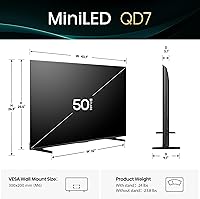
  • Screen Size: The panel measures 50 inches diagonally, with an overall unit footprint of 43.7″ wide by 25.5″ tall and 3.1″ deep including the stand.
  • Display Technology: Uses a Mini-LED backlight system combined with a QLED quantum dot layer for improved contrast and color volume over conventional LED-LCD panels.
  • Resolution: Native 4K UHD resolution (3840 x 2160 pixels) across the full panel.
  • Refresh Rate: The 50-inch model runs at a native 60Hz refresh rate; larger variants in the QD7 lineup (75-inch and above) step up to 144Hz.
  • Peak Brightness: Rated at up to 600 nits peak brightness, suitable for moderately bright rooms but not ideal for very high-ambient-light environments.
  • HDR Support: Compatible with Dolby Vision, HDR10+, HDR10+ Adaptive, and standard HDR10, covering the major HDR formats used by streaming platforms.
  • Audio: Built-in speaker system with Dolby Atmos processing; exact wattage output for the internal speakers is not officially specified by Hisense.
  • Smart Platform: Runs Amazon Fire TV OS with Alexa built-in, providing access to Prime Video, Netflix, Disney+, and thousands of other Fire TV-compatible apps.
  • AI Chipset: Powered by Hisense's Hi-View AI Engine, which handles real-time upscaling, noise reduction, and motion processing tasks.
  • Motion Processing: Features MEMC (Motion Estimation, Motion Compensation) technology with a Motion Rate rating of 240 to reduce blur in fast-moving content.
  • Gaming Features: Includes Game Mode Plus, Variable Refresh Rate (VRR), and Auto Low Latency Mode (ALLM) for reduced input lag during gaming sessions.
  • Connectivity: Equipped with HDMI ports, USB ports, Ethernet (RJ-45), dual-band Wi-Fi, and Bluetooth for flexible wired and wireless device connections.
  • Power Draw: Rated at 180 watts of power consumption under standard operating conditions.
  • Weight: The set weighs 34.9 pounds with the stand attached, making it manageable for a two-person installation.
  • Included Items: In the box: the TV, stand, power cable, voice remote (with Alexa), quick start guide, and two AAA batteries for the remote.
  • Local Dimming: Full Array Local Dimming is active across the panel, allowing independent brightness control in different screen zones to deepen shadow detail.
  • Upscaling: AI 4K Upscaler uses machine learning to enhance lower-resolution content — including HD broadcasts and older streaming titles — toward near-4K clarity.
  • Voltage: Designed for standard 120-volt North American electrical outlets with no adapter required.

Related Reviews
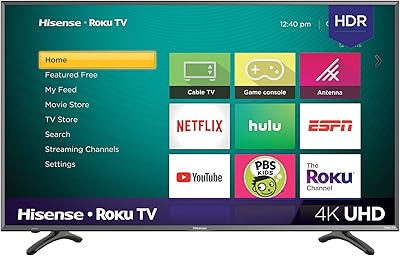
Hisense 50R7E 50-Inch 4K Roku Smart LED TV
84%
87%
Picture Quality
92%
Roku Streaming Performance
90%
Value for Money
65%
Sound Quality
70%
Brightness in Well-lit Rooms
More
Hisense 85-inch U8QG Mini-LED Smart TV
81%
91%
Picture Quality
93%
Brightness & HDR Performance
84%
Contrast & Local Dimming
89%
Gaming Performance
86%
Motion Handling
More
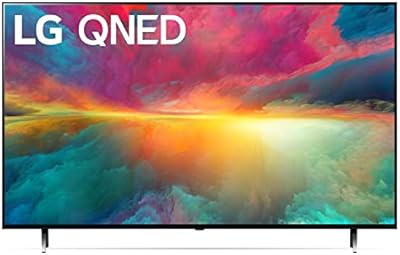
LG QNED75 50-Inch Mini-LED Smart TV
78%
83%
Picture Quality
71%
Local Dimming & Contrast
84%
Upscaling Performance
88%
Smart TV Experience
81%
Magic Remote Usability
More
Hisense 75-inch QD7 Mini-LED 4K Smart TV
75%
83%
Picture Quality
81%
Gaming Performance
78%
Motion Handling
79%
HDR Experience
82%
Color Accuracy
More
Hisense 85-inch U7 Mini-LED 4K TV
83%
88%
Picture Quality
91%
Gaming Performance
93%
Brightness & HDR
82%
Contrast & Local Dimming
86%
Color Accuracy
More
Hisense 75U7K 75-inch Mini-LED QLED TV
79%
88%
Picture Quality
79%
Contrast & Local Dimming
83%
Brightness
91%
Gaming Performance
86%
Motion Handling
More
Hisense U6 65-inch Mini-LED 4K Smart TV
78%
84%
Picture Quality
91%
Gaming Performance
82%
HDR Performance
79%
Motion Handling
76%
Local Dimming & Contrast
More
Hisense 50U6G1 50-Inch ULED 4K Smart TV
82%
89%
Picture Quality
84%
Sound Quality
92%
Value for Money
91%
Setup and Installation
75%
Usability and Interface
More
LG 50-inch UN7300 4K Smart TV
74%
82%
Picture Clarity
54%
Contrast & Black Levels
79%
Color Accuracy
61%
HDR Performance
91%
Smart Platform (webOS)
More
Hisense 43R7E 43-inch 4K Roku Smart LED TV
81%
87%
Picture Quality
92%
Value for Money
91%
Ease of Setup
85%
Streaming Performance
61%
Sound Quality
More

FAQ

It can hold its own in moderately lit rooms thanks to the 600-nit peak brightness and QLED color layer, but in a very sunny room with windows directly facing the screen you may notice some washout. Closing blinds or positioning the set away from direct light makes a noticeable difference.

It depends on what kind of gaming you do. Casual and single-player gaming works well thanks to Game Mode Plus and ALLM, which drop input lag to acceptable levels. That said, the 50-inch model is limited to 60Hz, so if you play fast-paced competitive titles and own a PS5 or Xbox Series X capable of 120fps output, you will not be able to take full advantage of that hardware here.

Technically you can set it up in a limited mode, but Fire TV is deeply tied to the Amazon ecosystem, and without an account you lose access to most apps and the Alexa voice features. For the best experience — and to get full use of what you paid for — an Amazon account is effectively required.

It is noticeable. Amazon promotes its own content and paid placements prominently on the home screen, and there is no straightforward way to completely disable it. Most people get used to it, but if a clean, ad-free interface is important to you, this is a genuine trade-off worth knowing before buying.

Not strictly, but most people end up wanting one after a few weeks. The built-in speakers with Dolby Atmos processing are fine for casual daytime TV, but they lack bass and can sound thin at higher volumes. A basic soundbar in the same price range as the TV itself makes a dramatic difference.

Out of the box the picture runs a bit oversaturated and overly sharpened in the default mode — which looks punchy in a store but fatiguing at home. Switching to the Filmmaker or Cinema picture mode and dialing back the sharpness a notch or two gets you to a much more natural and accurate image without a lot of effort.

Yes, and quite well. The built-in Alexa behaves the same as any Echo device, so you can control your lights, thermostats, locks, and other compatible smart home devices directly through the TV remote or by speaking to the set. It integrates cleanly into an existing Alexa ecosystem without needing a separate hub.

The set includes multiple HDMI ports, with at least one supporting eARC for connecting a soundbar or AV receiver with full audio return capability. It is worth confirming the specific port layout in the product manual, as port assignments can vary between firmware versions.

Both are strong competitors in the same price range and both use QLED panels, but the Hisense QD7 50-inch set differentiates itself primarily through its Mini-LED backlighting, which gives it an edge in local contrast control. TCL's equivalent tends to have a more neutral smart TV interface (Google TV) that some buyers prefer over Fire TV's Amazon-centric layout. Picture quality is close enough that personal preference and ecosystem loyalty often drive the final decision.

Yes, it supports standard VESA wall mounting. You will want to check the specific VESA pattern listed in the manual before purchasing a bracket — most universal mounts in the 200x200 or 400x200 VESA range are compatible, but confirming the exact spec avoids a frustrating return trip to the hardware store.

Where to Buy