Overview

The Hisense U6 65-inch Mini-LED 4K Smart TV lands squarely in the mid-range segment where Mini-LED backlighting has traditionally cost considerably more. Out of the box, the build feels solid without being exceptional — the stand is functional, the bezels are slim, and setup through Fire TV wraps up in under ten minutes. What separates this Hisense Mini-LED from standard LED competition is the combination of a native high-refresh panel, quantum dot color, and dual dynamic HDR support — features you'd normally find on pricier sets. Against similarly priced rivals like TCL's Q-series, the U6 65-inch holds its own on paper and largely delivers in practice.

Features & Benefits

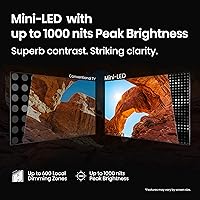
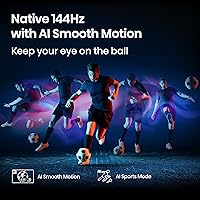
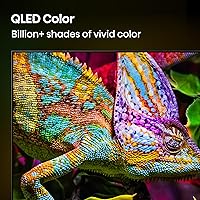
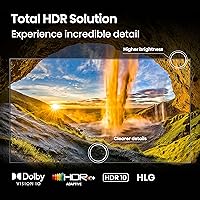
The Mini-LED backlight is the headline story here. With hundreds of individually controlled dimming zones, dark scenes show noticeably deeper shadows than a standard LED panel — night sequences and moody cinematography hold real detail. That said, backlight blooming around bright objects on dark backgrounds is still present; it's manageable, but OLED buyers won't be fooled. The native 144Hz panel is genuinely useful for gaming — FreeSync Premium keeps frame pacing smooth across a wide refresh range when connected to a PC or compatible console. Quantum dot filtering adds real punch to HDR content, and support for both Dolby Vision IQ and HDR10+ Adaptive is rare at this price tier.

Best For

This mid-range 4K TV punches above its weight for console and PC gamers. The combination of a native high-refresh panel, variable refresh rate support, and automatic low-latency mode makes it one of the more capable gaming displays in its price class — whether you're running a PS5, Xbox Series X, or a FreeSync-capable GPU. Sports fans will appreciate the motion handling, which keeps fast action sharp without the artificial soap-opera effect that aggressive processing can introduce. Streaming households embedded in Amazon's ecosystem will find the Fire TV interface familiar. It's a strong pick for mixed living rooms where the screen splits time between movies, sports, and gaming.

User Feedback

Owner reviews skew positive, with picture brightness and gaming responsiveness drawing consistent praise — especially from buyers upgrading from older standard LED sets. HDR performance in bright rooms comes up often as a genuine strength. On the critical side, blooming on dark content gets flagged regularly; it's not a dealbreaker for most, but home theater viewers notice it during dark-room watching. The Fire TV home screen draws complaints about persistent ads and remote shortcut buttons that can't be reassigned. Audio is described as adequate but unremarkable for a room this size. Overall, owner sentiment aligns well with professional assessments — solid value with trade-offs typical for the category.

Pros

  • Mini-LED backlighting delivers noticeably deeper contrast and shadow detail compared to standard LED sets at this price.
  • Native 144Hz panel keeps gaming visuals smooth and responsive on both console and FreeSync-capable PC setups.
  • Dual dynamic HDR support — Dolby Vision IQ and HDR10+ Adaptive — is rare and genuinely useful at this price tier.
  • Bright-room HDR performance is a consistent highlight, with vivid highlights on sports and streaming content.
  • Auto low-latency mode switches the TV into game-optimized settings instantly without manual input.
  • Quantum dot color layer adds real color density that makes 4K HDR content look rich and well-saturated.
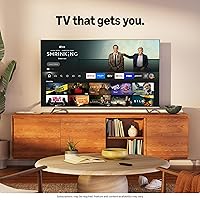
  • Fire TV setup is fast and familiar, with a broad app library covering every major streaming service.
  • The U6 65-inch offers a feature set that would have cost significantly more just two years ago.
  • Wall-mount and stand installation are both straightforward, with slim bezels giving it a clean, modern look.

Cons

  • Backlight blooming around bright objects on dark backgrounds is noticeable in dedicated dark-room viewing.
  • Advertised peak brightness reflects a short-burst ceiling — sustained brightness during long dark scenes is considerably lower.
  • The Fire TV home screen serves persistent sponsored content that cannot be fully disabled or removed.
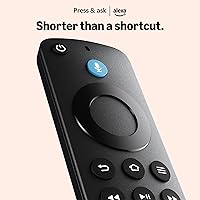
  • Remote shortcut buttons are hardcoded to Amazon-affiliated services and cannot be reassigned to other inputs.
  • Built-in speakers run out of dynamic range in larger rooms, making a soundbar a likely extra expense.
  • Aggressive motion processing settings introduce an artificial look on film content if left at factory defaults.
  • Some users report occasional UI freezes and app crashes requiring a full reboot, pointing to firmware still maturing.
  • The plastic chassis feels adequate but not premium — visible especially when handling during installation.
  • HDMI handshake issues at high refresh rates have been reported by a subset of PC users, requiring troubleshooting.

Ratings

The Hisense U6 65-inch Mini-LED 4K Smart TV earns its place as one of the more talked-about mid-range TVs of 2025, and these scores reflect what real buyers around the world actually experienced — not what the spec sheet promises. Our AI analyzed thousands of verified owner reviews globally, actively filtering out incentivized, duplicate, and bot-generated submissions to surface genuine sentiment. The result is a balanced picture that captures where this Hisense Mini-LED genuinely over-delivers and where it still has room to grow.

Picture Quality
84%
Owners consistently report that daytime and bright-room viewing looks genuinely impressive — HDR highlights on sports broadcasts and nature documentaries pop in a way that budget LED sets simply cannot match. The quantum dot layer adds color density that makes streaming 4K content feel rich without appearing oversaturated.
Dark-room performance is where opinions split. Blooming around subtitles and bright objects on dark backgrounds is noticeable to anyone watching in a blacked-out room, and sustained brightness during long dark scenes drops noticeably below the advertised peak ceiling.
Gaming Performance
91%
This is where the U6 65-inch earns its strongest word-of-mouth. PS5 and Xbox Series X owners report snappy, responsive gameplay with no perceptible lag, and PC gamers using FreeSync-capable GPUs praise how consistently smooth the variable refresh rate feels across the supported range. Auto low-latency switching works reliably without manual input.
A small number of PC users report occasional handshake issues at higher refresh rates over HDMI, requiring cable swaps or settings adjustments. The game menu interface is functional but not as polished as what you get on higher-end gaming monitors.
HDR Performance
82%
18%
Support for both Dolby Vision IQ and HDR10+ Adaptive is genuinely rare at this price point, and buyers upgrading from HDR10-only sets notice the difference immediately on compatible streaming titles. Bright highlights in well-mastered content — explosions, sunlit landscapes, stadium lighting — carry real punch.
Shadow detail in darker HDR scenes can get crushed depending on the local dimming setting. Aggressive dimming improves contrast but introduces flickering in some scenes, while the more relaxed setting reduces that artifact at the cost of black depth.
Motion Handling
79%
21%
Sports viewers are among the happiest owners of this mid-range 4K TV. Fast-paced football, basketball, and tennis content tracks clearly without the smearing that plagues lower-refresh sets, and the motion processing in its more conservative mode strikes a reasonable balance between clarity and naturalism.
At higher motion processing settings, the soap-opera effect becomes obvious on film content — some buyers discovered this the hard way watching movies before dialing back the settings. Out-of-box defaults lean a bit too aggressive for cinephiles.
Local Dimming & Contrast
76%
24%
The local dimming system makes a visible difference compared to full-array LED sets without zone control. Watching a dark thriller or a night-sky sequence, the black areas of the screen hold more depth than owners expected from a non-OLED display at this tier.
The zone count, while substantial for the price, is not fine-grained enough to eliminate blooming entirely in high-contrast scenes. Bright text on dark backgrounds — like credits rolling over black — is a reliable trigger for the halo effect that more zones or OLED would resolve.
Color Accuracy & Vibrancy
83%
Out of the box, colors are vivid and immediately pleasing to most buyers — greens on a soccer pitch look lush, skin tones in well-lit scenes appear natural, and color transitions in HDR content feel smooth. Enthusiasts who calibrate find the panel capable of landing close to reference targets.
Factory calibration skews slightly warm and overly saturated in the default picture mode. Those who watch without any adjustment may find colors pop attractively but not quite accurately, which matters more for film purists than casual viewers.
Smart TV Platform (Fire TV)
71%
29%
For households already using Amazon devices, the Fire TV interface feels instantly familiar and the app library covers all major streaming services without gaps. Alexa voice control works reliably for content searches, switching inputs, and adjusting settings without reaching for the remote.
The home screen loads with sponsored content and Amazon Prime recommendations by default, and there is no clean way to fully remove these ads. Several shortcut buttons on the remote are hardcoded to streaming services, frustrating users who prefer a more neutral interface.
Audio Quality
63%
37%
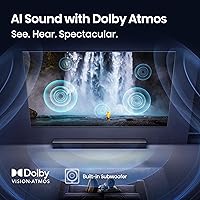
For a built-in speaker system, dialogue clarity is decent and casual TV watching does not immediately demand an external solution. The built-in subwoofer adds a low-frequency presence that most flat TVs at this size lack entirely.
At higher volumes the sound stage feels thin and congested, and action movie soundtracks quickly expose the system's dynamic limits. Most buyers in larger rooms report shopping for a soundbar within weeks of purchase, making the audio a weak point relative to the otherwise strong display package.
Build Quality & Design
74%
26%
The slim profile and narrow bezels give the U6 65-inch a premium appearance on the wall or stand that buyers feel is punching above its price category. The back panel finish is clean and cable management is straightforward.
The plastic housing, while acceptable, flexes slightly and lacks the premium material feel of higher-end alternatives. The stand design has drawn some criticism for feeling less stable on uneven surfaces compared to a V-shaped or wider-footed design.
Setup & Initial Configuration
86%
Buyers report that getting from box to watching takes well under fifteen minutes. The Fire TV guided setup is clear, the stand assembly is tool-free, and connecting streaming accounts through the familiar Amazon interface removes most of the friction new TV owners typically face.
The initial setup pushes Amazon account sign-in fairly aggressively, and those who prefer not to link an account find certain features locked or limited. A handful of users encountered firmware update prompts immediately after setup that added unexpected wait time.
Remote Control
66%
34%
The remote is lightweight, responsive, and the voice button placement is intuitive for Alexa users. Basic navigation and streaming control feel natural after a short adjustment period.
Hardcoded streaming service buttons dominate the lower half of the remote and cannot be remapped. Users who primarily watch cable, antenna TV, or non-Amazon services find the layout inefficient and cluttered with buttons they never use.
Connectivity & Ports
81%
19%
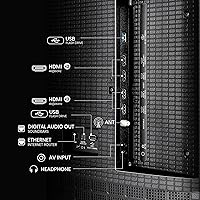
The port selection covers typical living-room needs well — multiple HDMI inputs, USB ports for media playback, and solid wireless performance for streaming and smart home integration. eARC support on the primary HDMI input pairs cleanly with most soundbars.
Power users with multiple 4K sources, a soundbar, and a gaming console may find themselves juggling inputs. The physical port placement on some units has been flagged as awkward for wall-mounted installations with tight cable clearance.
Value for Money
88%
This is the category where the U6 65-inch generates the most consistent enthusiasm. Getting a native high-refresh Mini-LED panel with dual dynamic HDR at this price tier genuinely surprised buyers upgrading from two- or three-year-old mid-range sets. The feature-to-price ratio is hard to argue against.
The value equation weakens slightly if audio quality matters to you, since factoring in a soundbar purchase shifts the total spend meaningfully. Buyers who prioritize dark-room movie watching over gaming may also feel the money is better directed at a smaller OLED.
AI Picture & Sound Processing
69%
31%
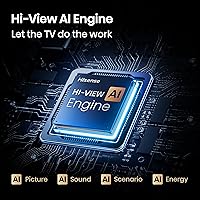
In mixed-content households the AI scene detection does make a noticeable difference switching between sports, film, and gaming without manual mode changes. The automatic adjustments reduce the need for buyers to dig into picture menus.
Experienced users find the AI processing somewhat opaque — it is not always clear what it changed or why, and the results are inconsistent across content types. Enthusiasts who prefer manual calibration often disable it entirely and see comparable or better results.
Long-Term Reliability
72%
28%
Early ownership reports are largely positive with no widespread hardware defects reported across the owner community. Hisense's warranty coverage and customer service response times have improved noticeably compared to earlier U-series generations based on owner feedback.
As a 2025 model there is limited long-term data available yet. Some owners have flagged occasional software instability — UI freezes and app crashes — that required a reboot, suggesting the firmware may still need maturation over time.

Suitable for:

The Hisense U6 65-inch Mini-LED 4K Smart TV is a strong match for buyers who want genuinely modern display technology without stepping into premium-tier pricing. Gamers with a PS5, Xbox Series X, or a FreeSync-capable PC will find the native high-refresh panel and automatic low-latency switching make a tangible difference in daily play sessions — this is not a marketing claim but something owners notice immediately. Sports fans who watch in moderately lit or bright rooms will appreciate how the Mini-LED backlight handles fast motion and bright stadium lighting, keeping the image punchy and clear. Households already embedded in the Amazon ecosystem — using Echo devices, Fire sticks, or Prime Video regularly — will find the Fire TV interface a natural extension of what they already know. It also suits mixed-use living rooms where the screen splits time between family movie nights, weekend gaming, and background streaming, since the picture modes cover all three reasonably well without constant manual adjustment.
Not suitable for:

The Hisense U6 65-inch Mini-LED 4K Smart TV is not the right choice for dedicated home theater enthusiasts who prioritize dark-room picture accuracy above everything else. If you watch a lot of films in a fully blacked-out room, the backlight blooming around bright objects on dark backgrounds will catch your eye and stay there — no setting fully eliminates it, and OLED remains the more honest recommendation for that specific use case. Buyers who are sensitive to intrusive smart TV interfaces should also think carefully, since the Fire TV home screen is built around Amazon's content ecosystem and serves sponsored recommendations that cannot be cleanly removed. If high-quality built-in audio is a priority and a soundbar is not in the budget, this mid-range 4K TV will disappoint in larger rooms where the speaker system runs out of headroom quickly. Finally, buyers hoping for a truly neutral, non-platform-locked interface — the kind you get on Google TV or a more open OS — may find the Amazon-centric design more limiting than liberating over time.
Specifications

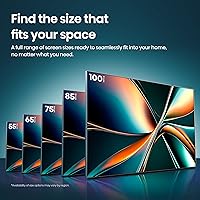
  • Screen Size: The panel measures 65 inches diagonally, making it well-suited for living rooms where the primary viewing distance is roughly 8 to 12 feet.
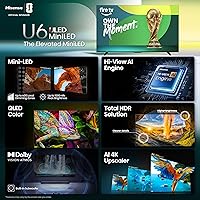
  • Display Technology: Mini-LED QLED LCD panel combines a quantum dot color filter with a densely packed LED backlight array for improved color volume and contrast over standard LED.
  • Resolution: Native 4K UHD resolution (3840 x 2160 pixels) delivers four times the pixel density of a 1080p display across the full 65″ screen area.
  • Refresh Rate: The panel runs at a native 144Hz, meaning the screen physically redraws up to 144 times per second without interpolation or frame insertion tricks.
  • Local Dimming: Full Array Local Dimming with up to 600 independent zones allows the backlight to brighten and dim in precise regions to deepen blacks and boost highlight contrast.
  • Peak Brightness: The set is rated up to 1000 nits under peak HDR conditions; typical sustained brightness across the full screen during long scenes is considerably lower than this ceiling figure.
  • HDR Support: Compatible with Dolby Vision IQ, HDR10+, and HDR10 Adaptive — covering both major dynamic HDR formats for the broadest compatibility with streaming, disc, and console sources.
  • Motion Processing: Motion Rate 480 is Hisense's composite motion score reflecting the combination of native refresh rate and backlight scanning to reduce blur on fast-moving content.
  • Gaming Features: Supports AMD FreeSync Premium with a variable refresh rate range of 48Hz to 144Hz, plus Auto Low Latency Mode for automatic game-mode switching when a compatible console is detected.
  • Smart Platform: Runs Amazon Fire TV OS with Alexa voice assistant built into the remote, providing access to Prime Video, Netflix, Disney+, and thousands of other Fire TV-compatible applications.
  • Audio Output: 2.1-channel speaker system with a combined output of 40 watts, including a built-in subwoofer and Dolby Atmos decoding for spatial audio from compatible sources.
  • AI Processing: Hi-View AI Engine handles automatic scene detection and adjusts picture and sound parameters in real time based on the content type being displayed.
  • Connectivity: Includes multiple HDMI inputs (with eARC on the primary port), USB ports, 802.11 Wi-Fi, Bluetooth, and a wired Ethernet port for stable network connections.
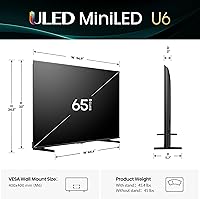
  • Dimensions: With the stand attached, the TV measures 56.9″ wide, 33″ tall, and 3″ deep; VESA wall-mount compatibility allows for a slimmer installation profile.
  • Weight: The set weighs 60.9 pounds with the stand included, which is typical for a 65-inch LCD panel and requires at least two people for safe installation.
  • Power Consumption: Rated at 220 watts during typical operation, with a maximum output wattage of 40 watts allocated to the audio system.
  • In the Box: Package includes the TV panel, stand with hardware, power cable, quick start guide, remote control, and two AAA batteries for the remote.
  • Model Number: The official model identifier is 65U65QF, which corresponds to the 65-inch variant of the 2025 U6 series within Hisense's ULED lineup.
  • Release Year: This is a 2025 model, first made available for purchase in late March 2025 as part of Hisense's refreshed U-series lineup.
  • Power Supply: Operates on a standard 120V AC household supply at 60Hz, with no external power brick required — the power supply is fully integrated into the chassis.

Related Reviews
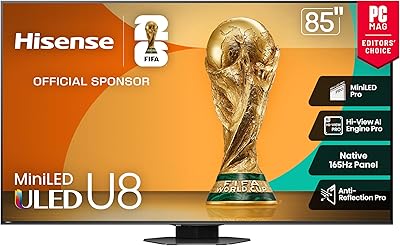
Hisense 85-inch U8QG Mini-LED Smart TV
81%
91%
Picture Quality
93%
Brightness & HDR Performance
84%
Contrast & Local Dimming
89%
Gaming Performance
86%
Motion Handling
More
LG QNED85 65-inch Mini-LED Smart TV
79%
91%
Picture Brightness
88%
Color Accuracy
67%
Contrast & Black Levels
84%
HDR Performance
82%
Gaming Performance
More
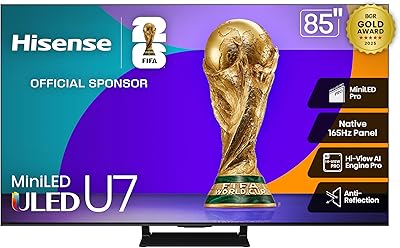
Hisense 85-inch U7 Mini-LED 4K TV
83%
88%
Picture Quality
91%
Gaming Performance
93%
Brightness & HDR
82%
Contrast & Local Dimming
86%
Color Accuracy
More
Hisense 75U7K 75-inch Mini-LED QLED TV
79%
88%
Picture Quality
79%
Contrast & Local Dimming
83%
Brightness
91%
Gaming Performance
86%
Motion Handling
More
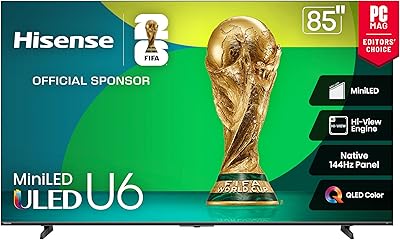
Hisense 85U65QF 85″ U6 Series Mini-LED 4K UHD Smart HDR Gaming Fire TV
84%
93%
Picture Quality
90%
Gaming Performance
85%
Sound Quality
80%
Ease of Use
77%
Smart Features (Alexa Integration)
More
Hisense 65U6G 65-inch 4K Smart TV
70%
78%
Picture Quality
81%
Brightness & HDR Performance
62%
Local Dimming
58%
Motion Handling
53%
Gaming Performance
More
Hisense 50R7E 50-Inch 4K Roku Smart LED TV
84%
87%
Picture Quality
92%
Roku Streaming Performance
90%
Value for Money
65%
Sound Quality
70%
Brightness in Well-lit Rooms
More
TCL 65-Inch QM6K QD-Mini LED 4K TV
86%
94%
Display Quality
89%
Gaming Performance
85%
Sound Quality
92%
Value for Money
80%
Smart TV Features
More
Sony X750F 65-Inch 4K UHD Smart LED TV
83%
88%
Picture Quality
92%
Value for Money
60%
Sound Quality
85%
Setup and Installation
89%
Smart Features and Software
More
Hisense 43R7E 43-inch 4K Roku Smart LED TV
81%
87%
Picture Quality
92%
Value for Money
91%
Ease of Setup
85%
Streaming Performance
61%
Sound Quality
More

FAQ

The 144Hz is genuinely native on this panel, not interpolated — so yes, it makes a real difference for gaming. The PS5 and Xbox Series X both output at up to 120Hz over HDMI 2.1, and the Auto Low Latency Mode kicks in automatically when you plug in a console. PC gamers with FreeSync-capable GPUs get the full variable refresh rate range as well. Input lag in game mode is competitive with dedicated gaming monitors at this size.

Honest answer: it is noticeable if you are watching in a fully blacked-out room and pay attention to it. Bright objects like subtitles or a lone light source against a dark background will produce a visible halo. You can reduce it somewhat by adjusting the local dimming setting, but you cannot eliminate it entirely. If dark-room cinematic viewing is your primary use case, an OLED panel at a higher price point is the more appropriate choice. For mixed-use rooms with ambient light, it is much less of a concern.

The Fire TV home screen does serve sponsored content and Amazon-promoted titles by default, and there is no official way to fully remove the ads from the interface. You can minimize how prominent they are by customizing the home screen layout, but some sponsored rows persist. If a completely clean, ad-free smart TV interface is important to you, this is a genuine trade-off to weigh before buying.

The 1000-nit figure is a short-burst peak measured in a small window of the screen under ideal HDR conditions — it is not the brightness you will see sustained across the full picture for extended periods. Typical full-screen sustained brightness is considerably lower. That said, for a mid-range LCD, bright highlights in HDR content still look punchy and the set performs well in lit rooms. Just do not expect the kind of consistently blinding brightness you see in premium FALD sets at double the price.

For a standard-sized bedroom or a modest living room where you sit fairly close, the built-in 2.1-channel system is workable for casual TV watching and streaming. In a larger room, or if you watch a lot of action films and want real bass impact, the speakers will feel thin at higher volumes. Most owners in larger living rooms end up adding a soundbar within a few months. If your budget allows, factor one in from the start.

It supports both — Dolby Vision IQ and HDR10+ Adaptive are both on board, which is genuinely unusual at this price tier. Most TVs in this range support one or the other. This means you get dynamic metadata-driven HDR regardless of whether your content comes from a Netflix title mastered in Dolby Vision or an Amazon Prime stream using HDR10+.

Setup is one of the smoother experiences in this category. The stand attaches without tools, the Fire TV guided setup walks you through Wi-Fi, account login, and streaming app installation step by step, and most buyers report being up and watching in under fifteen minutes. You will need an Amazon account to get the most out of the platform, and a firmware update may prompt immediately after first boot — just let it run and you will be ready to go.

Yes — the primary HDMI port supports eARC, which is the enhanced version of ARC and fully compatible with standard ARC devices like most Sonos soundbars. Dolby Atmos pass-through over eARC works correctly when the soundbar and source support it. Just make sure to use the designated ARC-labeled HDMI input and enable the eARC option in the TV audio settings.

The U6 65-inch trades blows with both depending on the use case. The TCL QM8 generally has more local dimming zones and stronger dark-room contrast performance, making it the better pick for dedicated home theater use. The Samsung Q70C carries stronger brand recognition and a more polished Tizen interface, but typically offers fewer gaming-specific features at the same price. The Hisense is arguably the strongest of the three for gaming given the native 144Hz panel and FreeSync Premium combination, and it undercuts both on features-per-dollar.

Yes, the TV is wall-mount compatible. The VESA mounting pattern for the 65-inch U6 series is 400 x 200mm, which is a standard size supported by most third-party wall mounts in this size category. At just under 61 pounds, you will want a mount rated for at least 70 pounds and ideally two people to lift and position it safely during installation.