


Overview

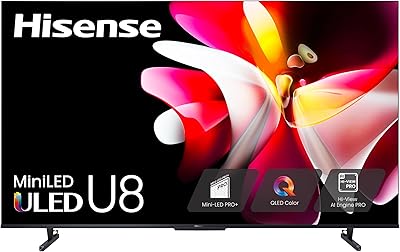
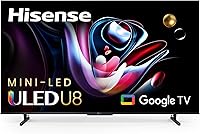
The Hisense 75U8K Mini-LED 4K TV sits at an interesting crossroads in the TV market — priced well below flagship OLEDs yet capable of matching or beating them on raw brightness. Hisense's U8 line has been quietly building a reputation over several generations, and the K-series refresh sharpens that with improved dimming zone density and better HDR processing out of the box. At 75 inches, this is genuinely large-screen territory; you need the wall space and viewing distance to justify it. Google TV handles the smart platform duties capably enough day-to-day, though it isn't the headline reason to buy. One honest caveat worth stating upfront: like all Mini-LED displays, blooming around bright objects on dark backgrounds is real and worth understanding before you commit.

Features & Benefits

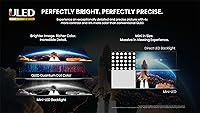
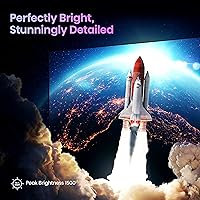
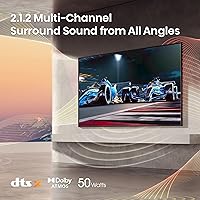
Up to 1,620 dimming zones give the U8K more granular control over backlight precision than most Mini-LED sets in this price range — in practice, this means well-separated highlights in movie credits or starfield sequences look noticeably crisper than on panels with fewer zones. Peak brightness of 1,500 nits makes HDR content genuinely pop, especially with Dolby Vision IQ reading the room's ambient light and adjusting picture settings automatically. For gaming, the 144Hz native panel pairs with VRR across 48–144 Hz and two full HDMI 2.1 ports, covering every current-gen console and most gaming PCs. The built-in 2.1.2 speaker system is serviceable for casual viewing but won't replace a decent soundbar for anyone who takes audio seriously.

Best For

The U8K makes the most sense for a few specific types of buyers. Console and PC gamers running a PS5 or Xbox Series X will find it one of the more capable large-screen options below flagship pricing — 4K at 144Hz with proper VRR support is still relatively uncommon at this display size. Sports viewers will appreciate how motion clarity and color saturation handle fast-moving content. That said, this Mini-LED set rewards a bright living room far more than a dark, dedicated home theater, where OLED's pixel-level contrast becomes a harder argument to dismiss. And if a 75-inch footprint doesn't match your room layout or viewing distance, sorting that out first will serve you better than any panel spec.

User Feedback

Owners of this 75-inch Hisense generally report strong out-of-box picture quality, with several noting they barely touched calibration settings before sitting down to watch. Gaming performance draws consistent praise — responsiveness and input lag figures come up repeatedly, particularly from PS5 and Xbox owners. The criticisms follow a predictable pattern for the technology: halo blooming in dark scenes bothers some viewers more than others, and a handful report that aggressive local dimming in certain picture modes can crush near-black detail. A few owners have flagged occasional Google TV sluggishness and remote pairing hiccups after firmware updates. Sitting at 4.3 stars overall, the negative reviews skew toward isolated unit issues or use cases — pitch-dark home theaters chief among them — rather than a systemic quality problem.

Pros

  • 1,500 nits of peak brightness makes HDR content genuinely pop, even in sun-drenched living rooms.
  • Up to 1,620 local dimming zones deliver noticeably better contrast precision than most competing Mini-LED panels.
  • The 144Hz native refresh rate with VRR support makes fast gaming feel crisp and responsive across the full range.
  • Two HDMI 2.1 ports cover PS5, Xbox Series X, and high-end gaming PCs at 4K and 144Hz without compromise.
  • Dolby Vision IQ reads ambient light automatically and adjusts picture settings, reducing the need for manual calibration.
  • Google TV provides access to every major streaming platform with built-in voice search and Alexa compatibility.
  • Out-of-box picture quality consistently impresses — most owners report it looks great before touching any settings.
  • Quantum Dot color adds real richness to sports and nature content, with saturation that stays natural rather than garish.
  • The 2.1.2 speaker system handles casual viewing adequately, taking the immediate pressure off a soundbar purchase.
  • The U8K delivers a rare pairing of serious gaming specs and strong HDR performance at a non-flagship price.

Cons

  • Mini-LED blooming produces a faint halo around bright objects on dark backgrounds — noticeable enough to frustrate some viewers.
  • Aggressive local dimming in certain presets can crush near-black shadow detail, requiring manual picture mode adjustments.
  • At 122 pounds, wall mounting or repositioning almost certainly requires two people and a heavy-duty, weight-rated bracket.
  • Google TV has attracted complaints about occasional UI sluggishness and app reliability issues, particularly after firmware updates.
  • The included remote has drawn mixed feedback on build quality and button feel from longer-term owners.
  • At 330 watts of power draw, ongoing running costs are meaningfully higher than those of smaller or more efficient alternatives.
  • Standard SDR content rarely showcases the panel's full capabilities — the wow factor is largely reserved for HDR sources.
  • Confirming room dimensions and seating distance before ordering is critical; returning a 122-pound television is rarely a straightforward process.
  • As a 2023 release, the panel faces growing competition from newer models offering higher zone counts and updated processing.

Ratings

The scores below are generated by our AI review engine after analyzing thousands of verified purchase reviews for the Hisense 75U8K Mini-LED 4K TV worldwide, with automated filtering applied to remove incentivized, duplicate, and bot-generated submissions. Our scoring reflects the genuine consensus across real buyer experiences — including both the areas where this set genuinely excels and the recurring frustrations that surface across long-term ownership. Nothing has been softened: where the data shows a clear weakness, the score reflects it.

Picture Quality
88%
Out of the box, the image on the U8K earns consistent praise from everyday viewers who expected to spend hours in picture menus before it looked right. HDR content — streaming movies, nature documentaries, sports — looks vivid and detailed without manual tinkering, which is meaningful at this price tier.
Standard definition and older HD sources expose the panel's upscaling limits, often appearing oversharpened or artificially processed compared to native 4K material. Viewing from off-axis angles introduces noticeable color and brightness falloff that limits flexible living room seating arrangements for larger households.
HDR Performance
91%
When Dolby Vision IQ content hits the screen, the U8K's 1,500-nit output produces highlights that feel genuinely three-dimensional — stadium lights, flame detail, and bright windows in dark scenes carry a luminance that cheaper panels simply cannot replicate. Ambient-light sensing adjusts calibration automatically as room conditions shift throughout the day, which owners consistently appreciate.
HDR benefits are heavily dependent on source quality — compressed streaming bitrates won't showcase the panel's full ceiling the way a physical 4K disc or premium streaming tier will. Tone mapping occasionally diverges from filmmaker intent in ways that manual calibration helps correct but adds meaningful setup time for detail-oriented viewers.
Gaming Performance
93%
Gamers running a PS5 or Xbox Series X on this Mini-LED set report noticeably tight, responsive controls — the low input lag in Game Mode Pro makes fast-paced titles feel reactive in a way that genuinely matters during competitive play. VRR from 48 to 144 Hz handles variable frame rate output smoothly, eliminating screen tear across a wide range of game engines.
PC gamers targeting 4K at 144Hz via HDMI 2.1 should verify GPU and cable compatibility upfront, as some report needing to troubleshoot display compression settings to consistently hit the full refresh rate. Only two of the four HDMI ports are 2.1-capable, so buyers with multiple high-bandwidth devices will need to manage port allocation carefully.
Contrast & Blacks
66%
34%
In typical mixed-lighting living room conditions, the local dimming system performs well — up to 1,620 zones allow the backlight to respond quickly to scene changes, and perceived contrast is genuinely impressive for a non-OLED panel across the vast majority of everyday content. Bright-room viewers rarely encounter the panel's core limitation.
Blooming — the faint halo of backlight that bleeds around bright objects on dark backgrounds — is an inherent Mini-LED limitation that becomes most visible during dark-room viewing: think subtitles over a black screen, lamplight in night scenes, or isolated spotlights. Some presets also apply aggressive dimming that crushes near-black shadow detail, requiring manual adjustment to recover texture.
Brightness
94%
At 1,500 nits peak, this is one of the brightest panels available at this price point — afternoon sun streaming through a living room window barely dents the picture's vibrancy during sports or streaming. HDR specular highlights on compatible content look genuinely luminous, and the screen handles ambient glare far more confidently than most competing sets.
Sustained full-screen brightness pulls back considerably from the 1,500-nit peak figure — that number reflects small highlight windows, not uniform panel output, which can mislead buyers comparing raw specs. The high-brightness capability also drives a 330-watt power draw, adding meaningful electricity running costs compared to more efficient alternatives in the same size class.
Motion Handling
85%
The 144Hz native panel makes fast-motion content — football, basketball, motorsports — look noticeably crisper than 60Hz or even 120Hz displays, with less trailing blur on players and quickly moving objects. Most owners find the default motion smoothing settings acceptable out of the box without needing custom configuration.
At higher motion interpolation settings, the soap opera effect can appear during drama or film content, and some buyers find the middle-ground settings difficult to dial in precisely without it looking artificial. Fast-strobing action sequences occasionally produce residual judder depending on the source frame rate and the interpolation level selected.
Color Accuracy
87%
Quantum Dot color extends the gamut well beyond standard panels, and sports viewers in particular notice the difference — grass looks genuinely rich rather than oversaturated, and skin tones hold accuracy across different lighting conditions within the same scene. Out-of-box performance is strong enough for most viewers without any professional calibration.
Default color temperature runs slightly cool on some presets, giving certain skin tones a marginally bluish cast that benefits from a small manual warmth adjustment. Highly saturated neon colors common in animated content or gaming UI elements can occasionally push past natural reproduction into slightly artificial-looking territory at factory settings.
Audio Quality
58%
42%
The 2.1.2 speaker configuration handles casual daily viewing without embarrassing itself — dialogue clarity is reasonable, and the integrated subwoofer adds enough low-end presence to make news and daytime TV sound fuller than typical flat-panel audio. Viewers using the TV as background sound during routine tasks will rarely feel urgency to upgrade.
For movie nights or music-driven content, the gap between what the picture delivers and what the speakers produce becomes genuinely hard to ignore — the system lacks the dynamic range and spatial separation to do justice to a proper film soundtrack. Most buyers investing at this price tier find a soundbar purchase necessary within the first few months of ownership.
Smart Platform
71%
29%
Google TV's app library is comprehensive — every major streaming service installs quickly, making this a practical cord-cutting hub for households that rotate between multiple subscriptions. Voice search works reliably for finding content across apps without navigating deep menus, reducing friction for daily use.
A recurring complaint from verified owners is UI sluggishness, particularly after firmware updates that introduce lag in the home screen and app switching that wasn't present before. Some users also report intermittent app crashes requiring a full TV restart to resolve, which erodes the day-to-day reliability of the platform for households that use it heavily.
Connectivity & Ports
89%
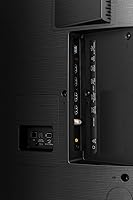
The port selection is well-considered for a modern large-screen setup — four HDMI ports total, two full HDMI 2.1, plus USB 3.0 and 2.0, Ethernet, Wi-Fi, and Bluetooth cover virtually every connection scenario without needing an external hub. eARC support allows clean audio passthrough to a compatible soundbar or AV receiver.
Only two of the four HDMI ports support full HDMI 2.1 bandwidth, meaning users connecting a gaming PC, two consoles, and a streaming device simultaneously will quickly outgrow the high-speed port count. There is no USB-C port, which limits direct connection options for laptops and newer mobile devices without an adapter.
Build Quality & Design
81%
19%
The physical construction feels solid and well-assembled — stand wobble is minimal, and the bezel is slim and understated enough to suit most room aesthetics without drawing attention away from the screen. The overall design is clean and purposeful, which suits a living room centerpiece meant to show content rather than itself.
At 122 pounds, moving or repositioning after installation is a genuine two-person job, and the stand depth limits placement flexibility on shallower media consoles. Some buyers also note that rear cable management is less organized than competing sets at this price tier, with port clustering that leaves routed cables awkwardly visible from the side.
Value for Money
84%
Compared to flagship OLEDs at similar screen sizes, the U8K delivers a compelling feature set — 144Hz, VRR, HDMI 2.1, and class-leading brightness — at a price that leaves meaningful budget room for a soundbar, wall mount, or extended warranty. For buyers who game and stream in equal measure, the hardware-to-price ratio is genuinely strong.
Street pricing has fluctuated considerably since the 2023 launch, and at certain price points the value case weakens when competing Mini-LED sets offer similar core specs for less. Buyers who primarily want a large streaming TV and have no interest in the gaming features may find the premium harder to justify against simpler, less expensive alternatives.
Setup & Ease of Use
76%
24%
Google TV's initial setup is guided and efficient — linking an account, configuring streaming services, and completing the auto-calibration routine takes most buyers under 20 minutes. Out-of-box picture quality is strong enough that the majority of owners skip manual tuning entirely and just start watching.
Physical installation requires two people at minimum — the 122-pound weight makes solo unboxing and wall mounting genuinely risky for both the TV and the person attempting it. Buyers who want to fine-tune picture modes beyond default presets will find the menu structure somewhat deep and inconsistently organized, which adds friction during initial configuration.
Remote & Interface
63%
37%
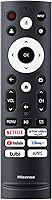
The remote includes dedicated shortcut buttons for major streaming services, reducing the number of steps to launch frequently used apps during everyday viewing. Voice control via the built-in microphone handles basic commands — title searches, volume adjustments, input switching — well enough for less tech-savvy household members to navigate independently.
The remote's build quality has drawn consistent criticism from longer-term owners — the plastic feel and button feedback are underwhelming relative to the price tier, and some report pairing dropouts after firmware updates. Navigating deeper settings menus with the remote alone is slow and imprecise enough that using a smartphone as a virtual remote quickly becomes the more practical option.

Suitable for:

The Hisense 75U8K Mini-LED 4K TV is purpose-built for a fairly specific kind of buyer, and it rewards that buyer well. If you game on a PS5 or Xbox Series X — or run a capable gaming PC — the 144Hz panel with full VRR support and two HDMI 2.1 ports delivers genuine next-gen performance rather than a spec-sheet approximation of it. Sports fans and live-event viewers will find that the combination of high motion clarity and Quantum Dot color saturation makes fast-moving content look vivid and sharp, even during afternoon viewing when room glare is at its worst. The 75-inch footprint makes real sense in living rooms with roughly 10 to 13 feet of seating distance, where a smaller screen would genuinely feel insufficient rather than just modest. Google TV is capable enough to function as a daily streaming hub for cord-cutters, and Dolby Vision IQ's ambient-light adjustment makes this a practical pick for rooms where lighting shifts throughout the day.

Not suitable for:

The Hisense 75U8K Mini-LED 4K TV is a harder sell for anyone whose primary viewing environment is a dark, dedicated home theater room. Mini-LED blooming — the faint halo of backlight that bleeds around bright objects on black backgrounds — is inherent to the underlying technology, and no firmware update will fully eliminate it; if that artifact bothers you during a showroom demo, it will bother you at home too. Buyers evaluating this panel head-to-head against a same-sized OLED for pure cinematic use will find that per-pixel black levels on OLED remain a genuinely compelling counter-argument, particularly at similar price points. The 75-inch format can also be a poor fit for smaller rooms — under about 10 feet of seating depth, the scale tips from immersive into uncomfortable. Anyone expecting the built-in speakers to carry a proper audio setup should lower those expectations significantly; the sound system is functional background audio, not a substitute for a soundbar or receiver. Finally, buyers who find smart TV software frustrating by nature may want to interact with the Google TV interface firsthand before committing.

Specifications

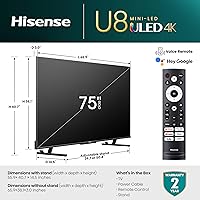
  • Screen Size: The panel measures 75 inches diagonally, best suited to living rooms with at least 8 to 10 feet of seating distance.
  • Display Tech: Uses a Mini-LED QLED backlight combined with a Quantum Dot color layer for extended color volume and high peak luminance.
  • Resolution: Native 4K UHD resolution at 3840 x 2160 pixels delivered across the full 75-inch panel area.
  • Refresh Rate: 144Hz native refresh rate supports smooth motion rendering for fast-action content and high-frame-rate gaming simultaneously.
  • Peak Brightness: Rated at up to 1,500 nits peak brightness in HDR mode, measured under Hisense manufacturer test conditions.
  • Dimming Zones: Up to 1,620 individual local dimming zones allow fine-grained, region-specific backlight control across the panel simultaneously.
  • HDR Support: Compatible with Dolby Vision IQ, HDR10+, and HLG formats, with automatic ambient-light-adjusted tone mapping for each standard.
  • Gaming: Game Mode Pro enables low-latency input handling with VRR spanning 48 to 144 Hz across compatible HDMI 2.1 sources.
  • HDMI Ports: Four HDMI ports total: two HDMI 2.1 inputs supporting 4K at 144Hz, plus two additional standard HDMI inputs.
  • USB Ports: One USB 3.0 port and one USB 2.0 port support external storage devices and local media file playback.
  • Audio System: Built-in 2.1.2 multi-channel configuration with 50W combined output, an integrated subwoofer, and upward-firing drivers for height audio.
  • Smart Platform: Runs Google TV with a built-in microphone for voice search, and supports Alexa integration via compatible external devices.
  • Connectivity: Wireless options include dual-band Wi-Fi and Bluetooth; wired connections are handled via Ethernet and the four HDMI ports.
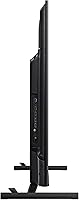
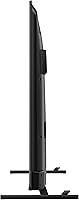
  • Dimensions: With the stand attached, the TV measures 65.9″ wide, 38.1″ tall, and 3″ deep.
  • Weight: The assembled unit weighs 122 pounds with stand, requiring a wall mount rated comfortably above that load for safe installation.
  • Power Draw: Rated at 330 watts under typical operating conditions, which sits above average for a 75-inch television in this category.
  • Model Number: The official Hisense model designation is 75U8K, with the numeric prefix identifying the 75-inch screen size variant.
  • Release Date: First made available in June 2023 as part of Hisense's U8K television lineup for that model year.

Related Reviews
Hisense U6 65-inch Mini-LED 4K Smart TV
78%
84%
Picture Quality
91%
Gaming Performance
82%
HDR Performance
79%
Motion Handling
76%
Local Dimming & Contrast
More
Hisense 55U8N 55-Inch Mini-LED Smart TV
80%
91%
Picture Quality
83%
Contrast & Black Levels
93%
Brightness & HDR
94%
Gaming Performance
86%
Color Accuracy
More
Hisense 85-inch U8QG Mini-LED Smart TV
81%
91%
Picture Quality
93%
Brightness & HDR Performance
84%
Contrast & Local Dimming
89%
Gaming Performance
86%
Motion Handling
More
Hisense 75-inch QD7 Mini-LED 4K Smart TV
75%
83%
Picture Quality
81%
Gaming Performance
78%
Motion Handling
79%
HDR Experience
82%
Color Accuracy
More
Hisense QD7 50-inch Mini-LED 4K Smart TV
77%
83%
Picture Quality
79%
Brightness & HDR Performance
81%
Color Accuracy
72%
Motion Handling
68%
Gaming Performance
More
Hisense 85-inch U7 Mini-LED 4K TV
83%
88%
Picture Quality
91%
Gaming Performance
93%
Brightness & HDR
82%
Contrast & Local Dimming
86%
Color Accuracy
More
Hisense 75U7K 75-inch Mini-LED QLED TV
79%
88%
Picture Quality
79%
Contrast & Local Dimming
83%
Brightness
91%
Gaming Performance
86%
Motion Handling
More
Hisense 85U65QF 85″ U6 Series Mini-LED 4K UHD Smart HDR Gaming Fire TV
84%
93%
Picture Quality
90%
Gaming Performance
85%
Sound Quality
80%
Ease of Use
77%
Smart Features (Alexa Integration)
More
TCL 55-inch QM6K Mini LED 4K TV
83%
88%
Picture Quality
76%
Local Dimming Performance
91%
Gaming Performance
93%
Sports Viewing
87%
HDR Compatibility
More
TCL 98QM6K Mini LED QLED 4K TV
78%
88%
Picture Quality
76%
Local Dimming Performance
91%
Motion & Refresh Rate
89%
Gaming Performance
86%
HDR Experience
More

FAQ

It really depends on what you watch. For sports, animated content, daytime viewing, and most streaming shows, blooming simply isn't an issue — the picture looks excellent. Where it shows up is in scenes with a bright object against a near-black background: white subtitles over a dark screen, a spotlight in a dim room, stars in a night sky. Most people in brighter living rooms rarely trigger it in obvious ways, but if dark-room cinema is a regular habit, you'll encounter it consistently enough that it's worth factoring into your decision before buying.

Yes — the Hisense 75U8K Mini-LED 4K TV includes two full HDMI 2.1 ports that support 4K at up to 144Hz, so both current-gen consoles connect and take full advantage of those specs. VRR runs from 48 to 144 Hz, covering the dynamic frame rate output these consoles produce. The key detail is to use one of the two HDMI 2.1 ports specifically; the other two HDMI inputs won't deliver the same bandwidth. Game Mode Pro keeps input lag low, and most console owners report the responsiveness feels noticeably sharp in practice.

It's functional and gets the job done for most people — every major streaming service is available, voice search works reliably, and the app library is genuinely broad. The complaints that come up in real owner feedback tend to center on occasional UI sluggishness, particularly after firmware updates, and some apps taking longer to load than expected. It isn't the fastest or most polished smart TV platform out there, but for everyday streaming it rarely becomes a genuine frustration. If you already find Google TV annoying on another device, that experience is unlikely to improve significantly here.

The built-in 2.1.2 speaker system at 50 watts is acceptable for casual, everyday viewing — news, background TV, sitcoms — and it won't embarrass itself in those contexts. For movies, music-driven content, or anything where audio quality matters to you, the gap between the picture quality this set can deliver and what the built-in speakers produce becomes hard to ignore. Most buyers at this level eventually add a soundbar; it's reasonable to start without one, but treat it as a placeholder rather than a long-term solution.

The U8K wins on peak brightness by a wide margin, and that advantage is most meaningful in rooms with natural light or when watching HDR content that pushes high luminance. OLED wins on absolute black levels and has no blooming whatsoever, which makes it more compelling for dark, dedicated home theater rooms. If your living room gets regular ambient light and you watch a mix of sports, gaming, and streaming, this Mini-LED set is arguably the more practical choice for that environment. If you're building a proper dark-room theater and picture-perfect blacks matter to you, the OLED argument gets harder to dismiss.

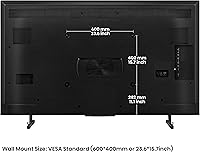
You'll need a mount rated for at least 122 pounds — with some safety margin above that — and the VESA pattern for this panel is typically 600x400mm, though confirming the exact spec for this model before purchasing is worth the extra minute. The more critical point is wall construction: a 122-pound television must be anchored directly into wall studs, not just drywall anchors. If you're not comfortable locating studs or assessing your wall's load capacity, hiring a professional installer is genuinely worth the cost — a dropped TV at this size causes serious damage.

It supports Dolby Atmos decoding through streaming apps and via HDMI eARC for passthrough to a compatible soundbar or AV receiver. The built-in speaker system has upward-firing drivers as part of its 2.1.2 configuration, which provides a degree of height audio effect internally. That said, the built-in Atmos experience is a modest version of what a proper external Atmos setup delivers — the eARC connection to a capable soundbar is where it actually becomes meaningful.

A practical guideline for 4K at this panel size is a seating distance of roughly 1 to 1.5 times the screen diagonal, which works out to about 6 to 9 feet as a functional range, with 8 to 10 feet being comfortable for most people. Under 6 feet, 75 inches stops feeling immersive and starts feeling uncomfortably large. Measure your actual seating distance from the TV wall before ordering — and factor in whether your sofa position is flexible. At 122 pounds, returning this set if the fit is wrong is a significant logistical hassle.

It handles standard cable and satellite sources through HDMI without any issues, and there is a built-in tuner for over-the-air antenna signals. The one thing worth knowing is that older HD or standard-definition content won't look as impressive as native 4K or HDR material — the panel's upscaling is competent but can make lower-quality sources appear over-processed if picture settings are left on aggressive modes. Switching to a more natural or cinema-oriented picture preset for broadcast content usually makes a noticeable improvement.

Hisense typically covers the U8K series with a one-year limited warranty on parts and labor from the date of purchase. Owner feedback on the support experience is genuinely mixed — some report smooth resolutions, while others describe longer wait times and difficulty reaching helpful service representatives. Registering the product through Hisense's website promptly after purchase and keeping your receipt organized are both worthwhile steps. Some buyers also opt for an extended protection plan through their retailer at the time of purchase, which can provide more predictable coverage and faster replacement options.

Where to Buy