Overview

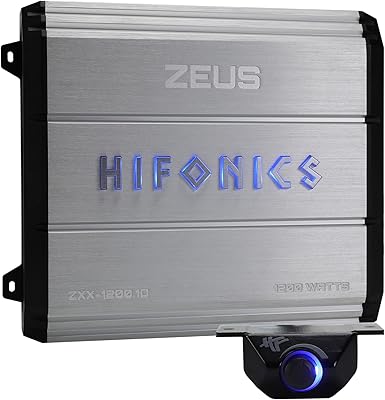
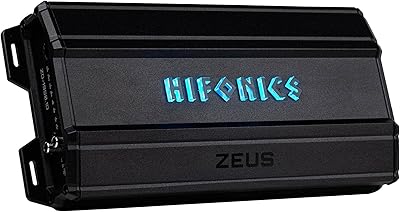
The Hifonics ZRX2416.1DV2 Monoblock Car Amplifier sits in a crowded but practical corner of the car audio market — strong enough to wake up a subwoofer, compact enough to tuck behind a rear seat, and priced for real-world budgets. Hifonics has been around long enough to carry some credibility in the value segment, and the Zeus ZRX V2 line continues that tradition. One thing to get straight before anything else: that 2400-watt figure is peak power, not RMS. The actual continuous output is considerably lower, which is standard for this tier but worth knowing before you start matching it to a sub. Manage that expectation and this Hifonics monoblock makes a lot more sense.
Features & Benefits

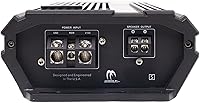
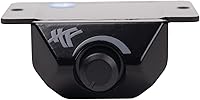
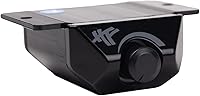
Super D-Class topology is what makes this amp practical for everyday installs. Class D runs efficiently, which means less wasted energy turning into heat inside your trunk or under a seat. The passive aluminum heatsink handles thermal load well under normal conditions — it is chunkier than fan-cooled alternatives, but it is also silent and reliable. The onboard crossover and EQ give you genuine tuning flexibility without reaching for a separate processor, a real plus at this price point. The included bass remote works, though the cable feels a bit basic. Angled molded terminals and nickel-plated RCA inputs make the wiring process considerably cleaner than you would expect at this level.

Best For

The Zeus ZRX V2 amp makes the most sense for DIY installers building around a single subwoofer in a car, truck, or SUV where trunk space is limited. If you are upgrading from a factory head unit setup or stepping up from a budget no-name amp, this one gives you noticeably more headroom and a level of build quality that holds up. The onboard controls mean you can skip the dedicated DSP expense for now — ideal if you are tuning by ear rather than by software. It is not built for competition-level SPL builds or multi-sub configurations, but for a clean single-sub setup on a practical budget, it covers the brief well.

User Feedback

Across roughly 300 ratings, this compact mono amplifier lands at 4.1 out of 5 stars, which is a reasonably strong result for the price tier. Buyers frequently mention straightforward installation and satisfying low-end output as highlights — particularly those coming from lesser-known brands. The criticism that comes up most often is around wattage expectations: some buyers feel let down once they realize the 2400W headline is peak, not sustained output. A handful of users have flagged fitment challenges with thicker gauge wire at the terminals. On the durability side, the LED protection indicators have earned quiet appreciation from owners who have run the amp consistently hard over time without issues.

Pros

  • Class D efficiency keeps heat manageable even during long listening sessions.
  • Compact enough to mount in tight spaces without sacrificing meaningful output.
  • Onboard crossover and EQ eliminate the need to buy a separate signal processor.
  • Nickel-plated RCA inputs and angled terminals make for a notably clean wiring job.
  • Included bass remote lets you adjust low-end on the fly from the driver seat.
  • LED protection indicators give you a quick visual read on amp health during use.
  • Hifonics brand carries real support infrastructure, unlike many budget alternatives.
  • Passive aluminum heatsink is silent and has no moving parts to fail over time.
  • Performs reliably as an upgrade from factory or entry-level amplification setups.
  • Positive owner sentiment across a meaningful sample size suggests consistent build quality.

Cons

  • The 2400W headline is peak power — real-world continuous output is significantly lower.
  • No published RMS spec makes it harder to properly match this amp to a subwoofer.
  • The bass remote cable feels cheap and the mount hardware is basic at best.
  • Passive heatsink is bulkier than fan-cooled competitors occupying the same power tier.
  • Terminal design can be awkward with heavier gauge wire, frustrating some DIY installs.
  • Onboard EQ controls lack the precision that a dedicated processor would provide.
  • Not well-suited for 4-ohm stable multi-driver configurations or bridged multi-channel needs.
  • Relatively limited owner review volume makes long-term durability harder to assess confidently.

Ratings

The scores below reflect an AI-driven analysis of verified buyer reviews for the Hifonics ZRX2416.1DV2 Monoblock Car Amplifier, sourced globally and filtered to exclude incentivized, bot-generated, and spam submissions. Each category is scored independently to give you an honest picture of where this amp genuinely delivers and where real-world owners have run into friction. Both the strengths and the recurring frustrations are reflected without softening either side.

Bass Output
84%
For buyers powering a single subwoofer in a sedan or SUV, the low-end punch consistently impresses — especially those upgrading from factory or entry-level setups. Owners running 10-inch and 12-inch subs frequently describe the bass as hitting harder than the price tag would suggest.
At higher volumes, some owners report the output feels constrained, which usually traces back to impedance mismatch or inflated wattage expectations. Buyers who size their sub around the peak 2400W figure often end up underdriving or overdriving their setup.
Value for Money
81%
19%
At this price point, getting a monoblock from a recognized brand with onboard crossover, EQ, and a bass remote included is a genuine win for budget-conscious builders. Most owners feel they got more amplifier than they paid for, particularly compared to no-name alternatives in the same tier.
The value perception takes a hit for buyers who feel misled by the peak wattage marketing — once they understand the real RMS output, some feel the pricing is less competitive than it first appeared. Those who need certified specs for matching components often wish the documentation were clearer.
Installation Ease
78%
22%
The angled molded terminals and nickel-plated RCA inputs make the wiring process noticeably cleaner than similarly priced alternatives. DIY installers with moderate experience report a straightforward, frustration-free process that often wraps up in a single afternoon.
A recurring complaint involves the terminal blocks struggling to accommodate thicker gauge wire, which can force installers to use reducers or compromise on wire quality. The bass remote cable routing also gets flagged as fiddly in compact mounting situations.
Build Quality
76%
24%
The aluminum heatsink chassis feels solid and purposeful, and owners who have run this Hifonics monoblock for a year or more generally report no structural issues or connector degradation. The overall fit of the unit gives a sense of durability that holds up against the price context.
The bass remote itself is where build quality drops noticeably — the cable feels thin and the housing is plasticky in a way that stands out against the amp body. A few long-term owners have reported the remote connection becoming intermittent over time.
Thermal Management
73%
27%
Under normal listening conditions, the passive aluminum heatsink keeps operating temperatures well within a safe range, and many owners appreciate the total silence that comes with having no internal fan. The LED protection system adds a useful layer of confidence for daily commute use.
In enclosed trunk installs with limited airflow, or during extended high-volume sessions, the heatsink runs noticeably hot and the protection circuit occasionally kicks in. Compared to fan-cooled competitors in this class, the passive design needs more breathing room to stay comfortable.
Power Accuracy
58%
42%
The amp does deliver usable, real-world power that satisfies buyers running appropriately matched subwoofers, and the Class D efficiency means it draws less from your electrical system than older topologies would at equivalent output.
The gap between the advertised 2400W peak figure and the actual continuous RMS output is the single most consistent source of buyer disappointment across all reviewed feedback. Without a clearly published RMS specification, too many buyers make purchasing decisions based on a number that does not reflect everyday performance.
Onboard Crossover
77%
23%
Having an electronic crossover built in is a genuine convenience for single-sub builds where buyers do not want to invest in an external processor. Owners tuning by ear find it flexible enough to shape the frequency rolloff without needing additional gear.
Precision-focused users find the crossover controls imprecise compared to a dedicated DSP, and there is limited feedback on exactly what frequencies the sweep covers. For anyone running a ported enclosure that is sensitive to frequency boundaries, the onboard controls may feel too coarse.
Signal Clarity
74%
26%
The nickel-plated RCA inputs with hex screw locking reduce the risk of signal noise from loose connections, and most owners report a clean, noise-free signal even in electrically busy vehicle environments. The PWM MOSFET power supply contributes to stable output that holds consistent tone at varied volumes.
Some owners running longer RCA cable runs have noted occasional ground loop interference, though this is often a vehicle wiring issue rather than a fault of the Zeus ZRX V2 amp itself. At higher gain settings, a small number of users detect audible hiss that requires careful gain staging to eliminate.
Compact Footprint
86%
For a monoblock claiming 2400W peak output, the physical size is genuinely smaller than most buyers expect, making it viable for installs under rear seats or in tighter enclosure cavities. Owners in smaller vehicles consistently praise the fact that it does not consume disproportionate mounting real estate.
The passive heatsink adds bulk to the overall chassis dimensions compared to slimmer fan-cooled alternatives, which can complicate installs in very tight profiles. Anyone measuring their available space to the centimeter should confirm the full heatsink dimensions before committing.
Bass Remote Usability
63%
37%
Having the bass remote included at no extra cost is a convenience that buyers at this tier genuinely appreciate, and the core function — adjusting sub level without reaching into the trunk — works reliably for everyday use.
The remote cable feels thin and the housing quality lags behind the amp itself, creating a mismatched impression. Several owners report that the included mounting hardware is minimal, and the remote can feel loose or imprecise compared to aftermarket alternatives.
Protection Circuitry
82%
18%
The LED-indicated overload and speaker short protection has earned quiet but consistent praise from long-term owners who have put this compact mono amplifier through sustained hard use without experiencing failures. The visual indicators on the end panel make diagnosing a protection event straightforward without needing a multimeter.
A handful of owners report that the protection circuit triggers conservatively — cutting output under load conditions that a more aggressive amp would handle without flagging. This can feel frustrating in a high-demand listening session until the root cause is identified and corrected.
Compatibility
79%
21%
The 12V DC operating requirement covers virtually every standard passenger vehicle on the road, and the amp plays well with both aftermarket and factory head unit signal chains when properly interfaced. Most subwoofer brands and enclosure types work without requiring unusual configuration.
Pairing this amp with dual-voice-coil subwoofers at certain impedance configurations requires careful planning, and the lack of detailed impedance stability documentation from Hifonics leaves some buyers guessing. Factory head unit integration sometimes requires an additional line output converter, which adds cost and installation steps.
Brand Reliability
75%
25%
Hifonics has enough of a track record in the car audio aftermarket that buyers feel more confident choosing it over unbranded alternatives at a similar price, and warranty support is generally available through established channels. Long-term owners across the Zeus ZRX V2 amp family report fewer premature failure incidents than typical budget-tier competitors.
Hifonics is not a top-tier brand, and buyers expecting the reliability and support experience of higher-end manufacturers may find the gap noticeable. Online support resources and detailed technical documentation for this model are thinner than you would find from more premium amplifier brands.

Suitable for:

The Hifonics ZRX2416.1DV2 Monoblock Car Amplifier is a strong fit for DIY car audio enthusiasts who want to power a single subwoofer without spending a fortune or dedicating half their trunk to the install. If you are stepping up from a cheap no-name amp or running your sub off a head unit and wondering why the bass feels thin, this Hifonics monoblock gives you real amplification with a recognizable brand behind it. The compact footprint makes it practical for mid-size sedans, crossovers, and smaller trucks where mounting space is genuinely constrained. Buyers who want to skip the added cost of an external signal processor will appreciate the onboard crossover and EQ — they are not studio-grade controls, but they are more than enough to get a single-sub setup sounding right. If you are comfortable with basic wiring and want a no-drama install that delivers solid bass output, the Zeus ZRX V2 amp is a sensible choice at this price point.
Not suitable for:

The Hifonics ZRX2416.1DV2 Monoblock Car Amplifier is not the right tool for anyone building a serious multi-subwoofer setup or chasing competition-level SPL numbers. The 2400-watt figure is peak power, and buyers who size their subwoofer expectations around that headline are going to be disappointed — the real continuous output is considerably more modest, which matters when matching to a high-demand sub. Dedicated car audio enthusiasts who rely on precise DSP tuning or need certified RMS figures for a specific impedance load will likely find this compact mono amplifier too loosely specified for their needs. Anyone running very thick gauge power wire may also hit practical frustrations at the terminals, which are functional but not designed for oversized cable. And if your build demands fan-cooled thermal management in a sealed, high-heat environment, the passive aluminum heatsink approach here — while durable — runs larger than more modern slim-profile alternatives.
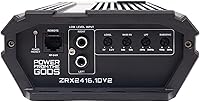
Specifications

  • Model Number: The unit carries the official model designation ZRX2416.1DV2, part of the Zeus ZRX V2 series from Hifonics.
  • Peak Power: Maximum peak power output is rated at 2400W, which represents burst capacity rather than continuous sustained output.
  • Amp Class: This amplifier uses Super D-Class topology, a variant of Class D design optimized for high efficiency and reduced heat generation.
  • Channels: Single-channel monoblock configuration, purpose-built for driving one subwoofer or a bridged subwoofer load.
  • Power Supply: A PWM MOSFET power supply maintains stable voltage delivery across varying demand conditions during playback.
  • Output Devices: Ultra-Fi MOSFET output devices are used internally to support consistent signal amplification under load.
  • Operating Voltage: Designed to operate at 12V DC, compatible with standard 12-volt automotive electrical systems.
  • Cooling System: Passive cooling is handled by an extruded aluminum heatsink with no internal fan, relying on surface area for heat dissipation.
  • Protection Circuit: LED-indicated protection circuitry monitors for overload conditions and speaker short faults, with visual status indicators on the end panel.
  • Crossover: An onboard electronic crossover allows users to filter frequency output without requiring an external processor or DSP unit.
  • Equalizer: Onboard EQ controls provide basic frequency shaping capability to tailor bass response to the specific subwoofer and enclosure being used.
  • Bass Remote: A wired bass level remote control is included in the box, allowing driver-seat adjustment of low-frequency output level.
  • RCA Inputs: Inputs are nickel-plated and rated for high-temperature resistance, secured with hex screw terminals to prevent signal-degrading loosening over time.
  • Terminals: Power, ground, and speaker connection terminals are angled and molded for easier wire routing and cleaner installation in tight spaces.
  • Mounting Type: Surface mount design suitable for flat installation on carpeted floors, under seats, or in trunk enclosures.
  • Dimensions: Package dimensions measure 16.65 x 7.8 x 4.41 inches, with the amplifier itself fitting within a compact monoblock footprint.
  • Weight: The unit weighs 6.75 pounds, keeping it manageable for solo DIY installation without requiring additional lifting assistance.
  • Manufacturer: Manufactured by Hifonics, a car audio brand with a multi-decade presence in the aftermarket amplifier segment.

Related Reviews
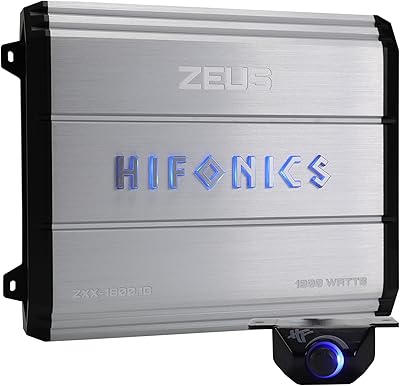
Hifonics Zeus ZXX 1800 Watt Monoblock Car Audio Amplifier
86%
88%
Performance
90%
Build Quality
85%
Ease of Installation
89%
Heat Management
84%
Sound Clarity
More
Hifonics ZXX-1200.1D Monoblock Car Amplifier
80%
88%
Value for Money
83%
Bass Output Quality
91%
Ease of Installation
86%
Thermal Management
74%
Build Quality
More
LKC PHF450D Car Audio Monoblock Amplifier
88%
91%
Power Output (2 Ohms)
87%
Power Output (4 Ohms)
93%
Heat Dissipation
88%
Build Quality
85%
Ease of Integration
More
Belva BB200ABv2 Monoblock Car Amplifier
76%
88%
Value for Money
79%
Bass Output Quality
91%
Ease of Installation
61%
Thermal Management
67%
Build Quality
More
Planet Audio TR1500.1M Monoblock Car Amplifier
70%
88%
Value for Money
79%
Bass Output & Performance
83%
Ease of Installation
63%
Build Quality
57%
Thermal Management
More
BOSS Audio R1600M Monoblock Car Amplifier
72%
83%
Value for Money
88%
Ease of Installation
79%
Bass Output
61%
Build Quality
86%
Signal Flexibility
More
Blaupunkt AMP1500M Monoblock Car Amplifier
73%
81%
Value for Money
63%
Real-World Power Output
88%
Ease of Installation
77%
Audio Clarity
58%
Build Quality
More
Planet Audio AC2500.1M Monoblock Car Amplifier
85%
92%
Performance
95%
Bass Output
85%
Ease of Installation
65%
Thermal Performance
88%
Build Quality
More
Planet Audio AC1500.1M Monoblock Car Amplifier
75%
91%
Value for Money
78%
Bass Output Quality
86%
Ease of Installation
61%
Thermal Management
67%
Build Quality
More
Hifonics ZD-1950.1D Mono Car Amplifier
76%
78%
Power Output
61%
Heat Management
86%
Ease of Installation
74%
Build Quality
79%
Value for Money
More

FAQ

No, and this is the most important thing to understand before buying. The 2400W figure is peak power, which represents a brief burst under ideal conditions — not sustained output. The continuous RMS rating is considerably lower, and that is the number that actually matters when matching this amp to a subwoofer. Always size your sub based on RMS figures, not peak.

For an amp in this power class, a 60A inline fuse on the power wire is a common starting point, and most installers use 4-gauge wire for the main power and ground runs. That said, always verify against the amp's actual fuse rating and your vehicle's wiring capacity. Keeping wire runs as short as possible and using quality ground connections will help you get stable performance.

Technically you can wire two subs to a monoblock if you keep the combined impedance within the amp's stable range, but this unit is really optimized for a single-subwoofer setup. If you are planning a dual-sub build from the start, you would be better served looking at a more capable platform designed for that configuration.

Yes, it can work with a factory head unit, but you will likely need a line output converter to turn the speaker-level signal into an RCA-level input the amp can use. Some installers also use a signal sensing turn-on lead instead of a traditional remote wire in factory setups. It is doable, just slightly more involved than a standard aftermarket head unit install.

The aluminum heatsink does its job well under normal listening conditions, and the amp should stay comfortably warm rather than dangerously hot. Extended high-volume sessions in a poorly ventilated space can push it harder, but the built-in protection circuitry will shut the amp down before damage occurs. Good airflow around the heatsink goes a long way.

The LEDs give you a quick status read on protection events — specifically overload conditions and speaker short faults. If one lights up unexpectedly, it is usually pointing to an impedance mismatch, a wiring problem, or the amp being pushed beyond its limits. They are genuinely useful for diagnosing issues without guessing.

Not necessarily. The Zeus ZRX V2 amp has an onboard electronic crossover and basic EQ controls that are sufficient for a standard single-subwoofer setup. If you are tuning by ear and just need to roll off the high frequencies to your sub, the onboard controls handle that fine. A dedicated DSP gives you more precision, but it is an optional upgrade, not a requirement.

The bass remote plugs into a dedicated port on the amp and lets you dial the subwoofer level up or down from the driver seat without reaching into your trunk. The cable is functional but on the basic side, and the remote itself mounts with a simple bracket. Most people stick it near the center console or on the dash. It is a convenient feature, even if the hardware feels modest.

This is something worth checking carefully against Hifonics published specifications for this specific model, since impedance stability varies and running a load the amp cannot handle can trigger protection or cause long-term damage. As a Class D monoblock in this price range, it is generally designed for 1-ohm or 2-ohm operation, but confirm the stable impedance rating before wiring your sub.

The Zeus ZRX V2 line includes several models at different power and channel counts — this compact mono amplifier sits toward the higher output end of the single-channel options in the range. Stepping down gets you less peak power in a similar footprint, while stepping up within the family generally means more overhead for demanding subwoofer loads. If your sub has a high RMS rating and you regularly push the volume, the next tier up might give you more comfortable headroom.