Overview

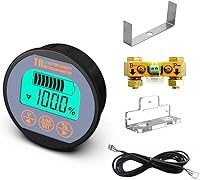
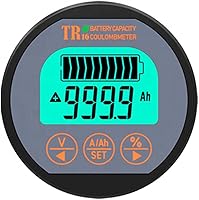
The HENGSHAN AiLi 8-80V 100A Battery Monitor is a compact, circular panel-mount display that packs genuine utility into a small footprint, designed for anyone running an off-grid, mobile, or marine power system. What sets it apart at this price tier is the wide operating range — it handles anything from a modest 12V setup up to 80V systems drawing 100A, all without needing a separate supply to power itself. The round 59mm face drops into a standard 54mm cutout, making it a natural fit for campervan dashboards, battery enclosures, and boat panels. This is a budget-tier device, and expectations should be set accordingly — but the core functionality is genuinely solid for capable DIYers who just want reliable numbers on a screen.
Features & Benefits

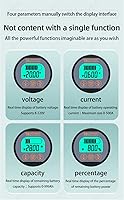
At its core, this battery monitor shows four things at once: state of charge as a percentage, remaining capacity in amp-hours, live voltage, and charge or discharge current — and that current reading is bidirectional, so you can see how fast you are drawing power and how quickly your charger is putting it back. It works with lithium, LiFePO4, lead-acid, and NiMH chemistries, covering nearly every common battery type in the DIY space. A memory function means your preset capacity values survive a power cycle, which is genuinely useful when the battery itself goes flat. Sleep consumption drops as low as 50–60 µA, so it will not quietly drain your bank overnight. The kit includes the shunt, a 2-meter cable, and an English manual.

Best For

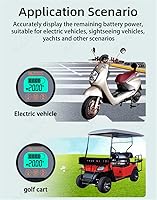
This panel-mount monitor suits a specific kind of buyer: someone who wants straightforward battery data without paying for a full battery management system. RV and campervan owners are a natural fit — the round form factor mounts cleanly into a dash cutout, and the fuel-gauge-style display means anyone in the vehicle can check the bank without deciphering technical readouts. It also works well on boats and marine setups where a compact, self-powered readout is more practical than a bulky alternative. For those building DIY solar or electric mobility projects like e-bikes, the broad voltage compatibility and Ah tracking make it a capable, no-fuss option. Budget-conscious hobbyists will find the feature-to-price ratio genuinely hard to argue with.

User Feedback

Buyers consistently highlight two things: easy installation and a display that is readable at a glance. Most report getting it wired up in under an hour, even without prior experience with shunts. The friction points are more nuanced. The operating temperature ceiling of 35°C is a real limitation — outdoor installs in warm climates or near heat sources can push beyond that. Accuracy sits at ±1%, reasonable for this tier, but some users note readings drift without properly calibrating the initial capacity preset. The plastic housing feels exactly as light as the price implies. Long-term reliability draws mixed opinions, and the manual, while functional, leaves some first-timers uncertain about the capacity configuration steps.

Pros

  • Covers a wide voltage range from 8V to 80V, making it compatible with most common DIY battery setups.
  • Bidirectional current monitoring lets you track both charging and discharging in real time.
  • Self-powered design means no extra wiring just to keep the display alive.
  • Works with lithium, LiFePO4, lead-acid, and NiMH chemistries right out of the box.
  • Memory function retains your capacity presets even after a full power loss.
  • The circular form factor fits a standard 54mm panel cutout — no adapter needed for most dash installations.
  • Sleep consumption as low as 50–60 µA means it will not silently drain your bank overnight.
  • Comes with the shunt, cable, and manual included — no separate shopping required to get started.
  • The charge status display is intuitive enough that non-technical passengers can read battery health at a glance.
  • Solid core functionality for the price tier — hard to beat as a first monitoring solution for casual off-grid use.

Cons

  • Operating temperature tops out at 35°C, ruling out hot outdoor enclosures and engine-adjacent installations.
  • The English manual leaves real gaps around capacity preset configuration, which frustrates first-time installers.
  • Accuracy can drift without careful initial calibration of the capacity preset value.
  • Plastic housing feels lightweight and may not hold up well under sustained vibration or rough handling.
  • Long-term reliability draws mixed feedback — some users report stable performance, others see issues within months.
  • Brand naming is inconsistent across the listing, which can make warranty support or sourcing replacements confusing.
  • Not suitable for systems regularly pulling over 100A — the shunt has a hard ceiling.
  • No wireless connectivity or app integration for those wanting to log or remotely monitor battery data.
  • The 2-meter cable included may fall short for larger installations where the shunt sits far from the display.
  • This panel-mount monitor offers no temperature sensor input, which limits insight into battery health in cold conditions.

Ratings

The scores below for the HENGSHAN AiLi 8-80V 100A Battery Monitor were generated by our AI engine after analyzing verified purchase reviews from buyers worldwide, with spam, bot-submitted, and incentivized feedback actively filtered out. The result is an honest snapshot of real ownership experience — strengths and frustrations alike, weighted by how frequently each theme appeared and how significantly it affected day-to-day use. Expect candor: where this volt-amp display unit earns its reputation, the numbers reflect that; where it falls short, we have not softened the score.
Value for Money
88%
For buyers fitting out a campervan or building a small solar setup on a tight budget, the feature-to-price ratio here is hard to argue with. Getting simultaneous voltage, current, Ah, and state-of-charge readout in a single panel unit — with shunt and cable included — at this price point is genuinely strong.
A small contingent of buyers feel the long-term reliability softens the value proposition. If the unit fails within a year, the initial saving looks less attractive, and sourcing a replacement or warranty support can be complicated by the inconsistent branding.
Ease of Installation
83%
The majority of buyers report getting this panel-mount monitor wired up and displaying live data within an hour, even without prior experience working with battery shunts. The circular form factor drops cleanly into a 54mm cutout, and the self-powered design removes one whole wiring step compared to monitors that need a separate supply.
The included manual is functional but thin on detail around the initial capacity preset configuration — the step that actually determines whether your state-of-charge percentage means anything. First-timers regularly report spending significant time troubleshooting this before readings make sense.
Display Readability
86%
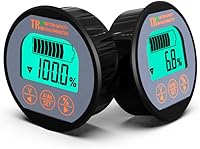
Users consistently single out the display as one of the better aspects of this unit. The smartphone-style charging indicator makes it easy for non-technical passengers or family members to check battery status without interpreting raw numbers, and the simultaneous readout of multiple values is appreciated in RV and boat contexts.
A handful of buyers note the display can be harder to read in direct bright sunlight, which is relevant for exposed marine or outdoor solar installations. Viewing angle is also limited, which matters if the panel cutout is positioned off to one side of a dashboard.
Measurement Accuracy
71%
29%
In controlled tests and clean installations, buyers report voltage and current readings that track closely with a quality multimeter — typically within the stated ±1.0% tolerance. For general battery management in an RV or off-grid solar context, that level of precision is workable and useful on a daily basis.
Accuracy is noticeably dependent on correct initial calibration of the capacity preset, and that process is poorly documented. Several users report that state-of-charge percentage drifts over time, particularly with lithium batteries, requiring periodic manual resynchronisation to maintain trustworthy readings.
Build Quality
58%
42%
The unit is compact and lightweight, which genuinely helps in mobile and vehicle installations where every gram and centimetre matters. The circular bezel fits flush against most panel surfaces and looks tidy once installed, with no sharp edges or obviously shoddy finishing on the face.
The plastic housing divides opinion — buyers coming from metal-bodied gauges find it noticeably light and less confidence-inspiring. There are recurring reports of units showing cosmetic or functional issues within the first year, particularly in installations with regular vibration such as off-road vehicles and boats.
Battery Chemistry Compatibility
91%
Coverage across lithium-ion, LiFePO4, lead-acid, and NiMH chemistries means most DIY buyers can use this battery monitor regardless of what battery type they have settled on. This breadth is particularly valued by builders who mix or upgrade chemistries over time without wanting to replace their monitoring hardware.
While the hardware is compatible, the preset configuration options for different chemistries are not well explained in the manual. Buyers using LiFePO4 in particular often need to experiment with capacity settings before the state-of-charge curve behaves correctly for their specific cells.
Operating Temperature Range
47%
53%
For buyers in temperate climates using this volt-amp display unit in a climate-controlled interior — inside a caravan, a home solar cabinet, or a boat cabin — the 0°C to 35°C operating window is unlikely to cause any real-world issues during typical use seasons.
This is the most cited technical limitation in negative reviews. The ceiling of 35°C rules out hot-climate outdoor enclosures and engine-adjacent installations, while the 0°C floor is a genuine problem for winter van-lifers and anyone in northern Europe, Canada, or mountainous regions where overnight temperatures regularly dip below freezing.
Long-Term Reliability
61%
39%
A meaningful proportion of buyers report running this panel-mount monitor continuously for over a year without issues, particularly in stable indoor or semi-sheltered installations. Those who invest time in correct initial setup and protect the unit from moisture and heat tend to report the most positive long-term outcomes.
The reliability picture is inconsistent enough to be a legitimate concern. A notable minority of reviews describe failures or accuracy degradation within 6 to 12 months of use, and the dual-brand naming makes it difficult to navigate warranty claims or identify genuine replacement parts with confidence.
Sleep & Standby Efficiency
89%
The sleep-mode draw of just 50–60 µA is genuinely excellent for a device of this type, and buyers using it on solar or leisure battery systems report that it contributes virtually nothing to parasitic drain. This makes it practical to leave permanently connected without worrying about it flattening the bank during extended storage periods.
A few buyers note that the transition between active and sleep modes is not always predictable based on the manual's description, and the working draw of up to 12 mA during active display is worth factoring in for very small battery packs where every milliamp counts continuously.
Memory & Settings Retention
82%
18%
The memory function is one of the more practically useful features for vehicle and solar applications, where the battery may fully discharge occasionally. Buyers appreciate not having to re-enter their capacity preset after a deep discharge event — it keeps the monitor trustworthy without requiring manual intervention each time.
Some users report that memory retention works inconsistently after prolonged or repeated deep discharge cycles, requiring occasional reconfiguration. The lack of documentation on how to verify that saved settings have actually been retained adds to the frustration when readings seem off after a power event.
Package Completeness
84%
Arriving with the shunt, 2-meter cable, and an English manual included means buyers can typically start the installation without any additional purchases. For first-time monitor buyers especially, not having to separately source a compatible shunt is a meaningful convenience that reduces the barrier to getting started.
The 2-meter cable length is adequate for compact setups but regularly falls short for larger installations such as full-size motorhomes where the battery bank sits far from the dashboard. Buyers working on bigger builds frequently need to purchase cable extensions, which undermines the out-of-the-box convenience.
User Manual Quality
52%
48%
The manual covers the basic wiring diagram and a walkthrough of the display modes, which is enough for buyers who already have some experience with battery monitoring equipment. The English translation is passable and generally understandable, even if the phrasing is occasionally awkward.
For first-time users, the manual consistently draws criticism for leaving the most critical step — configuring the initial capacity preset — vague and under-explained. Multiple buyers report relying on third-party YouTube videos or community forums to correctly complete setup, which should not be necessary for a product targeting DIY newcomers.
Form Factor & Mounting
87%
The 54mm circular cutout requirement aligns with a widely used standard in panel gauges, making this a practical drop-in replacement or addition for many existing dashboards and enclosures. Buyers fitting it into campervan fascias and boat panels consistently report a clean, flush result that looks purpose-built rather than improvised.
The circular form factor, while clean, limits placement options in vehicles or enclosures where rectangular cutouts dominate. A small number of buyers also note that the retaining mechanism for securing the unit from behind the panel feels less robust than expected, requiring care during installation to avoid cracking the housing.
Bidirectional Current Monitoring
85%
Seeing charge and discharge current on the same display without any mode switching is one of the more genuinely useful aspects of this unit for solar and vehicle users. Being able to watch in real time how much current a solar panel is putting in versus what a load is drawing helps users make smarter energy decisions throughout the day.
Accuracy of the current reading at low amperages — below roughly 5A — is less reliable than at mid and high loads, which can be misleading for users monitoring trickle charges or small parasitic loads. This is a known limitation of basic shunt-based designs at this price tier and is not unique to this unit.

Suitable for:

The HENGSHAN AiLi 8-80V 100A Battery Monitor is a strong fit for DIY-minded buyers who want practical, at-a-glance battery data without the complexity or cost of a full battery management system. RV and campervan owners will appreciate how cleanly it drops into a standard 54mm dashboard cutout, giving anyone in the vehicle an instant read on charge level, voltage, and current draw. Boaters and marine hobbyists benefit from the self-powered design — no need to run a separate supply line just to power the display. Off-grid solar builders working with 12V, 24V, or 48V LiFePO4 or lead-acid banks will find the bidirectional current tracking and Ah readout genuinely useful for day-to-day energy management. E-bike builders and electric mobility tinkerers who want a fuel-gauge-style indicator rather than a raw voltage display will also get good value here, provided their system stays within the 8–80V window.

Not suitable for:

Buyers expecting commercial-grade accuracy or long-term durability from this volt-amp display unit may be disappointed. The operating temperature ceiling of 35°C is a hard limitation — anyone planning to install it in an engine bay, a hot outdoor enclosure, or a camper roof box in summer climates should look elsewhere. The HENGSHAN AiLi 8-80V 100A Battery Monitor is also not the right choice for high-stakes applications like medical equipment power monitoring or professional fleet management where calibration drift or occasional readout inconsistencies carry real consequences. Those unfamiliar with shunt wiring and capacity preset configuration may find the manual leaves too many gaps, and the plastic build is unlikely to satisfy buyers who need something that can handle vibration, moisture, or rough physical handling over many years. If your system runs above 100A regularly, this unit is simply out of its depth.
Specifications

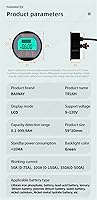
  • Voltage Range: The monitor operates across a wide input range of 8.0V to 80.0V, covering most common 12V, 24V, 48V, and 72V battery systems without any additional power supply.
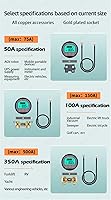
  • Current Range: Measures bidirectional current from -100A to +100A, capturing both charge and discharge flows through the included external shunt.
  • Capacity Range: Supports battery bank sizes from 0 to 999 Ah, making it suitable for small portable packs as well as large house battery banks.
  • Voltage Accuracy: Voltage readings are accurate to within ±1.0%, which is adequate for most DIY monitoring needs but may require verification against a calibrated multimeter after initial setup.
  • Current Accuracy: Current measurement accuracy is rated at ±1.0%, consistent with voltage accuracy and typical for shunt-based monitors in this price class.
  • Working Draw: Active power consumption runs between 10.0 and 12.0 mA, low enough to have negligible impact on most battery banks during normal operation.
  • Sleep Draw: In sleep mode, the unit draws just 50–60 µA, ensuring it will not meaningfully drain your battery bank during extended idle periods.
  • Temperature Range: Rated for operation between 0°C and 35°C; installations in hot enclosures, engine bays, or sub-zero winter environments fall outside the supported range.
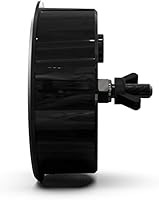
  • Display Format: Circular panel-mount display with a ø59mm face, showing state of charge, remaining Ah, voltage, and live current simultaneously.
  • Mounting Size: Requires a 54mm diameter panel cutout for installation, which is a standard size compatible with many pre-drilled enclosures and caravan dashboards.
  • Unit Weight: The complete unit including the shunt weighs approximately 270g, keeping the overall installation lightweight for mobile and vehicle applications.
  • Compatible Chemistries: Works with lithium-ion, lithium iron phosphate (LiFePO4), lead-acid (including AGM and gel), and nickel-metal hydride (NiMH) battery types.
  • Power Source: Self-powered directly from the monitored battery bank; no isolated or external power supply is needed, simplifying wiring considerably.
  • Memory Function: Retains user-configured capacity presets and settings after a full power loss, so the display does not need to be reconfigured every time the battery is fully discharged.
  • Package Contents: Each unit ships with the battery monitor, a 100A external shunt, a 2-meter connecting cable, and an English-language operation manual.
  • Housing Material: The monitor body is constructed from plastic, keeping weight down but offering limited resistance to sustained physical impact or prolonged moisture exposure.
  • Dimensions: Product measures approximately 3.86 x 2.13 x 0.82 inches (98 x 54 x 21 mm), making it compact enough for tight panel installations.
  • Shunt Rating: The included current shunt is rated for up to 100A continuous, suitable for most small to mid-sized off-grid and vehicle battery applications.

Related Reviews
Redodo 500A Battery Monitor with Shunt

85%
89%
Accuracy of Measurements
91%
Ease of Installation
87%
Display Clarity
80%
Cable Length/Flexibility
90%
Alarm Functionality
More
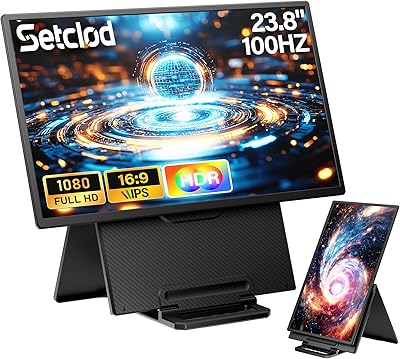
Setclod 23.8″ Portable Monitor
85%
87%
Display Quality
94%
Portability
92%
Ease of Setup
85%
Gaming Performance
72%
Build Quality
More
Eyoyo EM08B 8″ Monitor
75%
91%
Input Versatility
88%
BNC Connectivity
84%
Setup & Plug-and-Play Experience
82%
Mirror Flip Functionality
76%
Image Clarity for Surveillance Use
More
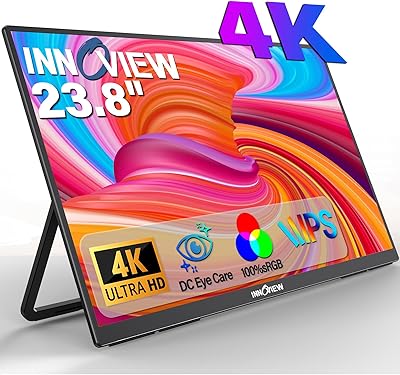
InnoView PM608 23.8-inch 4K Portable Monitor
76%
91%
Image Sharpness
88%
Color Accuracy
54%
Portability & Weight
83%
Stand & Flexibility
76%
USB-C Connectivity
More
ASUS BE24EQK 23.8” Business Monitor
89%
91%
Display Quality
85%
Webcam & Audio Performance
88%
Ergonomics & Adjustability
92%
Ease of Setup
94%
Eye Care Technology
More
ISDT N8 8-Slot AA/AAA Battery Charger
78%
91%
Independent Channel Performance
78%
Chemistry Compatibility
84%
Build Quality
83%
Display & Interface
86%
Charging Speed
More
Magedok T089B 8.9-inch Touchscreen Monitor
74%
84%
Touch Accuracy
81%
Display Brightness
78%
Image Sharpness
51%
Color Accuracy
62%
USB-C Connectivity
More
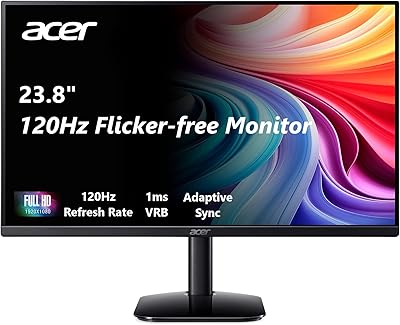
Acer KB242Y G0bi 23.8″ Monitor
85%
88%
Overall Performance
93%
Display Quality
86%
Gaming Experience
74%
Build Quality
82%
Ergonomics & Comfort
More
Intelligence 8 Bay Universal Battery Charger
86%
90%
Charging Speed
88%
Usability
93%
Safety Features
85%
Display Clarity
87%
Build Quality
More
JINSWY JIN-HD82 8″ Mini Security Monitor
75%
83%
Build Quality
78%
Image Clarity
91%
Input Versatility
71%
Brightness & Visibility
86%
Value for Money
More

FAQ

Yes, it does. The monitor handles any system voltage between 8V and 80V, so a 48V LiFePO4 bank sits comfortably within that range. Just make sure you set the capacity preset correctly during initial setup to get accurate state-of-charge readings.

No — this panel-mount monitor is self-powered directly from the battery system it is monitoring. You do not need to run a dedicated supply line to keep it active, which makes wiring noticeably simpler, especially in tight installations.

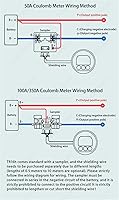
Most capable DIYers get it done in under an hour. The shunt connects in series with the negative battery cable, and the monitor wires back to the battery terminals. The trickiest part is accurately entering your battery bank's capacity in amp-hours during initial configuration — the manual covers this, though it leaves a few gaps that may require some trial and error.

If your cutout is 54mm in diameter, yes, it will drop right in. That is a fairly common size for round panel gauges, so many pre-drilled enclosures and caravan fascias will accept it without modification.

It is a popular choice for marine use, and the self-powered design suits boat wiring well. That said, keep in mind the plastic housing is not sealed against moisture, so avoid mounting it anywhere exposed to spray or condensation. A protected panel location is the safer bet.

The rated accuracy is ±1.0% for both voltage and current, which is reasonable for a monitor at this price point. In real-world use, readings tend to be close but not laboratory-grade — running a quick check against a known-good multimeter after setup is a smart habit, and making sure the capacity preset matches your actual battery size is critical for accurate Ah and percentage figures.

The unit has a built-in memory function that retains your configured settings even after a complete power loss. You will not need to reconfigure the capacity preset every time the battery goes flat, which is a genuine convenience for solar and vehicle setups.

The rated operating range has a lower limit of 0°C, so freezing temperatures put it outside spec. In practice, very cold conditions can affect display performance and sensor accuracy. If your installation site regularly drops below freezing, you should factor that in as a real limitation before buying.

For compact installations where the shunt is relatively close to the display — like a typical van or small boat — 2 meters usually works fine. For larger setups, such as a motorhome where the battery bank sits far from the dashboard, you may need to extend the cable or plan your routing carefully before committing to a mounting location.

The product appears under both the AiLi and HENGSHAN names depending on where you look, which can be confusing. This is a common situation with goods manufactured by one factory and sold under slightly different brand identities. In practice both refer to the same unit, but it is worth keeping your order confirmation handy if you ever need to follow up on a warranty or support issue.