Overview

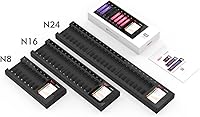
The ISDT N8 8-Slot AA/AAA Battery Charger sits in a practical sweet spot for hobbyists and power users who burn through rechargeable cells regularly. Unlike cheap plastic chargers that treat all slots as a single bank, this 8-slot charger runs each channel independently — a meaningful difference when you are mixing battery ages or chemistries. The aluminum-magnesium alloy housing gives it a noticeably more solid feel than most competitors at this price tier. One critical caveat worth stating upfront: this multi-chemistry charger does not support 1.5V lithium batteries, whether lithium-ion or standard lithium. That incompatibility trips up buyers more than any other issue, so confirm your battery types before purchasing. Available since late 2018 with over 1,100 ratings, it carries a solid real-world track record.
Features & Benefits

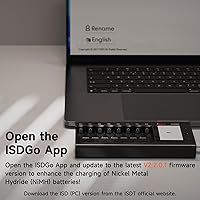
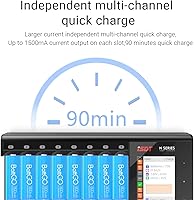
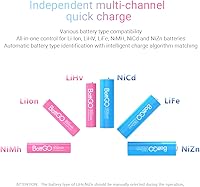
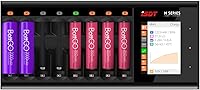
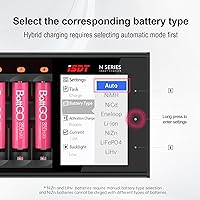
All eight slots on the ISDT N8 operate as fully independent channels, each capable of delivering up to 1500mA — which translates to noticeably faster turnaround when you need a full set of AAs ready before a long shoot or field session. This multi-chemistry charger handles NiMH, NiCd, NiZn, LiFePO4, Li-Ion, and LiHV cells, with an auto-detection mode that identifies most battery types automatically. NiZn cells are the one exception: you must select that chemistry manually, and they cannot share the charger with other types simultaneously. The 2.4-inch LCD touch panel delivers per-slot readouts of voltage, current, and charge state — genuinely useful when monitoring a mixed batch. USB-C firmware updates via the ISDGo app add long-term utility, and the thermal silica gel layer keeps heat in check during fast charging. As noted, 1.5V lithium AA/AAA cells remain unsupported regardless of mode.

Best For

The ISDT N8 is a natural fit for RC enthusiasts, photographers, and anyone juggling a large number of AA or AAA cells across different devices. If you regularly charge mixed batches — NiMH AAs for a flash unit alongside LiFePO4 cells for another device — the independent channel design handles that without throttling everything to the pace of the weakest cell. It also appeals to users who want diagnostic control, like discharge testing or cycle monitoring, rather than a basic plug-and-forget charger. Households with high battery turnover across remotes, flashlights, and wireless peripherals will also get solid value here. That said, this 8-slot charger is the wrong pick if your battery drawer runs entirely on 1.5V lithium AA/AAA cells, which are fully incompatible with this unit.

User Feedback

Across more than 1,100 ratings, the ISDT N8 holds a 4.1-star average — broadly respected, but with a few recurring friction points. Buyers consistently highlight the build quality and display, calling out the metal chassis and per-slot LCD data as genuine differentiators. Independent channel reliability also earns steady praise from users managing large battery inventories. On the downside, the single operating mode constraint — all slots must run the same function simultaneously — draws frustration from buyers expecting per-slot flexibility; those users are often steered toward the C4EVO. The 1.5V lithium incompatibility accounts for a disproportionate share of negative reviews, nearly always from buyers who overlooked the warning. Firmware updates earn appreciation from technically confident users, while casual buyers find the process less intuitive.

Pros

  • All eight slots charge independently, so a weak or partially drained cell never slows down the rest of the batch.
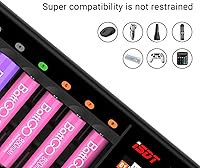
  • Broad chemistry support — NiMH, NiCd, NiZn, LiFePO4, Li-Ion, and LiHV — means one charger handles most rechargeable AA and AAA formats.
  • Auto-detection mode correctly identifies battery type in most cases, reducing manual setup for routine charges.
  • The 2.4-inch LCD touch panel gives real per-slot data, making it easy to spot a weak cell or confirm a full charge at a glance.
  • Aluminum-magnesium alloy housing feels noticeably more robust than the plastic shells common on budget chargers.
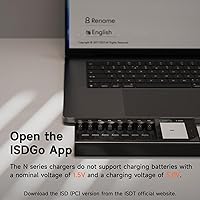
  • USB-C firmware updates via the ISDGo app mean the charger can receive performance improvements without replacing hardware.
  • Internal silica gel thermal layer keeps the unit running cool even when all eight slots are charging at maximum current.
  • Eight simultaneous slots make it efficient for high-volume users who would otherwise cycle through multiple rounds on a smaller charger.
  • At just 10 ounces, this multi-chemistry charger is compact enough to pack for travel or field use without adding meaningful weight.

Cons

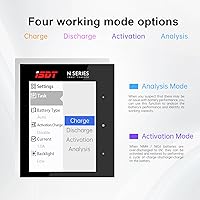
  • All channels must run the same operating mode simultaneously — you cannot charge some slots while discharging others.
  • No support for 1.5V lithium-ion or 1.5V lithium AA/AAA cells, a limitation that catches many buyers off guard.
  • NiZn batteries require manual chemistry selection and cannot be mixed with other types in the same session.
  • The firmware update process via ISDGo involves enough steps that less technical users consistently find it confusing.
  • No standalone AC plug included — power delivery depends on your existing USB-C power source, which affects max charging speed.
  • Single-mode operation across all channels is a real workflow limitation for users who manage diverse battery tasks at once.
  • Long-term durability beyond a few years of heavy use is not well-documented, so the metal build quality cannot be taken as a lifetime guarantee.
  • The interface, while informative, has a learning curve that casual or infrequent users may find unnecessarily complex.
  • Buyers who only need four slots will likely find the size and cost of this 8-slot charger more than their actual needs justify.

Ratings

The scores below reflect our AI-powered analysis of verified global user reviews for the ISDT N8 8-Slot AA/AAA Battery Charger, with spam, incentivized feedback, and bot activity actively filtered out before any scoring was applied. Each category is evaluated on real-world usage patterns drawn from thousands of buyer experiences — hobbyists, photographers, RC enthusiasts, and everyday households alike. Both the genuine strengths and the recurring frustrations are weighted transparently, so you get an honest picture rather than an inflated summary.

Independent Channel Performance
91%
Users consistently single out the independent channel architecture as the standout feature, particularly photographers and RC hobbyists who need to charge partially depleted cells without waiting for a full batch to equalize. Each slot operates at its own pace and current level, which in practice means faster, smarter charging with no babysitting required.
The one caveat users raise is the all-channels-same-mode restriction — every slot must run the same function at once, so you cannot charge some cells while running a discharge cycle on others in the same session. For users coming from chargers that offer per-slot mode flexibility, this is a real step down in workflow convenience.
Chemistry Compatibility
78%
22%
The breadth of supported chemistries — NiMH, NiCd, NiZn, LiFePO4, Li-Ion, and LiHV — is genuinely broader than most chargers at this price tier, and the auto-detection mode handles the majority of common rechargeable cells without any manual configuration. Users who maintain a mixed battery inventory across different devices appreciate not needing multiple chargers.
The hard incompatibility with 1.5V lithium and 1.5V lithium-ion AA/AAA cells is the single largest source of negative reviews, with many buyers only discovering the limitation after purchase despite clear product warnings. NiZn support, while present, adds friction since those cells require manual mode selection and cannot share a session with any other chemistry type.
Build Quality
84%
The aluminum-magnesium alloy housing is one of the first things users mention positively — it feels noticeably more solid in hand than the flimsy plastic shells common on budget chargers, and the integrated silica gel thermal layer keeps surface temperatures manageable even when all eight slots are running at high current. Several users describe it as feeling like a professional-grade tool rather than a consumer accessory.
While the build inspires confidence, this model has been on the market since 2018 and long-term field durability data beyond a few years of heavy use is limited. A handful of users have reported contact spring issues over extended use, and it remains unclear how the housing holds up under sustained daily cycling in demanding environments like workshops or outdoor field use.
Display & Interface
83%
The 2.4-inch LCD touch panel earns consistent praise for its clarity and information density — being able to check voltage, current draw, and accumulated capacity for each slot at a glance is something users genuinely rely on, especially when conditioning older cells or monitoring a mixed-age batch. The display is bright enough to read comfortably in varied lighting conditions.
Some users find the touch interface less responsive than expected, particularly when switching modes or navigating settings, and the menu logic takes a session or two to internalize. Casual users who just want to plug in and charge occasionally report the interface feels over-engineered for their needs.
Charging Speed
86%
With up to 1500mA available per slot and no current-sharing across channels, the ISDT N8 charges cells meaningfully faster than shared-bank chargers when all eight slots are loaded. Photographers reloading flash batteries between shoots and RC users turning around packs at the track report noticeably shorter waits compared to their previous four-slot or shared-bank units.
Charging speed is highly dependent on the power supply used, since no AC adapter is included in the box — users who pair the charger with an underpowered 12V brick may see reduced current delivery across all slots. A few users noted they had to upgrade their power source before seeing the full 1500mA performance advertised.
Value for Money
74%
26%
For users who genuinely need eight independent slots, multi-chemistry support, and diagnostic data in a metal housing, the price is broadly considered fair by the majority of reviewers. The firmware update path and the ISDGo app add a degree of longevity that helps justify the cost compared to cheaper units that become obsolete without support.
Buyers who end up returning it due to the 1.5V lithium incompatibility naturally rate value poorly, dragging the category down. Users with modest needs — a handful of NiMH AAs for household devices — also tend to feel the feature set is excess for their use case and the price is hard to justify against simpler four-slot alternatives.
Firmware & Software
69%
31%
Technically inclined users view the USB-C firmware update capability as a genuine long-term asset — the V2.2.0.1 update delivered real improvements to NiMH charging behavior, and the fact that ISDT actively maintains the product years after release is appreciated by those who have gone through the process. The ISDGo app is functional and covers what it needs to.
The update process involves enough steps — connecting to a PC or phone, navigating the ISDGo app, and managing file transfers — that casual users frequently find it opaque or frustrating. Several reviews mention failed first attempts at updating and a lack of clear in-app guidance, which leaves a portion of the user base on older firmware without realizing it.
Ease of Setup
76%
24%
For users sticking to NiMH or Li-Ion cells, setup is genuinely minimal — drop batteries in, let the auto-detection mode do its job, and charging begins within seconds. The slot-by-slot LCD feedback reassures users that the charger has correctly identified each cell type without any manual intervention needed.
The experience degrades for NiZn users, who must manually select the chemistry and charge those cells in a dedicated session separate from everything else. New users who are unfamiliar with the single-mode constraint also occasionally experience confusion when trying to run simultaneous charge and discharge operations across slots.
Thermal Management
82%
18%
The silica gel thermal interface integrated into the aluminum housing performs noticeably better than passive plastic cooling in comparable chargers — users running full eight-slot fast-charge sessions report that the unit stays warm but never alarmingly hot, which builds confidence during long charging cycles. The metal chassis acts as a passive heat sink alongside the gel layer.
Under sustained maximum-current loads across all eight slots, some users in warmer ambient environments report the bottom of the unit getting quite warm to the touch. There is no active cooling fan, so in enclosed spaces or during summer use, a few reviewers suggest giving the charger more airflow than the default desktop placement typically allows.
Portability
77%
23%
At 10 oz and with a footprint compact enough to fit in a camera bag side pocket or RC kit case, this multi-chemistry charger travels reasonably well for a full eight-slot unit. Users who bring it to shooting locations, hobby events, or field trips find the size-to-capacity ratio genuinely practical compared to bulkier alternatives.
The absence of an included AC wall adapter means traveling users need to carry a compatible 12V power brick separately, which adds bulk and a potential point of failure if the wrong adapter is packed. The unit is also noticeably heavier than budget plastic four-slot chargers, which matters to users packing light.
Discharge & Diagnostic Functions
79%
21%
Battery hobbyists who use the discharge and cycle functions to assess cell health report that the readouts are accurate and the process is reliable — being able to measure actual capacity against rated capacity is useful for sorting batteries and retiring degraded cells before they cause problems in critical devices. The LCD display makes following cycle progress intuitive.
The all-channels-same-mode restriction means diagnostic sessions tie up the entire charger, which frustrates users who want to keep charging fresh cells in parallel while reconditioning older ones. Compared to the ISDT C4EVO, which allows per-slot mode assignment, this is a tangible workflow limitation for power users who run varied tasks simultaneously.
Documentation & Support
63%
37%
ISDT maintains an official website with firmware downloads and setup guides, and the ISDGo app is available on multiple platforms, which gives the charger more official support infrastructure than many competing brands at this price point. Users who engage with the ISDT community forums and resources tend to resolve issues faster.
The included printed documentation is thin, and several users note that critical details — like the 1.5V lithium incompatibility and the NiZn manual-selection requirement — are not surfaced prominently enough in the physical packaging to prevent first-use errors. Customer service response times draw mixed feedback, with some users reporting slow or unhelpful replies to technical queries.
Long-Term Reliability
71%
29%
A meaningful number of reviewers report using the ISDT N8 without issue for two or more years of regular cycling, and the metal housing does appear to resist the physical wear and cosmetic degradation that plastic chargers typically show at the same usage level. The firmware update path also suggests the manufacturer intends to support the product over time.
Long-term data is inherently limited given the product age, and isolated reports of contact spring degradation and display flickering after extended use introduce some uncertainty. Users who push the charger through heavy daily cycling in demanding conditions cannot yet draw on a deep pool of multi-year reliability evidence.

Suitable for:

The ISDT N8 8-Slot AA/AAA Battery Charger is built for people who take their rechargeable batteries seriously — think RC hobbyists, wildlife photographers, and stage lighting crews who run through dozens of cells in a single session and cannot afford a slow turnaround. If your workflow involves multiple battery chemistries at once, the independent channel architecture means you can charge NiMH AAs alongside LiFePO4 cells without one batch slowing down the other. Households or small teams with a high volume of battery-powered devices — wireless keyboards, flashlights, game controllers, baby monitors — will also get strong daily utility from all eight slots. The per-slot LCD readout makes it genuinely useful for anyone who wants to track charge health over time, not just top up and move on. Users who appreciate firmware updates and long-term product support will find the USB-C connectivity and ISDGo app a practical bonus rather than a gimmick.
Not suitable for:

Anyone whose battery drawer is stocked exclusively with 1.5V lithium AA or AAA cells should stop here — the ISDT N8 8-Slot AA/AAA Battery Charger does not support that chemistry at all, and this single incompatibility is responsible for a disproportionate share of buyer frustration and returns. If you want the flexibility to run different operating modes on different slots simultaneously — say, charging some cells while discharging others — this unit falls short, since all eight channels must operate in the same mode at the same time; the ISDT C4EVO handles that use case better. Casual users who just want to plug in a few AAs and forget about it may find the LCD interface and manual NiZn selection process more involved than they bargained for. The price point is also a hard sell if you only charge four cells at a time — a simpler four-slot charger would cover the need at lower cost. And while the metal housing is a genuine quality indicator, buyers expecting long-term durability data should know this product line has limited multi-year field history compared to more established brands.
Specifications

  • Slot Count: The charger features 8 individual slots, each operating as a fully independent charging channel.
  • Battery Sizes: Compatible with AA and AAA rechargeable batteries only; no support for other cell sizes such as C, D, or 9V.
  • Chemistries: Supports NiMH, NiCd, NiZn, LiFePO4, Li-Ion, and LiHV battery chemistries via automatic or manual selection.
  • Incompatible Types: Does not support 1.5V nominal lithium-ion or 1.5V lithium AA/AAA batteries under any operating mode.
  • Max Charge Rate: Each slot delivers up to 1500mA of charge current independently, without reducing current to other active slots.
  • Operating Mode: All eight channels must operate in the same mode simultaneously; mixed per-slot modes such as charging one slot while discharging another are not supported.
  • Display: A 2.4-inch LCD touch panel shows real-time voltage, current, capacity, and charge status for each slot individually.
  • Housing Material: The outer shell is constructed from aluminum-magnesium alloy, providing better structural rigidity and heat transfer than standard plastic housings.
  • Cooling System: An internal layer of heat-conducting silica gel is integrated into the housing to manage thermal load during fast charging sessions.
  • Output Voltage: The charger operates at a 12V output voltage for its internal charging circuits.
  • Connectivity: A USB-C port is included for connecting to a computer to perform firmware updates via the ISDGo desktop or mobile application.
  • Firmware App: The ISDGo app supports firmware updates up to version V2.2.0.1, which includes improvements to NiMH charging performance.
  • Dimensions: The unit measures 7.48 x 3.15 x 1.18 inches, making it compact enough for a workbench, kit bag, or travel case.
  • Weight: The charger weighs 10 oz, which is heavier than basic plastic chargers but reasonable given the metal construction.
  • In-Box Cable: A USB-C cable is included in the package for immediate use with firmware update workflows.
  • Auto Detection: The charger can automatically identify most supported battery chemistries when set to Auto mode, though NiZn batteries require manual selection.
  • NiZn Handling: NiZn cells must be charged separately from all other chemistry types and require the user to manually select NiZn mode before charging.
  • Brand: Manufactured by Shenzhen ISD Technology Co., Ltd, a Chinese electronics company specializing in smart charging and power management devices.
  • Market Availability: This model has been commercially available since November 2018 and is not listed as discontinued by the manufacturer.

Related Reviews

ISDT A8 Air 8-Slot Battery Charger
79%
91%
Build Quality
84%
Charging Speed
93%
Independent Channel Performance
62%
App Experience
88%
Battery Chemistry Compatibility
More
Opus BT-C2400 Battery Charger Analyzer
77%
91%
Measurement Accuracy
88%
Internal Resistance Testing
93%
Channel Independence
54%
Charging Speed
83%
Refresh Mode Effectiveness
More
POWXS MKTBA 12-Bay Battery Charger
81%
88%
Charging Speed
93%
Slot Capacity
86%
Battery Compatibility
81%
LCD Display Clarity
89%
Safety Features
More
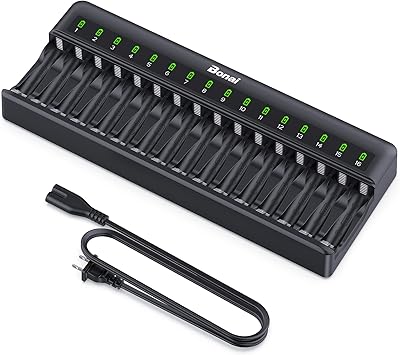
BONAI MY-C006 16-Bay AA/AAA Battery Charger
81%
93%
Slot Flexibility
88%
LED Indicator Clarity
91%
Charging Capacity
61%
Charge Speed
67%
Build Quality
More
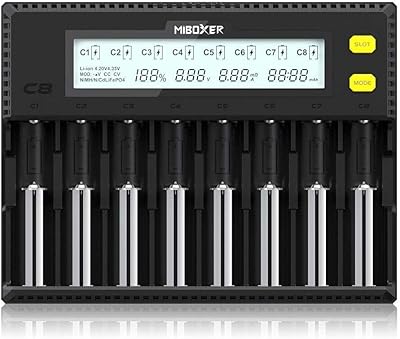
MiBOXER C8 8-Bay Battery Charger
82%
88%
Charging Performance
91%
Battery Compatibility
93%
LCD Display Clarity
86%
Internal Resistance Measurement
89%
Safety Features
More
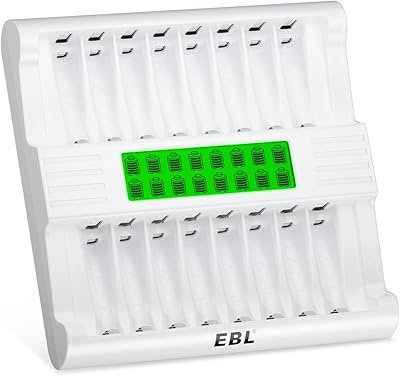
EBL 16-Bay AA AAA Battery Charger
79%
91%
Charging Speed
93%
Slot Independence
78%
LCD Display Clarity
62%
Heat Management
88%
Safety Features
More
EBL C880 40-Slot Battery Charger
84%
88%
Charging Performance
82%
Build Quality
85%
Ease of Use
90%
Cooling Efficiency
91%
Safety Features
More
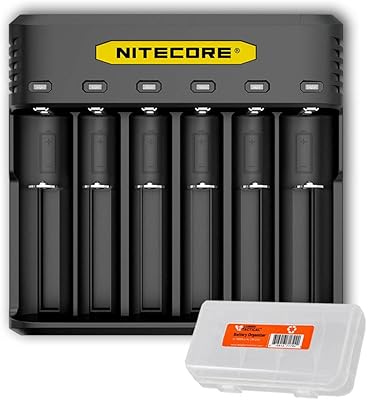
Nitecore Q6 Six Slot Battery Charger
86%
92%
Charging Performance
89%
Value for Money
88%
Build Quality
85%
Ease of Use
90%
Safety Features
More
Intelligence 8 Bay Universal Battery Charger
86%
90%
Charging Speed
88%
Usability
93%
Safety Features
85%
Display Clarity
87%
Build Quality
More
Ansmann Energy 8 Plus Battery Charger
79%
93%
Battery Compatibility
91%
Per-Slot Monitoring
74%
Battery Revival Function
52%
Charge Speed
83%
Build Quality
More

FAQ

Partially — the charger does support multiple chemistries, and it can auto-detect different types. However, all eight channels must run in the same operating mode simultaneously, so you cannot, for example, charge some slots while discharging others in the same session. For most users charging different chemistry types at standard charge rates at the same time, it works fine in practice.

No, and this is probably the most important thing to check before buying. The ISDT N8 8-Slot AA/AAA Battery Charger does not support 1.5V lithium or 1.5V lithium-ion AA/AAA cells — those are the disposable-style lithium batteries sold at most retail stores. It is designed for rechargeable chemistries like NiMH, LiFePO4, and standard Li-Ion cells with different nominal voltages. Using incompatible batteries in this charger is not recommended.
The 2.4-inch LCD touch panel shows the status of each slot individually in real time, including voltage, charge current, and a capacity readout in mAh. When a slot reaches full charge, the display updates to reflect the completed state. You do not need to watch all eight at once — a quick glance tells you exactly where each cell stands.

You do not need to update firmware for the charger to work out of the box, but updating to the latest version (V2.2.0.1) does improve NiMH charging performance, so it is worth doing if you primarily use NiMH batteries. The process involves connecting via USB-C to a computer and using the ISDGo app or the ISDT PC software. Technically comfortable users find it straightforward; if you are not used to firmware tools, it takes a bit more patience but is well-documented on the ISDT website.

You can charge any number of batteries from one to eight — the slots that are empty simply stay inactive. Since each channel operates independently, charging two batteries does not split the power budget across unused slots, so your cells still charge at full speed.

The main practical difference is per-slot mode flexibility. The C4EVO allows each slot to run a different function — so you could be charging in slot one and running a discharge cycle in slot two at the same time. This 8-slot charger requires all active channels to share the same operating mode. If you need that per-slot independence, the C4EVO is the better fit; if you just need more slots and faster throughput with a single operation running, the N8 has the edge.

The charger itself does not include an AC wall adapter — it requires a 12V DC power input. Most users connect it to an external power brick or bench power supply with the appropriate connector. Make sure you have a compatible 12V source before assuming it works as a standalone plug-in-the-wall unit, as the included USB-C cable is specifically for firmware updates, not power delivery.

The metal chassis does feel meaningfully more solid compared to the thin plastic shells on budget chargers, and it contributes to better heat dissipation during fast charging sessions. That said, this model has been on the market since 2018, so there is limited long-term field data beyond a few years of regular use. It is a genuine quality step up from the low end, but we would stop short of calling it indestructible.

You can charge NiZn batteries in this multi-chemistry charger, but not at the same time as other chemistries. NiZn cells require you to manually select the NiZn mode before charging — auto-detection does not reliably identify them — and they must occupy the charger exclusively during that session. If you mix battery types regularly, plan for NiZn to be a separate charging run.

Honestly, it might be. If you are cycling through a handful of NiMH AAs for remotes and wireless peripherals and you do not need discharge testing or multi-chemistry support, a simpler four-slot charger would cover your needs at a lower cost. The ISDT N8 is built for users who want independent channel control, diagnostic data, and volume throughput — those features add real value for hobbyists and power users, but they are excess capacity for light household use.