Overview

The Grandstream UCM6208 IP PBX Phone System is a rack-mountable, on-premise call controller built for small and mid-sized businesses that need to bridge traditional analog phone lines with modern VoIP infrastructure. Since its debut in 2016, it has earned a solid reputation backed by a sizeable community of installers and administrators. The hardware ships with 8 FXO and 2 FXS ports, meaning you can keep existing PSTN lines and analog devices without ripping out your current setup. That said, this is not a plug-and-play appliance — expect to invest real IT effort before your first call routes cleanly, and plan accordingly if internal technical resources are limited.

Features & Benefits

The UCM6208's eight FXO ports are the primary reason businesses choose it over a pure SIP-only solution — they connect directly to analog PSTN lines, letting companies avoid costly infrastructure replacements. The two FXS ports add room for a fax machine or a legacy handset nobody wants to retire. Capacity-wise, the unit handles 500 SIP extensions, 50 SIP trunks, and 30 concurrent calls — headroom most SMBs will not outgrow quickly. Zero-configuration provisioning for Grandstream endpoints makes deploying a fleet of IP phones far less tedious than manual setup. Dual Gigabit ports with PoE+ support simplify cabling, while the onboard security layer — SRTP, TLS, Fail2ban, and hardware-accelerated encryption — provides solid defense against VoIP-targeted attacks.

Best For

This IP PBX appliance is a natural fit for offices with 20 to 200 staff where analog PSTN lines still handle external calling. IT administrators and managed service providers who want full on-premise control — rather than routing call data through a third-party cloud platform — will appreciate the flexibility and auditability this unit delivers. It also pairs exceptionally well with teams already running Grandstream IP phones, since provisioning is nearly automatic in that environment. Organizations in areas with unreliable broadband will value the PSTN fallback capability, and any company trying to avoid recurring subscription fees can make a strong financial case for hardware ownership. Just be clear-eyed: someone on your team must own ongoing maintenance.

User Feedback

Buyers who have run this Grandstream PBX unit for a year or more tend to highlight call quality consistency and a surprisingly deep feature set for the price tier. Pairing it with Grandstream handsets is generally frictionless, and multi-year deployments frequently earn strong marks for uptime. The friction points are predictable: the admin interface looks like it has not had a visual refresh since launch, and configuring SIP trunks with third-party providers can become a trial-and-error exercise without solid documentation. Seasoned VoIP administrators typically rate the experience well; first-timers sometimes find initial SIP configuration harder than anticipated. Firmware updates do arrive, though some users feel the release cadence could be more consistent.

Pros

  • Eight FXO ports let businesses keep existing PSTN lines active, protecting years of telecom infrastructure investment.
  • Supports up to 500 SIP extensions and 30 concurrent calls — more than enough room for a growing SMB.
  • Zero-config provisioning for Grandstream endpoints makes large phone deployments far less tedious.
  • One-time hardware purchase eliminates the recurring monthly fees that cloud PBX subscriptions demand.
  • Built-in security stack covers SRTP, TLS, Fail2ban, and hardware-accelerated encryption for meaningful VoIP attack protection.
  • Dual Gigabit RJ45 ports with PoE+ support simplify network cabling for compatible IP phones.
  • The UCM6208 has been on the market since 2016, giving it a mature, well-documented community of installers and admins.
  • Two FXS ports allow legacy analog handsets and fax machines to stay in service alongside modern IP endpoints.
  • Automated Attendant and IVR features are included out of the box, without additional licensing costs.
  • Strong long-term uptime track record reported by businesses running multi-year deployments.

Cons

  • The web-based admin interface looks and feels dated, which makes navigation unintuitive for first-time users.
  • Configuring SIP trunks with third-party providers involves a noticeable learning curve and frequent trial-and-error.
  • This IP PBX appliance requires in-house IT competence — there is no hand-holding during setup or ongoing maintenance.
  • Firmware update releases are infrequent, leaving some users uncertain about long-term software support.
  • The plastic chassis feels utilitarian rather than premium, which may be a concern in environments with rough rack conditions.
  • Non-Grandstream SIP endpoints can require significant manual configuration and do not benefit from zero-touch provisioning.
  • No built-in failover or redundancy features — if the unit goes down, so does your entire phone system.
  • Official documentation can be sparse or outdated for certain edge-case configurations, pushing users toward community forums.
  • The unit requires an AC adapter rather than drawing PoE power, adding a dependency on available power outlets in the rack.

Ratings

The scores below reflect an AI-driven analysis of verified global user reviews for the Grandstream UCM6208 IP PBX Phone System, with spam, bot-generated, and incentivized feedback actively filtered out to ensure accuracy. Each category is scored on real-world performance patterns reported by IT administrators, managed service providers, and business owners across multi-year deployments. Both the genuine strengths and the frustrating shortcomings are weighted transparently — nothing is glossed over.

Value for Money
88%
For businesses tired of paying monthly cloud PBX subscription fees, the one-time hardware investment makes strong financial sense over a two-to-three year horizon. Users consistently note that the feature set — IVR, SIP trunking, analog line support, and robust security — would cost significantly more through a hosted provider.
The upfront cost can feel steep for very small offices that only need a handful of extensions. Additionally, businesses without in-house IT staff often discover hidden costs in professional installation and configuration services that were not factored into the initial budget.
Call Quality
84%
Most users report stable, clear audio on both analog PSTN lines and SIP trunk calls once the system is properly configured. Businesses handling high daily call volumes particularly appreciate the consistency — dropped or degraded calls are rare in well-maintained deployments.
Call quality is heavily dependent on the quality of the SIP trunk provider and the local network environment. A poorly configured QoS setup or an undersized internet connection can introduce latency and jitter that the hardware alone cannot compensate for.
Ease of Setup
47%
53%
For experienced VoIP administrators, the initial rack installation and basic extension provisioning are fairly straightforward. Those already familiar with Grandstream products tend to get a working system running in a reasonable timeframe, helped by a large community of installers sharing configuration templates.
First-time buyers without a VoIP background frequently describe the setup process as genuinely difficult. Configuring SIP trunks, dial plans, and NAT traversal involves multiple layers of technical knowledge, and the available official documentation does not always cover edge cases clearly enough to avoid frustrating trial-and-error sessions.
Feature Depth
91%
The breadth of built-in functionality is one of the most praised aspects of this IP PBX appliance. Auto Attendant, IVR, call queues, ring groups, voicemail-to-email, conferencing, and SIP trunk management are all included natively — features that cloud providers typically gate behind higher-tier subscription plans.
The sheer volume of features can feel overwhelming during initial configuration, particularly for smaller teams who only need a fraction of the available options. Some advanced features also require navigating deeply nested menus in an interface that does not always make their location intuitive.
Security
86%
The hardware-accelerated encryption engine, combined with SRTP and TLS for call and signaling protection, puts this unit well ahead of many competing on-premise PBX systems in the same price bracket. Fail2ban integration and configurable IP whitelists provide a credible defense layer against the SIP brute-force attacks that routinely target exposed PBX systems.
Security is only as strong as the configuration applied by the administrator. Out-of-the-box settings require deliberate hardening before the system should be exposed to the internet, and users who skip that step have reported unauthorized access incidents. Active firmware maintenance from Grandstream is also needed to patch emerging vulnerabilities.
Reliability & Uptime
87%
Multi-year deployment reports are largely positive, with many businesses running the UCM6208 continuously for three or more years without hardware failures. The maturity of the platform since 2016 means most early firmware bugs have been resolved, contributing to a stable production environment.
The unit lacks built-in redundancy or hardware failover — if the device fails, the entire phone system goes offline until the hardware is replaced or repaired. Businesses with strict uptime requirements should factor in a cold-spare unit or a failover plan as part of their deployment strategy.
Admin Interface
58%
42%
The web-based admin panel covers virtually every configurable parameter of the system, giving experienced administrators granular control without needing command-line access. Once you learn the layout, day-to-day management tasks like adding extensions or adjusting call routing become repeatable and reliable.
The interface looks and feels like it was designed in an earlier era of web software and has not received a meaningful visual or structural update in years. New users frequently describe the navigation as confusing, and finding specific settings across multiple nested menus adds unnecessary friction to routine administrative work.
Firmware & Software Support
61%
39%
Firmware updates are available and can be applied directly through the admin interface, which is convenient for keeping the system current without physical access. Grandstream has maintained the UCM6208 platform with periodic releases, and the unit has not been discontinued.
The cadence of firmware releases is slow enough that some users feel the platform is not being actively developed. Concerns about long-term software support for a hardware product launched in 2016 are reasonable, and buyers planning five-plus year deployments should investigate the current release history before committing.
Endpoint Compatibility
77%
23%
The UCM6208 is a standards-compliant SIP platform and works with a wide range of IP phones and softclients beyond Grandstream hardware. This flexibility is useful for businesses that already have a mixed fleet of endpoints from different manufacturers.
Zero-configuration auto-provisioning is exclusive to Grandstream endpoints, which means third-party phones require manual SIP setup. In practice, getting non-Grandstream devices fully functional — including features like BLF keys and presence — often requires additional troubleshooting that eats into deployment time.
Legacy Line Integration
93%
The eight FXO ports are the standout hardware feature for businesses transitioning from traditional telephony. Being able to connect existing analog PSTN lines directly — keeping active numbers, avoiding early contract termination fees, and maintaining a familiar dial experience — is exactly the kind of practical bridge most SMBs need.
FXO line performance can be sensitive to local loop conditions and impedance matching, occasionally producing echo or noise on certain PSTN connections. Proper echo cancellation settings need to be tuned during setup, and the quality of the analog lines from the carrier ultimately caps what the hardware can deliver.
Scalability
83%
Supporting up to 500 SIP extensions and 50 SIP trunks gives growing businesses substantial headroom without needing to replace the hardware as headcount increases. Most SMBs operating in the 20-to-200 employee range will never push the system close to its ceiling.
Physical scalability is fixed by the eight FXO and two FXS analog ports — if your analog line count grows beyond eight, you cannot expand the hardware without adding additional appliances. Businesses planning significant PSTN line growth should weigh whether a higher-port model would better serve long-term needs.
Network Integration
79%
21%
Dual Gigabit RJ45 ports provide flexible network topology options, and the integrated PoE+ port simplifies powering compatible IP phones without separate injectors. The system fits cleanly into standard SMB network environments alongside managed switches and routers.
Getting QoS correctly configured between the UCM6208 and the upstream network equipment is essential for call quality but requires router-level configuration knowledge that goes beyond the PBX itself. Users who underestimate this dependency often experience audio problems that are misattributed to the PBX hardware.
Documentation & Support
54%
46%
Grandstream publishes technical documentation and configuration guides for the UCM6208, and a reasonably active community of installers shares real-world setup notes and workarounds across forums. For common deployment scenarios, community knowledge often fills the gaps left by official materials.
Official documentation for edge-case configurations — particularly around third-party SIP trunk interoperability and advanced dial plan logic — is frequently incomplete or outdated. Grandstream's direct technical support receives mixed feedback, and buyers without a managed service provider relationship may find themselves relying heavily on community resources for complex issues.
Build & Form Factor
72%
28%
At 3 pounds and with a compact profile, this Grandstream PBX unit is easy to rack-mount or place on a shelf, and its size does not demand significant physical space in a comms room or IT closet. The hardware has proven structurally durable across multi-year deployments in normal office environments.
The plastic chassis feels noticeably less robust than competing units housed in metal enclosures, which may be a concern in environments with higher ambient temperatures or less controlled rack conditions. There is no integrated display or status indicators beyond basic LEDs, making on-device diagnostics limited.

Suitable for:

The Grandstream UCM6208 IP PBX Phone System is purpose-built for small and mid-sized businesses — roughly 20 to 200 employees — that are still running analog PSTN lines but want to introduce SIP trunking and IP telephony without scrapping their existing infrastructure. If your office has a mix of traditional analog handsets, fax machines, and newer IP phones, the hybrid FXO and FXS port design means you can bring everything under one call controller without a costly rip-and-replace project. IT administrators and managed service providers who want full visibility and control over their phone system — rather than trusting a cloud vendor with call routing and data — will find the on-premise architecture genuinely appealing. It also fits well in locations where broadband reliability is inconsistent, since keeping active PSTN lines as a fallback is a real operational safeguard. Organizations already invested in Grandstream IP endpoints will get the smoothest experience, as zero-config provisioning makes deploying and managing those devices noticeably less time-consuming.

Not suitable for:

The Grandstream UCM6208 IP PBX Phone System is a poor match for businesses with no in-house IT resources or anyone expecting a cloud-style setup wizard that just works out of the box. Configuring SIP trunks, dial plans, and extensions requires hands-on technical knowledge, and without that, the initial deployment can become a frustrating, time-consuming process. Very small offices — under ten or fifteen people — with no existing analog infrastructure will likely find a hosted VoIP service far more cost-effective and less maintenance-heavy than owning on-premise hardware. Companies that want automatic software updates, vendor-managed security patches, and zero hardware ownership responsibility should stay with cloud-hosted PBX alternatives. Similarly, organizations expecting a modern, intuitive admin interface will be disappointed — the web UI is functional but dated, and navigating it confidently takes some acclimatization.

Specifications

  • Model Number: The manufacturer model identifier for this unit is UCM6208.
  • Manufacturer: This IP PBX appliance is designed and produced by Grandstream Networks.
  • Release Date: The UCM6208 first became available to buyers in September 2016.
  • FXO Ports: The unit includes 8 FXO ports for direct connection to analog PSTN telephone lines.
  • FXS Ports: Two FXS ports allow legacy analog handsets or fax machines to operate alongside IP endpoints.
  • Max Extensions: The system supports up to 500 registered SIP user extensions.
  • Max SIP Trunks: Up to 50 simultaneous SIP trunks can be configured for external call routing.
  • Concurrent Calls: The hardware is rated to handle up to 30 active calls simultaneously.
  • Network Ports: Two Gigabit RJ45 Ethernet ports are included for flexible network integration.
  • PoE Standard: The integrated PoE+ port complies with IEEE 802.3at-2009, delivering up to 30W to compatible devices.
  • Security Protocols: Call and data encryption is handled through SRTP, TLS, and HTTPS with a hardware acceleration engine.
  • Intrusion Protection: Built-in network defense includes Fail2ban, configurable IP whitelist and blacklist, and real-time intrusion alerts.
  • Provisioning: Grandstream SIP endpoints support zero-configuration auto-provisioning directly through the UCM6208 interface.
  • Answering System: An Automated Attendant and IVR system are included natively, requiring no additional licensing.
  • Power Source: The unit is powered via an included AC adapter and does not draw power from PoE.
  • Dimensions: Physical dimensions measure 8″ long by 3″ wide by 11″ deep.
  • Weight: The unit weighs approximately 3 pounds, making it straightforward to rack-mount or reposition.
  • Chassis Material: The enclosure is constructed from a hard plastic chassis suitable for standard rack or shelf installation.

Related Reviews
Grandstream GDS3710 IP Video Door System
73%
93%
Build Quality
89%
Weatherproofing
71%
Video Clarity
67%
Low-Light Performance
86%
RFID Access Control
More
AMOCAM 356-505-WL WiFi Video Doorbell Intercom System
74%
83%
Video Clarity (Day)
67%
Night Vision Performance
79%
Build Quality
81%
Indoor Monitor Usability
58%
WiFi Connectivity
More
DVKNM TH102 9″ Dual Backup Camera System
81%
88%
Image Clarity
67%
Night Vision
72%
Installation Experience
69%
Monitor Build Quality
83%
DVR Recording Reliability
More
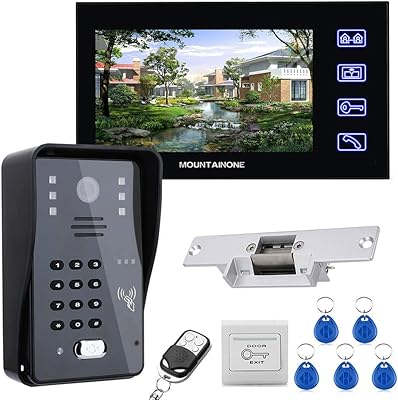
MOUNTAINONE Touch Key 7″ LCD RFID Password Video Door Phone Intercom System
84%
91%
Value for Money
94%
Ease of Installation
88%
Video Quality
83%
Reliability of Functions
70%
Connectivity (Wireless Setup)
More
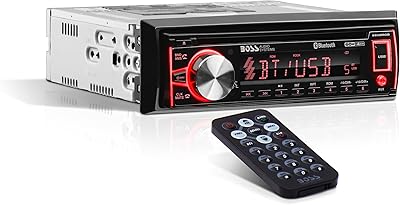
BOSS Audio BV755B Double Din Car Stereo
71%
82%
Value for Money
79%
Ease of Installation
71%
Bluetooth Performance
58%
Touchscreen Responsiveness
74%
Screen Quality
More
BOSS Audio UTV4B ATV/UTV Soundbar
73%
91%
Ease of Installation
63%
Sound Quality
59%
Volume Output
67%
Weatherproofing
72%
Bluetooth Performance
More
BOSS Audio 560BRGB Single Din Car Stereo
68%
83%
Value for Money
74%
Bluetooth Performance
79%
Ease of Installation
61%
Sound Quality
57%
Build Quality
More
BOSS Audio Systems ATV6.5B Weatherproof Sound System
86%
89%
Sound Quality
93%
Weatherproofing/Build Durability
87%
Bluetooth Connectivity
80%
Ease of Installation
90%
Power Output
More
BOSS Audio MCBK625BA Motorcycle Speaker System

74%
88%
Ease of Installation
71%
Audio Volume & Output
63%
Sound Quality & Clarity
74%
Bluetooth Reliability
69%
Weatherproofing & Durability
More
BOSS Audio BM40AMPBT Marine Speaker Pair
73%
83%
Ease of Installation
76%
Sound Volume & Output
47%
Bass Performance
78%
Treble & Midrange Clarity
71%
Bluetooth Reliability
More

FAQ

Yes, that is actually one of the strongest reasons to consider this unit. The eight FXO ports connect directly to standard analog PSTN lines from your telephone provider, so you do not have to cancel or replace those lines. Your existing numbers and line connections carry over without disruption.

The UCM6208 is a standards-based SIP platform, so it is technically compatible with most third-party SIP IP phones. That said, zero-configuration auto-provisioning only works with Grandstream endpoints — phones from other manufacturers will require manual SIP configuration, which adds setup time and complexity.

Honest answer: it is not beginner-friendly. Connecting hardware and reaching the web admin panel is straightforward enough, but configuring dial plans, SIP trunks, and extension routing requires a solid understanding of VoIP concepts. If your business does not have an IT administrator or a VoIP-experienced installer, budget for professional setup assistance before you buy.

Because the Grandstream UCM6208 IP PBX Phone System maintains active PSTN connections through its FXO ports, your analog lines can still handle inbound and outbound calls even when broadband is unavailable. This built-in fallback is one of the main reasons businesses in areas with unreliable internet choose this type of hybrid on-premise system over a purely cloud-based alternative.

No recurring fees come from Grandstream for the core PBX software — it runs entirely on the hardware you own. However, you will still pay your telephone provider for PSTN line service and, if you add SIP trunking, you will pay that SIP provider for call minutes or trunk capacity. The hardware itself has no mandatory subscription.

The system supports up to 30 concurrent active calls, which is the practical limit most SMBs should focus on rather than the 500-extension ceiling. For an office with 20 to 150 employees, 30 simultaneous calls is typically comfortable. Larger or very call-intensive environments should do a real traffic estimate before committing.

Yes, the UCM6208 supports up to 50 SIP trunks and works with most third-party SIP providers. However, expect some trial and error during configuration — SIP interoperability varies between providers, and getting codecs, authentication, and NAT traversal dialed in correctly takes patience. Community forums and provider-specific guides are your best friends during that process.

Once you know where things are, it is manageable. That said, the web-based interface is functional rather than polished — it has not received a significant visual update in several years, and the menu structure can feel unintuitive at first. Experienced VoIP admins generally adapt quickly; first-timers may find the learning curve steeper than expected.

Yes, remote workers can register as SIP extensions over the internet, and Grandstream softphone apps are compatible with the UCM6208. You will need to configure appropriate firewall rules and ensure the built-in security features — including TLS encryption and the IP whitelist — are properly set up before exposing the system to external connections.

Grandstream typically covers their hardware with a one-year limited warranty, though buyers should verify current terms with the seller at the time of purchase. Firmware updates are released periodically and can be applied through the admin interface, but the cadence is not frequent — some users have raised concerns about how actively the software side is maintained over the long term. Given the hardware has been in market since 2016, it is worth checking the latest firmware version and release notes before committing.