Overview

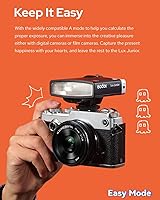
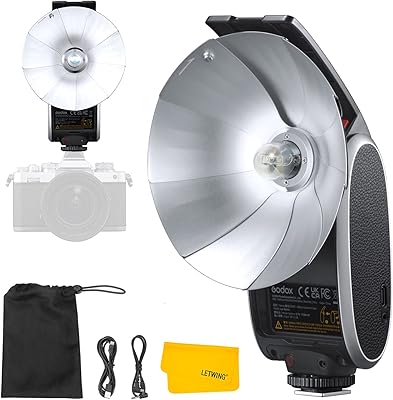
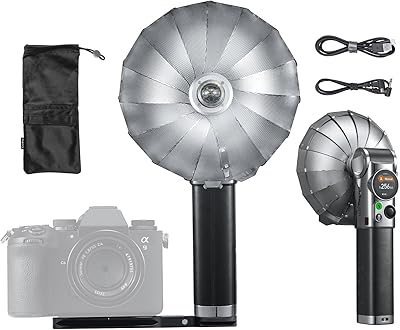
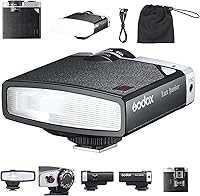
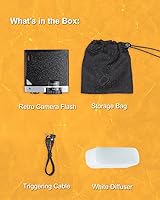
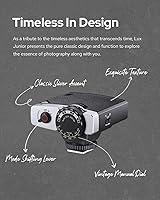
The Godox Lux Junior Retro Hot Shoe Flash is one of those rare accessories that makes you smile before you even fire a shot. Shaped like a throwback to the film era, it appeals to hobbyists and street photographers who want their kit to look as intentional as their images. It mounts via a standard central hot shoe, making it broadly compatible across Canon, Nikon, Sony, Fujifilm, Olympus, and several other brands — though that central contact requirement excludes certain cameras, so checking your specific model first is worth the minute. One thing to flag upfront: this retro flash has no TTL support. It is built around manual control, which is a feature for some and a dealbreaker for others. It ships with a diffuser cover, storage bag, and sync cable.
Features & Benefits

At its core, the Lux Junior runs on two standard AAA batteries and puts out a guide number of 12 at ISO 100 — modest output, best suited for subjects within a few meters rather than lighting up a large room. The color temperature sits at a consistent 6000K, rendering daylight-balanced tones straight out of camera. You get seven manual power levels ranging from full power down to 1/64, giving genuine granular control over exposure. There is also an auto mode for simpler shooting situations, and the S1/S2 optical slave modes let you trigger it wirelessly off another flash without buying a dedicated radio trigger. At just 4.6 ounces, it genuinely fits in a jacket pocket — a pocketable travel flash in the truest sense.

Best For

This compact speedlite is a natural fit for film photographers, Fujifilm X-series shooters, and anyone who wants a flash that looks right at home on a retro-styled body. It also works well for beginners getting comfortable with manual flash exposure — the stripped-back controls make it far less intimidating than a fully featured speedlite. Budget-conscious photographers wanting a simple optical slave setup without investing in radio triggers will find it capable enough for that role. That said, if you shoot weddings, events, or fast-moving subjects where TTL automation or high-speed sync is expected, this retro flash will frustrate you quickly. It is a deliberate, style-forward tool built for measured photography, not run-and-gun situations.

User Feedback

Across buyer reviews, the Lux Junior earns consistent praise for its build quality and design — people are genuinely surprised by how solid it feels at this price tier. The included diffuser cover also gets positive mentions for softening harsh light noticeably in close-up and portrait situations. On the downside, the most repeated frustration comes from buyers who overlooked the lack of TTL before purchasing; reading the spec sheet carefully is not optional here. The recycle time at full power is workable for deliberate shooting but starts to feel slow during quicker sessions. Compatibility confusion around certain Sony and Canon models appears regularly too, reinforcing that a quick model check before buying is genuinely necessary, not just a formality.

Pros

  • Retro design looks genuinely at home on Fujifilm, rangefinder-style, and vintage-inspired camera bodies.
  • Seven manual power levels from 1/1 to 1/64 give solid exposure control for deliberate, measured shooting.
  • Weighing just 4.6 oz, the Lux Junior is light enough to forget it is in your pocket.
  • Runs on standard AAA batteries — no proprietary packs to track down when you are traveling.
  • S1/S2 optical slave modes allow basic multi-flash setups without spending extra on radio triggers.
  • The included diffuser cover softens light noticeably, making close-up portraits look cleaner straight out of camera.
  • Build quality feels solid and well above average for a flash at this price point.
  • Auto mode gives beginners a workable starting exposure without forcing them into manual calculations immediately.
  • Ships with a storage bag and sync cable, adding practical value without requiring extra purchases.
  • Consistent 6000K color temperature produces natural, daylight-balanced results with little need for correction.

Cons

  • No TTL support — a genuine dealbreaker for anyone shooting in fast or unpredictable lighting conditions.
  • GN12 output struggles beyond two to three meters, limiting usefulness in larger spaces or outdoors.
  • Maximum sync speed of 1/200s rules out high-speed sync for wide-aperture outdoor flash work.
  • Full-power recycle time under three seconds sounds fine until you are waiting on a fast-moving subject.
  • No high-speed sync capability means it cannot keep up with action or bright-daylight fill flash techniques.
  • The power dial can develop a loose feel with extended regular use, which affects long-term reliability confidence.
  • Compatibility requires a central hot shoe contact — several popular Sony, Canon, and Fujifilm models are excluded.
  • No third-stop power increments between levels makes fine-tuning exposure harder than it needs to be.
  • The diffuser cover is small and easy to misplace, with replacement parts not widely available separately.
  • Batteries are not included, which feels like a minor but unnecessary omission at this price tier.

Ratings

The Godox Lux Junior Retro Hot Shoe Flash has been evaluated by our AI system after analyzing thousands of verified buyer reviews from global markets, with spam, bot-generated, and incentivized feedback actively filtered out. The scores below reflect a transparent picture of where this compact speedlite genuinely delivers and where real-world frustrations tend to surface. Strengths and pain points are weighted equally so you can make a fully informed decision before buying.
Build Quality
83%
For a flash in this price bracket, the physical construction consistently surprises buyers. The housing feels dense rather than hollow, and the hot shoe foot sits firmly without wobbling — something street photographers appreciate when the camera is bouncing around on a crowded sidewalk.
A handful of users noted that the power dial has a slightly loose feel after extended use, and the battery door on some units requires more force than expected to close properly. Nothing catastrophic, but worth monitoring over months of regular carry.
Retro Design & Aesthetics
91%
This is arguably where the Lux Junior earns its most enthusiastic praise. Fujifilm X-series and rangefinder-style camera owners in particular love how naturally it complements their body — it looks like it belongs there rather than being bolted on as an afterthought.
Design preference is subjective, and a small number of buyers found the retro styling more gimmicky than charming once the novelty wore off. If aesthetics are not a priority for you, paying a premium for looks over raw output may feel like an odd trade-off.
Flash Output Power
62%
38%
At GN12, the output is perfectly adequate for portraits, close-range street shots, and indoor fill light within roughly two to three meters. Paired with the diffuser, it produces a soft, flattering light that requires minimal post-processing correction for skin tones.
Push beyond close-to-mid range and the limitations become obvious quickly. Users shooting in large rooms, outdoors in bright sun, or trying to light subjects beyond three meters consistently reported underexposed results even at full power — this is not a flash built for reach.
Manual Control & Power Range
84%
Seven discrete power levels from full down to 1/64 give a genuinely useful spread for manual exposure work. Beginners learning flash fundamentals find the straightforward controls approachable, and the panel readout showing power, aperture, and distance makes dialing in a starting point intuitive.
The absence of intermediate third-stop increments between levels frustrates more experienced manual shooters who want finer adjustments. In tricky mixed-light situations, jumping between full stops can mean the difference between a correctly exposed shot and one that needs significant correction.
TTL & Automation
31%
69%
The auto mode does offer a basic exposure calculation that works reasonably well in straightforward lighting conditions, giving complete beginners a starting point without forcing them into manual math on their first outing.
There is no TTL support whatsoever, and this is the single most common source of buyer regret. Photographers coming from TTL-capable flashes find the adjustment steep, and those who did not read the specs carefully before purchasing express genuine frustration. For event and wedding work, this omission is simply a non-starter.
Optical Slave Performance
76%
24%
The S1 and S2 optical slave modes work reliably in typical indoor environments, letting photographers build a basic multi-flash setup without investing in radio triggers. For home studio portraits or product photography on a budget, this feature adds real practical value.
In bright outdoor conditions the optical sensor can struggle to pick up the trigger signal consistently, leading to missed pops. The slave range is also limited enough that placing this unit far from the master flash or around corners is not realistic.
Recycle Time
67%
33%
At power levels of 1/4 and below, the recycle time feels snappy enough for casual street shooting and portrait sessions where you are not rushing between frames. Most users shooting at moderate power report no meaningful frustration with the pacing.
At full 1/1 power, the sub-three-second recycle time sounds acceptable on paper but feels sluggish when you are trying to capture a fleeting moment or shoot a quick series of expressions. Users shooting fast-moving subjects noted missed opportunities waiting for the ready indicator.
Camera Compatibility
69%
31%
The broad compatibility across Canon, Nikon, Fujifilm, Sony, Olympus, Panasonic, Leica, and Pentax bodies via a standard central hot shoe means most photographers in the market for a compact flash will find it works with their existing kit without adapters.
The central contact requirement trips up a meaningful number of buyers. Cameras like the Sony ZV-1F, Canon R6, R50, and several Fujifilm models are explicitly incompatible, yet buyers still purchase without checking — and the resulting confusion generates a steady stream of negative reviews that reflect a spec-reading problem more than a product flaw.
Portability & Size
88%
At 4.6 ounces and small enough to slip into a jacket pocket alongside a wallet, this compact speedlite genuinely does not add meaningful weight to a travel or street kit. Photographers who shoot on foot for hours at a time consistently mention how little they notice it.
The compact size does create one minor ergonomic quirk — adjusting the power dial while the flash is mounted on the camera requires a bit of finger gymnastics, particularly on bodies where the eyepiece sits close to the hot shoe.
Battery Convenience
86%
Running on standard AAA batteries is a genuinely practical choice for travel photographers. You can grab replacements at any convenience store, airport kiosk, or hotel gift shop worldwide — no hunting for a specific proprietary pack or a USB port mid-shoot.
Battery life at full power is modest, and users shooting intensive sessions reported needing to carry spare batteries more often than expected. Rechargeable NiMH cells help here, but the flash does not include any batteries in the box, which feels like a small oversight at this price point.
Diffuser Quality
79%
21%
The included white diffuser cover earns consistent praise for doing its job well. Buyers using it for close-up portraits and product flats noted a noticeably softer, more even spread of light compared to bare flash, reducing harsh shadows without requiring a separate modifier.
The diffuser clips on securely but is small enough that it can be misplaced easily during a shoot. A few users mentioned losing it within the first few weeks and being surprised to find replacements are not widely sold separately.
Value for Money
81%
19%
For hobbyists, students, and casual shooters who want a functional and visually appealing flash without spending significantly more, the Lux Junior hits a reasonable value mark. The included accessories — storage bag, sync cable, and diffuser — add practical utility that makes the package feel more complete.
Buyers who need TTL, stronger output, or faster recycle times will quickly outgrow it and wish they had spent more initially. Measured purely against its feature set, some competing flashes at a similar price offer higher guide numbers even if they lack the retro styling.
Ease of Setup
85%
Slide it onto the hot shoe, drop in two AAA batteries, select auto or manual mode, and you are shooting. The minimal interface means there is almost no learning curve for first-time flash users, which several buyers specifically mentioned as a reason they recommended it to friends.
The simplicity cuts both ways — there are no custom functions, no zoom adjustment, and no way to fine-tune color temperature. Photographers who want to configure the flash precisely for specific scenarios will bump into the ceiling of its options fairly quickly.
Sync Speed & High-Speed Shooting
54%
46%
A maximum sync speed of 1/200s is sufficient for controlled indoor situations and standard portrait work where you are managing shutter speed deliberately. In studio-equivalent setups it performs without issue.
The lack of high-speed sync is a real constraint outdoors in bright conditions, where you often need shutter speeds well above 1/200s to control ambient exposure. Photographers who shoot wide-open in daylight and expect to blend flash will find this retro flash incompatible with that workflow entirely.

Suitable for:

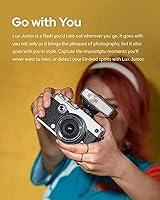
The Godox Lux Junior Retro Hot Shoe Flash is a strong pick for hobbyist photographers, street shooters, and creative enthusiasts who want a capable, characterful flash without the complexity of a professional-grade system. It fits naturally into the kit of Fujifilm X-series, vintage-style mirrorless, and film camera users who care as much about how their gear looks as what it does. Beginners learning manual flash exposure will find the stripped-back interface approachable — seven power levels and a clear panel readout make it easy to understand cause and effect without drowning in menus. Travel photographers who already carry a light bag will appreciate that this compact speedlite slips into a pocket and runs on AAA batteries available anywhere in the world. Anyone building a modest home studio or product photography setup on a budget can also get real use out of the S1/S2 optical slave modes to trigger it wirelessly off an existing flash.
Not suitable for:

The Godox Lux Junior Retro Hot Shoe Flash is simply the wrong tool for photographers whose work demands TTL automation, high-speed sync, or serious output power. Wedding and event photographers, in particular, should look elsewhere — the absence of TTL means constant manual adjustments in unpredictable, fast-changing lighting conditions, and the 1/200s sync speed ceiling makes outdoor fill flash in bright sun impractical. The GN12 guide number is modest by any measure, so anyone who regularly needs to light subjects beyond three meters or fill a larger space will find the output inadequate regardless of how they dial in the settings. It is also worth confirming your specific camera model before purchasing: bodies without a central hot shoe contact — including the Sony ZV-1F, Canon R50, Canon R6, and select Fujifilm models — are not compatible, and skipping that check is the most common cause of frustrated returns.

Specifications

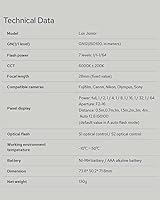
  • Guide Number: The flash delivers a guide number of GN12 at ISO 100 with a 28mm focal length, suitable for subjects within close to mid-range distances.
  • Color Temperature: Output is rated at 6000K with a tolerance of ±200K, producing consistent daylight-balanced light across all power levels.
  • Focal Length: The flash head covers a fixed 28mm focal length with no zoom adjustment available.
  • Power Range: Manual power is adjustable across 7 levels from full power (1/1) down to 1/64 in one-stop increments.
  • Recycle Time: At full 1/1 power, the flash recycles in under 3 seconds when powered by a fresh or fully charged battery.
  • Power Source: The unit is powered by 2x AAA batteries (alkaline or NiMH rechargeable), which are not included in the box.
  • Sync Modes: Supported sync options include hot shoe mount, sync cable port, and S1/S2 optical slave modes for wireless triggering.
  • Max Sync Speed: The maximum camera sync speed supported is 1/200s; high-speed sync is not available on this unit.
  • TTL Support: This flash does not support TTL (Through-The-Lens) automatic exposure — it operates in manual and basic auto modes only.
  • Dimensions: The flash body measures 2.9 x 2 x 2.8 inches, making it one of the more compact hot shoe flashes in its class.
  • Weight: Net weight without batteries is 4.6 oz, keeping the overall load on the camera's hot shoe minimal during extended shoots.
  • Hot Shoe Type: The unit requires a standard central-contact hot shoe on the camera; it is not compatible with multi-pin or non-central contact configurations.
  • Compatible Brands: Confirmed compatible camera brands include Canon, Nikon, Sony (select models), Fujifilm, Olympus, Panasonic, Leica, and Pentax.
  • Incompatible Models: Known incompatible models include Sony ZV-1F, Canon R6, Canon R50, Fujifilm X-A3, X100F, and X100T, among others without a central hot shoe contact.
  • Display Panel: The onboard panel displays current power level, calculated aperture, and recommended subject distance for the selected settings.
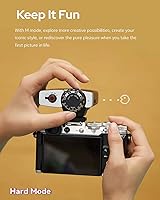
  • Operating Modes: The flash offers two primary operating modes: Manual (M) with full power control, and Auto (A) for simplified automatic exposure calculation.
  • Optical Slave: S1 mode triggers the flash on any detected flash burst, while S2 mode ignores a pre-flash and fires on the main flash pulse to support cameras with red-eye reduction.
  • In the Box: The package includes the flash unit, a white diffuser protection cover set, a storage bag, a sync cable, and a limited 1-year warranty card.

Related Reviews

Godox Lux Senior Retro Camera Flash
86%
93%
Design & Aesthetics
89%
Portability & Storage
85%
Lighting Performance
87%
Battery Life
82%
Ease of Use
More
Godox Lux Master Retro TTL Camera Flash
82%
91%
Build Quality & Design
88%
Touchscreen Usability
84%
TTL Accuracy
82%
High-Speed Sync (HSS) Performance
67%
Flash Power Output
More
Godox AD200 Pro
Godox AD200 Pro
86%
93%
Output Power & Consistency
91%
Portability & Form Factor
78%
Battery Life & Charging
89%
HSS & Sync Performance
88%
Wireless Ecosystem Integration
More
Godox V850III Flash
Godox V850III Flash
85%
88%
Performance
92%
Battery Life
86%
Ease of Use
84%
Build Quality
89%
Speed and Recycle Time
More
Godox MF12 Macro Flash
87%
88%
Performance
90%
Ease of Use
85%
Battery Life
80%
Flash Power
92%
Wireless Control
More
Godox TT350F Fujifilm TTL Camera Flash
80%
88%
TTL Accuracy
76%
Build Quality
84%
HSS Performance
82%
Wireless Reliability
61%
Recycle Time
More
Godox AD400Pro Outdoor Flash Monolight
80%
91%
Output Power & Consistency
83%
Battery Life & Reliability
71%
TTL Accuracy
88%
High-Speed Sync Performance
86%
Portability & Form Factor
More
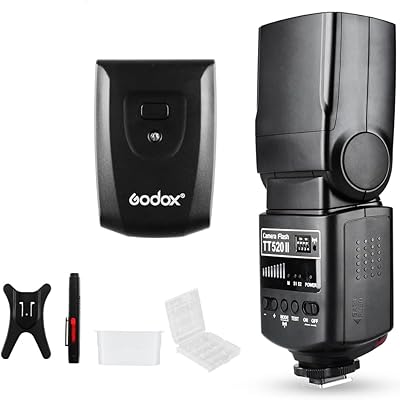
Godox TT520II Speedlite Flash
76%
91%
Value for Money
78%
Build Quality
84%
Wireless Performance
82%
Flash Output Consistency
76%
Ease of Use
More
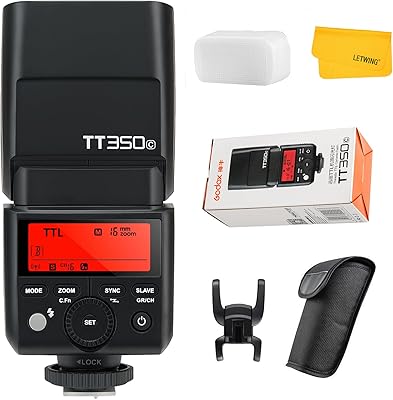
Godox TT350C TTL Flash for Canon
80%
94%
Portability & Size
74%
TTL Accuracy
88%
Wireless Reliability
61%
Flash Power Output
86%
High Speed Sync (HSS)
More
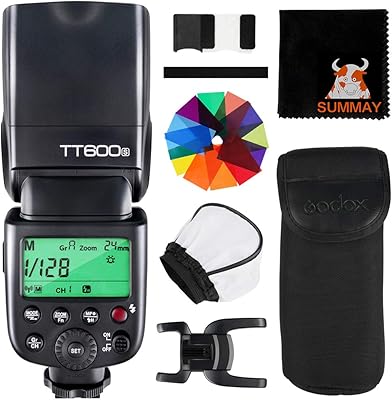
Godox TT600S Speedlight Camera Flash
79%
93%
Value for Money
88%
Wireless Performance
84%
Build Quality
91%
Output Consistency
76%
High-Speed Sync
More

FAQ

No — the Godox Lux Junior Retro Hot Shoe Flash does not support TTL on any camera brand. It operates in manual mode, where you set the power level yourself, or in a basic auto mode that estimates exposure using a sensor on the flash body. If TTL is important to your workflow, this is not the right flash for you.
Unfortunately, no. Both the Sony ZV-1F and Canon R50 are explicitly incompatible because their hot shoe designs do not include a standard central contact point. Before purchasing, it is worth checking whether your specific camera model has a single central-contact hot shoe — that is the key requirement for this retro flash to function.

Yes, you can — but only optically. The Lux Junior has built-in S1 and S2 optical slave modes that let it fire when it detects another flash. S1 triggers on any flash burst, while S2 skips the pre-flash and fires on the main pulse, which is helpful for cameras with red-eye reduction enabled. Just keep in mind that optical triggering can be unreliable in bright outdoor conditions or over long distances.

It runs on 2x standard AAA batteries, either alkaline or NiMH rechargeable. Battery life varies depending on power level — at lower settings you will get considerably more flashes per set than at full power. Rechargeable NiMH cells are worth using if you shoot frequently, as they hold up better over repeated firing cycles. Note that batteries are not included in the box.

At full power, the guide number of GN12 means you are working most effectively with subjects roughly two to three meters away, depending on your aperture setting. Push beyond that and you will start to see underexposure even at maximum output. This compact speedlite is built for close to mid-range work — portraits, street scenes, and product shots — rather than lighting subjects across a large room.

The design is genuine, not just a skin over generic internals — but it is worth setting expectations. The Lux Junior delivers consistent, daylight-balanced light at a color temperature of around 6000K, with seven usable power levels and solid build quality for its price tier. It performs well within its intended use case. Think of it as a stylish, practical tool for casual photography rather than a workhorse for demanding professional jobs.

Yes, quite noticeably for close-range work. The white diffuser cover clips onto the flash head and spreads the light more evenly, reducing harsh shadows and softening the output in a way that is genuinely useful for portraits and close-up shots. It is a small accessory but one that many users mention specifically in positive feedback. Just be careful not to lose it — replacements are not easy to find separately.

The Fujifilm X-T5 is on the compatible list and works without issues. The X100V is also compatible since it has a standard central hot shoe. However, the X100F and X100T are explicitly listed as incompatible, so if you are using one of those older models, this flash will not trigger correctly. Always double-check the specific model number against the compatibility list before ordering.

At full power, the flash recycles in under three seconds, which is workable for portrait sessions and deliberate street photography where you are not rushing between frames. Drop the power to 1/4 or lower and it feels much snappier. Where it becomes frustrating is in fast-paced situations where you want to fire two or three shots quickly — at full power, you will occasionally miss the moment waiting for the ready indicator to turn green.

It is actually a solid choice for that purpose. The interface is simple enough that you are not overwhelmed by options, and the display panel shows power level, aperture, and suggested distance, which makes it easier to understand the relationship between those variables as you shoot. The auto mode gives you a safety net while you are building confidence. Just go in knowing that TTL does not exist here — you are learning manual flash technique, which is genuinely a useful skill to develop.

Where to Buy