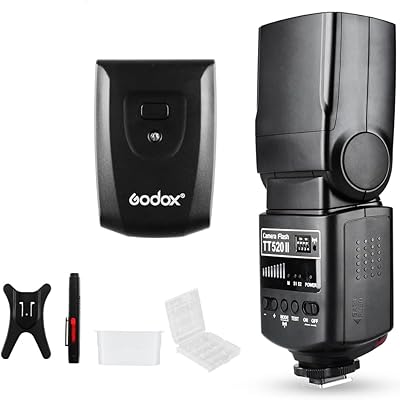
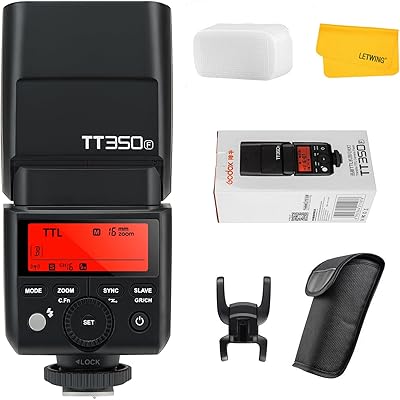
Overview

The Godox TT685II-C Canon Speedlight Flash is Godox's latest answer for Canon EOS shooters who want serious wireless flash capability without spending flagship money. Godox has been building lighting equipment since 1993, and that experience shows in how this unit is engineered — it is not a stripped-down budget option dressed up in specs. The second-generation TT685 II refines the original with a cleaner control layout and improved build consistency. At its core, the E-TTL II auto-metering system is what most buyers come for: it reads the scene and adjusts exposure automatically, so you spend less time reviewing shots and more time shooting. Canon bodies from entry-level Rebels to full-frame workhorses are all supported.
Features & Benefits

The GN60 guide number gives this Canon-dedicated speedlight enough muscle for indoor receptions, tight venues, and outdoor fill — without the bulk of a studio monolight. What makes it genuinely useful on location is the 2.4G wireless radio system: unlike optical triggers, it works around corners and in bright sunlight with no line-of-sight dependency. Pair that with High-Speed Sync up to 1/8000s and you can shoot wide open at f/1.8 in the middle of the afternoon without blowing your background. The motorized zoom head covers 24mm to 200mm and adjusts automatically to match your lens. Buttons are physical and direct, which matters when you are moving fast at an event and do not want to hunt through menus.

Best For

Wedding and event photographers will find the most immediate value here — dependable TTL and wireless triggering in one compact unit is exactly what unpredictable venues demand. Outdoor portrait and lifestyle shooters benefit from HSS, which lets you push shutter speed up and keep backgrounds in check on sunny afternoons. If you are already invested in Godox, this wireless flash unit slots into the Godox X system without any adapter gymnastics, making multi-flash setups straightforward to scale. Enthusiasts who have been making do with the built-in pop-up flash will notice an immediate difference in the quality and directionality of light. This is not aimed at full-time commercial photographers with unlimited budgets, but for everyone else shooting Canon, it covers a lot of ground.

User Feedback

Across a broad base of buyers, the most consistent praise centers on TTL accuracy in mixed-light environments — reviewers note that the flash rarely needs manual correction in standard shooting conditions, which is the whole point of auto-metering. The wireless range also draws positive mentions, with most users reporting solid connections across reasonable indoor and outdoor distances. On the critical side, new users occasionally mention a learning curve around the menu structure, especially those coming from Canon's Speedlite lineup where the interface feels more intuitive. Recycle times are generally rated as adequate, though heavy shooters note that battery drain accelerates quickly at full power. A recurring thread in comparisons: buyers frequently rate this unit as better value than equivalent Canon-branded options, though Canon's own system integration is acknowledged as slightly tighter.

Pros

  • E-TTL II metering handles exposure automatically, which keeps things moving fast at events and portrait sessions.
  • The 2.4G wireless radio triggers reliably without needing a direct line of sight to the camera.
  • High-Speed Sync up to 1/8000s gives outdoor shooters real creative control over background exposure.
  • GN60 output is genuinely powerful for a hotshoe flash, covering large rooms and outdoor fill situations comfortably.
  • Compatible with a wide range of Canon EOS bodies, from entry-level DSLRs to current full-frame cameras.
  • The Godox TT685 II slots cleanly into the broader Godox X ecosystem for multi-flash setups without extra adapters.
  • A bundled mini stand and protective case add immediate practical value that competing units often leave out.
  • Physical direct-access buttons mean you can adjust power on the fly without hunting through layered menus.
  • Buyers consistently rate this wireless flash unit as offering more capability per dollar than Canon-branded equivalents.
  • The motorized zoom head adjusts automatically to match your lens focal length, keeping light coverage optimized.

Cons

  • No weather sealing makes this a risky choice for photographers who regularly shoot outdoors in unpredictable conditions.
  • Battery drain at full power is significant — carrying multiple spare AA sets is essentially mandatory for all-day event work.
  • The instruction manual is minimal and leaves beginners to figure out advanced wireless configurations largely on their own.
  • First-time Godox users migrating from Canon Speedlites often face a noticeable learning curve with the menu structure.
  • Batteries are not included, which is a small but frustrating omission given how immediately you need them.
  • HSS engagement reduces effective flash output considerably, which limits its usefulness at distance in very bright conditions.
  • No cross-brand compatibility means this unit has zero resale flexibility if you ever switch camera systems.
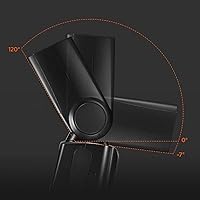
  • The swivel range does not reach full rotation, which can cause awkward repositioning in tight shooting environments.
  • Occasional wireless dropouts have been reported in environments with heavy radio frequency congestion.
  • Canon-specific in-camera flash menu integration is less refined compared to what native Canon Speedlites offer.

Ratings

Our AI-generated scores for the Godox TT685II-C Canon Speedlight Flash are built by analyzing thousands of verified buyer reviews worldwide, with spam, incentivized posts, and bot activity actively filtered out before any scoring takes place. The ratings below reflect the full picture — where this Canon-dedicated speedlight genuinely impresses and where real users have run into friction. Strengths and recurring pain points are weighted equally so you can make an informed decision.
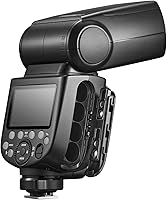
TTL Exposure Accuracy
88%
In typical indoor event and portrait scenarios, the E-TTL II metering lands well without constant manual correction — a consistent pattern across reviewers shooting receptions, family sessions, and corporate headshots. Most users report that the flash reads ambient light predictably and rarely produces blown highlights on faces.
In high-contrast or backlit situations, some users note the TTL can over-expose or hunt for the right output, requiring exposure compensation dialing. It is not infallible, and a handful of reviewers who shoot in complex mixed-lighting environments prefer switching to manual mode for critical work.
Wireless Reliability
86%
The 2.4G radio triggering is one of the most consistently praised aspects — users report dependable connections in crowded reception halls, outdoor fields, and even through walls at moderate distances. Unlike optical slaves, it does not get confused by ambient light or other flashes firing nearby.
A minority of reviewers report occasional misfires or brief dropouts at the far edges of the stated wireless range, particularly in environments with heavy radio interference. The connection is generally solid but not entirely immune to congested wireless environments like large wedding venues.
High-Speed Sync Performance
84%
Outdoor portrait shooters consistently highlight HSS as a standout capability, allowing them to shoot at wide apertures like f/1.8 in direct afternoon sun without overexposing the background. The ability to sync up to 1/8000s opens up creative choices that a standard flash simply cannot offer.
HSS does come at a power cost — at high sync speeds, effective flash output drops noticeably, which can require moving the flash closer to the subject or bumping ISO. A few users shooting at distance in very bright conditions found the output insufficient even at full power when HSS was engaged.
Build Quality
79%
21%
The overall construction feels solid and purposeful for its price tier — the hot shoe mount is tight, buttons have a satisfying tactile response, and the head rotates and tilts without wobble. Most buyers describe it as noticeably better built than budget no-name alternatives at lower price points.
It is not weather-sealed, which is a real limitation for photographers who shoot outdoors regularly in unpredictable conditions. A small number of reviewers reported cosmetic wear or minor play developing in the tilt mechanism after extended use, though structural failures appear rare.
Value for Money
91%
Across competing Canon-compatible flashes in a comparable price range, buyers repeatedly cite this as one of the strongest feature-to-cost ratios available. Getting GN60 output, full TTL, HSS, and 2.4G wireless in a single unit — with a case and stand included — is difficult to argue against at this tier.
Buyers coming from Canon's own Speedlite ecosystem sometimes feel the price difference does not fully account for the slight integration polish Canon-branded units offer. If you are already deep in Canon's native flash system, the savings may feel less dramatic than for someone starting fresh.
Ease of Use & Controls
71%
29%
Experienced flash users and those familiar with Godox products find the direct-access button layout logical and fast to navigate during live shoots. The LCD panel is clearly readable in most lighting conditions, and switching between TTL and manual modes does not require deep menu navigation.
First-time Godox users, especially those migrating from Canon Speedlites, frequently mention a learning curve before the menu structure clicks. A few reviewers found the button labeling less intuitive than expected, and the instruction manual is described as thin on practical guidance for beginners.
Recycle Time
76%
24%
At low-to-mid power settings, the recycle speed is fast enough to keep up with burst shooting at events and portrait sessions without causing frustrating delays between frames. For most everyday shooting scenarios — ceremony coverage, family portraits, product photography — the speed is more than adequate.
At full or near-full power, recycle times slow to a point where fast-paced documentary shooters may miss moments waiting for the flash to ready itself. With alkaline batteries, this slowdown is more pronounced; reviewers consistently recommend quality NiMH rechargeables to maintain acceptable speed during heavy use.
Battery Life
68%
32%
For moderate shooting sessions — a short portrait session or a ceremony — four AA batteries provide reasonable longevity without needing mid-shoot swaps. Users who shoot at partial power report notably better endurance than those pushing output to maximum.
Heavy event shooters and wedding photographers note that battery consumption at full power is demanding, and carrying spare sets is essentially mandatory for all-day coverage. Several reviewers expressed mild frustration that batteries are not included, which is a small but real out-of-the-box inconvenience.
Flash Output Power
83%
GN60 at peak output is genuinely powerful for a hotshoe flash, covering large reception halls, lighting subjects at moderate distances, and overpowering harsh midday sun when used with HSS. Compared to lower-output competitors in the same category, the extra headroom is regularly appreciated.
At maximum telephoto zoom (200mm), the output figures are impressive on paper, but real-world results at wide zoom settings are more modest. Photographers working in very large outdoor spaces or trying to fill large group scenes at distance may still find the output limiting.
Compatibility & System Integration
82%
18%
The Godox TT685 II covers an exceptionally wide range of Canon EOS bodies — from older Rebels through current full-frame cameras — making it a practical choice whether you are on an entry-level DSLR or a more advanced body. Canon E-TTL II communication works reliably across the supported lineup.
This is a Canon-only unit, so it offers no cross-brand flexibility if you ever switch systems. While the Godox X wireless system is broad and well-supported, some advanced Canon-specific features available through native Speedlites — such as certain in-camera control menu integrations — are not fully replicated.
Head Flexibility & Bounce Range
81%
19%
The tilt and swivel range covers all the standard bounce angles photographers rely on — ceiling bounce, wall bounce, and 45-degree fill — with smooth, detented movement that stays where you set it. The slight downward tilt capability is a practical touch for close-up macro-style or tabletop work.
The swivel range stops before full 360-degree rotation, which occasionally forces awkward repositioning when working in tight spaces or switching between landscape and portrait orientations quickly. It is a minor friction point but one that more experienced photographers notice in fast-paced environments.
Portability & Size
85%
At just over a pound, this wireless flash unit is light enough to use on-camera for extended handheld shoots without causing noticeable fatigue or throwing off balance. It fits comfortably in a camera bag side pocket alongside lenses, and the included protective case keeps it protected in transit.
It is not the most compact flash in its output class — photographers with smaller mirrorless setups sometimes comment that it looks and feels bulky relative to the camera body. For minimalist travel kits, the size may be a tradeoff worth noting.
Included Accessories
77%
23%
The bundled mini stand and protective case are genuinely useful additions that most competing flashes sell separately or omit entirely. The stand handles simple off-camera setups on a flat surface without requiring a separate light stand, which is convenient for quick product shots or solo portrait work.
The instruction manual is widely described as minimal — functional enough to set up the unit, but not helpful for learning advanced wireless configurations or troubleshooting TTL inconsistencies. Batteries are conspicuously absent, which feels like an oversight given that this flash needs four AA cells to operate.
Godox Ecosystem Compatibility
89%
For photographers already using or planning to build out a Godox lighting setup, this unit slots in without friction — it works natively with Godox X triggers, other TT685 units in multi-flash configurations, and the broader AD and V-series lineup. The ecosystem is well-established and widely documented online.
If you are not already in the Godox ecosystem, the X system requires purchasing a compatible trigger separately to take full advantage of wireless control from the camera position. It is an added cost and an extra piece of gear that Canon users starting from scratch should factor into their budget.

Suitable for:

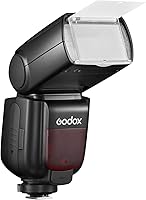
The Godox TT685II-C Canon Speedlight Flash is a strong match for Canon EOS shooters who need capable, wireless-ready flash without paying for a Canon-branded unit. Wedding and event photographers will feel right at home — TTL metering handles exposure automatically in rapidly changing light, and the 2.4G radio triggering works reliably in large halls where optical slaves struggle. Outdoor portrait and lifestyle photographers benefit directly from High-Speed Sync, which lets you keep a wide aperture and a clean background even in bright midday conditions. Enthusiasts upgrading from a pop-up flash will notice an immediate and meaningful difference in light quality, directionality, and creative control. It is also a smart entry point for anyone planning to build out a larger Godox lighting setup, since this unit talks natively to the rest of the X system ecosystem — no proprietary bridge required.
Not suitable for:

Photographers shooting in rain, mist, or consistently harsh outdoor conditions should look elsewhere, as the Godox TT685II-C Canon Speedlight Flash has no weather sealing of any kind — one unexpected downpour could end its life prematurely. Full-time commercial photographers who depend on flash for high-volume professional work may find the battery consumption and recycle time at full power more limiting than they can tolerate over a long shooting day. Nikon, Sony, Fujifilm, and other non-Canon users get nothing here — this is a Canon-only unit with no cross-brand compatibility whatsoever. Shooters who prefer the tight in-camera menu integration that Canon's native Speedlite line provides will notice the difference, particularly in advanced multi-flash control scenarios. And if you are a complete beginner expecting a plug-and-play experience with comprehensive guidance, the thin instruction manual means you will be doing a fair amount of self-directed learning online before the unit feels fully intuitive.
Specifications

  • Model Number: The unit is officially designated TT685IIC, representing the second-generation Canon-specific variant in Godox's TT685 speedlight line.
  • Guide Number: Maximum guide number is GN60 measured at ISO 100 with the zoom head set to 200mm, indicating strong output for a hotshoe flash in this class.
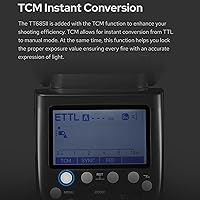
  • Flash Metering: Supports Canon E-TTL II automatic metering as well as full manual power control, giving shooters flexibility across automated and precise exposure workflows.
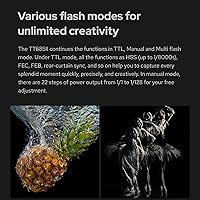
  • High-Speed Sync: HSS is supported up to 1/8000s shutter speed, allowing wide-aperture shooting in bright ambient light conditions that would otherwise exceed standard flash sync speeds.
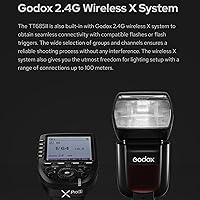
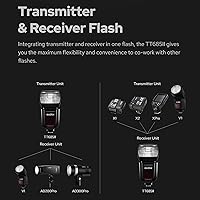
  • Wireless System: Built-in 2.4G radio transceiver is compatible with the Godox X wireless system, enabling on-camera master or off-camera slave operation without any line-of-sight requirement.
  • Zoom Range: The motorized zoom head covers a focal length range of 24mm to 200mm and adjusts automatically to match the attached lens, optimizing light spread for the frame.
  • Tilt Range: The flash head tilts from -7° (slight downward angle) to 90° (straight up), covering all standard bounce and direct flash positions.
  • Swivel Range: Horizontal swivel spans 0° to 270°, allowing wide repositioning for bounce and off-axis lighting without detaching the flash from the hot shoe.
  • Flash Duration: Flash duration ranges from approximately 1/300s at minimum power to 1/20000s at lower power outputs, with shorter durations available for motion-freezing applications.
  • Recycle Time: Recycle time ranges from approximately 0.1 seconds at low power to 2.6 seconds at full power output, depending on battery type and charge level.
  • Power Source: Requires four AA batteries, which are not included in the box; Godox recommends quality NiMH rechargeable cells for optimal recycle speed and endurance.
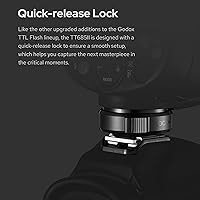
  • Compatible Mount: Fits the standard Canon EOS hot shoe and communicates via the Canon-specific multi-contact interface for full TTL and control integration.
  • Dimensions: Package dimensions measure 8.11 × 3.46 × 3.35 inches, reflecting a standard mid-size speedlight footprint suitable for most camera bags.
  • Weight: The unit weighs 1.28 pounds, keeping the overall camera-and-flash rig manageable for extended handheld or on-camera shooting sessions.
  • Included Accessories: The box includes the flash unit, a mini tabletop stand, a protective carrying case, and a printed instruction manual.
  • Manufacturer: Made by Godox, a Chinese lighting manufacturer founded in 1993 that specializes in camera flash, continuous lighting, and photography accessories.
  • Compatibility: Designed for Canon EOS cameras including models such as the 5D Mark II and III, 6D, 7D, 1DX, 50D, 60D, 500D, 550D, 600D, 650D, 1000D, and 1100D series.
  • Weather Sealing: This flash has no weather or dust sealing, making it unsuitable for use in rain, high humidity, or environments with significant airborne particulates.

Related Reviews

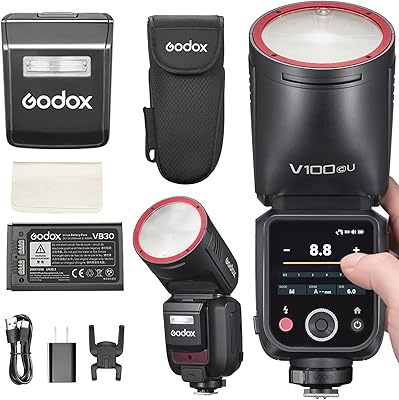
Godox V100-CU Canon Touchscreen Flash
82%
93%
Output Power
91%
Touchscreen Interface
82%
TTL Accuracy
88%
High-Speed Sync Performance
84%
Detachable Sub Flash
More
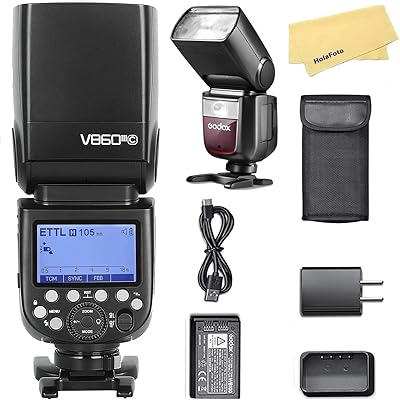
Godox V860III Canon Speedlite Flash
83%
93%
Battery Life & Endurance
91%
Recycle Time
74%
TTL Accuracy & Consistency
78%
Wireless Reliability
82%
Build Quality & Durability
More
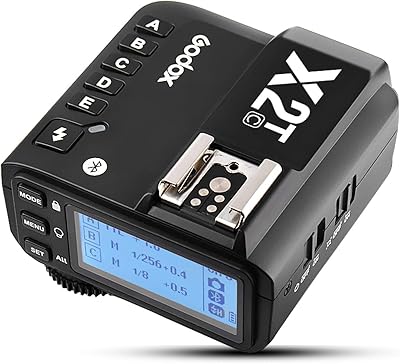
Godox X2T-C TTL Wireless Flash Trigger for Canon
86%
91%
Performance
88%
Ease of Use
85%
Reliability
89%
Bluetooth Control
75%
Signal Range
More
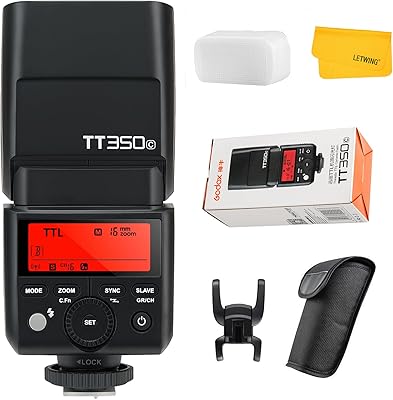
Godox TT350C TTL Flash for Canon
80%
94%
Portability & Size
74%
TTL Accuracy
88%
Wireless Reliability
61%
Flash Power Output
86%
High Speed Sync (HSS)
More
NEEWER Z880-C TTL Camera Flash Speedlite
83%
83%
Build Quality
88%
TTL Accuracy
86%
HSS Performance
74%
Wireless Reliability
91%
Battery Life
More
Godox V850III Flash
Godox V850III Flash
85%
88%
Performance
92%
Battery Life
86%
Ease of Use
84%
Build Quality
89%
Speed and Recycle Time
More
Godox AD200 Pro
Godox AD200 Pro
86%
93%
Output Power & Consistency
91%
Portability & Form Factor
78%
Battery Life & Charging
89%
HSS & Sync Performance
88%
Wireless Ecosystem Integration
More
Godox AD400Pro Outdoor Flash Monolight
80%
91%
Output Power & Consistency
83%
Battery Life & Reliability
71%
TTL Accuracy
88%
High-Speed Sync Performance
86%
Portability & Form Factor
More
Godox TT520II Speedlite Flash
76%
91%
Value for Money
78%
Build Quality
84%
Wireless Performance
82%
Flash Output Consistency
76%
Ease of Use
More
Godox TT520III Hot Shoe Flash
80%
91%
Value for Money
88%
Ease of Setup
84%
Wireless Performance
79%
Light Output & Power
86%
Manual Control Precision
More

FAQ

The Godox TT685II-C Canon Speedlight Flash is designed for Canon EOS hot shoe cameras broadly, which includes supported Canon mirrorless bodies that use the standard EOS hot shoe interface. That said, TTL compatibility can vary by specific model, so it is worth checking Godox's current compatibility list for your exact camera before purchasing.
The 2.4G radio transceiver is built directly into the flash, so it can act as a wireless slave without any additional receiver. However, to control it wirelessly from your camera position, you will need a compatible Godox X-series trigger mounted on your hot shoe — that part is sold separately.

Four AA batteries are required and are not included in the box. For the best combination of recycle speed and longevity, quality NiMH rechargeable batteries rated around 2500mAh are strongly recommended. Alkaline batteries work but tend to slow down recycle times at higher power levels and deplete faster during heavy use.

HSS needs to be enabled in the flash settings, but once activated it will engage automatically whenever your shutter speed exceeds the camera's standard sync speed. You do not have to toggle it shot by shot — just turn it on and the flash handles the rest based on the shutter speed you select.

TTL is reliable in a wide range of standard conditions, but it is not perfect in high-contrast or backlit scenes — the flash may slightly over- or under-expose, which is true of virtually any TTL system on the market. In those situations, dialing in flash exposure compensation or switching to manual mode gives you much more predictable results. Think of TTL as a strong starting point, not an infallible solution.

Yes, the Godox TT685 II is fully compatible with the Godox X wireless ecosystem, so it can work alongside other X-system flashes, AD-series monolights, and V-series units without any adapter. You can mix and match different Godox models in the same wireless group, which makes expanding a lighting setup straightforward and cost-effective.

For most practical shooting scenarios, the Godox unit delivers comparable or better specifications — more output power, built-in wireless radio, and HSS — for less money than a Canon equivalent in the same tier. The trade-off is that Canon Speedlites offer slightly tighter in-camera menu integration on certain bodies. If you shoot primarily in automatic modes and value wireless flexibility, the Godox is hard to argue against on a feature-per-dollar basis.

The build quality is well above what you would expect at this price point — the hot shoe mount is secure, the tilt and swivel movements are firm, and the buttons feel solid. It is not ruggedized or weather-sealed, so it is not built for punishment, but with normal professional use it holds up well. A handful of long-term users have reported minor wear on the tilt mechanism over time, though structural failures appear uncommon.

The basics — mounting it, shooting TTL on-camera — are straightforward for anyone who has used a hotshoe flash before. Where some first-time Godox users hit friction is in the menu structure for wireless configuration and manual power adjustment, which feels less intuitive than Canon's own Speedlite interface. The included manual is fairly thin, so expect to spend some time watching tutorial videos online before you feel fully confident with all the wireless modes.

The box contains the flash unit, a mini tabletop stand, a protective carrying case, and an instruction manual. The stand and case are both legitimately useful — the stand lets you place the flash off-camera on any flat surface without a light stand, and the case protects the unit during transport. It is a more complete out-of-the-box package than most flashes in this category offer.

Where to Buy