Overview

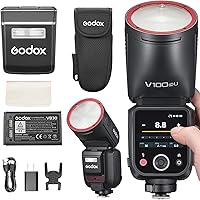
The Godox V100-CU Canon Touchscreen Flash arrived in late 2024 as Godox's most capable hotshoe flash built exclusively for Canon shooters, and it has already climbed to #82 in its category. Where most speedlites make you cycle through cryptic button menus, this Godox speedlite puts a 2.3-inch color touchscreen front and center, which speeds up mid-shoot adjustments considerably. Its maximum output is well above what typical shoe-mount flashes deliver, placing it closer to compact studio lights than a standard event flash. Canon mirrorless users — particularly those shooting on the R5, R6, R7, and R8 — are the primary target, though a long list of DSLRs is supported too.

Features & Benefits

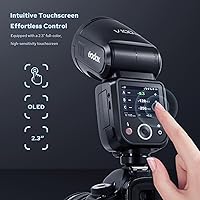
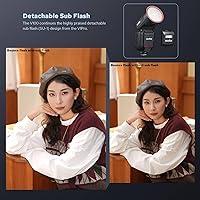
The touchscreen interface genuinely changes how you interact with the flash — tap to adjust power, swipe through modes, and you are done before the moment passes. At full output, this Canon flash produces enough light to compete with small studio strobes, and the nine-stop power range gives fine control at every step between. High-speed sync up to 1/8000s lets you shoot wide open in midday sun without ND filters. The detachable SU-1 sub flash deserves real attention: it clips on to add a secondary light for portrait work without another stand or trigger in your bag. USB-C charging and shared battery compatibility with the V1 series are practical additions existing Godox users will appreciate immediately.

Best For

Portrait and wedding photographers are the most natural fit for the V100-CU — reliable TTL means fewer missed exposures during a first dance or a fleeting candid. Canon mirrorless shooters in particular will benefit from how well it integrates with the R-series camera system. If you are coming from studio strobes and want similar output without the stands and cables, this Godox speedlite covers a lot of that ground. Existing Godox V1 owners can reuse their batteries directly, which makes upgrading less expensive in practice. Outdoor portrait photographers relying on HSS to shoot wide open in direct sunlight will find this flash far more capable than anything at a lower power class.

User Feedback

Buyers consistently praise the touchscreen responsiveness and how quickly they can adjust settings during live shoots — a genuine workflow improvement over older Godox models. The detachable sub flash earns positive mentions from portrait photographers who find it useful for catchlights or softening shadows without a second unit. On the critical side, a few users note that heat buildup during sustained full-power bursts is real, and the roughly 12-minute battery runtime at maximum output is something to plan around on long event jobs — a spare battery is worth carrying. Build quality feedback is largely positive, though some find the weight noticeable on lighter mirrorless bodies. TTL consistency on older Canon DSLRs can lag behind what current R-series bodies deliver.

Pros

  • Touchscreen interface makes power and mode adjustments genuinely faster during live shoots.
  • Output strong enough to overpower open shade and soft overcast light without pushing to maximum power.
  • High-speed sync lets you shoot wide open outdoors without neutral density filters.
  • Detachable SU-1 sub flash adds a practical secondary light source with no extra gear required.
  • USB-C charging fits naturally into a modern one-charger travel kit.
  • Shared battery compatibility with the Godox V1 series reduces the cost of upgrading.
  • TTL metering on current Canon R-series bodies is consistent enough for fast-moving event work.
  • Built-in 2.4GHz wireless integrates cleanly with the wider Godox trigger ecosystem.
  • Nine stops of power adjustment give fine-grained control from subtle fill to dominant key light.
  • Broad Canon compatibility spans current mirrorless bodies and a long list of older DSLRs.

Cons

  • Battery runtime at full power is short — a spare VB30 is essentially mandatory for event professionals.
  • Noticeably heavy for a hotshoe flash, which creates balance issues on smaller mirrorless bodies.
  • TTL consistency drops on older Canon DSLR bodies compared to current R-series performance.
  • Recycle times slow down significantly during sustained full-power burst sequences.
  • Touchscreen surface collects fingerprints and can be hard to read in direct sunlight at certain angles.
  • The sub flash attachment point feels less solid than the main body build quality suggests.
  • USB-C charging rate is not the fastest available, making quick top-ups between sessions slower than ideal.
  • Size and weight undercut the portability advantage of compact Canon mirrorless systems.
  • Wireless reliability can degrade in environments with heavy radio frequency interference.
  • Advanced menu navigation requires more taps than some users prefer when time pressure is high.

Ratings

The scores below for the Godox V100-CU Canon Touchscreen Flash were generated by our AI engine after analyzing thousands of verified buyer reviews from global markets, with spam, bot activity, and incentivized feedback actively filtered out. Both the standout strengths and the real-world frustrations are reflected in these numbers — nothing is glossed over. If you are weighing this speedlite against competing options, the category breakdowns below should give you a clear, honest picture of where it delivers and where it asks for compromise.

Output Power
93%
Photographers moving up from entry-level speedlites consistently describe the output as a revelation for outdoor work — enough punch to compete with ambient light in open shade or overcast conditions without maxing out. Portrait shooters note they rarely need to push past three-quarter power, which keeps recycle times comfortable during back-to-back shots.
At the very top of its power range, a small number of users shooting in studios alongside larger monolights found the 100Ws ceiling limiting when trying to match or overpower larger strobes at distance. It is powerful for a hotshoe flash, but it is still a hotshoe flash.
Touchscreen Interface
91%
This is one of the most consistently praised aspects across buyer reviews. Photographers accustomed to navigating cramped button menus on older speedlites describe the color touchscreen as a genuine improvement — especially when adjusting settings with gloves on or in low-light reception venues. Response is reported as fast and accurate.
A handful of users mention the screen picks up fingerprints quickly in dusty or humid outdoor environments, and a couple of reviewers note that direct sunlight can wash out visibility at certain angles. It is a minor complaint but worth knowing if you shoot frequently in harsh outdoor conditions.
TTL Accuracy
82%
18%
On current Canon R-series bodies — particularly the R5, R6 II, and R7 — TTL metering draws consistent praise for getting exposures right on the first or second frame without heavy manual intervention. Wedding photographers note this reliability is critical during fast-moving ceremonies where there is no time to chimp and correct.
TTL performance on older Canon DSLRs like the 80D or 6D Mark II is noticeably less consistent according to several reviewers, with occasional overexposure in high-contrast scenes. Users shooting mixed Canon lineups should be aware that the flash does not perform equally across every body generation.
High-Speed Sync Performance
88%
Outdoor portrait photographers specifically call out HSS as a primary reason for choosing this unit. Being able to shoot wide open at 1/2000s or faster in bright midday sun — without ND filters — is a workflow improvement that comes up repeatedly in reviews from natural light hybrid shooters.
As with most HSS implementations, output drops noticeably when pushing beyond 1/2000s, which a few technically experienced users flag as a limitation when shooting at the extreme end of shutter speeds. It works well within a practical range but is not magic at 1/8000s.
Detachable Sub Flash
84%
The SU-1 sub flash is frequently described as one of the most useful differentiators in this price class. Portrait shooters note it reduces the need for a reflector or a second speed light when filling harsh under-chin shadows, and several reviewers highlight its usefulness for adding a soft catchlight without extra gear.
The sub flash is compact by design, and its effective range is limited — reviewers using it at greater distances or with diffusers report diminished impact. A few users also mention that the attachment mechanism feels slightly less solid than the main body build quality, though none report it failing during a shoot.
Build Quality
79%
21%
The overall construction draws positive comments for feeling substantial and professional in hand. Users coming from budget Godox models note a clear step up in material quality, and the main body buttons and hotshoe mount feel solid through repeated use across event shoots.
At 2.51 pounds the V100-CU is noticeably heavy on lighter mirrorless bodies like the R50 or RP, and a few users note some flex around the tilt and swivel head joints after extended use. It is not fragile, but it does not feel quite as tank-like as some premium competitors at this price point.
Battery Life
67%
33%
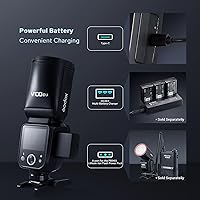
The lithium-ion VB30 battery charges quickly via USB-C, which is a practical advantage when topping up between sessions at a venue. Photographers shooting at moderate power levels — which covers most real-world event scenarios — report the battery lasting comfortably through a typical ceremony and cocktail hour.
At full power, runtime is short enough that carrying at least one spare is not optional for professionals working long events. Several wedding photographers explicitly flag this as a planning consideration, and users expecting all-day battery life at maximum output will be disappointed without backup power on hand.
Recycle Time
77%
23%
At moderate power settings the recycle speed is fast enough for burst-friendly portrait work and documentary-style event coverage. Most users report no frustrating delays during normal shooting rhythms where power is kept below the two-thirds threshold.
At or near full power, recycle times slow down enough to be noticeable, and the cooling system occasionally throttles output after a long sustained burst sequence. Photographers shooting rapid sequences of full-power frames — such as action sports or high-volume product work — may find the pacing restrictive.
Wireless Functionality
81%
19%
The built-in 2.4GHz wireless system integrates cleanly with the broader Godox X ecosystem, allowing the V100-CU to function as both a master and a receiver. Multi-flash setups using Godox triggers are described as reliable across typical indoor shooting distances.
A small number of users working in environments with heavy wireless interference — conference centers, large ballrooms — report occasional misfires. Range at the far edge of the spec is also slightly inconsistent in reviews compared to dedicated Godox XPro trigger performance.
Charging & Power Ecosystem
86%
USB-C charging is genuinely appreciated in reviews, particularly by photographers who already carry a single multi-port charger for their camera bodies, laptops, and accessories. The shared battery compatibility with the V1 series is a real cost-saver for anyone already in the Godox ecosystem.
The USB-C port does not support the fastest available charging speeds, so users expecting rapid top-ups in tight turnaround windows may find the charge rate slower than anticipated. Charging via the original VC26 dock is slightly faster according to a few comparisons in user reviews.
Ease of Use
89%
Reviewers transitioning from more complex flash systems consistently describe the learning curve as short. The touchscreen layout is logically organized, and photographers new to advanced flash features like second curtain sync or modeling light find the interface approachable without diving into a manual.
A small number of experienced users note that certain advanced menus require more taps than they would prefer under time pressure, and the lack of hard shortcut buttons for frequently used modes is occasionally flagged as a workflow friction point compared to flash units with dedicated physical controls.
Compatibility Range
83%
The long list of supported Canon bodies — spanning current R-series mirrorless all the way back to older DSLRs — means this flash will stay useful even if a photographer upgrades bodies over several camera generations. Reviewers appreciate not being locked out of features when switching between bodies.
Full-feature TTL and HSS support is confirmed strongest on recent Canon mirrorless bodies, and a few DSLR users report that some advanced functions behave inconsistently depending on firmware version. Godox support documentation on older body compatibility could be clearer.
Value for Money
74%
26%
Photographers comparing this flash to Canon's own top-tier speedlites note that the V100-CU offers meaningfully more output and unique features — particularly the sub flash — at a lower price point. For budget-conscious semi-pros, the price-to-capability ratio is described as competitive.
At its asking price, a portion of reviewers feel the battery life limitations and inconsistent TTL on older bodies are harder to accept than they would be on a cheaper unit. A handful of buyers who expected flagship-grade reliability across all shooting conditions feel the value proposition is slightly overstated.
Size & Portability
71%
29%
Compared to studio alternatives that deliver similar light output, the V100-CU is genuinely compact and travel-friendly. Photographers who previously relied on portable strobe kits appreciate consolidating to a single hotshoe unit for location work without sacrificing meaningful power.
Within the speedlite category itself, this is a large and heavy unit. Users hoping to travel light with a small mirrorless kit find the size and weight work against the compactness advantage of the camera body. It is a flash built for serious work, not casual portability.

Suitable for:

The Godox V100-CU Canon Touchscreen Flash was clearly built for serious Canon shooters who need more than a basic hotshoe unit can offer. Wedding and portrait photographers will find the most value here — reliable TTL on current R-series bodies like the R5, R6, and R7 means fewer blown exposures during moments that cannot be repeated, and the touchscreen lets you adjust on the fly without fumbling through nested menus mid-reception. Outdoor portrait photographers who shoot wide open in natural light will appreciate high-speed sync at shutter speeds that make ND filters unnecessary in most situations. The detachable sub flash is a particularly practical tool for solo shooters who want to add a second light source for under-chin fill without carrying extra stands or triggers. Photographers already invested in the Godox ecosystem — especially V1 battery owners — will find the compatibility reduces upgrade costs noticeably. Anyone transitioning away from bulky portable strobe kits toward a cleaner, more mobile location setup will find this Canon flash covers a surprising amount of that ground in a single unit.

Not suitable for:

There are real scenarios where the Godox V100-CU Canon Touchscreen Flash is not the right tool, and it is worth being direct about them. Casual photographers or beginners who shoot infrequently and do not need professional output will find the price hard to justify when simpler, lighter speedlites cover their actual needs. Photographers primarily shooting with older Canon DSLRs — think 80D, 70D, or 6D lineups — should know that TTL accuracy is noticeably less consistent on those bodies compared to current mirrorless cameras, which undermines one of the core reasons to buy this unit. The battery runtime at full power is short enough that event photographers covering long receptions or full-day documentary shoots must budget for spare batteries as a non-negotiable — this is not a flash you can run all day on a single charge at maximum output. Users who prioritize a compact, lightweight kit — particularly those pairing it with an R50 or RP body — will find the size and weight work against the portability advantage those cameras offer. Finally, photographers whose workflow depends on studio strobes for primary lighting will not find this speedlite a replacement; it is a powerful portable option, not a studio light substitute.

Specifications

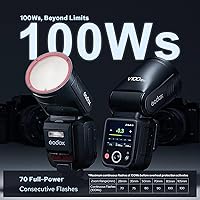
  • Maximum Output: The flash delivers a maximum output of 100Ws, placing it well above typical hotshoe speedlites and closer to compact studio monolights in practical power terms.
  • Power Range: Output is adjustable across nine full stops from 1/1 down to 1/256, allowing precise control from a dominant key light to the subtlest fill exposure.
  • Sync Speed: The flash supports high-speed sync up to 1/8000s, enabling wide-aperture shooting in bright ambient light without the need for neutral density filters.
  • Touchscreen: A 2.3-inch full-color high-sensitivity touchscreen serves as the primary control interface, replacing traditional button-and-dial navigation with a tap-and-swipe workflow.
  • Sub Flash: The detachable SU-1 sub flash includes 22 individually adjustable power levels and clips directly onto the main unit to provide fill or separation light without a second stand.
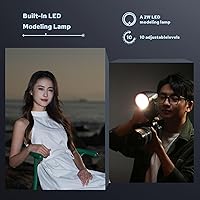
  • Flash Modes: Supported flash modes include TTL autoflash, Manual, High-Speed Sync, Flash Exposure Compensation, Second Curtain Sync, and Modeling Flash.
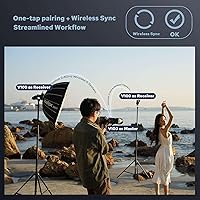
  • Wireless System: A built-in 2.4GHz wireless radio allows the unit to operate as both a master controller and a receiver within the Godox X wireless ecosystem.
  • Battery Type: The flash is powered by a removable Godox VB30 lithium-ion battery, which is included in the box and is cross-compatible with the Godox V1 series.
  • Charging: The VB30 battery can be charged via a USB-C Type-C port on the flash body or through the optional Godox VC26 external charging dock.
  • Battery Runtime: At maximum continuous full-power output, the included battery provides approximately 12 minutes of operation, with significantly longer runtimes at reduced power settings.
  • Cooling Capacity: The internal cooling system supports up to 70 consecutive full-power flashes before thermal protection engages and output is throttled to protect the unit.
  • Canon Compatibility: Confirmed compatible Canon bodies include the R3, R5, R6, R6 II, R7, R8, R50, RP, 90D, 80D, 5D Mark IV, 5D Mark III, 7D Mark II, 6D Mark II, and numerous others.
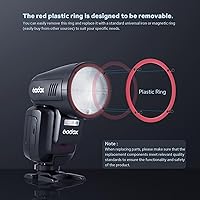
  • Mount Type: The flash uses a standard ISO hotshoe mount, with a removable red plastic ring that can be swapped for a universal iron or magnetic ring accessory ring sold separately.
  • Weight: The unit weighs 2.51 pounds including the battery, which is noticeably heavier than average hotshoe speedlites and can affect balance on lighter mirrorless camera bodies.
  • Dimensions: The flash measures 9.29 x 8.07 x 4.06 inches in its packaged form, reflecting the larger physical footprint that comes with its higher output class.
  • Wireless Frequency: The integrated wireless transmitter and receiver operate on the 2.4GHz band with Godox X protocol support for multi-flash group and channel management.
  • First Available: The V100-CU for Canon was first listed for sale in December 2024, making it one of the most recently released flagship speedlites in its category as of early 2025.
  • Manufacturer: The flash is designed and manufactured by Godox, a Chinese lighting brand widely used by professional photographers globally across studio and location work.

Related Reviews
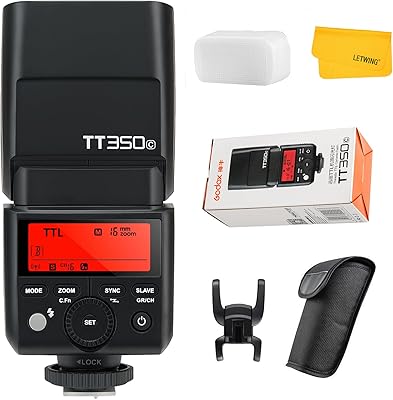
Godox TT350C TTL Flash for Canon
80%
94%
Portability & Size
74%
TTL Accuracy
88%
Wireless Reliability
61%
Flash Power Output
86%
High Speed Sync (HSS)
More
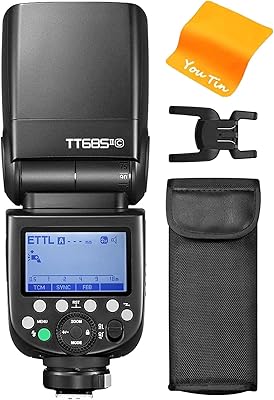
Godox TT685II-C Canon Speedlight Flash
81%
88%
TTL Exposure Accuracy
86%
Wireless Reliability
84%
High-Speed Sync Performance
79%
Build Quality
91%
Value for Money
More
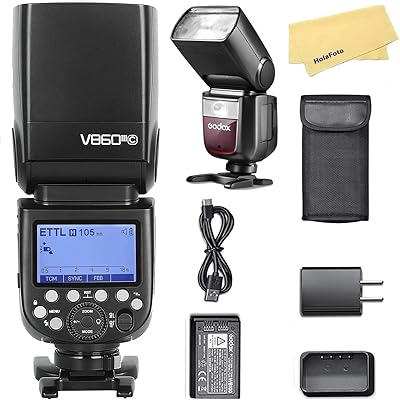
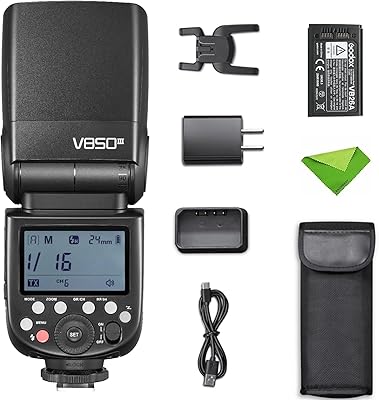
Godox V860III Canon Speedlite Flash
83%
93%
Battery Life & Endurance
91%
Recycle Time
74%
TTL Accuracy & Consistency
78%
Wireless Reliability
82%
Build Quality & Durability
More
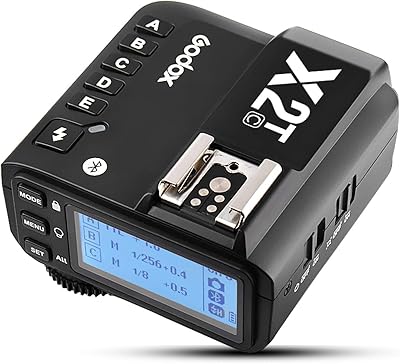
Godox X2T-C TTL Wireless Flash Trigger for Canon
86%
91%
Performance
88%
Ease of Use
85%
Reliability
89%
Bluetooth Control
75%
Signal Range
More
Godox V850III Flash
Godox V850III Flash
85%
88%
Performance
92%
Battery Life
86%
Ease of Use
84%
Build Quality
89%
Speed and Recycle Time
More
Godox AD200 Pro
Godox AD200 Pro
86%
93%
Output Power & Consistency
91%
Portability & Form Factor
78%
Battery Life & Charging
89%
HSS & Sync Performance
88%
Wireless Ecosystem Integration
More
Godox TT600S Speedlight Camera Flash
79%
93%
Value for Money
88%
Wireless Performance
84%
Build Quality
91%
Output Consistency
76%
High-Speed Sync
More
Godox TT350F Fujifilm TTL Camera Flash
80%
88%
TTL Accuracy
76%
Build Quality
84%
HSS Performance
82%
Wireless Reliability
61%
Recycle Time
More
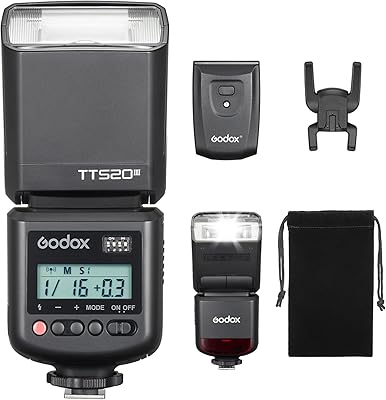
Godox TT520III Hot Shoe Flash
80%
91%
Value for Money
88%
Ease of Setup
84%
Wireless Performance
79%
Light Output & Power
86%
Manual Control Precision
More
Godox AD400Pro Outdoor Flash Monolight
80%
91%
Output Power & Consistency
83%
Battery Life & Reliability
71%
TTL Accuracy
88%
High-Speed Sync Performance
86%
Portability & Form Factor
More

FAQ

Yes, both bodies are explicitly supported and TTL performance on current Canon R-series cameras is where the V100-CU performs best. Metering is consistent enough for fast event and portrait work without constant manual correction.

It is technically compatible with those bodies, but TTL accuracy on older Canon DSLRs tends to be less reliable than on current mirrorless cameras. If your primary body is an older DSLR, expect to fine-tune flash exposure compensation more often to get consistent results.

The SU-1 sub flash clips onto the main unit and fires simultaneously to add a secondary light source — typically used to soften under-chin shadows in portrait work or to create a soft catchlight. It has 22 power steps of its own, so you can dial in a ratio between the main and sub output. It is most effective at close to moderate distances; at longer distances its effect becomes minimal.

For long events like full wedding days or multi-hour receptions, yes — a spare VB30 is essentially a requirement if you plan to shoot at or near full power for extended periods. At moderate power settings the runtime stretches considerably, but if you are banking on maximum output throughout a long shoot, one battery will not carry you through. The good news is the VB30 is the same battery used in the V1 series, so if you already have spares from that unit, they work directly.

Yes, the USB-C port on the flash body allows you to charge the VB30 in place, which is convenient for topping up overnight or between sessions using a standard USB-C cable. If you need faster charging or want to charge a spare simultaneously, the optional VC26 dock charges the battery outside the unit.

The V100-CU is a clear step above the V1 in terms of raw output — roughly double the power — and adds the touchscreen interface and detachable sub flash that the V1 lacks. The V1 is lighter and more compact, which some photographers prefer for run-and-gun shooting. If you already use the V1 and want more power and features without rebuilding your battery collection, the V100-CU is the natural upgrade path.

Under typical shooting conditions — where you are not firing at full power every few seconds continuously — heat management is not a practical concern. The cooling system is rated for a sustained sequence of up to 70 full-power flashes, and most real portrait sessions do not push anywhere near that. If you are doing rapid-fire full-power product photography or similar high-volume work, you may notice the unit slowing its recycle rate to cool down after extended bursts.

It works, but direct sunlight at certain angles can reduce screen visibility, and the surface picks up fingerprints quickly in outdoor conditions. Most photographers adapt quickly — adjust your viewing angle or shade the screen briefly — but it is worth knowing if you spend a lot of time shooting in harsh midday sun.

Yes, the built-in 2.4GHz wireless receiver means it works as a remote flash with Godox X-system triggers like the XPro-C or X2T-C. You can also use it as a master to control other Godox units on the same system. Trigger reliability is good in most environments, though heavy wireless interference in large event spaces can occasionally cause misfires.

It is a design accent that is actually meant to be removed and replaced. Godox designed it as a removable collar so you can swap it for a standard universal iron ring or a magnetic modifier ring — both sold separately — depending on what light-shaping accessories you want to use. If you have no interest in that, you can simply leave the original red ring in place or remove it entirely.

Where to Buy