Overview

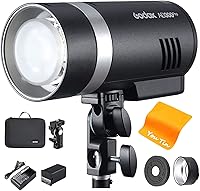
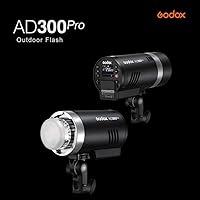
The Godox AD300 Pro Outdoor Flash Strobe sits squarely in the mid-to-premium tier of battery-powered monolights — a category that demands real performance, not just portability. At 2.75 lb and built around a 300Ws output, this portable monolight punches well above what its compact frame suggests. Godox has been making lighting gear since 1993, and that experience shows in how thoughtfully the hardware is engineered. This isn't a casual upgrade from a kit speedlite; it's a working tool designed for photographers who need studio-quality light on location. In a crowded field of portable strobes, it holds its own without relying on hype.
Features & Benefits

What separates the AD300 Pro from cheaper alternatives isn't any single feature — it's how well everything works together in the field. Multi-system TTL support across Canon, Nikon, Sony, Fujifilm, Olympus, and Panasonic means you're not locked out if you switch camera brands or second-shoot for someone on a different system. HSS up to 1/8000s is genuinely useful outdoors — it lets you overpower harsh sunlight at wide apertures without fighting your sync speed ceiling. The recycle time is fast enough to keep up at a wedding reception, and 320 full-power pops per charge is serious stamina for an all-day shoot. Fine 1/10-stop increments and a built-in 2.4G receiver round out a package that needs no extra trigger for basic wireless operation.

Best For

This battery-powered strobe is a natural fit for wedding and portrait photographers who regularly work outdoors — the TTL and HSS combination handles changing light conditions without requiring constant manual adjustment. Travel and editorial shooters will appreciate that it is powerful enough to matter yet compact enough to pack without drama. The bi-color modeling LED makes it surprisingly capable for hybrid shooters who occasionally need a continuous light source for video work. If you are already invested in the Godox ecosystem, this is a logical step up from entry-level speedlites. For commercial work where color consistency matters across hundreds of frames, the stable output removes one more variable from post-production.

User Feedback

Photographers who own this portable monolight tend to stick with it, which says something. Build quality and recycle speed come up repeatedly in positive feedback, along with praise for how consistently it renders color across a long shoot. The main friction points are practical rather than fundamental: Godox uses a proprietary battery and mount system, so committing to this light means committing to their ecosystem. Some Sony and Fujifilm users have noted occasional firmware compatibility hiccups, usually resolved with updates but worth knowing before a critical job. A handful of criticisms touch on the learning curve of multi-group wireless control for those new to off-camera lighting. These are real considerations, not dealbreakers.

Pros

  • 300Ws of battery-powered output handles outdoor shoots without needing mains power nearby.
  • HSS up to 1/8000s lets you shoot wide-open apertures in direct sunlight without fighting sync speed limits.
  • TTL support across six major camera brands makes it a practical choice for photographers who work across systems.
  • Recycle time fast enough to keep up at weddings and events without making you wait between shots.
  • 320 full-power pops per charge covers most full-day shoots on a single battery.
  • Built-in 2.4G receiver means no external trigger required for basic wireless setups.
  • Bi-color modeling LED is genuinely useful for hybrid shooters who occasionally need a continuous light source.
  • Fine 1/10-stop power increments give a level of exposure control that cheaper strobes simply do not offer.
  • Compact and light enough to pack in a camera bag without dedicating a separate case to it.
  • Consistent color temperature across a shoot reduces the time spent correcting white balance drift in post.

Cons

  • Proprietary battery means you are locked into Godox pricing for replacements and spares indefinitely.
  • TTL reliability on Sony and Fujifilm bodies lags noticeably behind Canon and Nikon performance.
  • Battery capacity drops in cold outdoor conditions, which matters for winter weddings and mountain shoots.
  • The firmware update process is technically fiddly and not well-documented for non-technical users.
  • Multi-group wireless control has a real learning curve that catches newcomers off guard in the field.
  • Not weather-sealed, which creates genuine risk at outdoor events where light rain is possible.
  • HSS cuts effective output significantly at higher shutter speeds — new users are often surprised by how much power they lose.
  • Some third-party Bowens-mount modifiers do not seat as securely as expected, requiring trial and error.
  • Modeling LED at 12W is too dim for use as a primary continuous light source in anything but dark environments.
  • Customer support quality from Godox varies considerably by region, making firmware and compatibility issues harder to resolve.

Ratings

The Godox AD300 Pro Outdoor Flash Strobe earned its reputation across thousands of verified purchases worldwide, and the scores below reflect exactly that — an AI-driven analysis of real buyer feedback, with spam, bot activity, and incentivized reviews actively filtered out. The result is an honest picture of where this battery-powered strobe genuinely excels and where working photographers have run into friction. Strengths and shortcomings are weighted equally, so you get a clear read before committing.
Light Output & Power
93%
At 300Ws, the AD300 Pro consistently surprises photographers who expect battery-powered lights to feel underpowered compared to mains-tethered studio gear. Outdoor portrait and wedding shooters regularly report it holding its own in direct afternoon sunlight when paired with HSS, which is exactly the kind of real-world pressure test that separates capable strobes from capable-looking ones.
A small number of users note that at maximum output the color temperature shifts slightly warmer, which can require minor correction in post when mixing with ambient. It is not a dealbreaker, but commercial photographers doing critical product work may prefer to shoot at 80–90% power for tighter consistency.
Portability & Form Factor
89%
At 2.75 lb with a body that fits comfortably in a camera bag side pocket, the AD300 Pro travels well without demanding a dedicated case. Travel photographers and editorial crews specifically call out how little space it takes up on location shoots, particularly compared to larger battery monolights in the same power class.
The included stand adapter and mounting hardware add meaningful bulk when packed, and a few users mention the overall unit feels slightly front-heavy on lighter light stands. It is not unstable by design, but windy outdoor conditions demand a proper sandbag — something photographers new to location strobes occasionally learn the hard way.
TTL Accuracy
84%
TTL performance across Canon and Nikon systems draws consistent praise for being predictable enough to trust at a fast-moving wedding reception, where stopping to dial in manual power is not always realistic. Photographers who shoot across multiple brand ecosystems — for example, owning both a Canon and a Sony body — appreciate that a single light handles both without fuss.
Sony and Fujifilm users report a narrower margin of reliability, with occasional exposure inconsistencies that Canon and Nikon shooters rarely mention. Most affected users found firmware updates resolved the worst of it, but those shooting Sony mirrorless professionally may want to run thorough tests before relying on TTL at a paid job.
HSS Performance
91%
HSS up to 1/8000s is one of the standout reasons photographers choose this light over cheaper alternatives that cap at standard sync speeds. Being able to shoot at f/1.8 in bright midday sun with controlled fill light — without a neutral density filter in the way — opens up creative options that location shooters using older portable strobes simply do not have.
HSS does reduce effective output meaningfully at higher shutter speeds, which is standard physics rather than a product flaw, but some buyers arrive expecting full 300Ws at 1/8000s. Photographers new to HSS occasionally express surprise at needing to compensate by moving the light closer or bumping power, which is worth understanding before the first outdoor shoot.
Recycle Time & Stamina
88%
The sub-1.5 second recycle at full power keeps up with the pace of event photography in a way that older portable monolights simply cannot. Wedding photographers shooting during first dances or candid reception moments note that they rarely wait on the light — 320 full-power pops per charge is enough to cover most full-day assignments without a battery swap.
In colder outdoor temperatures — shooting winter weddings or mountain locations — battery performance degrades noticeably and some users report the pop count dropping by a meaningful margin. Keeping a spare battery warm in a jacket pocket is a common workaround, though it does mean buying into the proprietary battery system at extra cost.
Wireless System & Controls
82%
18%
The built-in 2.4G receiver removes the need to buy a separate trigger for basic wireless operation, which is a genuine convenience when setting up a quick one or two-light location kit. The LCD panel displays group and channel information clearly even in direct sunlight, and photographers who run multi-light setups appreciate being able to adjust remote strobes without walking back to each unit.
Users coming from more premium wireless ecosystems find the interface functional but not particularly intuitive at first. Multi-group control in particular has a learning curve, and a handful of reviews mention accidentally changing settings during shoots while fumbling with the buttons in low light — the kind of minor frustration that fades with experience but stings early on.
Modeling Light Quality
77%
23%
The 12W bi-color LED modeling light is more useful than what many photographers expect from a battery strobe, covering the 3000K to 6000K range with smooth dimming. Hybrid shooters who occasionally need a continuous source for interview setups or short video clips find it genuinely functional rather than just a positioning aid.
At 12W, it is not bright enough to serve as a primary video light in anything but a dimly lit environment — photographers who came in hoping to replace a dedicated LED panel for video work will be disappointed. It works well for previewing light shape and shadows, but its role is supplementary rather than standalone.
Build Quality & Durability
86%
The overall construction feels appropriately solid for a professional tool — buttons have a positive click, the body does not flex or creak under normal handling, and the flash tube housing inspires confidence when fitting modifiers. Photographers who have used the light heavily over multiple seasons report no meaningful degradation in performance or physical condition.
The light is not weather-sealed, which matters more than some buyers initially realize when shooting at outdoor events where drizzle is a real possibility. A few long-term users also note that the modeling LED cover shows scratches more readily than the rest of the body, though this is cosmetic rather than functional.
Color Temperature Consistency
87%
Shot-to-shot color consistency is one of the aspects users mention most favorably, and it directly benefits photographers who shoot tethered or batch-edit large event galleries. Commercial photographers working on product shoots report that the stable color output across a session reduces the time spent correcting white balance drift in post.
As noted under output, a slight warmth shift at maximum power is a real pattern in feedback, though it primarily affects photographers working at the extreme end of the power range. For most portrait and event work at moderate power settings, consistency is tight enough to not require frame-by-frame correction.
Ease of Setup
79%
21%
For photographers already familiar with off-camera flash, the AD300 Pro is genuinely quick to deploy — power on, set channel and group, attach a modifier, and shoot. The fact that it needs no external receiver for most Godox triggers means one less thing to lose or forget to charge before a shoot.
First-time monolight users report a steeper learning curve than expected, particularly around group control and power adjustment logic. The manual, while present, is not particularly well-written for non-technical readers, and a few users mention relying on third-party video tutorials to fully understand multi-light wireless setups.
Modifier Compatibility
74%
26%
The AD300 Pro works with the broad Godox S-type Bowens mount ecosystem, which opens up a wide range of compatible softboxes, beauty dishes, and grids from both Godox and third-party manufacturers. Photographers already owning Bowens-mount modifiers from other brands generally find the transition straightforward.
The mount is not a true universal Bowens fit, and some third-party modifiers require minor adjustment or do not seat as securely as they do on dedicated Bowens-mount lights. A small number of users have reported compatibility issues with specific older modifier brands, which is worth checking before assuming every existing modifier will work without friction.
Battery Ecosystem & Cost
63%
37%
The built-in lithium-ion battery keeps the body compact and eliminates the need for an external battery pack, which is a real advantage for photographers who need a clean, simple setup. For those who shoot within a single long session, one charge is typically sufficient for a full working day.
The proprietary battery is the most commonly cited long-term frustration. Replacement batteries carry a meaningful additional cost, and the inability to use third-party cells means photographers are locked into Godox pricing for the life of the light. Shooters who own multiple units face compounding costs if they want redundant battery capacity for back-to-back shooting days.
Value for Money
85%
Relative to competing portable monolights in the same power and feature class, the AD300 Pro consistently comes up in comparisons as offering strong specifications at a price that does not require compromising on TTL, HSS, or build quality. Photographers upgrading from lower-tier portable flashes frequently describe it as the light they wish they had bought sooner.
Buyers comparing it against the absolute budget end of the portable strobe market will feel the price gap acutely, and those who rarely use TTL or HSS may find that paying the premium for those features does not align with their actual shooting style. It is a fair price for what it delivers, but only if the feature set matches how you actually work.
Firmware & Long-term Support
71%
29%
Godox has a reasonable track record of releasing firmware updates that address compatibility issues and expand system functionality over time. Several users who initially encountered TTL inconsistencies with newer Sony and Fujifilm bodies found that updates meaningfully improved the situation, which suggests the product is actively maintained rather than abandoned post-launch.
The firmware update process is not particularly user-friendly — it requires specific software, a USB connection, and some technical patience. A subset of users report confusion around which firmware version applies to which unit revision, and Godox customer support responses on these questions have been inconsistent in quality depending on region.

Suitable for:

The Godox AD300 Pro Outdoor Flash Strobe was built for photographers who earn a living — or are seriously working toward it — with their camera in situations where a wall outlet is not an option. Wedding photographers are the obvious fit: the combination of reliable TTL across major camera brands and HSS up to 1/8000s handles the chaos of outdoor ceremonies and golden-hour portraits without requiring constant manual adjustments. Portrait and editorial photographers who work on location will find the 300Ws output genuinely useful for overpowering harsh midday sun, and the compact form factor means it fits into travel kits without dominating the bag. Hybrid shooters who dip into video work will get real use from the bi-color modeling LED, which covers everything from warm tungsten interiors to daylight-balanced interview setups. If you are already using Godox triggers or other Godox lights, stepping up to this portable monolight fits naturally into an existing workflow rather than requiring a full system rebuild.

Not suitable for:

The Godox AD300 Pro Outdoor Flash Strobe is not the right choice if you are just getting started with off-camera flash and are not yet sure whether location lighting is a regular part of your work. The price tier assumes you already understand TTL, HSS, and multi-group wireless control — this is not a learning tool, and buying it to figure out off-camera lighting basics is an expensive way to get an education. Photographers shooting exclusively in studio environments with reliable mains power will find little advantage over a traditional plug-in monolight, which typically offers better power consistency at a lower cost. Sony and Fujifilm mirrorless shooters in particular should be aware that TTL performance on their systems is functional but not as polished as on Canon or Nikon, and professional jobs should be tested thoroughly before trusting it in a high-stakes scenario. Anyone resistant to committing to a single brand ecosystem will find the proprietary battery and mount system a recurring friction point as their kit grows.
Specifications

  • Power Output: Delivers 300Ws of flash power, suitable for outdoor fill-flash and controlled studio-style lighting on location.
  • HSS Sync Speed: Supports High-Speed Sync up to 1/8000s, enabling wide-aperture shooting in bright ambient conditions.
  • Recycle Time: Recycles in as little as 0.01 seconds at low power and up to 1.5 seconds at full power.
  • Pops Per Charge: Delivers up to 320 full-power flashes on a single battery charge under standard operating conditions.
  • Power Range: Adjustable across 9 stops from full power down to 1/256, with 1/10-stop incremental control throughout.
  • Modeling Light: Equipped with a 12W bi-color LED modeling lamp adjustable between 3000K and 6000K for accurate light preview and supplemental video use.
  • TTL Systems: Compatible with Canon E-TTL II, Nikon i-TTL, Sony, Fujifilm, Olympus, and Panasonic TTL autoflash systems.
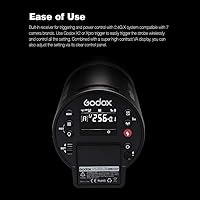
  • Wireless System: Features a built-in 2.4G wireless receiver for trigger and remote power control without a separate receiver unit.
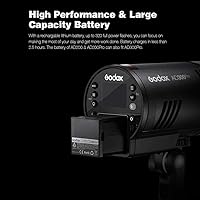
  • Battery: Runs on a built-in non-removable 14.4V / 2600mAh lithium-ion battery that charges via the included AC adapter.
  • Weight: Body weighs 1.25 kg (approximately 2.75 lb), balancing portability with the structural demands of a 300Ws output.
  • Dimensions: Body measures 7.5 x 3.9 x 3.5 inches, compact enough to fit in a standard camera bag side compartment.
  • Display: An LCD panel on the body shows power level, channel, group, and remote strobe status for on-the-fly adjustments.
  • ID Range: Supports unit ID settings from 01 to 99, allowing flexible multi-light identification within a wireless group setup.
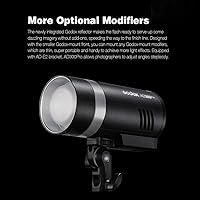
  • Mount Type: Uses a Godox S-type Bowens-compatible mount, compatible with a wide range of light shapers and third-party modifiers.
  • Flash Tube: Bare-bulb flash tube design provides wide, even light spread suitable for use with softboxes, umbrellas, and beauty dishes.
  • Charging Input: Charges via a standard AC power adapter; the unit does not support USB or in-field charging from portable power banks.
  • Color Temperature: Flash output maintains a stable color temperature across most power levels, with minor warmth shifts reported only at maximum power.
  • Compatibility Note: Functions as a manual strobe with any camera brand, with full TTL and HSS features available only on supported systems via compatible Godox triggers.

Related Reviews
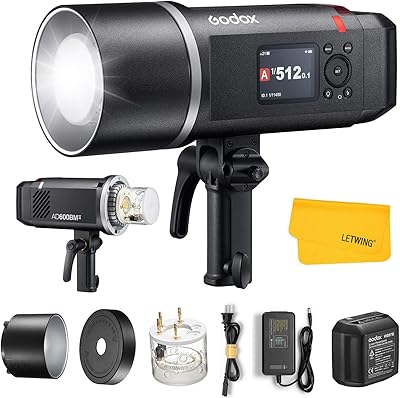
Godox AD600BM II Outdoor Flash Strobe
84%
93%
Performance
88%
Battery Life
90%
Recycle Time
85%
Ease of Use
82%
Build Quality
More
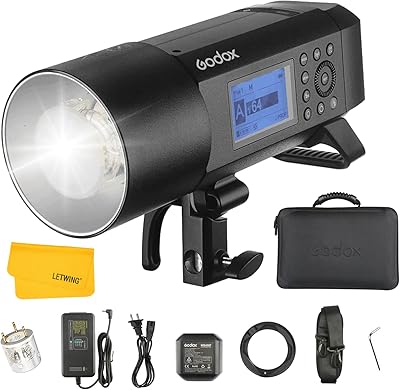
Godox AD400Pro Outdoor Flash Monolight
80%
91%
Output Power & Consistency
83%
Battery Life & Reliability
71%
TTL Accuracy
88%
High-Speed Sync Performance
86%
Portability & Form Factor
More
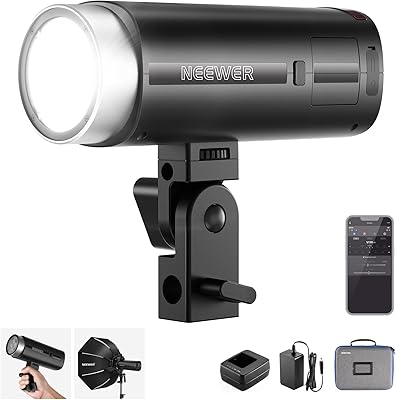
NEEWER Q200 200Ws Outdoor Studio Monolight
79%
88%
Light Output & Power
71%
Battery Life
76%
HSS Performance
69%
TTL Accuracy
63%
App Control & Connectivity
More
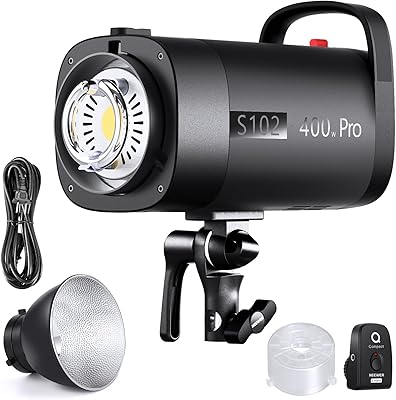
NEEWER S102-400W PRO Strobe Flash Light
86%
88%
Performance
92%
Build Quality
85%
Ease of Use
90%
Cooling System
86%
Wireless Capabilities
More
Godox V850III Flash
Godox V850III Flash
85%
88%
Performance
92%
Battery Life
86%
Ease of Use
84%
Build Quality
89%
Speed and Recycle Time
More
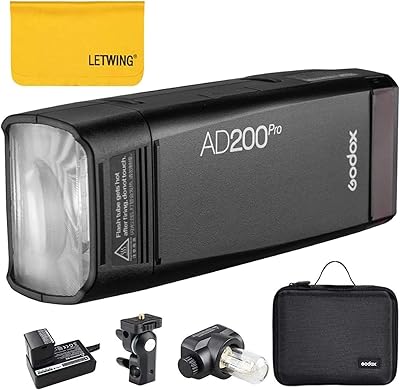
Godox AD200 Pro
Godox AD200 Pro
86%
93%
Output Power & Consistency
91%
Portability & Form Factor
78%
Battery Life & Charging
89%
HSS & Sync Performance
88%
Wireless Ecosystem Integration
More
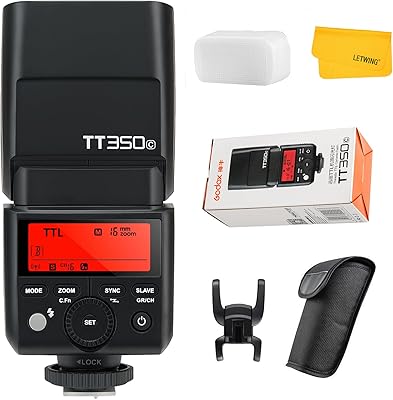
Godox TT350C TTL Flash for Canon
80%
94%
Portability & Size
74%
TTL Accuracy
88%
Wireless Reliability
61%
Flash Power Output
86%
High Speed Sync (HSS)
More
Godox TT520III Hot Shoe Flash
80%
91%
Value for Money
88%
Ease of Setup
84%
Wireless Performance
79%
Light Output & Power
86%
Manual Control Precision
More
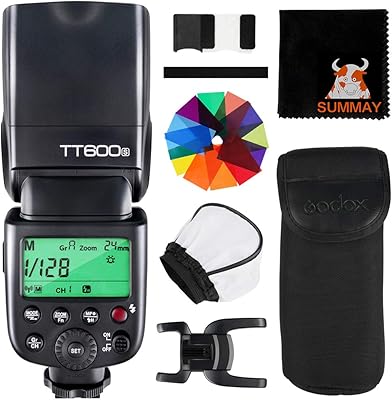
Godox TT600S Speedlight Camera Flash
79%
93%
Value for Money
88%
Wireless Performance
84%
Build Quality
91%
Output Consistency
76%
High-Speed Sync
More
Godox TT520II Speedlite Flash
76%
91%
Value for Money
78%
Build Quality
84%
Wireless Performance
82%
Flash Output Consistency
76%
Ease of Use
More

FAQ

For basic off-camera triggering, yes — the AD300 Pro has a built-in receiver but still requires a transmitter on your camera's hot shoe. Godox makes several compatible triggers, such as the X2T series, that pair directly with it. You do not need a separate receiver on the light itself, which keeps the setup clean.

It works, but Sony users should go in with realistic expectations. TTL accuracy on Sony bodies is functional and covers most shooting scenarios, but it is less consistent than the Canon or Nikon experience. Running the latest firmware on both the light and the trigger helps considerably, and most Sony users recommend testing thoroughly before any professional assignment.

The battery is built into the unit and is not user-replaceable in the traditional sense — you cannot swap it out in the field like you would with an external pack. Godox does offer battery servicing, but it involves sending the unit in. This is the most commonly cited long-term ownership concern, so it is worth factoring into your decision if you shoot frequently at high volumes.

No, it is not weather-sealed or rated for any level of moisture resistance. Shooting in drizzle is genuinely risky, and most experienced users keep a protective cover on hand for outdoor events where weather is unpredictable. Treat it like any standard electronic device — keep it dry.

It uses a Godox S-type mount, which accepts Bowens-compatible modifiers — softboxes, octaboxes, beauty dishes, grids, and umbrellas from Godox and many third-party brands. The fit is not always identical to a true Bowens mount, so some older or off-brand modifiers may seat loosely. It is worth checking compatibility with specific modifiers before committing to a purchase.

Quite a bit at higher shutter speeds — this is a physics limitation of HSS rather than a flaw specific to this light. At 1/8000s you might be working with the equivalent of a fraction of the full 300Ws. In practice, this means moving the light closer to your subject or shooting at moderate HSS speeds like 1/1000s to 1/2000s where power loss is less dramatic. Most photographers who rely on HSS regularly factor this into their positioning.

Yes, the 12W bi-color modeling LED operates independently and can be used as a continuous light source. It is useful for short video clips, interviews in dim environments, or previewing light placement before a shot. That said, 12W is not bright enough for serious video work in well-lit spaces — think of it as a capable supplementary source rather than a replacement for a dedicated LED panel.

The 2.4G wireless system supports up to 5 groups and 32 channels, so you can independently control a meaningful number of lights from the LCD panel or a compatible Godox trigger. In practice, most photographers use two to four lights in a wireless group setup, and the system handles that without any issues. For large multi-light commercial setups, dedicated Godox triggers with more advanced control interfaces are worth considering alongside the light.

At moderate to high power settings, the recycle time is fast enough that most wedding photographers report rarely waiting on the light during dancing or candid moments. At full power the 1.5-second recycle is noticeable, but most event photographers dial back to 50–70% power where the speed is more than adequate for continuous shooting sequences.

It depends on your current skill level. If you already shoot regularly with off-camera speedlites and understand TTL, HSS, and wireless triggering, this battery-powered strobe is a natural and worthwhile step up. If you are still figuring out the fundamentals of off-camera flash, the price point and feature complexity may be more than you need right now — there are more approachable entry points in the Godox lineup worth considering first.