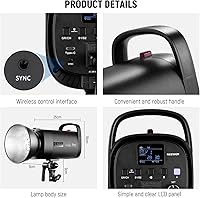
Overview

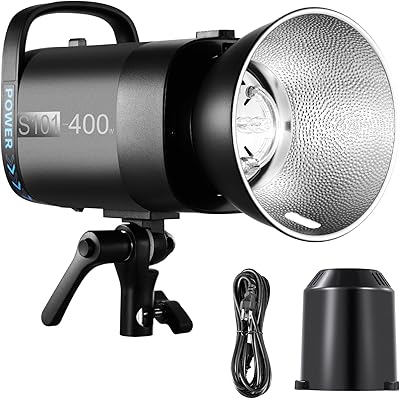
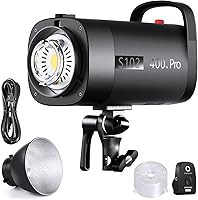
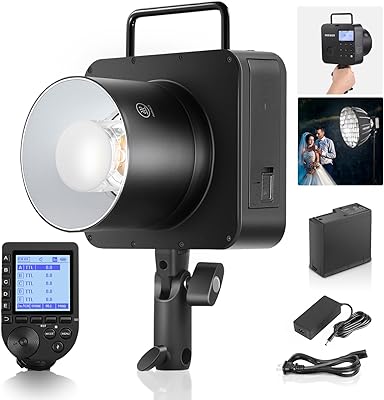
The NEEWER S102-400W PRO Studio Monolight enters the market as a capable mid-range option for photographers who want reliable studio power without spending professional-grade money. NEEWER has built a steady reputation supplying gear to the budget-to-prosumer crowd, and this flash unit fits that pattern well. It launched in mid-2024 and has already earned a 4.4-star average from 82 buyers — a respectable score, though still a modest sample size. The Bowens mount is a big practical win, plugging directly into a wide ecosystem of affordable modifiers. Combined with a built-in 30W LED modeling lamp, it positions itself as a solid all-in-one solution for home studio builders.

Features & Benefits

The 400Ws flash output is the headline number here, and in practice it translates to plenty of power for a standard portrait or product setup — you are not chasing exposure even at moderate apertures. The built-in LED modeling lamp runs at a consistent 5600K, giving you a reliable preview of where shadows and highlights will fall before you fire a shot. A 2.4G wireless trigger ships in the box, which is a genuine convenience, supporting 32 channels and a wide wireless range; advanced sync, however, requires the QPRO trigger sold separately. The silent cooling fan and sub-1.5-second recycle time round out a feature set that punches above the price point.

Best For

This studio monolight makes the most sense for photographers stepping up from speedlights who want something more consistent and dependable indoors. Portrait shooters working solo will appreciate the fast recycle time and the ability to dial power precisely from minimum to full. E-commerce photographers stand to benefit from the tight color temperature consistency, which matters when clients need faithful color across an entire shoot. It also works well for content creators who mix video with stills — the quiet fan means it will not bleed into audio recordings. It is less suited to demanding on-location work or high-volume commercial studios where years of heavy use is the real test.

User Feedback

With 82 ratings and a 4.4-star average — solid, though not yet a large enough pool for firm conclusions — buyers consistently highlight ease of setup and strong value as the standout positives. The included trigger and reflector earn genuine appreciation for letting shooters get to work right away. On the critical side, some users have raised concerns about build quality and occasional trigger inconsistencies. Feedback on the modeling lamp is generally positive for light shaping, though a few buyers wish it offered more brightness for precise positioning. Long-term durability remains an open question; the product has been available for just over a year and heavy-use data is still limited.

Pros

  • Delivers genuinely strong 400Ws output for a studio light at this price point, handling portraits and product work with ease.
  • The included 2.4G wireless trigger means you can start shooting wirelessly right out of the box without extra purchases.
  • A sub-1.5-second recycle time keeps sessions moving and reduces the frustration of missed moments.
  • Bowens mount compatibility gives you access to a huge range of affordable softboxes, beauty dishes, and reflectors.
  • The 5600K LED modeling lamp provides a reliable visual guide for positioning light before you fire a single flash.
  • Silent fan cooling means this flash unit can sit quietly on a video set without bleeding into recorded audio.
  • HD display panel makes power adjustments fast and easy, especially when switching between different shooting setups.
  • S1 and S2 optical slave modes let you integrate this strobe into mixed-brand lighting setups without additional triggers.
  • Early buyers consistently praise the value and straightforward setup, reflecting well on the out-of-box experience.
  • Power adjustment spans a wide range from minimum to full output, giving you fine control over exposure across different scenarios.

Cons

  • The QPRO trigger required for advanced sync features is not included and adds to the overall cost.
  • With only 82 ratings so far, there is not enough long-term user data to draw firm conclusions about durability.
  • Some buyers have flagged occasional trigger inconsistencies, which can disrupt a shoot at the worst possible moment.
  • Build quality concerns have surfaced in early reviews, suggesting the construction may not hold up under daily professional use.
  • The modeling lamp, while useful, has been noted by some users as insufficiently bright for very precise light shaping work.
  • No meaningful TTL support limits appeal for photographers who rely on automatic exposure calculation.
  • At 7.35 pounds, it is not particularly travel-friendly for photographers who move between locations regularly.
  • Long-term heat management under sustained heavy use remains unverified given the product's short time on the market.

Ratings

Our AI rating system analyzed verified global buyer reviews for the NEEWER S102-400W PRO Studio Monolight, actively filtering out incentivized, bot, and spam submissions to surface honest, real-world feedback. The scores below reflect both the genuine strengths that keep buyers satisfied and the recurring frustrations that affect day-to-day use. Nothing has been smoothed over — the ratings tell the full story.

Value for Money
88%
Buyers consistently point to this flash unit as one of the better-value studio lights available at this price tier. Photographers upgrading from speedlights report feeling like they got significantly more capability per dollar, especially given the included trigger and reflector that remove the need for immediate extra spending.
A handful of reviewers note that once you factor in the separately sold QPRO trigger for advanced sync, the total cost climbs noticeably. For some buyers, that additional outlay shifts the value equation in a less favorable direction.
Flash Output & Power
91%
The 400Ws output earns consistent praise from portrait and product photographers who find it more than adequate for a standard one- or two-light setup indoors. Users frequently mention being able to shoot at smaller apertures without pushing ISO, which directly improves image quality in controlled studio conditions.
A few buyers shooting in larger spaces or trying to use the strobe outdoors against bright ambient light report the power feeling insufficient. For expansive locations or outdoor fill work, 400Ws has clear limits that some users only discovered after purchase.
Color Consistency
84%
E-commerce and catalog photographers specifically highlight the tight 5600K color temperature as a practical asset when shooting long product sessions. Maintaining consistent white balance across hundreds of frames without mid-session corrections is something buyers in this workflow genuinely appreciate.
While most users are satisfied, a smaller subset report occasional slight color shift over an extended continuous session, which required recalibration in post. The variance stays within the rated ±200K spec, but for color-critical work it is worth monitoring.
Recycle Time
86%
The sub-1.5-second recycle at full power is frequently mentioned as a practical advantage for portrait sessions where subject energy and timing matter. Photographers shooting at reduced power settings report even faster recycling, which helps maintain a natural flow during client work.
A small number of users note occasional inconsistency in recycle speed after prolonged shooting at or near full power, particularly in warmer ambient environments. It is not a widespread complaint, but it does surface often enough to be worth noting.
Wireless Trigger Performance
74%
26%
The fact that a 2.4G trigger ships in the box is genuinely appreciated, especially by photographers who have previously bought budget strobes that required a separate trigger purchase from day one. The 32-channel system and 330ft range work reliably for most single-room studio setups.
Trigger misfires and occasional dropout are the most consistently flagged frustrations in critical reviews. Some users report that the included trigger becomes less reliable when used in environments with RF interference, and a few have needed to replace it within the first few months of regular use.
Modeling Lamp
77%
23%
The 30W LED modeling lamp at 5600K is well-regarded for helping photographers quickly visualize where shadows will fall before firing the flash. For standard portrait work with modifiers at typical shooting distances, most users find it does the job of light placement reliably.
Users shooting in brighter ambient environments or using very large modifiers report the modeling lamp lacks the intensity needed for precise light shaping. A noticeable segment of reviewers specifically wished for a brighter lamp, suggesting 30W sits near the lower edge of what this use case demands.
Build Quality
63%
37%
For the price tier, the overall fit of components and the general assembly feel reasonable to most buyers during initial setup. The body feels solid enough for a fixed home studio where it will not be frequently transported or knocked around.
Build quality is the most polarizing aspect of user feedback. Concerns about plastic housing rigidity, connector durability, and general long-term sturdiness appear repeatedly in critical reviews, and several users report degradation in fit and finish after several months of regular use.
Heat Management
81%
19%
The silent fan cooling system draws specific praise from video-oriented creators who need a flash unit that does not intrude on recorded audio. Most users report no overheating issues even during extended portrait sessions with frequent full-power flashes.
While the fan runs quietly under normal conditions, a minority of users note it becomes audibly more pronounced under heavy sustained use. Long-term thermal performance beyond the first year remains an open question given the product's relatively recent market entry.
Ease of Setup
89%
Out-of-box usability is among the most commonly praised qualities in buyer reviews. Photographers new to studio lighting specifically highlight how quickly they had the unit powered, triggered, and producing usable results without consulting the manual in depth.
The HD display and power controls are intuitive for experienced users, but the menu structure for wireless channel assignment and slave mode switching can be confusing for first-time studio light buyers without some initial guidance from the manual or online tutorials.
Modifier Compatibility
87%
The standard Bowens mount opens up compatibility with an enormous range of third-party light modifiers, and buyers frequently mention this as a key reason they chose this strobe over competitors with proprietary mounts. The built-in umbrella socket adds further flexibility for budget-friendly setups.
The included standard reflector, while functional, is considered basic by buyers who expected a more versatile or higher-quality modifier in the box. Most users plan to replace or supplement it relatively quickly, which adds to the effective cost of the kit.
Long-Term Durability
58%
42%
Among buyers who have used the flash unit for six months or more, a reasonable proportion report continued stable performance with no significant degradation in output or triggering. For moderate-use home studio photographers, early signs are cautiously positive.
The honest limitation here is that the product simply has not been on the market long enough for a meaningful durability verdict. Several buyers have flagged concerns about component longevity after extended use, and the data pool for multi-year performance is effectively nonexistent at this stage.
Optical Slave Performance
76%
24%
S1 and S2 optical slave modes work reliably in most indoor setups and allow this strobe to integrate cleanly into mixed-brand lighting configurations without additional hardware. Photographers building out a multi-light kit on a budget find this flexibility genuinely useful.
Optical slave sensitivity can be inconsistent in brightly lit environments or when the triggering flash is not positioned in the strobe's direct line of sight. A few users working in unconventional studio layouts report needing to reposition the unit to achieve reliable optical triggering.
Display & Controls
82%
18%
The HD display panel makes it easy to read power levels from across the room and the dial-based controls feel responsive during a session. Buyers who have used older analogue studio lights specifically appreciate the clarity of digital readouts when making precise power adjustments.
The display brightness under very strong ambient light can be hard to read clearly, a minor issue for indoor studio use but occasionally problematic for photographers who use the strobe near large windows. Button tactility has also been described as average rather than premium by a few detail-oriented reviewers.

Suitable for:

The NEEWER S102-400W PRO Studio Monolight is a strong fit for photographers who are serious enough about their craft to want real studio power, but are not yet at a point where spending on professional-tier gear makes financial sense. Portrait photographers shooting in a dedicated home studio or small rented space will find the output and recycle time genuinely practical for client work. E-commerce and product photographers who need repeatable, color-accurate results across long shooting sessions will appreciate the tight 5600K consistency. Content creators who blend video and stills in the same setup benefit from the silent fan, since ambient cooling noise can ruin an otherwise clean audio take. Anyone upgrading from speedlights will notice an immediate improvement in reliability, power control, and the ability to shape light with a full range of Bowens-mount modifiers.

Not suitable for:

The NEEWER S102-400W PRO Studio Monolight is not the right tool for photographers who need proven durability under heavy commercial workloads — the product has only been on the market since mid-2024, and long-term reliability data is still thin. Shooters who require advanced wireless sync features right out of the box should know that the high-level QPRO trigger system is sold separately, adding to the total cost. Working photographers who need to travel frequently or shoot on location will find the unit better suited to a fixed studio environment given its size and weight. If your workflow depends heavily on TTL automation rather than manual power control, this flash unit offers limited native TTL support. Buyers expecting build quality on par with established professional brands like Profoto or Broncolor will likely find the fit and finish underwhelming at this price tier.

Specifications

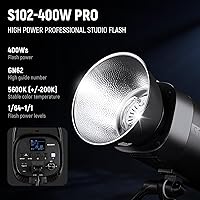
  • Flash Output: The strobe delivers 400 watt-seconds of power, providing a guide number of GN62 at 1 meter and ISO 100.
  • Color Temperature: Flash color temperature is rated at 5600K ±200K, offering neutral daylight-balanced light suitable for accurate color reproduction.
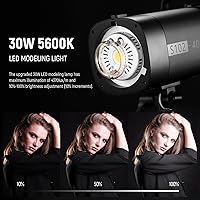
  • Modeling Lamp: A built-in 30W LED modeling lamp operates at 5600K with an output of 4370 lux per meter for previewing light placement.
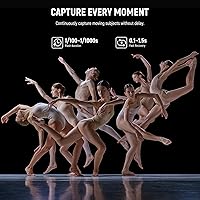
  • Flash Duration: Flash duration ranges from 1/100s to 1/1000s, allowing the strobe to freeze moderate to fast subject movement.
  • Recycle Time: The unit recycles to full power in 1.5 seconds or less, supporting a steady shooting pace during portrait or product sessions.
  • Power Range: Flash power is adjustable across a range equivalent to 1/64 to full power, giving fine-grained control over exposure output.
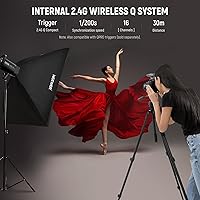
  • Wireless System: A 2.4G wireless trigger is included in the box, supporting up to 32 channels and 1 to 99 wireless IDs within a 330ft/100m range.
  • Sync Speed: High-speed sync of up to 1/200s is available when the strobe is used on a matching 2.4G channel with a compatible trigger.
  • Optical Slave: S1 and S2 optical slave modes allow the unit to be triggered by manual or TTL master flashes from third-party systems.
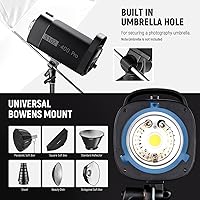
  • Mount Type: The strobe uses a standard Bowens mount with a built-in umbrella socket that supports 180-degree repositioning of the umbrella arm.
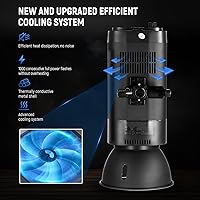
  • Cooling System: An internal silent fan combined with an advanced heat dissipation design enables up to 1000 consecutive full-power flashes without overheating.
  • Display: An HD digital panel on the body shows current power settings at a glance and retains configuration data between sessions.
  • Weight: The monolight body weighs 7.35 pounds, making it best suited for fixed studio use on a sturdy light stand.
  • Package Dimensions: The unit ships in a box measuring 16 x 10.3 x 8.5 inches, sized to protect the strobe and included accessories during transit.
  • In the Box: The package includes the monolight with modeling lamp, a 2.4G wireless trigger, a standard reflector, a power cord, and a user manual.
  • Advanced Trigger: QPRO trigger support is available for rapid sync and expanded wireless control, though the QPRO trigger itself is sold separately.
  • Compatibility: The Bowens mount is compatible with a wide range of third-party light modifiers including softboxes, beauty dishes, snoots, and grids.
  • Release Date: The product was first made available in July 2024, making it a relatively recent addition to the studio lighting market.

Related Reviews
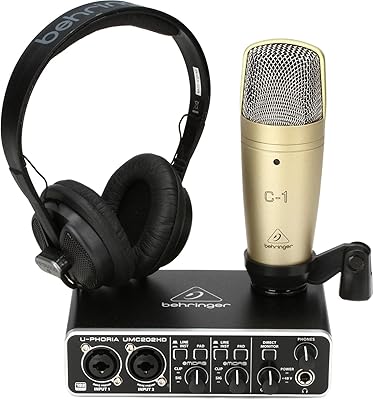
Behringer U-PHORIA STUDIO PRO
87%
92%
Audio Interface Build Quality
88%
Mic Preamplifier Clarity
83%
Microphone Sensitivity
67%
Headphone Comfort & Build
94%
Ease of Setup
More
NEEWER X1 Pro II Teleprompter 9″
84%
91%
Build Quality
88%
Glass Clarity & Transmission
93%
Quick-Release System
67%
App Performance & Bluetooth Stability
74%
Remote Control Usability
More
NEEWER 16″ Photo Studio Light Box
75%
83%
Lighting Quality
61%
Interior Size & Shooting Space
91%
Ease of Setup
86%
Portability & Storage
72%
Backdrop Variety & Quality
More
NEEWER Q6 600Ws Outdoor Studio Flash
86%
92%
Flash Power and Performance
85%
Wireless Control and App Integration
88%
Color Consistency and Temperature Stability
90%
Recycle Time and Burst Shooting Capability
87%
Build Quality and Durability
More
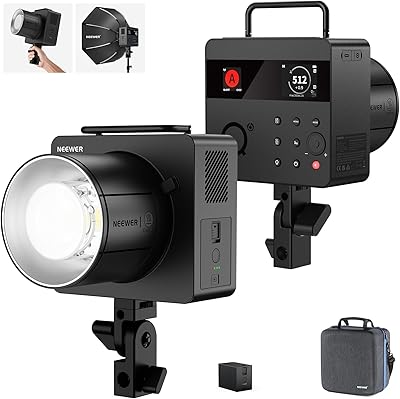
beyerdynamic DT 1770 Pro Studio Headphones
88%
94%
Sound Quality
88%
Comfort for Long Sessions
91%
Build Quality
90%
Noise Isolation
85%
Value for Money
More
NEEWER Q4 400Ws Outdoor Flash Strobe
81%
91%
Output Power & Performance
88%
Battery Life
86%
Recycle Speed
83%
TTL Accuracy
87%
High Speed Sync (HSS)
More
NEEWER S101-400W Studio Monolight
76%
88%
Light Output Consistency
79%
Build Quality
61%
Recycling Speed
84%
Modeling Lamp Usability
93%
Bowens Mount Compatibility
More
NEEWER Q300 300Ws Outdoor Battery Strobe Monolight
82%
91%
Battery Life & Endurance
87%
Flash Output Consistency
74%
Wireless Performance
78%
Recycle Speed
83%
Build Quality & Durability
More
JLab Studio Pro Wireless Over-Ear Headphones
75%
94%
Battery Life
91%
Value for Money
78%
Comfort
72%
Sound Quality
61%
Build Quality
More
NEEWER TL98C Magnetic LED Light Wand
79%
91%
Color Accuracy
84%
App Performance
63%
Battery Life
78%
Build Quality
71%
Magnetic Mount Strength
More

FAQ

A 2.4G wireless trigger is included in the box, so you can start shooting wirelessly right away. That said, if you want access to the more advanced QPRO rapid sync features, that trigger is a separate purchase.

If your modifiers use a Bowens mount, they will connect directly to this strobe with no adapter needed. Bowens is one of the most common mounting standards, so compatibility with third-party accessories is broad.

At 30W and 4370 lux per meter, the LED modeling lamp is genuinely useful for positioning your light and previewing shadows before you shoot. A small number of users have noted they wished it were a little brighter for very precise work, but for most home studio setups it does the job well.

The fan is designed to run quietly, and most users report it is unobtrusive during still photography. Content creators who record audio alongside video have found it acceptable for that use case, though individual sensitivity to background noise will vary.

Yes, this studio monolight works with any camera that has a standard sync port or can use the included 2.4G wireless trigger. It does not rely on proprietary camera connections, so brand compatibility is not a concern for basic triggering.

The rated recycle time is under 1.5 seconds at full power, which is fast enough for most portrait and product sessions. If you shoot at reduced power settings, recycling tends to be even quicker.

Color temperature is rated at 5600K ±200K, which is a tight tolerance for this price range and should produce consistent, neutral daylight results across a full session. Buyers focused on e-commerce catalog work have flagged this as one of the more practical strengths of the NEEWER S102-400W PRO Studio Monolight.

Yes, the S1 and S2 optical slave modes let you trigger this strobe using the flash pulse from another unit acting as a master, whether it is manual or TTL. This makes it reasonably easy to fold into a mixed-brand lighting setup.

It is an honest answer to say that long-term durability data is still limited, since the product only launched in mid-2024. Early feedback is largely positive, but if you need a light that has a track record of surviving years of heavy daily use, you may want to factor that uncertainty into your decision.

For indoor studio work, 400Ws is more than adequate for portraits and product photography. Overpowering strong outdoor sunlight with a 400Ws strobe can be challenging, especially in direct midday conditions, so this flash unit is best treated as a studio or controlled-environment tool rather than a bright-sun outdoor strobe.

Where to Buy