Overview

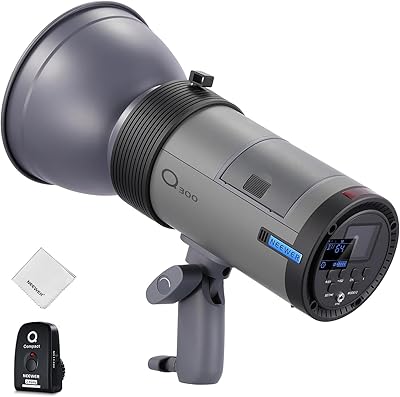
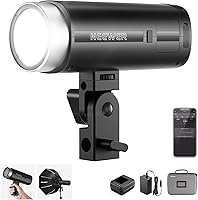
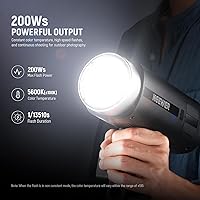
The NEEWER Q200 200Ws Outdoor Studio Monolight is a compact, battery-powered unit built for photographers who need real studio output away from a wall socket. Released in late 2024, it entered a competitive mid-range field where the Godox AD200 Pro has long been the default recommendation. What separates this outdoor monolight from most rivals at this price is smartphone app control — a feature that lets you adjust modes and push firmware updates without touching the light. With 200Ws of power, a 5600K color temperature, and a flash duration reaching up to 1/13510s, it holds its own technically. Climbing to #12 in Amazon's Photographic Lighting Monolights category within months of launch suggests it found an audience quickly.
Features & Benefits

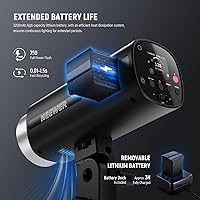
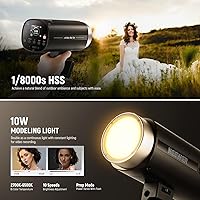
The Q200 strobe covers TTL, Manual, and MULTI modes, giving you real flexibility across different shooting conditions. TTL includes ±3.0EV exposure compensation, though accuracy depends on your camera system — Canon and Nikon tend to behave more predictably than some Sony setups. High-speed sync at 1/8000s is available, but only through the QPro trigger, which is sold separately and should be factored into your total investment. The 3200mAh battery is rated for 750 full-power flashes with recycle times as low as 0.01 seconds. The 10W modeling light, adjustable from 2700K to 6500K, is a practical bonus for composing in dim conditions. Wireless control spans 32 channels across five groups, which keeps complex multi-light setups organized.

Best For

This battery-powered flash is a natural fit for wedding and event photographers who shoot long days outdoors without reliable access to power outlets. It also suits fashion and portrait work where HSS daylight fills are essential — just budget for the QPro trigger upfront. Photographers stepping up from speedlights will appreciate getting genuine monolight output in a package that still fits in a camera bag without drama. Studio shooters who want to adjust power settings remotely via app, rather than crossing the set between every frame, will find that workflow genuinely practical. The 5.52-pound weight and relatively compact footprint make it reasonable to carry on location shoots where every pound counts.

User Feedback

Photographers using this outdoor monolight in the field frequently call out the metal handle construction and the app control as real strengths. On the downside, real-world battery life tends to fall short of the 750-flash rating at higher power levels, so plan accordingly on full-day jobs. App connectivity can be inconsistent — some users report needing to restart the pairing process, which gets old fast. TTL accuracy earns split reviews: solid on Canon bodies, less dependable elsewhere. The cooling fan handles heat well but produces audible fan noise that some find intrusive in quiet settings. The broader consensus is positive for the price point, with QPro trigger availability being the most frequently raised practical frustration.

Pros

  • 200Ws output handles outdoor ambient light confidently for portraits, weddings, and editorial work.
  • Flash duration up to 1/13510s freezes motion cleanly without needing to push to maximum HSS settings.
  • Smartphone app control lets solo shooters adjust power from across the set without an assistant.
  • The 10W modeling light with adjustable color temperature from 2700K to 6500K is genuinely useful in dim venues.
  • Recycle time as low as 0.01 seconds at lower power settings keeps up with fast-paced event shooting.
  • Five-group, 32-channel wireless system makes managing multiple lights across a large venue organized and reliable.
  • The all-metal handle feels solid under heavy modifiers and holds tilt position securely on windy outdoor shoots.
  • OTA firmware updates mean the Q200 strobe can improve over time without a trip back to the retailer.
  • At 5.52 pounds, this outdoor monolight is portable enough for destination and travel assignments without dominating the bag.
  • The 5600K color temperature stays consistent across a session, reducing the need for per-image white balance corrections in post.

Cons

  • Real-world battery life at full power falls well short of the 750-flash rating — carry a spare for all-day jobs.
  • HSS requires the QPro trigger, sold separately, which meaningfully increases the true cost of the complete setup.
  • App Bluetooth pairing drops unexpectedly for some users, requiring restarts during time-sensitive shooting situations.
  • TTL accuracy is inconsistent on Sony mirrorless bodies, making manual mode the safer default for critical work.
  • The cooling fan produces audible noise that becomes distracting in quiet indoor portrait or product shooting environments.
  • Plastic body sections feel less substantial than the metal handle, and cosmetic wear appears relatively early with regular field use.
  • The NEEWER Q system ecosystem lock-in means photographers invested in other wireless brands cannot mix triggers without switching systems.
  • The app interface needs polish, and some firmware updates have introduced new connectivity issues rather than resolving existing ones.

Ratings

The NEEWER Q200 200Ws Outdoor Studio Monolight earns its scores from AI analysis of verified global buyer reviews, with spam, bot submissions, and incentivized feedback actively filtered out before scoring. The ratings below reflect what real photographers — from wedding shooters to traveling portrait artists — consistently praised and criticized after using this outdoor monolight in the field. Both the standout strengths and the recurring frustrations are represented transparently, so you can make a genuinely informed decision.
Light Output & Power
88%
Wedding and portrait photographers consistently note that 200Ws delivers enough punch to compete with ambient sunlight during golden hour shoots, without pushing the unit into thermal stress. The 5600K color temperature holds well across a shoot, keeping skin tones consistent from frame to frame without heavy correction in post.
At full power, a handful of users shooting high-volume events found the output slightly inconsistent between flashes, suggesting minor variability under sustained heavy use. Those coming from 300Ws or 400Ws monolights may find the ceiling limiting for larger modifiers like 47-inch octaboxes at distance.
Battery Life
71%
29%
For a typical two-hour portrait session or a ceremony segment, the 3200mAh battery holds up well, and the roughly three-hour charge time is manageable when you have an overnight window between jobs. Photographers doing shorter editorial shoots report comfortably finishing without touching the charger.
The rated 750 full-power flashes is a lab number, not a field number. Shooters running the Q200 strobe at full or near-full power during long wedding receptions frequently report hitting battery limits well before that figure, often around 400 to 500 flashes in real conditions. Carrying a spare battery is genuinely advisable for all-day work.
HSS Performance
76%
24%
For fashion and lifestyle photographers shooting in harsh midday sun, the 1/8000s HSS capability opens up wide-aperture daylight fills that would otherwise be impossible. Users working with Canon bodies in particular report clean, well-exposed frames even at extreme sync speeds.
HSS requires the QPro trigger, which is sold separately and adds meaningful cost to the total investment — a fact that catches some buyers off guard. Performance at the highest sync speeds also showed more frame-to-frame variation on Sony mirrorless bodies compared to Canon DSLRs, based on aggregated user reports.
TTL Accuracy
69%
31%
In mixed-light outdoor environments, TTL mode handles exposure shifts reasonably well, saving time during fast-moving event coverage where manually tweaking power between every shot is impractical. Canon users report the most reliable and consistent TTL results overall.
TTL accuracy is noticeably less dependable on Sony and some Nikon mirrorless bodies, with users reporting overexposure in high-contrast scenes more often than expected. For critical commercial work, most experienced users default to manual mode and treat TTL as a convenience rather than a precision tool.
App Control & Connectivity
63%
37%
The smartphone app control is a genuinely useful differentiator — being able to adjust power output or switch modes from across the set without an assistant saves real time during solo shoots. OTA firmware updates mean the unit can improve over time without needing to return it or hunt for update cables.
App stability is the most polarizing aspect of this battery-powered flash among buyers. Bluetooth pairing drops unexpectedly for a meaningful percentage of users, requiring restarts mid-session, which is frustrating during time-sensitive work. Several reviewers noted the app interface needed refinement and that updates occasionally introduced new connectivity quirks rather than resolving old ones.
Recycle Time
86%
At lower and mid-range power settings, the recycle time feels nearly instantaneous, which is a real asset during fast-paced event coverage or run-and-gun portrait sessions. Photographers shooting sequences report confidently capturing multiple expressions without waiting for the ready indicator.
At full power, recycle stretches toward the 1.5-second ceiling, which is acceptable but noticeable compared to tethered AC-powered monolights. In burst-heavy scenarios like capturing first dances or action portraits, that gap between full-power shots requires a small but real adjustment to shooting rhythm.
Modeling Light
81%
19%
The 10W modeling light with a color temperature range from 2700K to 6500K is surprisingly versatile for a unit in this class. Photographers shooting in dim venues appreciate being able to warm the modeling light to match practical ambient sources, which helps with both composition and auto-focus accuracy in low light.
At 10W, the modeling light is useful for focus and general composition guidance, but it lacks the punch needed to use as a primary continuous light source, even for video B-roll. A few users also noted that brightness adjustments in PROP mode sometimes lag behind flash power changes rather than updating in real time.
Build Quality
77%
23%
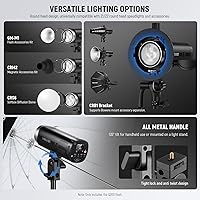
The all-metal handle feels solid and inspires confidence when mounting heavy modifiers, and the anti-twist 1/4-inch screw keeps the head firmly positioned during outdoor shoots where light stands flex in the wind. The overall construction reads as durable for a mid-range product.
The body incorporates plastic components alongside the metal handle, and several users noted that the plastic sections feel noticeably lighter and less premium than the handle suggests. A few reported cosmetic wear appearing earlier than expected, particularly around the control dial area with regular field use.
Portability & Form Factor
84%
At 5.52 pounds, this outdoor monolight strikes a workable balance between output power and carry weight, fitting into a mid-size lighting bag alongside a stand and a modifier without dominating the load. Travel photographers heading to destination shoots specifically call out the compact footprint as a practical advantage over larger AC-dependent alternatives.
While the weight is reasonable for solo location work, photographers already carrying full camera kits describe it as the tipping point that makes the overall bag heavy rather than light. It is notably heavier than dual-head speedlight alternatives, which matters on long walking shoots or hikes to remote locations.
Wireless Range & Multi-Light Control
83%
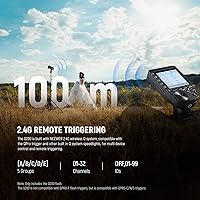
The 2.4G wireless system covering 32 channels and five groups gives multi-light setups real organizational flexibility, which photographers running two or three lights across a large event venue appreciate. Triggering at distances up to 100 meters held up well in open outdoor conditions according to multiple users.
In environments with significant 2.4G radio congestion — crowded wedding venues, convention halls — a portion of users reported occasional misfires that required channel changes to resolve. Compatibility is also limited to the NEEWER Q system ecosystem, which creates a barrier for photographers who already own triggers from other brands.
Flash Duration
87%
The flash duration reaching up to 1/13510s is a genuine technical strength, giving product and motion photographers the ability to freeze fast-moving subjects cleanly without relying on HSS. For studio-style outdoor portraits where sharp subject edges matter, this spec delivers noticeably crisp results.
Achieving the shortest flash durations requires operating at lower power outputs, which not all users immediately understand when they first set up the unit outdoors. At higher power levels, the effective flash duration lengthens, which can reintroduce slight motion blur in very fast action scenarios.
Heat Management
74%
26%
The built-in cooling fan does its job during extended shooting sessions, keeping the unit from throttling output or shutting down unexpectedly even during sustained bursts at mid-range power. Photographers shooting long studio days report stable, consistent performance without the overheating warnings that plague some competing units.
The fan noise is audible and becomes a recurring complaint in quiet shooting environments — think intimate indoor portraits or product sessions in a small studio. It is not loud enough to disrupt outdoor work, but in a hushed room it is present enough that some photographers find it mildly distracting.
Ease of Setup
82%
18%
The three-way base interface and 135-degree tilt range make positioning the light intuitive, and most users report getting from bag to first test shot in a few minutes without consulting the manual. The dock-based charging system is straightforward and does not require proprietary cables beyond what is included.
New users unfamiliar with the NEEWER Q ecosystem occasionally struggle with the initial app pairing and channel configuration, particularly when setting up multi-light groups for the first time. The manual covers the basics but lacks depth on troubleshooting connectivity issues, which pushes users toward online forums for help.
Value for Money
79%
21%
For photographers who do not already own a battery-powered monolight, the combination of 200Ws output, HSS capability, app control, and a variable-color modeling light at this price point represents strong overall value. The feature set genuinely punches above what the price alone suggests.
The true cost of unlocking full functionality — specifically adding the QPro trigger for HSS — nudges the total spend meaningfully higher than the unit price implies. When compared against the Godox AD200 Pro in a full kit-to-kit price comparison, the value gap narrows considerably, making the decision less obvious than the sticker price suggests.

Suitable for:

The NEEWER Q200 200Ws Outdoor Studio Monolight is a strong match for working photographers who spend most of their time shooting away from a power outlet. Wedding and event photographers covering long outdoor ceremonies will appreciate having a self-contained light that can handle an entire ceremony segment on a single charge without hunting for an extension cord. Portrait and fashion shooters who regularly work in direct sunlight will find the HSS capability — once paired with the QPro trigger — genuinely practical for pulling off wide-aperture daylight fills that speedlights struggle to achieve. Photographers making the step up from a hotshoe flash setup will find this outdoor monolight offers a meaningful jump in power and control without requiring a van full of gear. Solo shooters who want to adjust settings remotely via smartphone rather than walking back to the light between setups will also find the app control a real workflow improvement, provided the Bluetooth connection stays stable. It also suits travel-focused professionals who need a capable but carry-friendly light that fits into airline luggage without a dedicated equipment case.

Not suitable for:

The NEEWER Q200 200Ws Outdoor Studio Monolight is not the right tool for every situation, and being clear about that upfront saves frustration. Photographers who need to shoot extended all-day events at full power — multi-hour receptions, full-day commercial productions — will find that real-world battery performance falls noticeably short of the rated 750-flash figure, making a spare battery essentially mandatory rather than optional. Anyone who shoots primarily on Sony mirrorless bodies and relies heavily on TTL automation for fast-moving coverage should know that TTL consistency is less reliable on Sony than on Canon, and treating manual mode as the default is a more dependable approach. Photographers already invested in a non-NEEWER wireless ecosystem will hit compatibility walls, since this battery-powered flash only works within the NEEWER Q system — mixing it with Godox or Profoto triggers is not an option. Buyers who want HSS out of the box should also note that the QPro trigger is a separate purchase that adds to the real cost of the kit. And anyone who needs primary continuous light capability for video work should look elsewhere — the 10W modeling light is useful for focus and composition but does not have the output to serve as a main video source.
Specifications

  • Power Output: The unit delivers 200Ws of flash power, suitable for outdoor portrait, wedding, and fashion photography in bright ambient conditions.
  • Color Temperature: Flash color temperature is rated at 5600K ±100K, producing daylight-balanced light that integrates cleanly with natural sunlight.
  • Flash Duration: Maximum flash duration reaches up to 1/13510s at low power settings, enabling sharp subject freeze in controlled conditions.
  • HSS Sync Speed: High-speed sync up to 1/8000s is supported when used with the NEEWER QPro trigger, which is sold separately.
  • Flash Modes: Supports TTL, Manual (1/256 to 1/1 across 9 levels), MULTI, S1, and S2 optical slave modes for flexible shooting scenarios.
  • Battery: The integrated 14.8V / 3200mAh lithium-ion battery is rated for up to 750 full-power flashes on a single charge.
  • Recycle Time: Recycle time ranges from 0.01 seconds at minimum power to 1.5 seconds at full power output.
  • Charge Time: A full battery charge takes approximately 3 hours using the included dock and power adapter.
  • Modeling Light: A 10W LED modeling light offers adjustable brightness from 10% to 100% and variable color temperature from 2700K to 6500K.
  • Wireless System: Built-in 2.4G NEEWER Q system supports triggering across 32 channels (CH01–32) and five groups (A, B, C, D, E).
  • Wireless Range: The 2.4G wireless system supports triggering distances of up to 328ft (100m) in open outdoor environments.
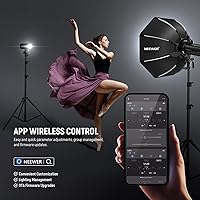
  • App Control: A companion smartphone app enables remote adjustment of flash modes, menu settings, and over-the-air firmware updates.
  • Tilt Range: The all-metal handle supports 135° of tilt adjustment and uses an anti-twist 1/4″ screw for secure light stand mounting.
  • Mount Interface: The base features a three-way interface for compatibility with standard light stands and mounting accessories.
  • Sync Port: A 2.5mm sync port supports front and rear curtain sync for use with compatible wired trigger systems.
  • Cooling: Built-in cooling fans actively manage heat during extended shooting sessions to maintain stable output performance.
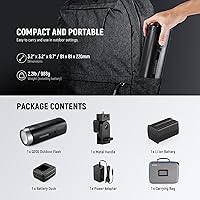
  • Dimensions: The unit measures 13.07 x 10.2 x 4.45 inches, making it compact enough to fit in a mid-size lighting bag alongside a modifier.
  • Weight: The complete unit weighs 5.52 pounds, balancing portability with the structural demands of supporting larger light modifiers.
  • Compatibility: Compatible with NEEWER QPRO-C, QPRO-N, and QPRO-S triggers, as well as Q-system speedlights including the Z2, 880, and NW760 series.
  • Exposure Compensation: TTL mode supports ±3.0EV exposure compensation across 19 levels; Manual mode supports +0.1 to 0.9EV fine-tuning per step.

Related Reviews

NEEWER Q300 300Ws Outdoor Battery Strobe Monolight
82%
91%
Battery Life & Endurance
87%
Flash Output Consistency
74%
Wireless Performance
78%
Recycle Speed
83%
Build Quality & Durability
More
NEEWER Q6 600Ws Outdoor Studio Flash
86%
92%
Flash Power and Performance
85%
Wireless Control and App Integration
88%
Color Consistency and Temperature Stability
90%
Recycle Time and Burst Shooting Capability
87%
Build Quality and Durability
More
NEEWER Q4 400Ws Outdoor Flash Strobe
81%
91%
Output Power & Performance
88%
Battery Life
86%
Recycle Speed
83%
TTL Accuracy
87%
High Speed Sync (HSS)
More
NEEWER 16″ Photo Studio Light Box
75%
83%
Lighting Quality
61%
Interior Size & Shooting Space
91%
Ease of Setup
86%
Portability & Storage
72%
Backdrop Variety & Quality
More
NEEWER LP60 24″x24″ Photography Light Box
79%
91%
Light Output & Brightness
88%
Color Accuracy
86%
Glare & Reflection Control
72%
Build Quality & Materials
74%
Backdrop Quality & Variety
More
NEEWER 6x9 feet Polyester Photo Studio Backdrop
87%
91%
Value for Money
87%
Build Quality & Durability
90%
Ease of Use
80%
Wrinkle Resistance
89%
Portability & Storage
More
NEEWER LP50 20″x20″ Photography Light Box
81%
91%
Lighting Quality
88%
Glare & Shadow Control
74%
Size & Interior Space
93%
Portability & Setup
67%
Backdrop Quality & Variety
More
NEEWER LP40 40CM Photography Light Box
81%
93%
Lighting Brightness
91%
Color Accuracy
88%
Glare & Shadow Control
74%
Build Quality
92%
Ease of Setup
More
Eve Outdoor Cam Floodlight Security Camera
73%
96%
Privacy & Data Security
93%
HomeKit Integration
88%
Floodlight Performance
71%
Video Quality
67%
Motion Detection Accuracy
More
LETSCEE HMC1 Solar Wireless Outdoor Security Camera
70%
84%
Value for Money
78%
Solar Charging Performance
81%
Image Quality (Daytime)
67%
Night Vision Quality
73%
Pan-Tilt Responsiveness
More

FAQ

Yes — high-speed sync up to 1/8000s requires the NEEWER QPro trigger, which is not included in the box. Make sure you pick up the correct version for your camera brand: QPRO-C for Canon, QPRO-N for Nikon, or QPRO-S for Sony. Factor that extra cost into your total budget before purchasing.

The 750-flash figure is measured at full power under controlled conditions, and real-world results are typically lower. Photographers shooting at full or near-full power during long events commonly report around 400 to 500 flashes before needing a recharge. If you are covering an all-day wedding or extended commercial shoot, carrying a spare battery is strongly recommended.

It is genuinely useful for solo photographers who need to adjust settings from a distance, but it is not without issues. Some users experience Bluetooth pairing drops that require restarting the connection, which is frustrating during a live shoot. When it works consistently, the ability to switch modes and update firmware remotely is a real practical advantage over most competitors in this price range.

TTL works best with Canon bodies, where most users report accurate and consistent exposures. Nikon is generally solid too, though a little less predictable in high-contrast scenes. Sony mirrorless users tend to get the least reliable TTL results, and many experienced photographers using Sony recommend defaulting to manual mode for any critical work rather than relying on automatic exposure.

No — the NEEWER Q200 200Ws Outdoor Studio Monolight uses NEEWER's proprietary 2.4G Q wireless system, which is not cross-compatible with Godox, Profoto, or other third-party trigger ecosystems. If you are already invested in a Godox setup, you would need to add NEEWER QPro triggers specifically to use this unit, which is worth considering before switching systems.
Not really as a primary source. The 10W output is helpful for checking composition and assisting autofocus in dim environments, but it does not produce enough light to serve as a main continuous source for video. The variable color temperature from 2700K to 6500K is a nice touch for matching ambient lighting during setup, but treat it as a focusing and framing aid rather than a video light.

It is noticeable in quiet environments. Outdoors or in a busy venue it blends into the background without much issue, but in a small indoor studio during a quiet portrait session, the fan hum is present enough that some photographers find it mildly distracting. It is not loud enough to appear on audio recordings in most cases, but it is worth knowing about if you work in hushed settings regularly.

The Q200 strobe uses a standard Bowens mount, which is the most widely adopted mounting standard in studio photography. This means the vast majority of softboxes, octaboxes, beauty dishes, and reflectors from brands like Godox, Neewer, Elinchrom (with adapter), and others will fit without issue. Modifier compatibility is one of the least complicated aspects of owning this light.

A full charge takes approximately 3 hours using the included dock and adapter, which is manageable if you have overnight time between shoots. The unit is not designed to be used while charging via the dock, so plan your charging windows around your shooting schedule rather than expecting a passthrough power option.

NEEWER does not officially rate this battery-powered flash as weather-sealed or water-resistant. It is designed for outdoor use in the sense that it is battery-powered and portable, but you should keep it away from rain, heavy moisture, and dusty conditions without additional protection. Many outdoor photographers use a rain cover or shoot under a light stand umbrella when conditions are unpredictable, which is sensible advice for any flash in this category.

Where to Buy