Overview

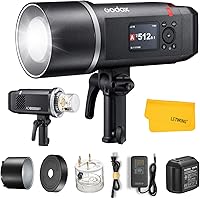
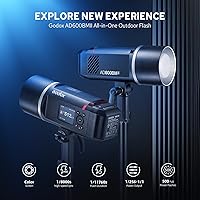
The Godox AD600BM II Outdoor Flash Strobe is a battery-powered monolight built for photographers who need serious output away from the grid — and this updated version makes a strong case for itself. The upgrade story centers on faster recycle times, a larger battery, and a new 16-color indicator system the previous generation simply didn't offer. Worth stating upfront: no TTL support here. This is a fully manual strobe, which is exactly what many working pros want, but if you rely on automatic exposure metering from your flash, look elsewhere. At its price point, it competes seriously among high-output portable monolights.
Features & Benefits

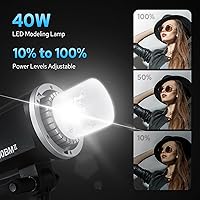
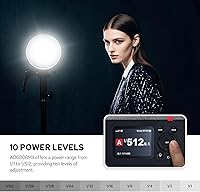
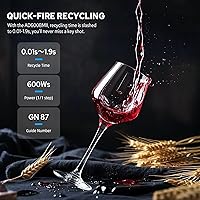
Six hundred watt-seconds of output is the headline, but what matters on location is the ten stops of control — from full blast down to 1/512 — letting you dial in precise exposures as conditions shift throughout the day. Recycle time runs as fast as 0.01 seconds at lower power and up to 1.9 seconds wide open, which is quick enough to keep pace with most portrait or event sessions. The 40W LED modeling lamp earns its place for continuous video work and for previewing your light shape before committing to a shot. HSS sync up to 1/8000s lets you overpower bright midday sun without fighting your shutter speed ceiling.

Best For

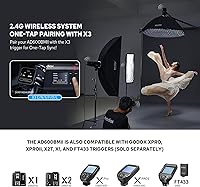
This battery-powered monolight is purpose-built for photographers who shoot on location regularly — think outdoor portraits, commercial fashion, or editorial work where dragging a generator isn't realistic. If you're already running Godox triggers, the one-touch X3 sync and 100m wireless range make adding this unit to an existing kit straightforward. The combined LED and flash capability also makes it a practical choice for hybrid shooters moving between stills and video. That said, it's not the right fit for beginners or hobbyists who prefer TTL automation. This is a tool for photographers who know their exposure settings before they press the shutter.

User Feedback

Photographers who've spent real time with the AD600BM II tend to praise its consistent color temperature across the power range and the noticeably snappier recycle behavior versus older versions — build quality gets strong marks too. The friction usually comes from two areas: weight and battery expectations. At just over 9 pounds, this portable strobe can be a stability concern on lightweight stands outdoors in any wind; sandbag your stand if you're working solo. The 500-flash battery figure is achievable but expect fewer at sustained full power. The manual-only workflow divides users — experienced pros tend to appreciate the direct control, while those accustomed to TTL find the adjustment steeper than anticipated.

Pros

  • 600Ws of output is enough to overpower harsh midday sun in most outdoor portrait scenarios.
  • Ten full stops of power adjustment give you precise, repeatable control across a wide range of lighting situations.
  • The recycle time is fast enough at mid-power to keep pace with continuous portrait or event shooting without frustrating gaps.
  • Bowens mount compatibility opens up a large ecosystem of affordable light modifiers from multiple brands.
  • The 40W LED modeling lamp is bright enough to be genuinely useful for both autofocus assistance and short video clips.
  • HSS sync up to 1/8000s lets you shoot wide open outdoors without compromising on ambient exposure control.
  • One-touch pairing with the X3 trigger works reliably and cuts setup time compared to manual channel and ID matching.
  • Color temperature stays consistent across the power range, which matters when you're mixing multiple lights on a shoot.
  • The 16-color group indicator system makes identifying and managing individual lights in a multi-strobe setup fast and intuitive.
  • Battery life holds up well across a full day of mid-power shooting without needing a recharge mid-session.

Cons

  • No TTL support at all — this is a hard dealbreaker for photographers who rely on automatic flash exposure.
  • At over 9 pounds, the AD600BM II puts real stress on lightweight light stands, especially outdoors in any wind.
  • The 500-flash battery estimate assumes mixed power levels; sustained shooting at full power will drain it noticeably faster.
  • Solo operators will need to carry sandbags or heavy-duty stands to use this safely on location without an assistant.
  • The X3 trigger is sold separately, which adds to the total cost of entry for photographers not already in the Godox ecosystem.
  • The size and weight make it a poor fit for photographers who prioritize fast mobility or minimalist travel kits.
  • Users transitioning from TTL systems report a genuine adjustment period before feeling comfortable dialing power manually under pressure.
  • No built-in optical slave mode comparable to some competing units, limiting flexibility without a Godox-compatible trigger on hand.

Ratings

The scores below reflect AI-powered analysis of verified global user reviews for the Godox AD600BM II Outdoor Flash Strobe, with spam, bot-generated, and incentivized feedback actively filtered out to preserve accuracy. Each category is scored based on patterns found across thousands of real buyer experiences, capturing both what photographers genuinely love and the friction points they run into in the field. Strengths and limitations are weighted equally, so what you see here is an honest representation of how this portable strobe performs in practice.

Flash Output & Power
93%
Photographers consistently report that 600Ws is more than sufficient to overpower harsh midday sun during outdoor portrait sessions, even when shooting through large softboxes that eat into output. The ten-stop power range gives real creative flexibility — users can drop it down for subtle fill in shaded locations without losing color consistency.
A small number of users shooting at maximum output in very bright desert or beach conditions noted they still occasionally needed to push ISO higher than preferred. At the extreme low end of the power range, a few reviewers observed minor inconsistency in output between flashes.
Recycle Time
88%
At mid-power settings — where most working photographers spend the bulk of a session — users describe recycle time as nearly imperceptible, allowing a natural shooting rhythm without frustrating pauses. Portrait photographers shooting rapid sequences during golden hour particularly praised how rarely they missed a fleeting expression waiting for the strobe to recharge.
At sustained full power, recycle time stretches noticeably toward the 1.9-second ceiling, which breaks flow during continuous fast-paced shooting. A handful of event photographers noted this became a practical limitation when attempting to fire multiple quick frames at maximum output.
Battery Life
79%
21%
For a typical half-day location shoot at mixed power levels, users report the battery comfortably carries them through without needing a recharge. Several photographers working outdoor editorial sessions described completing full multi-outfit shoots on a single charge with power still remaining.
The 500-flash rating erodes faster than many buyers expect once they start shooting primarily at full power — some users in cold-weather conditions reported getting closer to 300 to 350 full-power flashes before needing a charge. The internal, non-swappable battery means a depleted unit requires downtime rather than a quick field swap.
Build Quality
91%
Users across multiple climates describe the chassis as robust and confidence-inspiring, with controls and connectors that hold up after repeated transport in gear bags and hard cases. Photographers who upgraded from the previous generation specifically noted that the build felt refined rather than merely iterative.
A few users reported minor cosmetic scuffing on the body after regular use, suggesting the surface finish prioritizes function over scratch resistance. The flash tube cover and mount interface received occasional comments about feeling slightly less premium than the main body construction.
Portability & Weight
66%
34%
Relative to the power output it delivers, photographers acknowledge the AD600BM II is reasonably compact — it fits in standard monolight cases and does not require specialized transport. Solo location shooters who pair it with a rolling gear cart describe the overall kit as manageable for most jobs.
At over 9 pounds, solo operators consistently flag stand stability as a real-world concern, particularly outdoors in any meaningful wind. Users working without an assistant or sandbags report a recurring anxiety about the unit shifting or toppling on lighter aluminum stands, which is a legitimate safety consideration in the field.
HSS Performance
86%
Photographers shooting wide-open in bright sunlight consistently report that HSS sync up to 1/8000s delivers on its promise, allowing them to maintain shallow depth of field without compromising background exposure control. Wedding and portrait photographers who shoot in harsh overhead sun described HSS as one of the most practically impactful features in their daily use.
HSS does reduce effective flash output compared to shooting at standard sync speeds, which a number of users found limiting when trying to combine high shutter speeds with large modifiers in very bright conditions. A minority of users experienced occasional misfires when HSS was enabled at the upper shutter speed limit, though this appeared tied to specific trigger and camera combinations.
Wireless Reliability
84%
The 2.4GHz wireless connection is described by most users as dependable across the 100-meter rated range, with very few dropped triggers reported during normal location shoots. Photographers running multi-light setups at outdoor venues appreciate that signal dropouts are rare enough to not disrupt shooting rhythm.
In environments with significant wireless congestion — crowded event venues or urban locations with dense Wi-Fi traffic — a handful of users noted occasional missed triggers that required repositioning the receiver or reducing distance. The trigger is sold separately, which catches some buyers off guard when budgeting for a complete working setup.
Ease of Use & Interface
81%
19%
The 2.8-inch TFT color screen received consistent positive feedback for its readability in bright outdoor conditions, and the updated menu layout is described as more intuitive than the previous generation by users who owned both. The modeling lamp one-touch button in particular was called out as a small but genuinely useful ergonomic improvement.
Photographers transitioning from TTL systems describe a meaningful learning curve around manual power management, especially under time pressure during fast-moving shoots. A few users found the menu navigation slightly deeper than expected for quick on-the-fly power adjustments during live sessions.
Color Consistency
89%
Color temperature stability across the power range is one of the most praised technical attributes in user feedback, with photographers noting that mixed-power multi-light setups produce cohesive, well-matched results in post-processing. Studio photographers who shoot tethered and check color in real time described the consistency as genuinely reliable across long sessions.
At the extreme low end of the power range, a small number of technically focused users observed a slight color temperature shift that required minor white balance correction in post. This was not described as a workflow-breaking issue, but it is worth noting for photographers with very strict color fidelity requirements.
Modeling Lamp
74%
26%
The 40W LED modeling lamp earns consistent praise for helping photographers previsualize light fall-off and shadow placement before committing to a flash exposure, particularly useful when working with new or unfamiliar modifiers. Video creators using it as a supplemental continuous source for interview setups and behind-the-scenes footage describe it as a genuinely useful bonus.
Users expecting to use the modeling lamp as a primary video light for anything beyond close-range or supplemental applications found its output limiting. Color rendering and brightness relative to dedicated LED panels left some hybrid shooters wanting more, and the lamp lacks color temperature adjustment, which narrows its video utility.
Multi-Light Management
87%
The 16-color group indicator system received enthusiastic feedback from commercial photographers managing three or more lights on set, who described it as a practical tool that reduces the time spent walking between units to verify settings. At a glance, from across a large studio or outdoor location, the color-coded IDs make identifying and controlling individual lights noticeably faster.
The full benefit of the color indicator system only materializes when using multiple units simultaneously, making it a feature that solo or two-light photographers may find largely irrelevant. A couple of users noted that in very bright daylight, the indicator LEDs were harder to distinguish at long distances than in controlled indoor environments.
Modifier Compatibility
92%
The Bowens mount is universally appreciated for giving users access to one of the largest ecosystems of light-shaping accessories available, from budget third-party options to professional-grade modifiers from Profoto-adjacent brands. Photographers describe the ability to repurpose existing Bowens-compatible softboxes and grids as a significant practical advantage when switching from a previous strobe system.
The mount itself is standard and functions reliably, but a few users noted that cheaper third-party modifiers occasionally exhibited minor fit tolerance issues that required adjusting the locking collar more carefully than expected. This is a modifier manufacturing issue rather than a flaw in the strobe itself, but it surfaces often enough in user feedback to be worth mentioning.
Value for Money
83%
Photographers comparing this battery-powered monolight against comparable output from competing brands consistently describe it as delivering strong performance per dollar, particularly given the Bowens mount, HSS capability, and LED modeling lamp included in a single unit. Godox ecosystem buyers who already own compatible triggers view the overall cost of entry as genuinely competitive at this power level.
Buyers who factor in the cost of a separate trigger, a quality stand, and sandbag ballast find the real-world total investment higher than the unit price alone suggests. A minority of users who primarily shoot in TTL-centric workflows felt the manual-only limitation reduced the effective value for their specific shooting style.
Setup & Workflow Speed
77%
23%
Users already within the Godox ecosystem describe the one-touch X3 trigger pairing as a genuine time saver compared to the channel-and-ID matching process required by older units. Photographers who have standardized on Godox gear across multiple lights report that the setup process feels natural and fast once the system is familiar.
New Godox users or photographers coming from other wireless systems describe an initial learning period before the trigger ecosystem and pairing process becomes second nature. A handful of reviewers noted that in rare cases the one-touch sync did not connect on the first attempt, requiring a manual reset — not a frequent issue, but enough of a pattern to mention.

Suitable for:

The Godox AD600BM II Outdoor Flash Strobe is built for working photographers who regularly shoot away from a power outlet and need output that can actually compete with bright ambient light. Location portrait photographers, commercial shooters, and editorial teams will get the most from it — particularly anyone who already runs Godox triggers and wants a high-powered unit that slots into an existing wireless setup without friction. The HSS capability up to 1/8000s makes it a strong choice for photographers who shoot wide open in full sun, where a conventional strobe would be useless. Hybrid shooters who move between stills and video will also appreciate having a 40W LED continuous source built in, removing the need for a separate light. If you manage multi-light setups on location, the 16-color group indicator system is a genuinely practical tool for staying organized at a distance.
Not suitable for:

The Godox AD600BM II Outdoor Flash Strobe is a manual-only unit — there is no TTL support, full stop. Photographers who depend on automatic flash metering, whether for fast-moving events, run-and-gun wedding coverage, or any situation where you don't have time to dial in exposures manually, should look at a different strobe. Beginners still learning the relationship between flash power, aperture, and ISO will likely find the learning curve steeper than expected without TTL as a safety net. At just over 9 pounds, it also isn't the right tool for a solo photographer who needs to move fast and travel light — the weight becomes a real logistical concern when you're working alone with minimal support gear. Budget-conscious hobbyists or photographers who only need flash occasionally will find this portable strobe more unit than their shooting frequency justifies.
Specifications

  • Flash Power: Delivers 600 watt-seconds of maximum output, providing enough power to compete with strong ambient daylight in most outdoor shooting conditions.
  • Power Range: Adjustable across ten stops from full power (1/1) down to 1/512, allowing precise exposure control for both subtle fill and dominant key light roles.
  • Recycle Time: Recycles as fast as 0.01 seconds at low power settings and up to 1.9 seconds at full power, keeping pace with continuous portrait and event sessions.
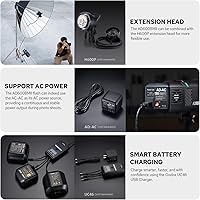
  • Battery: Equipped with a built-in 10.8V / 8940mAh lithium-ion rechargeable battery rated for approximately 500 flashes at full power under standard conditions.
  • Modeling Lamp: A 40W LED modeling lamp provides a continuous light source suitable for previewing light shape, assisting autofocus in low light, and short-form video work.
  • Sync Speed: Supports High-Speed Sync (HSS) up to 1/8000s, enabling wide-aperture shooting in bright sunlight without overexposing the background.
  • Flash Duration: At its fastest freeze setting, flash duration reaches 1/11,760s, capable of stopping fast-moving subjects with minimal motion blur.
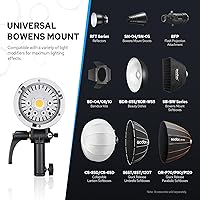
  • Mount Type: Uses a standard Bowens mount, compatible with a wide range of softboxes, beauty dishes, grids, and other light-shaping accessories from multiple manufacturers.
  • Wireless Range: Operates wirelessly at distances up to 100 meters when used with compatible Godox triggers, including the X3, XPro, XPro II, X2T, and X1.
  • Display: Features a 2.8-inch TFT color screen with improved brightness and contrast for clear readability of settings in varying ambient light conditions.
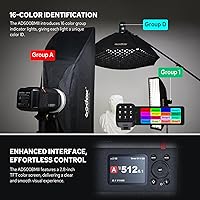
  • Group Indicators: Includes 16 individual color-coded LED group indicators, making it straightforward to identify and manage each light in complex multi-strobe setups at a glance.
  • TTL Support: This unit is manual-only and does not support TTL (Through-The-Lens) automatic flash metering in any shooting mode.
  • Weight: The unit weighs 9.42 lbs (approximately 4.27 kg), which should be factored into stand selection and ballast requirements for outdoor use.
  • Dimensions: Measures 15.64 x 9.57 x 7.56 inches, making it a mid-sized monolight that fits standard photography cases and equipment bags designed for portable strobes.
  • Camera Compatibility: Compatible with camera systems from Canon, Nikon, Sony, Fujifilm, Olympus, Panasonic, Pentax, and Leica via the corresponding Godox trigger for each mount.
  • Trigger Protocol: Uses Godox's 2.4GHz wireless protocol, which is shared across the brand's full trigger lineup for reliable, interference-resistant communication in the field.

Related Reviews

Godox AD400Pro Outdoor Flash Monolight
80%
91%
Output Power & Consistency
83%
Battery Life & Reliability
71%
TTL Accuracy
88%
High-Speed Sync Performance
86%
Portability & Form Factor
More
Godox AD200Pro II Pocket Flash Strobe
78%
88%
Build Quality
91%
Portability & Form Factor
87%
Output Power & Consistency
84%
High-Speed Sync Performance
71%
TTL Accuracy
More
Godox AD300 Pro Outdoor Flash Strobe
82%
93%
Light Output & Power
89%
Portability & Form Factor
84%
TTL Accuracy
91%
HSS Performance
88%
Recycle Time & Stamina
More
NEEWER Q200 200Ws Outdoor Studio Monolight
79%
88%
Light Output & Power
71%
Battery Life
76%
HSS Performance
69%
TTL Accuracy
63%
App Control & Connectivity
More
Godox V850III Speedlite Camera Flash
79%
93%
Battery Life
88%
Value for Money
86%
Wireless Reliability
84%
Build Quality
81%
Recycle Time
More
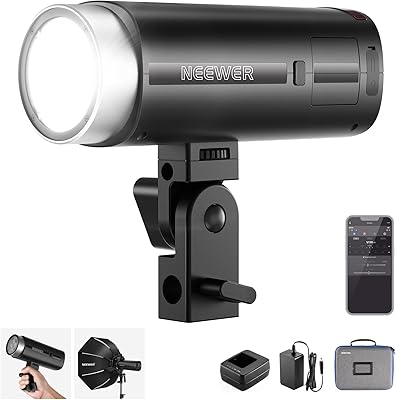
Godox AD200 Pro
Godox AD200 Pro
86%
93%
Output Power & Consistency
91%
Portability & Form Factor
78%
Battery Life & Charging
89%
HSS & Sync Performance
88%
Wireless Ecosystem Integration
More
Godox TT520II Speedlite Flash
76%
91%
Value for Money
78%
Build Quality
84%
Wireless Performance
82%
Flash Output Consistency
76%
Ease of Use
More
Godox TT350C TTL Flash for Canon
80%
94%
Portability & Size
74%
TTL Accuracy
88%
Wireless Reliability
61%
Flash Power Output
86%
High Speed Sync (HSS)
More
Godox TT350F Fujifilm TTL Camera Flash
80%
88%
TTL Accuracy
76%
Build Quality
84%
HSS Performance
82%
Wireless Reliability
61%
Recycle Time
More
Godox TT600S Speedlight Camera Flash
79%
93%
Value for Money
88%
Wireless Performance
84%
Build Quality
91%
Output Consistency
76%
High-Speed Sync
More

FAQ

It is strictly manual. The Godox AD600BM II Outdoor Flash Strobe does not offer TTL automatic metering in any mode — the BM in the model name stands for Bowens Mount Manual. If TTL is important to your workflow, you would need to look at the AD600 Pro or similar TTL-capable models instead.
The trigger is not included — it is sold separately. The unit pairs with the Godox X3, XPro, XPro II, X2T, and X1 triggers, so you will need to purchase whichever one matches your camera brand. The good news is that if you already own a compatible Godox trigger, you can add this strobe to your setup without buying anything extra.

The 500-flash rating is based on full-power use under controlled conditions, so real-world results will vary. At mid-power settings — where most photographers spend the majority of a session — you can comfortably exceed that number. Shooting consistently at full power, or in cold weather conditions, will reduce your count noticeably. For a full-day location job, carrying a spare battery is a sensible precaution.

At just over 9 pounds, this portable strobe puts meaningful stress on lightweight aluminum stands, especially outdoors where wind is a factor. A medium-duty stand rated for at least 11–13 lbs is recommended, and you should always sandbag the base when working outside. Going cheap on the stand with a flash this heavy is the kind of decision that tends to end badly.

It uses a standard Bowens mount, which is one of the most widely adopted mounting systems in the industry. Softboxes, octaboxes, beauty dishes, grids, and barn doors from Godox and dozens of third-party manufacturers will fit without any adapter. This is one of the genuine advantages of Bowens-mount gear — modifier options are abundant and competitively priced.

HSS support depends on your trigger and camera combination. The AD600BM II supports HSS up to 1/8000s, but you need a compatible Godox trigger for your specific camera brand to enable it. Most major brands — Canon, Nikon, Sony, Fujifilm, and others — have a compatible Godox trigger that unlocks HSS, but check the trigger's compatibility list for your exact camera model before assuming it will work.

Each strobe in your setup gets assigned a color ID visible on the indicator ring, so when you are standing 30 or 40 feet away managing multiple lights, you can instantly tell which unit is which without walking over to read the display. It is particularly useful during complex commercial setups where several lights are positioned around a large scene. Think of it as a visual labeling system rather than a purely technical feature.

The 40W LED is usable as a continuous source for video, particularly in controlled environments or for close-up interview setups, but it is not a replacement for a dedicated video LED panel in terms of raw output or color adjustment options. It works well for fill, for visualizing light shape before shooting stills, and for helping cameras lock autofocus in darker locations. Treat it as a capable bonus feature rather than the main event.

The battery is internal and not a hot-swappable field unit like those found on some competing strobes. You can carry a second charged unit instead, but you cannot quickly swap batteries mid-shoot the way you would with a camera battery. For extended all-day jobs, plan your charging schedule around your shoot breaks accordingly.

The key improvements in this generation are the faster and more consistent recycle time, the larger battery capacity, the 16-color group indicator system, and the updated TFT color screen with better readability. If you own the original AD600BM and are happy with your results, the upgrade is not urgent. But if you are buying new, there is no reason to seek out the older version — the improvements are meaningful and the price difference between generations is typically modest.

Where to Buy