

Overview

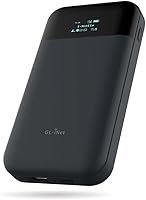
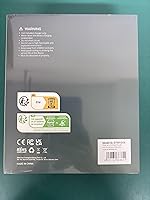
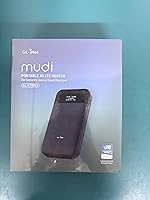
The GL.iNet GL-E750V2 4G LTE Mobile Hotspot is not just another pocket-sized LTE dongle — it's a fully capable travel router built for people who take their connectivity seriously. Where carrier-supplied hotspots give you a basic Wi-Fi signal and little else, the Mudi V2 runs OpenWrt firmware, supports enterprise-grade VPN protocols, and lets you customize your network the way you see fit. It sits at a mid-to-premium price point, and that gap is intentional. You're not paying for a simpler device with a glossy rebrand; you're paying for open-source flexibility and hardware designed with privacy-conscious travelers and remote workers in mind.

Features & Benefits

At the core of the GL-E750V2 is a Cat6 LTE modem that supports a nano SIM slot and a physical eSIM card — handy if you travel across multiple countries and want to avoid hunting down local SIMs. Dual-band Wi-Fi covers 2.4GHz and 5GHz simultaneously, so you can spread devices across both bands depending on range and speed needs. The real draw, though, is the VPN capability. WireGuard performance tops out at 50Mbps on this hardware, which is fast enough for video calls and streaming through an encrypted tunnel — something most carrier hotspots simply cannot do. The 7000mAh battery keeps things running for roughly 8 hours, and with MicroSD support up to 1TB plus a USB port, it can double as a mobile file server.

Best For

The Mudi V2 is squarely aimed at people who think about their network, not just use it. Remote workers and digital nomads will get the most value — it turns any hotel room or airport lounge into a private, controlled network rather than a shared free-for-all. Multi-country travelers will appreciate the SIM flexibility, though note that the physical eSIM card is sold separately and has confused some buyers expecting it to be included. Privacy-focused users who want always-on VPN routing for every device simultaneously will find few portable options that match this at the price. Worth being direct: if you're not comfortable navigating a router admin panel and tinkering, this device will frustrate you. It rewards technical confidence.

User Feedback

Users consistently praise the GL-E750V2's VPN throughput and the freedom that comes with running open-source firmware — the ability to push updates, add packages, and configure routing rules as needed is something loyal GL.iNet users have come to expect. Build quality also earns consistent nods. On the critical side, setup is a recurring pain point: connecting to LTE, configuring VPN tunnels, and navigating the admin interface takes real time and some networking knowledge. Real-world battery life tends to fall short of the listed 8 hours under VPN load. A handful of buyers were caught off guard by the eSIM card not being in the box. GL.iNet support is generally considered responsive and reliable with firmware updates.

Pros

  • WireGuard VPN runs at up to 50Mbps on the Mudi V2, fast enough for HD video calls and streaming through an encrypted tunnel.
  • OpenWrt firmware gives technically confident users full control over routing, DNS, and network behavior that carrier hotspots simply do not allow.
  • Dual-band Wi-Fi lets you spread devices across 2.4GHz and 5GHz simultaneously, reducing congestion when connecting multiple devices.
  • The 7000mAh battery keeps the GL-E750V2 running for several hours without a wall outlet, practical for long travel days.
  • MicroSD support up to 1TB and a USB port let the device function as a basic mobile file server — a genuinely useful bonus.
  • Build quality is consistently praised by real users; it feels like hardware meant to survive a packed carry-on bag.
  • GL.iNet has a strong track record of releasing firmware updates, which matters for long-term security and feature support.
  • Nano SIM slot plus physical eSIM card support gives multi-country travelers real flexibility in managing connectivity costs.
  • Supporting 30+ VPN server configurations makes this travel LTE router adaptable to a wide range of privacy and remote access setups.
  • The 2-year warranty adds meaningful purchase confidence for a device in this price range.

Cons

  • Initial setup is genuinely complex; non-technical users will likely struggle with LTE band selection and VPN configuration.
  • The physical eSIM card is sold separately, which is easy to miss and frustrating to discover after unboxing.
  • Real-world battery life under active VPN load falls noticeably short of the 8-hour advertised figure.
  • LTE band compatibility varies by region and carrier, and incompatible bands cannot be resolved through software alone.
  • OpenVPN throughput is capped around 10Mbps, which may feel limiting for users expecting full-speed encrypted connections.
  • The admin interface, while powerful, has a learning curve that can feel overwhelming without prior router management experience.
  • At this price point, buyers expecting a polished consumer experience similar to a carrier hotspot will be disappointed by the setup demands.
  • No cellular connectivity in Russia, Belarus, Cuba, Iran, North Korea, Syria, and Crimea — a hard limitation tied to the modem itself.

Ratings

The scores below for the GL.iNet GL-E750V2 4G LTE Mobile Hotspot were generated by our AI after analyzing thousands of verified global user reviews, with spam, bot submissions, and incentivized feedback actively filtered out. The ratings reflect a clear-eyed picture of where this travel LTE router genuinely excels and where real buyers have run into friction — nothing is glossed over.

VPN Performance
88%
WireGuard throughput of up to 50Mbps is the headline feature here, and users consistently confirm it delivers in practice — HD video calls and streaming through an encrypted tunnel hold up well even on modest LTE signals. For remote workers who need always-on VPN across every device on their network, this level of performance is hard to find in a portable form factor.
OpenVPN performance is a different story, capping around 10Mbps due to the protocol's heavier CPU demands on this hardware. Users who rely on OpenVPN for corporate access have reported that large file transfers or video conferencing through that specific tunnel feel noticeably sluggish.
Build Quality
84%
The Mudi V2 feels more substantial than most travel gadgets in this category — users regularly describe it as solid and well-assembled, with no flex or rattling. After months of being tossed into bags and used across multiple countries, most buyers report no signs of wear beyond normal surface scuffs.
A small number of users noted that the plastic casing shows scratches fairly easily, and the SIM card slot cover feels less robust than the rest of the chassis. It's not a dealbreaker, but for a device at this price point a slightly more premium material finish would be expected.
Setup & Ease of Use
51%
49%
Users with networking experience — those who've configured a router before or understand concepts like VLANs and DNS — find the admin interface logical and well-organized. GL.iNet's web UI is cleaner than raw OpenWrt, and the mobile app provides a reasonable starting point for basic configuration.
Non-technical buyers frequently cite setup as their biggest frustration. Selecting the correct LTE bands for their carrier, configuring VPN clients, and understanding network modes are not guided processes — they require research and trial and error. Several reviewers explicitly warned that this is not a device for someone who expects to be online within minutes of unboxing.
Battery Life
63%
37%
The 7000mAh battery is larger than what most competing portable routers offer, and for light-to-moderate use — browsing and occasional video calls without VPN active — users hit close to the advertised runtime. Charging via USB-C is convenient and compatible with standard laptop chargers and power banks.
Under real travel conditions with WireGuard running continuously and several devices connected, actual battery life commonly falls to the 5 to 6 hour range rather than the listed 8 hours. Users doing intensive remote work sessions have found themselves reaching for a power bank by early afternoon, which undercuts the untethered promise of the device.
LTE Connectivity
72%
28%
In regions where the EM060K modem's supported bands align well with local carriers — much of Western Europe, North America, and parts of Asia — users report strong and consistent LTE signal acquisition and stable throughput. The Cat6 modem handles band switching gracefully when moving between coverage zones.
Band compatibility is a genuine lottery depending on your destination. Users in certain Southeast Asian markets and South America have encountered mismatches between the modem's supported bands and their local carrier's infrastructure, resulting in weak signals or fallback to slower network tiers. This is a hardware limitation with no software fix.
Wi-Fi Coverage
76%
24%
Dual-band 802.11ac coverage is more than adequate for a hotel room, small apartment, or a quiet corner of a co-working space. Users connecting laptops, tablets, and phones simultaneously report stable performance without significant drops, which is the core expectation for this use case.
Range is limited compared to a full home router — expected given the compact size, but occasionally cited as an issue in larger suites or open-plan spaces. A few users noted that 5GHz range drops off more sharply than expected when walls are involved.
VPN Server Compatibility
83%
Support for over 30 VPN providers out of the box, combined with OpenWrt's extensibility, means the GL-E750V2 works with virtually every mainstream VPN service without needing manual config file imports for most of them. Users with Mullvad, NordVPN, and ProtonVPN accounts found setup particularly straightforward.
A handful of less common or enterprise VPN configurations still require manual setup and occasional command-line work, which circles back to the device's demand for technical confidence. Documentation for some providers is outdated in the official guides.
Portability
81%
19%
At 285g and roughly the footprint of a thick wallet, this travel LTE router disappears into a carry-on without taking up meaningful space. The included USB-C cables and multi-region power adapter mean the entire kit is self-contained for international travel.
Compared to ultra-slim LTE dongles, the Mudi V2 is noticeably bulkier — it's not a pocket device for everyone. Users who prioritize minimal carry over maximum functionality may find the form factor slightly inconvenient for true daily pocket carry.
Firmware & Software
86%
GL.iNet's track record of consistent firmware updates is well-regarded in the community — security patches and feature additions continue to arrive regularly, which meaningfully extends the useful life of the hardware. The OpenWrt foundation means the device can run community packages well beyond what GL.iNet ships by default.
Firmware updates occasionally introduce regressions that take a subsequent release to resolve, and a small number of users have reported needing to roll back after an update caused instability. The update process itself is straightforward, but it's not automatic, requiring users to stay engaged with the release notes.
Storage & Expandability
74%
26%
The MicroSD slot supporting up to 1TB and the USB 2.0 port together make the Mudi V2 surprisingly capable as a lightweight travel NAS — useful for sharing project files or media across a team without relying on cloud storage in regions with unpredictable connectivity.
USB 2.0 is the bottleneck here; transfer speeds for large files over the network are adequate but not fast enough for anything requiring high-throughput access like editing video files directly from the drive. Users expecting NAS-grade performance will need to adjust expectations.
eSIM Support
58%
42%
The physical eSIM card system, when purchased separately, offers genuine convenience for multi-country travelers who want to manage carrier profiles from a single card without carrying a collection of nano SIMs. The profile management interface is reasonably well-designed for the task.
The fact that the eSIM card is a separate purchase is poorly communicated at point of sale, and it is one of the most consistently mentioned sources of disappointment in user reviews. Buyers expecting eSIM capability to be ready out of the box feel misled, and the additional cost adds up.
Value for Money
69%
31%
For technically capable users who will actually use the VPN routing, OpenWrt customization, and multi-device management features, the price is defensible — no carrier hotspot at a lower price offers comparable network control. The 2-year warranty and ongoing firmware support add to the long-term value case.
For buyers who end up using only basic LTE hotspot functionality, the price premium over a simple carrier device is hard to justify. The value equation is highly dependent on how deeply a buyer engages with the advanced features, making this a poor fit for casual purchasers.
Customer Support
77%
23%
GL.iNet has built a reputation for being more responsive than typical networking hardware companies — their forums are active, and direct support tickets tend to receive substantive replies rather than scripted deflections. The community around OpenWrt provides an additional layer of practical help.
Support quality can vary depending on the complexity of the issue — hardware-specific problems like modem band limitations tend to hit the boundaries of what support can actually resolve. Response times occasionally lag during high-demand periods or major firmware release cycles.

Suitable for:

The GL.iNet GL-E750V2 4G LTE Mobile Hotspot is purpose-built for a specific type of traveler — one who treats a reliable, private internet connection as a non-negotiable work tool rather than a convenience. Digital nomads and remote workers who regularly connect from hotels, airport lounges, or rented offices will get real mileage from having a personal router that routes all traffic through WireGuard or OpenVPN by default, without trusting whoever manages the local network. Multi-country travelers benefit from the SIM flexibility: swap a local nano SIM or manage profiles on a physical eSIM card (sold separately) rather than paying roaming fees or hunting for new SIMs at every border. Small teams sharing one LTE connection across several laptops and phones will also find the dual-band Wi-Fi and network control features genuinely useful. If you're comfortable poking around a router admin interface and you value controlling your own network stack on the road, the Mudi V2 is one of very few portable devices that actually lets you do that.

Not suitable for:

Buyers looking for a simple plug-and-play hotspot should look elsewhere — the GL-E750V2 is not that device. Getting the most out of it requires a willingness to spend time in the admin panel configuring LTE bands, setting up VPN tunnels, and understanding basic networking concepts; out of the box, it works, but it won't be optimized. Casual travelers who just need a backup internet connection for a week-long vacation will likely find the setup overhead hard to justify compared to renting a local Mi-Fi unit or using a carrier hotspot. The physical eSIM card is a separate purchase, which has caught many buyers off guard expecting it to be included given the marketing language. Battery life under sustained VPN load also runs shorter than the advertised figure, so heavy users will want to keep a USB-C power bank nearby. Finally, users in regions where the modem's LTE bands don't align well with local carriers may face frustrating connectivity limitations that no amount of firmware tweaking can fix.

Specifications

  • Model: The device carries the official model designation GL-E750V2, the second-generation version of GL.iNet's Mudi travel router.
  • Modem: A pre-installed EM060K Cat6 4G LTE module handles cellular connectivity, supporting download speeds up to 300Mbps over LTE.
  • Wi-Fi (2.4GHz): The 2.4GHz band delivers wireless speeds up to 300Mbps under the 802.11ac standard, offering broader range for devices farther away.
  • Wi-Fi (5GHz): The 5GHz band supports speeds up to 433Mbps, suited for lower-latency tasks like video calls when devices are in close proximity.
  • WireGuard VPN: The hardware can sustain WireGuard VPN throughput of up to 50Mbps, sufficient for encrypted HD streaming and remote desktop sessions.
  • OpenVPN: OpenVPN is supported at speeds up to 10Mbps, reflecting the heavier processing load of this older protocol on the onboard CPU.
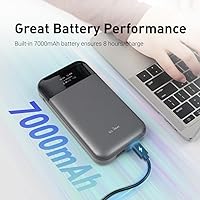
  • Battery: A built-in 7000mAh lithium polymer battery provides up to 8 hours of rated use before requiring a recharge via USB-C.
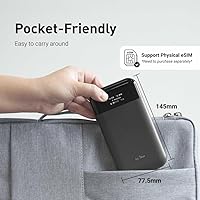
  • Dimensions: The unit measures 5.7 x 3.1 x 0.9 inches, compact enough to fit in a jacket pocket or the top pouch of a travel bag.
  • Weight: At 285g (10.1 oz), the GL-E750V2 is lightweight enough for daily carry without adding meaningful burden to a travel pack.
  • RAM & Storage: The router includes 128MB DDR2 RAM, 16MB NOR Flash, and 128MB NAND Flash for running the OpenWrt operating system and installed packages.
  • MicroSD Support: A MicroSD card slot accepts cards up to 1TB, enabling the device to serve as a portable network-attached storage node.
  • USB Port: One USB 2.0 port allows connection of external drives or other peripherals for expanded storage or file sharing over the local network.
  • SIM Support: The device accepts a standard nano SIM card and also supports GL.iNet's physical eSIM card format for managing multiple carrier profiles.
  • Firmware: The Mudi V2 runs OpenWrt, an open-source Linux-based router operating system that supports custom packages, DNS settings, and advanced routing rules.
  • Charging: The device charges via USB-C and ships with both a USB-C to USB-A cable and a USB-C to USB-C cable, plus a multi-plug power adapter.
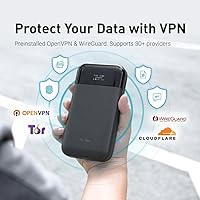
  • VPN Servers: Out of the box, the firmware supports configuration with more than 30 VPN service providers through the built-in admin interface.
  • Package Contents: The box includes the router, two USB-C cables, a USB-C port replicator, a multi-region power adapter (US, EU, UK, AU plugs), an Ethernet cable, and a user manual.
  • Warranty: GL.iNet covers the GL-E750V2 with a 2-year manufacturer warranty from the date of purchase.
  • Regional Restrictions: The cellular modem function is restricted by hardware limitations in Russia, Belarus, Cuba, Iran, North Korea, Syria, and the Crimean Peninsula.
  • Wireless Standard: The device is certified under the 802.11ac (Wi-Fi 5) standard with dual-band simultaneous operation across 2.4GHz and 5GHz frequencies.

Related Reviews
GL.iNet Spitz GL-X750V2 4G LTE Router
74%
83%
LTE Connectivity & Signal Reliability
74%
Wi-Fi Performance
91%
VPN Integration
78%
Setup & Ease of Use
88%
OpenWrt Customization
More
GL.iNet GL-XE300 Puli 4G LTE IoT Gateway
77%
88%
4G LTE Connectivity & Failover
91%
OpenWrt Flexibility & Customization
84%
VPN Performance & Setup
76%
Battery Life & Portability
58%
Wi-Fi Speed & Coverage
More
GL.iNet GL-X300B (Collie) 4G LTE VPN Industrial Wireless Gateway
85%
92%
Value for Money
88%
Connectivity Reliability
85%
Ease of Setup
90%
Build Quality
91%
Performance in Harsh Environments
More
RoamFi RoamWiFi R10 Portable Mobile Hotspot
71%
92%
Ease of Setup
78%
International Coverage
61%
Data Value & Plan Inclusivity
69%
Connection Speed
71%
Battery Life
More
Karbor MF833-4G Portable 4G LTE WiFi Hotspot
71%
82%
Ease of Setup
71%
Network Coverage
63%
Connection Speed
58%
Data Plan Value
66%
Battery Life
More
Firstnum M4 4G LTE Mobile Hotspot
84%
91%
Value for Money
94%
Ease of Use
92%
Portability
88%
Network Performance
83%
Battery Life
More
KuWFi L100EU 4G LTE Mobile Hotspot
69%
83%
Band Compatibility
58%
Ease of Setup
61%
Wi-Fi Performance
63%
Battery Life
88%
Portability
More
TP-Link M7350 4G LTE Mobile Hotspot
85%
86%
Performance
92%
Portability
88%
Battery Life
90%
Ease of Use
80%
Connectivity
More
Netgear Nighthawk MR1100 4G LTE Mobile Hotspot Router
82%
87%
Performance
78%
Battery Life
91%
Portability
84%
Setup & Installation
65%
Carrier Compatibility
More
Verizon MiFi 6620L Jetpack 4G LTE Mobile Hotspot
84%
91%
Battery Life
87%
Connectivity Reliability
85%
Portability & Size
78%
Ease of Setup
88%
Performance for Multiple Devices
More

FAQ

No, there is no SIM card in the box. You supply your own nano SIM from any compatible carrier. The device also supports GL.iNet's physical eSIM card, but that is a separate purchase as well — something worth knowing before you order if you were counting on eSIM support out of the box.

Honest answer: it takes some patience. Basic LTE connectivity with a SIM card is straightforward enough, but configuring VPN tunnels, selecting the right LTE bands for your carrier, or customizing DNS settings requires comfort with router admin interfaces. If you've never logged into a router's settings panel before, expect a learning curve. GL.iNet does provide documentation and an active community forum, which helps.

It depends on which LTE bands your local carrier uses and whether those bands are supported by the EM060K modem. Cat6 LTE covers a broad range of bands, but it's worth cross-referencing the modem's band list with your carrier's published frequencies before purchasing, especially for less common regional bands.

The rated 8 hours assumes moderate usage without VPN active. In practice, running WireGuard or OpenVPN continuously and connecting multiple devices will reduce that noticeably — users commonly report 5 to 6 hours under heavier load. Carrying a USB-C power bank is a practical solution for all-day use.

Yes, and this is one of the strongest reasons to choose the GL.iNet GL-E750V2 4G LTE Mobile Hotspot over a simpler carrier hotspot. Once you configure a VPN tunnel in the admin interface, every device that connects to the router's Wi-Fi is automatically routed through it — no per-device VPN app needed.

The dual-band Wi-Fi can handle multiple simultaneous connections, and in practical use most users connect 5 to 10 devices without significant degradation. The real bottleneck is the LTE connection speed available from your carrier, not the router's Wi-Fi capacity.

Yes. The USB 2.0 port supports external storage devices, and combined with OpenWrt you can configure network file sharing so connected devices on the local Wi-Fi can access files — useful for sharing documents or media during travel without cloud storage.

No, the Mudi V2 is a 4G LTE device only. The EM060K modem is a Cat6 LTE module, so it will not connect to 5G networks. The 5GHz Wi-Fi band it supports is a local wireless frequency, not a cellular 5G connection — a distinction that trips up some buyers.

OpenWrt is a Linux-based open-source firmware that replaces the typical locked-down software found on consumer routers. You don't need to use its advanced features — basic hotspot operation works without touching it — but it's the reason the GL-E750V2 supports custom VPN setups, DNS configurations, and installable network packages that no standard carrier hotspot can match.

It depends on how often you travel across different countries. The physical eSIM card lets you store and switch between multiple carrier profiles without swapping physical SIMs, which is genuinely convenient for frequent international travelers. If you mostly use one carrier and region, a standard nano SIM will serve you just as well at no extra cost.

Where to Buy