
Overview

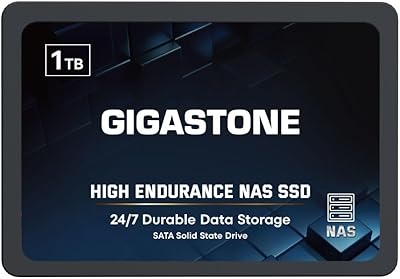
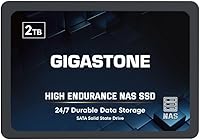
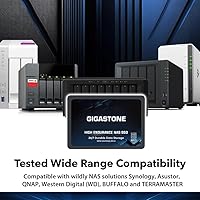
The Gigastone 2TB NAS Internal SSD is built specifically for network-attached storage — not as a repurposed laptop drive wearing a new label. Gigastone has carved out a niche in the NAS storage market by targeting buyers who need reliable, always-on performance without paying enterprise prices. At 2TB, this drive hits a practical sweet spot for home offices and small businesses: enough headroom for growing media libraries or collaborative file storage without the cost jump that comes with higher-capacity options. It runs on a standard 2.5-inch SATA interface, which is exactly what most NAS enclosures expect — there is no point chasing NVMe speeds your gigabit network cannot deliver anyway.

Features & Benefits

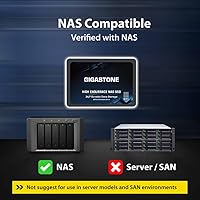
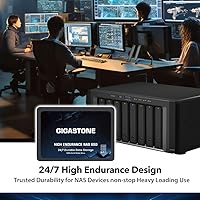
What sets this NAS SSD apart from a repurposed desktop drive is its 24/7 operation rating. Regular consumer SSDs are designed for intermittent use — run one continuously inside a NAS and you are quietly shortening its life. The Gigastone drive uses TLC 3D NAND paired with an SLC cache layer, handling burst writes efficiently while maintaining long-term endurance. Sequential reads hit 550 MB/s, which sounds unspectacular next to NVMe, but most home NAS enclosures are bottlenecked by network throughput long before SATA becomes a limit. It is also verified compatible with Synology, QNAP, and Asustor units — a reassurance worth having — and backed by a 5-year warranty with lifetime technical support.

Best For

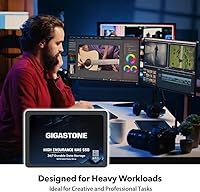
This 2TB NAS drive is a strong fit for home users and small teams running Synology or QNAP enclosures in a RAID 1 or RAID 5 configuration. If you are a photographer or video editor working with 4K or 8K footage across a shared network, having a high-endurance drive in the NAS bay keeps read and write cycles stable over long sessions. The silent, solid-state operation is also a genuine upgrade if you are coming from spinning HDDs — no vibration, no drive noise in a quiet office. It works well in NVR setups and personal cloud configurations too. Just keep in mind the listing explicitly rules out server or SAN environments, so enterprise use cases are off the table.

User Feedback

Sitting at 4.3 stars across 269 reviews, reception for the Gigastone drive skews positive, with easy installation and plug-and-play compatibility appearing most often in satisfied buyer comments. Users appreciate the quiet operation and straightforward setup process inside Synology and QNAP bays. That said, a recurring concern involves TBW endurance ratings — some buyers feel the rated write endurance trails what competing NAS SSDs from Samsung or Seagate offer at a similar price point. A small number of reviews flag early failure units, though Gigastone support responsiveness tends to soften those complaints. The general consensus is that for a home or small-office NAS setup, the value-to-performance ratio holds up well — just do not expect enterprise-grade endurance figures.

Pros

  • Rated for 24/7 continuous operation, which genuinely matters in always-on NAS environments where desktop drives can degrade quickly.
  • Verified compatible with Synology, QNAP, and Asustor NAS units, removing guesswork during installation.
  • TLC 3D NAND with SLC caching balances endurance and burst write performance well for home and SMB workloads.
  • ECC error correction and power loss protection add a meaningful layer of data integrity inside RAID arrays.
  • 550 MB/s sequential read speed more than saturates typical gigabit home network bandwidth — SATA is not the bottleneck here.
  • Silent, vibration-free operation is a real quality-of-life upgrade over spinning HDDs in a quiet office or home setup.
  • 5-year replacement warranty provides solid long-term coverage for a drive expected to run continuously.
  • Lifetime free technical support is a rare and practical inclusion, especially for less experienced NAS users.
  • The 2TB capacity hits a useful midpoint for growing media libraries without an outsized price premium.
  • Easy installation process gets consistently positive mentions from real buyers across multiple NAS enclosures.

Cons

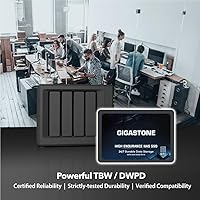
  • TBW endurance rating trails competing NAS SSDs from Samsung and Seagate at a similar price point, which matters for write-heavy use.
  • A small but notable number of reviewers report early drive failures, suggesting some quality-control inconsistency.
  • Not suitable for server or SAN environments, limiting its appeal to strictly NAS and personal cloud deployments.
  • No NVMe option in this product line means buyers with NVMe-capable enclosures must look elsewhere for maximum internal performance.
  • Brand recognition lags behind Western Digital, Seagate, and Samsung, which can make some buyers hesitant despite the warranty coverage.
  • Limited independent benchmark data makes it harder to verify manufacturer speed claims against real-world NAS workloads.
  • Write speed specifications are not prominently disclosed, which is a meaningful gap for buyers running RAID arrays with heavy write demands.

Ratings

The scores below reflect an AI-driven analysis of verified global buyer reviews for the Gigastone 2TB NAS Internal SSD, with spam, bot-generated, and incentivized feedback actively filtered out before scoring. Each category is weighted against real-world usage patterns reported by home NAS users, creative professionals, and small-business IT buyers. Both standout strengths and genuine frustrations are factored in transparently — nothing is smoothed over to make the overall picture look cleaner than it is.

NAS Compatibility
91%
Buyers running Synology DS-series and QNAP TS-series enclosures consistently report that the Gigastone drive is recognized immediately on first boot with no manual configuration needed. The verified compatibility across Synology, QNAP, and Asustor platforms removes a real source of anxiety that comes with installing less well-documented drives into expensive NAS hardware.
Compatibility verification does not extend to server or SAN environments, which frustrates a minority of buyers who assumed broader enterprise support. A handful of reviewers also note that Gigastone's compatibility list lags slightly behind the newest NAS enclosure releases, requiring buyers to verify independently before purchasing.
Endurance & 24/7 Operation
83%
Most users who have run this NAS SSD continuously for six months to over a year report no degradation in recognized health status via SMART monitoring tools inside Synology DSM or QNAP QTS. The 24/7 rating gives home users genuine confidence that the drive is purpose-built for always-on duty rather than being a rebranded laptop drive.
The published TBW rating draws consistent criticism when buyers compare it side-by-side with NAS SSDs from Samsung or Seagate at a similar price point — Gigastone's figures come in noticeably lower. For write-heavy use cases like heavy surveillance recording or large database transactions, that gap in rated endurance is a real consideration worth factoring in before buying.
Value for Money
78%
22%
For home users and small offices building out a first NAS storage array, the price-to-capacity ratio is competitive enough that most buyers feel they got a fair deal, particularly given the 5-year warranty and lifetime support that more expensive competitors do not always include. Buyers upgrading from aging HDDs see a clear performance jump at a cost well below premium NAS SSD alternatives.
When stacked against Samsung's 870 EVO or Seagate's IronWolf 110 at similar price points, some buyers feel the Gigastone drive does not quite justify its positioning — the brand carries less resale confidence and the TBW figures reinforce that perception. Buyers who do their homework sometimes find better-endurance options within a modest price premium.
Installation Experience
93%
Across hundreds of reviews, installation is the single most universally praised aspect of this drive — buyers describe it as a straightforward physical swap with no firmware flashing or jumper configuration required. Even first-time NAS builders report the drive being recognized within seconds of powering on their Synology or QNAP unit.
A small number of buyers encountered units that were not recognized on first insertion, requiring a drive bay re-seat or enclosure restart to resolve. These cases appear to be isolated rather than systemic, but they are worth noting for buyers who are not comfortable troubleshooting basic hardware seating issues.
Read Performance
86%
In real NAS usage — streaming 4K files to multiple devices, transferring large photo libraries, or serving collaborative project folders — the drive delivers smooth, consistent throughput that keeps up with what a gigabit or 2.5GbE network can actually push. Users editing video remotely over their home network report no perceptible lag attributable to drive speed.
The 550 MB/s sequential read figure is a ceiling number measured under ideal conditions, and some users running intensive multi-user simultaneous access see sustained speeds settle lower. Buyers expecting desktop-class benchmark performance inside a NAS context will find the numbers more modest under concurrent workload conditions.
Write Performance
71%
29%
For typical home NAS write tasks — backing up laptops, ingesting photo shoots, or syncing shared project folders — the SLC cache layer keeps initial write speeds snappy and responsive. Most users transferring files in the sub-100GB range per session will not encounter any noticeable slowdown.
When the SLC cache fills under a sustained large write — say, migrating a multi-terabyte archive to the NAS in one session — write speeds drop noticeably as the drive falls back to writing directly to TLC cells. Gigastone does not prominently disclose sustained write speeds, which has frustrated buyers who discovered the limitation mid-migration.
Build Quality
82%
18%
The drive feels solid in hand with no flex or rattling components, and the dust, shock, and water resistance ratings give buyers added confidence during the physical installation process — particularly useful if you are working in a dusty rack environment or handling multiple drives at once during a NAS build.
At 1.41 ounces the drive is light, which is practically fine but gives some buyers pause about perceived material quality when comparing it to heavier, denser competing drives. There is no external indication of drive health or activity — no LED or any other physical feedback — though this is standard for internal SSDs.
Noise & Vibration
97%
As a solid-state drive, it produces zero mechanical noise and generates no vibration whatsoever — a genuinely meaningful upgrade for anyone who has lived with a NAS full of spinning HDDs whirring and clicking in a home office or living space. Buyers who moved from HDDs specifically for noise reasons are consistently satisfied on this point.
There is essentially nothing negative to report here from a noise perspective, though buyers should be aware that the NAS enclosure's cooling fan — not the drives — typically becomes the dominant noise source in any multi-drive solid-state setup.
Thermal Management
74%
26%
Under typical home NAS workloads, the drive runs at comfortable temperatures that sit well within safe operating thresholds as reported by SMART data in Synology and QNAP dashboards. Users running light to moderate workloads report the drive staying noticeably cooler than equivalent HDDs in the same bays.
A handful of buyers running more intensive workloads in enclosures with limited airflow report higher-than-expected drive temperatures during sustained transfers. Gigastone does not publish an official operating temperature ceiling prominently, which leaves buyers in dense multi-drive enclosures without a clear threshold to monitor against.
RAID Reliability
81%
19%
The combination of ECC error correction and power loss protection gives this NAS SSD a meaningful advantage over unprotected consumer drives in RAID 1 and RAID 5 arrays, where a failed write during a power event can corrupt an entire volume. Buyers specifically running mirrored pairs in Synology units report stable, event-free operation over multi-month monitoring windows.
A small cluster of reviews documents one unit in a RAID pair failing within the first year, which — while covered under warranty — forced a RAID rebuild and temporary array degradation. This pattern appears in enough reviews to warrant attention from buyers planning to run the drives in critical-data RAID configurations without a separate backup strategy.
Warranty & Support
88%
The 5-year replacement warranty and lifetime free technical support are standout inclusions that Gigastone follows through on according to the majority of buyers who have had to use them. Several reviewers specifically call out support responsiveness as a positive experience, particularly for first-time NAS builders who needed setup guidance.
A minority of warranty claim experiences describe slower-than-expected turnaround times, and a few buyers note that the replacement process requires shipping the failed unit back at the buyer's expense in some regions. The lifetime technical support, while genuine, is primarily useful for setup questions rather than deep NAS administration troubleshooting.
Long-term Reliability
69%
31%
The majority of buyers who have owned this 2TB NAS drive for one to two years report it still functioning normally with healthy SMART status, which aligns with what you would expect from a 24/7-rated drive in a well-ventilated NAS enclosure under moderate workloads.
Early failure reports — though a minority — appear with enough frequency to suggest some batch inconsistency in quality control. Buyers planning to use this drive as the sole storage medium without redundancy or backup should weigh those anecdotal failure reports against the warranty coverage before committing.
Software & Ecosystem Integration
89%
Integration with Synology DSM and QNAP QTS is smooth — drive health shows up correctly in built-in storage management tools, SMART monitoring works without any configuration, and the drive appears in compatibility drop-downs without manual entry. This reduces setup friction significantly for buyers who are not experienced NAS administrators.
Gigastone does not offer any proprietary management software or companion app of its own, which means drive monitoring is entirely dependent on what your NAS operating system provides. For buyers on less mainstream NAS platforms not listed in the verified compatibility set, there is no supplementary tool to fall back on.

Suitable for:

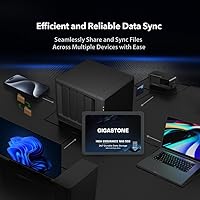
The Gigastone 2TB NAS Internal SSD is built for a specific kind of buyer: someone running a home or small-office NAS enclosure from Synology, QNAP, or Asustor who needs reliable, always-on storage without paying enterprise prices. If you are a photographer, video editor, or content creator storing large 4K or 8K project files on a network-attached device, this drive handles continuous read and write cycles far better than a repurposed desktop SSD would. Small teams sharing files across multiple devices simultaneously will appreciate the stable throughput and the low-vibration, silent operation that solid-state brings over spinning HDDs. It also fits well in NVR setups and personal cloud configurations where the drive runs around the clock and downtime is genuinely disruptive. The 2TB capacity sits at a practical midpoint — enough for growing media libraries or multi-user shared storage, without the steep cost of higher-capacity options.

Not suitable for:

The Gigastone 2TB NAS Internal SSD is not the right choice for buyers expecting enterprise-grade endurance figures or planning to deploy in server or SAN environments — the manufacturer explicitly rules those use cases out, and the TBW rating reflects a home and SMB workload assumption rather than a data-center one. If you are comparing it head-to-head with purpose-built NAS SSDs from Samsung or Seagate on raw endurance specs, the numbers may leave you underwhelmed, particularly for write-heavy workloads like heavy database transactions or continuous surveillance recording across many high-resolution cameras. NVMe enthusiasts should also look elsewhere — this is a SATA III drive, and while that is perfectly appropriate for most NAS bays, anyone with an NVMe-capable enclosure looking to maximize internal throughput will find faster options. Buyers on an extremely tight budget will find cheaper drives, and those needing more than 2TB in a single bay will obviously need to look at higher-capacity alternatives.

Specifications

  • Capacity: This drive offers 2TB of usable storage, suited for home and small-office NAS deployments with growing media libraries.
  • Form Factor: It uses a standard 2.5-inch form factor at 7mm height, fitting the drive bays found in most consumer and prosumer NAS enclosures.
  • Interface: The drive connects via SATA III running at up to 6 Gb/s, the standard interface supported by the vast majority of NAS units on the market.
  • Read Speed: Sequential read speed reaches up to 550 MB/s, which exceeds typical gigabit and even 2.5GbE home network throughput.
  • NAND Type: Storage cells use TLC 3D NAND flash with an SLC write cache layer to improve burst write performance and manage long-term cell wear.
  • Operation Rating: The drive is rated for 24/7 continuous operation, distinguishing it from consumer desktop SSDs designed for intermittent daily use.
  • Error Correction: Built-in ECC (Error Correcting Code) actively detects and corrects data errors, which is particularly important in multi-drive RAID configurations.
  • Power Protection: Hardware-level power loss protection guards against data corruption if the NAS enclosure loses power unexpectedly during a write operation.
  • Compatibility: Verified compatible with Synology, QNAP, and Asustor NAS enclosures; not recommended for use in server or SAN environments.
  • Compatible Devices: Designed for use in NAS enclosures, NVR systems, RAID arrays, and personal cloud setups requiring always-on internal storage.
  • Dimensions: Physical dimensions measure 7.13 x 4.49 x 0.63 inches, consistent with the standard 2.5-inch drive footprint.
  • Weight: The drive weighs 1.41 ounces, making it light enough to install without any strain on standard NAS drive bay mounts.
  • Drive Height: At 7mm thick, it fits both standard and slim NAS bays that require low-profile 2.5-inch drives.
  • Model Number: The official model number is GS-SSD-NAS-2TB-B, which should be used when checking compatibility lists on Synology or QNAP websites.
  • Warranty: Gigastone covers this drive with a 5-year replacement warranty, providing long-term protection for a device expected to run continuously.
  • Technical Support: Lifetime free technical support is included, accessible directly through Gigastone for setup assistance or troubleshooting at any point after purchase.
  • Installation Type: This is an internal drive requiring physical installation into an open 2.5-inch drive bay inside a compatible NAS enclosure.
  • Special Features: The drive is rated dust resistant, shock resistant, and waterproof, adding resilience during handling and transport prior to installation.

Related Reviews
SanDisk SSD Plus 2TB Internal SSD
82%
88%
Read Speed Performance
74%
Write Speed Performance
94%
Installation & Compatibility
91%
Value for Money
86%
Long-Term Durability & Reliability
More
Gigastone 4TB NAS SSD
88%
94%
Performance for Heavy Workloads
92%
Reliability for 24/7 Operation
88%
Data Transfer Speed
85%
Compatibility with NAS Systems
90%
Ease of Setup
More
Gigastone 1TB NAS SSD
90%
94%
Performance under Load
88%
Sequential Read/Write Speeds
91%
Endurance and Lifespan
97%
NAS Compatibility
85%
Installation Ease
More
Patriot P210 2TB Internal SSD
86%
86%
Performance
89%
Reliability
92%
Value for Money
88%
Ease of Installation
84%
Read Speed
More
Patriot Memory P320 2TB Internal SSD
87%
91%
Performance
95%
Read Speed
87%
Write Speed
92%
Installation Ease
65%
Thermals
More
RAOYI 2TB Internal SSD SATA III
88%
88%
Performance
91%
Read Speed
84%
Write Speed
86%
Durability & Build Quality
89%
Heat Dissipation
More
Patriot Memory P220 2TB Internal SATA SSD
77%
93%
Value for Money
78%
Read & Write Speed
91%
Installation Ease
88%
Boot & Load Times
74%
Build & Durability
More
SanDisk Ultra 3D NAND 2TB Internal SSD
89%
91%
Performance
89%
Read Speed
88%
Write Speed
90%
Build Quality
87%
Durability
More
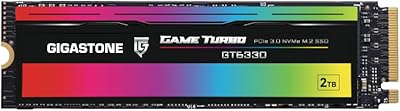
Gigastone GT6330 2TB PCIe Gen3 NVMe SSD
86%
94%
Performance in Gaming
91%
Read Speed
88%
Write Speed
86%
Reliability Under Load
82%
Energy Efficiency
More
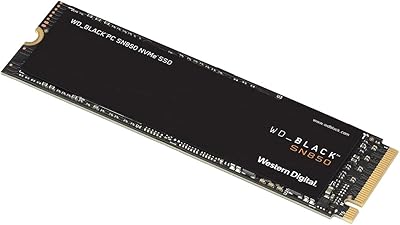
WD_BLACK SN850 2TB NVMe Internal Gaming SSD
88%
95%
Speed and Performance
90%
Ease of Installation
92%
Capacity for Large Files
88%
Build Quality and Durability
89%
Compatibility with Consoles
More

FAQ

Yes, in most cases you can slot it in and the Synology DSM software will recognize it without any extra steps. It has been verified compatible with a range of Synology models, though it is always worth checking Synology's online compatibility list using the model number GS-SSD-NAS-2TB-B to confirm your specific unit before buying.

It is not ideal. Consumer desktop SSDs are built for intermittent use — a few hours of activity per day at most. A NAS runs around the clock, and putting a desktop drive in that environment can lead to accelerated wear and a shorter lifespan. The Gigastone 2TB NAS Internal SSD is rated for 24/7 continuous operation specifically because its firmware and endurance profile are tuned for that kind of workload.

Not in a practical NAS context. Your home network — even on a fast 2.5GbE connection — is the real speed limit, not the drive. A 550 MB/s SATA drive comfortably outpaces what your network can actually deliver to connected devices, so you will not notice any real-world difference compared to a faster NVMe drive in the same enclosure.

Absolutely, and that is actually one of the better use cases for this drive. Running a mirrored pair gives you data redundancy without complicated configuration, and both Synology and QNAP make that setup straightforward through their management interfaces.

TLC stands for triple-level cell, which stores three bits of data per cell. It is a step down from MLC in raw endurance, but the SLC caching layer on this drive helps manage write wear intelligently by using faster single-bit cache cells for incoming writes before committing them to TLC storage. For home NAS workloads, the rated endurance is adequate — just do not expect it to match the TBW figures on premium enterprise NAS SSDs.

Not directly. This is a 2.5-inch drive, so you would need a 3.5-inch adapter bracket to mount it in a larger bay. Many NAS enclosures include these brackets or sell them separately, so it is worth checking what your specific unit supports before ordering one.

Gigastone offers a 5-year replacement warranty, meaning if the drive fails within that window under normal use, they will replace it. You would contact their support team directly to initiate the process. The included lifetime technical support also means you can reach out for help even outside the warranty period if you run into setup or configuration questions.

It can work for moderate NVR setups, but keep in mind that continuous high-bitrate surveillance recording is one of the more write-intensive workloads a drive can handle. For a small home system with a few cameras, this drive should hold up well. If you are running eight or more high-resolution cameras around the clock, you may want to compare the TBW rating here against drives specifically marketed for surveillance duty.

No, solid-state drives produce no mechanical noise at all — no spinning platters, no read heads, nothing. Unlike a traditional HDD, this NAS SSD runs completely silently, which makes it a good choice if your NAS lives anywhere near a workspace or living area.

The safest approach is to visit QNAP's official compatibility database and search for the model number GS-SSD-NAS-2TB-B alongside your specific QNAP unit. Gigastone states verified compatibility with QNAP enclosures broadly, but checking the official list takes two minutes and removes any doubt before you commit to a purchase.

Where to Buy