Overview

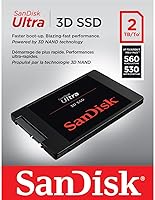
The SanDisk Ultra 3D 2TB Internal SSD sits squarely in the mainstream SATA market, targeting everyday users who want a meaningful upgrade from a spinning hard drive without spending a fortune on NVMe storage. With 2TB of capacity, it gives you genuine breathing room — enough for a full operating system, a hefty game library, and years of files on top of that. SanDisk's Ultra 3D line has built a solid reputation for balancing reliability and affordability, and this drive carries that forward. Just be clear about what you are getting: SATA interface speeds are real-world fast, but they will not match the raw throughput of a modern NVMe drive.

Features & Benefits

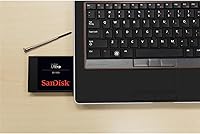
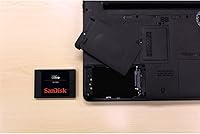
The numbers look good on paper — sequential reads up to 560 MB/s and writes approaching 530 MB/s — but what matters more is how that plays out in daily use. Boot times that once stretched past a minute drop to seconds. Games that stuttered through load screens stop doing that. Underpinning those speeds is 3D NAND architecture, which stacks memory cells vertically to pack more storage into a small footprint while improving longevity. The nCache 2.0 buffer handles burst writes smoothly, so you rarely notice slowdowns during large file transfers. At 7mm thin and 2.5-inch wide, this SanDisk drive slots into virtually any laptop or desktop bay, and the 5-year warranty backed by a 500TBW endurance rating signals that it is built to go the distance.

Best For

This SATA SSD makes the most sense in a few specific situations. If you are pulling a dusty HDD out of an old laptop or desktop and want a dramatic speed improvement without rebuilding your whole system, this is an easy call. Gamers with SATA-only motherboards get a tangible boost in load times without overpaying for NVMe they cannot even use. Content creators who need bulk local storage for raw footage or photo archives will appreciate 2TB at this price tier. It also works well as a secondary drive — park your game library or media collection here while keeping your NVMe boot drive uncluttered. Less ideal if your board supports NVMe and you are chasing pure transfer speeds.

User Feedback

With tens of thousands of ratings and a score sitting just below five stars, the Ultra 3D 2TB has earned real-world credibility — not just from casual buyers but from people who swapped it into older machines and noticed the difference immediately. The most common praise centers on easy installation and quiet operation compared to mechanical drives. Many laptop upgraders describe it as a straightforward, impactful upgrade. On the flip side, a small number of users have flagged that sustained write speeds can dip after the cache fills during very large transfers — normal behavior for drives in this class, but worth knowing. A few buyers found the bundled software unnecessary, though most skip it entirely without any issue.

Pros

  • Boot times that used to stretch past a minute on a hard drive can drop to under 15 seconds after installing this SATA SSD.
  • The 2TB capacity is genuinely roomy — enough for a full OS, a game library, and years of personal files without juggling storage.
  • 3D NAND construction improves durability and longevity compared to older planar flash memory designs.
  • A 5-year warranty backed by a 500TBW endurance rating gives you a realistic picture of how long the drive is built to last.
  • The 2.5-inch, 7mm slim profile fits into virtually any laptop or desktop without needing a bracket adapter.
  • Installation is straightforward — most users report being up and running within minutes, even without prior experience.
  • Shock resistance makes it far more physically durable than any mechanical hard drive in everyday mobile use.
  • The nCache 2.0 buffer handles everyday write bursts smoothly, so short file transfers and application saves feel snappy.
  • Quiet operation is a genuine quality-of-life improvement for anyone coming from a noisy spinning drive.
  • Backed by Western Digital's manufacturing infrastructure, which adds supply chain confidence for long-term reliability.

Cons

  • Sustained write speeds can noticeably drop once the nCache buffer is saturated during very large, continuous file transfers.
  • SATA III interface caps maximum throughput at levels that modern NVMe drives exceed by a wide margin.
  • No NVMe or PCIe option in this product line means it cannot serve buyers who need top-tier sequential performance.
  • The bundled software is considered unnecessary by most buyers and adds little practical value post-installation.
  • At this capacity tier, the price-per-gigabyte is not always the most competitive compared to occasional sale pricing on NVMe alternatives.
  • No included mounting hardware or adapter for desktop sleds, which can be a minor inconvenience for some desktop builds.
  • Performance results vary meaningfully depending on the host system, OS configuration, and workload type.
  • Not suitable as a standalone external storage solution — requires an internal bay or a separate enclosure purchased separately.

Ratings

The SanDisk Ultra 3D 2TB Internal SSD has been evaluated by our AI rating system after analyzing tens of thousands of verified global purchases, actively filtering out incentivized reviews, bot submissions, and outlier feedback that does not reflect typical buyer experiences. The scores below reflect both the genuine strengths that make this drive a consistent bestseller and the real friction points that some users have encountered. Nothing has been smoothed over — where buyers have raised consistent concerns, those are reflected honestly in the numbers.

Read Performance
83%
Users upgrading from spinning hard drives consistently describe the difference in boot times and application launches as dramatic. Windows loading in under 15 seconds, games opening without the usual pause — these are the moments buyers remember most when leaving reviews. For SATA, hitting close to its theoretical ceiling is a genuine achievement.
Buyers who already own or have tested NVMe drives find the read speeds noticeably behind, and some express mild regret not spending more on an M.2 option. The SATA interface itself is the ceiling here, and no firmware update will change that fundamental constraint.
Write Performance
74%
26%
For everyday workloads — saving documents, installing applications, moving moderate-sized folders — the write performance feels fast and consistent. The nCache 2.0 buffer does its job well when tasks stay within normal usage patterns, keeping short bursts snappy and responsive.
A recurring complaint in longer reviews is that sustained write speeds drop noticeably once the cache fills, which happens during large continuous transfers like copying a 50GB video folder. Users who regularly move big files report watching transfer speeds fall off mid-way through, which is a real limitation worth knowing about.
Installation Ease
93%
Across thousands of reviews, installation is one of the most praised aspects of this drive. First-time upgraders consistently describe the physical swap as taking under 10 minutes, and many note that the 7mm height meant no adapter was needed in their laptop. The process is genuinely accessible to non-technical users.
A small portion of buyers ran into friction with drive cloning software behaving inconsistently on certain older system configurations. A handful also noted the drive arrived without any mounting hardware for desktop sleds, which added an unexpected minor step to their build.
Value for Money
78%
22%
The combination of 2TB capacity, a well-known brand, and a 5-year warranty at this price tier earns consistent praise. Many buyers explicitly compare it favorably to lesser-known budget drives they considered, citing the peace of mind that comes with SanDisk's track record as worth a small premium.
Price-conscious buyers note that NVMe drives at similar or only slightly higher price points have started closing the gap, which makes the value calculation less clear-cut than it once was. During sales events, some competing drives undercut this one on price-per-gigabyte, leaving buyers who paid full price feeling the timing worked against them.
Long-Term Reliability
86%
The 500TBW endurance rating and 5-year warranty give buyers measurable confidence, and long-term reviewers who have owned the drive for two or more years largely report zero issues. The 3D NAND architecture is a known quantity with a solid track record across the wider SanDisk product line.
A small but non-trivial portion of negative reviews describe early failure within the first year, which — while statistically uncommon — is worth noting given the volume of units sold. Most of these cases appear to have been resolved through warranty claims, but the process was not always described as smooth.
Noise & Heat
96%
Buyers coming from loud mechanical hard drives consistently express relief at the complete silence this solid-state drive operates with. No clicking, no spinning up, no vibration — several laptop users also mention the machine running noticeably cooler after swapping out their old HDD.
A very small number of users in enclosed desktop cases with poor airflow noted slightly warmer system temps than expected, though this appears to be a case-specific issue rather than a drive problem. There are no widespread thermal complaints to speak of.
Build Quality
88%
The drive feels solid in hand despite its light weight, and the lack of moving parts means there is nothing to rattle loose over time. Multiple buyers have described accidentally dropping their laptop post-installation without any resulting drive issues, which speaks to its physical resilience.
The enclosure itself is straightforward plastic construction with no premium feel, which matters to exactly zero users once it is installed inside a machine. A couple of desktop builders noted the casing feels less substantial compared to some competing drives, though this is purely cosmetic.
Compatibility
91%
The 2.5-inch SATA form factor is about as universal as internal storage gets, and buyers report successful installations in a remarkably wide range of devices — old ThinkPads, gaming desktops, NAS enclosures, and PS4 consoles among them. Very few compatibility issues surface in the review pool.
A handful of users with very old systems running outdated SATA II controllers found throughput capped well below the advertised maximum, which is expected but not always communicated clearly to buyers unfamiliar with interface generations. Mac users occasionally need to reformat before use, which catches some first-timers off guard.
Gaming Performance
77%
23%
Gamers upgrading from HDDs report load time improvements that feel meaningful in practice — open-world titles like large RPGs and shooters stream assets noticeably more smoothly. For SATA-limited systems or consoles, this drive delivers a real upgrade without requiring a full system overhaul.
Buyers who research deeply before purchasing tend to find that NVMe drives produce faster in-game load times, and a portion of gaming-focused reviewers wish they had gone that route for their boot drive. The gap is real in benchmarks, even if it is less obvious during actual gameplay.
Software Bundle
51%
49%
The SanDisk SSD Dashboard is available for users who want to monitor drive health, check remaining endurance, or update firmware. For cautious buyers who like having visibility into drive status, having that tool available at no extra cost is a minor convenience.
Most buyers either never install the software or uninstall it quickly after trying it. Reviews frequently describe the dashboard as clunky, outdated-looking, and offering little that free third-party tools do not already cover more elegantly. It is not a selling point and is unlikely to influence any purchase decision.
Packaging & Presentation
68%
32%
The drive arrives in clean, no-nonsense retail packaging that protects it adequately during shipping. Buyers ordering for the first time report the unboxing experience as simple and functional, with nothing confusing or missing from what they expected.
Several buyers describe the packaging as feeling underwhelming relative to the price point — just the drive in a plastic tray with minimal documentation. There are no extras like a screwdriver, cloning cable, or setup guide, which budget competitors sometimes include as a small added touch.
Endurance & Longevity
84%
The 500TBW rating is a concrete, verifiable number that experienced buyers appreciate for planning purposes. At typical home or office write volumes, this drive is realistically rated to outlast most of the systems it will be installed in, which is a meaningful assurance.
The endurance ceiling does create hesitation among power users with high daily write workloads — video editors, developers running constant builds, or database users may need to actively track TBW remaining. The warranty condition that applies whichever limit comes first means heavy users need to stay aware.
Form Factor Versatility
89%
The 2.5-inch, 7mm design opens up a wide range of use cases beyond the obvious laptop swap — desktop secondary drive, NAS storage bay, external drive in a USB enclosure, and even console storage upgrades. Buyers appreciate having a format that works across multiple devices they already own.
Users with systems that only have M.2 slots and no 2.5-inch bay available have no way to use this drive internally, and a small group of buyers missed this detail before purchasing. It is a fixable problem with a USB enclosure, but it is an extra step and cost not everyone anticipates.

Suitable for:

The SanDisk Ultra 3D 2TB Internal SSD is the kind of drive that makes the most sense for people who are tired of waiting — tired of slow boot times, sluggish file opens, and hard drives that sound like they are working too hard just to load a document. It is a natural fit for anyone pulling an old mechanical drive out of a laptop or desktop and wanting a significant, immediately noticeable improvement without rebuilding their entire system. Gamers running SATA-only boards will find the load time reductions real and meaningful, even if this drive is not the fastest thing on the market. Content creators who need a dependable, high-capacity secondary disk for raw footage, photo archives, or project backups will appreciate the 2TB headroom at this price tier. It also works well for IT-minded buyers who want a reliable spare or a bulk storage companion to a faster NVMe boot drive.

Not suitable for:

If your motherboard has an open M.2 slot and raw transfer speed is a priority, the SanDisk Ultra 3D 2TB Internal SSD is probably not the drive you should be reaching for. SATA has a hard ceiling around 560 MB/s sequential read, which is genuinely fast compared to any spinning disk but falls well short of what a mid-range NVMe drive can deliver. Power users who regularly move very large files — think video editors working with uncompressed 4K footage or data analysts shuffling multi-gigabyte datasets — may run into the cache limits during sustained write operations and notice speed dip. Similarly, anyone building a brand-new system from scratch in 2024 with no SATA-only constraints would be better served looking at an NVMe alternative for their primary drive. If you need external portability, this internal form factor is simply not the right tool.

Specifications

  • Capacity: The drive offers 2TB of usable storage, providing ample space for operating systems, large game libraries, media collections, and project archives.
  • Interface: It uses a SATA III 6 Gb/s interface, which is broadly compatible with virtually all modern laptops and desktops that have a standard SATA port.
  • Form Factor: The 2.5-inch form factor with a 7mm profile fits the vast majority of laptop drive bays and desktop trays without requiring a thickness adapter.
  • Sequential Read: Maximum sequential read speed reaches up to 560 MB/s, which translates into noticeably faster boot times and quicker application launches compared to mechanical drives.
  • Sequential Write: Maximum sequential write speed reaches up to 530 MB/s, supporting smooth file transfers and responsive performance during everyday computing tasks.
  • NAND Type: The drive uses 3D NAND flash memory, where memory cells are stacked vertically to improve storage density, endurance, and power efficiency compared to older planar designs.
  • Cache Technology: nCache 2.0 technology provides a high-speed write buffer that absorbs burst data quickly, keeping short-duration transfers feeling fast and responsive.
  • Endurance Rating: The drive is rated for 500TBW (terabytes written), meaning you could write roughly 270GB of data every day for five years before approaching the rated limit.
  • Warranty: SanDisk backs the drive with a 5-year limited manufacturer warranty, whichever comes first between the time limit and the 500TBW endurance threshold.
  • Dimensions: The drive measures 0.28 x 3.96 x 2.75 inches, making it compact and easy to handle during installation in tight laptop or desktop enclosures.
  • Weight: At 1.92 ounces, the drive adds virtually no meaningful weight to a laptop or desktop build.
  • Shock Resistance: The solid-state design contains no moving parts, making it inherently resistant to physical shocks and vibrations that can damage traditional spinning hard drives.
  • Installation Type: This is an internal drive designed to be installed directly inside a PC or laptop; external use requires a separately purchased 2.5-inch enclosure.
  • Manufacturer: The drive is manufactured by Western Digital Technologies Inc., the parent company of the SanDisk brand, under its established consumer storage division.
  • Power Consumption: 3D NAND architecture allows the drive to operate at lower power levels compared to older SSD designs, which can contribute to modest battery life improvements in laptops.

Related Reviews
SanDisk Ultra 3D 500GB Internal SSD
87%
94%
Performance
91%
Value for Money
88%
Durability
93%
Read Speed
90%
Write Speed
More
SanDisk Ultra 3D NAND 4TB Internal SSD
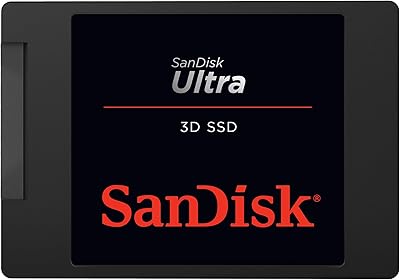
91%
94%
Sequential Read Speed
91%
Sequential Write Speed
96%
Endurance & Reliability
88%
Ease of Installation
90%
Compatibility
More
SanDisk Ultra 3D 1TB Internal SSD
79%
91%
Real-World Speed Improvement
88%
Installation Ease
84%
Value for Money
79%
Reliability and Longevity
93%
Compatibility
More
SanDisk SSD Plus 2TB Internal SSD
82%
88%
Read Speed Performance
74%
Write Speed Performance
94%
Installation & Compatibility
91%
Value for Money
86%
Long-Term Durability & Reliability
More
SanDisk SSD Plus 480GB Internal SSD
83%
91%
Value for Money
86%
Read Performance
67%
Write Performance
94%
Installation Ease
71%
Long-term Reliability
More
SanDisk SSD PLUS 240GB Internal SSD
87%
88%
Performance
92%
Speed Improvement vs HDD
90%
Durability / Shock Resistance
87%
Value for Money
94%
Ease of Installation
More
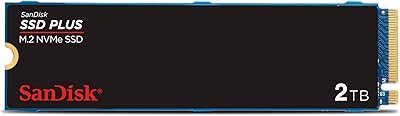
SanDisk 2TB SSD Plus M.2 NVMe SSD
86%
89%
Performance
92%
Ease of Installation
88%
Reliability
91%
Value for Money
90%
Capacity
More
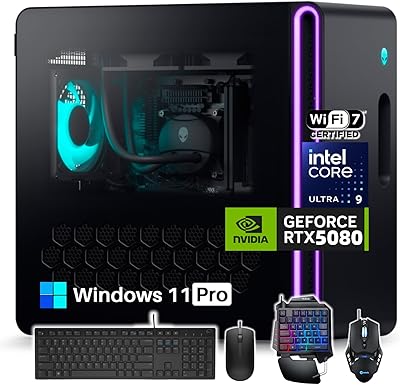
Alienware Aurora R16 Gaming Desktop, Intel Core Ultra 9, NVIDIA RTX 5080, 64GB RAM, 2TB SSD + 2TB HDD
87%
94%
Performance
92%
Cooling System
93%
Graphics/Visuals
88%
Build Quality
80%
Value for Money
More
SanDisk Portable SSD 2TB External Drive
78%
83%
Transfer Speed
88%
Build Quality
93%
Portability
81%
Value for Money
61%
Thermal Management
More
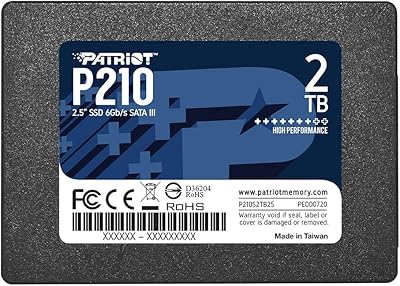
Patriot P210 2TB Internal SATA SSD
80%
93%
Value for Money
76%
Read & Write Speed
91%
Installation Ease
78%
Compatibility
67%
Long-term Reliability
More

FAQ

In most cases, yes. As long as your laptop has a 2.5-inch SATA drive bay, this SanDisk drive will drop right in. The 7mm height is thin enough to fit even slimmer laptop designs, though it is always worth checking your laptop's manual or manufacturer specs to confirm the bay dimensions before buying.

Installation usually just requires a small Phillips-head screwdriver to open your laptop or desktop case and swap the drive. Cloning your existing drive to this one beforehand — using free tools like Macrium Reflect or the included SanDisk Dashboard — saves you from reinstalling your operating system from scratch, which most people prefer.

NVMe drives are genuinely faster, sometimes by a factor of three to five times on sequential transfers. But if your system only has a SATA port — which is common in older laptops and many desktop builds — NVMe is simply not an option. Even if you do have an M.2 slot, the Ultra 3D 2TB holds its own for everyday tasks where the speed difference is barely noticeable in practice.

For most people, absolutely. 500TBW means you could write roughly 270GB of data every single day for five years before hitting that limit. Typical home users write far less than that — often under 20–30GB per day — so the drive should comfortably outlast its warranty period under normal use.

Not on its own. This is an internal SATA drive, so it needs to be installed inside a device or placed into a separate 2.5-inch USB enclosure, which you can find for a modest cost. Once in an enclosure, it works fine as an external drive, though you will be limited by USB speeds rather than SATA.

Yes, in a meaningful way if you are coming from a spinning hard drive. Game load times drop considerably, and open-world games that stream assets continuously tend to stutter less. That said, this SATA SSD will not match the load times of a high-end NVMe drive — the gap is real, though for most games it is not dramatic enough to matter in gameplay.

It typically ships with access to the SanDisk SSD Dashboard software, which lets you monitor drive health and firmware updates. Most buyers find they never use it, and it is entirely optional — the drive works perfectly well without it.

There is no comparison — this drive produces zero audible noise. Solid-state drives have no spinning platters or moving read heads, so the clicking and whirring you hear from a mechanical drive simply disappears entirely after the swap.

You are in much better shape than with a traditional hard drive. Because this SATA SSD has no moving parts, it handles physical shock far better. Drops that would damage or destroy a spinning drive are much less likely to harm this one, though no drive is completely indestructible under extreme impact.

The hardware itself is compatible with any system that has a 2.5-inch SATA bay, including certain Mac models. However, you may need to reformat the drive to the appropriate file system for your operating system — exFAT or APFS for Mac, NTFS for Windows — which is straightforward to do through your system's disk utility.