Overview

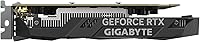
The GIGABYTE GeForce RTX 3050 WINDFORCE OC V2 6G arrived in late 2024 as a refreshed push into the budget GPU segment, and it occupies an interesting position in a crowded market. With 6GB of GDDR6 memory on a 96-bit memory bus, it handles 1080p gaming competently without pretending to be something it isn't. The dual WINDFORCE fans keep thermals in check inside a compact, dual-slot footprint that fits most mid-tower and smaller cases. Compared to GTX 10-series hardware or entry-level Pascal chips, the generational jump is real — you get hardware ray tracing and DLSS where none existed before. It won't challenge a mid-range card, but that was never the point.
Features & Benefits

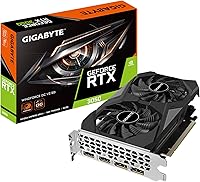
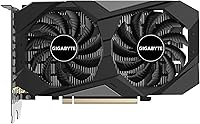
The cooling on this budget RTX card deserves mention upfront — GIGABYTE's fans use alternating blade rotation to cut air turbulence, which translates to quieter operation under load than you might expect at this price tier. Underneath sits NVIDIA's Ampere architecture, meaning hardware ray tracing and DLSS support are baked in at the silicon level, not bolted on as an afterthought. The 6GB of GDDR6 running at 14,000 MHz handles 1080p texture loads without obvious hitching in most titles, and the factory overclock delivers a small but measurable bump over reference speeds. Output options cover both DisplayPort and HDMI, and the card can technically drive displays up to 8K resolution.

Best For

This entry-level GPU makes the most sense for builders working with a tight budget who refuse to give up on modern GPU features entirely. If you're running titles like Fortnite, Valorant, or older open-world games at 1080p medium-to-high settings, it handles those comfortably. It's also a practical upgrade for anyone still on a GTX 1060 or 1070 — the jump to Ampere's ray tracing and DLSS alone is a noticeable step forward in how games can look and perform. HTPC and home theater setups benefit too, since the card supports modern display standards and fits neatly in compact builds without demanding a heavy-duty power supply.

User Feedback

Among the nearly 500 buyers who've rated the WINDFORCE OC V2, a 4.6-star average has held steady, and the reasons aren't hard to follow. People consistently highlight quiet fan operation and a smooth installation experience as standout positives — particularly first-time builders who were anxious about compatibility. The compact footprint also earns appreciation from small-case enthusiasts. Where feedback turns critical is predictable: the narrow memory bus does create a performance ceiling, and buyers pushing demanding modern titles at higher settings have noted the card doesn't always keep pace with their expectations. Those who went in with realistic 1080p goals tend to walk away genuinely satisfied.

Pros

  • Brings hardware ray tracing and DLSS to builders who cannot afford mid-range GPU pricing.
  • Dual WINDFORCE fans run quietly enough for bedroom and living room setups during normal gaming sessions.
  • Compact dual-slot design fits ITX, mATX, and mid-tower cases without clearance issues.
  • Low power draw means most existing PSUs work without an upgrade, keeping total build costs down.
  • GIGABYTE's build quality feels solid and well above what you might expect at this price tier.
  • Meaningful real-world upgrade for anyone still running a GTX 1060 or older Pascal-era card.
  • DLSS support visibly improves frame rates in supported titles, stretching the card's raw performance further.
  • Modern display outputs with HDMI and DisplayPort cover most monitor and TV setups without adapters.
  • Driver support for Ampere is mature and stable on both Windows 10 and 11 for most configurations.
  • Factory overclock out of the box gives a small but measurable performance bump over reference speeds.

Cons

  • The 96-bit memory bus creates a bandwidth ceiling that shows up in texture-heavy or VRAM-hungry modern games.
  • Ray tracing in demanding titles requires dropping to low RT settings to stay at playable frame rates.
  • Only two display outputs limits multi-monitor configurations to two screens maximum.
  • Temperatures climb higher than expected in cases with poor airflow during extended gaming sessions.
  • The performance gap over a used RTX 2060 or RX 5700 can be surprisingly narrow given the price difference.
  • No RGB lighting, which feels like an omission compared to competing cards in the same price bracket.
  • Buyers upgrading from a GTX 1080 or RX 5700 are unlikely to notice a dramatic real-world improvement.
  • Occasional driver conflicts reported during installation on systems previously running AMD graphics hardware.
  • 6GB of VRAM is increasingly tight for content creation, video editing, and 3D rendering workloads.
  • Competing used or older cards at a similar price can sometimes offer better raw performance per dollar.

Ratings

The GIGABYTE GeForce RTX 3050 WINDFORCE OC V2 6G has been evaluated using AI-driven analysis of verified global buyer reviews, with spam, bot-generated, and incentivized feedback actively filtered out before scoring. The result is a balanced picture that reflects where this budget RTX card genuinely delivers and where it falls short for real users building or upgrading their systems. Both the wins and the frustrations are represented honestly in the scores below.
1080p Gaming Performance
74%
26%
For the titles this card was designed for — esports, older open-world games, and less demanding AAA releases — buyers report solid, playable frame rates at 1080p on medium-to-high settings. Games like Fortnite, Minecraft with ray tracing, and GTA V run without frustrating hitching for most users.
Push into newer, graphically intense AAA titles and the cracks show. Reviewers attempting to run Cyberpunk 2077 or Alan Wake 2 at 1080p high settings found themselves reaching for lower presets more often than expected, which stings a little at this price point.
Value for Money
71%
29%
Buyers upgrading from GTX 10-series cards describe the jump as genuinely worthwhile — getting hardware ray tracing, DLSS, and a modern feature set without spending significantly more was a recurring theme in positive reviews. First-time builders also appreciated not compromising on brand reliability.
The competitive GPU landscape in late 2024 means this card faces real pressure from used mid-range alternatives that occasionally surface near the same price. Some buyers noted that with a small additional spend, meaningfully faster options exist, which complicates the value calculation.
Cooling & Thermal Management
83%
The dual WINDFORCE fans earn consistent praise for keeping the card quiet during everyday gaming sessions. Multiple reviewers noted they could barely hear the card spinning up during moderate workloads, which matters a lot in living room or bedroom setups where fan noise is noticeable.
Under sustained heavy loads in longer gaming sessions, a handful of users reported temperatures climbing higher than anticipated for a dual-fan card. It is not a dealbreaker, but those building in cases with poor airflow found temperatures less comfortable than expected.
Memory Bandwidth & Bus Width
57%
43%
At 1080p with textures kept to medium settings, the 6GB GDDR6 pool handles the workload without obvious stuttering or texture pop-in. For the target audience playing less demanding titles, day-to-day usage rarely exposes the bandwidth limitation in a way that feels disruptive.
The 96-bit memory bus is the most frequently cited technical frustration across reviews. Users who pushed texture quality to ultra or ran VRAM-hungry mods found themselves hitting a ceiling that a wider bus would have avoided, and several reviewers flagged this as the card's most significant engineering compromise.
Installation & Setup Ease
91%
First-time builders repeatedly highlight how painless this card is to drop into a system. The compact dual-slot design fits standard and smaller mid-tower cases without clearance drama, and the straightforward power requirements mean most existing PSUs handle it without an upgrade.
A small number of buyers reported driver installation hiccups on certain motherboard and CPU combinations, though these appeared to be isolated incidents rather than a pattern. The physical installation itself drew virtually no complaints across the review pool.
DLSS & Ray Tracing Support
78%
22%
Having functional DLSS and hardware ray tracing at this price tier remains a meaningful differentiator versus older budget cards. Buyers using DLSS in supported titles described noticeably smoother frame rates, which partially compensates for the card's raw performance ceiling.
Ray tracing at this performance tier requires significant quality compromises to stay playable. Reviewers who turned on RT in demanding titles found themselves dropping to low RT settings to maintain acceptable frame rates, which limits the real-world impact of having the feature at all.
Build Quality & Aesthetics
82%
18%
The card feels solid and well-assembled out of the box, with no flex or cheap plastic feel that sometimes appears at entry-level price points. The clean black shroud and low-profile backplate suit understated builds, and GIGABYTE's finishing quality is noticeably above generic alternatives.
There is no RGB lighting, which some buyers expected given how common it has become even in budget cards. A few users also noted the shroud design looks somewhat dated compared to newer GPU designs from the same price bracket, though this is purely cosmetic.
Noise Levels
84%
Quiet operation is one of the most organically mentioned positives across the review pool. The alternate-rotation fan design demonstrably reduces coil whine and blade turbulence noise, and most buyers in quiet home environments said they rarely noticed the card during normal gaming sessions.
At sustained maximum fan speeds during extended stress tests, the fans become audible — not loud, but noticeable in a quiet room. This is typical for dual-fan budget coolers and unlikely to surprise experienced builders, but it is worth flagging for noise-sensitive setups.
Power Efficiency
81%
19%
The card's modest power draw is a genuine practical advantage. Buyers with older systems and existing mid-range PSUs found they could install this entry-level GPU without any electrical upgrades, which kept total system costs lower than upgrading to a more powerful but hungrier card.
The efficiency story is less impressive when compared against newer-architecture alternatives at similar price points, some of which deliver comparable performance with even lower power consumption. For a late-2024 release, the performance-per-watt ratio is respectable but not class-leading.
Driver Stability
77%
23%
The vast majority of buyers reported stable driver behavior across Windows 10 and 11 without crashes or display output issues after initial setup. NVIDIA's driver support for the Ampere architecture is mature at this point, which works in the card's favor for long-term reliability.
A recurring minority complaint involved occasional driver conflicts during initial installation, particularly on systems being upgraded from AMD GPU setups. These issues were generally resolved after a clean driver installation, but the troubleshooting step caught some first-time builders off guard.
Display Output Versatility
86%
Supporting both HDMI and DisplayPort with compatibility up to 8K resolution makes this card genuinely future-flexible for display upgrades. HTPC builders and home theater users specifically called out the modern output options as a strong reason to choose this card over older alternatives.
The card offers only two physical outputs, which is limiting for multi-monitor setups. Users wanting to drive three or more displays simultaneously found this a real constraint, and some noted that competing cards in the same price range occasionally offer an additional output port.
Form Factor & Compatibility
88%
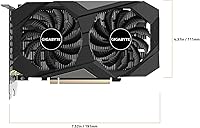
The compact dual-slot footprint is consistently praised by small-form-factor builders who struggle to fit longer, thicker cards in tighter cases. At 7.5 inches, it clears most ITX and mATX case length restrictions without requiring case modifications or bracket removal.
The slim physical profile, while useful for compact cases, does mean the cooling solution has less surface area than a triple-slot or longer card at the same price. Buyers in full-tower cases with plenty of airflow might benefit from a card with a more aggressive heatsink design.
Upgrade Value from Older GPUs
79%
21%
For anyone still running a GTX 1060, 1650, or RX 580, the generational jump to Ampere architecture brings real-world improvements in shader performance, supported features, and driver longevity. Reviewers in this camp described the upgrade as noticeably impactful in daily gaming use.
For users coming from a GTX 1080 or RX 5700, the upgrade case is weaker. A few buyers in this category mentioned the performance difference was underwhelming and expressed regret at not stretching the budget further toward a card with a wider performance gap over their previous hardware.

Suitable for:

The GIGABYTE GeForce RTX 3050 WINDFORCE OC V2 6G is a genuinely practical choice for budget-conscious builders who want to step into the modern GPU era without taking on serious financial risk. If your gaming library consists mostly of esports titles, older open-world games, or mid-tier AAA releases played at 1080p, this card covers that workload comfortably and without drama. It also makes strong sense for anyone still running a GTX 1060, 1650, or similar Pascal-era card, where the jump to Ampere's hardware ray tracing and DLSS support represents a real, tangible upgrade rather than a marginal one. First-time builders will appreciate how forgiving it is — the modest power draw means most existing or entry-level PSUs handle it without issue, and the compact footprint slides into small and mid-tower cases without clearance headaches. HTPC enthusiasts and home theater builders also have legitimate reasons to consider this entry-level GPU, since it supports modern display outputs and can drive high-resolution screens while staying quiet enough for living room use.
Not suitable for:

Buyers chasing high-performance 1080p gaming or planning to push into 1440p should realistically look elsewhere before committing to the GIGABYTE GeForce RTX 3050 WINDFORCE OC V2 6G. The 96-bit memory bus is a hard architectural ceiling that becomes noticeable the moment you start running texture-heavy modern titles at high or ultra presets — this is not a card that hides its limitations well under demanding conditions. If your current GPU is already a GTX 1080, RTX 2060, or anything in that neighborhood, the performance gap you will actually feel day-to-day is narrow enough that the upgrade may disappoint. Creative professionals who need the GPU for video editing, 3D rendering, or machine learning workloads will also find 6GB of VRAM limiting fairly quickly, as many professional applications are increasingly VRAM-hungry. And if multi-monitor setups with three or more displays are on your plan, the card's two physical outputs will immediately become a friction point. In short, the further your ambitions drift from casual 1080p gaming, the harder it becomes to justify this card over saving up for something with more headroom.

Specifications

  • GPU Architecture: Built on NVIDIA's Ampere architecture, the RTX 3050 includes 2nd Generation RT Cores for hardware ray tracing and 3rd Generation Tensor Cores for DLSS AI upscaling.
  • VRAM: Equipped with 6GB of GDDR6 memory, providing adequate headroom for 1080p gaming workloads and light content tasks.
  • Memory Bus: The memory interface runs at 96-bit width, which is a deliberate cost-reduction tradeoff that limits peak memory bandwidth compared to wider-bus alternatives.
  • Memory Speed: GDDR6 memory operates at 14,000 MHz effective clock speed, supporting smooth texture streaming in less demanding 1080p gaming scenarios.
  • Cooling System: Dual WINDFORCE fans use alternating blade rotation directions to reduce air turbulence and improve heat dissipation efficiency under load.
  • Form Factor: Dual-slot card measuring 7.5 inches in length, making it compatible with most mid-tower, mATX, and many ITX cases without modification.
  • Weight: The card weighs 14.1 ounces, light enough to avoid motherboard PCIe slot strain in standard horizontal desktop installations.
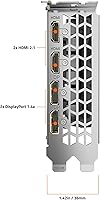
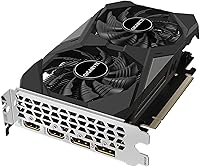
  • Display Outputs: Offers one HDMI port and one DisplayPort output, supporting a maximum of two simultaneous display connections.
  • Max Resolution: Capable of driving displays up to 7680x4320 pixels (8K) over supported output connections, making it compatible with future display upgrades.
  • Power Connector: Requires a single 8-pin PCIe power connector, with a recommended system PSU of around 550W for stable operation.
  • Factory Overclock: Ships with a factory-applied overclock on the GPU boost clock, providing a modest but measurable performance improvement over NVIDIA reference specifications.
  • API Support: Fully supports DirectX 12 Ultimate, OpenGL 4.6, and Vulkan, covering the complete range of modern game and application rendering requirements.
  • DLSS Support: Compatible with NVIDIA DLSS 2.x, allowing supported games to use AI-based upscaling to recover frame rates lost from running at native resolution.
  • Color & Finish: Ships in a black shroud finish with a clean, understated design that suits both windowed and closed-panel case builds.
  • Launch Date: This card was made commercially available in December 2024 as a refreshed variant targeting the entry-level segment of the current GPU market.
  • Warranty: GIGABYTE typically covers its graphics cards with a 3-year limited manufacturer warranty, though buyers should confirm regional terms at purchase.

Related Reviews
GIGABYTE GeForce RTX 3060 WINDFORCE OC 12GB
83%
92%
Performance
87%
Cooling Efficiency
90%
Ease of Installation
70%
Noise Levels Under Load
94%
Gaming Experience at 1440p
More
GIGABYTE GeForce RTX 4070 Super WINDFORCE OC 12GB
88%
94%
4K Gaming Performance
88%
Cooling Efficiency
90%
Build Quality
85%
Noise Levels
81%
Value for Money
More
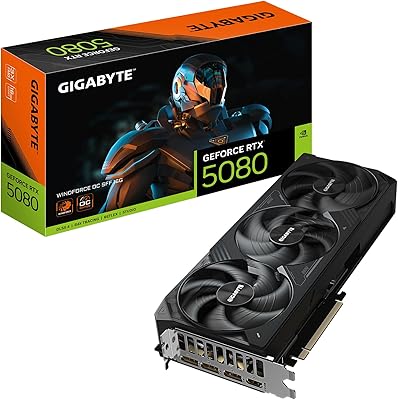
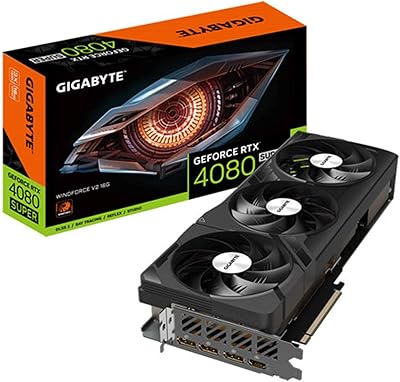
GIGABYTE GeForce RTX 5080 WINDFORCE OC SFF 16G
78%
93%
Gaming Performance
91%
DLSS 4 & AI Features
89%
SFF Compatibility & Fit
86%
Thermal Performance
84%
Noise Levels
More
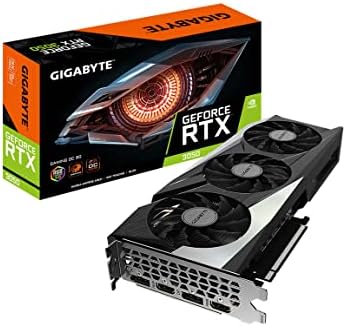
Gigabyte GeForce RTX 4080 SUPER WINDFORCE V2 Graphics Card
88%
94%
Overall Performance
93%
Gaming Performance (4K/8K)
90%
Cooling and Thermals
91%
DLSS 3 Technology
88%
Build Quality
More
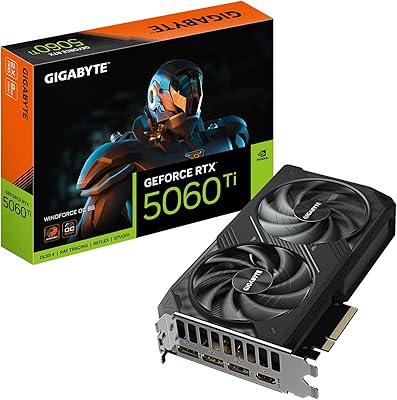
GIGABYTE GeForce RTX 3050 Gaming OC 8GB Graphics Card
84%
91%
Value for Money
88%
Gaming Performance (1080p)
89%
Cooling Efficiency
84%
Build Quality
86%
Noise Level
More
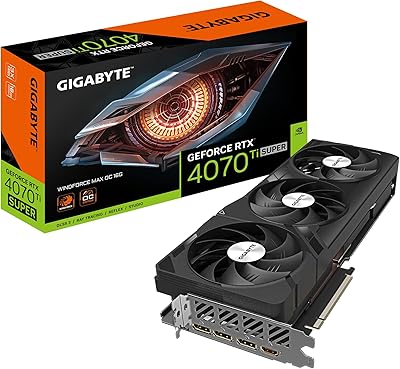
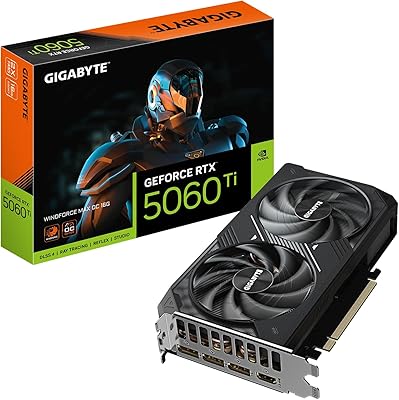
GIGABYTE GeForce RTX 4070 Ti Super WINDFORCE MAX OC 16GB
88%
94%
Gaming Performance
91%
Cooling Efficiency
92%
Ray Tracing & DLSS 3
93%
4K Gaming Capability
88%
Build Quality & Durability
More
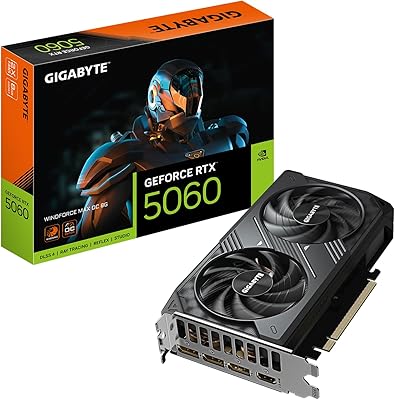
GIGABYTE GeForce RTX 5060 WINDFORCE MAX OC 8G Graphics Card
87%
89%
Performance
94%
Cooling Efficiency
85%
Build Quality
92%
Ease of Installation
90%
Noise Levels
More
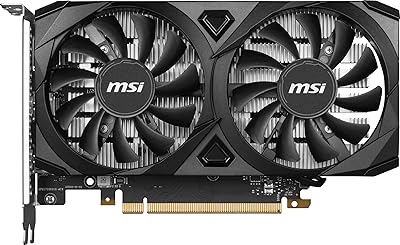
MSI GeForce RTX 3050 VENTUS 2X 6G OC Graphics Card
83%
89%
Gaming Performance (1080p/1440p)
92%
Cooling Performance
85%
Build Quality
91%
Price-to-Performance Ratio
88%
Ease of Installation
More
GIGABYTE GeForce RTX 5060 Ti WINDFORCE OC 8GB Graphics Card
86%
88%
1080p Gaming Performance
85%
1440p Gaming Performance
91%
Cooling Efficiency
87%
PCIe 5.0 Performance
80%
Build Quality
More
GIGABYTE GeForce RTX 5060 Ti WINDFORCE MAX OC 16G
85%
91%
1440p Gaming Performance
93%
Thermal Management
88%
VRAM Capacity & Usefulness
92%
Noise Levels
84%
Value for Money
More

FAQ

Most likely yes. At 7.5 inches long and a dual-slot profile, this budget RTX card clears the length restrictions of the majority of ITX and mATX cases on the market. That said, always cross-reference your specific case's maximum GPU length spec before buying, since a small number of compact ITX cases cap out below 7.5 inches.

A 550W PSU is the commonly recommended minimum for a full system running the WINDFORCE OC V2, though a 500W unit will often work fine if the rest of your build is power-efficient. The card itself draws relatively little power for an RTX-class GPU, which is one of the reasons it appeals to builders using older or budget-tier power supplies.

It can run ray tracing, but you'll need to be realistic about the settings. In lighter titles or older games with RT support, you can enable it without the experience falling apart. In newer, demanding games like Cyberpunk 2077, you'll want to set ray tracing to low and lean on DLSS to keep frame rates playable. Expecting high or ultra RT settings at smooth frame rates will lead to disappointment.

For 1080p gaming at medium-to-high settings in most titles, 6GB still holds up adequately. The concern is that some newer games are pushing past 6GB VRAM usage at high and ultra texture settings, so if you like running maximum quality presets, you may hit limits sooner than expected. Keeping textures at medium largely sidesteps this issue.

Quieter than most buyers expect for a budget card. The alternating fan blade design genuinely reduces turbulence noise, and under moderate gaming loads most users describe it as barely noticeable. At full fan speed during stress tests it becomes audible, but that is rarely the state it operates in during normal gaming.

Yes, and this step is especially important if you are switching from an AMD GPU. Use DDU (Display Driver Uninstaller) in safe mode to fully remove old drivers before swapping the hardware and installing NVIDIA drivers. Skipping this step is the most common source of installation issues that buyers report.

It is a genuinely worthwhile upgrade from a GTX 1060. You gain hardware ray tracing, DLSS support, improved shader performance, and a more modern driver ecosystem. In day-to-day gaming at 1080p, the performance difference is noticeable, especially once you factor in DLSS-boosted frame rates in supported titles.

For light editing tasks in software like DaVinci Resolve or Premiere Pro, it will work, but 6GB of VRAM is a real constraint for 4K footage or complex timelines with multiple effects layers. If video editing is a primary use case rather than a secondary one, a card with 8GB or more VRAM would serve you better long term.

It supports up to two monitors simultaneously using the HDMI and DisplayPort outputs. If you need three or more displays, this card is not the right fit since it physically only has two output ports and cannot drive a third screen without an adapter workaround that introduces its own complications.

The card itself is compatible with any system that has a PCIe x16 slot, which covers virtually all motherboards from the last decade. That said, pairing it with a very old or weak CPU can create a bottleneck that limits gaming performance regardless of the GPU. For best results, a reasonably modern quad-core or better processor is recommended.