Overview

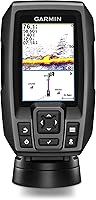
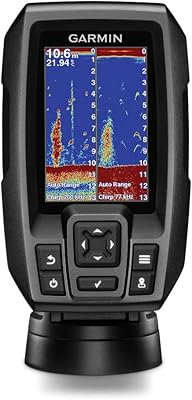
The Garmin Striker 4cv 3.5-inch Fish Finder has been on the market since late 2016, and the fact that it's still selling says something about how well it holds up against newer competition. It pairs CHIRP sonar with ClearVü scanning sonar, giving you two distinct ways to read what's below and around your hull — a combination you don't always find at this price tier. The unit weighs just over a pound, which matters when you're rigging a kayak where every ounce counts. It ships with a transducer, mount, and power cable already in the box, so you're not hunting for accessories before your first trip out.
Features & Benefits

The ClearVü scanning sonar is the real headline here. Rather than just showing blobs under your boat, it produces detailed, near-photographic images of structure — submerged timber, rocky ledges, suspended fish — with a clarity that traditional sonar simply can't match. Standard CHIRP sonar runs alongside it, delivering cleaner fish arches and sharper target separation than older single-frequency units. Physical buttons handle all navigation, which sounds basic until you're wearing gloves on a cold morning and a touchscreen becomes useless. The built-in waypoint map rounds things out, letting you drop a pin on a productive spot and navigate back reliably without a separate GPS unit.

Best For

This sonar unit was practically designed with kayak anglers in mind. It's compact, light, mounts easily to a rail or flush mount, and doesn't demand a big battery bank to run all day. Structure fishers will get the most from ClearVü imaging — if your style involves targeting laydowns, bridge pilings, or deep brush piles, the image quality genuinely helps. Ice fishers should pay close attention: the built-in flasher mode is a legitimate reason to choose this unit over cheaper alternatives, giving you that classic real-time jigging display without a separate device. Beginners will also appreciate that the setup rarely takes more than an afternoon.

User Feedback

With a 4.3-star average across over 200 ratings, the Striker 4cv earns its score without inflated expectations. Buyers praise the imaging clarity, especially given where this unit sits price-wise, and the ice fishing community in particular has embraced it for the flasher display. On the flip side, the screen size is a real trade-off — in direct sunlight it can wash out, and anyone accustomed to a 7-inch display will feel the difference. The most consistent complaint, though, is the absence of GPS. If you want chartplotting or the ability to track your path on the water, you'll need to budget for a different model or a separate device.

Pros

  • ClearVü scanning sonar delivers detailed, near-photographic underwater images that punch well above this price tier.
  • CHIRP sonar produces cleaner, more defined fish arches compared to older single-frequency units.
  • The built-in flasher mode makes this sonar unit a dual-purpose tool that ice fishers will genuinely appreciate.
  • Ships complete with transducer, mount, and power cable — no surprise accessory shopping before your first trip.
  • Physical button interface works reliably with wet hands or gloves, where touchscreens typically fail.
  • At just over a pound, it's light enough to mount on a kayak without affecting balance or adding clutter.
  • Waypoint mapping lets you quietly mark productive spots and return to them without a separate GPS device for basic navigation.
  • Garmin's build quality and brand reliability give long-term peace of mind that cheaper no-name units can't match.
  • Depth range far exceeds what most freshwater anglers will ever need, making it versatile across many fishing environments.
  • Setup is genuinely beginner-friendly — most buyers report being up and running within a single afternoon.

Cons

  • No built-in GPS or chartplotting means you cannot track your route or mark your position on a map.
  • The 3.5-inch screen washes out noticeably in direct sunlight, making readings harder to interpret on bright days.
  • Screen size is limiting if you prefer reading sonar from more than a couple of feet away.
  • No side imaging beyond ClearVü down-scanning, so wide lateral coverage is off the table.
  • Cannot network or share data with other marine electronics, limiting expansion for more advanced setups.
  • Battery dependency requires you to plan your power source carefully — there's no hardwired DC option out of the box.
  • Older display resolution will feel dated to anyone upgrading from a modern mid-range or premium unit.
  • The waypoint map is basic at best and is not a substitute for a real chartplotter on open or unfamiliar water.

Ratings

The scores below for the Garmin Striker 4cv 3.5-inch Fish Finder were generated by our AI system after analyzing verified purchaser reviews from multiple global markets, with spam, bot-submitted, and incentivized feedback actively filtered out. Each category reflects the honest distribution of real angler experiences — strong scores where buyers consistently agree, and lower scores where genuine frustrations surfaced repeatedly. Nothing has been smoothed over to make the product look better than it is.

Sonar Image Quality
88%
ClearVü scanning sonar consistently drew praise from buyers who were surprised by the level of detail at this price point. Structure like submerged timber and rock piles shows up with enough clarity that anglers can make real decisions about where to cast, rather than guessing at blurry returns.
At very high speeds or in turbulent water, image quality degrades noticeably and the ClearVü advantage diminishes. A handful of users also noted that interpreting the imaging takes some practice before the detail becomes genuinely useful on the water.
Value for Money
91%
For a unit that bundles ClearVü scanning sonar, CHIRP traditional sonar, and a flasher mode together with a transducer and full mounting hardware, the price-to-capability ratio genuinely impressed a wide range of buyers. Anglers who had previously used basic depth finders were particularly struck by how much they were getting.
Buyers who later realized the unit lacks GPS felt the value proposition shifted once they factored in the cost of a separate navigation device. If GPS is non-negotiable for your fishing style, the overall cost picture changes considerably.
Ease of Installation
87%
A consistent theme across reviews was how quickly first-time buyers got the unit running — most reported being fully set up within an afternoon without professional help. The included hardware covers transom, motor, and tilt-swivel mounting scenarios, which removes the most common friction points.
A smaller number of users ran into challenges routing the transducer cable cleanly on certain hull types, particularly inside kayak hulls with limited access. The power cable connection also requires a clean 12V source, which can be less obvious for complete beginners.
Ice Fishing Performance
93%
The built-in flasher mode made this sonar unit a genuine favorite among the ice fishing community, who praised it for replacing what would otherwise be a separate, single-purpose device. Real-time jigging response and depth reading in the classic circular format is exactly what ice anglers need, and it delivers.
The small screen size becomes more noticeable in cold-weather conditions where gloves are worn and the unit may be placed at an awkward angle inside a shelter. Some ice fishers also noted they would prefer a slightly brighter display for low-light fishing shack environments.
Screen Visibility
61%
39%
In overcast conditions, early morning light, and shaded fishing environments, the 3.5-inch LCD is readable enough at close range for kayak and small boat use. Anglers who consistently fish in calm, low-glare conditions reported no major complaints about the display.
Direct sunlight is a real problem — washout on a bright summer afternoon is one of the most cited complaints across all reviews. The screen size also limits readability from any meaningful distance, which becomes an issue on larger boats where the unit is mounted farther from eye level.
CHIRP Sonar Performance
84%
Buyers upgrading from single-frequency units were notably impressed by how much crisper fish arches appeared and how much better individual targets separated from one another. The continuous frequency sweep produces a noticeably cleaner picture when fish are close together or suspended near structure.
In very shallow water under about five feet, CHIRP performance can be inconsistent and some buyers reported dead zones right below the transducer. These edge cases are fairly typical of the technology but are worth knowing about if you frequently fish very shallow flats or shorelines.
Build Quality & Durability
79%
21%
Garmin's reputation for durable hardware carries over here — the unit feels solid in hand and the physical button interface has shown no significant wear issues even among anglers who use it heavily across multiple seasons. Water resistance in normal on-water conditions has held up reliably.
The mounting bracket hardware, while functional, feels like the weakest physical component of the package and a few buyers reported cracking at the mount pivot point after extended use in rough conditions. The unit is not designed for submersion, and a knockover into water can end its life quickly.
User Interface & Navigation
82%
18%
Physical dedicated buttons earn consistent praise from anglers who fish in cold, wet conditions where touchscreens become unreliable. The menu structure is shallow and logical enough that most buyers navigated the core functions without consulting the manual more than once.
Accessing less frequently used settings requires cycling through multiple button presses, which can be mildly frustrating mid-session. Users accustomed to modern touchscreen units may find the interface feels dated, even if it is functionally dependable.
Portability
89%
At just over a pound and with a clean cable setup, the unit moves between boats easily — multiple buyers specifically mentioned using it across a kayak, an aluminum fishing boat, and a canoe within the same season. Battery-powered operation makes it genuinely vessel-agnostic.
Moving the unit frequently does put wear on the mounting bracket over time, and buyers who swap vessels often may want to invest in a second mount to avoid the repeated install-uninstall cycle. Cable management across very different hull types can also be an added hassle.
GPS & Navigation Features
31%
69%
The waypoint system is functional enough for marking and returning to productive spots in a relative sense, which satisfies a basic need for anglers who fish the same familiar waters repeatedly. For simple spot-marking on a small local pond, it gets the job done.
The absence of actual GPS, chartplotting, or map overlays is the single most common source of post-purchase disappointment across all reviews. Buyers who assumed GPS was included — or who later realized how much they relied on it — frequently wished they had stepped up to a navigation-capable model.
Depth Range & Accuracy
86%
For freshwater applications, the depth capability far exceeds what most anglers will ever encounter, and buyers fishing deep reservoirs and river channels reported accurate, stable readings at significant depths. Bottom lock stays reliable even in deeper water scenarios.
Depth accuracy in very shallow, rocky, or weedy bottoms can be inconsistent, with occasional false readings or signal loss — a known limitation of the transducer type rather than a flaw unique to this unit. Fast boat speeds can also reduce reliable depth tracking.
Transducer Quality
81%
19%
The included GT20-TM transducer supports both CHIRP and ClearVü frequencies without requiring a separate purchase, which is a genuine convenience that many competing bundles do not match. Most buyers found it easy to install on transom mounts and reported clean signal from the start.
The transducer cable length may feel limiting on larger vessels where the unit needs to be mounted farther from the transom. A small number of buyers also reported interference or noise when the transducer was positioned near trolling motor cables.
Flasher Mode Usability
88%
Ice fishers and vertical jigging enthusiasts praised the flasher display as accurate, responsive, and intuitive once you understand how to read it. The fact that it is built into a unit this versatile — rather than requiring a separate device — adds practical value for multi-season anglers.
For buyers who have never used a flasher before, the learning curve is steeper than the rest of the interface. There is limited in-unit guidance on how to interpret the display, so new ice anglers may need to rely on external resources to get the most out of this feature.
Waypoint & Mapping Tools
67%
33%
Being able to mark productive spots — a specific dock corner, a brush pile, a depth transition — and return to them session after session is a genuinely useful capability that budget fish finders often omit entirely. For anglers fishing familiar local waters, it works reliably.
Without real GPS coordinates, the waypoint system is limited in practical scope and cannot be shared, exported, or used across devices. Anglers who want to plan trips using satellite maps or share spots with fishing partners will find these tools frustratingly basic.
Cold Weather Reliability
83%
Button-based operation performs significantly better than touchscreens in freezing temperatures, and multiple ice fishing reviewers confirmed the unit powered on and operated normally in sub-freezing conditions throughout extended winter sessions. Battery-powered design also suits portable ice fishing setups well.
LCD performance can slow or dim slightly in extreme cold, which is a hardware limitation of the display technology rather than a product defect. Keeping the unit inside a fishing shelter or insulated pack when not in use is generally recommended to avoid cold-soak issues.

Suitable for:

The Garmin Striker 4cv 3.5-inch Fish Finder is a strong match for kayak anglers, canoe fishers, and anyone running a small aluminum boat who needs a compact, reliable unit that won't dominate limited deck space. If you spend time targeting structure — submerged timber, dock pilings, rocky drop-offs — the ClearVü imaging gives you a meaningful edge over basic sonar at a price that doesn't require a second mortgage. Beginners who want a trustworthy brand name without being overwhelmed by complicated menus will find the button-based interface refreshingly straightforward. Ice fishers in particular get genuine value here because the built-in flasher mode replaces what would otherwise be a separate, dedicated device. Anyone who fishes multiple watercraft will also appreciate how easy it is to pull the unit, move it to another vessel, and be back on the water quickly.

Not suitable for:

The Garmin Striker 4cv 3.5-inch Fish Finder is not the right call for anglers who rely on GPS navigation, route tracking, or chartplotting — this unit simply doesn't have those capabilities, and no firmware update will add them. If you fish large, unfamiliar lakes where knowing your precise position and plotting a course back to the ramp matters for safety or efficiency, you need to step up to a GPS-integrated model. The 3.5-inch screen, while functional on a calm kayak in overcast light, becomes genuinely limiting on a larger boat where you're reading the display from a distance or squinting against a bright afternoon sun. Power users who want side imaging with wide coverage, advanced mapping overlays, or networking with other onboard electronics will hit the ceiling of what this sonar unit can do fairly quickly. It's also worth noting the display resolution, while adequate, won't impress anyone coming down from a premium unit with a larger, higher-resolution screen.

Specifications

  • Brand: Manufactured by Garmin, a well-established name in marine and outdoor navigation electronics.
  • Model: Striker 4cv, model number 010-01806-00, first released in October 2016 and still in active production.
  • Display Size: 3.5-inch LCD screen — compact enough for kayak mounts but best viewed from close range in good lighting conditions.
  • Resolution: 480x320 pixel display, which delivers adequate clarity for reading sonar returns and waypoint data at close range.
  • Sonar Type: Combines traditional CHIRP sonar with ClearVü high-frequency scanning sonar for both conventional and near-photographic imaging.
  • Transmit Power: 300 watts RMS transmit power, providing strong sonar signal performance across a wide range of water depths.
  • Max Depth: Capable of reading depths up to 1,750 feet, which exceeds the demands of virtually all freshwater and most nearshore saltwater fishing.
  • Power Source: Battery powered, requiring an external 12V DC power source such as a standard lead-acid or lithium marine battery.
  • Weight: The unit weighs 1.2 lbs, making it one of the lighter fish finders in its class and well-suited for small or portable watercraft.
  • Dimensions: The transducer cable and unit measure 36.06″ in length, with the head unit at approximately 4.2″ wide and 1.68″ deep.
  • Mounting Type: Includes a tilt and swivel mount, allowing flexible angle adjustment for optimal screen visibility from different seating positions.
  • Interface: Operated entirely via dedicated physical buttons, with no touchscreen, making it reliable in wet, cold, or gloved-hand conditions.
  • Flasher Mode: Built-in flasher display mode replicates the classic circular sonar dial format, specifically useful for ice fishing and vertical jigging.
  • Waypoint Map: Integrated waypoint mapping allows anglers to mark, store, and navigate back to specific fishing locations without a separate GPS chartplotter.
  • GPS: This model does not include GPS or chartplotting functionality; waypoint navigation is relative and does not provide positional map overlays.
  • In the Box: Package includes the fish finder unit, transducer, power and data cable, tilt and swivel mount, and transom and motor mounting hardware.
  • Transducer: Includes a GT20-TM transducer compatible with both CHIRP traditional sonar and ClearVü scanning sonar frequencies.
  • Display Type: Standard LCD display without backlight intensity adjustable to multiple levels for use in varying ambient light conditions.
  • Scanner Resolution: Sonar scanner resolution is 480x320, matching the display resolution for a direct, unscaled image rendering.
  • Release Date: Originally made available to consumers in October 2016, with no manufacturer discontinuation announced as of the latest available data.

Related Reviews
ikuai 3.5″ USB 3.0 Hard Drive Enclosure
80%
93%
Ease of Setup
71%
Build Quality
62%
Cable Quality & Reliability
88%
Drive Compatibility
74%
Data Transfer Speed
More
Phiradar FF688C 3.5″ Color LCD Fish Finder
76%
77%
Sonar Detection Accuracy
84%
Display Quality
88%
Ease of Setup
62%
Build Quality & Durability
58%
Transducer & Cable
More
Garmin Striker 4 3.5-inch GPS Fishfinder
84%
91%
Sonar Performance
88%
GPS Accuracy
93%
Ease of Use
61%
Display Quality
84%
Build Quality
More
Garmin Dezl OTR500 5.5-inch Truck GPS Navigator
75%
91%
Truck Routing Accuracy
88%
Display Quality
74%
PrePass Integration
72%
Load-to-Dock Guidance
69%
Ease of Setup
More
Inateck FE3001 3.5-inch Hard Drive Enclosure
79%
88%
Build Quality
83%
Drive Compatibility
79%
Transfer Speed
74%
Heat Management
91%
Setup & Ease of Use
More
ICY DOCK flexiDOCK MB830SP-B 3-Bay 3.5 Inch SATA/SAS HDD Docking Enclosure
83%
93%
Ease of Installation
88%
Build Quality
87%
Performance & Speed
79%
Cooling Efficiency
65%
Noise Levels
More
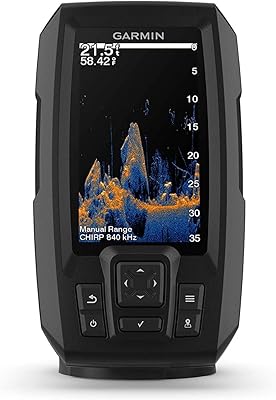
Garmin Striker Vivid 4cv Fish Finder
80%
88%
Sonar Clarity
83%
Display Quality
74%
GPS Accuracy
92%
Ease of Setup
89%
Ease of Use
More
ZWILLING 3.5-Inch Nail Scissors
82%
93%
Blade Sharpness
88%
Build Quality
86%
Cutting Precision
91%
Durability & Longevity
69%
Value for Money
More
Kingwin EZD-2535U3 Hard Drive Docking Station
80%
93%
Ease of Setup
88%
Drive Compatibility
76%
Transfer Speed
81%
Build Quality
84%
Hot-Swap Functionality
More
ZWILLING Slant Tweezer, Silver, 3.5 inch
86%
95%
Precision and Grip
88%
Ergonomics and Comfort
92%
Durability and Build Quality
90%
Ease of Use
93%
Rust Resistance
More

FAQ

It comes pretty well equipped out of the box. You get the fish finder unit itself, a transducer, a power and data cable, and both transom and motor mounting hardware. The main thing you supply yourself is a 12V battery to power it — a standard small boat or ice fishing battery works fine.

Yes, genuinely so. The built-in flasher mode is one of the main reasons ice anglers specifically seek out the Striker 4cv over other units in this price range. It gives you that real-time circular display that shows jigging depth and fish response, which is exactly what you want when you're fishing vertically through a hole.

No, it does not. This is one of the most important things to understand before buying. You can mark waypoints and navigate back to them in a relative sense, but there is no chartplotter, no map overlay, and no positional tracking. If GPS is important to your fishing, you will need to look at a different model or carry a separate device.

Most buyers report it being a straightforward afternoon project, even without prior experience. The tilt and swivel mount handles most hull types, and the transducer can be installed inside the hull on many kayak designs using the float-and-shoot method, which avoids drilling entirely. The button interface also means there is very little software setup involved once it is powered on.

Yes, the unit itself is water-rated and can handle saltwater environments. That said, it is most commonly used in freshwater. If you fish nearshore saltwater, the depth capability and sonar performance are more than adequate, but just rinse the transducer and hardware with fresh water after each saltwater outing to extend the lifespan of the components.

Standard CHIRP sonar gives you a traditional scrolling view of what is directly below the boat — blobs, arches, and depth lines. ClearVü uses a higher frequency, narrower beam to produce a much more detailed, almost photographic image of structure and fish. If you do a lot of structure fishing around submerged trees, docks, or rocky ledges, ClearVü makes a real practical difference. If you mostly troll open water, standard CHIRP alone would be sufficient.

This is the most honest trade-off with this unit. In overcast or shaded conditions it reads fine, but in direct midday sun the 3.5-inch LCD can wash out noticeably. If you fish mostly in open, sunny conditions on a larger boat where you need to read the display from a distance, the screen size and brightness may frustrate you. On a kayak where you are close to the unit and can shade it, it is much more manageable.

The unit runs on a standard 12V DC power source, like the small sealed lead-acid batteries many kayak and ice anglers already carry. Runtime depends entirely on the battery capacity you use — a compact 7Ah battery typically gets you a solid full day of fishing with this sonar unit, and larger batteries will obviously extend that further.

Yes, and portability is actually one of the more practical reasons people choose this unit. The mount detaches cleanly, and since it is battery powered, there is no permanent wiring involved. Plenty of anglers swap it between multiple watercraft depending on the trip. Just note that you may want a second mount bracket if you want to avoid removing and reinstalling hardware each time.

It handles normal on-water conditions well — rain, splash, and general moisture are not issues. The physical button interface is particularly reliable in wet conditions compared to touchscreen units. That said, it is not designed to be submerged, so full immersion could cause damage. For the environments it is designed for, durability has not been a common complaint among buyers.