Garmin Striker 4 3.5-inch GPS Fishfinder
Garmin Striker 4 3.5-inch GPS Fishfinder — image 1
Garmin Striker 4 3.5-inch GPS Fishfinder — image 2
84%

Overview

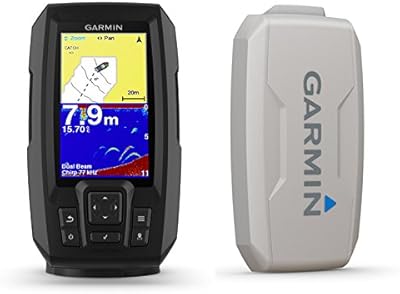
The Garmin Striker 4 3.5-inch GPS Fishfinder sits at the entry point of Garmin's fishfinder lineup, designed for anglers who want reliable sonar and GPS without spending a fortune. At roughly the price of a decent rod-and-reel combo, this fishfinder punches above its weight for casual lake fishing or weekend kayak trips. The compact build — just over eight ounces — makes it a natural fit for small boats and kayaks where space and weight matter. It holds the number-two spot in its Amazon category, which tells you something about how many anglers have voted with their wallets. That said, the 3.5-inch screen and monochrome display are real trade-offs worth knowing upfront.

Features & Benefits

The technology inside the Striker 4 is genuinely impressive for its price tier. CHIRP sonar sends a continuous sweep of frequencies rather than a single pulse, which translates to cleaner fish arches and far better separation between a fish and the bottom or debris below it. The built-in GPS lets you drop waypoints on productive spots — that dock where you hammered crappie last spring, the submerged brush pile nobody else knows about. Clear Vu scanning sonar rounds out the picture, rendering underwater structure with near-photographic clarity. Depth reach goes to 1,600 feet in freshwater. There's even a built-in flasher mode, making this Garmin unit a legitimate option for ice fishing without buying a separate unit.

Best For

This fishfinder is an easy recommendation for beginners who've been intimidated by more complex units. The keyed button interface is genuinely straightforward — most anglers figure it out within minutes on the water, no manual required. Kayak and small boat anglers will appreciate the light weight and compact footprint, and the included mounting hardware means you're not hunting for accessories out of the box. Freshwater bass and panfish anglers who like marking structure and returning to productive spots will get real value from the GPS waypoint system. Ice fishers also have good reason to consider it, thanks to the flasher mode. It's a less compelling fit for offshore saltwater fishing or anyone needing a large, color display.

User Feedback

Across thousands of buyer reviews, the overall sentiment for this Garmin unit is strongly positive — the consensus being that it delivers more than expected at its price point. Installation ease comes up constantly; people note that the included hardware and straightforward wiring get you on the water fast. GPS accuracy for marking favorite spots also earns consistent praise. On the critical side, the most common complaint centers on screen readability in direct sunlight, where the 3.5-inch monochrome display can struggle. A vocal minority also wishes for a color screen or touchscreen interface. Neither issue is a dealbreaker for most buyers, but they're worth weighing if you fish in bright conditions or prefer modern touch-based controls.

Pros

  • CHIRP sonar delivers noticeably cleaner fish arches and better target separation than basic single-frequency units.
  • Built-in GPS with waypoint mapping lets you save and return to productive spots with real precision.
  • At just over eight ounces, this fishfinder is light enough for kayaks and small aluminum boats without issue.
  • The included transducer, mounting brackets, and power cable mean you have everything needed to install out of the box.
  • IPX7 waterproof rating provides solid protection against splashes, rain, and accidental dunks.
  • The flasher mode makes it a capable ice fishing tool, eliminating the need to buy a separate dedicated device.
  • Depth range of 1,600 feet in freshwater covers virtually every lake and reservoir scenario most anglers will encounter.
  • Button-based controls are intuitive enough that most users report getting comfortable with the unit within a single outing.
  • The unit draws only 0.23 amps at 12 volts, so battery drain on a day trip is minimal.
  • Thousands of verified buyers rate it highly, reinforcing that real-world performance matches the spec sheet for most use cases.

Cons

  • The 3.5-inch monochrome display is hard to read in direct sunlight, which is a genuine daily frustration in summer.
  • No color display means distinguishing sonar targets requires more interpretation effort than on color-screen competitors.
  • There is no touchscreen interface, which feels like a step back for buyers used to modern fish finder designs.
  • The screen size that makes this unit kayak-friendly also makes it feel cramped when mounted on a larger console.
  • No built-in chartplotter or mapping capability beyond basic waypoints limits navigation utility compared to pricier units.
  • Saltwater depth performance maxes out at 750 feet, which excludes it from serious offshore deep-water applications.
  • No wireless connectivity or networking means it cannot share data with other onboard electronics or mobile apps.
  • Anglers who want side-imaging sonar will need to upgrade, as this unit does not support that technology.

Ratings

The scores below reflect our AI-driven analysis of thousands of verified global purchases of the Garmin Striker 4 3.5-inch GPS Fishfinder, with spam, bot-generated, and incentivized reviews actively filtered out before scoring. Each category is rated based on aggregated real-world feedback from anglers across freshwater, ice, and nearshore saltwater environments. Both the standout strengths and the honest frustrations are factored into every score you see here.

Sonar Performance
91%
CHIRP sonar is consistently praised for producing clean, well-defined fish arches that hold up even at higher boat speeds. Anglers regularly report being able to separate fish from bottom structure in ways that basic single-frequency units simply cannot match, which makes a tangible difference when fishing layered structure like submerged timber.
The unit lacks side-imaging sonar, which limits the horizontal picture of what is around the boat rather than directly below it. A small number of users fishing in very shallow water also note that the sonar return can be inconsistent at depths under three feet.
GPS Accuracy
88%
Waypoint accuracy receives strong praise from anglers who rely on returning to precise spots — brush piles, dock corners, and subtle bottom transitions. The GPS locks on quickly even in open water, and saved locations hold up reliably across multiple trips, which is the core ask for this kind of fishing tool.
The unit offers no map overlay or lake contour data, so GPS use is limited to raw coordinate-based waypoint navigation. Users who want a visual map context for their saved spots find this frustrating, especially compared to chart-capable units at a slightly higher price point.
Ease of Use
93%
The dedicated button layout is one of the most frequently cited positives, with many anglers noting they were confidently navigating menus within minutes of powering up for the first time. This is a unit that works well for a first-time fishfinder buyer who does not want to spend a half-day reading documentation before hitting the water.
Longtime touchscreen users occasionally describe the physical button interface as feeling dated or slow when scrolling through settings. The lack of a touchscreen is rarely a dealbreaker but does create an adjustment period for anyone coming from a smartphone-style interaction model.
Display Quality
61%
39%
In shaded or overcast conditions, the monochrome LCD is clear enough for reading sonar returns and waypoint data without strain. For fishing early morning or in tree-lined coves, most anglers find the display perfectly functional at normal operating distances.
Direct sunlight is a consistent problem — the screen washes out noticeably in midday summer conditions, which is exactly when many anglers are on the water. The absence of a color display also means interpreting sonar returns requires more mental effort compared to color-coded units, which some users find genuinely tiring over a long day.
Build Quality
84%
The IPX7 waterproof rating gives real confidence for open-boat and kayak use, and the majority of long-term owners report no weather-related failures even after seasons of regular use in rain and splash. The housing feels solid and purposeful without unnecessary bulk.
Some users note that the plastic housing shows cosmetic wear — scratches and scuffs — fairly quickly in active fishing environments. A handful of reviewers also mention that the connector points and cable junction feel less robust than the main unit body, raising mild concerns about long-term durability.
Installation
92%
The included hardware bundle — transducer, power cable, transom mount, and trolling motor mount — means most anglers can go from unboxing to first cast without a trip to the hardware store. Kayak and small boat installers particularly appreciate how little drilling and wiring the setup actually demands.
Wiring to a 12-volt power source still requires some comfort with basic electrical connections, which can be a stumbling block for complete beginners with no prior electronics installation experience. A few users also note the cable length is just barely adequate for certain boat configurations.
Value for Money
89%
Buyers consistently express that this Garmin unit delivers more capability than they expected at its price point, particularly the combination of CHIRP sonar, GPS, and the flasher mode in a single compact package. For anglers upgrading from a bare-bones depth finder, the jump in functionality feels substantial.
Buyers who stretch their budget to afford this unit sometimes feel the sting of the monochrome display and missing color sonar when they compare it side-by-side with color-screen competitors that cost only slightly more. The value equation is strong, but it tilts depending on how much display quality matters to the individual buyer.
Portability
90%
At just over eight ounces, this fishfinder is genuinely one of the lightest full-featured GPS sonar units available, and kayak anglers in particular treat this as a meaningful advantage. The tilt-swivel mount also makes repositioning quick without tools.
The compact size that makes it so portable also means the screen area is inherently limited, which becomes a frustrating trade-off on longer trips where you want to glance at readings without leaning in. There is no battery pack or standalone portable option included for use off the boat.
Ice Fishing Utility
83%
The built-in flasher mode is a genuine and uncommon feature at this price tier, giving ice anglers a circular sonar display that tracks jig movement and fish response in real time directly below the hole. Many ice fishers report using this as their primary season-round unit across both open water and ice.
Ice fishing use requires a separate compatible ice transducer, which is an additional purchase that first-time ice anglers may not anticipate. The unit also lacks temperature sensing, which some dedicated ice fishing electronics provide as a standard feature.
Sonar Depth Range
86%
A maximum depth of 1,600 feet in freshwater covers the vast majority of lakes, reservoirs, and rivers where most anglers will ever fish. For typical bass, crappie, catfish, and walleye applications, the depth capability never becomes a practical limitation.
Saltwater depth capability drops to 750 feet, which is adequate for inshore and nearshore fishing but falls short for anyone venturing into deeper offshore environments. The depth rating is also transducer-dependent and assumes ideal water clarity conditions.
Button Interface
78%
22%
Dedicated buttons for key functions mean you rarely need to dig through nested menus mid-trip to adjust a setting, which is a real practical advantage when your hands are wet and a fish is on the line. The tactile feedback is consistent and reliable even with gloves on during cold-weather fishing.
The button layout offers no customization, so advanced users who want shortcut-heavy navigation will find it somewhat rigid. Menu depth for certain sonar settings requires more button presses than feels natural once you've used more sophisticated interfaces.
Flasher Mode
81%
19%
The flasher display is smooth and responsive during vertical jigging, giving a real-time visual of how deep your lure sits relative to any fish below it. For anglers who grew up reading traditional flashers, the familiar format feels immediately intuitive.
The monochrome flasher display lacks the color zone differentiation found on dedicated ice fishing flashers, which makes it slightly harder to read signal strength and target density at a glance. It is a capable substitute for a dedicated unit but not quite a replacement for serious ice fishing competitors.
Waypoint Mapping
82%
18%
Marking and returning to waypoints is reliable and fast — a few button presses save a position, and navigating back to it on a subsequent trip is straightforward even without a map background. For structure fishermen who build a library of productive spots over a season, this system holds up well.
The absence of any base map or lake contour overlay means waypoints appear against a blank background, which makes it harder to contextualize saved spots relative to underwater terrain. Users familiar with mapping-capable units often find this limitation more frustrating than they anticipated.

Suitable for:

The Garmin Striker 4 3.5-inch GPS Fishfinder is built for anglers who want meaningful sonar and GPS capability without the complexity or cost of a high-end unit. It's a natural fit for kayak and small boat fishermen where deck space is tight and every ounce counts, since the unit weighs just over eight ounces and mounts easily with the included hardware. Beginner anglers will find the button-based interface approachable enough to use confidently on their first trip out, skipping the lengthy learning curve that more advanced units demand. Freshwater bass, crappie, and panfish anglers who rely on returning to specific productive spots — a sunken log, a dock corner, a drop-off edge — will genuinely benefit from the GPS waypoint system. Ice fishers also get real utility here, since the built-in flasher mode means this single unit can pull double duty across seasons without buying dedicated ice fishing electronics.

Not suitable for:

Anglers who need a large, bright, color display for quick at-a-glance readings in harsh sunlight will likely find themselves frustrated with what the Garmin Striker 4 3.5-inch GPS Fishfinder offers on its screen. The monochrome LCD measures just 3.5 inches diagonally, which is genuinely small when you're trying to read sonar returns while managing a rod, boat speed, and wind simultaneously. Serious offshore or deep saltwater fishermen will also run into limitations, as the unit is better optimized for freshwater environments and shallower coastal applications. Anglers who have grown accustomed to touchscreen interfaces on modern electronics may find the keyed button navigation feels dated. If you're looking for advanced networking features — chartplotter integration, side-imaging sonar, or wireless connectivity — this unit won't meet those expectations, and stepping up to a more capable platform would be the smarter long-term investment.

Specifications

  • Display Size: The unit features a 3.5-inch diagonal monochrome LCD screen measuring 1.9 x 2.9 inches (4.9 x 7.3 cm) in active area.
  • Resolution: The display renders at 480 x 320 pixels, providing adequate detail for reading sonar returns and waypoint data.
  • Weight: The unit weighs 8.1 oz (230 g), making it well-suited for lightweight kayak and small boat installations.
  • Dimensions: Physical dimensions are 3.6-inch L x 1.6-inch W x 5.9-inch H, giving it a compact footprint on any mounting surface.
  • Sonar Type: Supports CHIRP sonar (mid and high frequency) as well as traditional sonar at 50, 77, and 200 kHz for versatile bottom reading.
  • Transmit Power: Delivers 200 watts RMS of transmit power, which is sufficient for clear sonar returns in most freshwater and nearshore saltwater conditions.
  • Max Depth: Rated to a maximum depth of 1,600 feet in freshwater and 750 feet in saltwater under ideal transducer conditions.
  • Waterproof Rating: Carries an IPX7 waterproof rating, meaning it can withstand temporary immersion in up to 1 meter of water for up to 30 minutes.
  • Power Source: Operates on a 12-volt DC power supply with a current draw of just 0.23 amperes, resulting in minimal battery consumption during use.
  • GPS: Includes a built-in high-sensitivity GPS receiver that supports waypoint marking and navigation to saved locations on the water.
  • Flasher Mode: Features a built-in flasher display mode that replicates a traditional circular sonar readout, ideal for ice fishing and vertical jigging.
  • Interface: Controlled entirely through physical dedicated buttons with a keyed interface, requiring no touchscreen interaction.
  • Mounting: Ships with both transom and trolling motor mount options, giving anglers flexibility for different boat setups right out of the box.
  • Transducer: Includes a dual-beam transducer in the box compatible with the unit's traditional and CHIRP sonar modes.
  • Color: Available in black as the standard finish for this model configuration.
  • Display Type: Uses a monochrome LCD panel without color differentiation, which affects readability in certain lighting conditions such as direct sunlight.
  • Connectivity: Does not include wireless connectivity, Bluetooth, or networking capability; operates as a standalone unit.
  • In the Box: Package includes the fishfinder unit, power and data cable, tilt and swivel mount, transducer, transom mount, trolling motor mount, and documentation.

Related Reviews
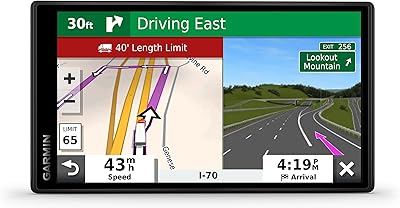
Garmin Dezl OTR500 5.5-inch Truck GPS Navigator
75%
91%
Truck Routing Accuracy
88%
Display Quality
74%
PrePass Integration
72%
Load-to-Dock Guidance
69%
Ease of Setup
More
Garmin Striker Plus 4 Fishfinder
90%
94%
Sonar Accuracy
89%
Display Clarity
91%
Ease of Setup
96%
Portability
88%
Battery Life
More
ikuai 3.5″ USB 3.0 Hard Drive Enclosure
80%
93%
Ease of Setup
71%
Build Quality
62%
Cable Quality & Reliability
88%
Drive Compatibility
74%
Data Transfer Speed
More
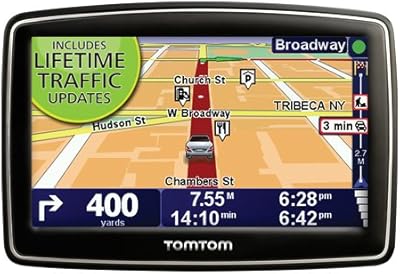
TomTom XL 335T 4.3-Inch Portable GPS Navigator
75%
83%
Navigation Accuracy
81%
Traffic Updates
88%
Ease of Use
62%
Display Quality
71%
Map Coverage
More
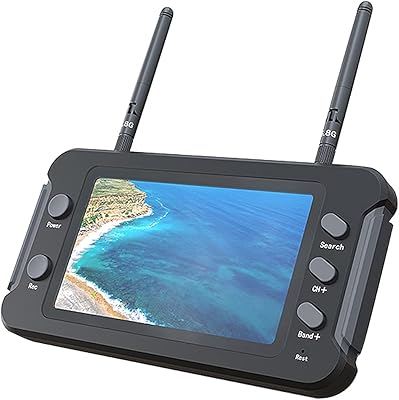
SoloGood 4.3-inch 5.8GHz FPV Monitor
77%
88%
Value for Money
74%
Display Clarity
83%
Signal Reception
61%
DVR Recording
86%
Ease of Setup
More
Canon EF-S 10-22mm f/3.5-4.5 USM Wide-Angle Lens
80%
88%
Image Sharpness
91%
Autofocus Performance
84%
Build Quality
63%
Distortion Control
67%
Chromatic Aberration
More
Inateck FE3001 3.5-inch Hard Drive Enclosure

79%
88%
Build Quality
83%
Drive Compatibility
79%
Transfer Speed
74%
Heat Management
91%
Setup & Ease of Use
More
CT Sounds Meso-6.5-D4 6.5 Inch Dual 4 Ohm Car Subwoofer
83%
90%
Bass Performance
85%
Power Handling
88%
Build Quality
65%
Installation Ease
92%
Cooling System Effectiveness
More
Redecker Natural Pig Bristle Nail Brush with Waxed Olive Wood Handle, 3-3/4-Inches
88%
91%
Effectiveness for Cleaning & Exfoliating
94%
Durability & Build Quality
87%
Grip Comfort & Ergonomics
89%
Eco-Friendliness & Sustainability
92%
Gentleness on Nails
More
ICY DOCK flexiDOCK MB830SP-B 3-Bay 3.5 Inch SATA/SAS HDD Docking Enclosure
83%
93%
Ease of Installation
88%
Build Quality
87%
Performance & Speed
79%
Cooling Efficiency
65%
Noise Levels
More

FAQ

You get quite a bit in the box — the unit itself, a transducer, a power and data cable, and both a transom mount and a trolling motor mount. For most small boat or kayak setups, that covers the basics. You will still need to wire it to a 12-volt power source, but no additional accessories are strictly required to get on the water.

Yes, and it works well for it. The built-in flasher mode mimics a traditional circular sonar display, which is exactly what ice anglers rely on for vertical jigging. You would need a separate ice fishing transducer for through-ice use, but the unit itself handles that application cleanly.

This is honestly one of the more common complaints. The 3.5-inch monochrome LCD can wash out in strong direct sunlight, making it harder to read on the water during midday. It is manageable in shaded conditions or with the screen angle adjusted on the tilt mount, but if you fish in consistently bright conditions, it is a real trade-off to consider.

The built-in GPS is well-regarded for its accuracy when saving waypoints. Anglers regularly report returning to specific brush piles, stumps, and drop-offs with confidence. It is not a chartplotter, so you won't get a map overlay, but the coordinates are reliable for spot-to-spot navigation.

Traditional sonar fires a single frequency pulse and reads the return. CHIRP sends a continuous sweep of frequencies across a range, which produces sharper, more defined fish arches and better separation between fish and nearby structure or bottom clutter. In practical terms, you will find it easier to distinguish a fish from a rock or debris field with CHIRP active.

Absolutely — it is one of the most popular applications for this unit. At just over eight ounces, it adds almost no meaningful weight, and the compact footprint fits comfortably on most kayak mounting plates or RAM-style systems. The transom mount works well on many kayak sterns too.

It functions in saltwater with a rated depth of up to 750 feet, so nearshore and inshore saltwater fishing is within its range. That said, it is primarily optimized for freshwater use, and serious offshore anglers will likely find the depth range limiting. Make sure to rinse the unit and transducer with fresh water after any saltwater exposure.

Not at all. The button layout is straightforward, and most first-time users report getting comfortable with the basic functions within a single outing. The menu structure follows Garmin's standard logic, which is consistent across their product line. You should be reading sonar and dropping waypoints the same day you install it.

No, this unit does not include built-in mapping or chart support — it is a fishfinder with GPS, not a chartplotter. The GPS function is limited to marking and navigating to waypoints you save yourself. If you need lake contour maps or navigational charts, you would need to step up to a unit from Garmin's ECHOMAP or similar series.

The Striker 4 draws just 0.23 amperes at 12 volts, which is very efficient. On a typical 12V sealed lead-acid battery used on a kayak or small boat, you can realistically run it for many hours on a single charge without it being the limiting factor in your outing. It is one of the more power-friendly options in its category.

Where to Buy