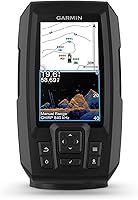
Overview

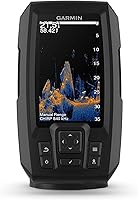
The Garmin Striker Vivid 4cv Fish Finder sits in a sweet spot that Garmin has always owned well — reliable, no-nonsense marine electronics at a price that doesn't require selling your truck. The 4-inch color LCD is genuinely useful on the water; it's bright enough to read in harsh midday sun without squinting. What makes this compact sonar unit stand out from the crowded entry-level field is the dual sonar setup: traditional CHIRP for deep-water reading and ClearVü scanning sonar for a sharper, photo-like view of structure beneath your hull. The transducer, GPS, and on-device mapping all come included, so there's nothing extra to source before your first trip out.

Features & Benefits

The vivid color palettes are more than a cosmetic upgrade — when you're trying to spot fish arches against a cluttered bottom, color separation genuinely changes how fast you read the screen. Traditional CHIRP sonar gives you reliable depth and target separation in deeper water, while ClearVü scanning sonar produces a cleaner, near-photographic image of what's directly below the boat — useful for finding submerged brush, ledges, and laydowns. The built-in GPS lets you drop waypoints on productive spots, track your speed, and build routes without a separate device. Pair that with Quickdraw Contours, which builds custom depth maps as you fish, and you have a genuinely capable package for the size.

Best For

This Garmin fishfinder is a natural fit for kayak and small boat anglers who want real sonar performance without hauling around a bulky, expensive unit. At under 12 ounces and with a clean surface mount, it installs quickly and doesn't hog limited rail space. Freshwater fishing is where it really earns its keep — lakes, reservoirs, and slow-moving rivers are ideal environments for ClearVü to show its strengths. If you're coming off a basic two-color depthfinder and want a noticeable upgrade in screen clarity and GPS capability without jumping to a full chartplotter, this compact sonar unit hits that value-to-performance mark cleanly. Beginners will appreciate the button-driven interface that doesn't bury key functions in endless menus.

User Feedback

Owners consistently point to screen brightness and color contrast as the biggest day-to-day wins — the display holds up well in full sun, which is a genuine pain point on cheaper units. Setup gets high marks too; most users report being up and running within 20 minutes, even without reading the manual. Where honest criticism tends to land is the 4-inch screen: anglers who want to run split-screen sonar views simultaneously find it cramped. The Quickdraw mapping is useful but stays on the unit — there's no cloud backup or community map sharing. A handful of users have noted GPS signal drop in heavily wooded areas. That said, hardware durability complaints are rare, and the overall satisfaction rate for this class of device is notably high.

Pros

  • The vivid color palettes make it noticeably easier to separate fish arches from bottom clutter at a glance.
  • Dual CHIRP sonar — traditional and ClearVü — gives you two genuinely useful views in one affordable unit.
  • Built-in GPS lets you mark productive spots and build routes without carrying a separate device.
  • Quickdraw Contours creates custom depth maps as you fish, which is a rare feature at this price tier.
  • The GT20 transducer is included, so you are ready to fish right out of the box.
  • At just over 11 ounces, this Garmin fishfinder is light enough for kayak rails and small console mounts.
  • The tilt/swivel bail mount makes repositioning quick and tool-free between trips.
  • Screen brightness holds up well in direct sunlight, which is a real advantage over cheaper units.
  • Setup is genuinely fast — most users are fully operational within 20 minutes of opening the box.
  • Garmin's hardware reliability track record at this tier is strong, with very few reported unit failures.

Cons

  • The 4-inch screen feels cramped when running split-screen sonar views simultaneously.
  • Quickdraw maps are stored locally only — there is no cloud sync or backup if the unit is lost or damaged.
  • ClearVü is downward-scanning sonar, not side imaging, which limits how much of a flat you can read on a single pass.
  • GPS signal can degrade noticeably in heavily wooded shorelines or canyon lake terrain.
  • No preloaded maps are included — you start with a blank chart and build coverage only as you fish new water.
  • The unit is hardwired, so installation requires basic wiring work that may not suit complete beginners.
  • The GT20 transducer has realistic depth limits that may not satisfy anglers chasing deep-water species.
  • No touchscreen interface, which some users find limiting when navigating menus quickly on the water.

Ratings

The scores below reflect an AI-driven analysis of verified global user reviews for the Garmin Striker Vivid 4cv Fish Finder, with spam, bot activity, and incentivized feedback actively filtered out to ensure reliability. Each category score is calibrated against real angler experiences — from weekend kayak fishermen to serious freshwater regulars — so both the genuine strengths and honest frustrations are represented. Where this compact sonar unit earns high marks, it earns them legitimately; where it falls short, the score reflects that too.

Sonar Clarity
88%
Users consistently praise how much cleaner the ClearVü return looks compared to the basic single-frequency fishfinders most of them upgraded from. The ability to distinguish a submerged log from a fish school — or a hard bottom from soft silt — is something anglers cite as a genuine on-water advantage during slow morning sessions.
A portion of buyers initially expected side imaging and felt misled when they realized ClearVü only scans downward. When running both sonar modes in split view, the 4-inch screen compresses each pane enough that fine detail becomes harder to read on the move.
Display Quality
83%
The vivid color palette system is one of the most frequently praised features across all buyer feedback. Anglers fishing midday on open reservoirs specifically noted that the screen holds up far better in harsh sunlight than competing units in the same price bracket.
The 4-inch physical size is the single most common complaint tied to the display. Users who fish with a sonar split-screen setup, or who are older and rely on larger text, regularly wish they had gone up to a bigger screen size even if it meant spending more.
GPS Accuracy
74%
26%
On open lake water the GPS locks quickly and holds a reliable signal that is accurate enough for marking productive fishing spots, running routes between launch ramps, and logging boat speed during trolling passes. Most users report it performs exactly as expected for freshwater day-fishing needs.
Feedback gets noticeably more mixed when anglers fish in tight river corridors with heavy tree canopy or in steep-walled canyon reservoirs. In those environments, signal acquisition slows and occasional drift in waypoint placement becomes frustrating enough to affect trust in the feature.
Ease of Setup
92%
Quick setup is one of the most emotionally positive themes in all the feedback — buyers describe real satisfaction in the unboxing experience because every component needed is right there in the box. Many kayak anglers report having the unit mounted, wired, and powered up within 30 to 40 minutes of arriving home with it.
The hardwired power connection requires some basic comfort with electrical work, and a small segment of buyers who had never wired a marine electronic before found the power cable step intimidating. Instructions could be more explicit about grounding and waterproofing the connection.
Ease of Use
89%
The button-driven interface receives consistent praise from first-time fishfinder buyers who were worried about a steep learning curve. Core functions — changing sonar mode, dropping a waypoint, adjusting sensitivity — are reachable in very few button presses, which matters when you have a rod in your hand.
Experienced anglers who have used touchscreen chartplotters find the physical button navigation to feel dated, especially when pinch-zooming or quickly switching between screens would be faster. Menu depth can also frustrate users who want to customize sonar settings beyond the basic presets.
Build Quality
86%
Hardware failure reports are genuinely rare in the feedback pool, which is meaningful for an electronic device exposed to water, vibration, and sun constantly. Users who have owned the unit for multiple seasons describe it as holding up without issues, which reflects well on Garmin's manufacturing standards at this tier.
A handful of buyers noted that the plastic housing feels less substantial than the price tag might suggest, particularly around the mounting bracket collar. In very cold winter conditions, a small number reported buttons becoming stiffer and harder to actuate with gloved hands.
Value for Money
91%
The combination of dual CHIRP sonar, built-in GPS, Quickdraw mapping, and an included transducer at this price point is where most positive sentiment converges. Buyers who researched the market before purchasing consistently describe the Striker Vivid 4cv as offering more technology per dollar than most of its direct competitors.
Buyers who later decided they needed a larger screen or side imaging often feel they would have been better served spending more upfront rather than treating this as a stepping stone unit. The value equation shifts for anglers whose needs grow faster than they anticipated.
Mapping Capability
67%
33%
Quickdraw Contours is a genuinely useful feature for anglers who fish the same water regularly. Over a season of use, the locally built depth maps become a real asset — anglers describe confidently returning to productive depth breaks and submerged points they charted themselves.
The local-only storage limitation is a consistent frustration. No cloud backup means a lost or damaged unit wipes out accumulated map data, and the absence of any community map-sharing functionality puts the Striker Vivid at a disadvantage compared to units that connect to shared depth datasets. First-time visitors to unfamiliar lakes start completely blind.
Transducer Performance
79%
21%
The included GT20-TM transducer handles freshwater duty well, providing clean returns at typical lake and reservoir depths without needing any upgrade for most casual and intermediate anglers. The fact that it supports both sonar modes out of the box — rather than requiring a separate purchase — is a practical advantage buyers regularly appreciate.
Anglers pushing the unit into deeper water, or those fishing saltwater inshore environments, report that the GT20 starts to show its limitations. Bottom returns get softer in deeper or saltier water, and users targeting deeper structure acknowledge the transducer is the component most likely to become a performance bottleneck over time.
Screen Size
58%
42%
For kayak anglers and small-boat fishermen who mount the unit close to eye level, the 4-inch display is compact without feeling unusable. Users who run a single sonar view rather than split-screen consistently describe the display as adequate for their needs and rarely complain about it in isolation.
This is the most objectively limiting hardware characteristic of the unit, and the buyer regret rate tied to screen size is the highest of any category in the feedback. Anglers who want to monitor traditional sonar and ClearVü simultaneously, or who want to overlay a GPS track with sonar data, feel genuinely constrained by the available screen real estate.
Mounting & Installation
84%
The tilt/swivel bail mount is praised for being flexible enough to work on a wide variety of boat and kayak setups without modification. Anglers who move the unit between boats describe the process as quick and tool-free, which adds practical value for users who do not have a dedicated vessel.
Surface mount installation on certain fiberglass boat consoles can be tricky depending on deck thickness and the routing path for the power cable. A few users noted the mount felt slightly less rigid than expected under constant vibration at higher boat speeds.
Connectivity
62%
38%
Wi-Fi connectivity for wireless firmware updates via the Garmin ActiveCaptain app is a thoughtful inclusion that makes keeping the unit current far less cumbersome than manual update methods. Users who keep the app on their phone appreciate that updates happen without any cable management at the dock.
Beyond firmware updates, the Wi-Fi feature offers limited day-to-day value for most buyers, and some feel the connectivity story is incomplete for a unit in this price tier. There is no live data streaming to a phone, no networked sonar sharing, and no remote display capability, which leaves the Wi-Fi feeling more like a maintenance tool than a connectivity feature.
Portability
87%
At just over 11 ounces, this Garmin fishfinder is light enough that it never becomes a burden on kayak rail mounts or small aluminum boat brackets. Anglers who fish multiple bodies of water in a season and move equipment frequently treat the low weight as a meaningful advantage.
Being hardwired for power means true portability has limits — you cannot simply unplug it and hand-carry it to a dock like a portable battery-powered unit. Users who fish from canoes or non-motorized craft without an onboard 12V source have to engineer a power solution separately, which adds complexity.
Color Palette Options
81%
19%
The Vivid-series color palettes are more than cosmetic — anglers fishing in overcast low-light conditions describe switching palette modes and immediately finding it easier to pick out fish arches against the background return. The ability to customize display contrast to lighting conditions is a feature users return to regularly.
A small number of users found the palette selection process buried deep enough in the menu system that they set it once and never revisited it. There is also occasional feedback that certain palettes, while vibrant, can actually make it harder to read fine target separation in heavily cluttered sonar returns.

Suitable for:

The Garmin Striker Vivid 4cv Fish Finder is built for anglers who want a meaningful upgrade from a basic depthfinder without crossing into chartplotter territory. Kayak fishermen and small-boat owners will appreciate how light and compact it is — it mounts cleanly without overwhelming a limited dash or rail setup. Freshwater anglers fishing lakes, reservoirs, and slow rivers will get the most out of the ClearVü scanning sonar, which renders structure and bottom composition in far more detail than a single-frequency unit ever could. Beginners benefit from the button-driven interface, which keeps core functions accessible without requiring a manual deep-dive. If you want Garmin's build quality, a GPS that actually works, and real dual-sonar capability without a large investment, this compact sonar unit checks every box.

Not suitable for:

Serious tournament anglers or anyone who fishes large, unfamiliar bodies of water with complex structure will likely outgrow the Garmin Striker Vivid 4cv Fish Finder fairly quickly. The 4-inch screen is the most consistent sticking point — running traditional sonar and ClearVü side by side in split-screen mode leaves each view cramped and harder to read at a glance. Saltwater offshore anglers will also want to look elsewhere, as the GT20 transducer is optimized for freshwater and shallower inshore depths rather than deep open-water performance. The Quickdraw mapping is a useful tool, but it saves only to the unit itself with no cloud backup or access to community-shared maps, which limits its practical range for exploratory fishing. Anyone expecting side-imaging sonar should know that ClearVü is a downward-scanning technology — it does not scan laterally, and the distinction matters when you're hunting suspended fish along a broad flat.

Specifications

  • Screen Size: The unit features a 4-inch color LCD display sized to fit compact kayak and small-boat installations without sacrificing readability in daylight.
  • Display Type: The LCD panel supports multiple vivid color palettes specifically designed to help anglers distinguish fish arches, structure, and bottom composition at a glance.
  • Sonar Type: The unit runs dual sonar: CHIRP traditional sonar for reliable depth and target separation, plus CHIRP ClearVü downward-scanning sonar for a sharper, near-photographic image of what lies beneath the hull.
  • Transducer: A GT20-TM transducer is included in the box, supporting both traditional CHIRP and ClearVü frequencies and suited primarily for freshwater and shallow inshore use.
  • GPS: A built-in high-sensitivity GPS receiver enables waypoint marking, route creation, and boat speed tracking directly on the unit without any additional hardware.
  • Mapping: Quickdraw Contours mapping software is built in, allowing the unit to generate custom 1-foot contour depth maps in real time as you navigate new water, stored locally on the device.
  • Dimensions: The unit measures 1.8″ deep by 3.9″ wide by 6.9″ tall, making it one of the more compact fishfinder heads available in its feature class.
  • Weight: At 11.2 ounces, the unit is light enough for kayak installations where total load on rail or deck mounts is a practical concern.
  • Mounting: The included tilt/swivel bail mount allows surface mounting with easy angle adjustment, and no additional mounting hardware is required for a standard installation.
  • Power Source: The unit is hardwired via an included power/data cable and requires a direct connection to a 12V DC power source on the vessel.
  • Interface: Navigation is handled entirely through physical buttons, with a menu structure designed to keep key sonar and GPS functions accessible within a few presses.
  • Connectivity: The unit includes Wi-Fi capability, which supports wireless software updates via the Garmin ActiveCaptain companion app when within range of a compatible device.
  • Color Palettes: Multiple selectable color palette themes — including the Vivid-series palettes — allow users to tune the on-screen contrast to their lighting conditions and personal preference.
  • In-Box Contents: The package includes the fishfinder head unit, GT20-TM transducer, power/data cable, tilt/swivel bail mount, mounting hardware, and documentation.
  • Model Number: The official Garmin model number is 010-02550-00, which can be used to confirm firmware updates, compatible accessories, and warranty claims.
  • Brand: Garmin is the manufacturer, a company with a long track record in GPS technology and marine electronics with global service and support infrastructure.
  • Target Environment: The unit and included GT20 transducer are designed primarily for freshwater use on lakes, reservoirs, and rivers, with limited suitability for deep saltwater offshore applications.
  • Department: Listed as suitable for all ages, though the product is designed for adult anglers operating motorized or paddle-powered watercraft.

Related Reviews
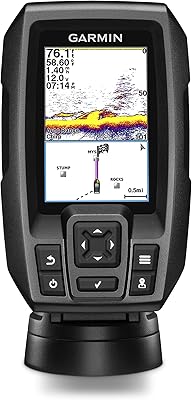
Garmin Striker 4cv Fish Finder
86%
93%
Sonar Imaging Clarity
89%
Ease of Use
91%
Portability
84%
Battery Life
85%
Build Quality
More
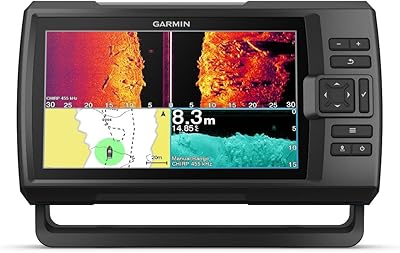
Garmin Striker Vivid 5cv Fish Finder
80%
88%
Sonar Clarity & Target Separation
91%
Real-Time Jig Tracking
86%
Display Visibility Outdoors
62%
Battery Life in Cold Conditions
93%
Bundle Completeness & Out-of-Box Readiness
More
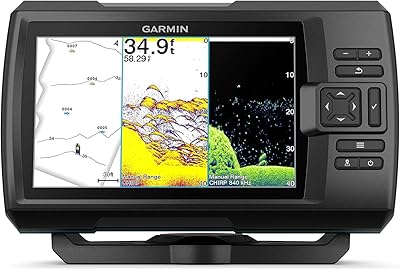
Garmin STRIKER Vivid 9sv Fishfinder
83%
93%
Sonar Image Clarity
91%
Display Quality
88%
GPS Accuracy
86%
Sonar Coverage Range
84%
Ease of Installation
More
Garmin Striker Vivid 7cv 7-inch Fishfinder
80%
88%
Display Clarity
84%
Sonar Performance
91%
GPS Accuracy
83%
Quickdraw Contours Mapping
79%
Ease of Setup
More
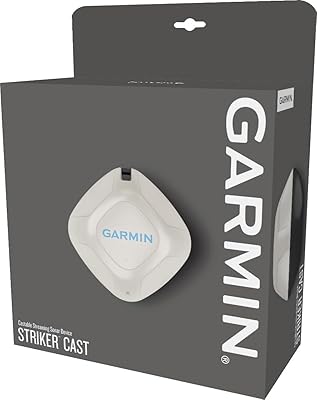
Garmin Striker Cast Castable Sonar Fish Finder
79%
91%
Ease of Setup
71%
App Performance & Stability
84%
Sonar Accuracy
78%
Wireless Range
88%
Battery Life
More
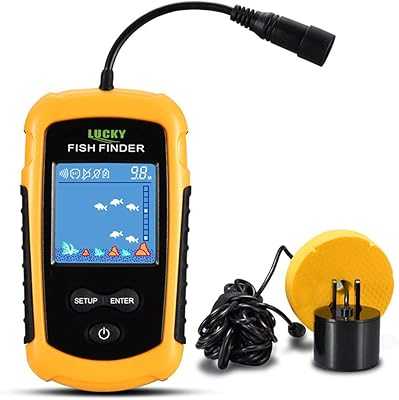
Lixada Wired Fishing Finder Sonar Sensor
70%
88%
Ease of Setup
76%
Display Clarity
63%
Depth Detection Accuracy
72%
Bottom & Structure Detection
58%
Audible Fish Alarm
More
Garmin Striker Plus 9SV Fish Finder
79%
93%
Sonar Image Quality
88%
Display Readability
86%
GPS Accuracy
84%
Ease of Use
81%
Value for Money
More
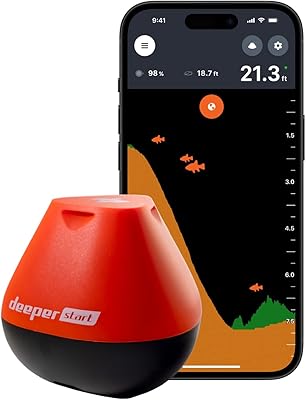
Deeper START Castable Fish Finder
75%
88%
Ease of Setup
93%
Portability & Form Factor
67%
App Experience
71%
Sonar Accuracy & Fish Detection
76%
Battery Life
More
RICANK F12 Fish Finder
86%
89%
Ease of Use
92%
Portability
91%
Water Resistance
87%
Fish Location Accuracy
82%
Battery Life
More
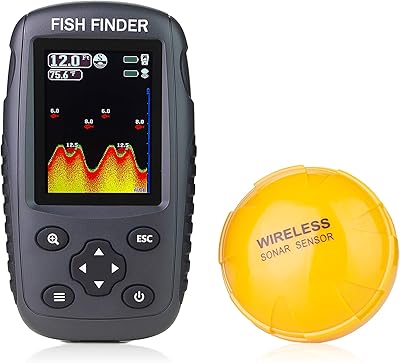
Venterior VT-FF005 Portable Castable Fish Finder
80%
91%
Ease of Setup
78%
Sonar Accuracy
84%
Display Readability
77%
Wireless Range & Connectivity
73%
Battery Life
More

FAQ

Everything you need for a standard installation is in the box — the fishfinder unit, GT20-TM transducer, power/data cable, tilt/swivel mount, and all the mounting hardware. The only thing you supply yourself is a connection to a 12V power source on your boat. Most anglers are up and running in well under an hour.

Traditional CHIRP sonar sends a range of frequencies and is excellent for reading depth, separating individual fish targets, and understanding general bottom hardness. ClearVü is a downward-scanning sonar that produces a much sharper, almost photo-like image of structure, submerged timber, and contour changes directly below the boat. They complement each other well — traditional CHIRP for target identification, ClearVü for reading what your boat is passing over.

No — ClearVü scans downward, not laterally. It gives you a clearer picture of what is directly beneath the hull, but it does not show you what is sitting 20 or 30 feet to either side. For side imaging, you would need a different unit in Garmin's lineup, like one of the Echomap series models. If down-scanning coverage is enough for your fishing style, ClearVü does it well at this price point.

Quickdraw Contours builds a 1-foot contour depth map of whatever water you are actively fishing over, saving it directly to the unit as you go. Over time you build up a detailed map of your home waters. However, on this model the maps stay local — there is no way to sync them to the cloud or access community-shared maps from other users. If you fish the same water regularly, it gets very useful fast.

Yes, and this is one of the things users consistently mention in positive reviews. The backlit color LCD holds up well in direct sun, and the vivid color palette options let you dial in contrast for your conditions. It is not a bonded glass display like a high-end unit, but for the size and price tier, the outdoor visibility is genuinely solid.

The unit itself is water-resistant and can handle marine environments, but the included GT20-TM transducer is optimized for freshwater and relatively shallow depths. For calm inshore saltwater fishing — flats, estuaries, shallow bays — it will perform adequately. For offshore or deepwater saltwater use, you would want a unit with a more capable transducer designed for those depths and conditions.

Installation on a kayak is very manageable for most people. The tilt/swivel bail mount handles the physical mounting, and the power/data cable just needs to reach a 12V source — many kayak anglers use a small sealed lead-acid battery in a dry bag. The wiring is straightforward with no complex connectors. If you can follow basic instructions and use a screwdriver, you can handle this install.

The built-in GPS acquires a signal reasonably quickly in open water conditions and is reliable for waypoint marking and speed tracking. Where it can struggle is in environments with heavy tree canopy overhead, steep canyon walls, or deep river corridors that obstruct satellite visibility. For most lake and reservoir fishing, performance is consistent and dependable.

The Wi-Fi is not for streaming sonar to a mobile device. Its primary use is connecting to Garmin's ActiveCaptain app to download software and firmware updates wirelessly, which is more convenient than managing files manually. It is a practical feature for keeping the unit current, but it does not add real-time connectivity functions during fishing.

It depends entirely on how you fish. For a single sonar view — either traditional CHIRP or ClearVü — 4 inches is quite workable and clear. Where it starts to feel limiting is if you want to run both sonar modes in split-screen simultaneously, or if your eyesight makes smaller displays frustrating. Kayak anglers and minimalist small-boat setups tend to be very happy with it. If you regularly want to run split views or display map and sonar side by side, moving up to a 5 or 7-inch unit is worth considering.

Where to Buy